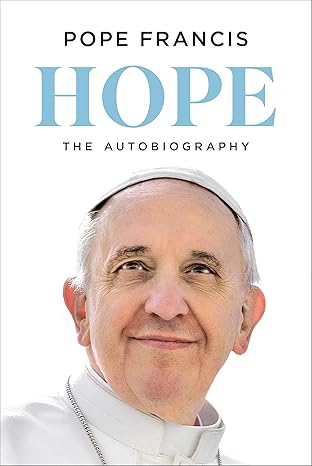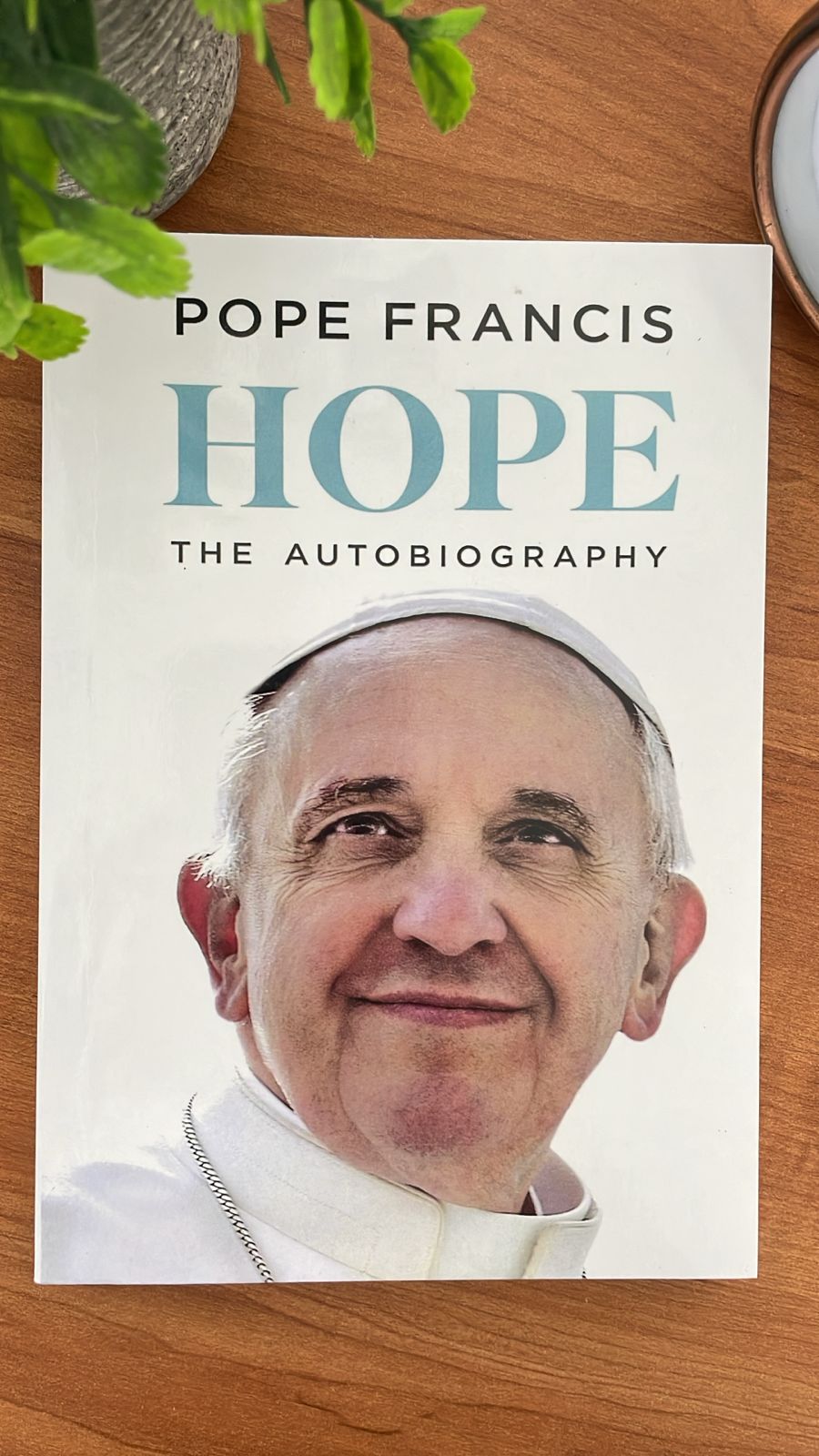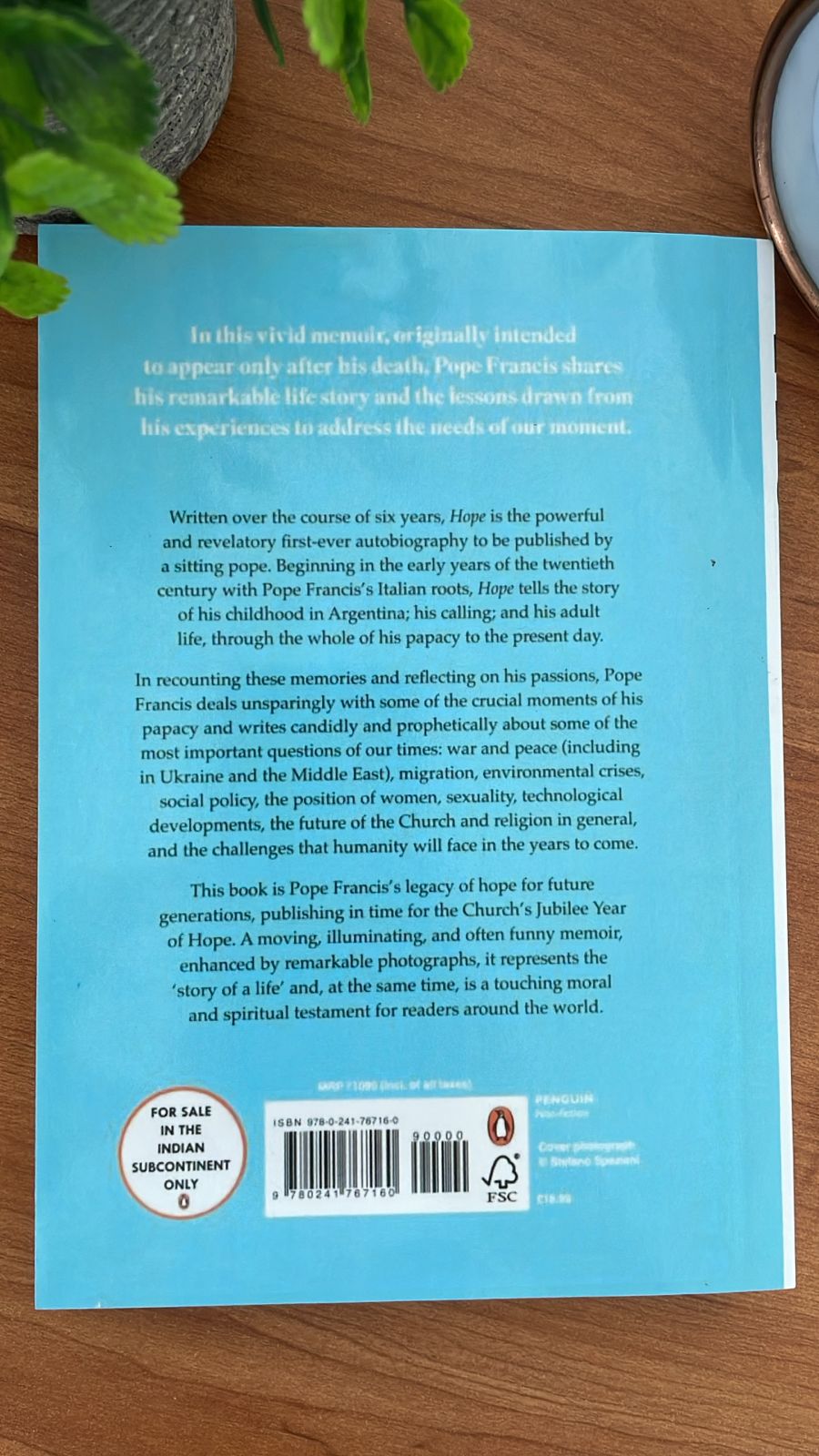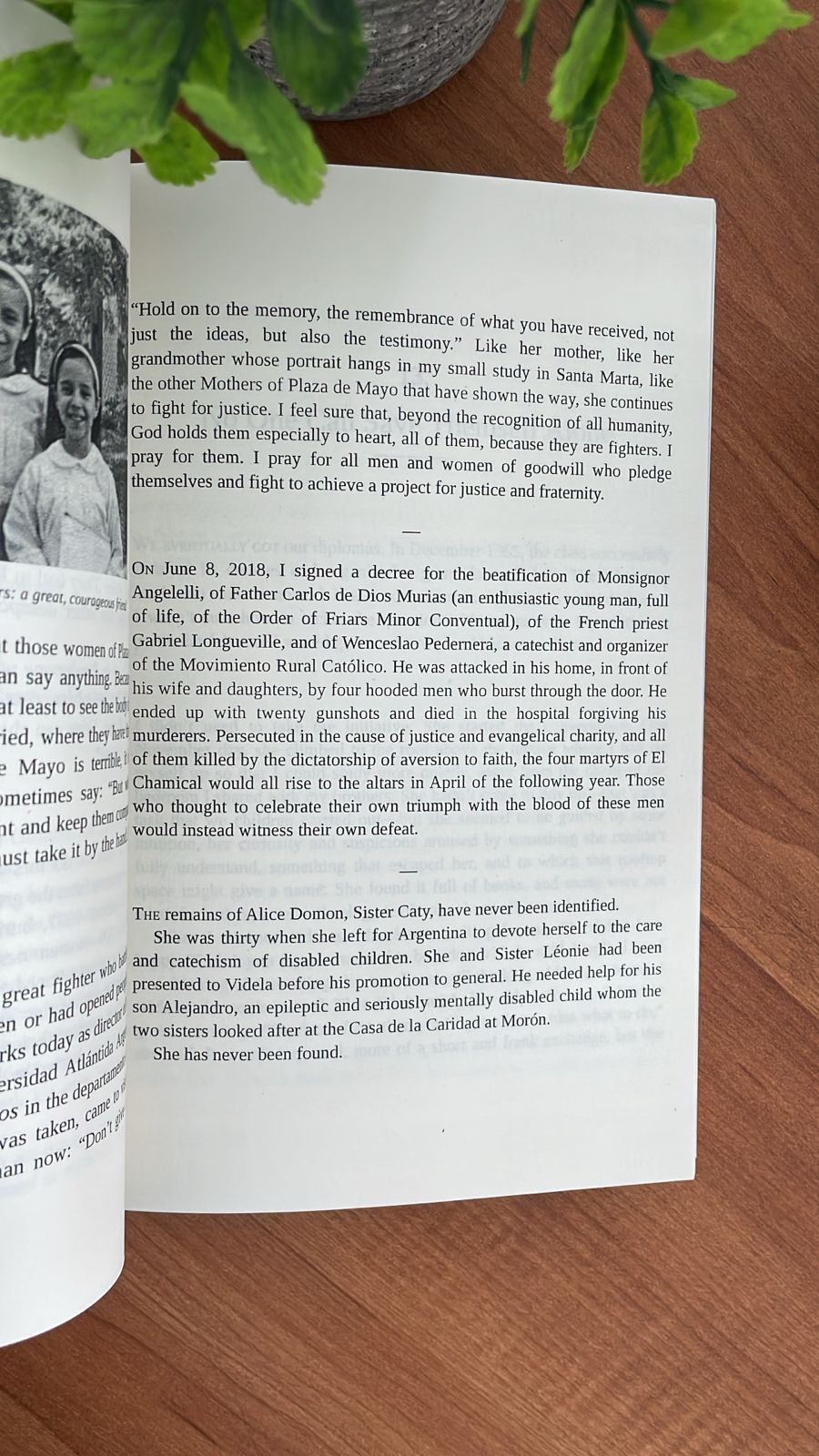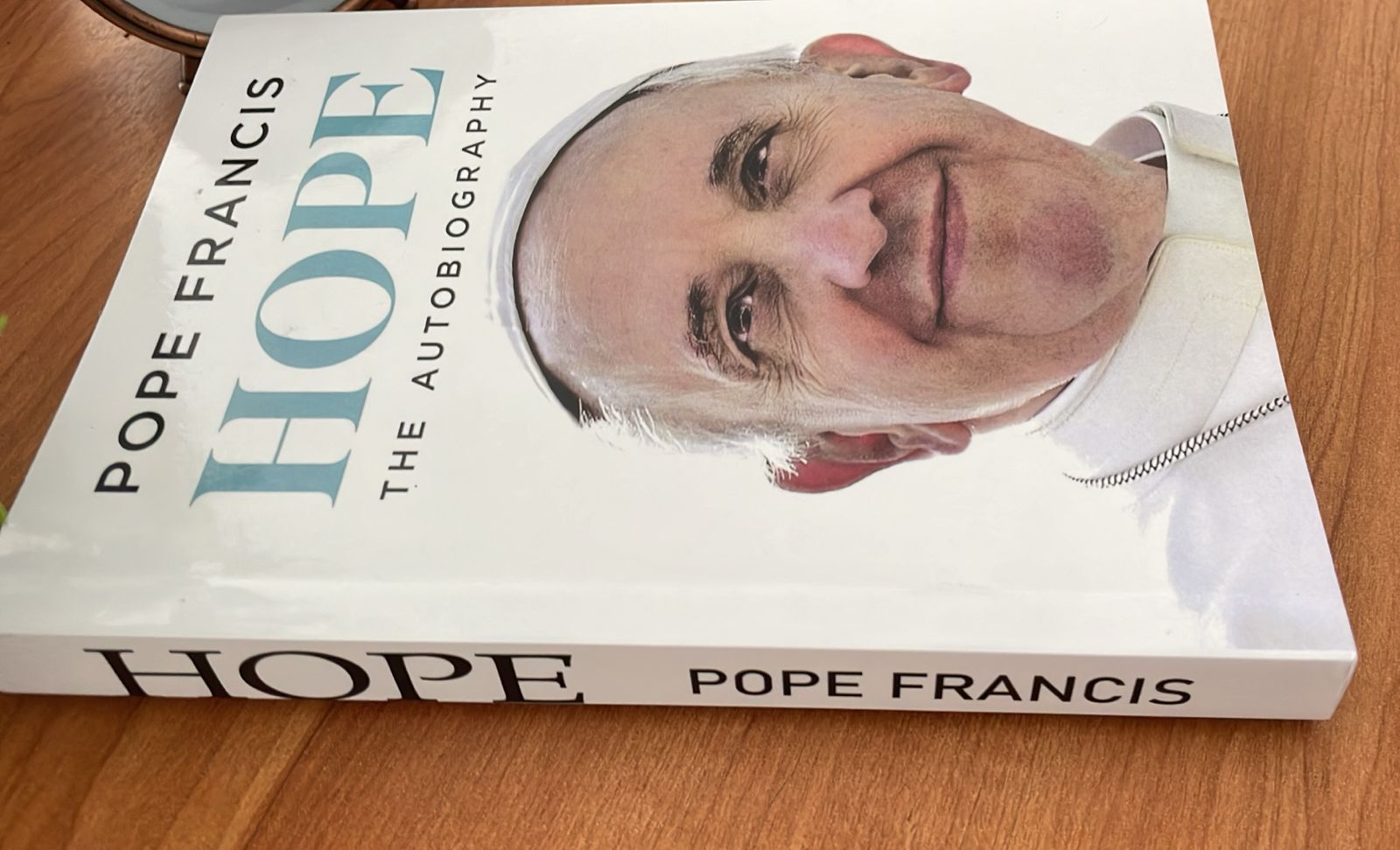
Hope by Pope Francis is a deeply personal autobiography that tells the extraordinary life story of Jorge Mario Bergoglio, from his family roots and childhood in Buenos Aires to his religious calling and years as the leader of the Catholic Church.
Written with Carlo Musso, the memoir combines personal memories with reflections on faith, family, migration, leadership, social justice, war, peace, inequality, environmental responsibility, technology, and the future of humanity.
Rather than presenting only the public figure known around the world as Pope Francis, the book introduces readers to the experiences, people, struggles, mistakes, friendships, and convictions that shaped the man behind the papacy.
The result is both an autobiography and a wider reflection on how people can respond to difficult times without losing compassion or hope.
Hope by Pope Francis – Book Overview
Hope by Pope Francis begins long before Jorge Mario Bergoglio became pope.
The memoir traces his family history back to his Italian roots and the migration of his ancestors to Latin America.
Migration becomes especially meaningful because it is not merely a political issue discussed from a distance.
It forms part of his own family’s story.
From there, the book moves through his childhood in Buenos Aires, his education, personal interests, religious vocation, priesthood, leadership within the Jesuit order, and eventual rise within the Catholic Church.
Readers also gain insight into the journey that led to his election as pope in 2013.
Throughout the memoir, personal experience is repeatedly connected to larger questions about society.
Childhood in Buenos Aires
The early chapters of Hope by Pope Francis reveal the world that shaped Jorge Mario Bergoglio.
Born in Buenos Aires to a family of Italian migrants, he grew up surrounded by family, community, work, faith, and the cultural life of Argentina.
These memories help readers understand the human experiences behind his later values.
Family history becomes especially important.
The courage required for earlier generations to leave Europe and establish a new life in Latin America helped shape his perspective on migration and belonging.
For Pope Francis, migrants are therefore not simply statistics.
Their experiences reflect stories of fear, sacrifice, courage, separation, and hope.
Discovering His Religious Vocation
A major part of Hope by Pope Francis explores the development of his religious vocation.
Becoming a priest was not simply a career decision.
It was connected to a growing sense of purpose and responsibility.
Bergoglio joined the Society of Jesus, commonly known as the Jesuits, and eventually became a priest.
His religious formation exposed him to education, spiritual discipline, leadership, and service.
These experiences later influenced the way he approached his responsibilities as a bishop, cardinal, and pope.
The memoir shows that leadership developed gradually through years of learning rather than appearing suddenly when he entered the Vatican.
Becoming Pope Francis
One of the most historically significant parts of Hope by Pope Francis concerns his election as pope.
In March 2013, Jorge Mario Bergoglio became the 266th pope of the Catholic Church.
His election was significant in several ways.
He became the first Latin American pope and the first Jesuit pope.
He also chose the name Francis, inspired by Saint Francis of Assisi.
The choice reflected themes that would become closely associated with his papacy, including humility, care for the poor, peace, simplicity, and concern for the natural world.
The memoir gives readers an inside perspective on how someone who had spent much of his life in Argentina suddenly became one of the most recognized religious leaders in the world.
Leadership Through Humility
Leadership is one of the strongest themes in Hope by Pope Francis.
The memoir repeatedly suggests that authority should not be confused with superiority.
A leader has responsibilities toward other people.
Listening matters.
Humility matters.
Recognizing mistakes matters.
And understanding the lives of ordinary people matters.
This leadership philosophy challenges the idea that powerful positions should isolate people from those they serve.
Pope Francis often emphasizes closeness to individuals who are poor, displaced, forgotten, or excluded.
Leadership, from this perspective, means remaining aware of people who have less power.
Migration and Human Dignity
Migration receives significant attention in Hope by Pope Francis.
His own family’s migration from Italy to Argentina gives the subject personal meaning.
The memoir encourages readers to see migrants and refugees as individuals rather than abstract political problems.
Behind every movement across borders is a human story.
People may leave their homes because of poverty, violence, war, political persecution, environmental conditions, or the hope of creating a better future for their families.
The book emphasizes the importance of maintaining human dignity when discussing these issues.
Even when governments face difficult policy decisions, compassion should not disappear.
War and Peace
Hope by Pope Francis also reflects on war and the responsibility of societies to pursue peace.
The memoir addresses modern conflicts and the suffering created when political struggles become violent.
War affects far more than soldiers.
Families lose homes.
Children lose safety.
Communities are displaced.
Infrastructure disappears.
Fear can remain long after fighting ends.
Pope Francis encourages dialogue and diplomacy while warning against the normalization of violence.
Peace is presented not as weakness but as something that often requires patience, courage, negotiation, and the willingness to understand people on opposing sides.
Poverty and Inequality
Social inequality is another major concern in Hope by Pope Francis.
The memoir repeatedly returns to the lives of people who exist outside centres of economic and political power.
Poverty is not presented only as an individual failure.
Social systems, economic structures, educational opportunity, healthcare, employment, and political decisions can all influence people’s ability to build secure lives.
This creates responsibilities for governments, businesses, institutions, and individuals.
The book encourages readers to consider whether economic progress is meaningful if large numbers of people remain excluded from its benefits.
Caring for the Environment
Environmental responsibility is closely connected to human welfare in Hope by Pope Francis.
Environmental problems do not affect everyone equally.
Poorer communities may suffer more from pollution, extreme weather, damaged ecosystems, or declining access to resources.
This makes environmental protection both an ecological and social issue.
The memoir encourages a broader understanding of responsibility.
Human beings are not separate from the natural world.
Economic development, consumption, technology, and political choices all affect the planet people share.
Protecting that planet therefore becomes part of caring for future generations.
Technology and the Future
Hope by Pope Francis also discusses technological development.
Technology can improve medicine, communication, education, productivity, and access to information.
But progress also creates ethical questions.
Artificial intelligence and other advanced technologies may affect employment, privacy, decision-making, inequality, and human relationships.
Technology itself is not automatically good or bad.
Its effects depend heavily on how people choose to design, regulate, and use it.
The memoir encourages readers to ensure that technological advancement continues serving human dignity rather than reducing people to data, consumers, or economic units.
The Future of the Church
The future of the Catholic Church is another important subject in Hope by Pope Francis.
The memoir reflects on the challenges religious institutions face in a rapidly changing world.
Tradition remains important, but institutions must also understand the people living in the present.
Questions surrounding women, sexuality, social change, religious participation, and cultural differences have created significant debates.
Pope Francis reflects on these issues through his own experiences and understanding of the Church’s mission.
The book does not present every question as simple.
Instead, it shows how religious leadership involves balancing history, faith, compassion, responsibility, and contemporary realities.
Faith During Difficult Times
Faith is naturally central to Hope by Pope Francis, but the memoir often presents faith as something tested by difficulty rather than protected from it.
People experience illness.
Families suffer loss.
Communities experience injustice.
Countries face war.
Individuals experience uncertainty.
Faith does not necessarily remove these challenges.
Instead, it can provide a way to continue through them.
Hope becomes particularly meaningful when circumstances are difficult.
Optimism assumes things will improve.
Hope can continue even when improvement is uncertain.
That difference gives the book much of its emotional power.
Why Read Hope by Pope Francis?
Hope by Pope Francis may appeal to readers interested in:
- Autobiography and memoir
- Pope Francis
- Modern history
- Faith and spirituality
- Leadership
- Social justice
- Migration
- Peace and conflict
- Poverty and inequality
- Environmental responsibility
- Technology and society
- The Catholic Church
- Personal growth
- Human dignity
- Global affairs
The memoir combines a personal life story with reflections on some of the most significant moral and social questions of the modern world.
Who Should Read This Book?
Hope by Pope Francis may especially appeal to:
- Memoir readers
- Biography readers
- Readers interested in Pope Francis
- Christians and Catholic readers
- Students of religion
- History readers
- Leadership readers
- Readers interested in social justice
- Readers interested in global issues
- People exploring faith and spirituality
- Readers interested in migration and inequality
- Readers seeking reflective nonfiction
A reader does not necessarily need to be Catholic to find value in the book.
Many of its major themes—hope, dignity, compassion, migration, inequality, leadership, peace, and responsibility—extend far beyond one religious tradition.
A Powerful Memoir About Life and Hope
Hope by Pope Francis presents the life of Jorge Mario Bergoglio as a journey shaped by family, migration, faith, learning, responsibility, mistakes, service, and changing historical circumstances.
From his childhood in Buenos Aires to his years leading the Catholic Church, the memoir shows how personal experiences can influence a person’s understanding of much larger global issues.
It is also a book about hope itself.
Hope does not require ignoring suffering.
It asks people to recognize suffering without believing that suffering must have the final word.
Through reflections on faith, war, migration, poverty, environmental responsibility, technology, leadership, and human dignity, Hope by Pope Francis offers readers a personal and thought-provoking account of one remarkable life and the values that shaped it.
For readers interested in autobiography, spirituality, leadership, modern history, social issues, and the life of Pope Francis, this memoir provides an intimate and historically significant reading experience.
Learn more about HOPE: The Autobiography by Pope Francis on the official Penguin Random House website.

Explore more biography and memoir books at Bargain Books.


Reviews
There are no reviews yet.