No products in the cart.
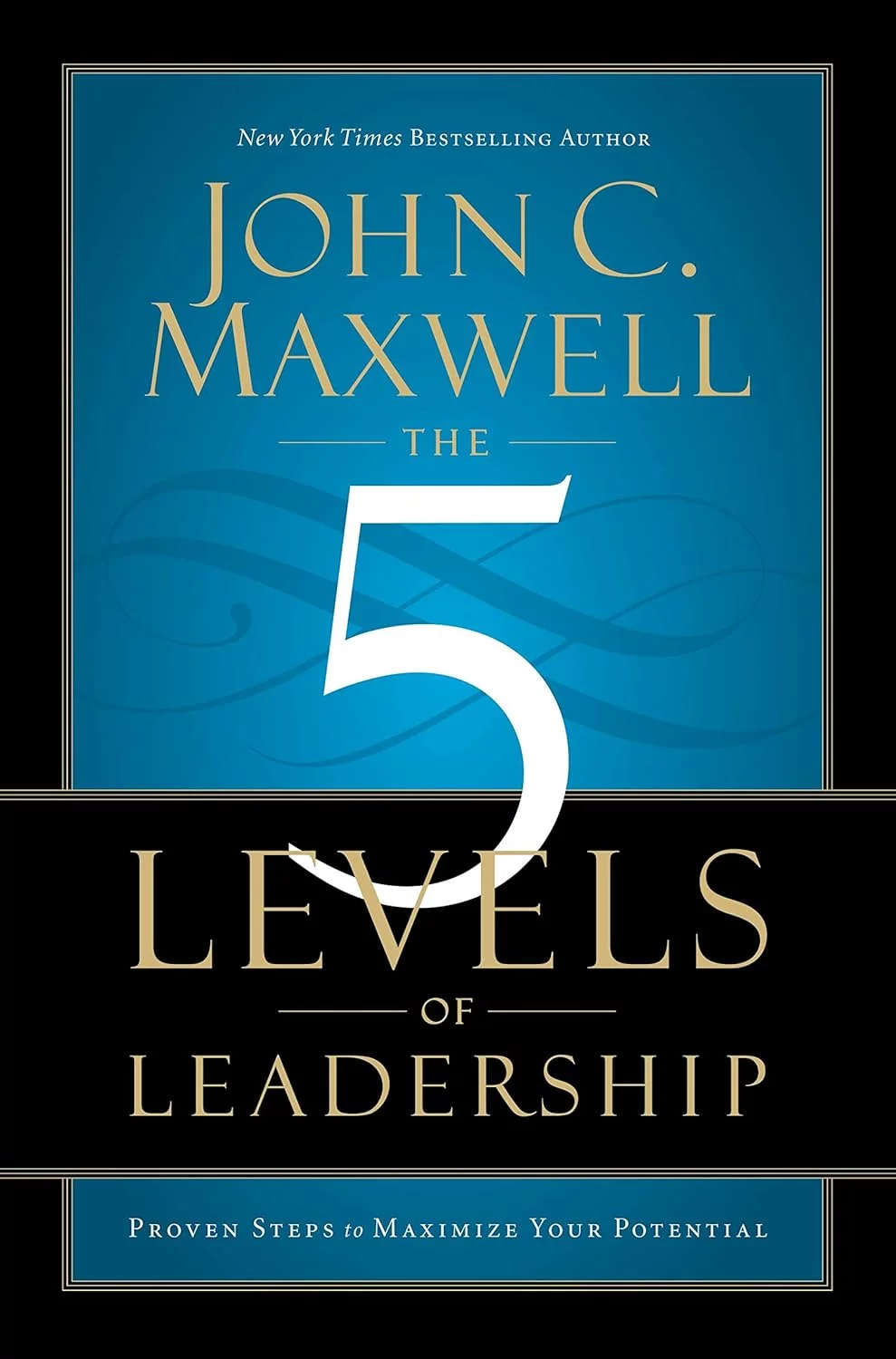
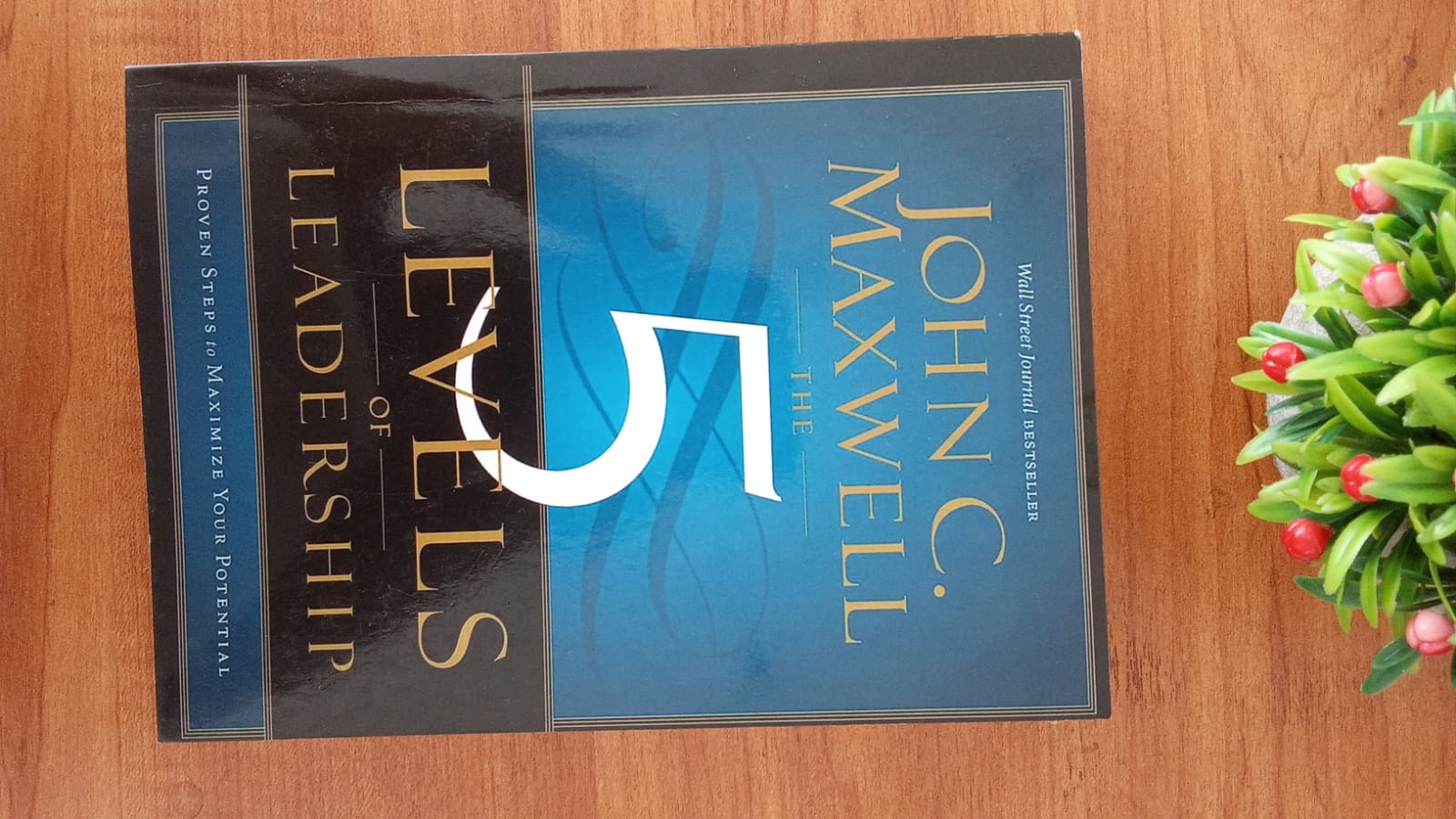

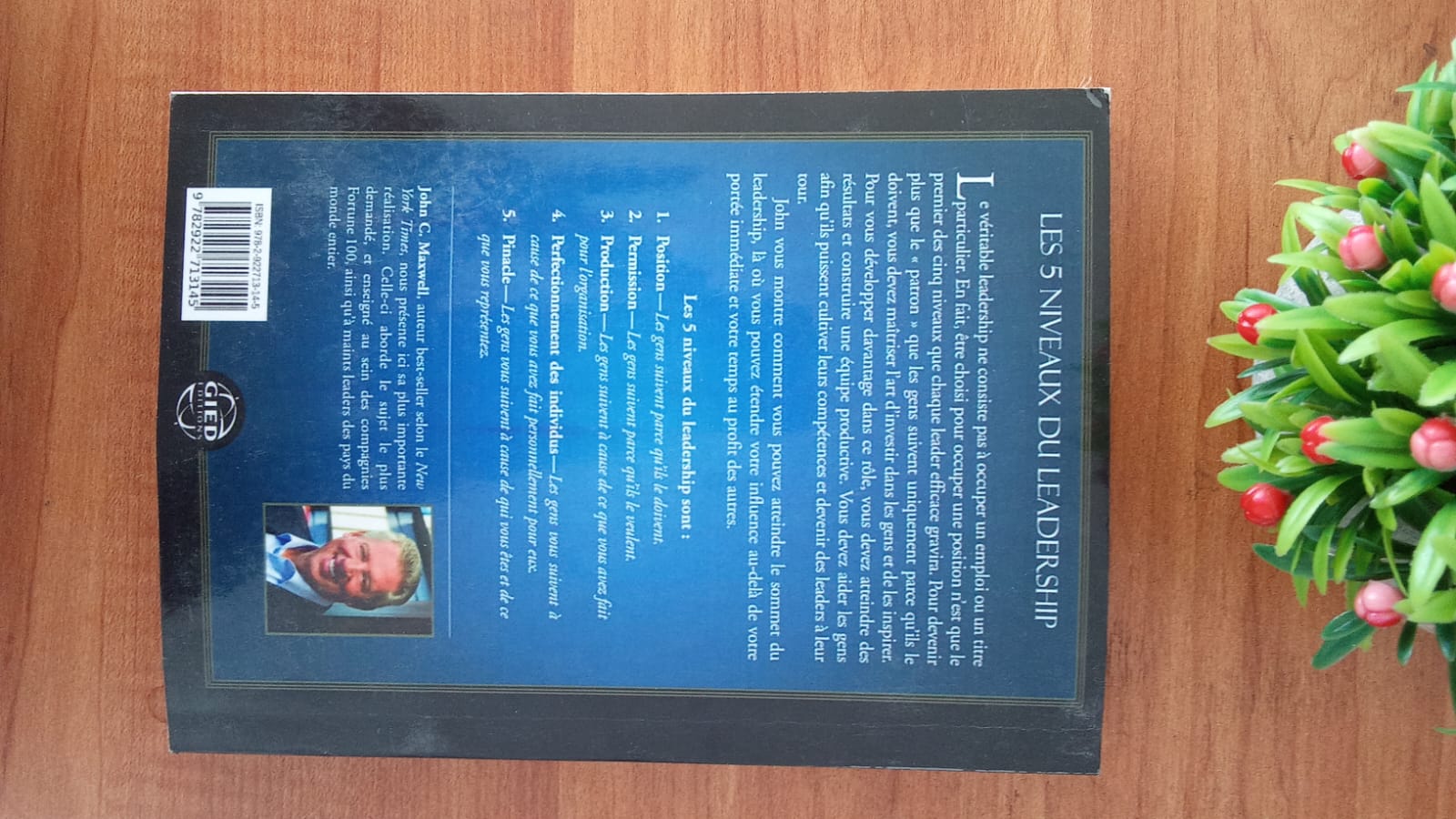
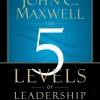



The 5 Levels of Leadership by John C. Maxwell

රු2,250.00
3 X Rs. 750.00 or 8% Cashback with


or 3 X රු750.00 with


or up to 4 X රු562.50 with


5 Levels of Leadership by John C Maxwell is a practical leadership guide that explains how leaders can grow from simply holding a position to becoming influential people who develop other leaders.
Maxwell presents leadership as a five-level journey: Position, Permission, Production, People Development and Pinnacle. Each stage represents a deeper level of influence, from being followed because of a title to being respected for the leaders and legacy you have developed.
With practical insights and examples, the book is valuable for managers, entrepreneurs, supervisors, team leaders and anyone who wants to improve their ability to influence and develop others.
Product details:
- Full title: The 5 Levels of Leadership
- Subtitle: Proven Steps to Maximize Your Potential
- Author: John C. Maxwell
- Publisher/Imprint: Center Street
- Format: Trade Paperback
- Pages: 304
- Language: English
- ISBN-13: 9781599953632
- ISBN-10: 1599953633
- Publication date: 3 September 2013
- Dimensions: 20.3 × 2.0 × 13.2 cm
- Weight: Approximately 260 g
- Categories: Leadership, Management, Business and Personal Development
- Key themes: Influence, relationships, results, team development and leadership growth
3 in stock
Here is your full book-style content written in the same structure and tone
A Practical Guide to Becoming an Effective Leader – The 5 Levels of Leadership by John C. Maxwell
5 Levels of Leadership by John C Maxwell is a practical guide for anyone who wants to move beyond simply having a leadership title and become someone people genuinely choose to follow. John C. Maxwell presents leadership as a process of growth, showing that holding a managerial position is only the beginning.
The book introduces five distinct levels of leadership: Position, Permission, Production, People Development and Pinnacle. Each level represents a deeper form of influence and requires leaders to develop new skills, behaviours and relationships.
Rather than treating leadership as something people either naturally possess or do not, Maxwell presents it as something that can be intentionally developed.
5 Levels of Leadership by John C Maxwell
5 Levels of Leadership by John C Maxwell provides a clear framework for understanding how leadership influence grows.
The five levels are:
- Position
- Permission
- Production
- People Development
- Pinnacle
A leader may begin with authority because of a job title, but effective leadership requires much more than authority. As leaders progress, they build stronger relationships, produce meaningful results, develop other people and eventually establish influence that extends beyond their immediate position.
Level 1 – Position
Position is the starting point of leadership.
At this level, people follow because the leader has been given formal authority. Someone may become a manager, supervisor, director or team leader and therefore receive responsibility for other people.
A title can give a person authority, but it does not automatically create trust or respect.
A positional leader may be able to tell employees what must be done, but relying only on authority can limit engagement.
Questions for leaders at this stage include:
- How well do I understand my responsibilities?
- Do I depend too heavily on my title?
- Do team members trust my decisions?
- Am I learning how to influence people?
- What skills do I need to develop next?
The goal is not to reject positional authority. Formal authority is necessary in many organisations. The challenge is to build leadership qualities beyond the title.
Level 2 – Permission
The second stage is Permission.
At this level, relationships become much more important. People begin following because they want to, not simply because organisational rules require them to.
Leaders develop stronger connections by:
- Listening
- Showing respect
- Communicating clearly
- Understanding team members
- Building trust
- Supporting others
- Demonstrating consistency
Strong relationships can create a healthier working environment because people feel recognised rather than treated simply as resources.
5 Levels of Leadership by John C Maxwell demonstrates that leadership is deeply connected with relationships.
A leader who knows team members, understands their strengths and communicates effectively is often in a better position to influence them.
Build Trust Before Expecting Influence
Trust is essential to meaningful leadership.
Employees observe whether a leader:
- Keeps commitments
- Takes responsibility
- Communicates honestly
- Treats people fairly
- Gives credit appropriately
- Responds consistently
- Supports the team during difficulty
Trust is usually built gradually through repeated behaviour.
One impressive speech cannot replace months of inconsistent leadership. Likewise, a title cannot force genuine respect.
Leaders therefore need to think about how their everyday actions influence the way people perceive them.
Level 3 – Production
Strong relationships alone are not enough. Leaders must also produce results.
The third level, Production, focuses on achieving meaningful outcomes.
Effective leaders create momentum by helping teams accomplish important goals. Results demonstrate that leadership is producing something useful for the organisation.
This might involve:
- Increasing sales
- Improving service
- Completing projects
- Reducing unnecessary costs
- Solving operational problems
- Improving productivity
- Meeting deadlines
- Raising quality
- Achieving strategic targets
Leaders who consistently produce results can strengthen their credibility.
Team members can see that the leader does not simply talk about success but helps create it.
Lead by Example
At the Production level, personal example becomes particularly important.
A leader cannot reasonably expect discipline, responsibility or commitment from a team while demonstrating the opposite behaviour personally.
Leaders should consider whether they model:
- Reliability
- Preparation
- Accountability
- Professionalism
- Problem solving
- Continuous improvement
- Respect
- Commitment to results
This does not mean leaders must perform every employee’s job themselves.
Instead, they should demonstrate the standards and attitudes they expect throughout the organisation.
Create Momentum
Successful leadership can create momentum.
When teams begin achieving results, confidence can increase. People see evidence that their work matters and that progress is possible.
Leaders can strengthen this momentum by:
- Setting clear goals.
- Defining responsibilities.
- Tracking progress.
- Recognising achievements.
- Identifying problems early.
- Removing unnecessary obstacles.
- Learning from setbacks.
- Celebrating meaningful progress.
Results can make future goals feel more achievable.
Level 4 – People Development
The fourth stage focuses on developing other people.
A leader’s impact becomes significantly greater when they stop being the only person capable of leading.
People Development involves helping team members improve their capabilities and preparing some of them to become leaders themselves.
This may include:
- Coaching
- Mentoring
- Delegating meaningful responsibility
- Giving constructive feedback
- Providing training
- Creating development opportunities
- Identifying potential leaders
- Allowing people to make decisions
- Supporting career development
5 Levels of Leadership by John C Maxwell emphasises that developing people expands a leader’s influence.
A team becomes stronger when leadership ability is distributed instead of concentrated in one person.
Develop Leaders, Not Just Followers
There is an important difference between creating followers and developing leaders.
A leader who creates only followers may remain necessary for every decision.
A leader who develops other leaders creates people capable of solving problems, guiding teams and producing results independently.
Managers can begin by identifying employees who demonstrate qualities such as:
- Responsibility
- Initiative
- Reliability
- Communication ability
- Willingness to learn
- Problem-solving skills
- Positive influence
- Consistency
Potential leaders can then be given progressively greater responsibility with suitable guidance.
Delegate Meaningful Responsibility
Delegation is an important part of developing people.
Simply giving someone unwanted tasks is not the same as leadership development.
Effective delegation may involve giving a team member responsibility for:
- Managing a small project
- Leading a meeting
- Solving an operational problem
- Training another employee
- Coordinating a process
- Making defined decisions
- Reporting results
Leaders should provide appropriate authority along with responsibility.
When employees are never allowed to make decisions, their leadership abilities have limited opportunity to develop.
Give Useful Feedback
People development also requires feedback.
Useful feedback should be:
- Specific
- Timely
- Respectful
- Actionable
- Connected to behaviour or results
Instead of simply saying that someone performed poorly, a leader should explain what happened, why it matters and what could be improved.
Positive feedback is equally valuable.
Recognising effective behaviour helps employees understand what they should continue doing.
Level 5 – Pinnacle
Pinnacle is the highest of Maxwell’s five leadership levels.
At this stage, influence reflects a long record of results, developing people and building leaders.
Pinnacle leadership is not achieved simply through seniority or a prestigious title. It represents influence created over time.
Leaders at this stage can have an impact beyond their immediate team because they have developed other capable leaders who continue influencing additional people.
The focus moves increasingly toward legacy.
Leadership Is a Journey
One of the most useful concepts in 5 Levels of Leadership by John C Maxwell is that leadership growth is a journey rather than a single achievement.
Receiving a promotion does not mean someone has finished learning how to lead.
Even experienced managers can improve:
- Communication
- Decision making
- Emotional awareness
- Coaching
- Delegation
- Strategic thinking
- Team development
- Conflict management
- Accountability
- Relationship building
Leadership development therefore requires ongoing reflection and practice.
Different Relationships May Be at Different Levels
A leader may not have the same level of influence with every person.
For example, a manager may have strong trust with one employee while another employee follows primarily because of organisational authority.
This means leadership requires attention to individual relationships.
Managers can ask:
- How strong is my relationship with this person?
- Do they trust me?
- Have we achieved meaningful results together?
- Am I helping them develop?
- What can I do to improve this relationship?
This makes the framework useful for evaluating leadership at a more practical level.
Useful for Managers and Team Leaders
5 Levels of Leadership by John C Maxwell is especially relevant for:
- Managers
- Supervisors
- Team leaders
- Entrepreneurs
- Business owners
- Executives
- Project managers
- Department heads
- Emerging leaders
- Professionals preparing for management
New managers can use the framework to understand why receiving authority is only the first step.
Experienced leaders can use it to evaluate whether they are producing results and developing future leaders.
Apply the Five Levels at Work
Readers can turn the framework into a practical leadership exercise.
Start by asking:
- Which leadership level best describes me today?
- Am I relying too heavily on authority?
- How strong are my relationships?
- What measurable results has my team produced?
- Who am I actively developing?
- Who could become a future leader?
- What responsibilities can I delegate?
- How can I improve my influence?
- What leadership habit should I change?
- What legacy do I want to create?
These questions can help convert the book’s concepts into specific actions.
Build Stronger Teams
Leadership development affects more than the individual leader.
When leaders improve communication, relationships, performance and people development, the entire team can benefit.
Strong teams usually need:
- Clear direction
- Defined responsibilities
- Trust
- Communication
- Accountability
- Competence
- Cooperation
- Opportunities for development
A leader’s role is to help create an environment where those qualities can grow.
About John C. Maxwell
John C. Maxwell is an internationally known author, speaker and leadership teacher whose work focuses on leadership, personal growth, teamwork and influence.
His leadership books include titles such as The 21 Irrefutable Laws of Leadership, Developing the Leader Within You, Leadershift and The 5 Levels of Leadership.
His writing frequently presents leadership concepts through structured frameworks that managers and aspiring leaders can apply in professional and organisational settings.
Product Details
Product title: The 5 Levels of Leadership
Subtitle: Proven Steps to Maximize Your Potential
SEO product title: 5 Levels of Leadership by John C Maxwell
Author: John C. Maxwell
Publisher/Imprint: Center Street
Format: Trade Paperback
Language: English
Page count: 304 pages
ISBN-13: 9781599953632
ISBN-10: 1599953633
Publication date: 3 September 2013
Dimensions: Approximately 203 × 132 × 20 mm
Weight: Approximately 260 grams
Categories: Leadership, Business, Management and Personal Development
Key themes: Influence, relationships, results, developing leaders and leadership growth
Why Choose 5 Levels of Leadership by John C Maxwell?
5 Levels of Leadership by John C Maxwell provides a simple but powerful framework for understanding how leadership influence develops.
Readers learn that leadership begins with Position but can grow through Permission, Production and People Development before reaching Pinnacle. Each stage challenges leaders to move beyond authority and become more effective at building relationships, creating results and developing others.
For managers, entrepreneurs, supervisors and aspiring leaders who want a structured approach to professional development, 5 Levels of Leadership by John C Maxwell is a valuable addition to a business and leadership bookshelf.
Explore our complete business and leadership books collection to discover more titles about management, teamwork, communication, influence and developing successful organisations.
View the official publication details for
The 5 Levels of Leadership by John C. Maxwell
.
Be the first to review “The 5 Levels of Leadership by John C. Maxwell”
Related products
-17%
Out of stock
Non-Fiction & Knowledge
Original price was: රු2,900.00.රු2,400.00Current price is: රු2,400.00.
3 X Rs. 800.00 or 8% Cashback with
or 3 X රු800.00 with
or up to 4 X රු600.00 with
-34%

Non-Fiction & Knowledge
Original price was: රු2,250.00.රු1,490.00Current price is: රු1,490.00.
3 X Rs. 496.67 or 8% Cashback with
or 3 X රු496.67 with
or up to 4 X රු372.50 with
-39%

Out of stock
Self-Help & Psychology
Original price was: රු2,450.00.රු1,500.00Current price is: රු1,500.00.
3 X Rs. 500.00 or 8% Cashback with
or 3 X රු500.00 with
or up to 4 X රු375.00 with

Out of stock
Self-Help & Psychology
රු1,900.00
3 X Rs. 633.33 or 8% Cashback with
or 3 X රු633.33 with
or up to 4 X රු475.00 with

රු2,000.00
3 X Rs. 666.67 or 8% Cashback with
or 3 X රු666.67 with
or up to 4 X රු500.00 with
-24%

Out of stock
Non-Fiction & Knowledge
Original price was: රු2,500.00.රු1,900.00Current price is: රු1,900.00.
3 X Rs. 633.33 or 8% Cashback with
or 3 X රු633.33 with
or up to 4 X රු475.00 with
Non-Fiction & Knowledge
රු2,250.00
3 X Rs. 750.00 or 8% Cashback with
or 3 X රු750.00 with
or up to 4 X රු562.50 with

Out of stock
Non-Fiction & Knowledge
රු1,900.00
3 X Rs. 633.33 or 8% Cashback with
or 3 X රු633.33 with
or up to 4 X රු475.00 with
Reviews
There are no reviews yet.