
No products in the cart.
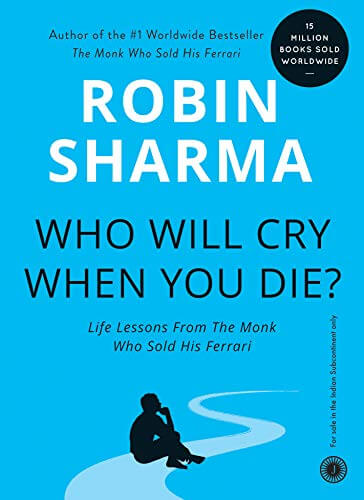


Who Will Cry When You Die? by Robin Sharma
Who Will Cry When You Die by Robin Sharma is a practical self-help book about living with more purpose, discipline, gratitude, happiness, and meaning.
The book contains 101 short life lessons.
Each chapter focuses on a simple idea that readers can apply to everyday life.
About Who Will Cry When You Die
Who Will Cry When You Die asks readers to think about the kind of life they are creating.
Are you living intentionally?
Are you spending time on what really matters?
Are you becoming the person you want to be?
Robin Sharma encourages readers to stop waiting for the perfect moment.
He argues that meaningful living begins with small daily choices.
7 Powerful Lessons from Who Will Cry When You Die
1. Discover Your Calling
One of the strongest ideas in Who Will Cry When You Die is the importance of purpose.
Sharma encourages readers to identify the work, contribution, or mission that gives life meaning.
A clear sense of purpose can make everyday decisions easier.
It gives direction to effort.
2. Start Your Day Well
The way you begin your morning can influence the rest of your day.
The book encourages quiet reflection, reading, exercise, and planning.
Instead of immediately reacting to messages or problems, create space to think.
A calmer beginning can improve focus.
3. Protect Your Time
Time is one of life’s most valuable resources.
Money can often be earned again.
Time cannot.
Sharma encourages readers to stop wasting hours on activities that add little value.
He asks readers to become more intentional about how their days are used.
4. See Problems Differently
Difficult experiences can become teachers.
That does not mean every problem is good.
It means hardship can still reveal lessons.
The book encourages readers to ask what can be learned from setbacks.
This can create resilience.
5. Invest in Relationships
Success feels empty when important relationships are neglected.
Family matters.
Friendship matters.
Kindness matters.
The book encourages readers to give people attention while they are still present.
Small acts of care can create lasting memories.
6. Enjoy the Journey
People often postpone happiness.
They tell themselves life will begin after the next promotion.
The next goal.
The next purchase.
Sharma encourages readers to enjoy the process.
Achievement matters.
But so does the life happening while you pursue it.
7. Build a Legacy
The title asks an important question.
How will people remember you?
Legacy is not only about fame.
It can be found in kindness.
Character.
Service.
Love.
And the way you make other people feel.
101 Short Life Lessons
One of the strengths of the book is its structure.
The chapters are brief.
Readers do not need to finish the book in one sitting.
A single chapter can be read in a few minutes.
That makes the book suitable for daily reading.
Small Changes Matter
The book does not depend on one dramatic life transformation.
Instead, Sharma focuses on smaller habits.
Wake up earlier.
Read more.
Reflect.
Spend time with people you love.
Reduce unnecessary worry.
Small improvements can compound.
Purposeful Living
Many people become busy without asking why.
They work.
Travel.
Buy things.
Complete tasks.
But activity does not always equal meaning.
Who Will Cry When You Die encourages readers to connect daily actions with larger values.
Gratitude
Gratitude appears throughout the book.
It shifts attention away from what is missing.
Readers are encouraged to notice what is already good.
Health.
Relationships.
Opportunities.
Time.
Simple appreciation can change perspective.
Discipline
Motivation comes and goes.
Discipline is more reliable.
Sharma encourages readers to build habits that continue even when enthusiasm disappears.
This can apply to exercise.
Reading.
Work.
Savings.
Relationships.
And personal growth.
Silence and Reflection
Modern life can become noisy.
Phones.
News.
Work.
Messages.
Social media.
The book encourages regular periods of quiet.
Reflection allows people to notice what they are thinking and where their life is heading.
Stop Worrying About Everything
Worry can consume time without solving problems.
Sharma encourages readers to separate what can be controlled from what cannot.
Action can help with the first category.
Acceptance may be necessary for the second.
This can reduce unnecessary mental pressure.
Personal Growth
Growth should continue throughout life.
Read.
Learn.
Ask questions.
Develop skills.
Challenge assumptions.
The book encourages readers to treat personal development as an ongoing responsibility.
Relationships and Presence
Being physically present is not always enough.
People also need attention.
The book encourages readers to listen properly.
Put distractions away.
Notice small moments.
Presence can strengthen relationships more than expensive gestures.
The Importance of Kindness
Kindness does not require wealth.
A conversation can help.
A compliment can help.
A small favor can help.
Sharma repeatedly emphasizes the impact of simple positive actions.
Living Without Regret
A meaningful life requires choices.
Some opportunities will be missed.
Some decisions will be imperfect.
But the book encourages readers to avoid living entirely through fear.
Trying, learning, and growing can reduce future regret.
Health and Energy
Success becomes harder without energy.
Sharma encourages readers to protect physical wellbeing.
Exercise.
Rest.
Good routines.
And mental recovery.
Health supports every other part of life.
Learning from the Past
The past cannot be changed.
But it can be used.
Mistakes can become lessons.
Pain can create understanding.
Successes can reveal strengths.
Sharma encourages readers to honor the past without becoming trapped by it.
Happiness and Simplicity
More is not always better.
More work.
More possessions.
More commitments.
More noise.
Sometimes a simpler life can create greater peace.
The book encourages readers to decide what is genuinely important.
Who Should Read This Book?
Who Will Cry When You Die is ideal for readers interested in self-help, personal development, motivation, mindfulness, purpose, and life lessons.
The short chapters make it especially suitable for beginners.
Readers who enjoyed The Monk Who Sold His Ferrari may also appreciate this book.
It can also work well as a daily reflection book.
About Robin Sharma
Robin Sharma is an author and leadership expert known for books about personal mastery and purposeful living.
His books include The Monk Who Sold His Ferrari, The 5AM Club, The Greatness Guide, and Who Will Cry When You Die?
His official site describes this book as a collection of 101 practical lessons on purposeful living, personal mastery, and spiritual growth.
Readers can learn more through the official Robin Sharma books page.
Product Details
Title: Who Will Cry When You Die?
Subtitle: Life Lessons from The Monk Who Sold His Ferrari
Author: Robin Sharma
Genre: Self-Help / Personal Development / Motivation
Language: English
Number of Lessons: 101
Common Jaico Paperback Edition
Publisher: Jaico Publishing House
ISBN-13: 9788179922323
Format: Paperback
Pages: 248
Release Date: June 15, 2006
Jaico lists this English paperback edition at 248 pages.
Other Edition
The original HarperCollins edition is also widely listed.
ISBN-13: 9780006385783
Publisher: HarperCollins
Publication Year: 1999
Pages: Approximately 225–256 depending on listing and printing.
Different editions may have different page counts and cover designs.
Always check the barcode on your physical copy before entering final WooCommerce specifications.
Explore More Self-Help Books
Who Will Cry When You Die is ultimately about living deliberately.
Use your time well.
Care for people.
Keep learning.
Protect your health.
Serve others.
And create a life that means something.
Readers can explore more Self-Help & Psychology Books at Bargain Books.
For readers looking for simple, practical, and powerful life lessons, Who Will Cry When You Die is an easy-to-read guide to building a more meaningful life.
| Author | Robin Sharma |
|---|---|
| Language | English |
| Type | Paperback Printed Book (Second Quality Copy) |
Be the first to review “Who will cry when you die by Robin Sharma”
Related products
-24%
Non-Fiction & Knowledge
Original price was: රු2,300.00.රු1,750.00Current price is: රු1,750.00.
3 X Rs. 583.33 or 8% Cashback with


or 3 X රු583.33 with


or up to 4 X රු437.50 with

-24%
Out of stock
Non-Fiction & Knowledge
Original price was: රු2,100.00.රු1,600.00Current price is: රු1,600.00.
3 X Rs. 533.33 or 8% Cashback with
or 3 X රු533.33 with
or up to 4 X රු400.00 with
Non-Fiction & Knowledge
රු1,950.00
3 X Rs. 650.00 or 8% Cashback with
or 3 X රු650.00 with
or up to 4 X රු487.50 with
-24%
Out of stock
Non-Fiction & Knowledge
Original price was: රු2,500.00.රු1,900.00Current price is: රු1,900.00.
3 X Rs. 633.33 or 8% Cashback with
or 3 X රු633.33 with
or up to 4 X රු475.00 with
-34%
Non-Fiction & Knowledge
Original price was: රු2,250.00.රු1,490.00Current price is: රු1,490.00.
3 X Rs. 496.67 or 8% Cashback with
or 3 X රු496.67 with
or up to 4 X රු372.50 with
-19%

Out of stock
Biography
Original price was: රු2,400.00.රු1,950.00Current price is: රු1,950.00.
3 X Rs. 650.00 or 8% Cashback with
or 3 X රු650.00 with
or up to 4 X රු487.50 with
Out of stock
Self-Help & Psychology
රු2,200.00
3 X Rs. 733.33 or 8% Cashback with
or 3 X රු733.33 with
or up to 4 X රු550.00 with
Out of stock
Non-Fiction & Knowledge
රු1,800.00
3 X Rs. 600.00 or 8% Cashback with
or 3 X රු600.00 with
or up to 4 X රු450.00 with
Reviews
There are no reviews yet.