
No products in the cart.
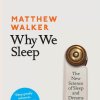
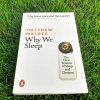




Why We Sleep by Matthew Walker
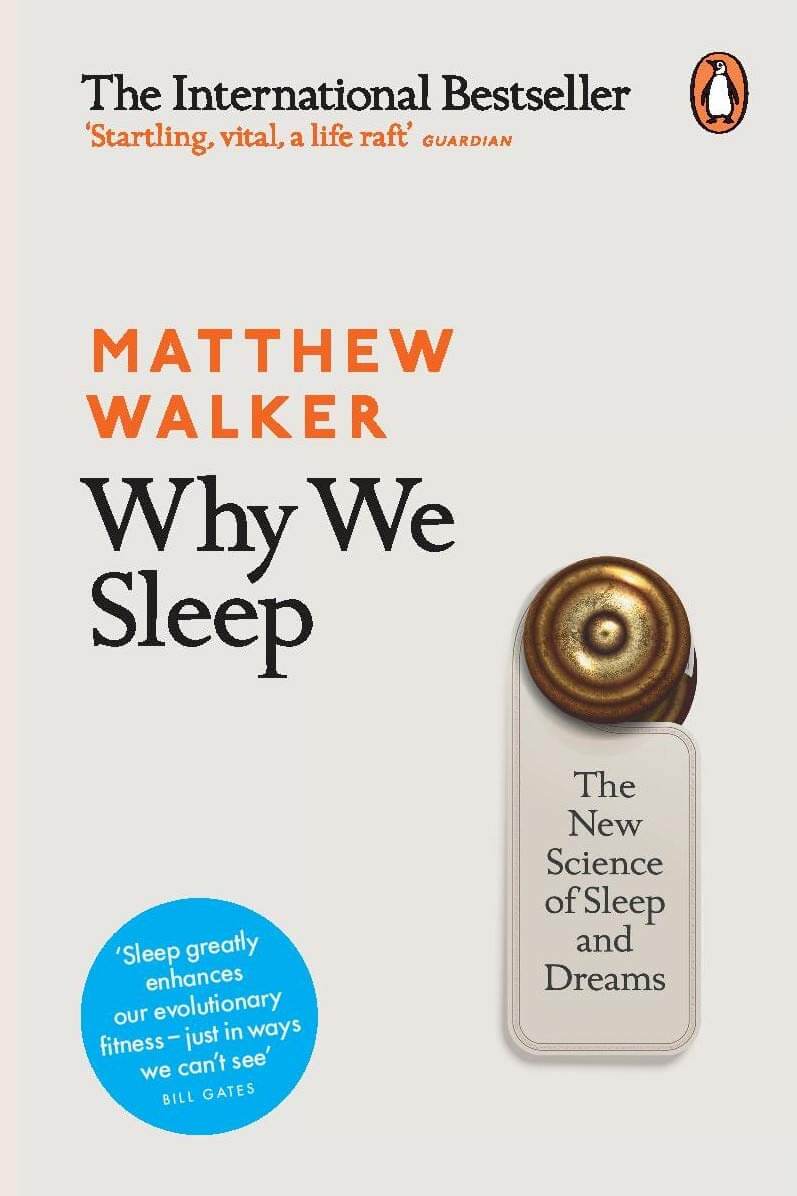
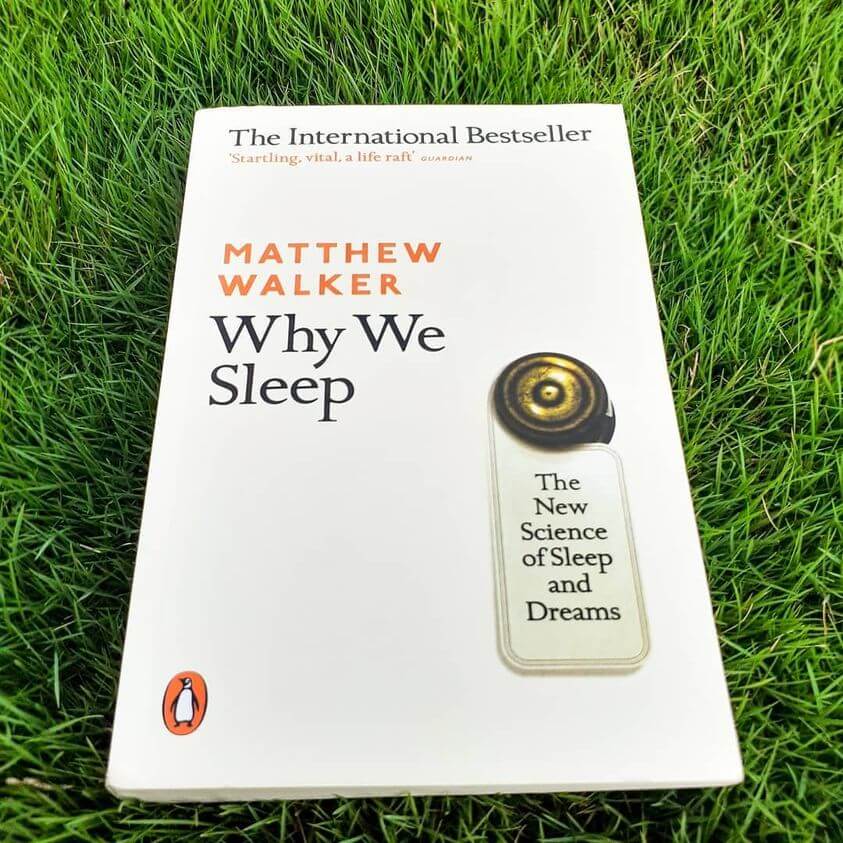
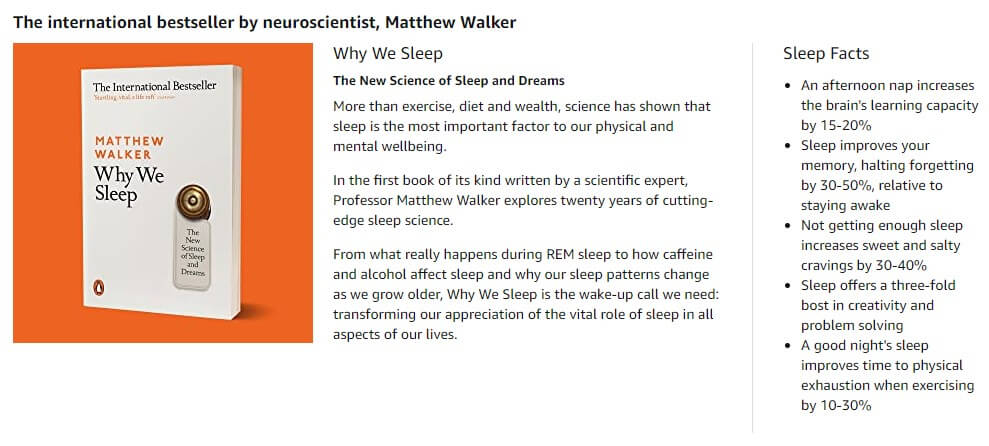
Why We Sleep by Matthew Walker is a fascinating science book about sleep, dreams, memory, health, performance, and what happens when we do not get enough rest.
The book explains why sleep is not wasted time.
It is an active biological process that supports the brain and body.
Walker explores sleep from several angles.
He looks at memory.
Learning.
Emotion.
Dreaming.
Caffeine.
Alcohol.
Age.
And sleep deprivation.
About Why We Sleep
Why We Sleep asks one of the most basic questions in human biology.
Why do we spend so much of our lives asleep?
The answer is more complex than simply “to rest.”
Sleep affects how the brain processes information.
It influences attention.
Memory.
Mood.
And physical recovery.
Walker explains how different stages of sleep perform different functions.
7 Powerful Reasons to Read Why We Sleep
1. It Explains Why Sleep Matters
One of the biggest strengths of Why We Sleep is that it makes sleep science understandable.
Walker explains why sleep matters for both the brain and body.
The book covers memory, concentration, learning, emotional balance, and physical health.
This makes sleep feel less like downtime and more like an essential biological process.
2. You Learn About REM and NREM Sleep
Sleep is not one single state.
The brain moves through different stages.
These include non-REM sleep and REM sleep.
Each stage has different characteristics.
Walker explains how these cycles change throughout the night.
He also explores how they may contribute to memory, learning, and dreaming.
3. It Explains Sleep and Memory
Sleep plays an important role in learning.
The brain needs time to process information.
Walker discusses how sleep before learning can affect attention.
He also explains how sleep after learning may help strengthen memories.
This makes the book especially relevant for students.
4. It Explores the Effects of Sleep Deprivation
One of the strongest themes in Why We Sleep is what happens when people consistently do not get enough sleep.
Attention may decline.
Reaction time may become slower.
Mood can change.
Decision-making can become harder.
The book uses research to show why chronic sleep loss should not be treated as a sign of productivity.
5. It Explains Caffeine and Alcohol
Many people use caffeine to stay awake.
Others use alcohol because they believe it helps them sleep.
Walker explains why both substances can affect sleep quality.
Caffeine can remain active in the body for hours.
Alcohol may make someone feel sleepy but can disrupt normal sleep structure.
Understanding this can help readers think differently about evening habits.
6. Dreams Become Easier to Understand
Dreaming is another major topic.
Walker examines REM sleep and dream activity.
He discusses theories about emotion, memory, and creativity.
Dreams remain scientifically complex.
But the book gives readers an accessible introduction to why dreaming may matter.
7. It Encourages Better Sleep Habits
Why We Sleep is not only theoretical.
The book also includes practical ideas.
Regular sleep schedules matter.
Light matters.
Caffeine timing matters.
Alcohol matters.
Temperature matters.
Creating a consistent environment can make good sleep easier.
What Happens During Sleep?
Sleep may look passive from the outside.
The brain is still active.
Different stages perform different functions.
Deep non-REM sleep is associated with slow brain waves.
REM sleep has a different pattern.
During REM sleep, vivid dreaming is common.
The brain moves through these stages repeatedly during the night.
Circadian Rhythm
The body has an internal biological clock.
This is known as the circadian rhythm.
It helps regulate sleep and wakefulness.
Light is one of the strongest signals affecting this rhythm.
Morning light can help reinforce wakefulness.
Bright light late at night can delay sleep for some people.
Melatonin
Melatonin is a hormone involved in sleep timing.
It helps signal that the biological night has begun.
Walker explains that melatonin does not function like a traditional sleeping pill.
Its role is more closely related to timing.
This distinction is useful for understanding how the body prepares for sleep.
Caffeine
Caffeine blocks the effects of adenosine.
Adenosine is a chemical that builds sleep pressure while we are awake.
This is one reason coffee can temporarily reduce feelings of tiredness.
But caffeine does not remove the underlying sleep need.
It delays the sensation.
That is why late-day caffeine can sometimes affect bedtime.
Alcohol and Sleep
Alcohol can make people feel drowsy.
That does not necessarily mean the sleep is high quality.
Walker discusses how alcohol can fragment sleep.
It may also affect REM sleep.
For readers who use alcohol as a sleep aid, this section can be especially useful.
Sleep and Learning
Students often sacrifice sleep to study longer.
The book questions that strategy.
Learning depends on more than time spent reading.
The brain must also process and store information.
Adequate sleep can support attention and memory.
That makes sleep part of learning rather than an interruption to it.
Sleep and Emotion
Poor sleep can affect mood.
People may become more irritable.
More reactive.
Less patient.
Emotional regulation can become harder.
Walker explains how sleep and emotional processing are closely connected.
This is one reason exhaustion can make ordinary problems feel much larger.
Sleep Across the Lifespan
Sleep changes with age.
Children need more sleep than adults.
Teenagers often experience later sleep timing.
Older adults may experience changes in sleep quality and sleep structure.
Why We Sleep explains these differences in an accessible way.
Sleep and Performance
Athletes care about training.
Nutrition.
Recovery.
Sleep belongs in that same discussion.
Adequate rest supports recovery and concentration.
It can also affect reaction time and decision-making.
The book argues that reducing sleep to gain more waking hours can backfire.
The Problem With “I’ll Sleep Later”
Many people treat sleep like something they can easily recover later.
The book challenges that idea.
One late night may be manageable.
Repeated sleep restriction is different.
The effects can accumulate.
This is why regular sleep matters.
Practical Sleep Habits
One of the most useful parts of Why We Sleep is the focus on everyday habits.
Keep a consistent bedtime.
Keep a consistent wake time.
Reduce late caffeine.
Avoid relying on alcohol for sleep.
Keep the bedroom cool and dark.
Use light exposure strategically.
Give yourself enough time in bed.
These ideas sound simple.
But consistency is often more important than complexity.
Sleep and Modern Life
Modern life creates many barriers to sleep.
Artificial light.
Phones.
Late-night work.
Stress.
Early schedules.
Caffeine.
Travel.
Shift work.
The book explains how these pressures can conflict with biological rhythms.
A Book About More Than Sleep
Why We Sleep is really a book about daily functioning.
Sleep affects how we think.
How we feel.
How we learn.
How we work.
And how we interact with other people.
That makes the subject relevant to almost everyone.
Who Should Read This Book?
Why We Sleep is ideal for readers interested in psychology, neuroscience, health, productivity, learning, and personal development.
Students may find it useful.
Parents may find the sections on age and sleep interesting.
Professionals who regularly sacrifice sleep for work may also find it eye-opening.
Important Health Note
This book discusses sleep science and health research.
It should not be used to diagnose or treat insomnia, sleep apnea, depression, or other medical conditions.
Persistent sleep problems deserve professional medical evaluation.
Individual sleep needs can also vary.
About Matthew Walker
Matthew Walker is a neuroscientist and sleep researcher.
His official site describes him as a professor of neuroscience and biomedical engineering at the University of Texas at Dallas, where he directs sleep research at the Center for BrainHealth.
He has published extensively on sleep, brain function, and health.
Readers can learn more through the official Matthew Walker website.
Product Details
Title: Why We Sleep
Subtitle: The New Science of Sleep and Dreams
Author: Matthew Walker
Genre: Science / Psychology / Health / Sleep
Language: English
Common Penguin Paperback Edition
Publisher: Penguin
ISBN-13: 9780141983769
Format: Paperback
Pages: 368
Publication Date: January 4, 2018
Dimensions: 196 × 130 × 23 mm
Weight: 282 g
Penguin confirms these specifications for the paperback edition.
Important Edition Note
Different international editions may have different covers, ISBNs, dimensions, and page counts.
Always check the barcode printed on your physical copy before entering final WooCommerce specifications.
Explore More Psychology and Self-Help Books
Why We Sleep makes a strong case that sleep should be treated as a core part of daily health and performance.
It affects memory.
Mood.
Learning.
Attention.
Recovery.
And quality of life.
Readers can explore more Self-Help & Psychology Books at Bargain Books.
You can also explore Non-Fiction & Knowledge Books at Bargain Books.
For readers who want to understand what happens when we sleep and why rest matters so much, Why We Sleep is an informative and thought-provoking introduction to the science of sleep.
| Author | Matthew Walker |
|---|---|
| Language | English |
| Type | Paperback Printed Book (Second Quality Copy) |
Be the first to review “Why We Sleep by Matthew Walker”
Related products
-26%
Out of stock
Non-Fiction & Knowledge
Original price was: රු2,000.00.රු1,490.00Current price is: රු1,490.00.
3 X Rs. 496.67 or 8% Cashback with


or 3 X රු496.67 with


or up to 4 X රු372.50 with

-24%
Non-Fiction & Knowledge
Original price was: රු2,300.00.රු1,750.00Current price is: රු1,750.00.
3 X Rs. 583.33 or 8% Cashback with
or 3 X රු583.33 with
or up to 4 X රු437.50 with
Non-Fiction & Knowledge
රු2,450.00
3 X Rs. 816.67 or 8% Cashback with
or 3 X රු816.67 with
or up to 4 X රු612.50 with
Out of stock
Self-Help & Psychology
රු1,900.00
3 X Rs. 633.33 or 8% Cashback with
or 3 X රු633.33 with
or up to 4 X රු475.00 with
Non-Fiction & Knowledge
රු1,700.00
3 X Rs. 566.67 or 8% Cashback with
or 3 X රු566.67 with
or up to 4 X රු425.00 with
-34%

Non-Fiction & Knowledge
Original price was: රු2,250.00.රු1,490.00Current price is: රු1,490.00.
3 X Rs. 496.67 or 8% Cashback with
or 3 X රු496.67 with
or up to 4 X රු372.50 with
-24%

Out of stock
Non-Fiction & Knowledge
Original price was: රු2,500.00.රු1,900.00Current price is: රු1,900.00.
3 X Rs. 633.33 or 8% Cashback with
or 3 X රු633.33 with
or up to 4 X රු475.00 with
Out of stock
Non-Fiction & Knowledge
රු1,500.00
3 X Rs. 500.00 or 8% Cashback with
or 3 X රු500.00 with
or up to 4 X රු375.00 with
Reviews
There are no reviews yet.