
No products in the cart.

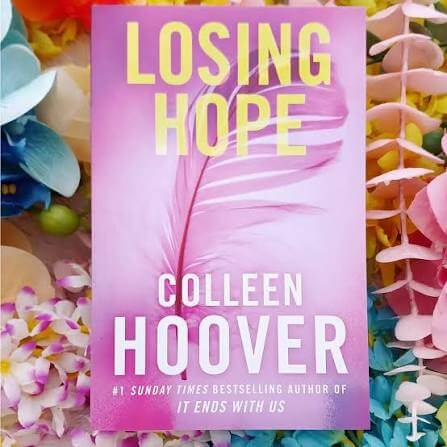
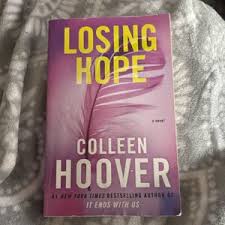




Losing Hope (Hopeless, Book 2) by Colleen Hoover

රු1,750.00
3 X Rs. 583.33 or 8% Cashback with


or 3 X රු583.33 with


or up to 4 X රු437.50 with


Losing Hope by Colleen Hoover revisits the emotional events of Hopeless through Dean Holder’s perspective.
Haunted by the girl he believes he failed to protect, Holder has spent years searching for answers and carrying a burden of guilt. Reconnecting with Sky brings him closer to the truth, but it also forces him to confront painful memories, family grief and emotions he has never fully understood.
This moving companion novel reveals Holder’s hidden thoughts and adds new scenes and context to Sky and Holder’s story. Read Hopeless first to avoid major spoilers and experience the series in its intended order.
4 in stock
Losing Hope (Hopeless, Book 2) by Colleen Hoover
Losing Hope by Colleen Hoover is an emotional companion novel to the bestselling romance Hopeless, retelling its unforgettable story through the perspective of Dean Holder. While many important events will be familiar to readers of the first book, Holder’s memories, private struggles and previously untold experiences give the story a powerful new emotional dimension.
Dean Holder has spent years haunted by the disappearance of a young girl he believes he failed to protect. His inability to find her has shaped his life, leaving him burdened by guilt, unanswered questions and the persistent belief that discovering the truth might finally allow him to move forward.
When Holder reconnects with Sky, he begins to suspect that the person he has been searching for may be closer than he ever imagined. Instead of bringing immediate relief, however, their growing connection forces him to confront memories and emotions he has never been prepared to face.
Readers who experienced Sky’s journey in Hopeless saw Holder as intense, unpredictable and often mysterious. Losing Hope opens the door to everything he kept hidden. His decisions become clearer as the novel explores the guilt, grief and fear behind his behaviour, revealing how deeply the past affected both him and his family.
Losing Hope by Colleen Hoover reveals Holder’s story
This book is more than a straightforward retelling. Colleen Hoover revisits key moments from Hopeless while adding scenes, memories and emotional context that were unavailable from Sky’s point of view. Familiar conversations gain different meanings when readers understand what Holder knew, feared or was trying to conceal.
Holder’s narration also shows how strongly he is affected by the people he believes he could not save. His search for answers has become inseparable from his identity. Even when he appears confident or protective, he is struggling with a sense of responsibility that no young person should have to carry alone.
His relationship with Sky gradually gives him a reason to imagine a future beyond guilt. Yet loving her also means accepting that he cannot control every outcome or repair every wound. He must learn that supporting someone is different from rescuing them and that healing cannot be forced, even when it is desperately wanted.
A story about grief, guilt and redemption
One of the novel’s central themes is survivor’s guilt. Holder repeatedly questions whether different choices could have prevented the painful events that shaped his life. His thoughts demonstrate how grief can distort a person’s understanding of responsibility, encouraging them to blame themselves for circumstances they could not fully control.
The story also explores how trauma affects memory and relationships. People may hide the truth to protect themselves or those they love, but silence can create additional confusion and suffering. As Holder begins to understand the past, he must decide what honesty, forgiveness and redemption genuinely mean.
Family grief plays an especially significant role in his journey. Holder is not dealing with one isolated event but with several interconnected losses. Through his perspective, readers see how pain can spread through a family, changing the ways its members communicate and influencing the decisions they make for years afterwards.
Despite its difficult subject matter, Losing Hope is ultimately concerned with healing. It acknowledges that love cannot erase trauma, but it can provide the trust and companionship needed to begin facing it. Holder and Sky’s connection becomes meaningful because both characters are learning how to live with truths they can no longer avoid.
Should you read Hopeless before Losing Hope?
Hopeless should be read first. Losing Hope reveals important information about Sky, Holder and their shared history, so beginning with this book would spoil several of the first novel’s most significant discoveries.
Readers who have already finished Hopeless will gain the most from Holder’s perspective. Moments that once appeared confusing or emotionally distant become more understandable, while the additional material gives greater depth to his relationships and personal development.
Because the novel revisits some of the same events, it is especially suitable for readers who enjoy companion books told from another character’s point of view. Rather than replacing the original story, it works alongside it, allowing the two narrators’ experiences to form a more complete picture.
Who will enjoy this emotional romance?
Losing Hope is recommended for readers who enjoy emotionally intense contemporary romance, dual-perspective companion novels, damaged but sympathetic characters and stories about confronting painful histories. Fans of Colleen Hoover’s It Ends with Us, November 9, Ugly Love and Reminders of Him are likely to appreciate its combination of romance, grief and personal healing.
The novel contains mature and potentially distressing subject matter, so it is not a light romantic read. Its emotional impact comes from the way Hoover places love beside trauma, allowing moments of tenderness and hope to exist without minimising the seriousness of the characters’ experiences.
About Colleen Hoover
Colleen Hoover is the internationally bestselling author of more than twenty novels, including It Ends with Us, It Starts with Us, Verity, Ugly Love and All Your Perfects. She is known for accessible, emotionally driven stories that combine romance with difficult personal and social themes.
The recommended Hopeless series order is:
- Hopeless
- Losing Hope
- Finding Cinderella
- All Your Perfects
- Finding Perfect
Explore more titles on the official Colleen Hoover website, or discover more contemporary romance books through BookLounge Sri Lanka.
Deeply emotional and revealing, Losing Hope gives readers the opportunity to understand Holder beyond the mystery surrounding him in Hopeless. It is a moving story about guilt, grief, memory and the difficult process of accepting that hope can survive even after life has been permanently changed.
Be the first to review “Losing Hope (Hopeless, Book 2) by Colleen Hoover”
Related products

Needs Category Review
රු1,750.00
3 X Rs. 583.33 or 8% Cashback with
or 3 X රු583.33 with
or up to 4 X රු437.50 with
-17%

Needs Category Review
Original price was: රු30.00.රු25.00Current price is: රු25.00.
3 X Rs. 8.33 or 8% Cashback with
or 3 X රු8.33 with
or up to 4 X රු6.25 with

Needs Category Review
රු1,800.00
3 X Rs. 600.00 or 8% Cashback with
or 3 X රු600.00 with
or up to 4 X රු450.00 with

Needs Category Review
3 X Rs. 0.00 or 8% Cashback with
or 3 X රු0.00 with
or up to 4 X රු0.00 with

Needs Category Review
රු1,900.00
3 X Rs. 633.33 or 8% Cashback with
or 3 X රු633.33 with
or up to 4 X රු475.00 with

Needs Category Review
රු1,750.00
3 X Rs. 583.33 or 8% Cashback with
or 3 X රු583.33 with
or up to 4 X රු437.50 with

Out of stock
Needs Category Review
රු17,900.00
3 X Rs. 5,966.67 or 8% Cashback with
or 3 X රු5,966.67 with
or up to 4 X රු4,475.00 with

Out of stock
Needs Category Review
රු9,500.00
3 X Rs. 3,166.67 or 8% Cashback with
or 3 X රු3,166.67 with
or up to 4 X රු2,375.00 with
Reviews
There are no reviews yet.