
No products in the cart.






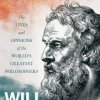
Walden by Henry David Thoreau

රු1,950.00
3 X Rs. 650.00 or 8% Cashback with


or 3 X රු650.00 with


or up to 4 X රු487.50 with


Short Description:
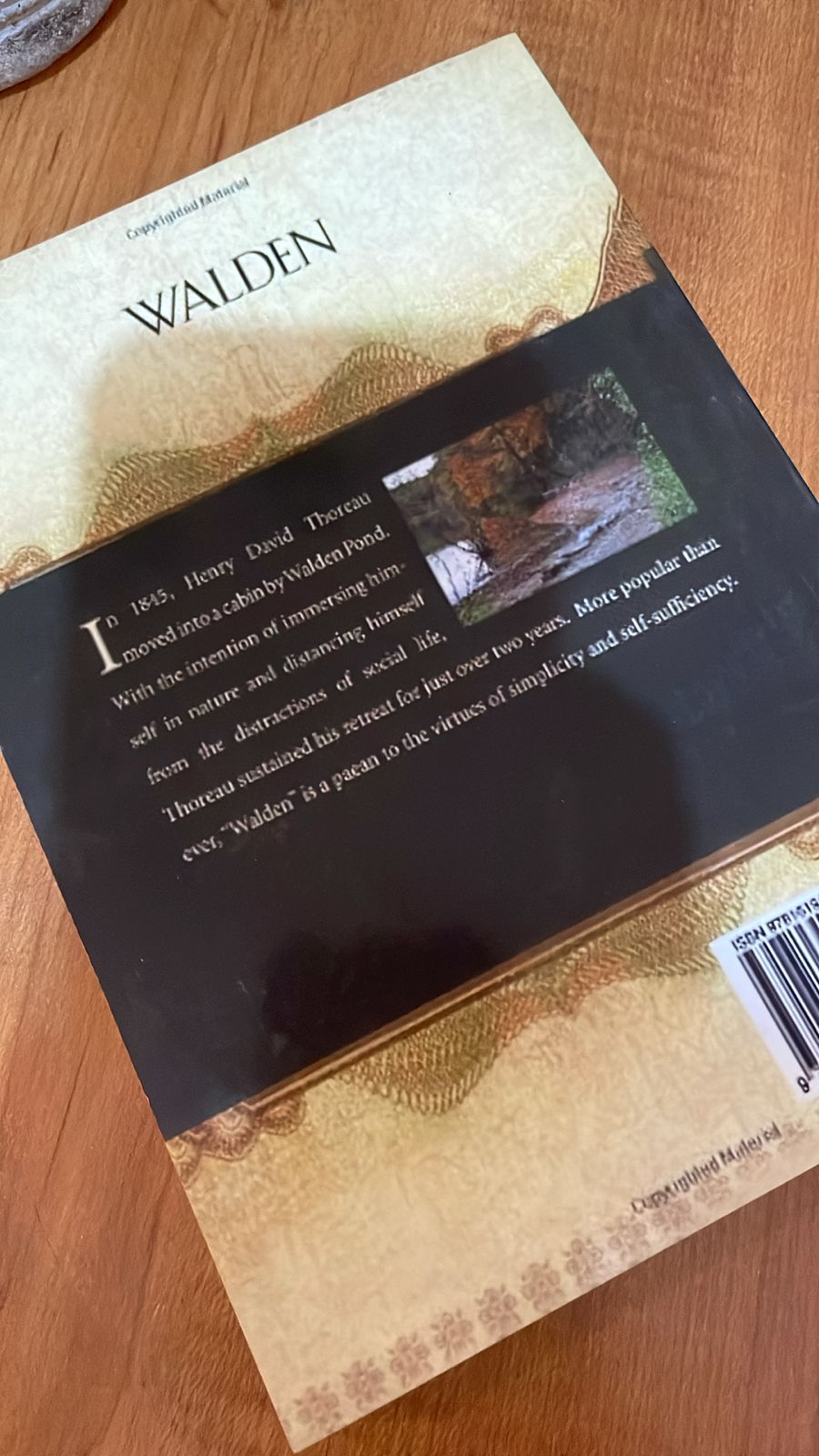
Walden by Henry David Thoreau is a classic work of philosophy and nature writing that explores simple living and self-reliance. Based on the author’s experience at Walden Pond, the book encourages readers to slow down, reconnect with nature, and focus on what truly matters in life.
4 in stock
Walden by Henry David Thoreau
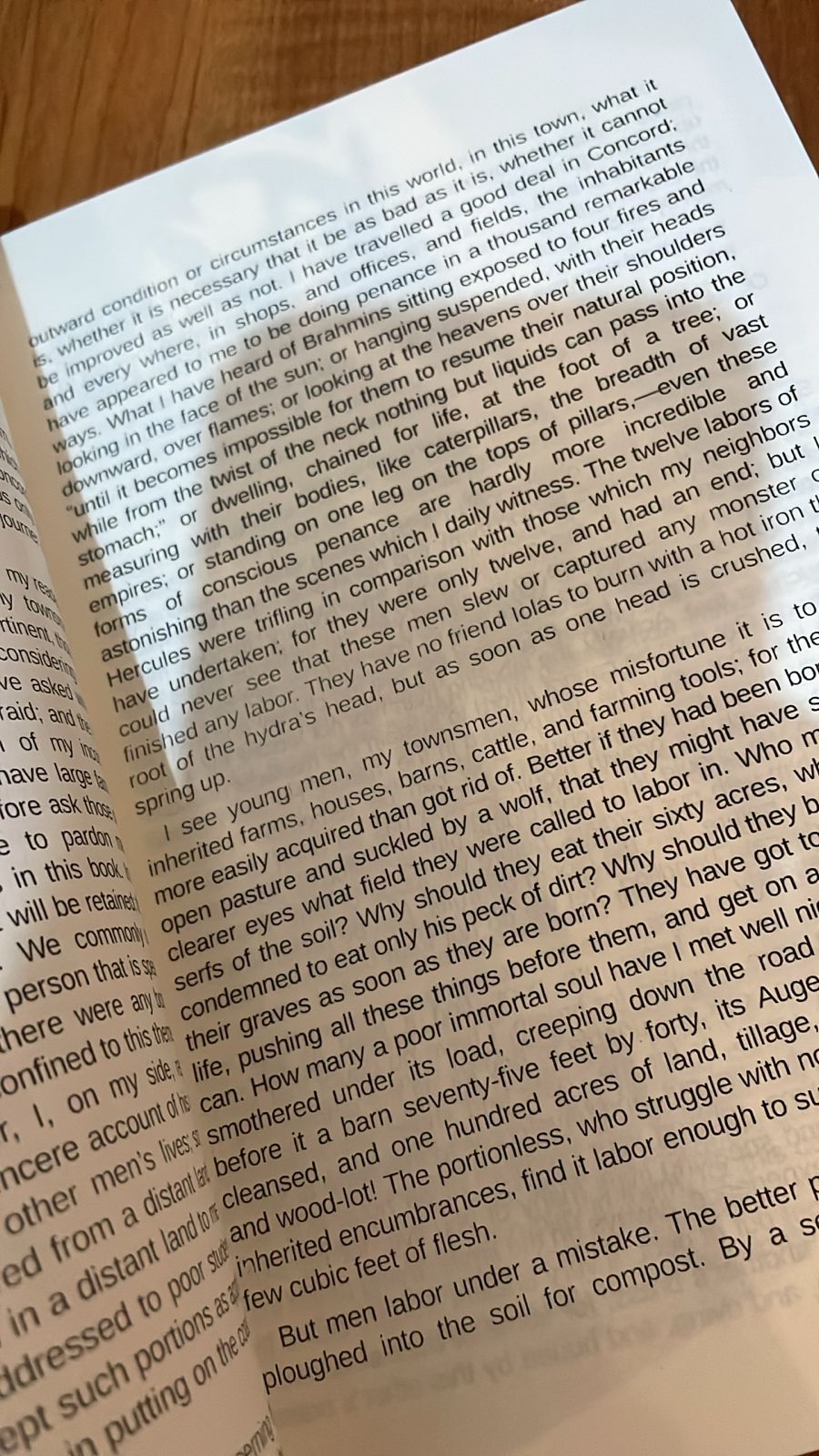
Walden by Henry David Thoreau is a classic work of American literature about simple living, self-reliance, nature, independence, work, materialism, solitude, and the search for a more deliberate life.
Thoreau based the book on the period he spent living near Walden Pond in Massachusetts.
He built a small cabin.
He grew food.
He observed nature.
He kept detailed notes.
And he used the experience to question how people spend their time.
Why do people work so much?
How many possessions are actually necessary?
What does a good life look like?
And how much freedom is lost when people organize their lives around money, status, and constant consumption?
About Walden by Henry David Thoreau
Walden by Henry David Thoreau was first published in 1854.
The book is based on Thoreau’s stay near Walden Pond from 1845 to 1847.
It is not simply a diary of living in the woods.
Thoreau combines personal experience with philosophy, social criticism, nature writing, economics, and reflections on everyday life.
He questions the assumption that more possessions automatically create a better life.
He also argues that people should think carefully about how they use their limited time.
7 Powerful Lessons from Walden by Henry David Thoreau
1. Live Deliberately
One of the most famous ideas in Walden by Henry David Thoreau is the importance of living deliberately.
Thoreau wanted to avoid drifting through life without thinking.
He chose a simpler environment so he could examine what really mattered.
The larger lesson is not that everyone should move into the woods.
It is that people should make conscious choices instead of simply following habits, expectations, or social pressure.
2. Simplicity Creates Freedom
Thoreau repeatedly argues that possessions can become obligations.
A larger house requires more money.
More money may require more work.
More work consumes more time.
This cycle can leave people with very little freedom.
By simplifying, Thoreau believed people could reduce unnecessary obligations.
The goal was not poverty for its own sake.
It was independence.
3. Nature Can Clarify the Mind
Nature is central to Walden.
Thoreau observes the pond.
Trees.
Animals.
Weather.
Seasons.
Ice.
Light.
These observations are not only descriptive.
Nature becomes a way of thinking.
The slower rhythm of the natural world helps him examine human behavior more clearly.
4. Work Should Serve Life
Thoreau questions the idea that people should spend most of their lives working simply to maintain a lifestyle.
He does not argue against work.
He argues against unnecessary work.
If people reduce their needs, they may also reduce the amount of time they must spend earning money.
That creates more room for reflection, creativity, relationships, and experience.
5. Independence Matters
Self-reliance is another major theme.
Thoreau values the ability to make decisions without depending completely on social approval.
He wants to choose his own priorities.
That includes where he lives.
How he spends money.
How he spends time.
And what he considers success.
6. Society Does Not Always Know What Is Best
Walden by Henry David Thoreau is often critical of social expectations.
People may assume everyone needs a large house.
A prestigious career.
Expensive possessions.
A conventional lifestyle.
Thoreau questions these assumptions.
Just because something is normal does not mean it is necessary.
7. Time Is a Form of Wealth
One of the deepest ideas in Walden is that time may be more valuable than money.
People often trade years of their lives for material comfort.
Thoreau asks whether the trade is always worth it.
If a simpler life requires less money, it may also require less labor.
That can create more freedom.
Why Thoreau Went to Walden Pond
Thoreau did not move to Walden Pond because he wanted complete isolation.
The pond was relatively close to Concord, Massachusetts.
He still interacted with people.
He visited town.
Visitors came to see him.
His goal was more experimental.
He wanted to live with fewer distractions.
He wanted to test how little he truly needed.
This makes the book a personal experiment as much as a philosophical work.
The Cabin
The cabin becomes a symbol of simplicity.
Thoreau built it himself.
He kept expenses low.
He recorded costs carefully.
The point was not architectural achievement.
It was to show that shelter did not necessarily need to create years of debt or financial pressure.
His cost calculations form part of the book’s wider argument about economic independence.
Economy
The opening section of Walden is called “Economy.”
Thoreau examines food.
Clothing.
Shelter.
Work.
Money.
He argues that many people create unnecessary financial pressure by expanding their wants.
This section can feel surprisingly modern.
Questions about debt, consumption, lifestyle inflation, and work-life balance are still relevant today.
Solitude
Thoreau values solitude.
But he does not present it as loneliness.
For him, solitude creates space to think.
He enjoys being alone with nature.
He finds mental clarity in quiet.
That does not mean he rejects friendship.
He simply argues that being alone can be valuable.
Visitors
Despite the reputation of Walden as a book about isolation, Thoreau regularly receives visitors.
He talks with travelers.
Workers.
Friends.
Neighbors.
These conversations show that his experiment was not complete withdrawal from society.
Instead, it was a different relationship with society.
The Pond
Walden Pond is the physical center of the book.
Thoreau studies its water.
Depth.
Seasonal changes.
Ice.
Shoreline.
The pond becomes both real and symbolic.
Its clarity reflects the kind of clarity Thoreau wants in his own life.
Animals and Seasons
Thoreau pays close attention to animals.
Birds.
Ants.
Fish.
Small changes in weather.
The freezing and thawing of the pond.
These details give the book its strong nature-writing quality.
Time is measured through seasons rather than schedules.
Materialism
Walden by Henry David Thoreau is highly critical of excessive materialism.
Thoreau believes people often become owned by their possessions.
A person buys a house.
Then spends years working to pay for it.
A person buys more things.
Then needs more space.
The cycle continues.
Thoreau asks whether simpler living might create greater freedom.
Self-Reliance
Thoreau’s version of independence is not complete self-sufficiency.
He still exists within society.
But he tries to reduce unnecessary dependence.
He grows some food.
He builds his own shelter.
He limits expenses.
The experiment becomes a way of discovering which needs are real and which are created by habit.
Education and Reading
Thoreau values reading deeply.
He believes serious books deserve serious attention.
Classical literature appears throughout Walden.
Reading becomes another form of independence.
It allows people to learn from minds far beyond their own time and place.
Criticism of Modern Life
Even though the book was published in the nineteenth century, many criticisms feel current.
People are busy.
They work constantly.
They worry about status.
They compare themselves with others.
They accumulate things.
Thoreau questions whether this activity actually produces happiness.
Living According to Your Own Values
The book encourages readers to define success personally.
What matters to you?
Time?
Money?
Community?
Nature?
Creativity?
Travel?
Family?
The answer does not have to match society’s answer.
This is one reason Walden by Henry David Thoreau remains influential.
It asks readers to examine their assumptions.
Who Should Read This Book?
Walden by Henry David Thoreau is ideal for readers interested in classic literature, philosophy, simple living, minimalism, nature writing, self-reliance, and personal freedom.
It may especially appeal to readers who feel overwhelmed by work or consumption.
Students of American literature may also appreciate its influence on transcendentalism, environmental thought, and modern ideas of intentional living.
Readers who enjoy reflective nonfiction may find it especially rewarding.
About Henry David Thoreau
Henry David Thoreau was an American writer, philosopher, naturalist, and essayist.
He was associated with the transcendentalist movement.
His most famous works include Walden and the essay commonly known as Civil Disobedience.
His writing often explores nature, conscience, independence, simplicity, and the relationship between individuals and society.
Readers can learn more through the official Walden Woods Project website.
Product Details
Title: Walden
Author: Henry David Thoreau
Genre: Classic Literature / Philosophy / Nature Writing / Memoir
Language: English
Original Publication: 1854
Main Themes: Simplicity, Nature, Self-Reliance, Time, Work, Independence, Materialism
Common Penguin Classics Edition
Publisher: Penguin Classics
ISBN-13: 9780140390445
Format: Paperback
Pages: Approximately 352
Different editions may include introductions, notes, additional essays, or different pagination.
Some editions pair Walden with Civil Disobedience or other Thoreau writings.
Always check the ISBN printed on your physical copy before entering final WooCommerce specifications.
Explore More Classic and Non-Fiction Books
Walden by Henry David Thoreau is ultimately about asking a simple question.
How much of your life is truly your own?
Thoreau does not provide one universal answer.
Instead, he challenges readers to examine work, money, possessions, nature, time, and personal freedom more carefully.
Readers looking for more timeless literature can explore Fiction & Literature Books at Bargain Books.
You can also explore Non-Fiction & Knowledge Books at Bargain Books.
For readers interested in simple living, nature, philosophy, independence, and a more deliberate approach to life, Walden by Henry David Thoreau remains one of the most influential classics in American literature.
Be the first to review “Walden by Henry David Thoreau”
Related products
-24%

Out of stock
Non-Fiction & Knowledge
Original price was: රු2,500.00.රු1,900.00Current price is: රු1,900.00.
3 X Rs. 633.33 or 8% Cashback with
or 3 X රු633.33 with
or up to 4 X රු475.00 with
-24%

Out of stock
Non-Fiction & Knowledge
Original price was: රු2,100.00.රු1,600.00Current price is: රු1,600.00.
3 X Rs. 533.33 or 8% Cashback with
or 3 X රු533.33 with
or up to 4 X රු400.00 with

Out of stock
Non-Fiction & Knowledge
රු1,900.00
3 X Rs. 633.33 or 8% Cashback with
or 3 X රු633.33 with
or up to 4 X රු475.00 with
-7%

Out of stock
Original price was: රු4,500.00.රු4,200.00Current price is: රු4,200.00.
3 X Rs. 1,400.00 or 8% Cashback with
or 3 X රු1,400.00 with
or up to 4 X රු1,050.00 with
Non-Fiction & Knowledge
රු2,250.00
3 X Rs. 750.00 or 8% Cashback with
or 3 X රු750.00 with
or up to 4 X රු562.50 with
Non-Fiction & Knowledge
රු2,450.00
3 X Rs. 816.67 or 8% Cashback with
or 3 X රු816.67 with
or up to 4 X රු612.50 with
-21%

Non-Fiction & Knowledge
7 Secrets to Investing Like Warren Buffett by Mary Buffett & Sean Seah
Original price was: රු1,900.00.රු1,500.00Current price is: රු1,500.00.
3 X Rs. 500.00 or 8% Cashback with
or 3 X රු500.00 with
or up to 4 X රු375.00 with

Non-Fiction & Knowledge
රු1,700.00
3 X Rs. 566.67 or 8% Cashback with
or 3 X රු566.67 with
or up to 4 X රු425.00 with
Reviews
There are no reviews yet.