
No products in the cart.

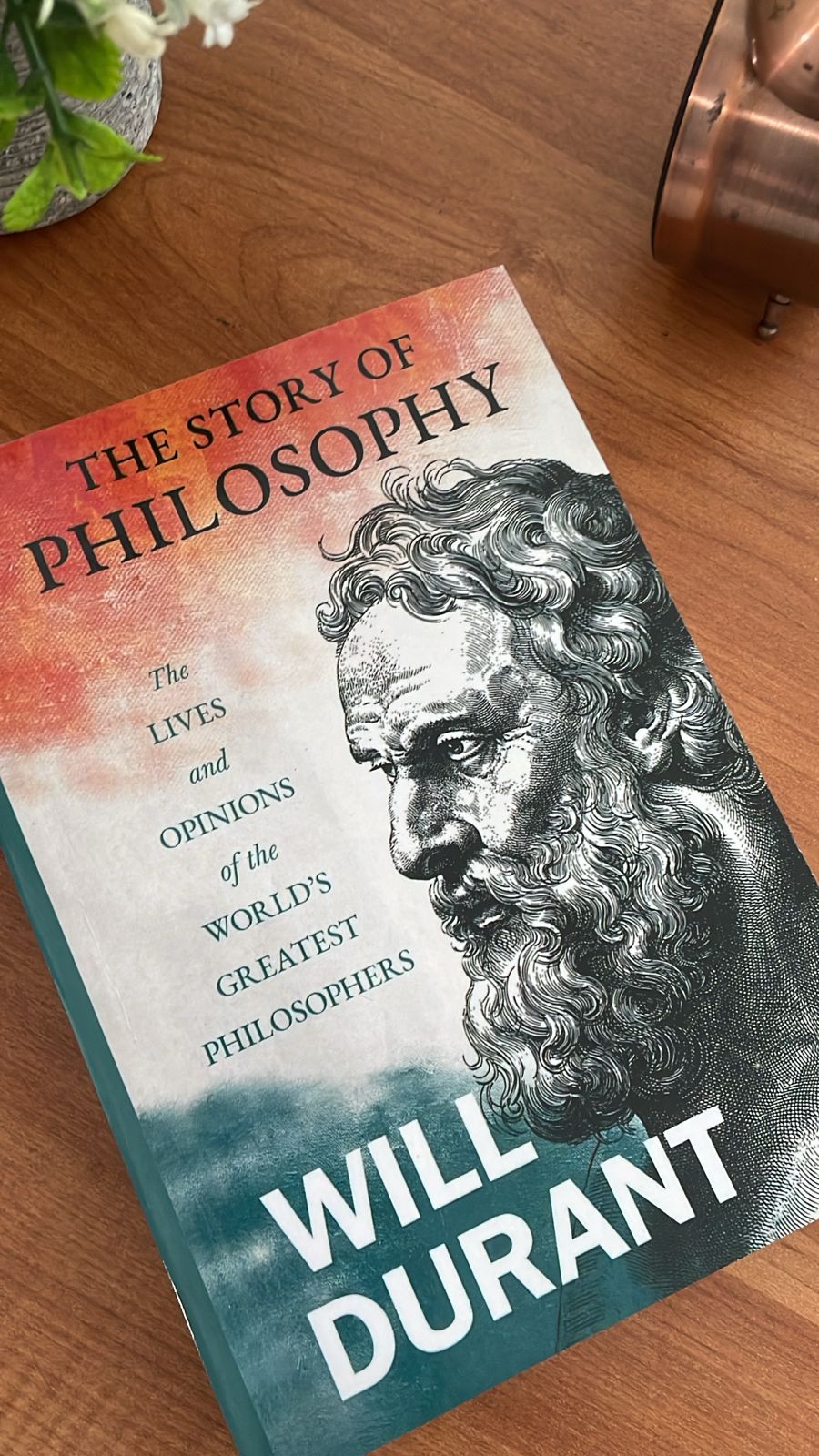


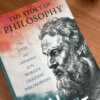
Story Of Philosophy by Will Durant


රු2,500.00
3 X Rs. 833.33 or 8% Cashback with


or 3 X රු833.33 with


or up to 4 X රු625.00 with


Short Description:
The Story of Philosophy by Will Durant is a clear and engaging introduction to the ideas of the world’s greatest philosophers. Through simple explanations and storytelling, the book explores life, knowledge, and human nature, making philosophy easy to understand and relevant to everyday life.
4 in stock
The Story of Philosophy by Will Durant
The Story of Philosophy by Will Durant is a classic introduction to the lives, ideas, arguments, and historical influence of some of the most important philosophers in Western thought.
Instead of presenting philosophy as a collection of difficult academic theories, Durant connects ideas to the people who created them.
Readers discover not only what famous philosophers believed but also the societies, conflicts, personalities, and historical circumstances that shaped their thinking.
About The Story of Philosophy
The Story of Philosophy introduces major thinkers in a clear and accessible style.
Will Durant believed philosophy should not remain limited to specialists.
He wanted ordinary readers to understand the questions philosophers have explored for centuries.
What is a good life?
What makes knowledge reliable?
What is justice?
How should society be organized?
What is freedom?
Durant approaches these questions through the lives and ideas of individual philosophers.
Plato and Socrates
The journey begins with ancient Greece.
Socrates becomes one of the most important starting points.
He challenged people to question assumptions rather than simply accept popular opinion.
Plato developed many of these ideas further.
His philosophy explored justice, education, government, reality, and knowledge.
Durant explains these ideas through both historical context and interpretation.
Aristotle and Practical Thought
Aristotle approached philosophy differently.
He studied logic, ethics, politics, biology, poetry, and many other subjects.
His influence extended far beyond ancient Greece.
For centuries, his ideas shaped education, science, politics, and philosophy.
The Story of Philosophy shows how Aristotle tried to understand the world through observation and systematic reasoning.
7 Powerful Reasons to Read The Story of Philosophy
1. Philosophy Becomes Easier to Understand
Philosophy can appear intimidating.
Durant avoids unnecessary complexity.
He explains difficult ideas in a conversational and engaging style.
This makes the book useful for readers who are new to philosophy.
2. You Learn About the Philosophers as People
The book does not separate ideas from the people who created them.
Readers learn about personalities, relationships, struggles, ambitions, and historical circumstances.
This makes the philosophers feel more human.
Their theories become easier to understand when readers see the problems they were trying to solve.
3. It Covers Centuries of Thought
The book moves across a long intellectual history.
Readers encounter ancient Greek philosophy.
Then they move through early modern thinkers and into nineteenth- and twentieth-century philosophy.
This creates a useful overview of how major ideas changed over time.
4. Great Thinkers Disagree with Each Other
The Story of Philosophy does not present philosophy as one continuous agreement.
Later thinkers often challenge earlier ones.
Some emphasize reason.
Others emphasize experience.
Some defend individual freedom.
Others focus on society and institutions.
Understanding these disagreements helps readers see how philosophical debates develop.
5. It Connects Philosophy to History
Ideas do not appear in isolation.
Political revolutions, scientific discoveries, religion, economic change, and social conflict all influence philosophy.
Durant explains these connections.
This helps readers understand why particular ideas became important at particular moments.
6. Philosophy Becomes Relevant to Everyday Life
Questions about happiness, morality, power, knowledge, and human behaviour remain relevant.
Readers still face many of the problems discussed by ancient and modern thinkers.
The book encourages readers to compare philosophical ideas with their own experiences.
7. It Encourages Independent Thinking
The aim is not simply to memorize names.
Readers are encouraged to think about the arguments.
Do you agree with Plato?
Does Nietzsche make sense?
What does Kant contribute?
Which ideas remain useful today?
This turns philosophy into an active process of questioning.
Francis Bacon and the Rise of Modern Thought
Francis Bacon emphasized observation and experimentation.
His work contributed to changing ideas about knowledge.
Rather than depending only on inherited authorities, Bacon encouraged people to investigate the world.
This shift helped influence the development of modern scientific thinking.
Spinoza and Reason
Baruch Spinoza developed a highly systematic philosophy.
He explored God, nature, ethics, freedom, and human emotion.
His views were controversial during his lifetime.
Durant presents Spinoza as both a thinker and a person whose life reflected unusual intellectual independence.
Voltaire and the Enlightenment
Voltaire used wit, criticism, and argument to challenge intolerance and abuse of authority.
His writing became closely connected with the Enlightenment.
Freedom of thought and criticism of institutions became increasingly important.
Durant shows how philosophy can influence political and social change.
Immanuel Kant
Kant is often considered difficult.
His work asks fundamental questions about how human beings experience reality.
He tried to understand the relationship between reason and experience.
The Story of Philosophy attempts to present these complicated ideas in a more approachable way.
Kant’s influence on later philosophy was enormous.
Arthur Schopenhauer
Schopenhauer offered a darker view of human life.
He focused heavily on desire and suffering.
His philosophy suggests that people are driven by forces that do not always lead to satisfaction.
Durant examines both the pessimistic side of Schopenhauer and the intellectual importance of his work.
Friedrich Nietzsche
Nietzsche challenged traditional morality, religion, and social conventions.
His writing often focused on strength, creativity, values, and individual transformation.
His ideas have been interpreted in many different ways.
Durant places Nietzsche within the broader development of nineteenth-century philosophy.
Bertrand Russell and Modern Philosophy
The book eventually reaches thinkers closer to Durant’s own period.
Bertrand Russell appears as an important modern philosopher.
Russell worked across logic, mathematics, politics, ethics, and social criticism.
His writing helped make philosophy accessible to a wider audience.
Philosophy and Society
The Story of Philosophy repeatedly shows that philosophical ideas influence societies.
Ideas about justice affect politics.
Ideas about knowledge affect science.
Ideas about human nature affect education and law.
Philosophy is therefore not separate from practical life.
It influences the assumptions people use when making decisions.
Who Should Read This Book?
This book is ideal for readers beginning their study of philosophy.
Students can use it as an introduction before reading more difficult original works.
General readers may enjoy its biographical approach.
Readers interested in history can also benefit from the way Durant connects ideas to historical events.
It is especially useful for anyone who wants a broad overview of Western philosophy without beginning with a highly technical textbook.
About Will Durant
Will Durant was an American writer, historian, and philosopher.
He became known for making philosophy and history accessible to general audiences.
Together with his wife Ariel Durant, he later worked on the multi-volume Story of Civilization.
Durant received the Pulitzer Prize in 1968 and the Presidential Medal of Freedom in 1977.
Readers can learn more about the book on the official Simon & Schuster page for The Story of Philosophy.
Product Details
Title: The Story of Philosophy
Author: Will Durant
Full Title: The Story of Philosophy: The Lives and Opinions of the Greater Philosophers
Genre: Philosophy / History of Ideas / Intellectual History
Language: English
Original Publication: 1926
A commonly available Pocket Books mass-market paperback carries ISBN 9780671739164 and contains 528 pages.
Simon & Schuster also lists a 432-page digital edition with ISBN 9781476702605.
Always check the ISBN and specifications printed on your physical copy before entering final WooCommerce product information.
Explore More Philosophy and Non-Fiction Books
The Story of Philosophy remains valuable because it makes difficult ideas approachable without removing their historical importance.
Readers meet philosophers as people.
They see how ideas developed.
They also discover how later thinkers challenged earlier ones.
From Plato and Aristotle to Nietzsche and Russell, the book offers a broad journey through centuries of intellectual debate.
Readers interested in similar titles can explore more Non-Fiction & Knowledge Books at Bargain Books.
For anyone curious about philosophy but unsure where to begin, The Story of Philosophy is a highly accessible introduction to many of the thinkers who shaped Western intellectual history.
Be the first to review “Story Of Philosophy by Will Durant”
Related products
-24%

Out of stock
Non-Fiction & Knowledge
Original price was: රු2,500.00.රු1,900.00Current price is: රු1,900.00.
3 X Rs. 633.33 or 8% Cashback with
or 3 X රු633.33 with
or up to 4 X රු475.00 with

Non-Fiction & Knowledge
රු1,700.00
3 X Rs. 566.67 or 8% Cashback with
or 3 X රු566.67 with
or up to 4 X රු425.00 with

Non-Fiction & Knowledge
රු1,550.00
3 X Rs. 516.67 or 8% Cashback with
or 3 X රු516.67 with
or up to 4 X රු387.50 with
-34%

Non-Fiction & Knowledge
Original price was: රු2,250.00.රු1,490.00Current price is: රු1,490.00.
3 X Rs. 496.67 or 8% Cashback with
or 3 X රු496.67 with
or up to 4 X රු372.50 with

Out of stock
Non-Fiction & Knowledge
රු1,500.00
3 X Rs. 500.00 or 8% Cashback with
or 3 X රු500.00 with
or up to 4 X රු375.00 with
-21%

Non-Fiction & Knowledge
7 Secrets to Investing Like Warren Buffett by Mary Buffett & Sean Seah
Original price was: රු1,900.00.රු1,500.00Current price is: රු1,500.00.
3 X Rs. 500.00 or 8% Cashback with
or 3 X රු500.00 with
or up to 4 X රු375.00 with

Non-Fiction & Knowledge
රු2,250.00
3 X Rs. 750.00 or 8% Cashback with
or 3 X රු750.00 with
or up to 4 X රු562.50 with
-24%
Out of stock
Non-Fiction & Knowledge
Original price was: රු2,100.00.රු1,600.00Current price is: රු1,600.00.
3 X Rs. 533.33 or 8% Cashback with
or 3 X රු533.33 with
or up to 4 X රු400.00 with
Reviews
There are no reviews yet.