
No products in the cart.
-31%
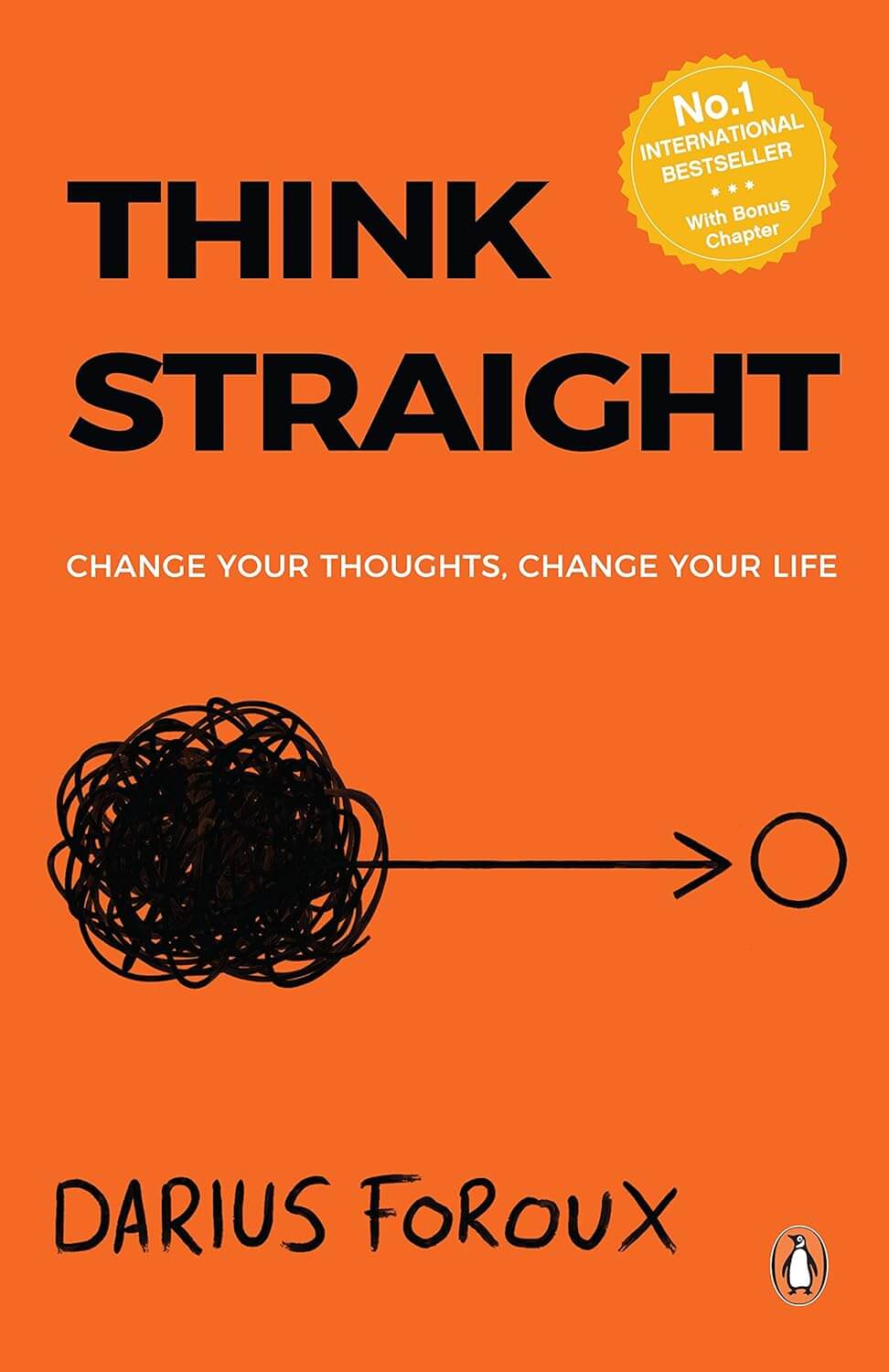
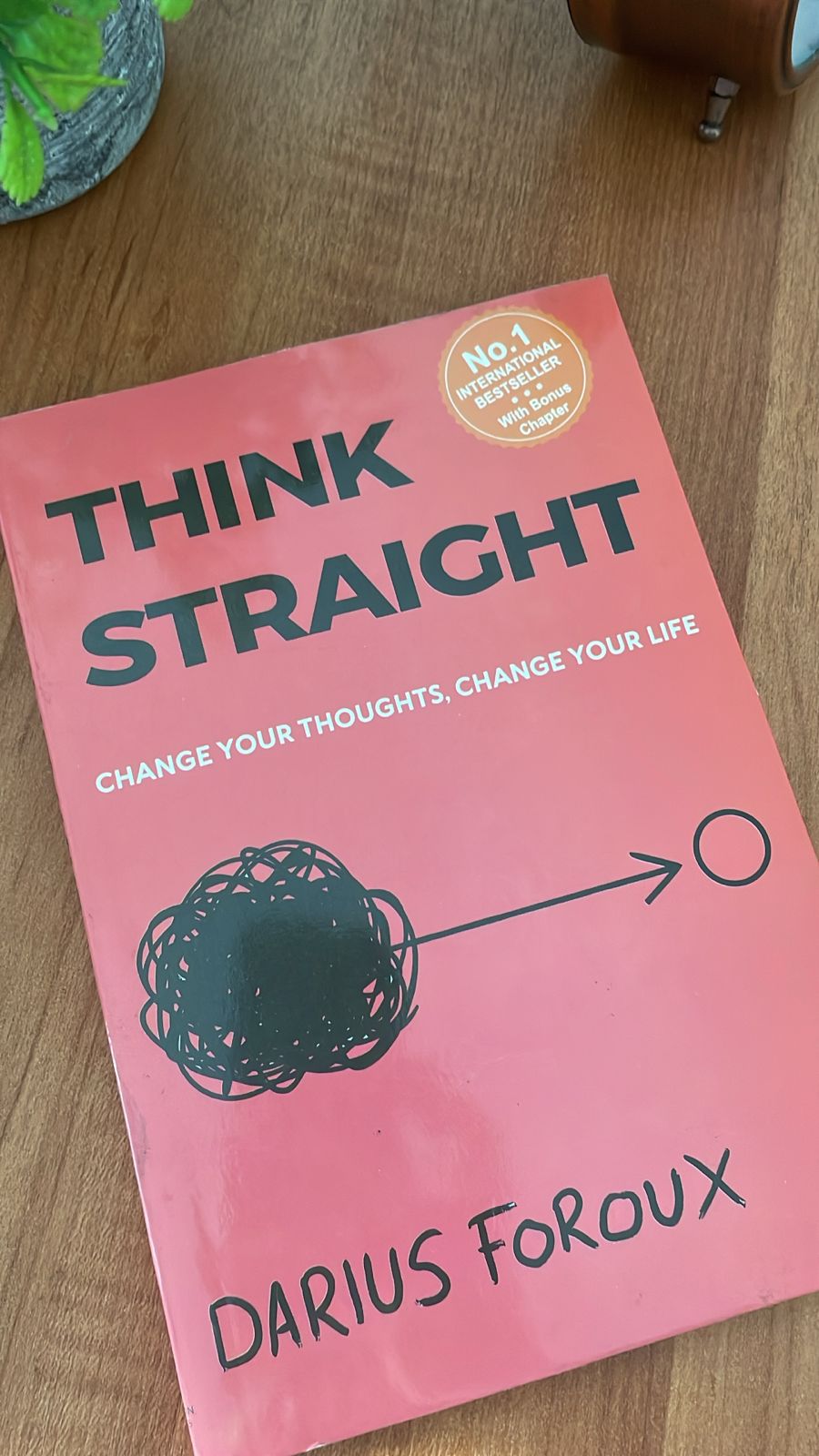
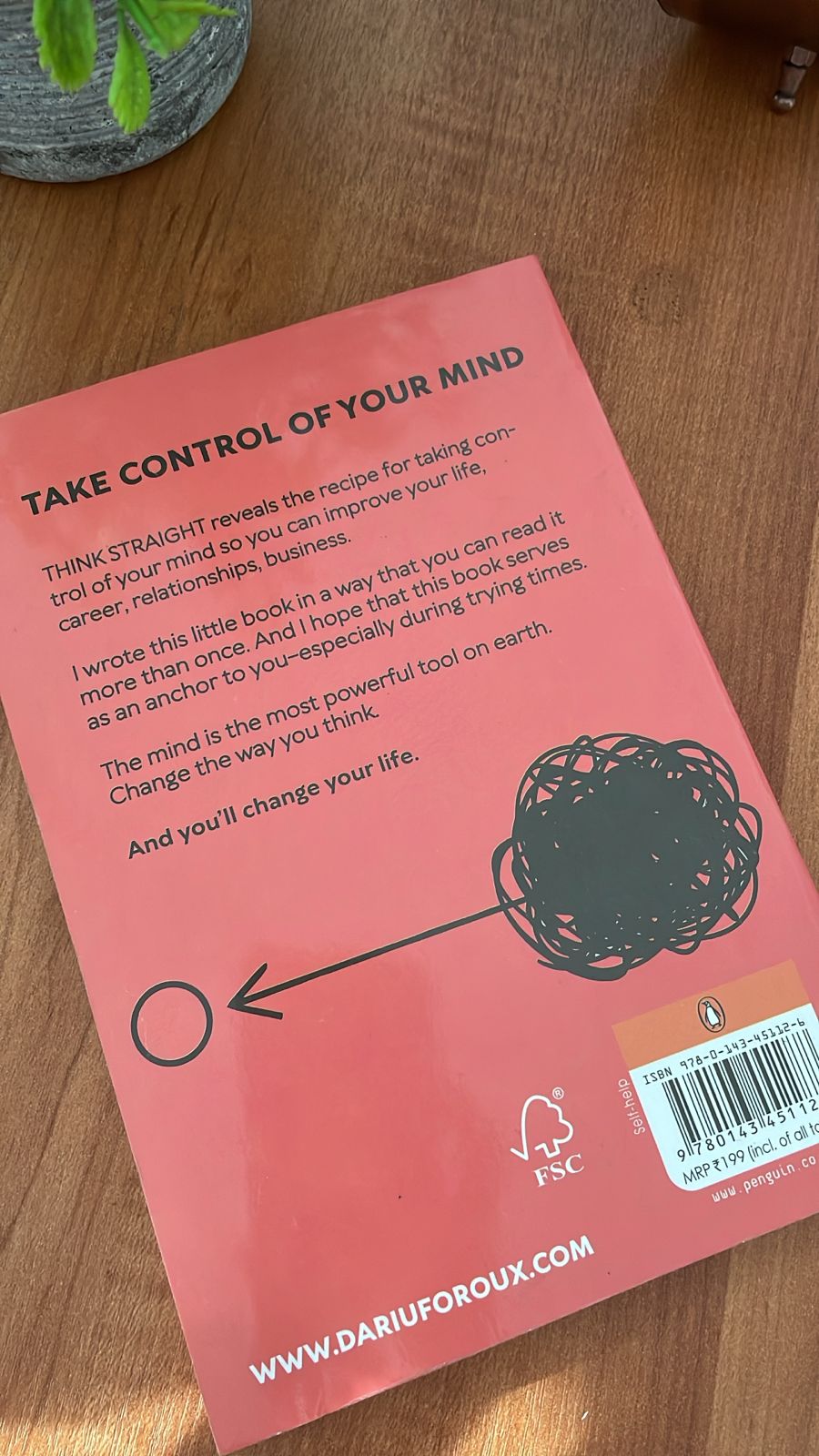

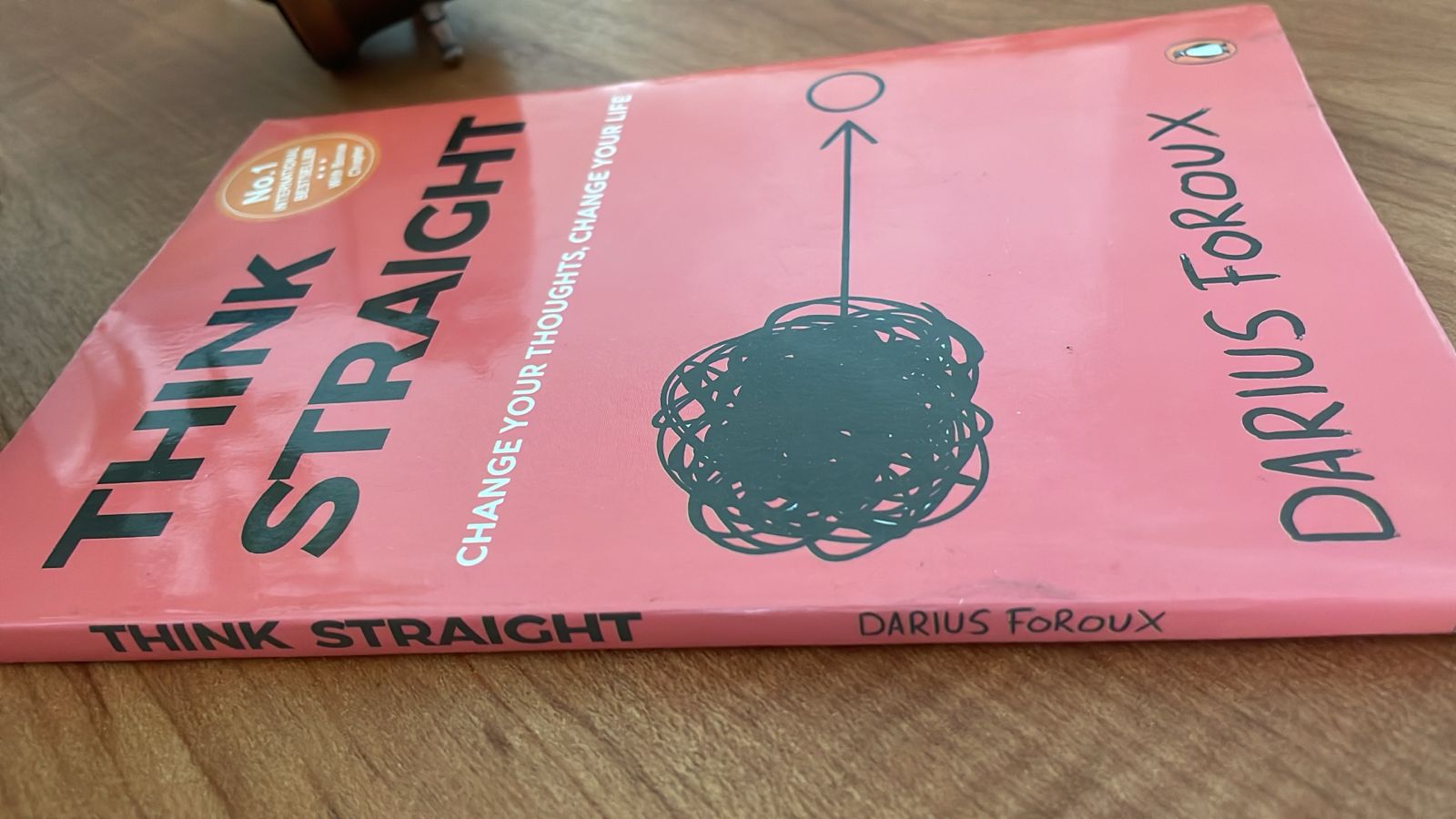



Think Straight by Darius Foroux

Original price was: රු1,600.00.රු1,100.00Current price is: රු1,100.00.
3 X Rs. 366.67 or 8% Cashback with


or 3 X රු366.67 with


or up to 4 X රු275.00 with


Unlock the power of clear thinking with ‘Think Straight’ by Darius Foroux. This insightful book provides practical wisdom on decision-making, productivity, and creating a focused mindset. Foroux’s straightforward approach and actionable advice make this a must-read for anyone looking to cut through the noise, make better choices, and achieve greater success in both personal and professional spheres.
1 in stock
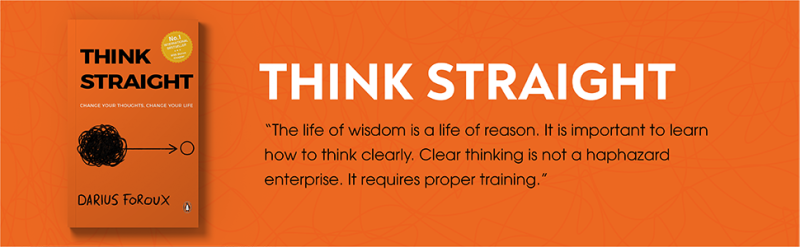
Think Straight by Darius Foroux
Think Straight by Darius Foroux is a practical self-development book about controlling your thoughts, reducing overthinking, making clearer decisions, and learning how to use your mind more effectively.
Many people spend large parts of the day worrying.
They replay conversations.
They imagine future problems.
They think about mistakes that have already happened.
They also worry about what other people think.
Darius Foroux argues that not every thought deserves attention.
Learning to choose which thoughts matter can improve the way you work, decide, communicate, and live.
About Think Straight
Think Straight is built around a simple idea.
Your mind should work for you.
You should not become a prisoner of every thought that appears.
Foroux explains that people often confuse thinking with worrying.
They may spend hours mentally repeating the same problem without creating a useful solution.
The book encourages a more practical approach.
Think when thinking helps.
Take action when action is required.
And learn to let go of thoughts that do not serve a useful purpose.
7 Powerful Lessons from Think Straight
1. Not Every Thought Deserves Attention
One of the strongest ideas in Think Straight is that having a thought does not mean you need to follow it.
The mind constantly generates ideas, fears, memories, and possibilities.
Some are useful.
Many are not.
Learning to notice the difference can reduce mental clutter.
Instead of reacting to every thought, pause and ask whether it helps you move forward.
2. Stop Overthinking
Overthinking often feels productive.
It can feel as though you are solving a problem.
But repeating the same worry is not the same as solving it.
Foroux encourages readers to recognize when thinking has stopped being useful.
Once you have enough information, make a decision.
Then move forward.
3. Focus on What You Can Control
People often spend energy thinking about things outside their control.
They worry about other people’s opinions.
They worry about the future.
They worry about situations they cannot change.
Think Straight encourages readers to redirect attention toward their own choices and actions.
This creates a more practical mindset.
4. Think in Facts, Not Assumptions
A large amount of stress comes from assumptions.
Someone does not reply quickly.
You assume they are angry.
A project becomes difficult.
You assume it will fail.
Foroux encourages readers to separate facts from stories created by the mind.
Ask what you actually know.
This can reduce unnecessary anxiety and improve decisions.
5. Let Go of Useless Thoughts
Some thoughts have no useful outcome.
They do not help you decide.
They do not help you solve a problem.
They simply consume attention.
The book encourages readers to become more selective.
Mental energy is limited.
Use it on things that matter.
6. Action Creates Clarity
People sometimes wait until they feel completely certain before acting.
That certainty may never arrive.
Action can provide information that thinking alone cannot.
Start.
Observe what happens.
Adjust.
This practical approach can help with work, business, study, and personal goals.
7. Your Thinking Can Be Trained
Clear thinking is not only a personality trait.
It is a skill.
You can practise it.
You can improve how you respond to stress.
You can become better at recognizing unhelpful thought patterns.
You can also learn to make decisions with less unnecessary mental noise.
The Problem with a Preoccupied Mind
Modern life creates endless opportunities for distraction.
Messages arrive.
Social media constantly provides new information.
Work follows people home.
The mind rarely gets a break.
Foroux refers to this kind of constant internal activity as a preoccupied mind.
It becomes difficult to concentrate when attention is divided between dozens of thoughts.
Learning to think more deliberately can help restore focus.
Useful Thinking vs Useless Thinking
One of the most practical distinctions in Think Straight is between useful and useless thinking.
Useful thinking leads somewhere.
It helps you solve a problem.
It helps you plan.
It helps you decide.
Useless thinking often repeats the same worry.
It may create fear without producing action.
Recognizing this distinction can improve mental efficiency.
Control Your Attention
Attention is valuable.
Whatever you repeatedly focus on begins to dominate your experience.
If you constantly focus on problems, life may feel like one long crisis.
If you focus only on distractions, important work suffers.
The book encourages readers to choose their attention more deliberately.
This does not mean ignoring real problems.
It means giving attention where it can actually help.
Stop Living in the Past
People often replay old mistakes.
They think about what they should have said.
They imagine what they would do differently.
Reflection can be useful.
But endless regret is not.
Learn the lesson.
Then move forward.
Think Straight encourages readers to avoid spending too much mental energy on events that cannot be changed.
Reduce Future Anxiety
The future is uncertain.
That uncertainty can create fear.
What if the job disappears?
What if the business fails?
What if the relationship ends?
Some planning is useful.
But repeatedly imagining every possible disaster does not create security.
Foroux encourages a more practical question.
What can I do now?
That brings attention back to the present.
Think Before You React
Clear thinking becomes especially important when emotions are strong.
Anger can make people say things they later regret.
Fear can create rushed decisions.
Stress can make small problems feel enormous.
A short pause can create distance between emotion and action.
That distance can improve judgment.
Decision-Making
Making decisions is a major part of everyday life.
Should you accept a job?
Should you start a project?
Should you spend money?
Should you continue a relationship?
Overthinking can make these decisions harder.
Think Straight encourages readers to gather relevant information and then decide.
No decision is completely risk-free.
At some point, action becomes necessary.
Writing Helps Clear the Mind
Writing can be a useful thinking tool.
Putting thoughts on paper creates distance.
A problem that feels overwhelming in your head may look much simpler when written down.
You can identify facts.
You can list options.
You can decide on the next step.
Foroux himself is known for using writing as a tool for thinking and personal development.
Inner Calm
Clear thinking is closely connected to inner calm.
A constantly busy mind makes calm difficult.
Reducing unnecessary thought creates more mental space.
That can improve concentration.
It can also make emotional reactions easier to manage.
The goal is not to eliminate thought.
It is to think more intentionally.
Practical Thinking at Work
Think Straight can also be applied professionally.
Workplaces create many opportunities for overthinking.
You may worry about a manager’s opinion.
You may delay a decision because you fear being wrong.
You may spend too long perfecting something that is already good enough.
Clear thinking helps identify what actually needs attention.
Then you can act.
Thinking and Relationships
Relationships are another area where assumptions create problems.
People often try to guess what someone else is thinking.
They interpret silence.
They create explanations without asking.
This can produce unnecessary conflict.
Clear communication is usually better than mental guessing.
Ask.
Listen.
Respond to what is actually happening.
Learn to Let Go
Letting go is not the same as ignoring responsibility.
It means recognizing when additional thought no longer adds value.
You can learn from a mistake without thinking about it every day.
You can care about someone without controlling every outcome.
You can have goals without obsessing over every possible failure.
This creates more mental freedom.
Who Should Read This Book?
Think Straight is ideal for readers interested in self-help, productivity, decision-making, and personal development.
It may especially help people who struggle with overthinking.
Students can use its ideas to improve focus.
Professionals can apply them to decision-making.
Entrepreneurs may appreciate its emphasis on action over endless analysis.
The short chapters also make it suitable for readers who prefer practical books that can be revisited easily.
About Darius Foroux
Darius Foroux is an author and entrepreneur who writes about productivity, habits, decision-making, personal finance, and self-development.
His work has appeared in publications including TIME, NBC, Fast Company, and Inc.
His books include Think Straight, Do It Today, The Stoic Path to Wealth, and other titles focused on practical personal improvement.
Readers can learn more through the official Penguin page for Think Straight.
Product Details
Title: Think Straight
Subtitle: Change Your Thoughts, Change Your Life
Author: Darius Foroux
Genre: Self-Help / Personal Development / Productivity
Language: English
Penguin India Paperback ISBN: 9780143452133
Pages: 132
Penguin India Publication: October 2020
A newer Southeast Asian Penguin paperback carries ISBN 9789815351385 and contains 112 pages.
Earlier independently published editions also exist and have different page counts and ISBNs.
Always check the ISBN printed on your physical copy before entering final WooCommerce specifications.
Explore More Self-Help Books
Think Straight offers a simple message.
You do not need to believe every thought.
You do not need to solve every imaginary problem.
You do not need to spend hours worrying about things outside your control.
Choose useful thoughts.
Focus on facts.
Make decisions.
Take action.
And let go of mental noise that does not improve your life.
Readers interested in mindset, productivity, and clearer decision-making can explore more Self-Help & Psychology Books at Bargain Books.
For readers who want a short, practical guide to reducing overthinking and developing clearer thought patterns, Think Straight is an accessible and useful choice.
| Author | Darius Foroux |
|---|---|
| Type | Paperback Printed Book |
| ISBN/ISSN | 0143452134, 978-0143452133 |
| Language | English |
| Pages | 132 |
Be the first to review “Think Straight by Darius Foroux”
Related products
-14%
Out of stock
Self-Help & Psychology
Original price was: රු2,900.00.රු2,500.00Current price is: රු2,500.00.
3 X Rs. 833.33 or 8% Cashback with
or 3 X රු833.33 with
or up to 4 X රු625.00 with

Non-Fiction & Knowledge
රු1,700.00
3 X Rs. 566.67 or 8% Cashback with
or 3 X රු566.67 with
or up to 4 X රු425.00 with
-23%

Non-Fiction & Knowledge
Original price was: රු2,200.00.රු1,700.00Current price is: රු1,700.00.
3 X Rs. 566.67 or 8% Cashback with
or 3 X රු566.67 with
or up to 4 X රු425.00 with
-33%

Self-Help & Psychology
Original price was: රු2,300.00.රු1,550.00Current price is: රු1,550.00.
3 X Rs. 516.67 or 8% Cashback with
or 3 X රු516.67 with
or up to 4 X රු387.50 with
-26%
Out of stock
Non-Fiction & Knowledge
Original price was: රු2,000.00.රු1,490.00Current price is: රු1,490.00.
3 X Rs. 496.67 or 8% Cashback with
or 3 X රු496.67 with
or up to 4 X රු372.50 with
-19%
Out of stock
Non-Fiction & Knowledge
Original price was: රු2,650.00.රු2,150.00Current price is: රු2,150.00.
3 X Rs. 716.67 or 8% Cashback with
or 3 X රු716.67 with
or up to 4 X රු537.50 with
-34%
Non-Fiction & Knowledge
Original price was: රු2,250.00.රු1,490.00Current price is: රු1,490.00.
3 X Rs. 496.67 or 8% Cashback with
or 3 X රු496.67 with
or up to 4 X රු372.50 with
Non-Fiction & Knowledge
රු2,450.00
3 X Rs. 816.67 or 8% Cashback with
or 3 X රු816.67 with
or up to 4 X රු612.50 with
Reviews
There are no reviews yet.