
No products in the cart.
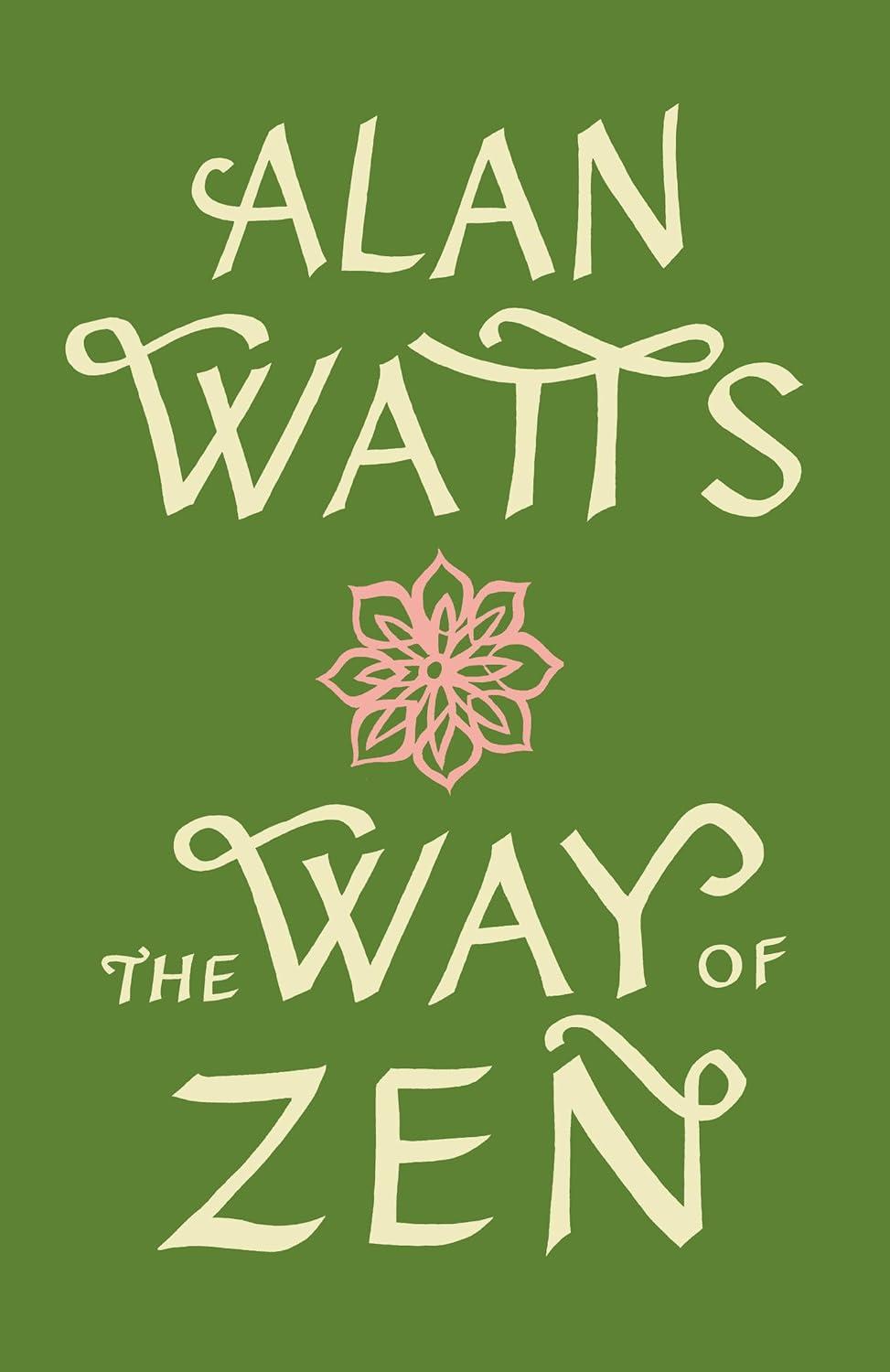
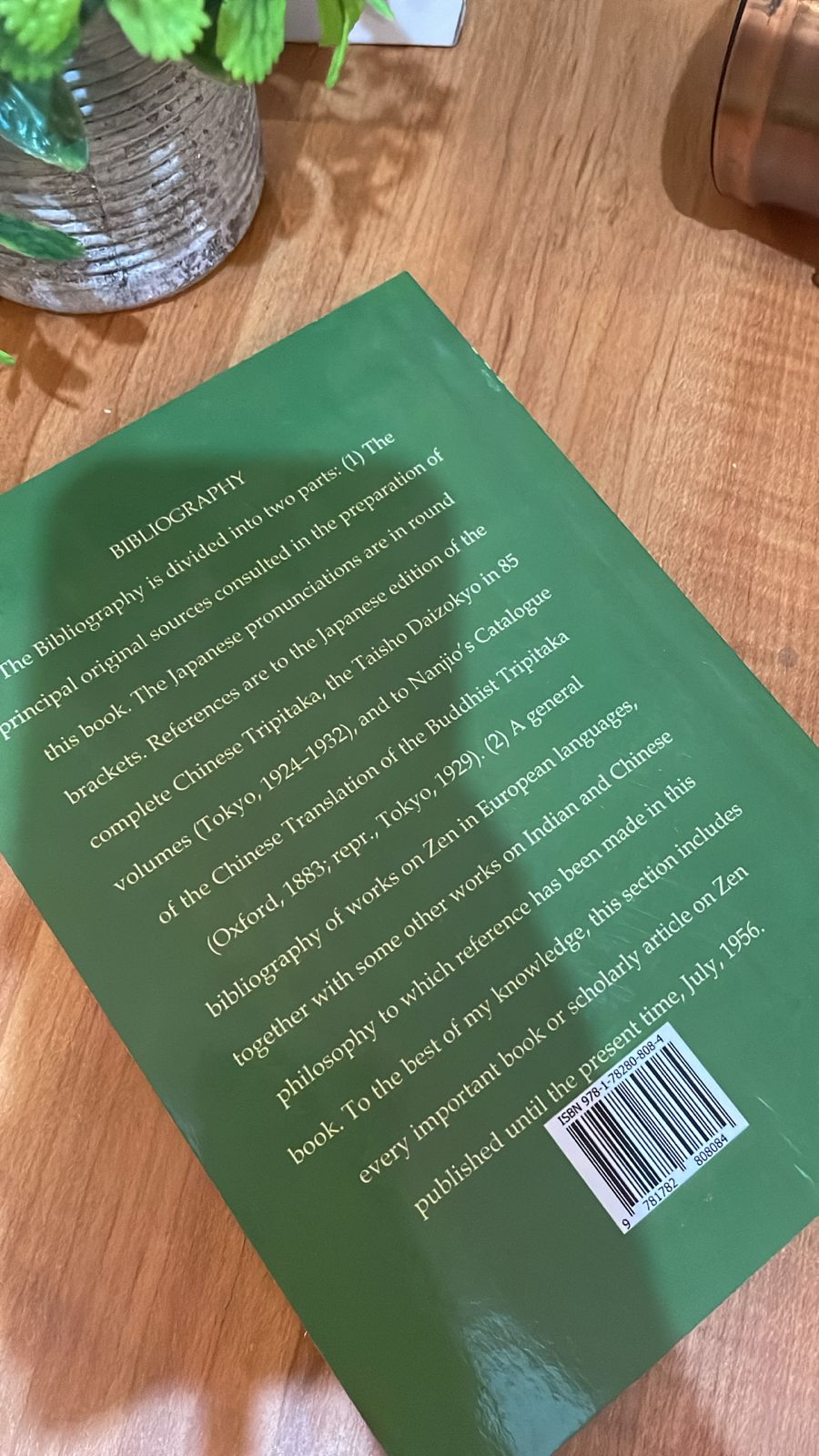









The Way of Zen by Alan Watts
The Way of Zen by Alan Watts is a classic introduction to Zen Buddhism, Eastern philosophy, mindfulness, Taoism, meditation, simplicity, and the art of experiencing life directly.
Alan Watts became one of the most influential interpreters of Eastern philosophy for Western readers.
In this book, he explains where Zen came from, how it developed, and why its ideas remain relevant.
The book explores Buddhism.
Taoism.
Meditation.
Awareness.
Language.
The nature of the self.
And the difference between thinking about life and actually experiencing it.
About The Way of Zen
The Way of Zen is not simply a meditation manual.
It is a philosophical introduction to the history and ideas behind Zen.
Watts begins by exploring the Indian and Chinese traditions that influenced Zen.
He discusses Buddhism.
Taoism.
The development of Ch’an in China.
And the later growth of Zen in Japan.
He then turns toward the practical and philosophical implications of Zen.
What does it mean to live in the present?
Why do people constantly struggle against experience?
Can the mind understand reality without turning everything into concepts?
These questions form the heart of the book.
7 Powerful Lessons from The Way of Zen
1. The Present Moment Matters
One of the central ideas in The Way of Zen is that reality is experienced in the present.
People often live mentally in the past.
Or worry about the future.
Zen emphasizes direct awareness of what is happening now.
This does not mean ignoring responsibilities.
It means recognizing that life is always actually lived in the present moment.
2. Stop Trying to Control Everything
Human beings naturally want control.
We plan.
Predict.
Organize.
Measure.
But not everything can be controlled.
Zen encourages a different relationship with uncertainty.
Instead of fighting every change, people can learn to move with experience.
This idea is closely related to Taoist philosophy.
3. The Self Is Not as Separate as It Feels
People often think of themselves as completely separate from the world.
Watts challenges this assumption.
Breathing depends on the atmosphere.
Food depends on the earth.
Language depends on society.
Life depends on countless relationships.
Zen encourages readers to see the individual as part of a larger process rather than an isolated object.
4. Concepts Are Not Reality
Words are useful.
Labels are useful.
Categories are useful.
But they are not the same as direct experience.
You can describe water.
But the description is not water.
You can explain music.
But the explanation is not the music.
The Way of Zen repeatedly reminds readers not to confuse ideas about reality with reality itself.
5. Simplicity Can Create Clarity
Zen often values simplicity.
Simple spaces.
Simple actions.
Simple attention.
This is not necessarily minimalism in the modern lifestyle sense.
It is more about removing unnecessary mental complication.
When attention is less cluttered, experience can become clearer.
6. Meditation Is About Awareness
Meditation is often misunderstood as trying to force the mind to become completely empty.
Zen takes a different approach.
Thoughts may appear.
Feelings may appear.
Sounds may appear.
The aim is not always to fight them.
Awareness itself becomes the practice.
7. Life Is Not a Problem to Solve
Modern life often feels like a constant list of problems.
Finish this.
Fix that.
Reach the next goal.
Achieve more.
Zen asks whether life itself should be treated like a project that must constantly be completed.
Sometimes experience can simply be experienced.
The Origins of Zen
Zen did not appear suddenly.
It developed through a long interaction between Indian Buddhism and Chinese philosophy.
Buddhist teachings traveled into China.
There they encountered Taoist ideas.
This interaction helped create Ch’an Buddhism.
Ch’an later became known as Zen in Japan.
Watts explains this historical development in an accessible way.
Buddhism and Zen
Zen grows from Buddhist traditions.
One important Buddhist idea is that suffering is connected to attachment.
People want experiences to stay the same.
But everything changes.
Zen does not offer a simple escape from change.
Instead, it encourages greater awareness of impermanence.
Taoism and Zen
Taoism strongly influenced the development of Chinese Zen.
Taoist thought often emphasizes naturalness.
Flow.
Balance.
Non-forcing.
Watts shows how these ideas helped shape Zen.
The result is a philosophy that often values spontaneous action over excessive control.
Wu Wei
A related Taoist concept is wu wei.
It is sometimes translated as non-action.
But this can be misleading.
It does not necessarily mean doing nothing.
It refers more closely to acting without unnecessary force.
Think about swimming with a current instead of constantly fighting against it.
The idea is effort without strain.
The Problem With Overthinking
Thinking is useful.
But thinking can become excessive.
People replay conversations.
Imagine future disasters.
Analyze simple experiences until they become complicated.
Zen does not reject thought.
Instead, it questions the idea that thinking is the only way to understand reality.
Direct Experience
A major theme in The Way of Zen is direct experience.
Taste food.
Listen to music.
Feel the wind.
Observe breathing.
These experiences happen before they are analyzed.
Zen practice often points attention toward that immediate level.
Language and Reality
Language divides reality into categories.
Good.
Bad.
Self.
Other.
Success.
Failure.
These categories help people communicate.
But reality is often more complex.
Watts explains how Zen uses paradox, stories, and unusual teaching methods to disrupt rigid thinking.
Zen Koans
Koans are famous Zen teaching tools.
They often appear to be impossible questions.
The purpose is not always to produce a logical answer.
Instead, a koan may challenge the student’s usual way of thinking.
It can expose the limits of purely analytical reasoning.
Meditation
Meditation is important in Zen.
But Watts presents it as part of a broader way of seeing.
Sitting meditation can develop attention.
Awareness.
Stillness.
But Zen is not limited to formal meditation.
Ordinary activities can also become forms of practice.
Walking.
Eating.
Working.
Listening.
Mindfulness
The modern word “mindfulness” is often associated with stress reduction.
Zen goes deeper.
Awareness is not only a relaxation technique.
It is a way of seeing experience more clearly.
Thoughts are observed.
Feelings are observed.
Sensations are observed.
The observer itself becomes something to investigate.
The Illusion of Control
People often believe they can control life completely.
Career.
Relationships.
Health.
Future events.
But uncertainty remains.
Zen does not encourage passivity.
It encourages realistic acceptance of what cannot be controlled.
This can reduce unnecessary struggle.
Nature
Nature plays an important role in Zen philosophy.
Mountains.
Water.
Trees.
Seasons.
These are not simply decorative images.
They show change.
Cycles.
Interdependence.
Natural processes do not constantly explain themselves.
They simply happen.
Zen often uses nature as a model for simplicity and directness.
Art and Zen
Zen influenced many forms of art.
Painting.
Poetry.
Calligraphy.
Gardens.
Tea culture.
Martial arts.
The emphasis is often on attention, simplicity, and spontaneous expression.
Technique matters.
But technique eventually becomes natural.
Zen and Everyday Life
Zen is not only for monasteries.
Its principles can apply to everyday life.
Eating breakfast.
Walking.
Working.
Talking.
Listening.
The goal is not to turn every action into a complicated spiritual exercise.
It is to become more present in ordinary experience.
Letting Go
Letting go is one of the most difficult ideas in Zen.
People become attached to outcomes.
Reputation.
Possessions.
Relationships.
Identity.
Letting go does not necessarily mean abandoning these things.
It means recognizing that they cannot be controlled forever.
Ego and Identity
People create stories about themselves.
Successful.
Unsuccessful.
Intelligent.
Unlucky.
Important.
Unimportant.
These stories can become rigid.
Zen questions whether identity is as fixed as people assume.
Experience is always changing.
The self is changing too.
Why The Way of Zen Remains Relevant
The modern world is full of distraction.
Notifications.
Deadlines.
News.
Social media.
Constant comparison.
People spend enormous amounts of time mentally somewhere else.
The ideas in The Way of Zen can feel especially relevant in this environment.
The book encourages a slower and more attentive relationship with experience.
Who Should Read This Book?
The Way of Zen is ideal for readers interested in philosophy, Buddhism, Zen, meditation, mindfulness, spirituality, Taoism, and Eastern thought.
It may especially appeal to readers who enjoy philosophical books rather than step-by-step self-help.
Beginners can use it as an introduction to Zen history and ideas.
More experienced readers may appreciate Watts’s interpretation and writing style.
About Alan Watts
Alan Watts was a British-born philosopher, writer, and speaker known for introducing Eastern philosophy to Western audiences.
Penguin Random House notes that he became especially well known for interpreting Zen Buddhism and Indian and Chinese philosophy.
He wrote more than twenty books on religion, philosophy, psychology, and spirituality.
Readers can learn more through the official Alan Watts website.
Product Details
Title: The Way of Zen
Author: Alan Watts
Genre: Philosophy / Buddhism / Zen / Spirituality / Mindfulness
Language: English
Original Publication: 1957
Common Vintage Paperback Edition
Publisher: Vintage
ISBN-13: 9780375705106
ISBN-10: 0375705104
Format: Paperback
Pages: 256
Publication Date: January 26, 1999
Dimensions: Approximately 5-3/16 × 8 inches
Penguin Random House confirms these specifications for the Vintage paperback edition.
Different international editions may use different ISBNs, covers, page counts, and dimensions.
Always check the barcode printed on your physical copy before entering final WooCommerce specifications.
Explore More Philosophy and Self-Development Books
The Way of Zen is ultimately a book about learning to experience life with less resistance.
It encourages readers to notice how much energy is spent trying to control what cannot be controlled.
Zen does not promise a life without difficulty.
It offers a different way of relating to difficulty.
Pay attention.
Let experience unfold.
Question rigid assumptions.
And remember that life is happening now.
Readers looking for more philosophy and personal-development titles can explore Self-Help & Psychology Books at Bargain Books.
You can also explore Non-Fiction & Knowledge Books at Bargain Books.
For readers interested in Zen Buddhism, meditation, mindfulness, Taoism, spirituality, and Eastern philosophy, The Way of Zen remains one of Alan Watts’s most accessible and influential works.
Be the first to review “Way of Zen by Alan Watts”
Related products
-24%
Out of stock
Non-Fiction & Knowledge
Original price was: රු2,100.00.රු1,600.00Current price is: රු1,600.00.
3 X Rs. 533.33 or 8% Cashback with


or 3 X රු533.33 with


or up to 4 X රු400.00 with

-19%

Out of stock
Non-Fiction & Knowledge
Original price was: රු2,650.00.රු2,150.00Current price is: රු2,150.00.
3 X Rs. 716.67 or 8% Cashback with
or 3 X රු716.67 with
or up to 4 X රු537.50 with
Non-Fiction & Knowledge
රු2,450.00
3 X Rs. 816.67 or 8% Cashback with
or 3 X රු816.67 with
or up to 4 X රු612.50 with
Out of stock
Non-Fiction & Knowledge
රු1,800.00
3 X Rs. 600.00 or 8% Cashback with
or 3 X රු600.00 with
or up to 4 X රු450.00 with
-13%

Out of stock
Non-Fiction & Knowledge
Original price was: රු3,900.00.රු3,400.00Current price is: රු3,400.00.
3 X Rs. 1,133.33 or 8% Cashback with
or 3 X රු1,133.33 with
or up to 4 X රු850.00 with
-18%

Out of stock
Original price was: රු2,800.00.රු2,300.00Current price is: රු2,300.00.
3 X Rs. 766.67 or 8% Cashback with
or 3 X රු766.67 with
or up to 4 X රු575.00 with
Out of stock
Non-Fiction & Knowledge
රු1,600.00
3 X Rs. 533.33 or 8% Cashback with
or 3 X රු533.33 with
or up to 4 X රු400.00 with
-26%

Out of stock
Non-Fiction & Knowledge
Original price was: රු2,000.00.රු1,490.00Current price is: රු1,490.00.
3 X Rs. 496.67 or 8% Cashback with
or 3 X රු496.67 with
or up to 4 X රු372.50 with
Reviews
There are no reviews yet.