
No products in the cart.
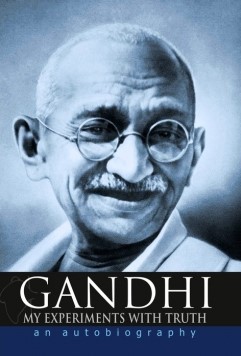
The Story of My Experiments With Truth by Mahatma Gandhi


රු1,800.00
3 X Rs. 600.00 or 8% Cashback with


or 3 X රු600.00 with


or up to 4 X රු450.00 with


Explore The Story of My Experiments With Truth by Mahatma Gandhi, a profound autobiography of one of history’s greatest leaders. Discover Gandhi’s journey of self-discovery, nonviolent resistance, and spiritual growth. Perfect for readers interested in autobiographies, history, and inspirational leaders!
3 in stock
The Story of My Experiments with Truth by Mahatma Gandhi
The Story of My Experiments with Truth by Mahatma Gandhi is one of the most influential autobiographies of the twentieth century.
Rather than simply recording important events from his life, Gandhi uses the book to examine his personal search for truth.
He writes openly about mistakes, fear, faith, discipline, relationships, education, politics, nonviolence, and the experiences that shaped his philosophy.
The result is both a memoir and a deeply reflective account of personal growth.
About The Story of My Experiments with Truth
The Story of My Experiments with Truth begins with Gandhi’s childhood in India.
He writes about his family, education, marriage, religious influences, and early weaknesses.
The story later follows him to England, where he studied law.
It then moves to South Africa, where experiences of racial discrimination played an important role in shaping his political and moral ideas.
Eventually, Gandhi returned to India and became closely involved in public movements based on truth and nonviolent resistance.
Why Gandhi Called Them Experiments
Gandhi did not describe the book as a conventional autobiography.
He explained that his main purpose was to tell the story of his experiments with truth.
For him, truth was not simply an abstract idea.
It was something to be tested through behaviour.
He examined diet, religion, relationships, honesty, self-control, politics, and public service through this approach.
That makes the book unusually personal.
Gandhi frequently admits when he believed he had failed.
7 Powerful Lessons from The Story of My Experiments with Truth
1. Truth Requires Practice
Truth is the central theme of the autobiography.
Gandhi believed honesty should influence both private and public life.
But he also understood that living truthfully was difficult.
He describes situations in which fear, embarrassment, desire, or social pressure made honesty challenging.
The lesson is that truth is something people must continually practise.
2. Admit Your Mistakes
One striking quality of the book is Gandhi’s willingness to discuss failures.
He describes poor choices from childhood and adulthood.
He does not present himself as someone who always knew the right answer.
Instead, he treats mistakes as opportunities for self-examination.
This makes the autobiography feel more human and reflective.
3. Self-Discipline Creates Freedom
Gandhi experiments with food, habits, simplicity, and personal restraint.
He believed that controlling unnecessary desires could help people focus on larger goals.
Self-discipline therefore becomes more than a personal habit.
It becomes part of his moral and political philosophy.
4. Nonviolence Can Be Powerful
The Story of My Experiments with Truth helps readers understand the development of Gandhi’s commitment to nonviolence.
His experiences in South Africa were especially important.
He began developing methods of resistance that relied on courage and moral pressure rather than physical violence.
These ideas later became central to his public life in India.
5. Courage Does Not Mean Having No Fear
Gandhi openly admits that he was shy and sometimes fearful when he was young.
Public speaking could be difficult for him.
Yet he gradually became capable of leading large public movements.
His story suggests that courage can develop through action.
People do not need to begin as fearless individuals.
6. Simplicity Can Strengthen Focus
Gandhi gradually moved toward a simpler way of living.
He believed unnecessary possessions and habits could create distraction.
Reducing them allowed him to focus more clearly on service, discipline, and larger responsibilities.
The book does not present simplicity as punishment.
Instead, it becomes part of his search for freedom from unnecessary dependence.
7. Personal Change Can Influence Society
Gandhi did not completely separate personal ethics from public action.
He believed social change should begin with personal responsibility.
Truth, discipline, nonviolence, and service therefore influenced both his private habits and political methods.
This connection between personal conduct and public leadership is one of the book’s most important ideas.
Gandhi’s Childhood
The autobiography begins with Gandhi’s early life in Gujarat.
He writes about his parents and family influences.
He also discusses his childhood marriage.
Some of these chapters are surprisingly self-critical.
Gandhi examines jealousy, fear, temptation, and mistakes rather than trying to create a perfect image of himself.
This honesty gives readers insight into how his later values developed.
Studying in England
Gandhi travelled to England to study law.
Living in a new country forced him to adapt.
He experimented with diet, clothing, social behaviour, and religious study.
This period expanded his understanding of different cultures and beliefs.
It also encouraged him to think more seriously about personal discipline.
South Africa and Satyagraha
South Africa became one of the most important stages in Gandhi’s development.
He experienced racial discrimination directly.
These experiences pushed him toward public activism.
It was during this period that his ideas about Satyagraha developed.
Satyagraha emphasized resistance based on truth and nonviolence.
Instead of attempting to destroy opponents, Gandhi hoped to confront injustice while preserving moral discipline.
Religion and Spirituality
Religion is an important part of The Story of My Experiments with Truth.
Gandhi was deeply influenced by Hindu traditions.
But he also studied Christianity, Islam, Jainism, and other religious traditions.
He often looked for principles shared across different faiths.
Truth became increasingly connected to his understanding of God.
Readers do not need to share Gandhi’s religious beliefs to appreciate his questions about ethics and responsibility.
Diet and Self-Control
Some readers may be surprised by how much attention Gandhi gives to food.
Diet was part of his larger experiment with discipline.
He tested vegetarianism and different dietary practices.
These experiments reflected his interest in controlling desire and reducing unnecessary dependence.
They also reveal how seriously he examined everyday habits.
Leadership Through Example
Gandhi increasingly believed that leaders should practise the principles they ask others to follow.
This meant accepting personal sacrifice.
It also meant holding himself accountable.
The autobiography shows how his political philosophy developed alongside his private experiments.
Leadership, in this view, was not simply about giving instructions.
It required personal example.
The Importance of Nonviolence
Nonviolence became one of Gandhi’s most famous principles.
However, the book shows that it was connected to a broader moral system.
Truth, courage, self-control, and respect for human dignity all supported it.
Gandhi did not view nonviolence as passive surrender.
He saw it as a disciplined form of resistance.
This distinction became central to his later public movements.
A Book About Growth
The Story of My Experiments with Truth remains powerful because Gandhi does not pretend that personal growth happens instantly.
His ideas change.
His behaviour changes.
He experiments.
Sometimes he believes an experiment has succeeded.
Sometimes he admits that he was mistaken.
That willingness to continue learning gives the autobiography much of its lasting value.
Who Should Read This Book?
This autobiography is ideal for readers interested in biography, history, philosophy, leadership, spirituality, and personal development.
Students may find it useful for understanding Gandhi beyond simplified historical summaries.
Readers interested in nonviolence can see how his philosophy gradually developed.
Those interested in self-improvement may appreciate his focus on honesty, discipline, and self-examination.
It is also an important work for readers studying twentieth-century political and social history.
About Mahatma Gandhi
Mohandas Karamchand Gandhi was an Indian lawyer, political leader, and advocate of nonviolent resistance.
He became a central figure in India’s independence movement.
His ideas about Satyagraha later influenced civil-rights and nonviolent movements around the world.
His autobiography was originally written in Gujarati and translated into English by Mahadev Desai.
Readers can explore the complete text and historical information on the Gandhi Heritage Portal.
Product Details
Title: The Story of My Experiments with Truth
Author: Mahatma Gandhi
English Translator: Mahadev Desai
Genre: Autobiography / Memoir / Philosophy / History
Language: English
Original Gujarati Serial Publication: 1925–1929
First English Edition: Published in two volumes in 1927 and 1929
A common Penguin/Fingerprint paperback edition is listed at 448 pages with ISBN 9788172343118.
Other editions differ significantly in page count, ISBN, translation notes, introductions, and formatting.
Always check the physical copy you are selling before entering final WooCommerce specifications.
Explore More Biography Books
The Story of My Experiments with Truth is more than the record of a famous political leader.
It is the story of someone repeatedly examining his own behaviour.
Gandhi writes about fear, mistakes, discipline, faith, nonviolence, service, and leadership.
His central idea is that truth must be lived rather than simply discussed.
Readers interested in similar life stories can explore more Biography Books at Bargain Books.
For readers interested in history, leadership, philosophy, spirituality, and personal transformation, The Story of My Experiments with Truth remains a major autobiographical work.
| Author | Mahatma Gandhi |
|---|---|
| Type | Paperback Printed Book (Second Quality Copy) |
| ISBN/ISSN | 8172343116 |
| Language | English |
| Pages | 448 |
Be the first to review “The Story of My Experiments With Truth by Mahatma Gandhi”
Related products

Out of stock
Non-Fiction & Knowledge
රු1,900.00
3 X Rs. 633.33 or 8% Cashback with
or 3 X රු633.33 with
or up to 4 X රු475.00 with
-26%

Out of stock
Non-Fiction & Knowledge
Original price was: රු2,000.00.රු1,490.00Current price is: රු1,490.00.
3 X Rs. 496.67 or 8% Cashback with
or 3 X රු496.67 with
or up to 4 X රු372.50 with
-19%

Out of stock
Non-Fiction & Knowledge
Original price was: රු2,650.00.රු2,150.00Current price is: රු2,150.00.
3 X Rs. 716.67 or 8% Cashback with
or 3 X රු716.67 with
or up to 4 X රු537.50 with

Non-Fiction & Knowledge
රු2,450.00
3 X Rs. 816.67 or 8% Cashback with
or 3 X රු816.67 with
or up to 4 X රු612.50 with
-13%

Out of stock
Non-Fiction & Knowledge
Original price was: රු3,900.00.රු3,400.00Current price is: රු3,400.00.
3 X Rs. 1,133.33 or 8% Cashback with
or 3 X රු1,133.33 with
or up to 4 X රු850.00 with
-23%

Non-Fiction & Knowledge
Original price was: රු2,200.00.රු1,700.00Current price is: රු1,700.00.
3 X Rs. 566.67 or 8% Cashback with
or 3 X රු566.67 with
or up to 4 X රු425.00 with
-24%

Out of stock
Non-Fiction & Knowledge
Original price was: රු2,100.00.රු1,600.00Current price is: රු1,600.00.
3 X Rs. 533.33 or 8% Cashback with
or 3 X රු533.33 with
or up to 4 X රු400.00 with

Non-Fiction & Knowledge
රු1,550.00
3 X Rs. 516.67 or 8% Cashback with
or 3 X රු516.67 with
or up to 4 X රු387.50 with
Reviews
There are no reviews yet.