
No products in the cart.
-19%
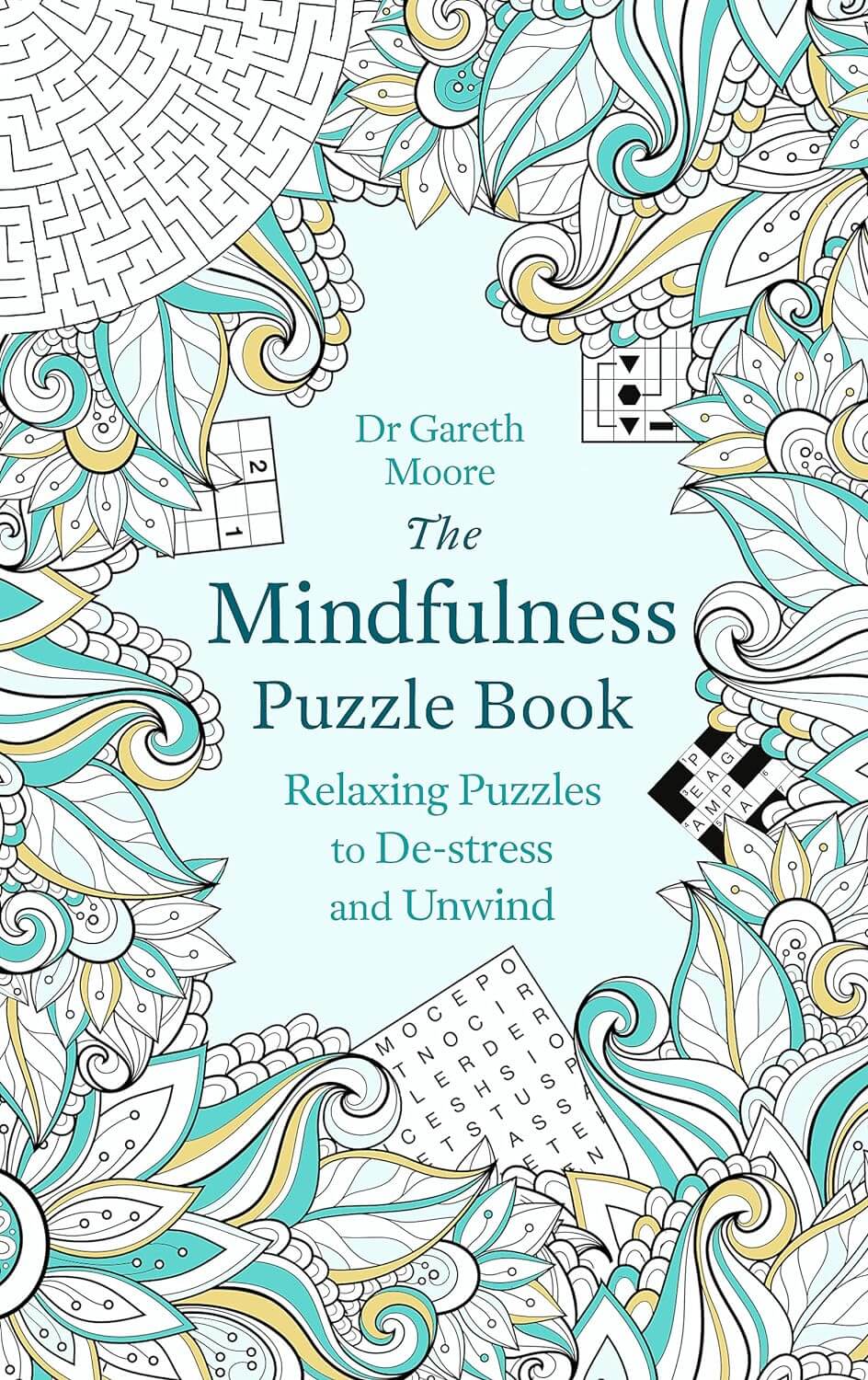
The Mindfulness Puzzle Book: Relaxing puzzels to De-stress and unwind by by Dr. Gareth Moore

Original price was: රු2,700.00.රු2,200.00Current price is: රු2,200.00.
3 X Rs. 733.33 or 8% Cashback with


or 3 X රු733.33 with


or up to 4 X රු550.00 with


Unwind and sharpen your mind with The Mindfulness Puzzle Book by Dr. Gareth Moore. Featuring relaxing puzzles, this book offers a perfect way to de-stress and enhance mindfulness.
Out of stock
Email when stock available
The Mindfulness Puzzle Book by Gareth Moore is a relaxing collection of puzzles and brain-training activities created for people who want to step away from everyday distractions, engage their minds and enjoy a calmer kind of challenge.
Modern life can feel constantly busy.
Messages.
Emails.
Notifications.
Deadlines.
Social media.
Work.
Study.
Even during free time, the mind can remain occupied.
Sometimes what you need is not another screen.
You need something simple enough to enjoy but interesting enough to hold your attention.
That is where this book comes in.
Dr Gareth Moore combines familiar puzzle formats with more creative activities designed to provide an enjoyable balance between challenge and relaxation.
Readers can encounter activities such as:
Mazes.
Dot-to-dots.
Spot-the-difference puzzles.
Colouring activities.
Traditional puzzle formats.
Visual challenges.
Brain-training exercises.
Instead of demanding intense competitive performance, the activities are designed to provide manageable challenges that encourage the reader to concentrate on one thing at a time.
The Mindfulness Puzzle Book by Gareth Moore can be enjoyed during:
A quiet evening.
A lunch break.
A weekend.
A commute when appropriate.
A holiday.
A screen-free break.
Or simply whenever you want to give your attention something different.
It is not a meditation textbook and does not require previous mindfulness experience.
You simply open the book, choose a puzzle and begin.
For puzzle lovers, busy professionals, students, adults looking for screen-free entertainment and anyone who enjoys mentally stimulating activities, this is an accessible and enjoyable collection to keep nearby.
The Mindfulness Puzzle Book by Gareth Moore – Book Overview
The Mindfulness Puzzle Book by Gareth Moore approaches relaxation through focused activity.
People sometimes imagine relaxation means doing absolutely nothing.
But for many people, sitting still while trying not to think can be surprisingly difficult.
The mind immediately begins:
Planning.
Remembering.
Worrying.
Checking the phone.
Thinking about tomorrow.
A puzzle gives attention somewhere specific to go.
There is:
A problem.
A pattern.
A path.
A visual detail.
A clear next step.
That focus can provide a welcome break from the mental noise of everyday life.
Mindfulness Through Focused Activity
Mindfulness is often associated with meditation.
But the broader idea of paying close attention to what you are doing can also be applied to ordinary activities.
While solving a puzzle, attention becomes centered on:
The page.
The task.
The next move.
Instead of trying to think about ten things simultaneously, you concentrate on one challenge.
That focused experience is part of what makes puzzle books appealing as quiet leisure activities.
A Break From Screens
Many people spend much of the day looking at screens.
Phone.
Laptop.
Tablet.
Television.
Work may require a screen.
Entertainment often involves another screen immediately afterward.
A physical puzzle book offers a different experience.
Open the page.
Pick up a pencil.
Work through the challenge.
No notifications.
No loading.
No algorithm deciding what to show next.
That simplicity can be refreshing.
Why Puzzles Can Feel Relaxing
A good recreational puzzle occupies the mind without demanding the same type of pressure as work or study.
You have a clear problem.
You can work through it gradually.
When you make progress, there is a small sense of achievement.
For many readers, this makes puzzles an enjoyable way to transition out of a busy day.
Familiar Puzzle Types
One of the strengths of The Mindfulness Puzzle Book by Gareth Moore is its use of recognizable activities.
A puzzle does not necessarily need to be extremely complicated to be enjoyable.
Familiar formats reduce the time spent learning complicated rules.
You can simply begin.
That makes the book accessible even if you are not an expert puzzle solver.
Mazes
Mazes are simple in concept.
Find a path from one point to another.
Yet even a familiar maze requires:
Attention.
Planning.
Visual tracking.
Patience.
You may enter a path that appears correct.
Then discover it leads nowhere.
Return.
Try another route.
That process provides a satisfying combination of challenge and simplicity.
Dot-to-Dots
Dot-to-dot activities turn sequential attention into a picture.
Each step is small.
Find the next number.
Connect it.
Continue.
Eventually, a larger image emerges.
The activity rewards patience rather than speed.
Spot the Difference
Spot-the-difference puzzles encourage careful observation.
Two images may appear almost identical.
Then you begin noticing:
A missing object.
A changed shape.
A small detail.
A different position.
The activity makes you slow down and look more closely.
Colouring Activities
Colouring is another activity often associated with quiet concentration.
There is no need to rush.
No single speed is correct.
You simply work through the page.
For some readers, combining puzzles with creative activities makes the book more varied than a collection containing only one type of challenge.
Variety Matters
A book with only one puzzle format may become repetitive.
The Mindfulness Puzzle Book by Gareth Moore offers variety so readers can move between different styles of activity.
If you do not feel like solving one type of puzzle, choose another.
This can keep the experience fresh.
Challenge Without Competition
Many areas of life involve competition.
Work performance.
Grades.
Sales targets.
Sports.
Social comparison.
A personal puzzle book does not require you to compete with anyone.
You can work at your own pace.
Five minutes.
Twenty minutes.
An hour.
There is no audience.
No Need to Be Fast
Some people assume being good at puzzles means completing them quickly.
That is not necessary here.
The purpose is enjoyment.
Take your time.
Pause.
Return later.
The process can matter as much as finishing.
Small Achievements
Large goals can take months or years.
A puzzle offers a smaller cycle.
Begin.
Think.
Solve.
Complete.
That small completion can feel satisfying, particularly after a day filled with unfinished tasks.
Give Your Brain One Job
Modern multitasking often means switching attention rapidly between activities.
Writing an email.
Checking a message.
Returning to work.
Looking at a notification.
A puzzle reverses that pattern.
For a few minutes, the brain has one job.
Solve what is on the page.
Attention
Attention is a limited resource.
When it is constantly divided, people can feel mentally tired even without completing much.
Puzzle-solving invites sustained attention.
You stay with the problem long enough to understand it.
Observation
Some puzzles reward close observation.
Instead of rushing past details, you examine them.
This can be a refreshing contrast with digital environments where users are encouraged to scroll rapidly through endless information.
Patience
Not every puzzle gives up its answer immediately.
You may try one approach.
It fails.
You try another.
This naturally encourages patience.
Persistence Without High Stakes
The advantage of a recreational puzzle is that failure carries almost no serious consequence.
Wrong route?
Try again.
Missed detail?
Look again.
This creates a low-pressure environment for persistence.
Problem-Solving
Puzzle solving often involves breaking a problem into smaller pieces.
What do I know?
What have I already tried?
Which possibility can I eliminate?
What should I examine next?
These are useful ways of thinking, even though the book is primarily intended for enjoyment.
Creativity
Some challenges also encourage more flexible thought.
When the obvious approach does not work, you may need to look at the problem differently.
That moment of changing perspective is part of what makes puzzles satisfying.
A Quiet Evening Activity
The Mindfulness Puzzle Book by Gareth Moore can be a good alternative to spending an entire evening scrolling through a phone.
You do not need to commit to finishing the book.
Open one page.
Complete one activity.
Stop whenever you want.
A Weekend Companion
Weekends are often meant for rest, but they can easily become filled with more screen time.
A puzzle book provides another option.
Tea or coffee.
A comfortable place.
A pencil.
A few puzzles.
Simple entertainment can sometimes be the most enjoyable.
Travel
Puzzle books can also make useful travel companions.
Long journeys often include periods of waiting.
A physical book does not necessarily require:
Internet access.
Charging.
Headphones.
A subscription.
You can simply open it and begin.
Waiting Time
Waiting can feel frustrating because the mind wants stimulation.
Instead of repeatedly checking a phone, a puzzle can turn waiting into a small recreational activity.
Study Breaks
Students sometimes attempt to study continuously for hours.
Eventually concentration declines.
A short break can help create separation between study sessions.
A light puzzle offers a different type of mental activity from reading notes or writing assignments.
Work Breaks
Professionals may experience similar fatigue.
After hours of:
Documents.
Spreadsheets.
Emails.
Meetings.
Switching to another work-related screen may not feel like a real break.
A physical puzzle can create a clearer transition.
Mindful Breaks
A break does not have to involve complete inactivity.
A mindful break can simply mean doing one enjoyable thing with full attention.
For some readers, puzzles are ideal for this.
Reducing Digital Distraction
Phones are useful.
But many people open them without a specific purpose.
Check one message.
Then social media.
Then a video.
Then another notification.
Twenty minutes disappear.
A puzzle book provides an activity with a natural beginning and end.
Screen-Free Entertainment
That makes The Mindfulness Puzzle Book by Gareth Moore particularly attractive to readers looking for screen-free hobbies.
Other screen-free activities may include:
Reading.
Drawing.
Journaling.
Walking.
Crafts.
Puzzles fit naturally into this category.
For Adults
Although activities such as mazes and dot-to-dots may remind readers of childhood, the book presents puzzle activities for adult enjoyment.
There is something appealing about rediscovering activities that do not require constant productivity.
You do not need to monetize them.
You do not need to become an expert.
You can simply enjoy them.
Play Matters
Adults sometimes forget the value of play.
Every activity begins to require a purpose.
Career development.
Fitness.
Money.
Achievement.
A recreational puzzle can simply be something enjoyable.
Mental Stimulation
At the same time, puzzles involve active participation.
Unlike passively watching something, you need to:
Observe.
Decide.
Remember.
Compare.
Experiment.
That makes the experience mentally engaging.
Active Entertainment
There is an important difference between consuming entertainment and participating in it.
A film provides the story.
A puzzle asks you to do something.
That sense of participation is part of the appeal.
Not a Test
However, The Mindfulness Puzzle Book by Gareth Moore should not be approached like an examination.
There is no need to worry about whether your performance proves anything about your intelligence.
The puzzles exist to be enjoyed.
You Can Skip a Puzzle
Do not like one activity?
Skip it.
Return later.
Choose another.
A recreational book should work for the reader, not the other way around.
Create a Puzzle Routine
Some readers may enjoy making puzzles part of a small routine.
For example:
Ten minutes after work.
One puzzle before bed.
A few pages on Sunday morning.
A short puzzle during lunch.
The exact schedule does not matter.
Pair It With a Calm Environment
You can make the experience more relaxing by reducing other distractions.
Put the phone aside.
Find a comfortable place.
Make a drink.
Choose a puzzle.
Focus only on that for a short period.
No Complicated Setup
One advantage is simplicity.
You do not need:
Equipment.
A membership.
Software.
Training.
A complicated set of instructions.
The book and something to write with are enough for most activities.
A Gift for Puzzle Lovers
The Mindfulness Puzzle Book by Gareth Moore can also make a thoughtful gift.
It may suit people who enjoy:
Crosswords and puzzles.
Brain games.
Quiet hobbies.
Creative activities.
Screen-free entertainment.
Mindfulness-themed gifts.
Relaxing leisure activities.
A Gift for Busy People
Sometimes the person who most needs a break is the person who says:
“I don’t have time for hobbies.”
A puzzle book does not require a large time commitment.
A few minutes can still be enjoyable.
A Different Kind of Mindfulness Book
This is important for customers to understand.
The Mindfulness Puzzle Book by Gareth Moore is not primarily a book explaining Buddhist mindfulness, meditation theory or clinical mindfulness practices.
It is a puzzle and activity book designed around focused, restful recreation.
Readers expecting long chapters about meditation techniques should choose a different title.
Readers wanting puzzles may find this format much more appealing.
The Mindfulness Puzzle Book Series
This book began a wider Mindfulness Puzzle Book series by Gareth Moore.
Additional volumes followed with further collections of relaxing and brain-training puzzles.
That makes the original book a natural starting point.
Do You Need to Read the Books in Order?
No traditional reading order is required.
These are puzzle collections rather than a continuous story.
You can begin with the first book and continue with later volumes if you enjoy the format.
Gareth Moore
Dr Gareth Moore is a bestselling puzzle author known for creating puzzle and brain-training books for a wide range of readers.
His work covers many styles of:
Logic activities.
Brain games.
Visual puzzles.
Number challenges.
Recreational puzzle books.
His experience in puzzle creation helps make the activities varied and approachable.
Is The Mindfulness Puzzle Book a Reading Book?
Not in the traditional sense.
You do not need to read it from page one to the final page like a novel.
It is interactive.
You work with the book.
Solve.
Draw.
Observe.
Complete activities.
Can Beginners Use It?
Yes.
The collection uses familiar puzzle styles and is intended for general readers rather than specialist competition puzzlers.
You can begin without advanced puzzle experience.
Do I Need Mindfulness Experience?
No.
You do not need previous experience with:
Meditation.
Mindfulness courses.
Yoga.
Buddhist practice.
The focus is on engaging with puzzles and activities.
Is It a Meditation Book?
No.
Although mindfulness is part of the concept and title, the book is primarily categorized as a puzzle and recreational activity book.
Readers specifically seeking formal meditation instruction may prefer a dedicated mindfulness guide.
Is It a Stress Treatment?
No.
The book is designed as relaxing recreation and should not be presented as medical or psychological treatment.
Puzzles may provide an enjoyable break, but persistent anxiety, severe stress or other mental-health concerns may require appropriate professional support.
Is It Good for Screen-Free Time?
Yes.
A physical puzzle book can be particularly useful for readers trying to spend some leisure time away from phones, tablets and computers.
Can I Complete It in Any Order?
Yes.
You can choose whichever activities appeal to you.
There is no requirement to complete every page sequentially.
Is It Suitable as a Gift?
Yes.
It can be a useful gift for:
Puzzle fans.
Busy professionals.
Students.
Adults who enjoy quiet hobbies.
People looking for screen-free activities.
Readers interested in mindfulness-themed products.
Relaxation Without Doing Nothing
One of the most appealing ideas behind The Mindfulness Puzzle Book by Gareth Moore is that relaxation can still involve engagement.
You do not have to sit completely still.
You can:
Think.
Draw.
Search.
Compare.
Solve.
while giving your attention a break from everyday responsibilities.
Focus on the Page in Front of You
Life often demands that we think far ahead.
Next week.
Next month.
Next deadline.
A puzzle asks something simpler:
What is the next step here?
For a few minutes, that can be enough.
Notice Progress
Puzzles provide visible progress.
A maze gets completed.
Dots connect.
Differences are found.
A challenge is solved.
That sense of completion can make the activity satisfying.
Do One Thing at a Time
This may be the simplest lesson connected with the book.
You do not have to solve everything at once.
Not the puzzle.
Not the day.
Not every problem in life.
For now, solve the task in front of you.
Important Features
The Mindfulness Puzzle Book by Gareth Moore offers:
- A varied collection of recreational puzzles
- Brain-training activities
- Mazes
- Dot-to-dot activities
- Spot-the-difference challenges
- Colouring activities
- Familiar puzzle formats
- Screen-free entertainment
- Flexible, self-paced use
- Activities designed around focused relaxation
- A practical gift option for puzzle lovers
- An easy activity to enjoy in short sessions
7 Powerful Reasons to Try The Mindfulness Puzzle Book by Gareth Moore
There are many reasons to enjoy The Mindfulness Puzzle Book by Gareth Moore, but seven stand out:
- It gives your attention a break from everyday distractions – Focusing on one puzzle at a time can provide a welcome change from constant notifications, messages and multitasking.
- It includes a variety of activities – Mazes, dot-to-dots, spot-the-difference, colouring and other puzzle formats help keep the experience varied.
- It provides screen-free entertainment – The physical puzzle format is ideal for people who want something enjoyable to do away from phones, tablets and computers.
- You can use it at your own pace – Complete one activity or spend a longer session working through several pages; there is no pressure to rush.
- The puzzles combine relaxation with mental engagement – Instead of passive entertainment, the activities invite observation, concentration and problem-solving.
- It is suitable for ordinary puzzle lovers, not only experts – Familiar formats make the collection approachable for readers who simply want an enjoyable challenge.
- It makes a thoughtful gift – Its combination of puzzles, creativity and quiet leisure makes it suitable for students, professionals, puzzle enthusiasts and people looking for a calming screen-free hobby.
Why Read The Mindfulness Puzzle Book by Gareth Moore?
The Mindfulness Puzzle Book by Gareth Moore is an excellent choice for readers interested in:
- Mindfulness puzzles
- Puzzle books for adults
- Relaxing puzzles
- Brain games
- Gareth Moore
- Screen-free activities
- Mazes
- Dot-to-dot puzzles
- Spot-the-difference
- Colouring activities
- Brain-training books
- Quiet hobbies
- Puzzle gifts
- Recreational puzzles
- Focus activities
- Mental challenges
- Relaxing activities
- Travel puzzle books
- Mindful leisure
- Adult activity books
It is especially suitable for readers who want something more active than simply reading but calmer than highly competitive games.
Who Should Use This Book?
The Mindfulness Puzzle Book by Gareth Moore may especially appeal to:
- Puzzle lovers
- Busy professionals
- Students
- Adults looking for screen-free hobbies
- People who enjoy brain games
- Readers who enjoy mazes
- People who like visual puzzles
- Fans of dot-to-dot activities
- Travellers
- Commuters
- People looking for quiet evening activities
- Gift buyers
- Readers interested in mindfulness-themed activities
- Anyone who enjoys solving small challenges at their own pace
The Mindfulness Puzzle Book by Gareth Moore – Give Your Mind One Enjoyable Thing to Focus On
The Mindfulness Puzzle Book by Gareth Moore offers something that can feel surprisingly rare in a busy day:
One task.
Not ten tabs.
Not five notifications.
Not three conversations happening simultaneously.
One page.
One puzzle.
One next step.
You look.
Think.
Try.
Maybe you make a mistake.
You try again.
Then eventually:
Solved.
That simple cycle can be deeply satisfying.
The purpose is not to become the world’s greatest puzzle solver.
It is not to prove intelligence.
It is not another productivity target.
It is simply an opportunity to spend some time absorbed in an enjoyable activity.
Modern life provides endless ways to consume information.
A puzzle asks you to participate.
Instead of scrolling, you search.
Instead of watching someone else solve something, you solve it.
Instead of constantly switching attention, you stay with one problem for a little longer.
That makes this book particularly suitable for people trying to create more intentional breaks from digital life.
Keep it on a desk.
Beside the bed.
In a travel bag.
On a coffee table.
Open it whenever you have a few quiet minutes.
Complete one puzzle.
Or several.
There is no correct schedule.
The value comes from giving yourself permission to stop thinking about everything else for a moment and concentrate on the challenge directly in front of you.
For readers who enjoy puzzles, brain games, creative activities and screen-free leisure, The Mindfulness Puzzle Book by Gareth Moore is an accessible collection designed to turn a few spare minutes into focused, enjoyable puzzle time.
Learn more about The Mindfulness Puzzle Book by Gareth Moore on the official Hachette website.
Explore more mindfulness and activity books at Bargain Books.
| Weight | 0.22 kg |
|---|---|
| Dimensions | 13.65 × 1.59 × 21.91 cm |
| Author | Dr. Gareth Moore |
| Type | Paperback Printed Book (Second Quality Copy) |
| Language | English |
| Pages | 192 |
Be the first to review “The Mindfulness Puzzle Book: Relaxing puzzels to De-stress and unwind by by Dr. Gareth Moore”
Related products
-14%

Self-Help & Psychology
Original price was: රු2,900.00.රු2,500.00Current price is: රු2,500.00.
3 X Rs. 833.33 or 8% Cashback with
or 3 X රු833.33 with
or up to 4 X රු625.00 with
Non-Fiction & Knowledge
රු1,700.00
3 X Rs. 566.67 or 8% Cashback with
or 3 X රු566.67 with
or up to 4 X රු425.00 with
Self-Help & Psychology
රු2,200.00
3 X Rs. 733.33 or 8% Cashback with
or 3 X රු733.33 with
or up to 4 X රු550.00 with
-34%

Self-Help & Psychology
Original price was: රු2,350.00.රු1,550.00Current price is: රු1,550.00.
3 X Rs. 516.67 or 8% Cashback with
or 3 X රු516.67 with
or up to 4 X රු387.50 with
-24%
Out of stock
Non-Fiction & Knowledge
Original price was: රු2,100.00.රු1,600.00Current price is: රු1,600.00.
3 X Rs. 533.33 or 8% Cashback with
or 3 X රු533.33 with
or up to 4 X රු400.00 with
-23%
Non-Fiction & Knowledge
Original price was: රු2,200.00.රු1,700.00Current price is: රු1,700.00.
3 X Rs. 566.67 or 8% Cashback with
or 3 X රු566.67 with
or up to 4 X රු425.00 with
-33%

Self-Help & Psychology
Original price was: රු2,300.00.රු1,550.00Current price is: රු1,550.00.
3 X Rs. 516.67 or 8% Cashback with
or 3 X රු516.67 with
or up to 4 X රු387.50 with
-24%
Out of stock
Non-Fiction & Knowledge
Original price was: රු2,100.00.රු1,600.00Current price is: රු1,600.00.
3 X Rs. 533.33 or 8% Cashback with
or 3 X රු533.33 with
or up to 4 X රු400.00 with
Reviews
There are no reviews yet.