
No products in the cart.
-10%
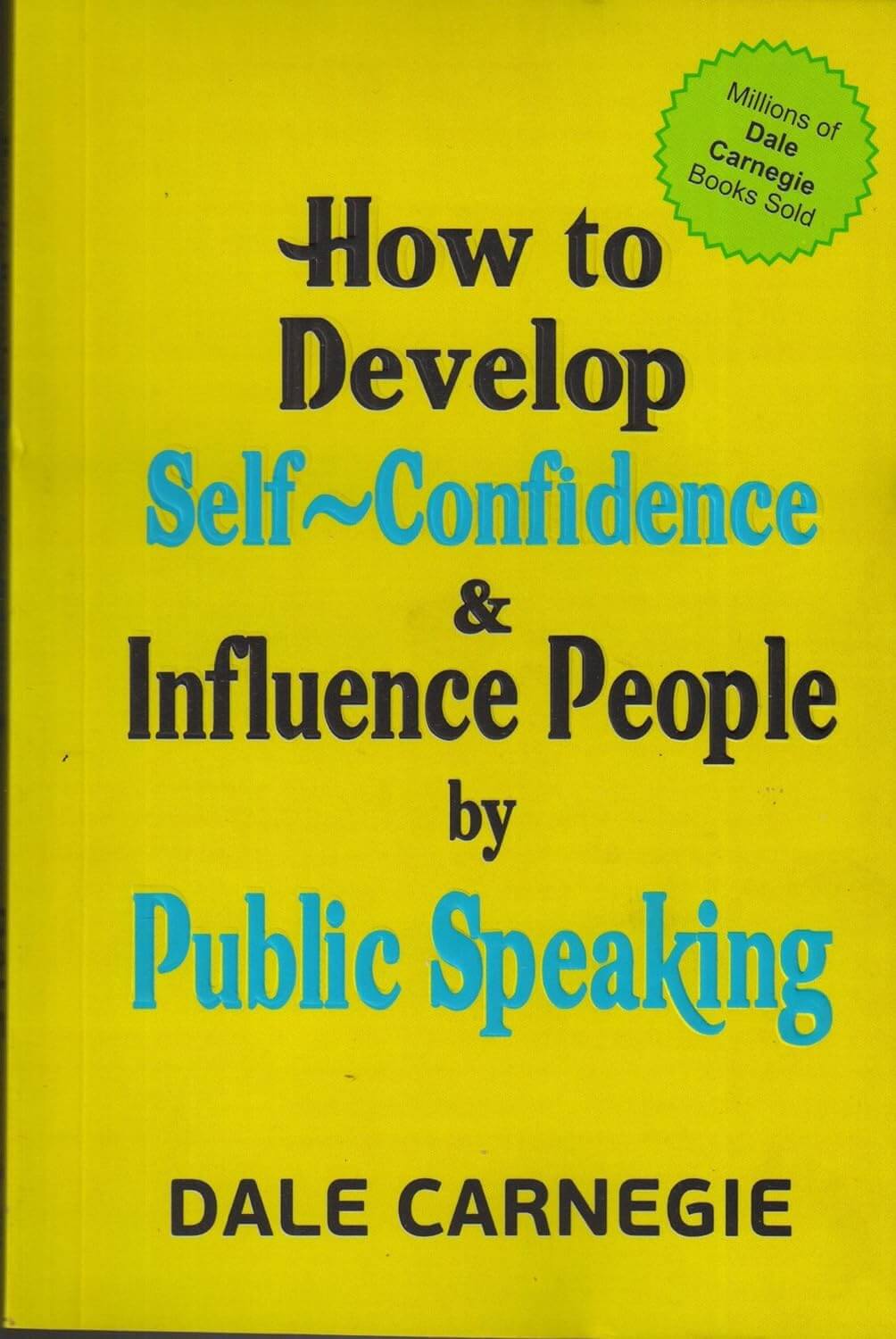
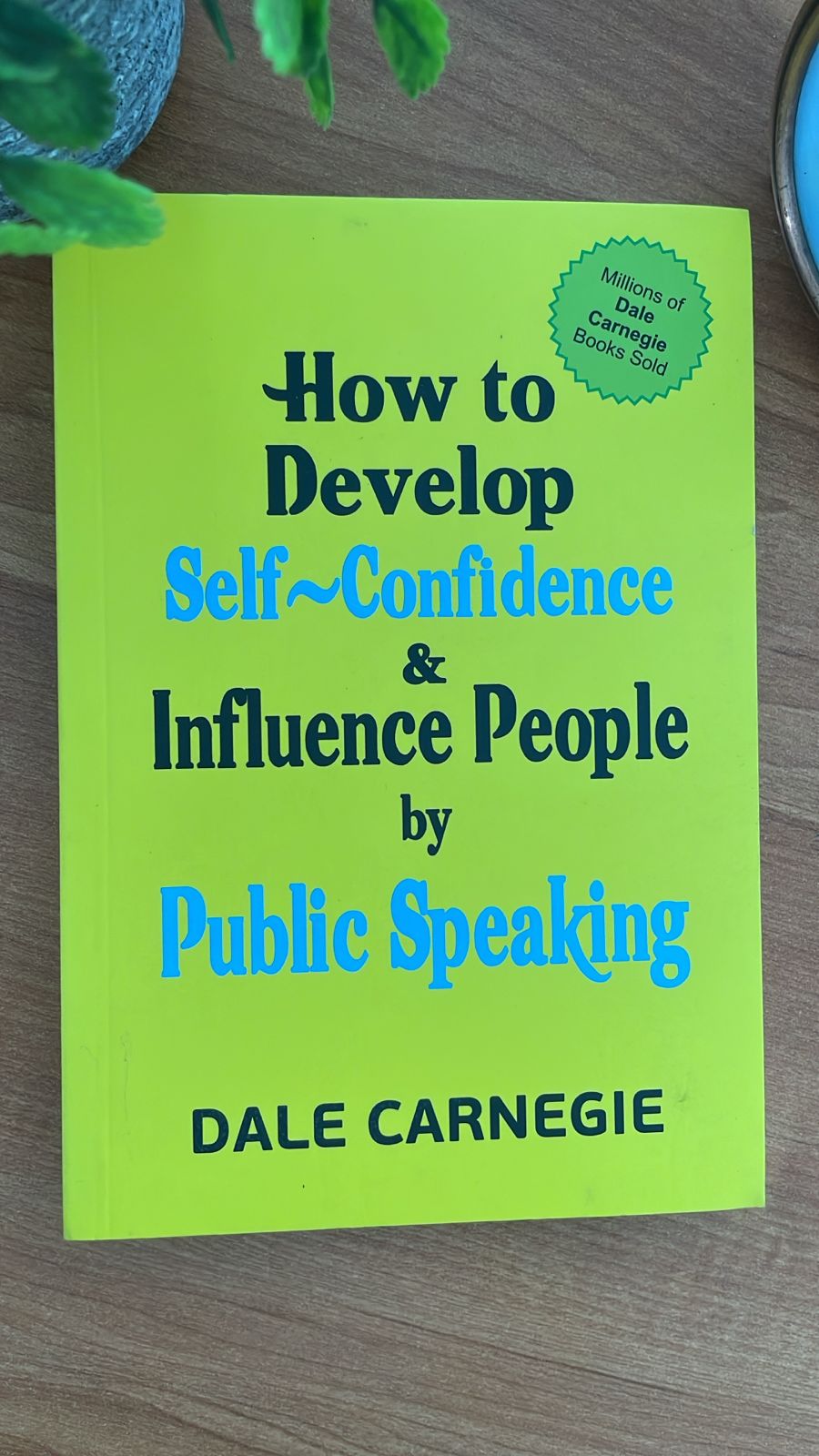
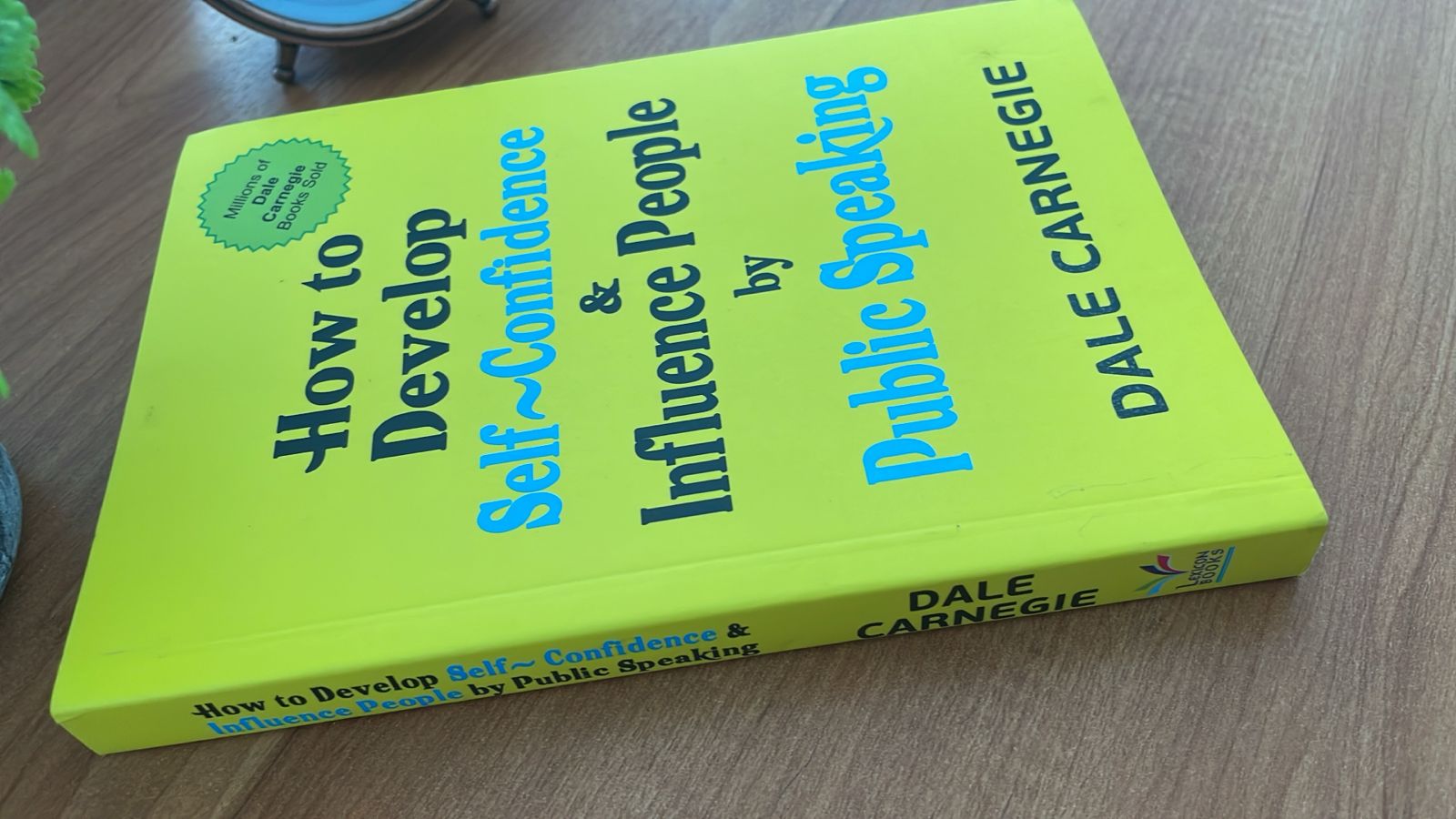


How to Develop Self-Confidence & Influence People By Public Speaking [Paperback] by Dale Carnegie

Original price was: රු2,000.00.රු1,800.00Current price is: රු1,800.00.
3 X Rs. 600.00 or 8% Cashback with


or 3 X රු600.00 with


or up to 4 X රු450.00 with


Enhance your communication skills and public speaking abilities with Dale Carnegie’s classic, ‘How to Develop Self-Confidence & Influence People By Public Speaking.’ This essential guide offers practical techniques and strategies for overcoming fears and mastering the art of persuasive speaking.
5 in stock
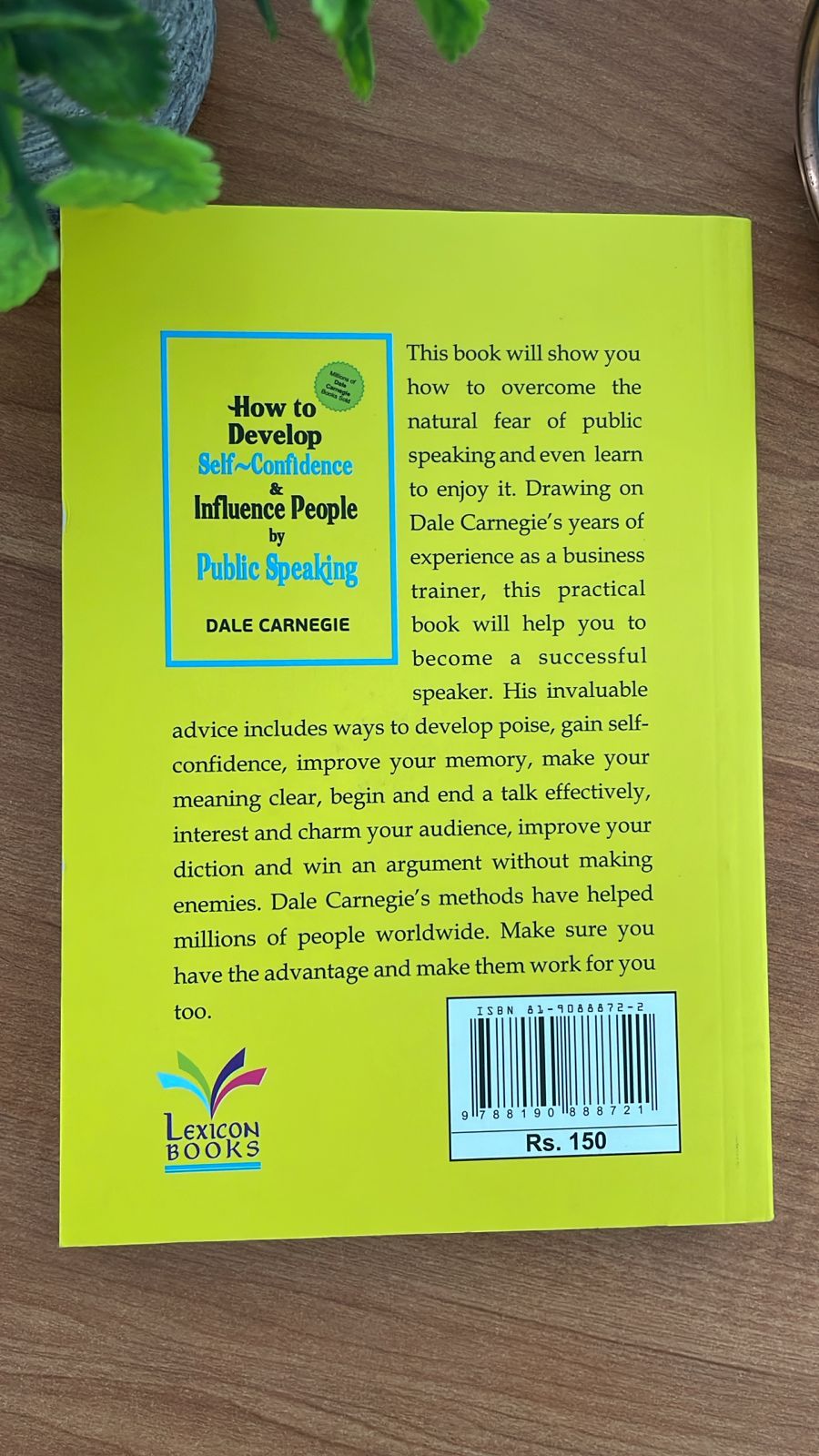
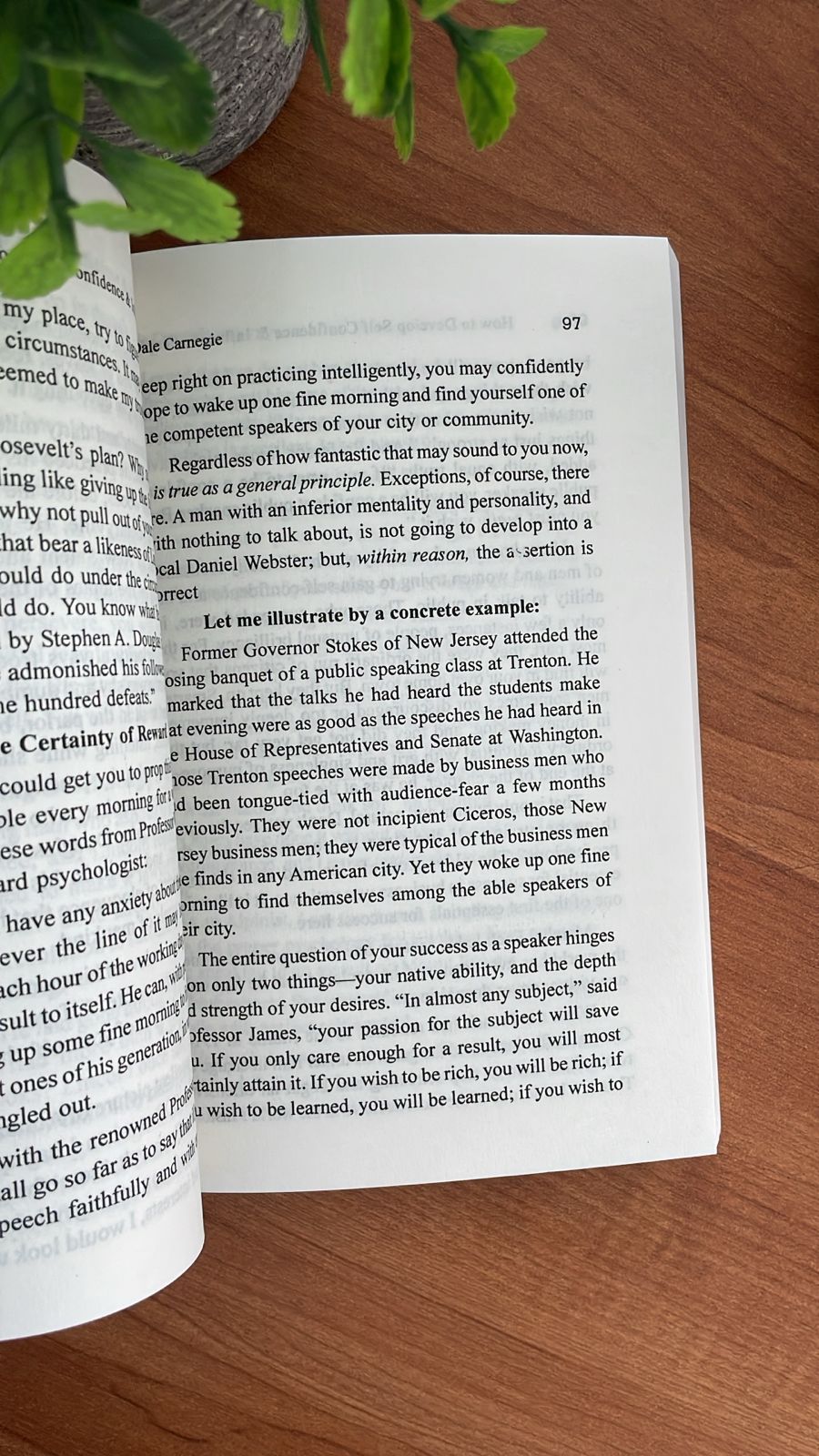
How to Develop Self-Confidence by Dale Carnegie is a practical guide for anyone who wants to become more confident, persuasive, and effective when speaking in front of other people. Drawing on Dale Carnegie’s extensive experience teaching communication and public speaking, the book provides simple techniques for overcoming nervousness, organizing ideas, improving delivery, and connecting with an audience.
Public speaking is one of the most common fears people experience.
A student may feel nervous before a presentation.
An employee may struggle when speaking during a meeting.
A business owner may need to explain an idea to customers.
A manager may need to motivate a team.
In all of these situations, communication skills can influence results.
The central message of How to Develop Self-Confidence by Dale Carnegie is that successful public speaking is not something reserved for naturally confident people.
It is a skill that can be learned.
How to Develop Self-Confidence by Dale Carnegie – Book Overview
How to Develop Self-Confidence by Dale Carnegie explains how ordinary people can become better speakers through preparation, practice, experience, and understanding how audiences respond.
Carnegie rejects the idea that great speakers are simply born with natural talent.
Confidence develops through action.
The more people practise speaking, the more familiar the experience becomes.
Preparation also reduces uncertainty.
When someone understands the topic they are discussing, organizes their ideas clearly, and knows what they want the audience to remember, speaking becomes easier.
The book provides practical advice on everything from beginning a speech to creating a memorable ending.
Overcoming the Fear of Public Speaking
One of the biggest topics in How to Develop Self-Confidence by Dale Carnegie is fear.
Many people feel nervous before speaking to an audience.
Their heart may beat faster.
Their hands may shake.
They may forget words they knew perfectly moments earlier.
They may become so focused on making a mistake that speaking becomes even more difficult.
Carnegie explains that nervousness is normal.
The goal is not necessarily to eliminate every nervous feeling.
Instead, speakers can learn to continue despite those feelings.
Preparation and repeated practice gradually make public speaking less frightening.
Confidence Comes From Preparation
Confidence is easier when you know what you want to say.
How to Develop Self-Confidence by Dale Carnegie emphasizes the importance of preparation.
A speaker who understands the topic deeply does not need to memorize every sentence.
They know the ideas.
They know the examples.
They know the main message.
This allows the speech to feel more natural.
Good preparation may include:
- Researching the topic
- Identifying the main message
- Organizing key points
- Selecting useful examples
- Practising aloud
- Understanding the audience
- Preparing the opening and ending carefully
Preparation turns uncertainty into familiarity.
That familiarity helps create confidence.
Speak About What You Know
Another important lesson in How to Develop Self-Confidence by Dale Carnegie is the value of speaking from experience and genuine knowledge.
Audiences can often tell when a speaker truly understands the subject.
Personal experiences can make a presentation more convincing because they contain specific details and genuine emotion.
Instead of filling a speech with complicated theories, Carnegie encourages speakers to use information they understand well.
This can make communication clearer and easier to remember.
A speaker who believes in their own message is also more likely to communicate with enthusiasm.
Organizing a Speech Clearly
A good speech needs structure.
How to Develop Self-Confidence by Dale Carnegie teaches readers to organize ideas so that audiences can follow them easily.
A presentation should not feel like unrelated thoughts appearing randomly.
The speaker should know where the speech is going.
A simple structure may include:
- A strong opening
- A clear central message
- Supporting examples or evidence
- A memorable conclusion
When ideas are organized clearly, the speaker feels more confident and the audience understands more easily.
Good structure also reduces the chance of forgetting important points.
How to Start a Speech
The opening of a presentation matters because it creates the audience’s first impression.
How to Develop Self-Confidence by Dale Carnegie provides guidance on how to begin in a way that attracts attention.
A speaker may begin with:
- An interesting story
- A surprising fact
- A question
- A real-life example
- A problem the audience understands
- A strong statement
The goal is to give people a reason to keep listening.
Long apologies or uncertain beginnings can weaken a presentation before the main message even starts.
A speaker should begin with purpose.
How to End a Speech
The ending is equally important.
People often remember the final moments of a presentation.
How to Develop Self-Confidence by Dale Carnegie encourages speakers to finish deliberately rather than stopping suddenly because they have run out of material.
A strong ending may summarize the central idea.
It may challenge the audience to take action.
It may return to a story used earlier.
It may provide a memorable statement.
The exact technique depends on the speech.
But the final message should reinforce what the speaker wants the audience to remember.
Improving Your Memory
Memory is another important topic in How to Develop Self-Confidence by Dale Carnegie.
Speakers often fear forgetting what they planned to say.
Trying to memorize an entire speech word for word can sometimes make this problem worse.
If one sentence is forgotten, the speaker may lose confidence because the next sentence depended on remembering the exact sequence.
A better approach is to understand the main ideas.
Speakers can also improve memory by connecting information with images, stories, examples, and associations.
Meaningful information is often easier to remember than isolated words.
Speak Naturally
Great public speaking should not sound like someone reading an instruction manual.
How to Develop Self-Confidence by Dale Carnegie encourages natural delivery.
A speaker should communicate ideas rather than simply recite sentences.
Natural speaking includes changes in tone, pace, emphasis, and volume.
Important ideas may deserve a pause.
Exciting moments may be delivered with more energy.
Serious points may require a slower pace.
Variation keeps the audience interested.
It also makes the speaker sound more human.
Clear Communication
Speaking successfully is not about using the most complicated vocabulary possible.
It is about making the audience understand.
How to Develop Self-Confidence by Dale Carnegie emphasizes clarity.
If a speaker uses technical language that the audience does not understand, the message fails even if the information is accurate.
Good communicators explain complicated ideas in simple ways.
They use examples.
They compare unfamiliar concepts with familiar ones.
They repeat important ideas when necessary.
Clear communication demonstrates understanding rather than lack of sophistication.
Improving Diction and Delivery
Voice and diction also influence public speaking.
How to Develop Self-Confidence by Dale Carnegie discusses how speakers can improve the way their words sound.
Good delivery involves speaking clearly enough for the audience to understand.
It also involves avoiding a flat or monotonous voice.
The speaker should emphasize important words.
They should pause naturally.
They should avoid speaking too quickly.
Effective delivery helps the audience stay focused.
It can also increase the speaker’s sense of control.
Understanding Your Audience
A successful presentation is not only about the speaker.
It is about the audience.
How to Develop Self-Confidence by Dale Carnegie encourages speakers to consider what listeners care about.
What problems do they have?
What do they already know?
What information would interest them?
Why should they care about this topic?
A presentation becomes much stronger when the speaker connects the message to the audience’s needs.
Instead of asking only, “What do I want to say?” the speaker should also ask, “Why would they want to hear it?”
Keep the Audience Interested
Attention is limited.
Even an important topic can become boring if it is presented poorly.
How to Develop Self-Confidence by Dale Carnegie offers techniques for making speeches more engaging.
Stories are especially powerful.
People often remember stories more easily than abstract information.
Specific examples also help.
Instead of saying that something is “very successful,” describe what happened.
Numbers can be useful when they support a point, but too many statistics may overwhelm an audience.
Variation keeps attention alive.
Persuasion and Influence
Public speaking is often connected to persuasion.
A salesperson may want a customer to consider a product.
A manager may want employees to support a new strategy.
A politician may want voters to accept an idea.
A teacher may want students to think differently.
How to Develop Self-Confidence by Dale Carnegie explores how speakers can influence people without creating unnecessary conflict.
Persuasion works better when people feel respected.
Attacking an audience or making them feel foolish usually creates resistance.
A strong speaker understands both logic and emotion.
Winning an Argument Without Making Enemies
One of the practical themes in How to Develop Self-Confidence by Dale Carnegie is how to disagree effectively.
Winning an argument is not always the same as changing someone’s mind.
A person may technically prove the other side wrong while creating resentment.
Carnegie encourages a more thoughtful approach.
Listen.
Understand the other person’s perspective.
Avoid unnecessary humiliation.
Look for common ground.
Present evidence clearly.
Respectful persuasion is often more effective than aggressive confrontation.
Use Enthusiasm
Enthusiasm can make an ordinary topic much more interesting.
How to Develop Self-Confidence by Dale Carnegie encourages speakers to care about what they are discussing.
Audiences often respond to energy.
If the speaker appears bored, listeners may become bored too.
But genuine enthusiasm can be contagious.
This does not mean shouting or exaggerating constantly.
It means communicating that the subject matters.
A speaker who cares about the message naturally becomes more engaging.
Practice Is Essential
Reading about public speaking is not enough.
How to Develop Self-Confidence by Dale Carnegie repeatedly emphasizes practice.
You can understand every principle of swimming without becoming a swimmer.
Public speaking works similarly.
You improve by speaking.
Practise in front of a mirror.
Speak to a small group.
Volunteer to make presentations.
Participate in meetings.
Record yourself.
Review what worked and what should improve.
Each speaking experience builds familiarity.
Familiarity gradually builds confidence.
Public Speaking and Career Success
Communication skills can influence professional success.
How to Develop Self-Confidence by Dale Carnegie is valuable beyond formal speeches.
The same principles apply to:
- Job interviews
- Business meetings
- Sales presentations
- Classroom presentations
- Team briefings
- Leadership speeches
- Client meetings
- Networking events
- Online presentations
- Training sessions
People who can explain their ideas clearly often have an advantage.
A strong idea has limited value if the person who created it cannot communicate it effectively.
Confidence Beyond the Stage
The lessons in How to Develop Self-Confidence by Dale Carnegie can also improve confidence outside public speaking.
Preparing carefully builds discipline.
Speaking in front of others develops courage.
Answering questions improves quick thinking.
Meeting new audiences improves social confidence.
Explaining ideas improves communication.
Public speaking can therefore become a tool for broader personal development.
Someone who once feared presentations may gradually become more comfortable leading meetings, introducing themselves, expressing opinions, and taking responsibility.
Why Read How to Develop Self-Confidence by Dale Carnegie?
How to Develop Self-Confidence by Dale Carnegie is a valuable choice for readers interested in:
- Public speaking
- Confidence
- Communication
- Presentation skills
- Leadership
- Persuasion
- Personal development
- Memory improvement
- Career growth
- Audience engagement
- Effective speaking
- Social confidence
- Business communication
- Overcoming stage fright
The book focuses on practical techniques rather than complicated communication theory.
Who Should Read This Book?
How to Develop Self-Confidence by Dale Carnegie may especially appeal to:
- Students
- Teachers
- Managers
- Entrepreneurs
- Sales professionals
- Business owners
- Team leaders
- Public speakers
- University students
- Job seekers
- Professionals giving presentations
- People who experience stage fright
- Readers of Dale Carnegie
- Anyone wanting stronger communication skills
It is especially useful for someone who understands what they want to say but becomes nervous when speaking in front of other people.
A Powerful Guide to Confident Public Speaking
How to Develop Self-Confidence by Dale Carnegie teaches that confident speakers are developed through practice rather than created by luck.
Fear can be reduced.
Ideas can be organized.
Memory can improve.
Delivery can become more natural.
Audiences can be understood.
Persuasion can become more respectful and effective.
Most importantly, people can learn to speak even when they initially believe public speaking is something they simply cannot do.
Dale Carnegie’s principles remain useful because communication continues to matter in almost every area of life.
Whether you are giving a classroom presentation, leading a business meeting, speaking to customers, interviewing for a job, or addressing a large audience, the same fundamentals apply.
Prepare well.
Understand your message.
Know your audience.
Speak naturally.
Practise repeatedly.
For readers who want to overcome stage fright, build real confidence, communicate ideas more clearly, and become more influential speakers, How to Develop Self-Confidence by Dale Carnegie offers a practical and encouraging guide.
Learn more about How to Develop Self-Confidence & Influence People by Public Speaking by Dale Carnegie on Google Books.
Explore more personal development and communication books at Bargain Books.
| Weight | 0.4 kg |
|---|---|
| Author | Dale Carnegie |
| Type | Paperback Printed Book |
| ISBN/ISSN | 817599472X |
| Language | English |
| Pages | 240 |
Be the first to review “How to Develop Self-Confidence & Influence People By Public Speaking [Paperback] by Dale Carnegie”
Related products

Non-Fiction & Knowledge
රු2,250.00
3 X Rs. 750.00 or 8% Cashback with
or 3 X රු750.00 with
or up to 4 X රු562.50 with

Out of stock
Self-Help & Psychology
රු2,200.00
3 X Rs. 733.33 or 8% Cashback with
or 3 X රු733.33 with
or up to 4 X රු550.00 with

රු2,000.00
3 X Rs. 666.67 or 8% Cashback with
or 3 X රු666.67 with
or up to 4 X රු500.00 with
-19%

Out of stock
Biography
Original price was: රු2,400.00.රු1,950.00Current price is: රු1,950.00.
3 X Rs. 650.00 or 8% Cashback with
or 3 X රු650.00 with
or up to 4 X රු487.50 with

Non-Fiction & Knowledge
රු1,550.00
3 X Rs. 516.67 or 8% Cashback with
or 3 X රු516.67 with
or up to 4 X රු387.50 with

Non-Fiction & Knowledge
රු2,450.00
3 X Rs. 816.67 or 8% Cashback with
or 3 X රු816.67 with
or up to 4 X රු612.50 with
-24%

Out of stock
Non-Fiction & Knowledge
Original price was: රු2,100.00.රු1,600.00Current price is: රු1,600.00.
3 X Rs. 533.33 or 8% Cashback with
or 3 X රු533.33 with
or up to 4 X රු400.00 with
-23%

Non-Fiction & Knowledge
Original price was: රු2,200.00.රු1,700.00Current price is: රු1,700.00.
3 X Rs. 566.67 or 8% Cashback with
or 3 X රු566.67 with
or up to 4 X රු425.00 with
Reviews
There are no reviews yet.