
No products in the cart.
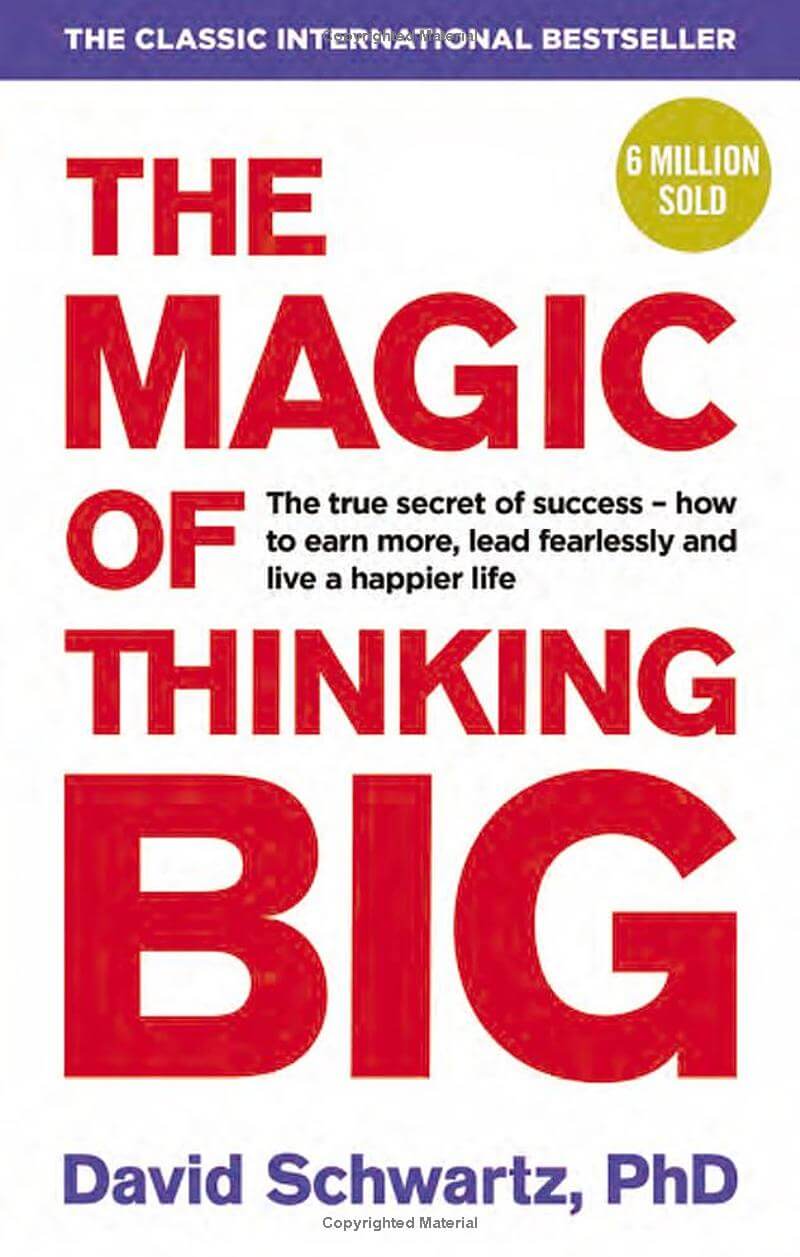
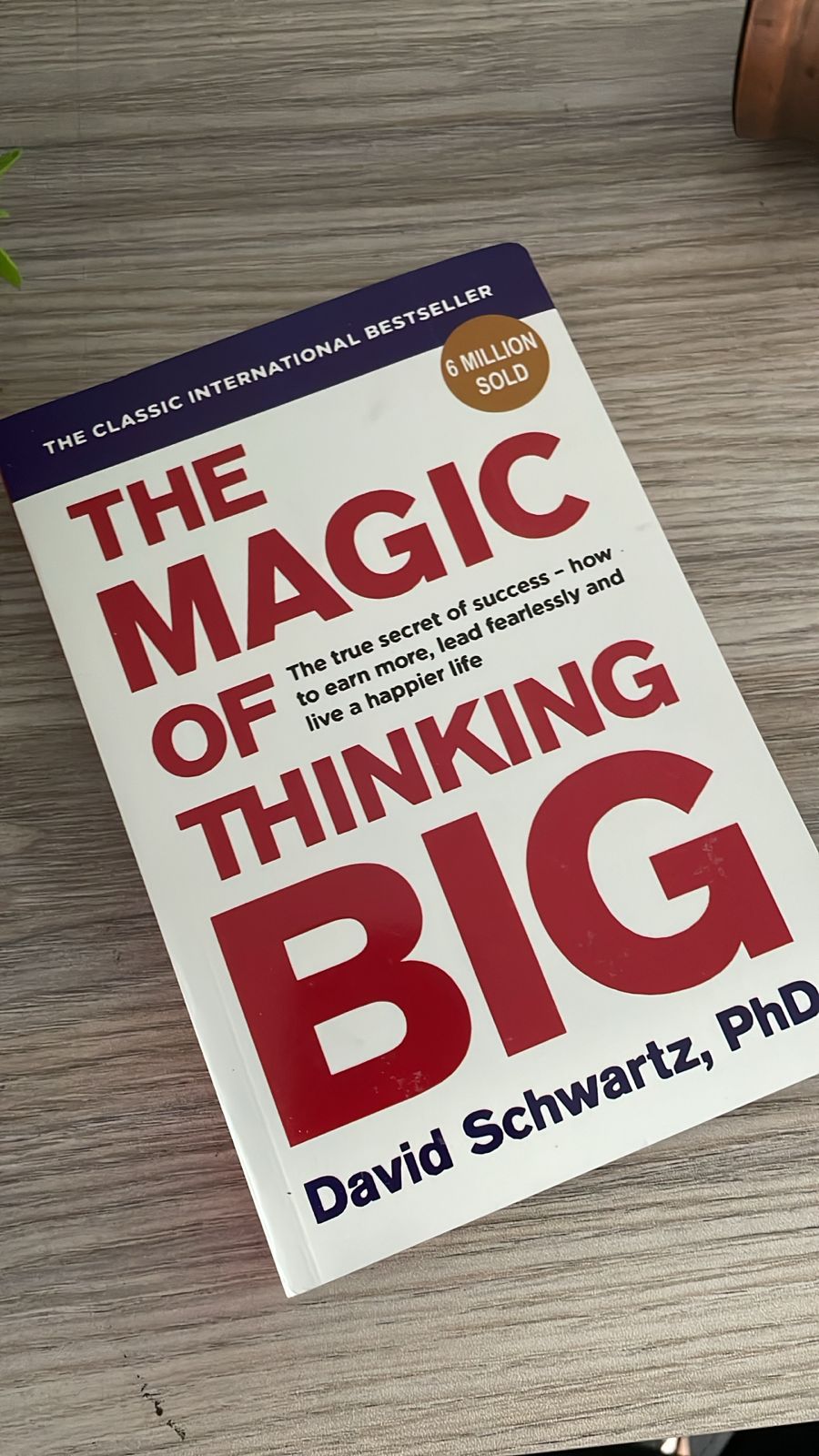


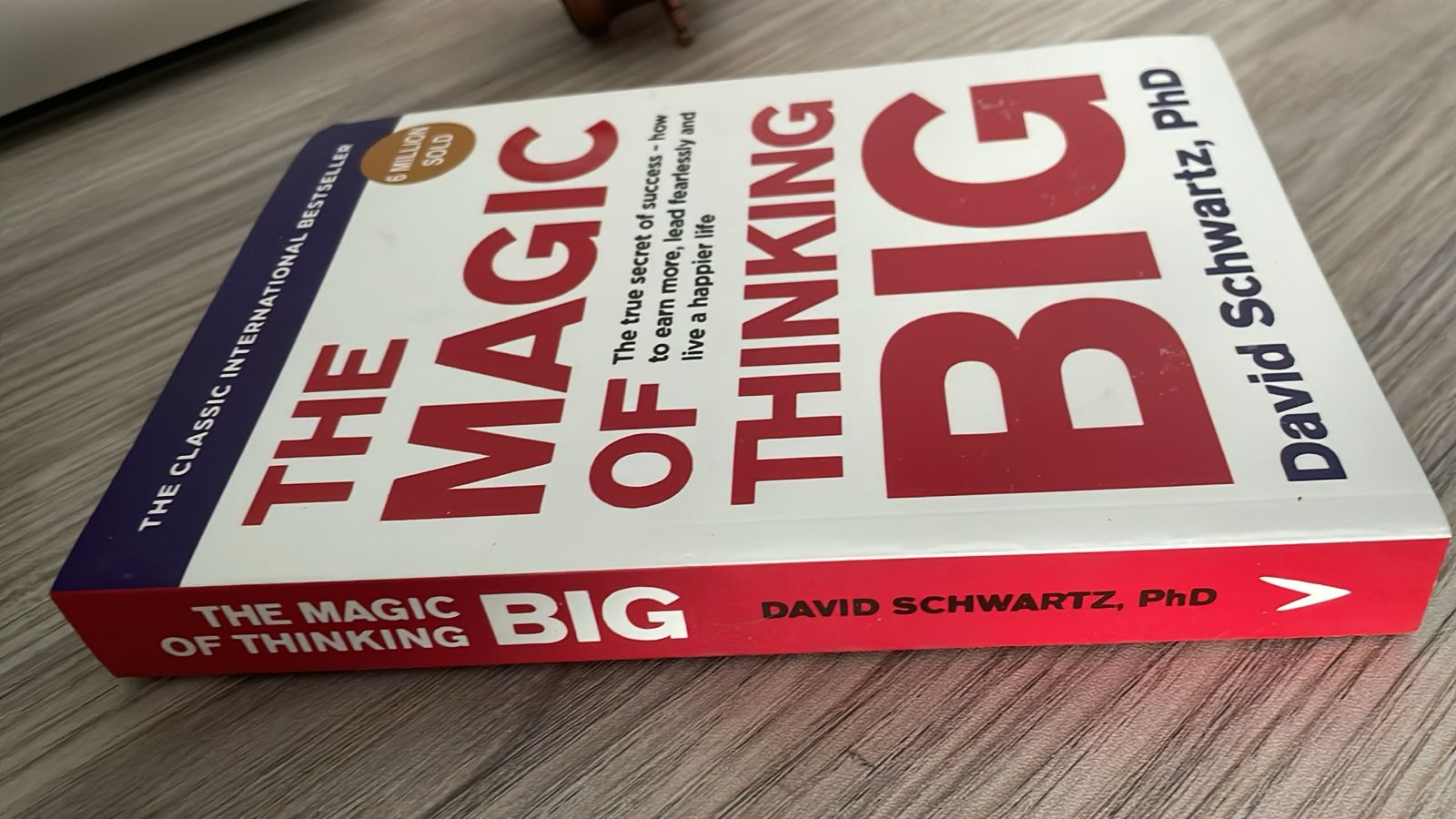
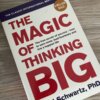


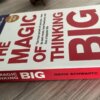
Magic of Thinking Big by David J. Schwartz


රු1,750.00
3 X Rs. 583.33 or 8% Cashback with


or 3 X රු583.33 with


or up to 4 X රු437.50 with


The Magic of Thinking Big by David Schwartz is a classic personal-development book that teaches readers how to build confidence, overcome excuses, set ambitious goals, take action and develop a success-focused mindset. Through practical lessons on leadership, communication, fear, creativity, relationships and turning setbacks into progress, David J. Schwartz shows how bigger thinking can lead to bigger possibilities. Ideal for entrepreneurs, students, professionals, leaders and anyone seeking greater confidence, motivation and personal growth.
11 in stock
The Magic of Thinking Big by David Schwartz is a classic personal-development book about developing greater confidence, setting ambitious goals, taking action and refusing to allow fear, excuses or limited thinking to control your future.
Why do some people achieve far more than others?
Is it because they are naturally more intelligent?
Luckier?
More talented?
David J. Schwartz argues that success often begins with something much simpler:
The size of your thinking.
People who expect little from themselves often create small possibilities.
People who believe they can improve, grow and accomplish meaningful goals are more likely to take the actions that make progress possible.
The book teaches readers how to think differently about:
Confidence.
Fear.
Goals.
Work.
Leadership.
Relationships.
Failure.
Opportunities.
Success.
Rather than waiting until you feel completely ready, Schwartz encourages readers to begin acting like the person they want to become.
Think bigger.
Speak positively.
Associate with constructive people.
Turn ideas into action.
Develop better habits.
And stop using excuses to explain why progress is impossible.
The Magic of Thinking Big by David Schwartz is especially suitable for readers interested in motivation, career development, business, leadership, confidence and practical self-improvement.
The Magic of Thinking Big by David Schwartz – Book Overview
The Magic of Thinking Big by David Schwartz is built around one central principle:
The way you think strongly influences the way you act.
If you repeatedly tell yourself:
“I cannot do this.”
“I am not smart enough.”
“This is impossible.”
“I will probably fail.”
you are less likely to take meaningful action.
But if you begin asking:
“How can I do this?”
“What can I learn?”
“What opportunity am I missing?”
“What would I attempt if I believed improvement was possible?”
your behavior changes.
The book therefore focuses not on empty optimism, but on developing thought patterns that encourage constructive action.
Think Big
Thinking big means refusing to limit yourself automatically.
It does not mean believing every impossible fantasy will happen.
It means refusing to shrink your goals simply because they feel intimidating.
A person thinking small asks:
What is the safest thing I can do?
A person thinking bigger asks:
What could I achieve if I improved my skills and acted consistently?
That difference can influence an entire career.
Believe You Can Succeed
One of the most famous principles in The Magic of Thinking Big by David Schwartz is the importance of belief.
Belief influences effort.
If you truly believe improvement is possible, you are more likely to:
Study.
Practice.
Ask questions.
Persist.
Look for solutions.
If you assume failure is guaranteed, effort becomes much harder.
Belief Creates Action
Belief alone does not complete the work.
You still need:
Planning.
Discipline.
Skill.
Effort.
But belief often determines whether you begin.
Confidence helps create action.
Action creates experience.
Experience can create more confidence.
Cure Yourself of Excuses
Schwartz discusses what he calls excuse-making.
People frequently explain lack of progress using:
Age.
Health.
Intelligence.
Luck.
Background.
Education.
Circumstances.
Some limitations are real.
But sometimes people turn manageable difficulties into permanent reasons not to try.
Stop Saying “I Can’t”
A useful lesson from The Magic of Thinking Big by David Schwartz is to replace automatic defeat with problem-solving.
Instead of:
“I can’t afford this.”
ask:
“How could I create the resources?”
Instead of:
“I don’t know how.”
ask:
“How can I learn?”
Instead of:
“I don’t have experience.”
ask:
“How can I begin gaining experience?”
The second question creates possibilities.
Intelligence Is Not Everything
Many people assume successful people must have extraordinary intelligence.
Schwartz challenges this assumption.
Practical success often depends on:
Attitude.
Persistence.
Communication.
Judgment.
Action.
Relationships.
Consistency.
A highly intelligent person who never acts may achieve less than an ordinary person who steadily improves.
Action Beats Endless Thinking
Ideas are valuable.
But an idea that never becomes action has limited value.
People often delay because they want:
Perfect timing.
Perfect confidence.
Perfect information.
Perfect preparation.
That moment may never arrive.
Start Now
One of the simplest lessons is to begin.
Write the first page.
Make the first call.
Send the application.
Create the first product.
Start studying.
Begin saving.
Take one step.
Action reduces fear because uncertainty becomes experience.
Fear
Fear is one of the biggest barriers to growth.
Fear of:
Failure.
Rejection.
Criticism.
Embarrassment.
Losing money.
Looking foolish.
These fears can become powerful enough to stop action before anything even happens.
Action Reduces Fear
Fear often becomes larger in imagination.
Taking a small action can make the situation feel manageable.
Afraid of speaking?
Practice.
Afraid of an interview?
Prepare and attend one.
Afraid of starting a business?
Test the idea on a small scale.
Action creates information.
Build Confidence
Confidence is not something people either have or do not have.
It can be developed.
Confidence grows when you:
Prepare.
Practice.
Keep promises to yourself.
Complete difficult tasks.
Learn from mistakes.
Speak with constructive people.
Repeated action builds evidence that you can handle challenges.
Look Confident
Schwartz also emphasizes behavior.
How you:
Walk.
Speak.
Sit.
Dress.
Interact.
can affect both how others perceive you and how you perceive yourself.
Professional behavior can support professional confidence.
Think Positively About Yourself
People often use negative language about themselves.
“I am terrible at this.”
“I always fail.”
“I am not leadership material.”
Repeated often enough, these statements can become identity.
A better approach is specific improvement.
“I need more practice.”
“I made a mistake.”
“I can learn this.”
The second type of thinking leaves room for growth.
Use Bigger Words About Yourself
Your internal language matters.
Do not constantly reduce your own abilities.
Instead of focusing only on weaknesses, recognize:
Skills.
Experience.
Progress.
Potential.
Confidence should be realistic, but it should not be unnecessarily small.
Think Creatively
Creative thinking is another central theme in The Magic of Thinking Big by David Schwartz.
Creativity does not belong only to artists.
Business owners need creativity.
Managers need creativity.
Students need creativity.
Anyone solving problems needs creativity.
Ask “How Can I Do Better?”
This is one of the most useful questions in the book.
How can I:
Serve customers better?
Study more effectively?
Manage time better?
Communicate more clearly?
Improve this product?
Reduce this cost?
Become more useful?
Improvement begins with questions.
Capacity Can Expand
People often assume they are already operating at their limit.
But better methods can increase capacity.
For example:
Better organization can save time.
Better delegation can reduce overload.
Better communication can prevent repeated mistakes.
Better systems can increase productivity.
Thinking bigger often means improving the method, not simply working longer.
Environment Matters
The people around you influence your thinking.
If everyone around you constantly says:
“That won’t work.”
“People like us can’t do that.”
“Why bother?”
those attitudes can become contagious.
Choose Constructive Influences
You do not need friends who agree with every idea.
Good feedback matters.
But there is a difference between:
Constructive criticism.
And permanent negativity.
Spend more time around people who:
Think.
Create.
Learn.
Build.
Improve.
Avoid Gossip and Small Thinking
Constant gossip uses mental energy without creating much value.
The book encourages readers to focus more on:
Ideas.
Goals.
Opportunities.
Improvement.
People who want to grow should spend more time discussing possibilities than criticizing others.
Attitude
Attitude affects how people respond to you.
Enthusiasm can create energy.
A negative attitude can make even good opportunities feel difficult.
Develop Enthusiasm
Enthusiasm does not mean pretending every situation is wonderful.
It means bringing energy to what matters.
A person who speaks with genuine interest is often more persuasive than someone who appears bored.
Make Others Feel Important
An important leadership and relationship lesson in The Magic of Thinking Big by David Schwartz is to treat people with respect.
People want to feel:
Seen.
Valued.
Heard.
Important.
This applies to:
Employees.
Customers.
Friends.
Family.
Colleagues.
Respect Is Powerful
You do not need money or authority to make someone feel valued.
Simple actions matter:
Remembering a name.
Listening.
Saying thank you.
Recognizing good work.
Respect strengthens relationships.
Customer Service
This idea also applies strongly to business.
Customers remember how they are treated.
A company that treats customers like interruptions will eventually lose trust.
A company that makes people feel valued can create loyalty.
Leadership
Thinking big is closely connected with leadership.
A leader must see possibilities beyond the current problem.
Good leaders think about:
Direction.
People.
Standards.
Opportunities.
Long-term improvement.
Think Like a Leader
Leadership begins before receiving a title.
A person can demonstrate leadership by:
Taking responsibility.
Solving problems.
Helping others.
Communicating clearly.
Maintaining high standards.
Titles often come after leadership behavior appears.
See Things From Other People’s Perspective
Good leaders understand that everyone sees situations differently.
Before making a decision, ask:
How will employees see this?
How will customers see it?
How will my manager see it?
How will my partner see it?
Perspective improves judgment.
People Matter
Technical ability alone rarely creates long-term success.
Most careers involve people.
Customers.
Colleagues.
Managers.
Employees.
Partners.
Communication and relationships therefore matter greatly.
Be Likeable Without Pretending
Being likeable does not mean changing your personality to please everyone.
It means practicing qualities such as:
Respect.
Listening.
Kindness.
Reliability.
Positive communication.
People generally prefer working with someone who makes cooperation easier.
Initiative
Successful people often act without waiting for someone to tell them every step.
They see a problem.
Then ask:
What can I do about it?
Initiative makes people more valuable in organizations.
Become Solution-Oriented
Problems exist everywhere.
The person who only identifies problems becomes less useful than the person who also searches for solutions.
Instead of:
“This is broken.”
try:
“This is broken, and here are two possible ways we could fix it.”
That is leadership thinking.
Goals
Goals give direction.
Without goals, effort can become scattered.
You may stay busy while moving nowhere in particular.
Create a Clear Future
Ask:
Where do I want to be in one year?
Five years?
Ten years?
What kind of:
Career?
Business?
Income?
Health?
Relationships?
Skills?
The future will not follow the plan perfectly, but direction helps guide decisions.
Long-Term Thinking
Short-term comfort can conflict with long-term goals.
Studying may be uncomfortable now.
Saving may limit spending now.
Building a business may require sacrifice now.
Long-term thinking asks whether today’s action supports tomorrow’s goal.
Break Big Goals Into Steps
Thinking big does not mean every action must be big.
Large goals are usually achieved through small repeated steps.
Goal:
Build a successful company.
Today’s step:
Talk to ten customers.
Goal:
Become healthier.
Today’s step:
Exercise.
Goal:
Improve English.
Today’s step:
Read ten pages and learn new vocabulary.
Small actions build large outcomes.
Failure
Failure does not automatically mean you chose the wrong goal.
Sometimes it means:
The method failed.
Timing was poor.
Preparation was weak.
More experience is needed.
Learn From Setbacks
The wrong response to failure is:
“I knew I couldn’t do it.”
A better response is:
“What exactly caused this result?”
That question turns disappointment into learning.
Turn Defeat Into Victory
The Magic of Thinking Big by David Schwartz encourages readers to study setbacks.
Do not simply repeat the same mistake.
Analyze.
What went wrong?
What should change?
What can be improved?
Then return stronger.
Persistence
Persistence matters, but intelligent persistence matters more.
Repeatedly hitting the same wall is not always courage.
Sometimes you need another route.
Persist with the goal.
Be flexible with the method.
Opportunities
Opportunities are not always obvious.
Sometimes an opportunity appears as:
A complaint.
A problem.
A difficult assignment.
A market nobody serves.
A skill nobody wants to learn.
Big thinkers train themselves to notice possibilities.
Think Beyond Your Current Position
Do not define your future entirely by your current job title.
A junior employee can develop management skills.
A student can develop professional skills.
A small retailer can develop systems used by larger businesses.
Growth begins before promotion.
Business Thinking
The principles in The Magic of Thinking Big by David Schwartz apply particularly well to entrepreneurs.
Business owners need to think about:
Growth.
Customers.
Competition.
Teams.
Innovation.
Confidence.
Decision-making.
Sell Value
Selling becomes easier when you truly believe something creates value.
Whether selling:
A product.
A service.
An idea.
Your skills.
Your proposal.
you need confidence in what you offer.
Believe in What You Sell
If a salesperson seems uncertain, the customer feels that uncertainty.
Confidence is contagious.
So is doubt.
Know your product.
Understand its benefits.
Speak clearly.
Reputation
Your reputation is built slowly through repeated actions.
Show up.
Keep promises.
Do good work.
Treat people fairly.
Over time, these behaviors create trust.
Success Is Not Only Money
While the book frequently discusses achievement and career success, thinking big can apply to many parts of life.
A bigger life may mean:
Better relationships.
Greater confidence.
Stronger contribution.
Improved health.
Meaningful work.
Personal growth.
Success should connect with what matters to you.
Stop Comparing Yourself Constantly
Comparison can make goals feel smaller.
Someone will always have:
More money.
More followers.
More experience.
More status.
Your useful question is:
Am I improving?
Compete With Your Previous Standard
Try to become better than yesterday.
Read more.
Learn more.
Communicate better.
Work smarter.
Save more.
Improve gradually.
Progress compounds.
Habits
Thinking becomes habitual.
If you repeatedly look for problems, you become skilled at noticing problems.
If you repeatedly look for solutions, you become skilled at noticing possibilities.
That means thinking patterns can be trained.
Daily Thinking
Ask yourself regularly:
What went well?
What needs improvement?
What important action am I avoiding?
What opportunity should I pursue?
What can I do better tomorrow?
Reflection helps convert experience into growth.
Personal Responsibility
One of the book’s strongest messages is personal responsibility.
You cannot control everything.
Economic conditions.
Other people.
Unexpected events.
But you can influence:
Your attitude.
Preparation.
Response.
Actions.
Focus on what you can control.
Don’t Wait for Luck
Luck can matter.
But waiting for luck creates no strategy.
Preparation increases the chance that you recognize and use opportunities when they appear.
Confidence in Career Development
Professionals can apply The Magic of Thinking Big by David Schwartz by acting before promotion arrives.
Want to become a manager?
Practice:
Communication.
Delegation.
Problem-solving.
Decision-making.
Responsibility.
Become more capable before the title arrives.
Improve Your Value
Income often increases when value increases.
Ask:
What skill could make me more useful?
Sales?
Technology?
Leadership?
Communication?
Finance?
Marketing?
Continuous learning creates options.
Communication
The ability to communicate clearly is one of the most valuable professional skills.
Big ideas are useless if nobody understands them.
Good communication requires:
Clarity.
Listening.
Confidence.
Respect.
Speak Constructively
Language affects atmosphere.
Compare:
“This will never work.”
with:
“This has challenges. How can we solve them?”
The second statement still recognizes the problem but encourages action.
Don’t Magnify Small Problems
Sometimes people allow minor issues to consume enormous mental energy.
A small disagreement.
A negative comment.
A delayed reply.
Not every problem deserves maximum attention.
Learn to distinguish:
Important problems.
Minor irritations.
Keep Perspective
Ask:
Will this matter next week?
Next year?
In five years?
Perspective can prevent small problems from controlling your mood.
Make Better Decisions
Big thinking does not mean reckless decision-making.
It means looking beyond immediate emotion.
What are the long-term consequences?
What is the opportunity?
What is the risk?
What can I learn?
Good decisions combine ambition with judgment.
The Magic of Thinking Big and Modern Life
The book was written decades ago, so some examples and language reflect its era.
However, many core principles remain highly relevant:
Confidence.
Goal setting.
Action.
Positive communication.
Leadership.
Problem-solving.
These ideas apply to modern careers, entrepreneurship and personal development.
Is The Magic of Thinking Big Still Worth Reading?
Yes, particularly for readers who appreciate classic motivational books.
Some examples may feel dated, but the central framework remains practical.
The strongest ideas are simple:
Think bigger.
Act.
Stop making excuses.
Build confidence.
Treat people well.
Set clear goals.
Learn from failure.
Is This a Business Book?
It can be useful for business readers, but it is broader than business.
The book combines:
Personal development.
Career advice.
Leadership.
Motivation.
Communication.
Success psychology.
Entrepreneurs and managers may find many principles directly applicable.
Is It Similar to Think and Grow Rich?
Readers who enjoy Think and Grow Rich by Napoleon Hill may also appreciate The Magic of Thinking Big by David Schwartz.
Both emphasize:
Belief.
Goals.
Mindset.
Ambition.
Action.
However, Schwartz’s book places strong emphasis on practical everyday behavior and confidence-building.
Is It Good for Students?
Yes.
Students can apply its lessons to:
Education.
Career planning.
Confidence.
Public speaking.
Goal setting.
Developing useful skills.
The habit of thinking beyond immediate limitations can be especially valuable early in life.
7 Powerful Success Lessons From The Magic of Thinking Big by David Schwartz
There are many ideas in The Magic of Thinking Big by David Schwartz, but seven stand out:
- Believe that improvement is possible – Belief encourages the effort, learning and persistence needed to create progress.
- Stop using excuses as permanent limitations – Challenges may be real, but look for what you can control and what action is still possible.
- Take action before you feel completely ready – Action builds experience, reduces fear and creates momentum.
- Think creatively by asking how you can do better – Successful people constantly search for improved methods rather than accepting that things must remain unchanged.
- Treat people as important – Respect, listening and appreciation improve leadership, customer relationships and teamwork.
- Turn failure into education – Analyze setbacks, identify what went wrong and use the lesson to improve your next attempt.
- Set goals bigger than your current circumstances – Long-term ambition gives daily effort direction and encourages you to grow into greater responsibility.
Why Read The Magic of Thinking Big by David Schwartz?
The Magic of Thinking Big by David Schwartz is an excellent choice for readers interested in:
- Personal development
- Motivation
- Success
- Positive thinking
- Confidence
- Leadership
- Business
- Entrepreneurship
- Goal setting
- Career growth
- Self-belief
- Productivity
- Communication
- Problem-solving
- Overcoming fear
- Action
- Personal responsibility
- Growth mindset
- Classic self-help books
- Professional development
It is particularly valuable for readers who feel they are capable of more but struggle with fear, hesitation or limited expectations.
Who Should Read This Book?
The Magic of Thinking Big by David Schwartz may especially appeal to:
- Entrepreneurs
- Business owners
- Students
- Managers
- Leaders
- Sales professionals
- Young professionals
- Job seekers
- People building confidence
- Readers interested in personal development
- Readers who enjoy motivational books
- People working toward larger goals
- Professionals seeking career growth
- Anyone who feels stuck in small thinking
The Magic of Thinking Big by David Schwartz – Think Bigger, Act Bigger, Grow Bigger
The Magic of Thinking Big by David Schwartz ultimately asks readers to examine one powerful question:
Are your current limitations real—or have you simply accepted them without challenging them?
Many people are capable of more than they attempt.
They wait for:
More confidence.
Better timing.
More money.
More experience.
Permission.
But growth often begins before those things arrive.
You begin.
Learn.
Improve.
Make mistakes.
Adjust.
Continue.
Thinking big does not guarantee easy success.
It does something more useful.
It encourages you to stop defeating yourself before the attempt even begins.
The person who thinks bigger searches for solutions.
The person who acts gains experience.
The person who learns from failure improves.
The person who treats others well builds relationships.
And the person who keeps developing eventually becomes capable of opportunities that once seemed too large.
For readers interested in confidence, motivation, leadership, business, career development and practical self-improvement, The Magic of Thinking Big by David Schwartz remains a powerful classic about expanding what you believe is possible and backing that belief with meaningful action.
Learn more about The Magic of Thinking Big by David J. Schwartz on the official Simon & Schuster website.
Explore more personal development and success books at Bargain Books.

| Author | David J. Schwartz |
|---|---|
| Type | Paperback Printed Book |
| ISBN/ISSN | 1785040472, 978-1785040474 |
| Language | English |
| Pages | 384 |
Be the first to review “Magic of Thinking Big by David J. Schwartz”
Related products
-13%

Out of stock
Non-Fiction & Knowledge
Original price was: රු3,900.00.රු3,400.00Current price is: රු3,400.00.
3 X Rs. 1,133.33 or 8% Cashback with
or 3 X රු1,133.33 with
or up to 4 X රු850.00 with
Non-Fiction & Knowledge
රු2,250.00
3 X Rs. 750.00 or 8% Cashback with
or 3 X රු750.00 with
or up to 4 X රු562.50 with
-24%
Out of stock
Non-Fiction & Knowledge
Original price was: රු2,100.00.රු1,600.00Current price is: රු1,600.00.
3 X Rs. 533.33 or 8% Cashback with
or 3 X රු533.33 with
or up to 4 X රු400.00 with
-14%

Out of stock
Self-Help & Psychology
Original price was: රු2,900.00.රු2,500.00Current price is: රු2,500.00.
3 X Rs. 833.33 or 8% Cashback with
or 3 X රු833.33 with
or up to 4 X රු625.00 with
-34%

Self-Help & Psychology
Original price was: රු2,350.00.රු1,550.00Current price is: රු1,550.00.
3 X Rs. 516.67 or 8% Cashback with
or 3 X රු516.67 with
or up to 4 X රු387.50 with

Out of stock
Autobiography
රු2,750.00
3 X Rs. 916.67 or 8% Cashback with
or 3 X රු916.67 with
or up to 4 X රු687.50 with
Out of stock
Non-Fiction & Knowledge
රු1,800.00
3 X Rs. 600.00 or 8% Cashback with
or 3 X රු600.00 with
or up to 4 X රු450.00 with
-26%
Non-Fiction & Knowledge
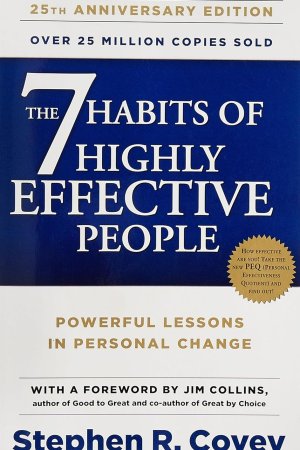
The 7 Habits of Highly Effective People by Stephen R. Covey – Blue Cover
Original price was: රු2,300.00.රු1,700.00Current price is: රු1,700.00.
3 X Rs. 566.67 or 8% Cashback with
or 3 X රු566.67 with
or up to 4 X රු425.00 with
Reviews
There are no reviews yet.