
No products in the cart.
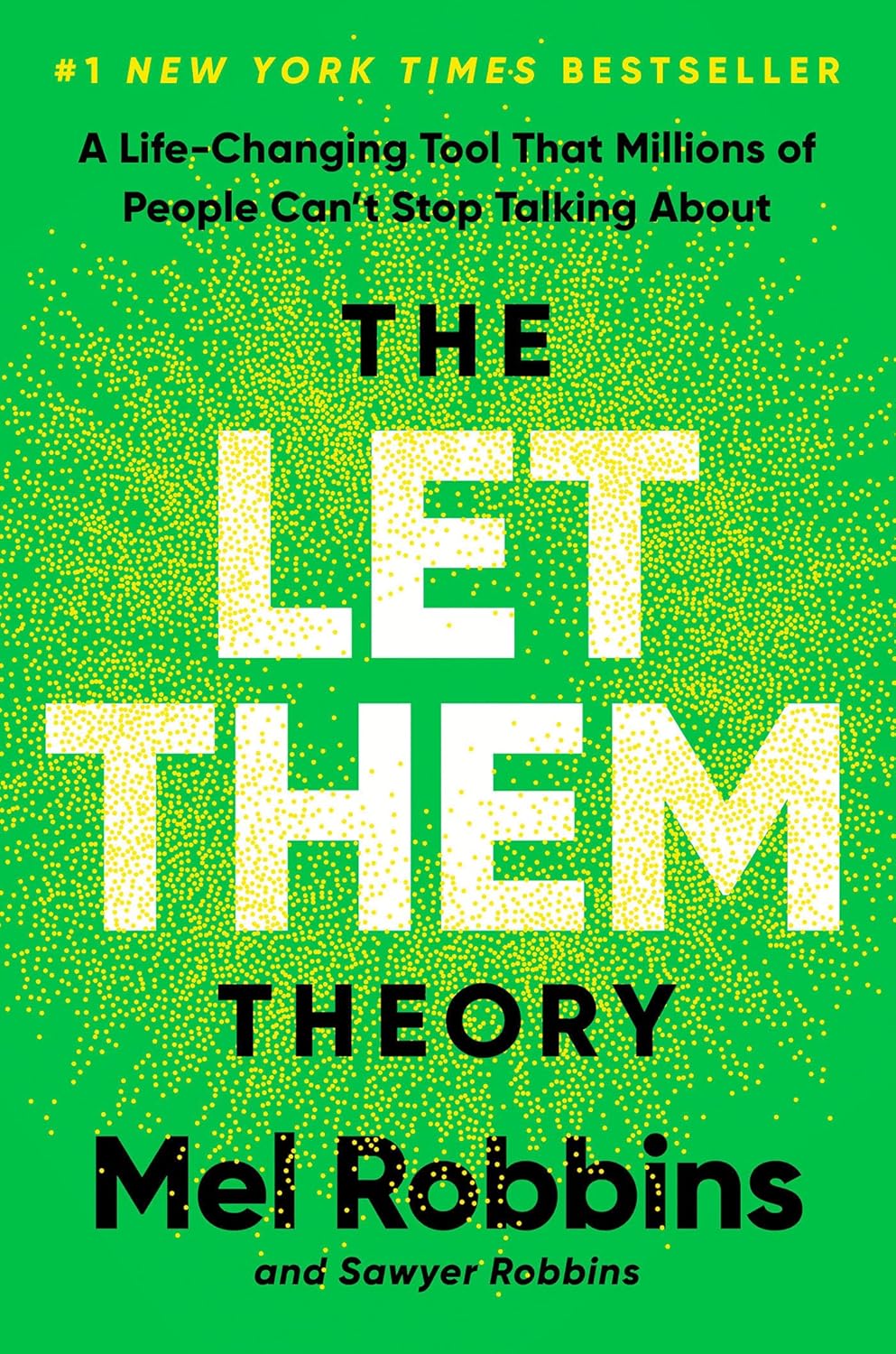
Let them theory by Mel Robbins and Sawyer Robbins


රු1,400.00
3 X Rs. 466.67 or 8% Cashback with


or 3 X රු466.67 with


or up to 4 X රු350.00 with


The Let Them Theory by Mel Robbins is a practical personal-development book that teaches readers how to stop wasting energy trying to control other people’s choices, opinions and behavior. Through the simple ideas of “Let Them” and “Let Me,” Mel Robbins shows how to reduce overthinking, handle rejection, set healthier boundaries, improve relationships and focus on what you can actually control. Ideal for readers interested in confidence, self-help, emotional intelligence, relationships and personal growth.
Out of stock
Email when stock available
The Let Them Theory by Mel Robbins is a practical personal-development book about letting go of the exhausting need to control other people and redirecting your attention toward the one person you can truly control: yourself.
People will:
Disagree with you.
Judge you.
Choose differently.
Ignore your advice.
Change plans.
Leave you out.
Disappoint you.
Take another path.
And often, our instinct is to resist.
We try to convince them.
Correct them.
Change their minds.
Make them understand.
Make them behave differently.
Mel Robbins argues that this constant effort can drain enormous amounts of emotional energy.
Her solution begins with two simple words:
Let Them.
If people want to think differently?
Let them.
If someone does not invite you?
Let them.
If they choose another path?
Let them.
If someone does not recognize your value?
Let them.
But the idea does not end there.
The second and equally important part is:
Let Me.
Let me decide how I respond.
Let me protect my peace.
Let me communicate clearly.
Let me choose where I spend my energy.
Let me set a boundary.
Let me take responsibility for my own life.
That combination gives The Let Them Theory by Mel Robbins its central message.
You cannot control everyone else.
But you can control what you do next.
The Let Them Theory by Mel Robbins – Book Overview
The Let Them Theory by Mel Robbins is built around a simple approach to relationships, stress and emotional control.
Many problems become worse because people spend too much time focusing on:
What someone else should do.
What they should say.
How they should behave.
What they should think.
How quickly they should reply.
Whether they should appreciate us.
Whether they should choose us.
This creates frustration because other people remain outside our control.
Mel Robbins encourages readers to recognize that reality earlier.
Instead of fighting it:
Let them.
Then shift attention back toward yourself:
Let me.
What Does “Let Them” Mean?
“Let Them” means allowing other people to make their own choices without automatically trying to control the outcome.
This does not mean you agree with everything they do.
It does not mean accepting harmful treatment.
It does not mean having no standards.
It simply means recognizing:
Their choices belong to them.
Your response belongs to you.
That distinction can reduce unnecessary stress.
What Does “Let Me” Mean?
The second part is essential.
If you only say “Let Them,” the idea could become passive.
But The Let Them Theory by Mel Robbins also emphasizes personal responsibility.
Let Me means asking:
What can I do?
What choice can I make?
What boundary can I set?
What conversation should I have?
What do I want?
What is actually within my control?
This moves the reader from frustration toward action.
Stop Trying to Control Other People
One of the biggest lessons in the book is that trying to control other people rarely works for long.
You may try to control:
Your partner.
Your friends.
Your coworkers.
Your children.
Your employees.
Your relatives.
But people ultimately make their own decisions.
Trying to manage every reaction can become exhausting.
Control Versus Influence
There is an important difference between control and influence.
You can:
Give advice.
Communicate.
Explain.
Encourage.
Lead.
Ask.
But you cannot guarantee how another person responds.
Understanding this difference can protect your energy.
Protect Your Energy
Emotional energy is limited.
If you spend hours thinking:
Why did they say that?
Why haven’t they replied?
Why don’t they understand?
Why did they choose someone else?
you are investing energy into things you may not be able to change.
The Let Them Theory by Mel Robbins encourages readers to redirect that energy toward their own life.
Stop Taking Everything Personally
Other people’s behavior is not always about you.
Someone may be:
Stressed.
Distracted.
Busy.
Insecure.
Focused on another priority.
Working through their own problems.
Yet people often interpret everything personally.
They didn’t reply.
They must dislike me.
They didn’t invite me.
Something must be wrong with me.
The Let Them approach can interrupt this pattern.
Let Them Think What They Want
You cannot control everyone’s opinion.
Trying to create a version of yourself that everyone approves of is impossible.
Some people will admire you.
Some will misunderstand you.
Some may dislike you.
Trying to satisfy everyone can make you lose your own direction.
People’s Opinions
A major source of anxiety comes from constantly asking:
What will people think?
But every person interprets life through:
Their experiences.
Values.
Preferences.
Expectations.
You cannot manage all those perspectives.
Sometimes the healthiest response is simply:
Let them think what they think.
Stop Chasing Approval
Approval can feel rewarding.
But dependence on approval can become limiting.
You may avoid:
Starting a business.
Changing careers.
Setting boundaries.
Expressing an opinion.
Leaving a relationship.
because someone else may disapprove.
The Let Them Theory by Mel Robbins encourages readers to stop allowing other people’s reactions to become the main decision-maker.
Rejection
Rejection hurts.
A person may:
Reject your invitation.
Reject your idea.
Reject your application.
Reject your relationship.
But rejection also provides information.
If someone does not choose you, forcing them rarely creates a healthy connection.
Let them choose.
Then decide what you will do next.
Friendship
Friendships naturally change.
People move.
Priorities change.
Relationships evolve.
Sometimes one person tries desperately to hold a friendship in exactly the same form it once had.
The Let Them mindset can help reduce resentment.
If a friend wants distance, let them.
Then ask:
What kind of friendship do I want?
Who shows up for me?
Where should I invest my energy?
Being Left Out
Being excluded can feel painful.
A gathering happens.
You are not invited.
People make plans without you.
The instinct may be:
Why?
What did I do?
Should I confront them?
Mel Robbins encourages readers to avoid immediately turning exclusion into a judgment about personal worth.
Let them make their plans.
Then focus on building relationships where connection feels mutual.
Relationships
Romantic relationships are another important area where the theory can be useful.
People often try to change partners.
Be more affectionate.
Communicate differently.
Want what I want.
Behave how I expect.
But relationships become healthier when each person takes responsibility for themselves.
Let Them Show You Who They Are
People reveal themselves through behavior.
If someone repeatedly:
Breaks promises.
Avoids communication.
Disrespects boundaries.
Creates drama.
you do not always need to keep explaining why they should behave differently.
Their actions provide information.
Let them show you.
Then decide what you will do with that information.
Boundaries
“Let Them” does not mean having no boundaries.
In fact, boundaries become more important.
A boundary is not:
“You must change.”
A boundary is:
“If this happens, here is what I will do.”
That shifts responsibility back toward yourself.
Healthy Boundaries
A healthy boundary might sound like:
I cannot control whether you shout.
But I can leave the conversation if shouting begins.
I cannot control whether you respect my time.
But I can decide how available I will be.
That is the difference between controlling someone and controlling your own participation.
Family
Family relationships can create especially strong expectations.
Parents want children to behave differently.
Children want parents to understand them.
Siblings compare each other.
Relatives give unwanted opinions.
The Let Them Theory by Mel Robbins can help readers separate love from control.
You can care deeply about someone and still accept that their life belongs to them.
Parenting
Parents naturally want to protect their children.
But as children grow, control becomes increasingly limited.
They need opportunities to:
Make choices.
Experience consequences.
Learn.
Develop independence.
The theory can help parents distinguish between guidance and unnecessary control.
Adult Children
Relationships between parents and adult children can become difficult when expectations remain too strong.
Parents may believe:
They should visit more.
They should call more.
They should make different choices.
But adult children ultimately control their own lives.
Let them choose.
Then decide how you want to maintain the relationship.
Workplace Relationships
The theory also applies at work.
Coworkers may:
Disagree.
Take credit.
Compete.
Complain.
Behave differently than you would prefer.
Some situations need direct action.
Others do not.
The challenge is learning which problems deserve your energy.
Coworkers
You cannot control every coworker’s personality.
But you can control:
Your professionalism.
Your communication.
Your standards.
Your boundaries.
Your work.
This reduces the temptation to spend every day frustrated by personalities you cannot change.
Leadership
Leaders also benefit from understanding control.
A manager cannot control every thought or emotion inside a team.
But they can create:
Expectations.
Systems.
Culture.
Feedback.
Accountability.
The best leadership focuses on what can actually be influenced.
Emotional Maturity
A major theme in The Let Them Theory by Mel Robbins is emotional maturity.
Emotional maturity includes recognizing:
Other people are separate from me.
They can disagree.
They can make decisions I dislike.
Their choices do not automatically determine my worth.
That understanding can improve relationships.
Expectations
Expectations create disappointment when reality does not match the internal script.
We may think:
They should remember.
They should understand.
They should know what I need.
But people cannot always meet unspoken expectations.
Sometimes communication is needed.
Sometimes acceptance is needed.
Let Go of the “Should”
A useful mental shift is noticing how often frustration contains the word:
Should.
They should call.
They should care more.
They should understand.
They should apologize.
Maybe they should.
But if they do not, what will you do?
That question brings control back to you.
Stress
Trying to control uncontrollable situations creates stress.
The brain continues searching for a solution even when no solution exists.
Letting go of that impossible responsibility can create emotional relief.
Anxiety
Anxiety often increases when people try to predict and control every possible outcome.
What if they reject me?
What if they judge me?
What if they leave?
No strategy can eliminate every uncertain outcome.
The Let Them mindset encourages greater tolerance for uncertainty.
Emotional Freedom
Emotional freedom does not mean never caring.
It means caring without believing you must control everything.
You can love someone and still allow them to choose.
You can want a positive outcome without believing your wellbeing depends on controlling it.
Focus on Yourself
Once you stop managing everyone else’s behavior, you have more space to ask:
What do I want?
What matters to me?
What should I change?
What action can I take?
That shift is central to The Let Them Theory by Mel Robbins.
Personal Responsibility
“Let Me” introduces responsibility.
It prevents the theory from becoming:
Whatever happens, happens.
Instead:
They choose.
I choose too.
That is empowering because your life is not reduced to waiting for other people.
Stop Waiting for Permission
People often delay important choices because they want someone else to approve.
Start the project.
Apply for the role.
Change the routine.
Travel.
Learn.
Create.
Not every decision needs outside permission.
Confidence
Confidence grows when you trust yourself to handle outcomes.
The goal is not knowing everything will work perfectly.
It is knowing:
Whatever happens, I can respond.
That type of confidence creates resilience.
Comparison
Comparison can create unnecessary pressure.
Someone else:
Earns more.
Gets married earlier.
Builds a larger business.
Travels more.
Looks happier online.
Let them have their path.
Your responsibility is your path.
Social Media
Social media makes comparison easy.
People see carefully selected moments from other lives and compare them with their own complete reality.
The Let Them approach can reduce the urge to compete with everyone.
Let them post.
Let them celebrate.
Let them live their life.
Then return to yours.
Success
Other people’s success does not reduce your possibilities.
If someone gets promoted, launches a business or reaches a goal before you, that is their journey.
Use the energy you might spend comparing to improve your own actions.
Failure
Failure is also easier to process when you stop focusing excessively on judgment.
People may criticize.
Let them.
The more useful question is:
What can I learn?
What will I do differently?
Change
People sometimes resist your growth.
When you change:
Habits.
Career.
Relationships.
Goals.
Boundaries.
others may feel uncomfortable.
You do not need universal approval before becoming a different version of yourself.
People May Not Understand Your Growth
Someone who knew an older version of you may expect you to remain that way.
When you change, they may say:
You are different.
Sometimes that is not an insult.
Growth requires change.
Difficult Conversations
The Let Them approach does not mean avoiding conversations.
Some situations require clear communication.
Tell people:
What you need.
What happened.
What you will accept.
What you will not accept.
Then let them decide how they respond.
Communication Without Control
Healthy communication says:
Here is how I feel.
Here is what I need.
Here is my boundary.
Control says:
You must become the person I want you to be.
Understanding this difference can improve relationships.
Love Without Control
Love can easily become mixed with control.
We want people we love to make good decisions.
But their decisions remain theirs.
Supporting someone does not require controlling them.
Stop Rescuing Everyone
Some people constantly rescue others.
Solve their problems.
Handle consequences.
Give advice that was never requested.
This can create dependence.
Sometimes allowing someone to experience consequences is part of respecting their independence.
Your Peace
Protecting your peace does not mean avoiding every difficult person.
It means recognizing which battles are worth your energy.
Not every comment deserves a response.
Not every misunderstanding needs correction.
Not every opinion needs to be changed.
Let Them Misunderstand You
This can be difficult.
People naturally want to explain themselves.
But sometimes someone has already decided what they believe.
Endless explanation may not change it.
You can clarify once.
Then let them.
Let Them Leave
Relationships sometimes end.
Friendships change.
Coworkers move.
Partners leave.
Trying to force someone to remain where they do not want to be can create greater pain.
Letting someone leave can create space for acceptance and eventually new possibilities.
Let Them Make Mistakes
Watching someone you care about make a poor choice is difficult.
Advice can be offered.
Support can be available.
But adults often need to learn through experience.
Trying to prevent every mistake may create conflict without changing the outcome.
Let People Be Themselves
Another important lesson is allowing people to be who they actually are rather than who you wish they were.
Sometimes disappointment comes from falling in love with potential.
The person might change.
They might improve.
They might become more responsible.
But decisions should be based on current reality.
See Reality Clearly
“Let Them” can help reveal reality.
Stop arguing with what someone repeatedly shows you.
Observe.
Accept the information.
Then make your own decision.
Your Response Is Your Power
You cannot always control the event.
But your response remains powerful.
Someone criticizes you.
Someone rejects you.
Someone disappoints you.
The response determines what happens next.
Detachment
Healthy detachment means recognizing that other people’s emotional reactions do not always need to become your emotional responsibility.
They can be upset.
You can still make the decision that is right for you.
People-Pleasing
People-pleasing often comes from fear.
Fear of:
Disapproval.
Conflict.
Rejection.
Being disliked.
The Let Them approach challenges this pattern.
Let people have feelings about your decisions.
You can still choose according to your values.
Saying No
“No” can disappoint people.
That does not automatically make it wrong.
If someone dislikes your boundary:
Let them.
A boundary that disappears whenever someone becomes unhappy is not really a boundary.
Self-Respect
Self-respect grows when your actions align with your values.
You stop abandoning yourself simply to keep everyone comfortable.
That is one of the most practical applications of The Let Them Theory by Mel Robbins.
Happiness
Happiness becomes difficult when it depends entirely on everyone around you behaving correctly.
Someone will always disappoint you.
A healthier approach puts more responsibility for wellbeing into your own hands.
Relationships Become Clearer
When you stop chasing, fixing and forcing, you begin seeing who naturally shows up.
Who contacts you?
Who respects you?
Who supports you?
Who makes effort?
Letting go can reveal which relationships are reciprocal.
Choose Where to Invest
You have limited:
Time.
Attention.
Energy.
Love.
Resources.
Spend them on relationships and goals where they can create something meaningful.
Let Me Choose Better
The second half of the theory repeatedly returns to choice.
Let them behave how they choose.
Then:
Let me choose whether I stay.
Let me choose whether I respond.
Let me choose whether this relationship works for me.
Let me choose my next action.
Control What You Can Control
A useful division is:
Outside Your Control
Other people’s opinions.
Their choices.
Their emotions.
Their past.
Their personality.
Within Your Control
Your actions.
Your communication.
Your boundaries.
Your effort.
Your decisions.
Your response.
The more clearly you separate these categories, the less energy is wasted.
The Let Them Theory in Business
Entrepreneurs can also apply the concept.
Customers may reject your product.
Competitors may copy ideas.
People may criticize your business.
You cannot control everything.
But you can control:
Quality.
Service.
Strategy.
Marketing.
Innovation.
How you respond.
The Let Them Theory at Work
Professionals can use the approach when dealing with:
Office politics.
Competition.
Feedback.
Difficult managers.
Coworker personalities.
Not every workplace problem should be ignored.
But not every problem deserves emotional obsession either.
The Let Them Theory in Dating
Dating contains enormous uncertainty.
Someone may lose interest.
Reply slowly.
Choose another person.
Reject you.
Trying to force attraction usually creates more pain.
Let them choose.
Then choose someone who chooses you.
The Let Them Theory in Friendships
Friendship should contain mutual effort.
If you are constantly:
Chasing.
Organizing.
Messaging.
Repairing.
while the other person contributes very little, step back.
Let them show you the level of relationship they want.
Then decide whether that level works for you.
The Let Them Theory in Family Life
Family members may always have opinions.
About your:
Career.
Partner.
Money.
Parenting.
Lifestyle.
You can listen respectfully without giving everyone decision-making power over your life.
Mel Robbins
Mel Robbins is known for practical self-development ideas focused on action and behavior change.
Her popular books include:
The 5 Second Rule
The High 5 Habit
and
The Let Them Theory
Her approach typically turns psychological or behavioral ideas into simple tools readers can remember and apply in everyday life.
The 5 Second Rule and The Let Them Theory
The two ideas address different challenges.
The 5 Second Rule focuses heavily on taking action before hesitation stops you.
The Let Them Theory focuses more strongly on relationships, emotional energy and control.
Both encourage readers to focus on their own behavior.
The High 5 Habit
The High 5 Habit focuses more on self-support, confidence and changing your relationship with yourself.
Readers who enjoy Mel Robbins’s straightforward style may find all three books complementary.
Practical Personal Development
One reason The Let Them Theory by Mel Robbins appeals to many readers is simplicity.
The core idea is easy to remember.
When you feel yourself trying to control another person:
Let Them.
Then bring yourself back into the equation:
Let Me.
Simple does not always mean easy.
But simple tools are easier to remember during emotionally difficult situations.
7 Powerful Lessons From The Let Them Theory
There are many lessons in The Let Them Theory by Mel Robbins, but seven stand out:
- Stop trying to control other people – Their choices belong to them, and constantly trying to manage those choices wastes emotional energy.
- Use “Let Me” to reclaim your power – After accepting what others choose, focus on your own actions, boundaries and decisions.
- Let people show you who they are – Repeated behavior provides valuable information. You do not need to constantly explain people out of their own patterns.
- Stop depending on universal approval – People will have opinions about you. Their opinions do not need to become instructions for your life.
- Set boundaries without trying to control others – A healthy boundary defines what you will do rather than demanding that another person change.
- Redirect your energy toward your own life – Time spent obsessing over someone else’s behavior can be invested in your health, relationships, career and goals.
- Accept what you cannot control and act on what you can – Emotional freedom comes from understanding the difference.
Why Read The Let Them Theory by Mel Robbins?
The Let Them Theory by Mel Robbins is an excellent choice for readers interested in:
- Mel Robbins books
- Personal development
- Self-help
- Relationships
- Boundaries
- Confidence
- Emotional intelligence
- People-pleasing
- Overthinking
- Stress management
- Self-respect
- Personal growth
- Friendship
- Family relationships
- Dating
- Communication
- Letting go
- Motivation
- Mental wellbeing
- Life advice
It is particularly useful for readers who spend too much emotional energy worrying about what other people think, say or do.
Who Should Read This Book?
The Let Them Theory by Mel Robbins may especially appeal to:
- Mel Robbins fans
- Personal-development readers
- People struggling with overthinking
- People-pleasers
- Readers learning to set boundaries
- Anyone dealing with difficult relationships
- Professionals facing workplace stress
- People struggling with rejection
- Readers wanting greater confidence
- Anyone constantly seeking approval
- Readers interested in emotional intelligence
- People trying to let go of control
- Readers wanting healthier relationships
- Anyone seeking practical self-help tools
Let Them Be Themselves – And Let Yourself Move Forward
The Let Them Theory by Mel Robbins is ultimately about freedom.
The freedom to stop managing every opinion.
Every reaction.
Every choice.
Every relationship.
Other people are going to behave in ways you do not expect.
They may:
Disagree.
Leave.
Change.
Reject you.
Misunderstand you.
Choose differently.
You can spend enormous energy fighting reality.
Or you can say:
Let Them.
Then ask the more important question:
What will I do?
Let me communicate.
Let me set a boundary.
Let me walk away.
Let me focus on my goals.
Let me choose relationships that feel mutual.
Let me build the life I want.
That second step transforms the theory from passive acceptance into personal responsibility.
For readers interested in self-development, confidence, healthier relationships, boundaries, emotional freedom and reducing unnecessary stress, The Let Them Theory by Mel Robbins offers a simple and memorable framework for focusing less on controlling other people and more on creating your own life.
Learn more about The Let Them Theory by Mel Robbins on Mel Robbins’ official website.
Explore more personal development books at Bargain Books.
Be the first to review “Let them theory by Mel Robbins and Sawyer Robbins”
Related products
-24%
Out of stock
Non-Fiction & Knowledge
Original price was: රු2,100.00.රු1,600.00Current price is: රු1,600.00.
3 X Rs. 533.33 or 8% Cashback with
or 3 X රු533.33 with
or up to 4 X රු400.00 with
-23%

Non-Fiction & Knowledge
Original price was: රු2,200.00.රු1,700.00Current price is: රු1,700.00.
3 X Rs. 566.67 or 8% Cashback with
or 3 X රු566.67 with
or up to 4 X රු425.00 with
-24%
Non-Fiction & Knowledge
Original price was: රු2,300.00.රු1,750.00Current price is: රු1,750.00.
3 X Rs. 583.33 or 8% Cashback with
or 3 X රු583.33 with
or up to 4 X රු437.50 with
-14%

Out of stock
Self-Help & Psychology
Original price was: රු2,900.00.රු2,500.00Current price is: රු2,500.00.
3 X Rs. 833.33 or 8% Cashback with
or 3 X රු833.33 with
or up to 4 X රු625.00 with
-33%

Self-Help & Psychology
Original price was: රු2,300.00.රු1,550.00Current price is: රු1,550.00.
3 X Rs. 516.67 or 8% Cashback with
or 3 X රු516.67 with
or up to 4 X රු387.50 with
-34%

Non-Fiction & Knowledge
Original price was: රු2,250.00.රු1,490.00Current price is: රු1,490.00.
3 X Rs. 496.67 or 8% Cashback with
or 3 X රු496.67 with
or up to 4 X රු372.50 with
-24%

Out of stock
Non-Fiction & Knowledge
Original price was: රු2,500.00.රු1,900.00Current price is: රු1,900.00.
3 X Rs. 633.33 or 8% Cashback with
or 3 X රු633.33 with
or up to 4 X රු475.00 with

Out of stock
Autobiography
රු2,750.00
3 X Rs. 916.67 or 8% Cashback with
or 3 X රු916.67 with
or up to 4 X රු687.50 with
Reviews
There are no reviews yet.