No products in the cart.
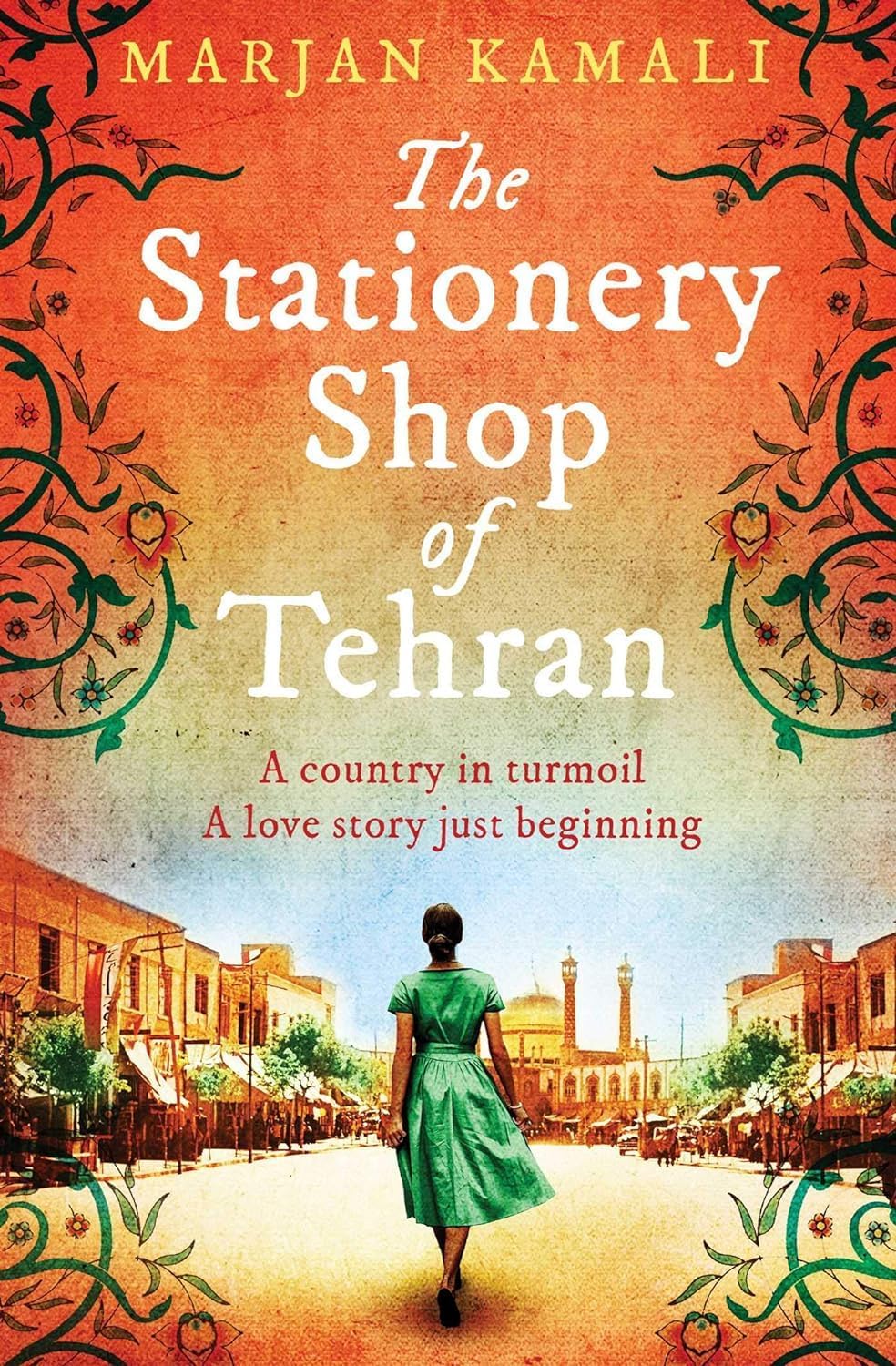
Stationery Shop Of Tehran by Marjan Kamali

රු1,750.00
3 X Rs. 583.33 or 8% Cashback with


or 3 X රු583.33 with


or up to 4 X රු437.50 with


Out of stock
Email when stock available
The Stationery Shop of Tehran by Marjan Kamali
The Stationery Shop of Tehran by Marjan Kamali is a deeply moving historical novel about first love, separation, memory, family, and the choices that can shape an entire lifetime.
Set in 1953 Iran, the story begins with Roya, a young woman who finds comfort in a beautiful stationery shop in Tehran.
The shop is filled with books, fountain pens, bottles of ink, and writing paper.
It is also where Roya meets Bahman.
Their meeting changes both of their lives.
About The Stationery Shop of Tehran
Roya loves spending time in Mr. Fakhri’s stationery shop.
For her, it is more than a place to buy paper and books.
It is a peaceful escape from the uncertainty outside.
Mr. Fakhri eventually introduces Roya to another regular customer named Bahman.
Bahman is passionate, idealistic, and deeply interested in politics and justice.
He also shares Roya’s love of literature and poetry.
Their connection develops quickly.
Soon, what begins as friendship becomes a powerful young romance.
Roya and Bahman
Roya and Bahman fall in love during a period of major political tension in Iran.
Their relationship is full of hope.
They begin imagining a future together.
But the world around them is changing.
Political conflict is becoming increasingly dangerous.
On the eve of an important moment in their relationship, Roya waits for Bahman in a town square.
He never arrives.
That moment changes the direction of her life.
7 Powerful Reasons to Read The Stationery Shop of Tehran
1. A Moving Story of First Love
At its heart, the novel is about the lasting power of first love.
Roya and Bahman meet while they are young and hopeful.
Their relationship develops during a period when both of them are still discovering who they want to become.
The emotional connection between them gives the story much of its power.
2. A Fascinating Historical Setting
The Stationery Shop of Tehran takes place partly during the political turmoil of Iran in 1953.
Historical events influence the characters directly.
Politics is not simply background information.
It changes relationships, families, and futures.
This gives readers a personal way to experience an important period of Iranian history.
3. Books and Poetry Matter
The stationery shop is filled with literature.
Roya and Bahman connect partly through their shared appreciation of books and poetry.
The poetry of Rumi also holds special meaning within their relationship.
For book lovers, the setting creates an especially warm and memorable atmosphere.
4. Love and Loss Are Closely Connected
This is not a simple romance where everything happens easily.
Roya experiences love alongside disappointment and uncertainty.
She must learn how to continue living when the future she imagined disappears.
The novel explores how people carry memories of important relationships even after their lives move in different directions.
5. Family Expectations Shape the Characters
Family plays an important role throughout the story.
Roya’s choices are influenced by the expectations and concerns of the people around her.
Bahman also faces pressures connected to family and society.
These relationships make the romance more complicated.
They also help explain why certain decisions become so difficult.
6. The Story Explores Immigration and Belonging
Roya’s life eventually takes her far from Tehran.
She must adapt to a different country and create a new future.
This introduces themes of immigration, identity, memory, and belonging.
Home becomes more complicated than simply a place on a map.
The novel asks whether people ever completely leave their past behind.
7. It Is About More Than Romance
Although love is central, The Stationery Shop of Tehran explores many other themes.
It examines regret.
It explores forgiveness.
It asks how political events affect ordinary families.
It also considers how people understand decisions made decades earlier.
This gives the novel emotional depth beyond its central romance.
The Stationery Shop
The stationery shop itself is one of the most memorable parts of the novel.
Mr. Fakhri creates a space filled with books, paper, ink, and conversation.
For Roya, the shop becomes connected to happiness and possibility.
It is also closely connected to her memories of Bahman.
The setting gives the novel a nostalgic atmosphere.
Readers who love bookstores, stationery shops, libraries, and literary settings may particularly enjoy these scenes.
Tehran in 1953
The political setting is essential to The Stationery Shop of Tehran.
Iran in 1953 was experiencing major political uncertainty.
The lives of Roya and Bahman become connected to events far larger than themselves.
Their personal story demonstrates how political upheaval can enter ordinary homes and relationships.
History is therefore experienced through human emotions rather than only through dates and political figures.
Memory and Unanswered Questions
Some relationships end with clear explanations.
Others leave questions behind.
Roya carries memories from her youth for many years.
Time changes many things.
But it does not automatically erase every question.
The novel explores what happens when the past unexpectedly becomes relevant again.
Can old wounds finally be understood?
Can people forgive decisions made decades earlier?
And can knowing the truth change how someone remembers a lifetime?
Love Across Time
One of the most powerful ideas in the novel is that love can change even when it is never completely forgotten.
People grow older.
They build careers and families.
They move to new countries.
Life continues.
Yet certain memories can remain deeply connected to who they become.
Marjan Kamali uses Roya’s journey to explore that complicated relationship between past and present.
Who Should Read This Book?
The Stationery Shop of Tehran is ideal for readers who enjoy historical fiction with a strong emotional storyline.
It may also appeal to fans of literary fiction and historical romance.
Readers interested in Iranian history and culture may particularly appreciate the setting.
It is also a strong choice for readers who enjoy stories about first love, separation, immigration, family secrets, and second chances.
Fans of emotionally rich novels by authors such as Khaled Hosseini may also find the book appealing.
About Marjan Kamali
Marjan Kamali is a bestselling author whose fiction often explores Iranian culture, relationships, memory, and political history.
Her novels include The Stationery Shop, Together Tea, and The Lion Women of Tehran.
Her work has been translated into numerous languages.
Readers can learn more about this novel on the official Simon & Schuster page for The Stationery Shop of Tehran.
Product Details
Title: The Stationery Shop of Tehran
Author: Marjan Kamali
Genre: Historical Fiction / Romance / Literary Fiction
Language: English
Publisher: Simon & Schuster UK
Paperback ISBN-13: 9781471185014
Pages: 320
Publication Date: 28 November 2019
Setting: Tehran, Iran / United States
Themes: Love, Loss, Memory, Family, Immigration, Politics, Forgiveness
These specifications refer to the Simon & Schuster UK paperback edition.
Always check the ISBN printed on your physical copy before entering final WooCommerce specifications.
Explore More Fiction & Literature
The Stationery Shop of Tehran combines an unforgettable love story with history, family, political upheaval, and the complicated power of memory.
Roya begins as a young woman falling in love inside a beautiful stationery shop.
Her experiences eventually take her across countries and decades.
Yet questions from her youth continue to remain important.
Readers looking for more emotional and thought-provoking novels can explore Fiction & Literature Books at Bargain Books.
Readers who enjoy Marjan Kamali can also discover The Lion Women of Tehran at Bargain Books.
For readers who enjoy historical fiction, enduring love stories, Iranian culture, and novels about how the past continues shaping the present, The Stationery Shop of Tehran is a memorable choice.
Be the first to review “Stationery Shop Of Tehran by Marjan Kamali”
Related products

Out of stock
Classics & Literary Fiction
රු1,750.00
3 X Rs. 583.33 or 8% Cashback with
or 3 X රු583.33 with
or up to 4 X රු437.50 with
-28%

Out of stock
Classics & Literary Fiction
Original price was: රු1,800.00.රු1,300.00Current price is: රු1,300.00.
3 X Rs. 433.33 or 8% Cashback with
or 3 X රු433.33 with
or up to 4 X රු325.00 with

Out of stock
Contemporary romance
රු1,850.00
3 X Rs. 616.67 or 8% Cashback with
or 3 X රු616.67 with
or up to 4 X රු462.50 with

Out of stock
Fiction & Literature
රු1,750.00
3 X Rs. 583.33 or 8% Cashback with
or 3 X රු583.33 with
or up to 4 X රු437.50 with
-24%
Contemporary romance
Original price was: රු2,100.00.රු1,600.00Current price is: රු1,600.00.
3 X Rs. 533.33 or 8% Cashback with
or 3 X රු533.33 with
or up to 4 X රු400.00 with
-48%

Out of stock
Classics & Literary Fiction
Original price was: රු3,000.00.රු1,550.00Current price is: රු1,550.00.
3 X Rs. 516.67 or 8% Cashback with
or 3 X රු516.67 with
or up to 4 X රු387.50 with

Out of stock
Adventure Fiction
Death on the Nile – Film Tie-In Edition | Agatha Christie Paperback
රු2,400.00
3 X Rs. 800.00 or 8% Cashback with
or 3 X රු800.00 with
or up to 4 X රු600.00 with
-22%

Out of stock
Classics & Literary Fiction
Original price was: රු2,250.00.රු1,750.00Current price is: රු1,750.00.
3 X Rs. 583.33 or 8% Cashback with
or 3 X රු583.33 with
or up to 4 X රු437.50 with
Reviews
There are no reviews yet.