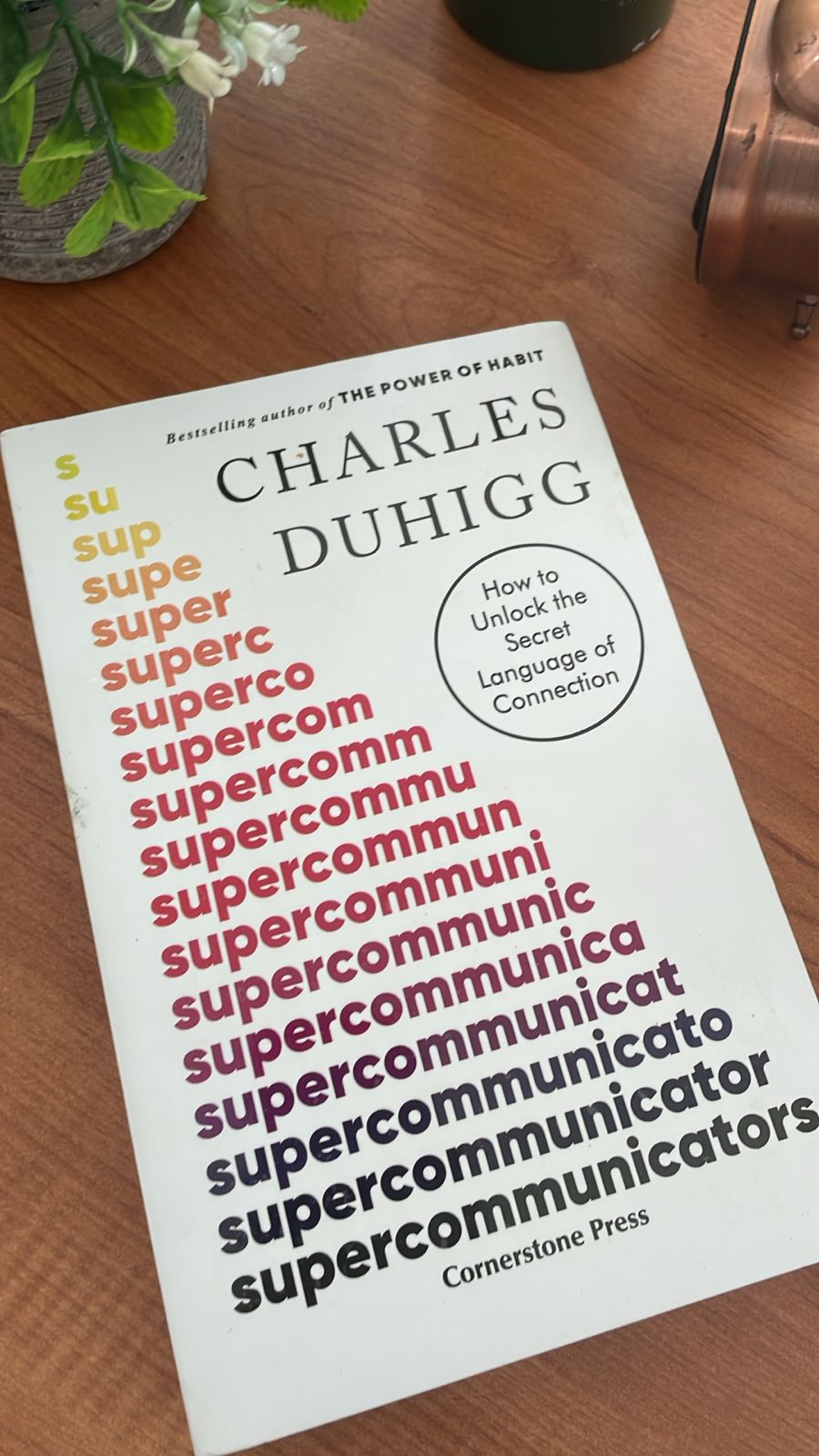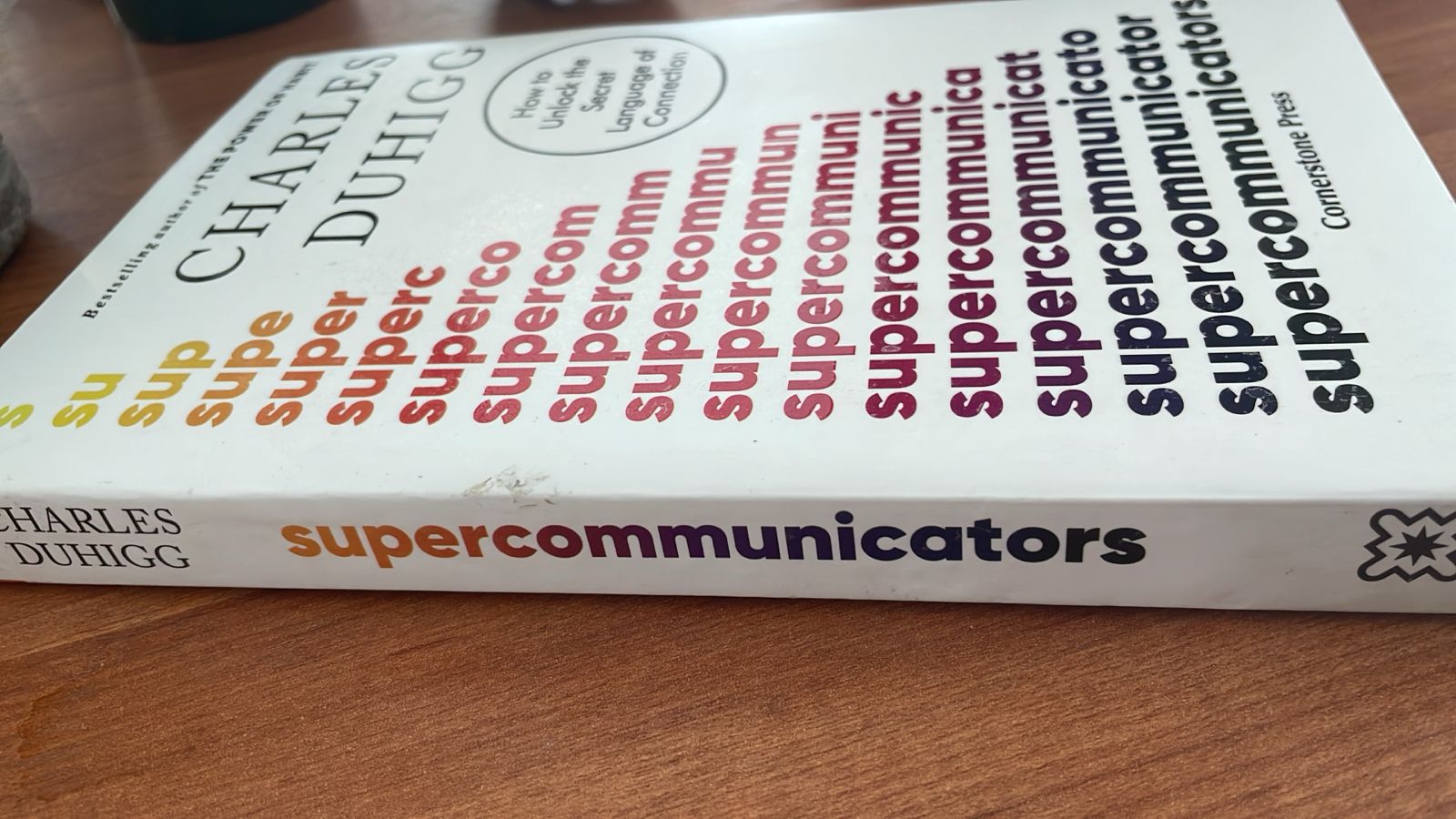
Supercommunicators by Charles Duhigg
Supercommunicators by Charles Duhigg is a practical guide to improving conversations, listening more effectively, building trust, and creating stronger connections at work and in everyday life.

Some people seem able to talk with almost anyone.
They know how to ask useful questions.
They make others feel heard.
They can handle difficult conversations without immediately creating more conflict.
Charles Duhigg argues that these abilities are not simply natural talents.
They are skills that can be learned.
About Supercommunicators
Supercommunicators explores the psychology and neuroscience behind effective communication.
Duhigg studies conversations in relationships, workplaces, creative teams, conflict situations, and everyday social interactions.
His central idea is that people often participate in different kinds of conversations without realizing it.
When two people are having different types of conversations, connection becomes much harder.
Recognizing the type of conversation can change how we listen and respond.
The Three Types of Conversations
The book identifies three broad categories.
The first is the practical or decision-making conversation.
This asks: What is this really about?
The second is the emotional conversation.
This asks: How do we feel?
The third is the social conversation.
This asks: Who are we?
Good communicators learn to recognize which kind of conversation is happening.
They then respond in a way that matches the other person.
7 Powerful Lessons from Supercommunicators
1. Match the Conversation
One of the central lessons in Supercommunicators is what Duhigg calls the matching principle.
Imagine one person wants practical advice.
The other person responds only with emotional reassurance.
Both may have good intentions.
But they are not having the same conversation.
Effective communication often begins by understanding what the other person actually needs.
2. Ask Better Questions
Strong communicators do not simply wait for their turn to speak.
They ask questions that encourage deeper answers.
A useful question can reveal motivations, concerns, and emotions.
Instead of asking questions that produce only yes-or-no answers, Duhigg encourages curiosity.
The goal is to help the other person explain what matters to them.
3. Listen for Emotion
People do not always state their emotions directly.
Someone may describe a workplace problem while actually feeling ignored.
Another person may discuss a disagreement while feeling embarrassed or afraid.
Listening carefully means paying attention to tone, context, and emotional signals.
This can help reveal what the conversation is really about.
4. Show That You Are Listening
Listening is not enough if the other person cannot tell you are listening.
Good communicators demonstrate understanding.
They may repeat an important idea in their own words.
They may ask a relevant follow-up question.
They may acknowledge an emotion.
These small actions can make people feel heard.
5. Difficult Conversations Can Become Safer
Conflict often becomes worse when people feel attacked or misunderstood.
Supercommunicators explores ways to make difficult conversations feel safer.
This does not mean avoiding disagreement.
It means creating enough trust that people can discuss disagreement without immediately becoming defensive.
Curiosity and respectful listening can help.
6. Identity Shapes Conversation
People communicate through the lens of their experiences and identities.
Family background, profession, culture, beliefs, and personal history can all influence how someone interprets a discussion.
The book encourages readers to remember that people may understand the same words differently.
Recognizing these differences can reduce unnecessary conflict.
7. Connection Can Be Learned
Perhaps the most encouraging idea in the book is that communication skills can improve.
You do not need to be naturally outgoing.
You do not need to dominate conversations.
You can become better by practising listening, asking questions, recognizing emotions, and matching the type of conversation taking place.
Practical Conversations
Practical conversations focus on decisions and problems.
What should we do?
What is the goal?
What solution makes sense?
These conversations are common at work.
They also happen at home.
The challenge is making sure everyone agrees on what problem they are actually trying to solve.
A discussion can become frustrating if two people are solving different problems.
Clarifying the goal can immediately improve the conversation.
Emotional Conversations
Emotional conversations are different.
Sometimes a person is not asking for a solution.
They want to be understood.
This is where many conversations go wrong.
Someone describes a difficult day.
The listener immediately offers advice.
But advice was not what the speaker wanted.
They wanted empathy.
Recognizing this difference can dramatically improve relationships.
Social Conversations
Social conversations are connected to identity.
Who are we?
What group do we belong to?
What values matter to us?
These questions may not always be stated directly.
But they influence many discussions.
Topics involving politics, culture, work, family, and social roles can quickly become identity-based.
Understanding that identity is involved can help people communicate more carefully.
The Importance of Listening
Supercommunicators repeatedly returns to listening.
Good listening is active.
It requires attention.
It also requires curiosity.
Instead of preparing a response while the other person is speaking, strong listeners try to understand the speaker’s meaning.
This can reveal information that might otherwise be missed.
Communication at Work
The ideas in the book can be especially useful in professional environments.
Teams need to discuss priorities.
Managers need to give feedback.
Employees need to explain problems.
Clients need to feel understood.
Poor communication creates delays and frustration.
Clear communication can improve cooperation.
The ability to identify what kind of discussion is happening can make meetings and workplace conversations more productive.
Difficult Conversations
Hard conversations are unavoidable.
People disagree about money.
They disagree about responsibilities.
They disagree about behaviour, values, and expectations.
Avoiding every difficult topic rarely solves the underlying problem.
Duhigg explores ways people can stay curious during conflict.
The goal is not always agreement.
Sometimes the goal is simply better understanding.
Communication in Relationships
The book also applies to friendships and romantic relationships.
Partners may speak about the same event but experience it differently.
One may want a solution.
The other may want emotional support.
Recognizing that difference can prevent unnecessary arguments.
Feeling understood can be just as important as receiving advice.
Communication and Connection
At its heart, Supercommunicators is about connection.
People want to feel seen.
They want to feel heard.
They also want to believe that what they say matters.
Effective communication creates that feeling.
This can strengthen relationships at home, at work, and in social situations.
Who Should Read This Book?
Supercommunicators is ideal for managers, team leaders, entrepreneurs, students, professionals, couples, and anyone interested in improving relationships.
It can be useful for people who struggle with difficult conversations.
It may also help people who want to become better listeners.
Sales professionals, teachers, customer-service teams, and managers can apply many of the techniques directly.
The lessons are practical enough to use in everyday conversations.
About Charles Duhigg
Charles Duhigg is a Pulitzer Prize-winning journalist and bestselling author.
His books include The Power of Habit, Smarter Faster Better, and Supercommunicators.
His work often combines scientific research, psychology, real-world stories, and practical frameworks.
Readers can learn more on the official Charles Duhigg Supercommunicators page.
Product Details
Title: Supercommunicators
Subtitle: How to Unlock the Secret Language of Connection
Author: Charles Duhigg
Genre: Communication / Psychology / Self-Help / Business
Language: English
Original Publication: 2024
Publisher: Random House
The U.S. hardcover edition was published on February 20, 2024 and contains 320 pages.
A newer Random House Trade Paperbacks edition was published on September 30, 2025 and also contains 320 pages, with ISBN 9780593243923.
Edition details can vary.
Always check the ISBN and format printed on your physical copy before entering final WooCommerce specifications.
Explore More Self-Development Books
Supercommunicators offers a practical way to improve one of the most important skills in daily life.
Better communication can improve teamwork.
It can strengthen relationships.
It can reduce unnecessary misunderstandings.
And it can make difficult conversations easier to navigate.
The core idea is simple.
Before responding, understand what kind of conversation is actually happening.
Then listen and respond in a way that matches it.
Readers interested in communication, psychology, leadership, and personal growth can explore more Self-Help & Psychology Books at Bargain Books.
Readers interested in workplace communication and leadership can also explore Business, Finance & Economics Books at Bargain Books.
For anyone who wants to listen better, speak more clearly, and connect more deeply with other people, Supercommunicators is a practical and engaging guide.


Reviews
There are no reviews yet.