
No products in the cart.

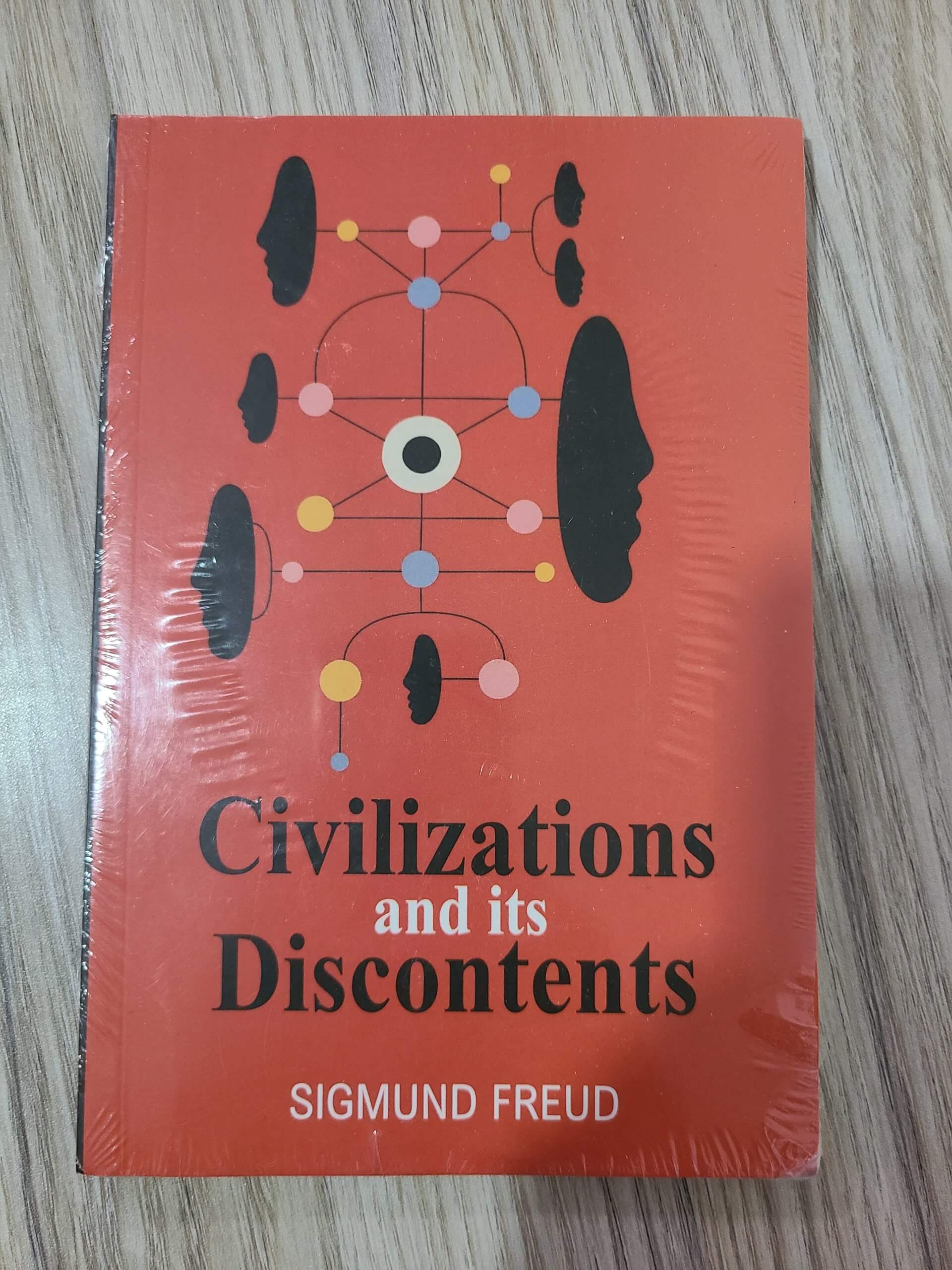










Civilization and Its Discontents by Sigmund Freud


රු1,500.00
3 X Rs. 500.00 or 8% Cashback with


or 3 X රු500.00 with


or up to 4 X රු375.00 with


Civilization and Its Discontents” by Sigmund Freud is a seminal work in psychology and social theory. In this profound and thought-provoking book, Freud explores the tension between individual desires and societal expectations, delving into the sources of human unhappiness and the conflicts inherent in civilization. This classic text is essential reading for anyone interested in psychology, philosophy, and the human condition.
Out of stock
Email when stock available
Civilization and Its Discontents by Sigmund Freud
Civilization and Its Discontents by Sigmund Freud is a classic work of psychology and social thought.
Freud examines a difficult question: can individuals ever be completely happy while living within the rules and restrictions required by civilization?
Why Read Civilization and Its Discontents?
Civilization and Its Discontents is ideal for readers interested in psychology, philosophy, society, human behaviour, morality, and psychoanalysis.
Freud argues that organized society requires people to limit some of their instinctive desires.
Those restrictions help make social life possible.
However, Freud believed they can also contribute to frustration and unhappiness.
Individual Freedom and Society
Human beings naturally want freedom.
Societies also need rules.
Without rules, cooperation and social order become difficult.
Freud explores the tension created when personal desires conflict with expectations from family, culture, morality, and society.
The Search for Happiness
Happiness is one of the book’s central concerns.
People naturally try to avoid suffering.
They also seek pleasure and satisfaction.
Freud asks whether civilization makes happiness easier or more difficult.
His answer is deliberately complicated.
Social life can protect people.
It can also require them to sacrifice certain freedoms.
Repression and Desire
Freud believed human beings possess powerful instinctive drives.
Society cannot allow every desire to be acted upon freely.
Rules, traditions, and moral expectations therefore restrict behaviour.
Penguin describes the book as examining whether this repression can reduce people’s chances of happiness.
Aggression
The book also discusses human aggression.
Freud did not believe people were naturally peaceful in every situation.
He argued that aggressive impulses create difficulties for civilization.
Societies therefore develop rules and institutions intended to control harmful behaviour.
This creates another conflict between instinct and social order.
Guilt and Conscience
Civilization and Its Discontents also explores guilt.
People do not need an external authority watching them all the time.
Social expectations can become internalized.
A person may begin judging their own thoughts and actions.
Freud connects this internal moral pressure with his wider psychoanalytic ideas about the superego.
The Cost of Civilization
Civilization gives people important benefits.
It provides cooperation, security, culture, knowledge, and shared institutions.
But Freud asks whether these benefits come with psychological costs.
People may have to suppress desires.
They may experience guilt.
They may also feel frustrated by expectations they did not personally choose.
Religion and Human Needs
Religion is another subject Freud examines.
He considers why religious beliefs can provide comfort, meaning, and a sense of protection.
His discussion is strongly connected to his own psychoanalytic theories.
Readers do not need to agree with Freud to find these arguments interesting.
The book remains valuable partly because it encourages debate.
Love and Civilization
Love helps connect people.
Families, friendships, and communities depend on relationships.
But Freud believed human relationships can also create conflict.
People want intimacy.
They also want independence.
This creates another tension between individual needs and collective life.
Psychology and Society
Civilization and Its Discontents moves beyond individual psychology.
Freud applies psychoanalytic ideas to entire societies.
He asks whether conflicts inside an individual mind can also appear in larger social structures.
This approach helped make the book influential beyond clinical psychology.
Penguin describes Freud’s ideas as foundational to psychoanalysis and highly influential on twentieth-century intellectual thought.
A Book That Challenges the Reader
This is not a simple self-help book.
Freud does not offer seven easy steps to happiness.
Instead, he presents difficult questions about human nature.
Can society exist without restricting individuals?
Can complete freedom exist without creating conflict?
Can civilization remove suffering?
These questions remain thought-provoking even when readers disagree with Freud’s conclusions.
7 Powerful Ideas from Civilization and Its Discontents
1. Civilization requires compromise.
Living together means accepting certain limits.
2. Happiness and society can conflict.
What benefits society may not always satisfy every individual.
3. Human desires are powerful.
Freud believed instinctive drives strongly influence behaviour.
4. Aggression matters.
Societies need ways to control destructive behaviour.
5. Guilt can become internal.
People often regulate themselves through conscience and social expectations.
6. Freedom has limits.
Complete personal freedom can conflict with the needs of others.
7. Human nature is complicated.
Civilization can protect people while also creating new forms of frustration.
About Sigmund Freud
Sigmund Freud was born in 1856 and died in 1939.
He trained as a doctor and became the founder of psychoanalysis.
His ideas about the unconscious, personality, dreams, desire, and psychological conflict became enormously influential.
Many specific Freudian theories are debated or rejected within modern psychology, so this book is best read as an influential historical work of psychoanalytic and social thought rather than as a current scientific textbook.
Book Details
Penguin publishes several editions, so check your physical book before entering the ISBN.
For the Penguin Great Ideas paperback edition:
Author: Sigmund Freud
Publisher: Penguin
Series: Penguin Great Ideas
Format: Paperback
Pages: 112
Publication Date: September 2, 2004
ISBN: 9780141018997
Dimensions: 18 × 11.2 × 0.6 cm
Weight: 74 g
Penguin also publishes a 192-page Pocket Hardback edition, ISBN 9780141395890, so edition details can differ considerably.
Perfect for Readers Interested In
This book is suitable for readers interested in psychology, philosophy, psychoanalysis, human behaviour, society, morality, Freud, social theory, happiness, and classic intellectual works.
Readers interested in Freud may also explore The Interpretation of Dreams, The Future of an Illusion, and The Essentials of Psycho-Analysis. Penguin lists these among his other works.
Buy Civilization and Its Discontents in Sri Lanka
Looking for Civilization and Its Discontents in Sri Lanka?
This influential work is an excellent choice for readers interested in psychology, philosophy, society, human desire, morality, freedom, and the complicated relationship between individuals and civilization.
Discover Freud’s provocative argument about why the benefits of civilization may also contribute to human dissatisfaction. https://www.penguin.co.uk/books/55115/civilization-and-its-discontents-by-sigmund-freud/9780141018997
| Author | Sigmund Freud |
|---|---|
| Type | Paperback Brand new Printed (Indian Locally published) |
| ISBN/ISSN | 1891396625 |
| Language | English |
| Pages | 146 |
Be the first to review “Civilization and Its Discontents by Sigmund Freud”
Related products

Damaged & Imperfect Books
රු2,750.00
3 X Rs. 916.67 or 8% Cashback with
or 3 X රු916.67 with
or up to 4 X රු687.50 with

Damaged & Imperfect Books
රු950.00
3 X Rs. 316.67 or 8% Cashback with
or 3 X රු316.67 with
or up to 4 X රු237.50 with
-24%

Non-Fiction & Knowledge
Original price was: රු2,300.00.රු1,750.00Current price is: රු1,750.00.
3 X Rs. 583.33 or 8% Cashback with
or 3 X රු583.33 with
or up to 4 X රු437.50 with

Damaged & Imperfect Books
රු950.00
3 X Rs. 316.67 or 8% Cashback with
or 3 X රු316.67 with
or up to 4 X රු237.50 with

Out of stock
Damaged & Imperfect Books
රු2,500.00
3 X Rs. 833.33 or 8% Cashback with
or 3 X රු833.33 with
or up to 4 X රු625.00 with

Out of stock
Self-Help & Psychology
රු2,200.00
3 X Rs. 733.33 or 8% Cashback with
or 3 X රු733.33 with
or up to 4 X රු550.00 with

Out of stock
රු1,950.00
3 X Rs. 650.00 or 8% Cashback with
or 3 X රු650.00 with
or up to 4 X රු487.50 with

Out of stock
Self-Help & Psychology
රු1,250.00
3 X Rs. 416.67 or 8% Cashback with
or 3 X රු416.67 with
or up to 4 X රු312.50 with
Reviews
There are no reviews yet.