
No products in the cart.
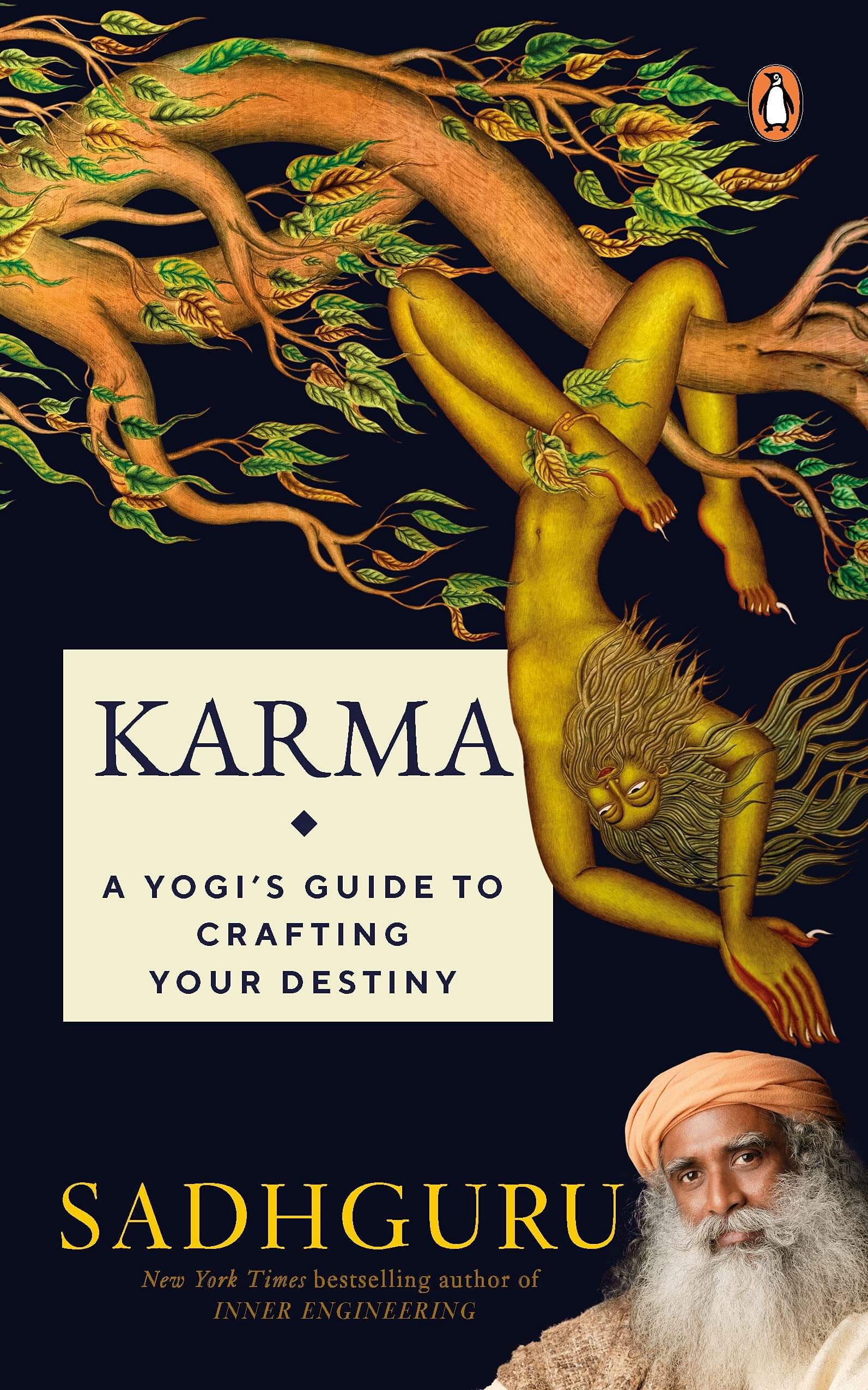
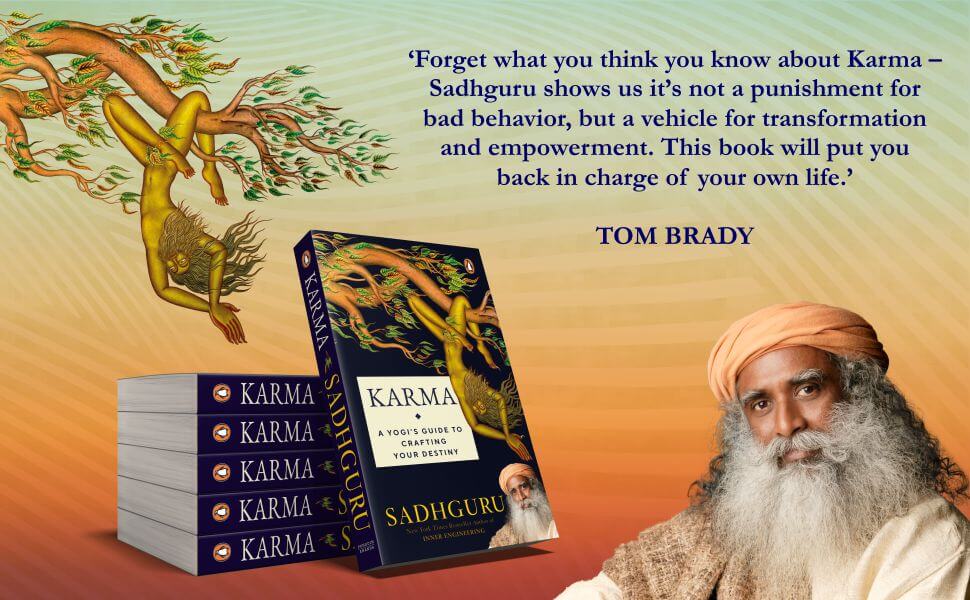
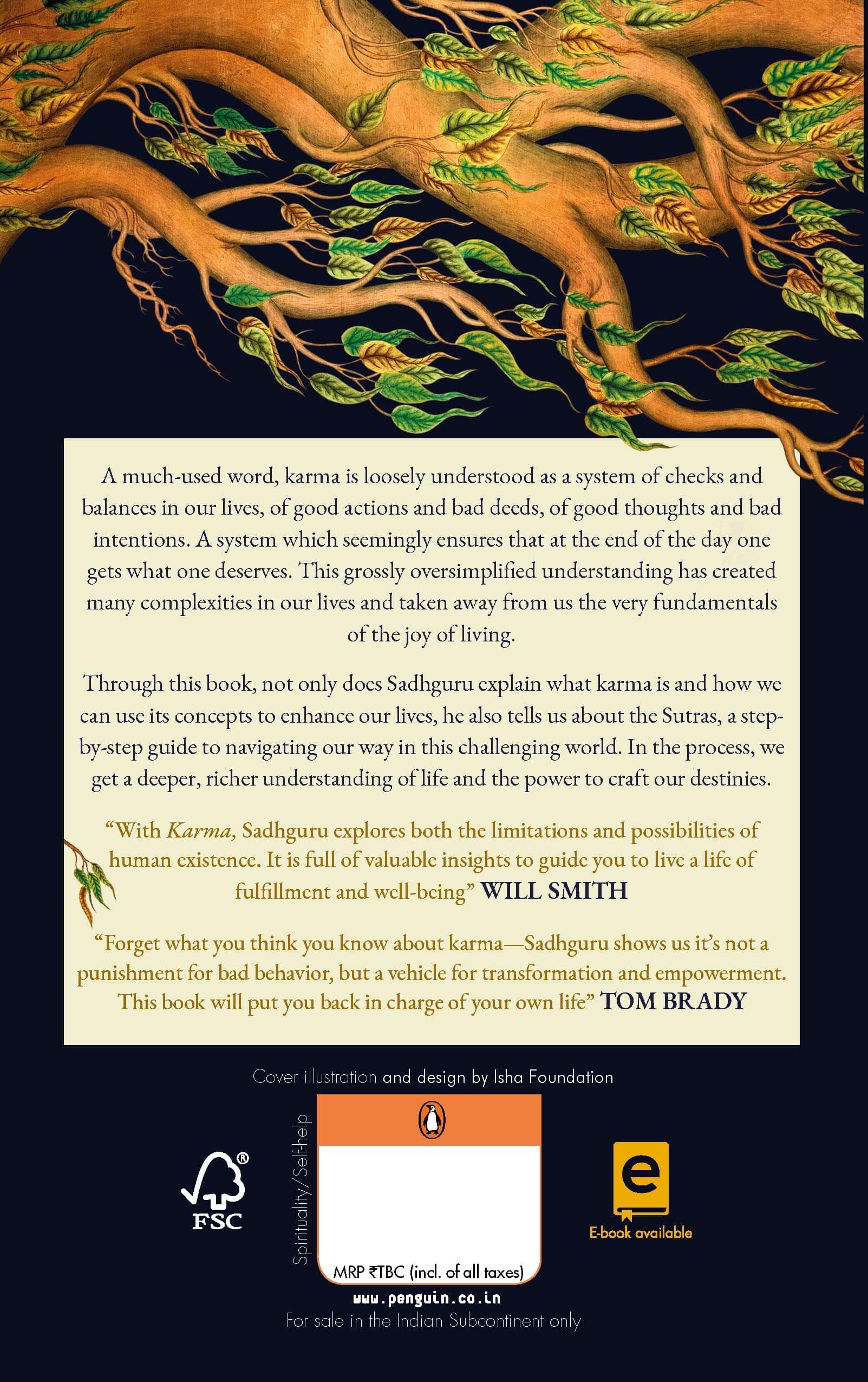






Karma by Sadhguru is a powerful spiritual and self-development book that explores one of the most widely used—and often misunderstood—ideas in the world: karma.
Many people think karma means:
Do something good and something good will happen to you.
Do something bad and something bad will happen to you.
But Sadhguru presents a very different understanding.
In Karma by Sadhguru, karma is not described as punishment.
It is not described as a cosmic reward system.
It is not simply about destiny.
Instead, karma is explained as action.
Your actions.
Your thoughts.
Your emotions.
Your intentions.
Your responses.
And the patterns you create through them.
This means karma is not necessarily something that controls you from outside.
It is something you participate in creating.
That idea changes the entire conversation.
Instead of asking:
“Why is this happening to me?”
Sadhguru encourages readers to ask:
“How am I responding to what is happening?”
That shift—from helplessness to responsibility—is at the heart of Karma by Sadhguru.
Karma by Sadhguru – Book Overview
Karma by Sadhguru explores the meaning of karma from a yogic perspective.
Sadhguru challenges the popular belief that karma is simply a balance sheet of:
Good actions.
Bad actions.
Rewards.
Punishments.
Instead, he explains karma as an internal mechanism created through action and memory.
According to this approach, people become shaped by repeated:
Thoughts.
Emotions.
Choices.
Reactions.
Habits.
Experiences.
These patterns can gradually influence how someone experiences life.
The important message is that awareness can create freedom.
If you become more conscious of the way you think and respond, you may become less controlled by unconscious patterns.
That is why Karma by Sadhguru is not only a spiritual book.
It is also a book about:
Responsibility.
Self-awareness.
Personal freedom.
Conscious living.
Inner transformation.
What Is Karma?
One of the first things Karma by Sadhguru tries to clarify is the meaning of the word itself.
Karma simply means:
Action.
That action can take different forms.
Physical action.
Mental action.
Emotional action.
Even intention can influence the way someone experiences life.
This is important because many people treat karma as though it is something external.
A mysterious force deciding who deserves reward and who deserves punishment.
Sadhguru’s explanation moves away from that idea.
Karma becomes a process.
A person acts.
The action creates an impression.
Repeated impressions create patterns.
Patterns influence future responses.
Over time, these patterns can feel automatic.
Karma Is Not Punishment
One of the strongest lessons in Karma by Sadhguru is that karma should not be understood only as punishment.
When something difficult happens, people sometimes say:
“That must be your karma.”
This can make karma sound like a moral sentence.
But Sadhguru’s explanation is very different.
He presents karma as a mechanism.
Not revenge.
Not judgment.
Not a cosmic scorecard.
This means difficult experiences are not automatically evidence that someone is a bad person.
The idea is much more connected to cause, response and internal conditioning.
Responsibility
Responsibility is one of the most important themes in Karma by Sadhguru.
People often try to find someone to blame.
Parents.
Partners.
Society.
Government.
Luck.
God.
Fate.
But blame can create helplessness.
If everything is someone else’s responsibility, then you may feel you have no power.
Sadhguru presents responsibility differently.
Responsibility means:
The ability to respond.
You may not control everything that happens.
But you can influence how you respond.
This distinction is central to the book.
Response Versus Reaction
There is a difference between responding and reacting.
A reaction is often automatic.
Someone criticizes you.
You become angry.
Someone ignores you.
You feel rejected.
Something goes wrong.
You panic.
A response involves more awareness.
You notice the situation.
You notice your emotion.
Then you choose what to do.
Karma by Sadhguru encourages this movement from automatic reaction toward conscious response.
That does not mean emotions disappear.
It means you create more space between the situation and your behaviour.
Intention
Intention matters.
Two people may perform the same action for completely different reasons.
One may act from:
Compassion.
Another from:
Fear.
One may help someone genuinely.
Another may help because they want recognition.
Outwardly, the behaviour can look similar.
Internally, the process is different.
Karma by Sadhguru explores how intention can shape the quality of action.
This makes karma more subtle than simply categorizing behaviour as good or bad.
Unconscious Patterns
A major idea in the book is that people often live through repeated patterns.
For example:
Someone feels criticized.
They immediately become defensive.
Another person feels insecure.
They constantly seek approval.
Someone experiences failure.
They automatically assume they are incapable.
These patterns can repeat for years.
Eventually, they may feel like personality.
But Karma by Sadhguru encourages readers to question whether these reactions are truly fixed.
Are you choosing them?
Or are they simply happening automatically?
Awareness creates the possibility of change.
Memory and Conditioning
Human beings are shaped by memory.
Not only conscious memory.
The body remembers.
The mind remembers.
Emotions remember.
Past experiences influence present behaviour.
Karma by Sadhguru explores how accumulated experiences can shape the way a person responds today.
This conditioning can become useful.
For example, learning from danger helps survival.
But it can also become limiting.
If every new situation is interpreted through old experiences, people may struggle to see life clearly.
Living in the Past
Sometimes people believe they are living in the present.
But they are actually responding to the present through memories from the past.
Someone reminds you of a person who hurt you.
You become suspicious.
A situation feels similar to an earlier failure.
You become afraid.
The present event may be new.
But the reaction comes from memory.
Karma by Sadhguru encourages greater awareness of this process.
Destiny
The subtitle of the book refers to crafting your destiny.
This does not mean controlling every event.
You cannot control:
Other people.
Weather.
Economies.
Illness.
Accidents.
Every future circumstance.
But you can influence the way you experience and respond to life.
That becomes a form of inner freedom.
Instead of being entirely driven by unconscious habits, you become more deliberate.
Freedom
Freedom is one of the central promises behind the book’s approach.
If your reactions are automatic, are you actually free?
Suppose someone can make you angry with one sentence.
They are controlling your emotional state.
Suppose one negative comment destroys your confidence.
Your wellbeing depends on another person’s words.
Karma by Sadhguru encourages readers to build a stronger inner foundation.
Freedom begins when outside events stop completely determining your internal experience.
Conscious Action
Conscious action means acting with awareness.
Why am I doing this?
What is my intention?
What result am I trying to create?
What effect will this have?
This does not mean overthinking every small decision.
It means becoming less automatic.
The more conscious action becomes, the less likely a person is to repeat patterns without understanding them.
Karma and Habit
Habits are a practical way to understand karma.
Imagine someone repeatedly reacts angrily.
Eventually anger becomes easier.
The pathway is familiar.
Another person repeatedly chooses patience.
That response becomes easier too.
Repeated behaviour strengthens patterns.
This is similar to the way Karma by Sadhguru explains accumulated tendencies.
You become shaped by what you repeatedly do.
Karma and Identity
People often define themselves through statements such as:
“I am an angry person.”
“I am shy.”
“I am unlucky.”
“I always fail.”
These identities can become restrictive.
They transform temporary patterns into permanent definitions.
Karma by Sadhguru encourages a more flexible understanding.
A pattern is something you have developed.
That does not necessarily mean it is who you are.
If a pattern was created, perhaps it can also be changed.
The Trap of Blame
Blame can feel satisfying.
If someone else is responsible, you do not need to examine yourself.
But blame also reduces power.
If your happiness depends entirely on another person changing, what happens if they never change?
Karma by Sadhguru encourages responsibility without self-condemnation.
Responsibility does not mean:
Everything bad is your fault.
It means:
Your response is still yours.
That difference is important.
Awareness
Awareness is one of the strongest tools discussed throughout the book.
Before changing a pattern, you need to notice it.
What triggers you?
What happens in your body?
What thoughts appear?
What emotion follows?
What behaviour repeats?
Observation creates distance.
Instead of immediately becoming the reaction, you begin watching the reaction.
That can create new choices.
Yoga and Karma
Sadhguru explains karma from a yogic perspective.
Yoga, in this context, is not limited to physical stretching.
It is connected with:
Inner balance.
Awareness.
Consciousness.
Body.
Mind.
Energy.
Karma by Sadhguru connects yogic understanding with the process of becoming less trapped by unconscious action.
The goal is greater mastery over your internal experience.
The Body
The body carries memory.
It learns patterns.
It responds automatically to familiar situations.
This is useful for survival.
But the same mechanism can also limit flexibility.
Sadhguru encourages readers to understand that the body is part of the karmic process.
It is not separate from mind and emotion.
The Mind
The mind collects information constantly.
Experiences.
Opinions.
Judgments.
Memories.
Expectations.
All of these influence how reality is interpreted.
Two people can experience the same event and react completely differently.
Why?
Because they bring different memories and patterns to the situation.
Karma by Sadhguru helps readers understand why internal conditioning matters so much.
Emotion
Emotional patterns can become especially powerful.
Love.
Fear.
Jealousy.
Anger.
Attachment.
Anxiety.
When emotions repeat automatically, they can begin controlling behaviour.
Awareness does not require suppressing emotion.
It involves experiencing emotion without becoming completely controlled by it.
Attachment
Attachment becomes problematic when happiness depends entirely on a person, object or outcome.
You may love someone deeply.
But if your identity disappears without them, suffering becomes more intense.
Karma by Sadhguru explores the relationship between involvement and attachment.
It is possible to care deeply without losing all inner stability.
Suffering
Suffering is an important theme.
Pain and suffering are not always the same.
Pain can happen physically or emotionally.
Suffering often becomes intensified by the story the mind creates around the experience.
For example:
“This should never have happened.”
“My life is ruined.”
“I will never recover.”
The event is real.
But the mental repetition can continue long after the event.
Karma by Sadhguru encourages readers to examine this difference.
Past and Future
People often spend enormous amounts of time in:
Memory.
Or imagination.
The past becomes regret.
The future becomes anxiety.
Meanwhile, the present receives little attention.
Conscious living involves becoming more available to what is happening now.
This does not mean forgetting the past or ignoring the future.
It means not allowing them to completely consume the present.
Inner Engineering and Karma
Readers familiar with Sadhguru’s earlier book Inner Engineering may find Karma by Sadhguru a natural continuation.
Both books focus heavily on:
Responsibility.
Inner wellbeing.
Self-awareness.
Conscious living.
Personal transformation.
Inner Engineering introduces a broader approach to creating inner balance.
Karma focuses more specifically on action, memory, conditioning and freedom from unconscious patterns.
Karma and Choice
Choice becomes meaningful only when awareness is present.
If you react automatically, there may be very little real choice.
A conscious person has more options.
They can pause.
Observe.
Respond differently.
This is why the book connects awareness with freedom.
The Cycle of Action
A simplified way to understand the cycle described in Karma by Sadhguru is:
Action creates an impression.
Impressions create tendencies.
Tendencies influence future action.
Future actions create more impressions.
The cycle continues.
The goal is not to avoid all action.
That would be impossible.
The goal is to become less entangled in unconscious action.
Karma and Good Deeds
The book challenges overly simple moral calculations.
Doing something good only because you expect a reward can still be transactional.
The focus shifts toward intention and awareness.
Why are you acting?
What state are you creating within yourself?
How conscious is the action?
This makes the concept more complex than:
Good deed = good karma.
Bad deed = bad karma.
Self-Transformation
One of the biggest strengths of Karma by Sadhguru is that it places transformation inside the individual.
You do not need to wait for:
The perfect partner.
A better boss.
A different country.
More money.
Everyone else to change.
Those things may help.
But inner transformation does not need to wait for perfect external conditions.
Personal Power
When people stop seeing themselves only as victims of circumstance, personal power can increase.
Again, this does not mean denying injustice or difficulty.
It means recognizing that your inner response still matters.
That is an empowering message throughout Karma by Sadhguru.
Spirituality Without Fatalism
Some people associate spirituality with accepting whatever happens as fate.
Sadhguru’s approach is different.
Karma is presented as responsibility.
Not resignation.
The message is not:
“This is your destiny, so accept it.”
It is closer to:
“You are participating in the creation of your experience.”
That makes the book active rather than passive.
Practical Reflection
Readers can apply the book by asking questions such as:
Why did I react that way?
Is this response coming from the present situation or past memory?
What is my intention?
Am I acting consciously?
Am I blaming someone else for my entire internal state?
Can I respond differently?
These questions turn the philosophy into everyday reflection.
Karma and Relationships
Relationships are one of the easiest places to see unconscious patterns.
Someone says something.
You react.
They react to your reaction.
You react again.
Soon, the argument is no longer about the original issue.
It is about old patterns.
Karma by Sadhguru encourages greater awareness in these moments.
Changing one response can sometimes change the entire cycle.
Karma and Work
The same principles apply to work.
Someone receives criticism.
They become defensive.
Someone else becomes curious.
One response may create conflict.
The other may create learning.
The event is similar.
The internal response changes the outcome.
Karma and Success
The book also challenges the idea that success is only external.
Money.
Status.
Recognition.
Achievement.
These can be useful.
But if success creates constant anxiety, the person may still feel trapped.
Karma by Sadhguru places greater emphasis on the quality of inner experience.
Freedom From Compulsion
Compulsion means doing something automatically even when you know it is not helping.
Scrolling.
Anger.
Jealousy.
Overeating.
Approval-seeking.
Procrastination.
Repeated arguments.
The more conscious you become, the more space may appear between impulse and action.
That space creates freedom.
Sadhguru’s Accessible Style
One reason readers enjoy Sadhguru’s books is that he attempts to explain traditional yogic concepts using modern language.
Karma by Sadhguru combines:
Spiritual philosophy.
Stories.
Examples.
Questions.
Practical reflection.
This makes the subject more approachable for readers who may not have studied Indian philosophy or yoga before.
A Book About Empowerment
The strongest message of Karma by Sadhguru is empowerment.
Karma is not presented as a prison.
It is presented as a mechanism.
If you understand the mechanism, you may begin using it consciously.
You are not required to remain completely trapped by old conditioning.
7 Powerful Lessons From Karma by Sadhguru
Karma by Sadhguru contains many ideas, but seven stand out:
- Karma means action – It is not simply a cosmic system of reward and punishment.
- Responsibility creates power – You may not control everything that happens, but you can become more conscious of how you respond.
- Intention matters – The inner quality behind an action can be as important as the visible action itself.
- Unconscious patterns create limitation – Repeated thoughts, emotions and reactions can gradually shape behaviour.
- Awareness creates freedom – When you can observe a pattern, you gain the possibility of responding differently.
- Your past does not need to become your future – Memory influences you, but awareness can reduce the control of old conditioning.
- Destiny can be approached consciously – Inner experience becomes less accidental when action becomes more deliberate.
Why Read Karma by Sadhguru?
Karma by Sadhguru is an excellent choice for readers interested in:
- Spirituality
- Sadhguru
- Karma
- Yoga philosophy
- Self-awareness
- Personal growth
- Conscious living
- Responsibility
- Inner peace
- Mindfulness
- Destiny
- Habits
- Psychology
- Self-improvement
- Indian philosophy
- Emotional wellbeing
It is especially useful for readers who want a deeper explanation of karma beyond the common idea of “what goes around comes around.”
Who Should Read This Book?
Karma by Sadhguru may especially appeal to:
- Sadhguru readers
- Readers of Inner Engineering
- Spirituality readers
- Self-help readers
- Yoga practitioners
- Readers interested in meditation
- Readers exploring personal responsibility
- Readers interested in consciousness
- Readers trying to break old habits
- Readers interested in emotional awareness
- Readers who want to understand karma
- Readers interested in Indian spiritual philosophy
- Readers exploring purpose and destiny
A Powerful Guide to Action, Responsibility and Freedom
Karma by Sadhguru asks readers to rethink one of the world’s most familiar spiritual ideas.
Karma is not simply:
Reward.
Punishment.
Fate.
Luck.
Instead, Sadhguru presents it as a process created through action.
Every repeated thought.
Every emotional response.
Every behaviour.
Every intention.
can contribute to patterns.
Those patterns can eventually begin running automatically.
But awareness changes the relationship.
You begin noticing.
You begin questioning.
You begin responding instead of reacting.
And with greater awareness comes greater possibility.
The central message of Karma by Sadhguru is not that everything in life is under your control.
It is that your inner experience does not have to remain completely accidental.
You can become more conscious.
More responsible.
Less compulsive.
More deliberate.
For readers interested in spirituality, self-improvement, yoga, consciousness, emotional wellbeing, responsibility, destiny and personal transformation, Karma by Sadhguru offers a thought-provoking perspective on how our actions shape the way we experience life.
Learn more about Karma: A Yogi’s Guide to Crafting Your Destiny by Sadhguru on the official Sadhguru website.
Explore more personal development and spiritual books at Bargain Books.
| Author | Sadhguru |
|---|---|
| Language | English |
| Type | Paperback Printed Book (Second Quality Copy) |
Be the first to review “Karma by Sadhguru”
Related products
-34%

Non-Fiction & Knowledge
Original price was: රු2,250.00.රු1,490.00Current price is: රු1,490.00.
3 X Rs. 496.67 or 8% Cashback with


or 3 X රු496.67 with


or up to 4 X රු372.50 with

-23%

Non-Fiction & Knowledge
Original price was: රු2,200.00.රු1,700.00Current price is: රු1,700.00.
3 X Rs. 566.67 or 8% Cashback with
or 3 X රු566.67 with
or up to 4 X රු425.00 with
-24%

Non-Fiction & Knowledge
Original price was: රු2,300.00.රු1,750.00Current price is: රු1,750.00.
3 X Rs. 583.33 or 8% Cashback with
or 3 X රු583.33 with
or up to 4 X රු437.50 with
Out of stock
Autobiography
රු2,750.00
3 X Rs. 916.67 or 8% Cashback with
or 3 X රු916.67 with
or up to 4 X රු687.50 with

Non-Fiction & Knowledge
රු2,450.00
3 X Rs. 816.67 or 8% Cashback with
or 3 X රු816.67 with
or up to 4 X රු612.50 with
-28%

Self-Help & Psychology
Original price was: රු1,800.00.රු1,300.00Current price is: රු1,300.00.
3 X Rs. 433.33 or 8% Cashback with
or 3 X රු433.33 with
or up to 4 X රු325.00 with
-24%
Out of stock
Non-Fiction & Knowledge
Original price was: රු2,100.00.රු1,600.00Current price is: රු1,600.00.
3 X Rs. 533.33 or 8% Cashback with
or 3 X රු533.33 with
or up to 4 X රු400.00 with

Out of stock
Non-Fiction & Knowledge
රු1,600.00
3 X Rs. 533.33 or 8% Cashback with
or 3 X රු533.33 with
or up to 4 X රු400.00 with
Reviews
There are no reviews yet.