No products in the cart.
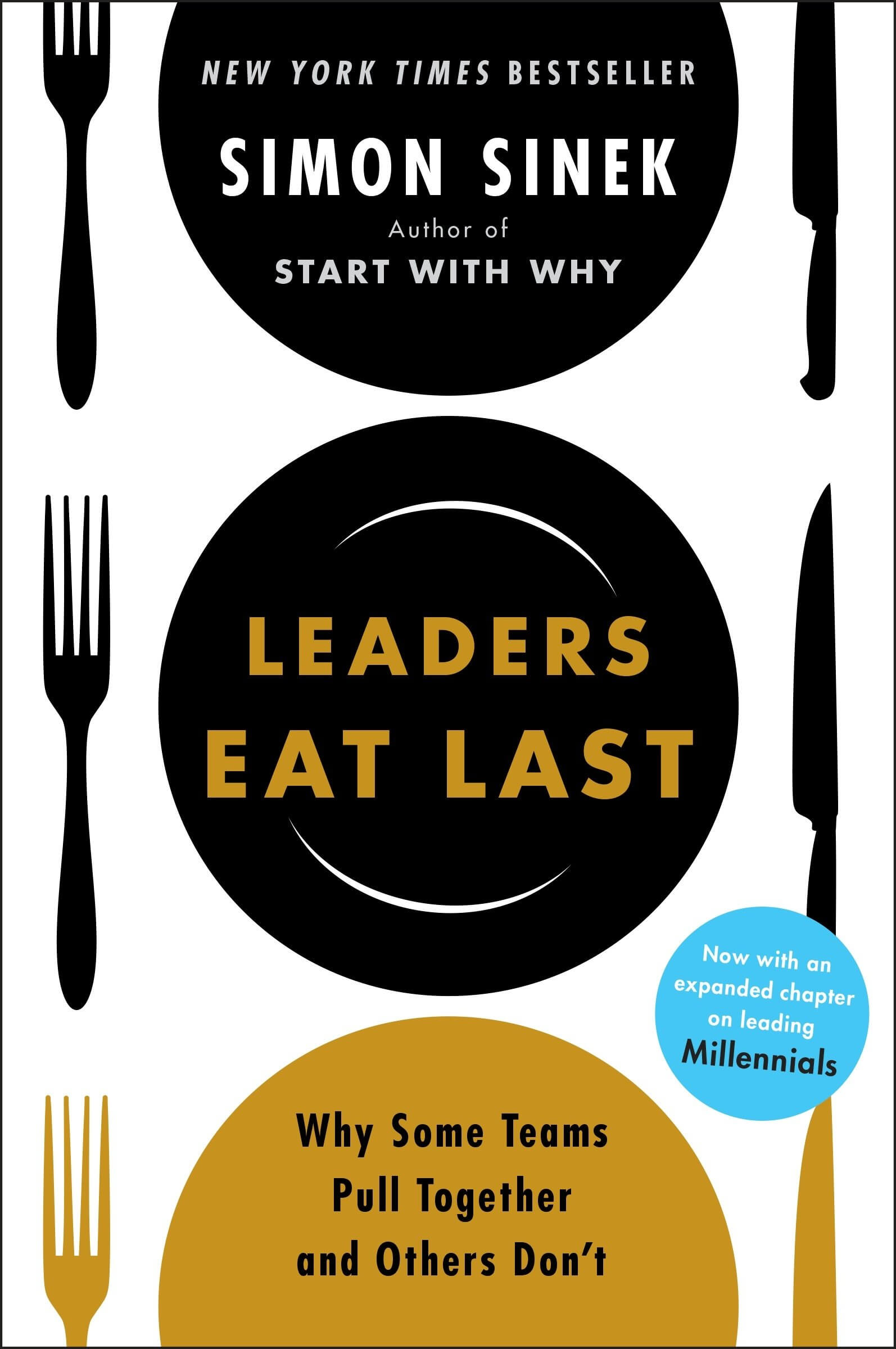
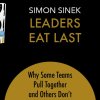
Leaders Eat Last by Simon Sinek


රු1,900.00
3 X Rs. 633.33 or 8% Cashback with


or 3 X රු633.33 with


or up to 4 X රු475.00 with


Leaders Eat Last by Simon Sinek is a bestselling leadership book about building organizations where people feel trusted, valued and safe. Through the powerful concept of the Circle of Safety, Simon Sinek explains how great leaders prioritize their teams, create cooperation, strengthen workplace culture and inspire loyalty. Ideal for managers, entrepreneurs, business owners and team leaders, this book offers practical lessons on trust, employee wellbeing, servant leadership and creating teams that work together instead of against one another.
Out of stock
Email when stock available
Leaders Eat Last by Simon Sinek is a powerful leadership book about trust, teamwork, workplace culture, responsibility, employee wellbeing and why the best leaders put their people before themselves.
Why do some teams work together with extraordinary loyalty while others are filled with:
Competition.
Fear.
Politics.
Distrust.
Stress.
Blame.
Simon Sinek argues that the difference often begins with leadership.
A strong organization is not created only through:
Higher salaries.
Bonuses.
Targets.
Rules.
Technology.
Strategy.
People also need to feel safe.
They need to believe their leaders care about them.
They need to trust the people around them.
That is where Sinek’s idea of the Circle of Safety becomes important.
When employees feel protected inside the organization, they can focus their energy on solving problems outside it.
When they feel threatened internally, they begin protecting themselves instead.
That can create:
Office politics.
Information hiding.
Competition between departments.
Fear of mistakes.
Low morale.
Weak teamwork.
Leaders Eat Last by Simon Sinek explains why leadership is less about being the most important person in the room and more about accepting responsibility for the people in your care.
Leaders Eat Last by Simon Sinek – Book Overview
Leaders Eat Last by Simon Sinek explores why certain organizations create remarkable levels of trust and cooperation.
Sinek looks at examples from:
The military.
Business.
Government.
Workplace culture.
Leadership.
Team psychology.
He argues that humans naturally perform better when they feel part of a group that protects them.
In dangerous environments, people need to know:
Someone has my back.
My team will support me.
My leader will not sacrifice me simply to protect themselves.
This psychological safety can create stronger relationships and better performance.
Why Do Leaders Eat Last?
The title comes from an observation involving the United States Marine Corps.
In the dining environment Sinek describes, junior Marines eat first.
Senior officers eat later.
The point is symbolic.
Leadership does not mean:
I have the highest rank, so I deserve more.
Instead, leadership means:
I have greater responsibility, so I make sure my people are taken care of first.
This becomes the central lesson behind Leaders Eat Last by Simon Sinek.
Authority may come with a position.
Leadership must be earned through behavior.
Leadership Is Responsibility
A job title does not automatically make someone a leader.
Manager.
Director.
CEO.
Supervisor.
Team leader.
These titles give authority.
But leadership is about what someone does with that authority.
A real leader accepts responsibility for:
People.
Culture.
Trust.
Safety.
Development.
When something goes wrong, weak leaders often ask:
Who can I blame?
Strong leaders ask:
What can I do to help fix this?
The Circle of Safety
The Circle of Safety is one of the most important ideas in Leaders Eat Last by Simon Sinek.
Every organization faces outside threats.
Competition.
Economic problems.
Changing technology.
Customer demands.
Market pressure.
New regulations.
Unexpected crises.
Employees should be able to spend their energy dealing with those challenges.
But if they also feel threatened by people inside the company, energy is wasted.
They begin worrying about:
Losing their jobs.
Being blamed.
Being embarrassed.
Internal competition.
Office politics.
Unfair managers.
When leaders create a Circle of Safety, employees are more likely to trust one another.
Psychological Safety
Although Sinek often uses the phrase Circle of Safety, the idea connects closely with psychological safety.
People perform better when they feel able to:
Ask questions.
Admit mistakes.
Offer ideas.
Request help.
Disagree respectfully.
Without fear of humiliation or punishment.
If employees are afraid to speak, problems can remain hidden until they become much worse.
Trust
Trust is one of the strongest themes in Leaders Eat Last by Simon Sinek.
Trust cannot be ordered.
A manager cannot simply say:
“Trust me.”
and expect trust to exist.
Trust grows through repeated behavior.
Do leaders keep promises?
Do they protect employees during difficult periods?
Do they communicate honestly?
Do they give credit?
Do they take responsibility?
Trust is built slowly.
It can be destroyed quickly.
Cooperation
Humans are naturally capable of cooperation.
When people feel safe, they are more willing to:
Share information.
Help teammates.
Solve problems together.
Take reasonable risks.
Offer creative ideas.
A workplace built around internal competition can damage this cooperation.
If employees believe their colleagues are threats, they may stop helping each other.
Competition Inside the Team
Competition can sometimes motivate performance.
But constant internal competition can become destructive.
Imagine two departments that should work together.
Instead, each tries to make the other look bad.
Information is hidden.
Problems are blamed on someone else.
People care more about protecting their own position than serving the customer.
The organization may appear busy.
But it is not functioning as one team.
Leaders Protect Their People
A central idea in Leaders Eat Last by Simon Sinek is that leaders should protect people from unnecessary internal threats.
That does not mean protecting employees from every challenge.
People need:
Accountability.
Standards.
Feedback.
Responsibility.
But they should not need to constantly fear their own organization.
Sacrifice
Leadership often requires sacrifice.
A leader may need to give up:
Comfort.
Credit.
Time.
Personal convenience.
Sometimes even short-term financial gain.
Why?
Because leaders carry responsibility for others.
The title Leaders Eat Last symbolizes exactly this idea.
The leader does not take the best opportunity first.
They ensure the team is cared for.
Servant Leadership
The book strongly connects with the idea of servant leadership.
Servant leaders ask:
How can I help my people succeed?
Instead of:
How can my people make me look successful?
This creates a different relationship between leaders and employees.
The leader still makes difficult decisions.
They still maintain standards.
But their authority is used in service of the team.
Good Leaders Do Not Need All the Credit
Recognition matters.
Employees want their contribution to be seen.
A weak leader may take credit when things go well and blame the team when things go wrong.
A stronger leader often does the opposite.
They give credit outward.
They take responsibility inward.
That behavior increases trust.
Workplace Culture
Culture is not simply:
Posters.
Mission statements.
Company slogans.
Office decorations.
Culture is what people experience every day.
How are mistakes handled?
How do managers speak to employees?
What behavior gets rewarded?
What happens when someone asks for help?
What happens when the company is under pressure?
Those moments reveal the real culture.
Culture Comes From Leadership
Leaders influence culture through what they tolerate.
If a high-performing employee constantly mistreats colleagues and leadership ignores it, employees learn:
Performance matters more than respect.
If managers punish people for admitting mistakes, employees learn:
Hide problems.
If leaders reward collaboration, employees learn:
Help each other.
Culture develops through repeated signals.
Employee Wellbeing
Leaders Eat Last by Simon Sinek argues that employee wellbeing matters to organizational performance.
People are not machines.
They experience:
Stress.
Fear.
Motivation.
Belonging.
Loyalty.
Burnout.
Leaders who ignore these factors may achieve short-term results while damaging long-term performance.
Fear-Based Management
Some managers believe fear increases productivity.
Threaten employees.
Pressure them.
Compare them constantly.
Make job security uncertain.
This may create short bursts of performance.
But fear has a cost.
People may become less creative.
Less honest.
Less loyal.
More defensive.
Fear can make employees focus on survival rather than excellence.
Stress
Stress is not always bad.
Short-term stress can help people respond to challenges.
But chronic workplace stress is different.
When employees constantly feel threatened, exhausted or insecure, performance can decline.
Leadership can either reduce unnecessary stress or increase it.
Burnout
Burnout can develop when people experience sustained pressure without enough:
Support.
Control.
Recognition.
Recovery.
Meaning.
A strong leader pays attention before talented people become completely exhausted.
Belonging
Humans want to belong.
We want to feel part of something.
A team becomes stronger when people believe:
I matter here.
People know me.
My contribution matters.
Someone would notice if I disappeared.
That sense of belonging can create extraordinary loyalty.
Loyalty
Employee loyalty cannot simply be demanded.
Organizations sometimes ask employees for total commitment while offering little commitment in return.
That relationship becomes transactional.
If the company treats people as disposable, employees may eventually treat the company the same way.
Loyalty is more likely when people feel that loyalty is mutual.
The Biology of Leadership
Sinek also uses biology to explain aspects of human behavior.
He discusses chemicals commonly associated with different social and motivational experiences, including:
Endorphins.
Dopamine.
Serotonin.
Oxytocin.
These are used to illustrate differences between individual achievement and social connection.
Dopamine
Dopamine is often associated with achievement and reward.
Complete a task.
Hit a target.
Receive a notification.
Reach a goal.
It can create motivation.
That can be useful.
But an organization focused only on constant targets and rewards may create unhealthy behavior.
People may become obsessed with numbers while ignoring people.
Oxytocin and Trust
Oxytocin is often associated with trust and social bonding.
Sinek uses it to explain why strong human relationships can create feelings of safety and connection.
Workplaces where people genuinely care about one another can become much more resilient during difficult periods.
Serotonin and Status
Serotonin is discussed in relation to pride, recognition and social status.
Recognition can strengthen relationships when used well.
People want to know their work matters.
A good leader recognizes contribution without creating unhealthy competition.
Endorphins
Endorphins help humans push through physical discomfort.
Sinek uses biological explanations to show how human systems evolved for survival and cooperation.
The broader lesson is that workplace behavior is deeply connected with basic human needs.
Short-Term Results Versus Long-Term Trust
One of the biggest leadership challenges is balancing:
Short-term performance.
Long-term organizational health.
A decision may improve quarterly results while damaging employee trust.
For example:
Mass layoffs can immediately reduce costs.
Extreme targets can temporarily increase output.
Constant pressure can produce short-term numbers.
But leaders should also ask:
What happens next year?
What happens to loyalty?
What happens to trust?
The Danger of Numbers
Numbers are useful.
Revenue.
Profit.
Targets.
Growth.
Performance metrics.
But people can disappear behind numbers.
A company may say:
“We reduced headcount by 10%.”
That sounds abstract.
But every number represents people.
Families.
Careers.
Relationships.
Leaders should understand both the numbers and their human consequences.
Customers Benefit From Strong Culture
Employee culture ultimately affects customers.
Employees who feel trusted and supported are more likely to:
Solve customer problems.
Take responsibility.
Go beyond minimum requirements.
Help colleagues.
A company cannot easily build a great customer experience while creating a terrible employee experience.
Leadership During Difficult Times
Leadership becomes most visible during pressure.
Anyone can appear supportive when everything is going well.
Real leadership becomes clearer during:
Revenue decline.
Economic crisis.
Operational failure.
Major mistakes.
Unexpected competition.
Those moments reveal priorities.
Does leadership immediately sacrifice employees?
Or do leaders search for ways to share responsibility?
Trust During Crisis
Teams that already trust each other can respond more effectively during crises.
They communicate.
Support each other.
Share information.
Teams without trust may begin blaming each other.
That is why culture should be built before the crisis arrives.
Managers Versus Leaders
Managers often focus on:
Process.
Deadlines.
Tasks.
Budgets.
Leaders focus additionally on:
People.
Purpose.
Culture.
Trust.
Both are necessary.
A person can be an excellent manager and a poor leader.
The strongest organizations develop both skills.
Leadership Is Not About Being Nice
Caring leadership does not mean avoiding difficult conversations.
A good leader may still need to:
Correct poor performance.
Change responsibilities.
Set high standards.
Reject ideas.
Make difficult decisions.
The difference is how those decisions are made.
With respect?
Fairness?
Transparency?
Responsibility?
Accountability
Safety without accountability can create another problem.
A strong workplace requires both.
Employees should feel safe enough to admit mistakes.
But they should still take responsibility for correcting them.
Healthy leadership combines:
Trust.
Standards.
Support.
Accountability.
Mistakes
How leaders respond to mistakes matters.
If every mistake leads to punishment, employees may hide problems.
If mistakes are completely ignored, standards decline.
A better approach asks:
Was this an honest mistake?
What can we learn?
How do we stop it happening again?
Communication
Leaders need strong communication.
People handle bad news better when they trust the source.
Silence creates uncertainty.
Uncertainty creates fear.
Honest communication is especially important during change.
Employees may not need every confidential detail.
But they do need clarity.
Listening
Communication is not only talking.
Strong leaders listen.
What problems are employees experiencing?
What ideas do they have?
What are customers saying?
What risks are people afraid to mention?
Leaders who stop listening gradually become disconnected from reality.
Empathy
Empathy helps leaders understand experiences outside their own.
A senior executive may not experience the same:
Workload.
Customer complaints.
Technical problems.
Schedule pressure.
as frontline employees.
Listening to those experiences improves decisions.
Leadership and Ego
Leadership can strengthen ego.
Higher status.
More attention.
More authority.
More recognition.
This creates risk.
A leader may begin believing:
I know best.
People should not question me.
My success proves I am always right.
Leaders Eat Last by Simon Sinek encourages a more responsible view of authority.
Power Is a Responsibility
The more authority someone has, the greater their ability to influence other people’s lives.
That should increase responsibility, not entitlement.
A leader’s decisions can affect:
Income.
Careers.
Confidence.
Family life.
Mental wellbeing.
Understanding that responsibility can produce more thoughtful leadership.
Creating Strong Teams
Strong teams usually need:
Trust.
Clear purpose.
Communication.
Psychological safety.
Mutual respect.
Shared responsibility.
Leadership support.
Skills matter.
But technically talented people who cannot trust one another may still perform poorly as a team.
Hiring for Character
Organizations often hire primarily for skill.
But character matters too.
Can this person cooperate?
Do they take responsibility?
Do they help others?
How do they behave under pressure?
Skills can sometimes be taught.
Character problems can be much harder to fix.
Leaders Develop Other Leaders
Strong leadership does not create permanent dependence on one person.
A good leader develops others.
They teach.
Delegate.
Coach.
Give responsibility.
Allow people to grow.
Eventually, the organization becomes stronger because leadership exists at multiple levels.
Purpose
Purpose also matters.
People want to understand:
Why does this organization exist?
Why does my work matter?
What are we trying to build?
This connects Leaders Eat Last by Simon Sinek with Sinek’s earlier book Start With Why.
Purpose gives people direction.
Safety gives them the environment to pursue it.
Start With Why and Leaders Eat Last
The two books complement each other.
Start With Why focuses on purpose.
Why does the organization exist?
Leaders Eat Last focuses more on people and culture.
How do leaders create an environment where people can work together toward that purpose?
Readers interested in leadership may benefit from reading both.
The Infinite Game
Simon Sinek later expanded his leadership ideas in The Infinite Game.
That book focuses on long-term leadership in environments where there is no permanent finish line.
Together, the three books create a useful progression:
Start With Why – understand purpose.
Leaders Eat Last – build trust and strong culture.
The Infinite Game – lead for the long term.
Leadership in Small Businesses
The ideas in Leaders Eat Last by Simon Sinek are not only for large corporations.
Small businesses can apply them too.
A shop owner.
Startup founder.
Restaurant manager.
Team supervisor.
Department head.
can all create a Circle of Safety.
Sometimes leadership matters even more in small teams because every relationship has greater impact.
Leadership in Retail
Retail teams depend heavily on cooperation.
Employees must:
Serve customers.
Handle stock.
Solve problems.
Support each other.
Communicate.
If employees fear being blamed for every mistake, service quality can suffer.
A supportive manager can create confidence and responsibility.
Leadership in Sales
Sales teams are often highly competitive.
Competition can motivate.
But excessive competition can cause:
Information hiding.
Customer stealing.
Internal conflict.
Unethical behavior.
Good leaders create systems where individual success does not destroy team cooperation.
Leadership in Startups
Startups often operate under intense pressure.
Limited money.
Fast deadlines.
Constant uncertainty.
This makes psychological safety especially important.
Teams need to feel able to speak openly about:
Risks.
Mistakes.
Bad ideas.
Technical problems.
Without that honesty, small problems can grow quickly.
Employee Recognition
People want to know that their contribution matters.
Recognition does not always require money.
A sincere:
Thank you.
Well done.
I noticed what you did.
can matter.
Recognition strengthens belonging when it is genuine.
Why People Leave Managers
People sometimes leave organizations because of leadership rather than the job itself.
A role may be attractive.
Salary may be acceptable.
But a toxic manager can make the experience unbearable.
This demonstrates how much direct leaders influence employee wellbeing.
Retention
Strong culture can improve employee retention.
People are less likely to leave environments where they feel:
Trusted.
Respected.
Supported.
Connected.
Compensation still matters.
Career development matters.
But culture matters too.
Performance
Some leaders believe caring about people reduces performance.
Sinek argues the opposite.
People often perform better when they trust the organization.
Why?
Because energy moves away from self-protection and toward contribution.
Innovation
Innovation requires risk.
New ideas may fail.
If employees fear punishment for every failed experiment, they stop experimenting.
Psychological safety therefore supports innovation.
People need to believe reasonable failure will be treated as learning rather than humiliation.
Cooperation Over Self-Protection
When employees feel unsafe, they may spend time protecting themselves.
Documenting every interaction.
Avoiding responsibility.
Blaming others.
Hiding information.
When they feel safer, those behaviors can decrease.
The result is more energy available for real work.
Leadership Is a Daily Practice
Leadership is not one motivational speech.
It is repeated behavior.
Every day.
How do you respond when someone makes a mistake?
How do you treat junior employees?
Do you listen?
Do you keep promises?
Do you give credit?
Small actions create culture.
7 Powerful Leadership Lessons From Leaders Eat Last
There are many lessons in Leaders Eat Last by Simon Sinek, but seven stand out:
- Great leaders create a Circle of Safety – People perform better when they feel protected from unnecessary internal threats.
- Leadership means responsibility, not privilege – A higher position should increase responsibility for others rather than entitlement.
- Trust must be earned through behavior – Leaders create trust by keeping promises, protecting people and acting consistently.
- Strong culture beats internal fear – Employees who are not busy protecting themselves have more energy for customers, innovation and teamwork.
- People matter as much as numbers – Revenue and targets are important, but long-term success depends on the humans producing those results.
- Leaders sometimes need to sacrifice first – The title “leaders eat last” represents placing the needs of the team ahead of personal comfort.
- Great leadership creates more leaders – The goal is not to make everyone dependent on one person but to build a culture where responsibility and leadership spread throughout the organization.
Why Read Leaders Eat Last by Simon Sinek?
Leaders Eat Last by Simon Sinek is an excellent choice for readers interested in:
- Leadership
- Simon Sinek books
- Management
- Workplace culture
- Employee engagement
- Teamwork
- Trust
- Business
- Entrepreneurship
- Organizational psychology
- Servant leadership
- Communication
- Employee wellbeing
- Team building
- Motivation
- Human resources
- Company culture
- Leadership development
It is particularly useful for anyone responsible for managing people.
Who Should Read This Book?
Leaders Eat Last by Simon Sinek may especially appeal to:
- Business owners
- Entrepreneurs
- CEOs
- Managers
- Supervisors
- Team leaders
- HR professionals
- Startup founders
- Sales managers
- Retail managers
- Students studying management
- Readers interested in leadership
- Simon Sinek fans
- People building teams
- Anyone wanting to improve workplace culture
Great Leaders Make People Feel Safe
Leaders Eat Last by Simon Sinek presents leadership as something deeper than authority.
A leader’s responsibility is not simply to:
Give instructions.
Hit targets.
Increase profit.
Control employees.
A leader creates the environment in which other people perform.
When employees feel unsafe, they protect themselves.
When they feel trusted, respected and supported, they are more likely to cooperate.
That is the deeper meaning behind the title.
Leaders eat last because leadership involves responsibility.
The leader protects the team.
Supports the team.
Develops the team.
Takes responsibility for the environment.
And sometimes sacrifices personal comfort so others can succeed.
For readers interested in leadership, business, management, organizational culture, employee engagement, trust, teamwork and building stronger companies, Leaders Eat Last by Simon Sinek offers a practical and memorable framework for understanding why people work better when they know their leaders genuinely care about them.
Learn more about Leaders Eat Last by Simon Sinek on Simon Sinek’s official website.
Explore more leadership and business books at Bargain Books.
| Author | Simon Sinek |
|---|---|
| Language | English |
| Type | Paperback Printed Book (Second Quality Copy) |
Be the first to review “Leaders Eat Last by Simon Sinek”
Related products
Non-Fiction & Knowledge
රු2,450.00
3 X Rs. 816.67 or 8% Cashback with
or 3 X රු816.67 with
or up to 4 X රු612.50 with
Non-Fiction & Knowledge
රු1,700.00
3 X Rs. 566.67 or 8% Cashback with
or 3 X රු566.67 with
or up to 4 X රු425.00 with
-24%
Out of stock
Non-Fiction & Knowledge
Original price was: රු2,100.00.රු1,600.00Current price is: රු1,600.00.
3 X Rs. 533.33 or 8% Cashback with
or 3 X රු533.33 with
or up to 4 X රු400.00 with
Out of stock
Autobiography
රු2,750.00
3 X Rs. 916.67 or 8% Cashback with
or 3 X රු916.67 with
or up to 4 X රු687.50 with
-34%
Non-Fiction & Knowledge
Original price was: රු2,250.00.රු1,490.00Current price is: රු1,490.00.
3 X Rs. 496.67 or 8% Cashback with
or 3 X රු496.67 with
or up to 4 X රු372.50 with

Out of stock
Non-Fiction & Knowledge
රු1,500.00
3 X Rs. 500.00 or 8% Cashback with
or 3 X රු500.00 with
or up to 4 X රු375.00 with
-13%

Out of stock
Non-Fiction & Knowledge
Original price was: රු3,900.00.රු3,400.00Current price is: රු3,400.00.
3 X Rs. 1,133.33 or 8% Cashback with
or 3 X රු1,133.33 with
or up to 4 X රු850.00 with
Out of stock
Self-Help & Psychology
රු2,200.00
3 X Rs. 733.33 or 8% Cashback with
or 3 X රු733.33 with
or up to 4 X රු550.00 with
Reviews
There are no reviews yet.