
No products in the cart.


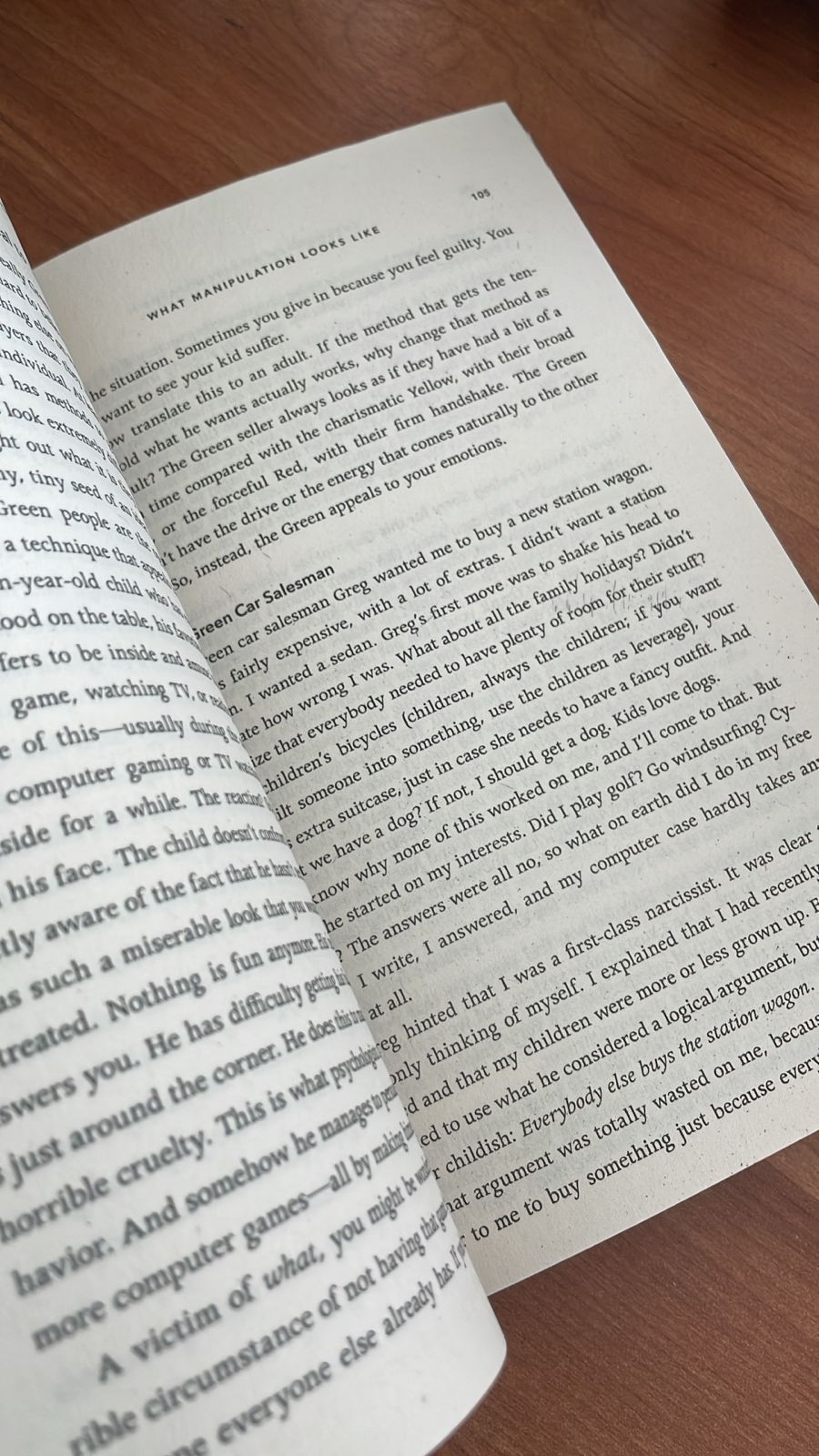

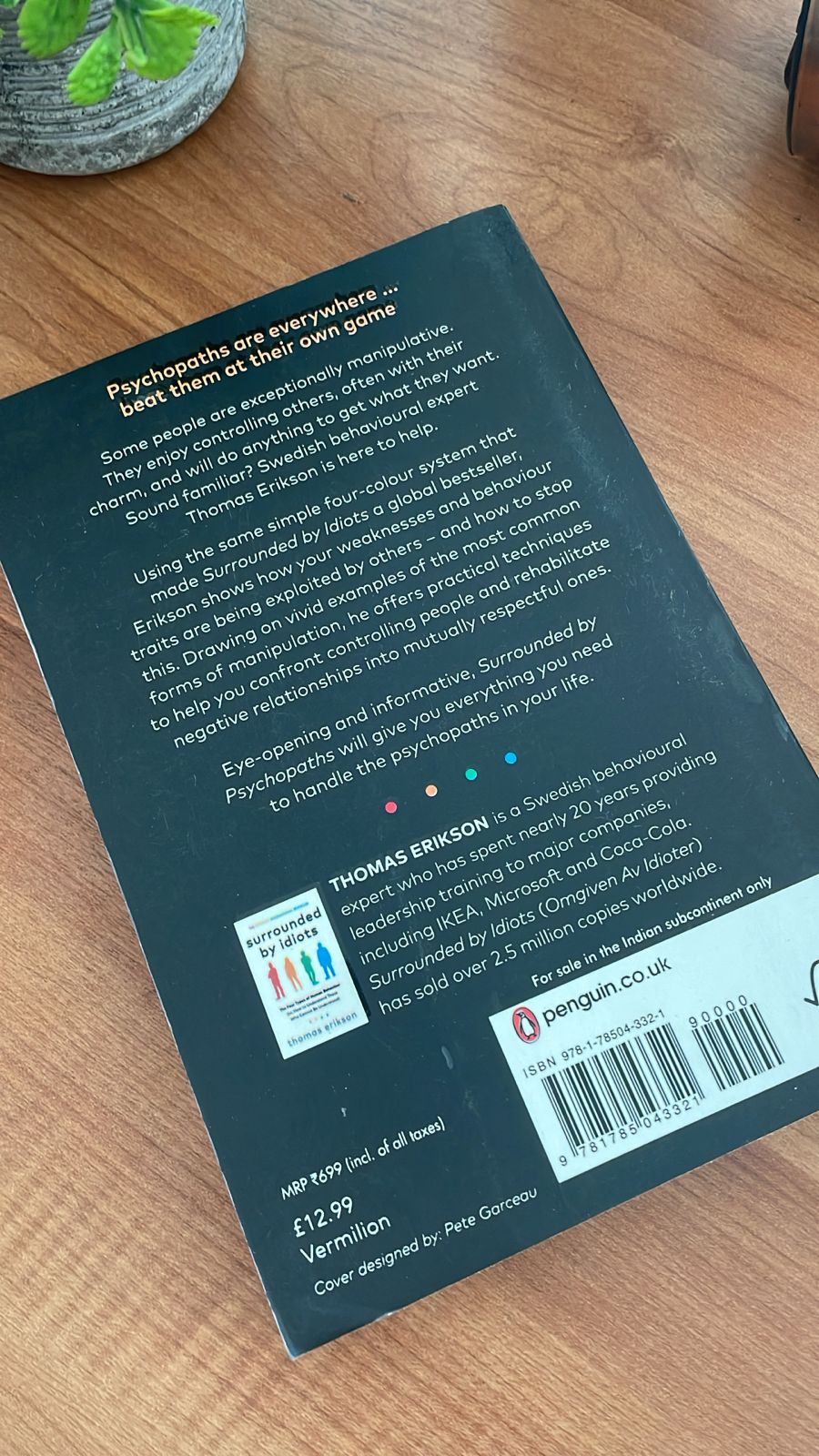





Surrounded by Psychopaths: or, How to Stop Being Exploited by Others by Thomas Erikson


රු1,700.00
3 X Rs. 566.67 or 8% Cashback with


or 3 X රු566.67 with


or up to 4 X රු425.00 with


Discover Surrounded by Psychopaths by Thomas Erikson, a compelling guide on identifying and managing psychopathic behavior in your personal and professional life. Perfect for those seeking practical strategies to protect themselves from manipulation and improve their mental well-being.
5 in stock
Surrounded by Psychopaths by Thomas Erikson
Surrounded by Psychopaths by Thomas Erikson is a practical guide to recognizing manipulation, understanding difficult behavior, improving self-awareness, and protecting yourself from people who may try to control or exploit others.
The book builds on the four-color communication system introduced in Surrounded by Idiots.
Erikson examines how different behavior styles may react to manipulation and why some people can be easier targets for particular tactics.
The goal is not simply to identify difficult people.
It is also to understand your own weaknesses and communicate with greater awareness.
About Surrounded by Psychopaths
Surrounded by Psychopaths explores how manipulative individuals can appear charming, confident, helpful, or highly persuasive.
Problems may only become visible later.
A person may begin controlling conversations.
They may distort facts.
They may use guilt or pressure.
They may exploit another person’s trust.
Erikson explains common patterns and offers practical ways to recognize them before they become more damaging.
Understanding Manipulation
Manipulation happens when someone tries to influence another person through dishonest, hidden, or unfair methods.
It can happen at work.
It can happen in relationships.
It can also happen between friends or family members.
Some manipulation is obvious.
Other forms are much harder to notice.
The book encourages readers to pay attention to repeated behavior rather than isolated incidents.
7 Powerful Lessons from Surrounded by Psychopaths
1. Charm Does Not Always Mean Trustworthiness
Some manipulative people can appear extremely charming.
They may make strong first impressions.
They may listen carefully and quickly learn what another person wants to hear.
This can create trust.
Surrounded by Psychopaths encourages readers to evaluate actions over time rather than relying only on charisma.
Consistency matters.
2. Know Your Own Weaknesses
Self-awareness is one of the strongest defenses against manipulation.
People have different emotional triggers.
Some want approval.
Others dislike conflict.
Some want recognition.
Others strongly value loyalty.
A manipulator may identify these needs and use them strategically.
Understanding your own tendencies can make those tactics easier to notice.
3. Learn to Recognize Pressure
Manipulation often creates artificial urgency.
A person may tell you that you must decide immediately.
They may suggest that refusing means you are disloyal.
They may also create fear about what will happen if you say no.
Recognizing pressure gives you a chance to slow down.
Not every decision needs to be made immediately.
4. Boundaries Are Essential
One of the key lessons in Surrounded by Psychopaths is the importance of boundaries.
A manipulative person may continue pushing until someone finally gives in.
Clear limits can make that more difficult.
A boundary should be simple.
It should also be consistent.
Repeatedly changing your position can make manipulation easier.
5. Pay Attention to Behavior, Not Promises
Words can be persuasive.
Actions provide better evidence.
Someone may promise loyalty while repeatedly acting selfishly.
They may apologize without changing behavior.
They may claim to respect boundaries while continuing to ignore them.
The book encourages readers to look for patterns.
Repeated behavior usually reveals more than a single promise.
6. Different Personality Types Have Different Vulnerabilities
Erikson uses his Red, Yellow, Green, and Blue model throughout the book.
Different styles may react differently to manipulation.
A Green personality may avoid conflict.
A Yellow personality may respond strongly to attention.
A Red personality may react to competition.
A Blue personality may trust detailed information.
Understanding these tendencies can make communication more deliberate.
7. You Cannot Change Everyone
A difficult lesson is that some people may have little interest in changing.
You can communicate clearly.
You can establish boundaries.
You can reduce contact.
But you cannot force someone to become more respectful.
Sometimes protecting yourself is more realistic than trying to fix another person.
The Four-Color Behavior Model
Surrounded by Psychopaths uses the same color model that appears throughout Thomas Erikson’s series.
Red Behavior
Red personalities tend to be direct, competitive, decisive, and results-focused.
They may value control and speed.
A manipulative person might attempt to provoke their competitiveness or challenge their authority.
Yellow Behavior
Yellow personalities are often enthusiastic, social, expressive, and optimistic.
They may enjoy attention and approval.
Manipulators may exploit that desire for recognition or connection.
Green Behavior
Green personalities often value harmony, loyalty, and stability.
They may dislike confrontation.
This can sometimes make it difficult for them to challenge someone who repeatedly crosses boundaries.
Blue Behavior
Blue personalities often value logic, accuracy, evidence, and detail.
They may spend considerable time analysing information.
A manipulator might exploit this by providing selective or misleading details.
The model is designed as a communication framework rather than a complete scientific description of personality.
Manipulation at Work
The workplace can create opportunities for manipulation.
Someone may take credit for another employee’s work.
They may spread misleading information.
They may create conflict between colleagues.
They may also use authority or social influence to control decisions.
Erikson encourages readers to remain aware of patterns.
Keeping clear records can also be useful in professional situations.
Manipulation in Relationships
Personal relationships can make manipulation harder to identify.
Trust already exists.
Emotions are involved.
A person may excuse behavior because they care about the relationship.
Repeated guilt, pressure, lying, blame shifting, or boundary violations can gradually become normal.
Surrounded by Psychopaths encourages readers to step back and examine the pattern.
Healthy relationships should involve respect from both sides.
Gaslighting and Distorted Reality
Manipulators may sometimes deny events or reinterpret them in ways that make another person doubt their own memory.
This behavior is commonly discussed under the term gaslighting.
When conversations repeatedly leave you confused, written records may help.
Taking time before responding can also make it easier to evaluate what actually happened.
The goal is to avoid being pressured into accepting someone else’s version of events automatically.
Flattery as a Tool
Flattery can be genuine.
But it can also be strategic.
A manipulative person may offer excessive praise to gain trust.
Later, they may use that relationship to ask for favors or control.
The lesson is not to distrust every compliment.
It is to judge people by patterns of behavior over time.
Guilt and Emotional Pressure
Guilt can be a powerful tool.
A manipulator may suggest that setting a boundary makes you selfish.
They may claim that disagreement proves you do not care.
This can make people abandon reasonable limits.
Clear thinking is important.
Feeling guilty does not automatically mean you have done something wrong.
Protecting Yourself
Protection begins with awareness.
Notice repeated patterns.
Slow down decisions.
Ask questions.
Keep boundaries clear.
Avoid sharing sensitive information too quickly.
When necessary, create distance.
These strategies do not guarantee that manipulation will disappear.
They can make it easier to recognize and respond to.
Psychopathy and Clinical Diagnosis
The title uses the word “psychopath,” but readers should be careful about applying clinical labels to people around them.
Psychopathy is a complex psychological concept.
Only qualified professionals should assess serious personality disorders or related conditions.
Someone who lies, behaves selfishly, or manipulates others should not automatically be considered a psychopath.
The practical value of the book is in examining behavior and learning how to respond safely and clearly.
Who Should Read This Book?
Surrounded by Psychopaths is suitable for readers interested in communication, psychology, relationships, leadership, and workplace behavior.
It may be especially useful for people who want to understand manipulation.
Managers and employees may find the workplace examples valuable.
Readers who enjoyed Surrounded by Idiots will recognize Erikson’s four-color framework.
People interested in boundaries and difficult relationships may also find useful ideas throughout the book.
About Thomas Erikson
Thomas Erikson is a Swedish behavioral expert, lecturer, and internationally bestselling author.
His books include Surrounded by Idiots, Surrounded by Psychopaths, Surrounded by Bad Bosses, and Surrounded by Narcissists.
His writing focuses on communication, behavioral differences, conflict, and relationships.
Readers can learn more through the official Macmillan page for Surrounded by Psychopaths.
Product Details
Title: Surrounded by Psychopaths
Subtitle: How to Protect Yourself from Being Manipulated and Exploited in Business (and in Life)
Author: Thomas Erikson
Series: The Surrounded by Idiots Series
Genre: Psychology / Communication / Self-Help / Relationships
Language: English
Publisher: St. Martin’s Essentials
Paperback Publication: October 5, 2021
Paperback ISBN-13: 9781250816436
Pages: 272
Some digital and alternate editions use different ISBNs and page counts.
Always check the ISBN and page count printed on your physical copy before entering final WooCommerce specifications.
Explore More Self-Help Books
Surrounded by Psychopaths is ultimately about becoming more aware of how influence works.
Manipulation becomes more difficult when you understand your own vulnerabilities.
Boundaries become easier when you practice them consistently.
And difficult behavior becomes easier to evaluate when you focus on patterns instead of promises.
Readers interested in psychology, communication, boundaries, and personal development can explore more Self-Help & Psychology Books at Bargain Books.
Readers interested in workplace communication and leadership can also explore Business, Finance & Economics Books at Bargain Books.
For readers who want to understand manipulation and become more deliberate about protecting their boundaries, Surrounded by Psychopaths provides an accessible guide.
| Weight | 0.4 kg |
|---|---|
| Dimensions | 12.7 × 1.7 × 19.7 cm |
| Author | Thomas Erikson |
| Type | Paperback Printed Book (Second Quality Copy) |
| ISBN/ISSN | 1785043323 |
| Language | English |
| Pages | 272 |
Be the first to review “Surrounded by Psychopaths: or, How to Stop Being Exploited by Others by Thomas Erikson”
Related products

Non-Fiction & Knowledge
රු1,700.00
3 X Rs. 566.67 or 8% Cashback with
or 3 X රු566.67 with
or up to 4 X රු425.00 with
-29%

Self-Help & Psychology
Original price was: රු1,750.00.රු1,250.00Current price is: රු1,250.00.
3 X Rs. 416.67 or 8% Cashback with
or 3 X රු416.67 with
or up to 4 X රු312.50 with

Damaged & Imperfect Books
රු950.00
3 X Rs. 316.67 or 8% Cashback with
or 3 X රු316.67 with
or up to 4 X රු237.50 with

Damaged & Imperfect Books
රු2,750.00
3 X Rs. 916.67 or 8% Cashback with
or 3 X රු916.67 with
or up to 4 X රු687.50 with

Damaged & Imperfect Books
රු950.00
3 X Rs. 316.67 or 8% Cashback with
or 3 X රු316.67 with
or up to 4 X රු237.50 with

Out of stock
Damaged & Imperfect Books
Ikigai by Héctor García & Francesc Miralles (Paperback) (1203)
රු850.00
3 X Rs. 283.33 or 8% Cashback with
or 3 X රු283.33 with
or up to 4 X රු212.50 with

Damaged & Imperfect Books
රු950.00
3 X Rs. 316.67 or 8% Cashback with
or 3 X රු316.67 with
or up to 4 X රු237.50 with
-34%

Self-Help & Psychology
Original price was: රු2,350.00.රු1,550.00Current price is: රු1,550.00.
3 X Rs. 516.67 or 8% Cashback with
or 3 X රු516.67 with
or up to 4 X රු387.50 with
Reviews
There are no reviews yet.