
No products in the cart.


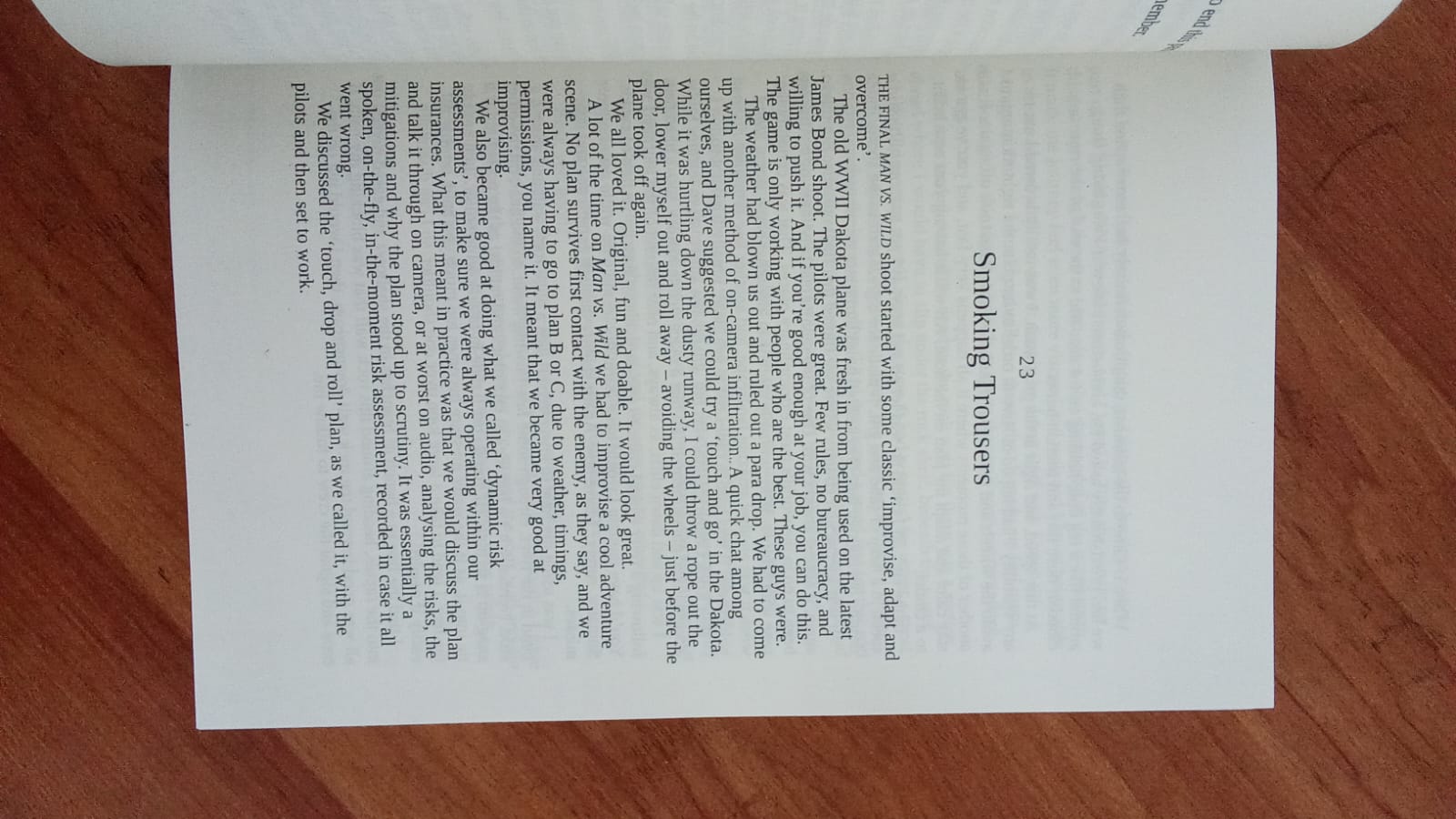





Never Give Up by Bear Grylls


රු1,950.00
3 X Rs. 650.00 or 8% Cashback with


or 3 X රු650.00 with


or up to 4 X රු487.50 with


Never Give Up by Bear Grylls is an inspiring adventure autobiography filled with real-life stories of survival, courage, resilience and extraordinary challenges. From recovering after a serious parachuting accident and climbing Everest to behind-the-scenes experiences from Man vs. Wild and Running Wild, Grylls shares lessons about facing fear, learning from failure, teamwork, kindness and continuing when life gets difficult. An excellent read for adventure fans, students, leaders and anyone looking for motivation to become more resilient.
5 in stock
Never Give Up by Bear Grylls is an inspiring autobiography about courage, resilience, adventure and learning how to keep moving forward when life becomes difficult.
Bear Grylls is internationally known for entering environments most people would rather avoid.
Mountains.
Jungles.
Deserts.
Frozen wilderness.
Dangerous rivers.
Remote islands.
But this book is not simply a collection of survival stories.
Behind every expedition is a deeper question:
What helps someone continue when quitting would be easier?
Through stories from his life, television career, expeditions, personal challenges and encounters with remarkable people, Grylls reflects on the mindset that has helped him survive setbacks and pursue ambitious goals.
He writes about:
Fear.
Failure.
Courage.
Preparation.
Family.
Friendship.
Faith.
Kindness.
Risk.
Leadership.
Adventure.
And resilience.
The message of Never Give Up by Bear Grylls is not that strong people never become afraid or exhausted.
It is that courage often means taking the next step while fear is still present.
For readers interested in motivational books, adventure memoirs, survival stories and real-life lessons about perseverance, this is an energetic and encouraging read from one of the world’s best-known adventurers.
Never Give Up by Bear Grylls – Book Overview
Never Give Up by Bear Grylls combines autobiography, adventure and life lessons.
Grylls looks back on extraordinary experiences but repeatedly connects them with ordinary challenges.
Most readers will never:
Climb Everest.
Film in a remote jungle.
Jump from aircraft.
Cross extreme terrain.
But almost everyone will experience moments of:
Fear.
Failure.
Uncertainty.
Loss.
Pressure.
Self-doubt.
The wilderness becomes a metaphor for life.
When circumstances become difficult, the same basic questions appear:
What matters now?
What can I control?
What is the next step?
Who can I trust?
Do I continue?
Who Is Bear Grylls?
Bear Grylls is a British adventurer, television presenter and author known internationally for survival and outdoor-adventure programs.
He trained with 21 SAS Regiment and later became widely known through television series such as Man vs. Wild and Running Wild with Bear Grylls.
His public career has been built around:
Adventure.
Survival.
Exploration.
Leadership.
Physical endurance.
And teaching people how to respond under pressure.
The Parachuting Accident
One of the defining events in Grylls’s life occurred when a parachuting accident left him with a broken back.
For an adventurer and athlete, an injury of that severity could have permanently changed the direction of his life.
Recovery required:
Time.
Patience.
Rehabilitation.
Determination.
He later went on to climb Mount Everest.
Recovery Is Part of Strength
People often associate strength with action.
Running.
Climbing.
Fighting.
Pushing.
But recovery demands another kind of strength.
Waiting.
Healing.
Repeating rehabilitation.
Accepting temporary limitations.
Progressing gradually.
Sometimes the courageous action is not dramatic.
It is simply doing the next recovery exercise again.
Everest
Bear Grylls reached the summit of Mount Everest in 1998, after recovering from his back injury. His own official biography lists the summit at age 23.
Everest becomes a powerful symbol in his story because reaching the summit required much more than ambition.
It demanded:
Preparation.
Teamwork.
Physical conditioning.
Decision-making.
Patience.
Respect for danger.
Big Goals Are Built From Small Steps
A mountain is climbed one section at a time.
The same is true of many life goals.
You cannot:
Build a business in one day.
Become fit in one workout.
Finish a degree in one study session.
Develop confidence from one motivational quote.
Large outcomes are created through repeated smaller actions.
That idea appears naturally throughout Never Give Up by Bear Grylls.
Courage
Courage is one of the book’s biggest themes.
People sometimes imagine courage means:
Feeling no fear.
Grylls’s experiences suggest something more useful.
Fear can remain.
Courage is acting intelligently despite it.
Fear Is Information
Fear is not always the enemy.
Fear can tell you:
Something is dangerous.
You need preparation.
You need help.
You need to slow down.
The goal should not be eliminating every fearful feeling.
The goal is preventing fear from making every decision automatically.
Risk
Adventure involves risk.
But risk and recklessness are different.
Good adventurers prepare.
They study.
They check equipment.
They understand weather.
They make backup plans.
They know when turning around may be the smartest option.
That is an important distinction in Never Give Up by Bear Grylls.
Never Give Up Does Not Mean Never Change Direction
The phrase “never give up” can be misunderstood.
It does not need to mean:
Continue every plan forever.
Ignore danger.
Refuse to rest.
Keep pursuing something destructive.
Sometimes persistence means remaining committed to the goal while changing the route.
A failed method is not necessarily a failed mission.
Adaptability
Survival depends heavily on adaptation.
Conditions change.
Weather changes.
Equipment breaks.
Plans fail.
The person who insists that everything must happen exactly as expected may struggle.
A resilient person asks:
What is happening now?
What resources remain?
What should change?
Failure
Failure appears throughout any adventurous life.
Not every expedition goes perfectly.
Not every plan works.
Not every decision produces the expected result.
The useful question becomes:
What can this teach me?
Failure Is Feedback
Instead of:
“I failed, therefore I am useless,”
a more productive response is:
“What specifically failed?”
Was the problem:
Preparation?
Timing?
Skill?
Information?
Communication?
Execution?
Once failure becomes information, improvement becomes possible.
Resilience
Resilience does not mean being emotionally unaffected.
Strong people still experience:
Disappointment.
Pain.
Fear.
Frustration.
Resilience means recovering enough to continue.
That makes Never Give Up by Bear Grylls particularly relevant to readers going through difficult periods.
Resilience Is Trainable
People sometimes treat resilience as a personality trait.
Either you have it or you do not.
But many elements can be developed.
You can practice:
Handling discomfort.
Keeping small promises.
Preparing better.
Managing emotions.
Asking for help.
Learning from mistakes.
These habits gradually make difficult situations more manageable.
The Next Step
When a challenge feels enormous, thinking about the entire problem can become overwhelming.
A better question may be:
What is the next useful step?
Not the next fifty steps.
Just the next one.
In survival situations, that might mean:
Find shelter.
Get warm.
Find water.
Call for help.
In ordinary life, it could mean:
Send the email.
Make the appointment.
Study one chapter.
Create the budget.
Have the difficult conversation.
Man vs. Wild
Grylls became internationally famous through Man vs. Wild, which took survival television into extreme environments around the world.
In Never Give Up by Bear Grylls, he goes behind the scenes on some of the adventures and challenges associated with his television career.
What Television Does Not Always Show
Adventure television may appear spontaneous.
But major productions require:
Planning.
Camera crews.
Safety.
Logistics.
Travel.
Research.
Coordination.
Risk management.
The visible adventure sits on top of a much larger professional operation.
Teamwork
One of the strongest lessons from survival environments is that even famous adventurers depend on other people.
Camera crews.
Guides.
Pilots.
Medical professionals.
Local experts.
Production teams.
Family.
Survival stories often celebrate one individual.
Reality is usually more collaborative.
Strong People Ask for Help
Independence is useful.
But refusing help simply to prove toughness can become a weakness.
Knowing when to trust another person is a form of judgment.
The best teams understand that people bring different strengths.
Running Wild
Grylls’s later television work included Running Wild with Bear Grylls, where well-known guests joined him in demanding outdoor situations.
The book includes stories involving personalities such as Barack Obama, Roger Federer and Julia Roberts, among others.
These encounters add another dimension to the book.
Famous people who appear completely confident in their ordinary environment may respond very differently when placed outside their comfort zone.
Outside the Comfort Zone
Comfort is not bad.
But if we never leave familiar conditions, we may never discover what we can handle.
A useful challenge can reveal:
Patience.
Leadership.
Creativity.
Fear.
Humor.
Resilience.
Growth Requires Some Discomfort
The goal is not to make life unnecessarily miserable.
But many forms of growth involve temporary discomfort.
Exercise.
Learning.
Public speaking.
Leadership.
Starting a business.
Having difficult conversations.
Doing unfamiliar things.
If every uncomfortable feeling is treated as a signal to stop, progress becomes limited.
Preparation Builds Confidence
Confidence does not always come from motivational thinking.
It can come from preparation.
You trained.
You practiced.
You studied.
You checked your equipment.
You created a backup plan.
Now your brain has evidence that you are ready.
That is more dependable than simply repeating:
“I am confident.”
Confidence and Competence
Confidence without competence can become dangerous.
Competence without confidence can remain unused.
The ideal combination is:
Skill
plus
the willingness to act.
Adventure
Adventure is central to Never Give Up by Bear Grylls.
But adventure does not need to mean jumping from helicopters.
Adventure can mean:
Starting something new.
Travelling.
Changing careers.
Learning a skill.
Building a company.
Returning to education.
Choosing uncertainty when the goal matters.
Living Fully
One of Grylls’s recurring messages is that life becomes richer when people are willing to engage with it actively.
That does not mean constantly chasing danger.
It means resisting the temptation to spend an entire life waiting for the perfect moment.
Take Action Before You Feel Completely Ready
There may never be a moment when you feel:
100% prepared.
100% confident.
100% certain.
At some point, preparation must become action.
You learn more after beginning.
Leadership Under Pressure
Extreme conditions reveal leadership quickly.
When something goes wrong, people look for someone who can:
Stay calm.
Prioritize.
Communicate.
Make decisions.
A leader does not need to pretend everything is fine.
The leader needs to help the group understand what to do next.
Calm Is Contagious
Panic can spread.
Calm can too.
A leader’s emotional state influences the team.
That does not mean suppressing all fear.
It means managing your response enough to remain useful.
Make the Problem Smaller
If a team is facing ten problems simultaneously, begin with the most urgent.
Survival thinking often follows priorities.
The same principle is useful in business and daily life.
Do not solve everything at once.
Solve what matters most first.
Kindness
A surprisingly important theme in Never Give Up by Bear Grylls is kindness.
The official description specifically highlights courage, kindness and resilience as central lessons.
This matters because toughness is sometimes confused with emotional coldness.
Grylls presents another idea:
You can be resilient and compassionate.
Strength and Kindness Can Coexist
Being kind does not require being weak.
You can:
Set boundaries.
Make hard decisions.
Compete.
Lead.
And still treat people with dignity.
True confidence rarely needs cruelty.
Humility
Nature is very good at destroying ego.
A storm does not care about your job title.
A mountain does not care how many followers you have.
Extreme environments remind people that control has limits.
Humility helps because it keeps you learning.
Respect the Environment
One of the quickest ways to create danger is assuming you are stronger than nature.
Experienced adventurers pay attention.
Weather.
Terrain.
Temperature.
Water.
Time.
Humility can be a survival skill.
Learn From Experts
Confidence should never prevent learning from people who understand more than you do.
Local guides.
Specialists.
Team members.
Mentors.
The smartest person in the room does not always need to prove it.
Family
Despite the dramatic adventures, family is another important part of Grylls’s life story.
Success that destroys every important relationship is a questionable form of success.
Adventure and achievement exist inside a larger life.
Priorities
When people are busy, urgent things often defeat important things.
Emails feel urgent.
Meetings feel urgent.
Deadlines feel urgent.
Relationships may not appear urgent until they are damaged.
That is why priorities need deliberate attention.
Success Is More Than Achievement
A life cannot necessarily be measured only through:
Money.
Records.
Titles.
Followers.
Awards.
Meaning can also come from:
Family.
Service.
Friendship.
Purpose.
Faith.
Contribution.
Gratitude
Adventure often teaches gratitude through contrast.
When you have been:
Cold,
you appreciate warmth.
Hungry,
you appreciate food.
Exhausted,
you appreciate rest.
Modern life can make basic comforts invisible because they are always available.
Gratitude brings them back into awareness.
Simple Things Matter
A hot drink.
A safe bed.
Family nearby.
Clean water.
A quiet morning.
These ordinary things can become extraordinary when circumstances change.
Attitude
You cannot always control circumstances.
But you can sometimes influence your response.
This is one of the classic resilience principles behind Never Give Up by Bear Grylls.
That does not mean attitude fixes everything.
Some problems require:
Medical care.
Professional support.
Money.
Policy changes.
Other people’s cooperation.
But mindset still affects how we use the options available to us.
Focus on What You Can Control
You cannot control:
Weather.
Other people’s opinions.
The economy.
Every outcome.
You can often control:
Preparation.
Effort.
Communication.
Your next action.
Where you place attention.
This distinction can reduce wasted energy.
Mental Toughness
Mental toughness is often imagined as forcing yourself endlessly.
A healthier version includes:
Persistence.
Emotional regulation.
Adaptability.
Self-discipline.
Recovery.
The ability to ask for help.
Real toughness is not self-destruction.
Rest Matters
“Never give up” should not be interpreted as “never rest.”
Exhaustion damages:
Judgment.
Reaction time.
Mood.
Performance.
Recovery supports resilience.
Athletes understand this.
Adventurers understand this.
Professionals should too.
Discipline
Motivation feels exciting.
Discipline is less dramatic.
Discipline means doing useful things repeatedly.
Training.
Preparing.
Practising.
Following procedures.
Checking equipment.
Improvement is often boring before it becomes impressive.
Consistency Beats Occasional Intensity
One extremely hard day cannot replace months of consistent preparation.
This is true in:
Fitness.
Study.
Career development.
Business.
Learning.
Saving money.
The small repeated action often matters more than one dramatic burst.
Self-Belief
Grylls’s life includes goals that would have looked unrealistic from the outside.
Recover from serious injury.
Climb Everest.
Build an international adventure career.
Self-belief helped make action possible.
But productive self-belief is not:
“I will definitely succeed.”
It is:
“I am willing to try, learn and continue.”
The Difference Between Hope and Action
Hope matters.
But hope needs action.
Wanting a different future is the beginning.
Then comes:
Planning.
Training.
Calling.
Applying.
Practising.
Trying again.
Failure Does Not Have to Become Identity
There is an important difference between:
“I failed.”
and
“I am a failure.”
The first describes an event.
The second turns that event into identity.
Resilient people learn to separate the two.
Stories of Famous Guests
Part of the fun of Never Give Up by Bear Grylls comes from seeing well-known figures outside their normal professional environments.
A politician.
Athlete.
Actor.
Celebrity.
Remove the familiar environment and something interesting happens.
Status becomes less important.
Basic human responses become more visible.
Everyone Experiences Fear
Success does not remove fear.
Famous people still:
Doubt themselves.
Become uncomfortable.
Struggle.
Make mistakes.
The difference often lies in how they respond.
You Do Not Need to Become Bear Grylls
This is important.
The book should not be read as:
You need to climb mountains.
Eat strange survival food.
Jump from aircraft.
The useful question is:
What is your mountain?
Maybe it is:
A degree.
A business.
Recovery.
A difficult career change.
A personal fear.
A relationship that needs repairing.
Your challenge can be ordinary and still require extraordinary courage.
Personal Challenges
Grylls does not limit the book to professional adventure.
The official description notes that he also discusses personal challenges and achievements.
This helps prevent the book from becoming merely a highlight reel.
Meaningful life stories also include setbacks.
Success Stories Can Hide Difficulty
When we look at a successful person, we usually see the current result.
We do not automatically see:
Years of work.
Injury.
Rejected ideas.
Fear.
Financial pressure.
Family sacrifice.
Mistakes.
That creates survivorship bias.
The visible success is only part of the story.
Keep Perspective
One difficult day can feel enormous while it is happening.
Perspective asks:
Will this matter in one year?
Five years?
What remains good despite this problem?
What have I survived before?
Perspective does not erase difficulty.
It reduces the chance that one problem becomes your entire world.
Faith
Faith has also been an important part of Bear Grylls’s personal worldview.
Readers do not need to share every spiritual belief to understand the broader role that meaning and purpose can play in resilience.
People survive difficult periods partly because they believe their lives remain connected to something larger than the immediate struggle.
Purpose
Purpose answers:
Why continue?
When the reason is strong, hardship becomes easier to tolerate.
A difficult task without meaning feels exhausting.
The same difficult task connected to something deeply valued can feel worthwhile.
Service
Success becomes more meaningful when it contributes beyond the individual.
Leadership.
Scouting.
Mentorship.
Helping others.
Teaching survival skills.
These can turn personal experience into something useful to other people.
Lessons for Students
Students can apply Never Give Up by Bear Grylls by remembering that poor performance on one examination is not the end.
Ask:
What did I misunderstand?
Where did I lose marks?
What needs more practice?
What is the next study step?
Progress becomes easier when failure becomes feedback.
Lessons for Entrepreneurs
Entrepreneurs can apply the same mindset.
A campaign fails.
Customer demand is weaker than expected.
A feature does not work.
A supplier problem appears.
Instead of simply thinking:
Business is impossible,
ask:
What is the problem actually telling us?
Adaptation is central to both survival and entrepreneurship.
Lessons for Professionals
Career setbacks happen.
Rejected applications.
Missed promotions.
Failed projects.
Critical feedback.
Resilience involves learning without allowing one event to define your professional identity.
Lessons for Leadership
Leaders can learn from survival thinking:
Prioritize.
Communicate clearly.
Stay useful under pressure.
Prepare.
Trust specialists.
Take responsibility.
Protect the team.
And remain adaptable.
Is Never Give Up by Bear Grylls an Autobiography?
Yes.
Never Give Up by Bear Grylls is an autobiographical adventure book built around Grylls’s life, expeditions, television experiences and personal lessons.
It follows his earlier autobiography Mud, Sweat and Tears.
Do You Need to Read Mud, Sweat and Tears First?
No.
You can read Never Give Up by Bear Grylls independently.
However, readers who want a broader chronological understanding of Grylls’s earlier life may also enjoy Mud, Sweat and Tears.
The newer book focuses heavily on later adventures, television experiences and lessons learned along the way.
Is Never Give Up a Survival Manual?
Not primarily.
It contains survival and adventure experiences, but it is better categorized as:
Biography & Memoir / Adventure / Inspirational Non-Fiction
Readers wanting detailed technical survival instructions may prefer one of Grylls’s dedicated survival guides.
Is It a Motivational Book?
Yes, partly.
The motivation comes from true stories and lessons rather than a traditional step-by-step self-help program.
The stories illustrate ideas such as:
Courage.
Resilience.
Kindness.
Persistence.
Adaptability.
Is It Only for Bear Grylls Fans?
No.
Fans of his television work will naturally enjoy the behind-the-scenes material.
But readers who enjoy:
Adventure biographies.
Sports memoirs.
Motivational books.
Survival stories.
Leadership.
may also find it engaging.
Is It Suitable for Readers Who Do Not Watch Survival TV?
Yes.
The life lessons are broader than television.
You do not need detailed knowledge of Man vs. Wild or Running Wild before reading.
Edition Note
Different editions have different specifications.
The Penguin UK paperback is listed as:
ISBN: 9780552177832
Pages: 432
Publication: June 2022
The National Geographic U.S. hardcover is listed as:
ISBN: 9781426222627
Pages: 336
Publication: March 1, 2022
So for your WooCommerce ISBN, format and page-count fields, check the physical copy you actually have rather than using another edition’s details.
Important Themes
Never Give Up by Bear Grylls explores:
- Resilience
- Courage
- Adventure
- Survival
- Failure
- Persistence
- Fear
- Leadership
- Kindness
- Teamwork
- Preparation
- Risk
- Adaptability
- Family
- Faith
- Gratitude
- Recovery
- Discipline
- Purpose
- Personal growth
7 Powerful Lessons From Never Give Up by Bear Grylls
- Courage does not require the absence of fear. Fear is natural. Courage means making a useful decision even when fear is present.
- When the whole challenge feels overwhelming, focus on the next step. Big goals become more manageable when reduced to immediate actions.
- Failure is information, not identity. A setback can reveal what needs to change without proving that you are incapable of succeeding.
- Preparation creates stronger confidence than positive thinking alone. Training, knowledge and contingency planning give you real reasons to trust yourself.
- Adaptability matters as much as persistence. Never giving up on the goal does not mean refusing to change a strategy that is clearly failing.
- Real strength includes kindness and teamwork. Grylls repeatedly emphasizes that courage and toughness can exist alongside compassion and reliance on others.
- Resilience grows through difficult experiences. You become more confident in your ability to handle future challenges when you repeatedly face hardship, learn and recover.
Why Read Never Give Up by Bear Grylls?
Never Give Up by Bear Grylls is an excellent choice for readers interested in:
- Bear Grylls
- Adventure
- Survival
- Autobiography
- Biography and memoir
- Inspirational true stories
- Personal development
- Resilience
- Courage
- Mental strength
- Leadership
- Outdoor adventure
- Mount Everest
- Man vs. Wild
- Running Wild
- Overcoming failure
- Motivational books
- Teamwork
- Life lessons
- Personal growth
The book is particularly enjoyable for readers who prefer learning through real stories rather than reading a purely theoretical self-help book.
Who Should Read This Book?
Never Give Up by Bear Grylls may especially appeal to:
- Bear Grylls fans
- Adventure readers
- Outdoor enthusiasts
- Students
- Entrepreneurs
- Athletes
- Leaders and managers
- People facing setbacks
- Readers who enjoy survival stories
- Fans of motivational memoirs
- Readers interested in mental resilience
- People trying to become more courageous
- Anyone who needs encouragement to continue after a difficult period
Never Give Up by Bear Grylls – Keep Taking the Next Step
Never Give Up by Bear Grylls is ultimately not about becoming fearless.
It is about discovering that fear does not need to control the final decision.
Bear Grylls has experienced extraordinary situations.
A severe injury.
Everest.
Remote wilderness.
Extreme television challenges.
Unpredictable expeditions.
But the most useful lessons from those experiences are surprisingly ordinary.
Prepare.
Stay calm.
Look after the people around you.
Adapt.
Learn when something goes wrong.
Do not confuse failure with identity.
And when the entire journey feels impossible, focus on the next step.
This is what makes the title meaningful.
“Never give up” does not mean blindly continuing every plan.
It means refusing to allow one bad moment to write the entire ending.
You can:
Rest.
Change direction.
Ask for help.
Try another method.
Recover.
Learn.
Then continue.
That version of resilience is much more useful than pretending strong people never struggle.
Grylls’s adventures show that even people famous for toughness depend on:
Preparation.
Teams.
Knowledge.
Humility.
Kindness.
And sometimes luck.
The wilderness does not reward ego.
It rewards awareness.
Life often works similarly.
You cannot control everything.
But you can continue building the ability to respond.
That might mean one more step up a mountain.
Or one more application after rejection.
One more study session after failing an exam.
One more attempt at rebuilding a business.
One more conversation that repairs a relationship.
Your challenge does not need to look dramatic to require courage.
For readers who enjoy true stories about adventure, resilience, leadership and pushing through difficult moments, Never Give Up by Bear Grylls offers an energetic reminder that setbacks are part of the journey—and that the next useful step may matter more than having the entire route figured out.
Learn more about Never Give Up by Bear Grylls on the official Disney Books website.
Explore more self-help and motivational books at Bargain Books.
Be the first to review “Never Give Up by Bear Grylls”
Related products
-26%
Non-Fiction & Knowledge
The 7 Habits of Highly Effective People by Stephen R. Covey – Blue Cover
Original price was: රු2,300.00.රු1,700.00Current price is: රු1,700.00.
3 X Rs. 566.67 or 8% Cashback with
or 3 X රු566.67 with
or up to 4 X රු425.00 with
-21%

Non-Fiction & Knowledge
7 Secrets to Investing Like Warren Buffett by Mary Buffett & Sean Seah
Original price was: රු1,900.00.රු1,500.00Current price is: රු1,500.00.
3 X Rs. 500.00 or 8% Cashback with
or 3 X රු500.00 with
or up to 4 X රු375.00 with
-34%

Self-Help & Psychology
Original price was: රු2,350.00.රු1,550.00Current price is: රු1,550.00.
3 X Rs. 516.67 or 8% Cashback with
or 3 X රු516.67 with
or up to 4 X රු387.50 with

Non-Fiction & Knowledge
රු2,250.00
3 X Rs. 750.00 or 8% Cashback with
or 3 X රු750.00 with
or up to 4 X රු562.50 with

Self-Help & Psychology
රු2,200.00
3 X Rs. 733.33 or 8% Cashback with
or 3 X රු733.33 with
or up to 4 X රු550.00 with

Self-Help & Psychology
රු1,500.00
3 X Rs. 500.00 or 8% Cashback with
or 3 X රු500.00 with
or up to 4 X රු375.00 with
-14%

Out of stock
Self-Help & Psychology
Original price was: රු2,900.00.රු2,500.00Current price is: රු2,500.00.
3 X Rs. 833.33 or 8% Cashback with
or 3 X රු833.33 with
or up to 4 X රු625.00 with

Non-Fiction & Knowledge
රු2,450.00
3 X Rs. 816.67 or 8% Cashback with
or 3 X රු816.67 with
or up to 4 X රු612.50 with
Reviews
There are no reviews yet.