
No products in the cart.
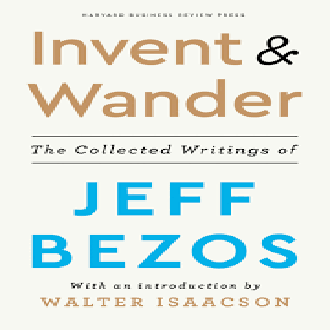


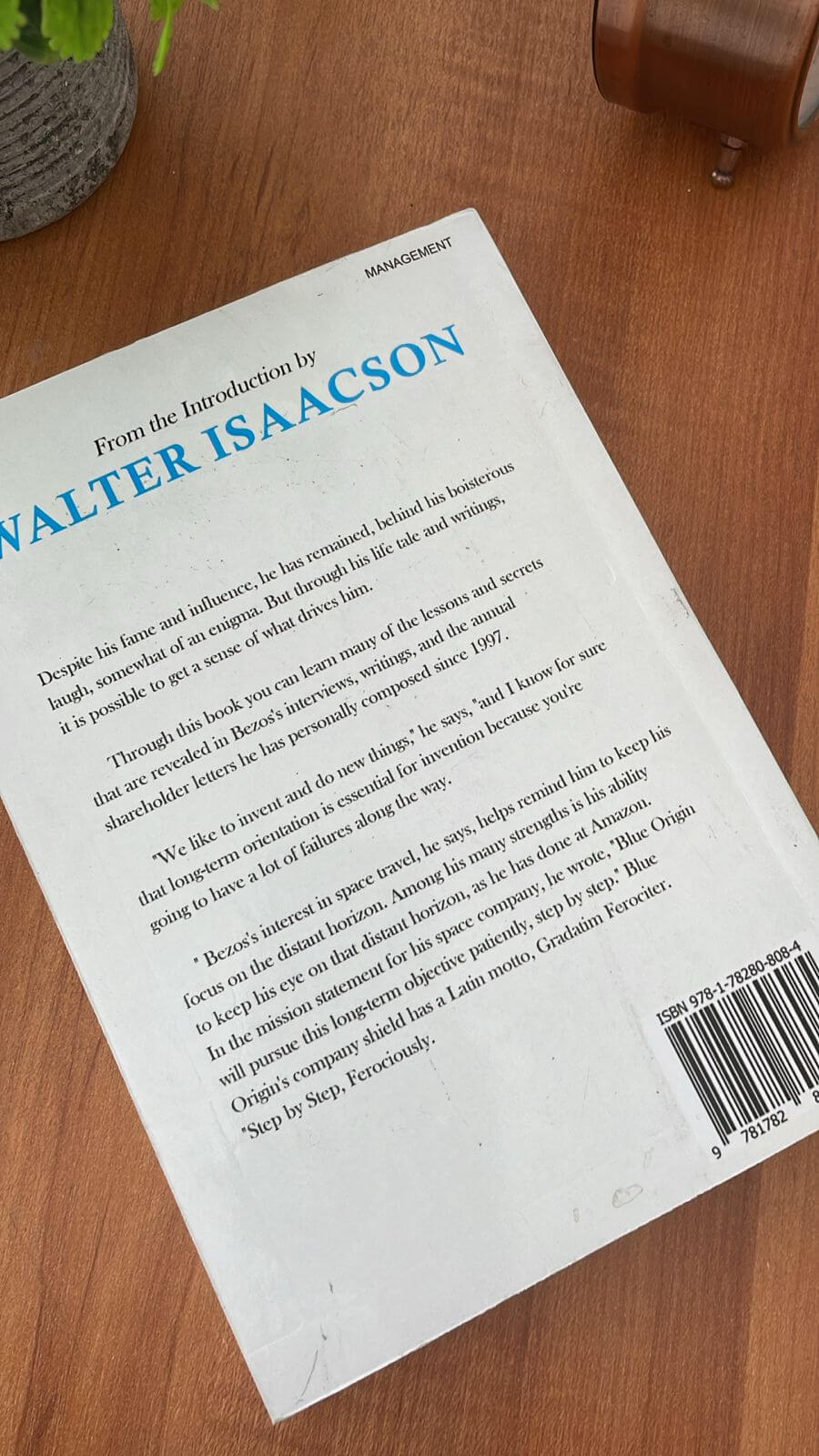



Invent And Wander by Walter Isaacson and Jeff Bezos


රු2,500.00
3 X Rs. 833.33 or 8% Cashback with


or 3 X රු833.33 with


or up to 4 X රු625.00 with


Invent and Wander is a collection of writings and insights from Jeff Bezos that reveal the principles behind Amazon’s success. It offers powerful lessons on innovation, leadership, and long-term thinking, making it a must-read for entrepreneurs and business enthusiasts.
3 in stock
Invent and Wander by Jeff Bezos is a fascinating collection of business ideas, shareholder letters, speeches, and reflections from one of the most influential entrepreneurs of the modern era.
Jeff Bezos transformed Amazon from an online bookstore into one of the world’s largest technology and commerce companies.
He also founded Blue Origin with an ambitious long-term vision for space exploration.
But how does someone think when building businesses designed to operate at enormous scale?
What principles guide decisions?
How does Amazon approach customers?
Why does Bezos repeatedly talk about Day 1?
Why are failure and experimentation considered necessary?
And why does long-term thinking matter so much?
Invent and Wander by Jeff Bezos offers direct insight into these questions through Bezos’s own words.
With an introduction by Walter Isaacson, the book brings together decades of shareholder letters, speeches, interviews, and reflections covering business strategy, innovation, leadership, technology, customer experience, culture, experimentation, climate, space exploration, and the future.
Rather than presenting one continuous autobiography, the book allows readers to observe how Bezos’s thinking developed over time.
Invent and Wander by Jeff Bezos – Book Overview
One of the most valuable features of Invent and Wander by Jeff Bezos is that many of its lessons come directly from letters Bezos wrote to Amazon shareholders.
These letters were not simply financial updates.
They often explained how Bezos thought about business.
Customers.
Employees.
Innovation.
Failure.
Long-term growth.
Competition.
Decision-making.
Amazon’s culture.
Readers can therefore see how certain principles appeared repeatedly over many years.
Some of the most important themes include:
- Customer obsession
- Day 1 thinking
- Long-term strategy
- Experimentation
- Failure
- Innovation
- High standards
- Culture
- Working backward
- Decision-making
- Entrepreneurship
- Technology
- Blue Origin
- Future thinking
Together, these ideas provide a broad picture of how Bezos approached building organizations.
The Day 1 Mindset
Perhaps the most famous concept in Invent and Wander by Jeff Bezos is Day 1.
For Amazon, Day 1 represents the mentality of a startup.
Curious.
Fast.
Customer-focused.
Willing to experiment.
Unwilling to become comfortable.
Bezos repeatedly warned about what he called Day 2.
Day 2 represents stagnation.
Slow decision-making.
Bureaucracy.
Complacency.
Decline.
The lesson is powerful because successful companies often change after becoming large.
At the beginning, they fight for every customer.
They experiment.
They move quickly.
They listen.
Then success arrives.
The organization becomes larger.
Processes multiply.
Meetings increase.
Decision-making slows.
The company may begin protecting what already exists instead of creating what customers will need next.
Invent and Wander by Jeff Bezos encourages leaders to keep behaving as if the business is still on Day 1.
Customer Obsession
Another central principle is customer obsession.
Many companies say they care about customers.
Bezos pushes the idea much further.
Instead of focusing primarily on competitors, Amazon has historically emphasized beginning with the customer.
What does the customer want?
What frustrates them?
What would make the experience easier?
What would they value even if they are not currently asking for it?
Invent and Wander by Jeff Bezos repeatedly shows how this mindset influenced Amazon.
Customers generally want:
Lower prices.
More selection.
Faster delivery.
Greater convenience.
Better service.
These desires are unlikely to disappear quickly.
That makes them useful foundations for long-term strategy.
Focus on Customers, Not Only Competitors
Studying competitors is useful.
But excessive competitor focus can become dangerous.
If your competitor launches something, you copy it.
If they reduce prices, you react.
If they enter a new market, you follow.
Eventually your strategy becomes dependent on someone else.
Invent and Wander by Jeff Bezos suggests that focusing on customers can create a more stable direction.
Ask:
What would make our customers happier?
What problem still exists?
What can we simplify?
What should become faster?
What should become cheaper?
This can produce innovation that competitors eventually need to copy from you.
Work Backward From the Customer
One of Amazon’s well-known approaches is working backward.
Instead of beginning with technology and asking how to sell it, teams can begin with the customer problem.
What does the customer need?
What experience should exist?
Then work backward to determine:
What product must be built?
What technology is required?
What operations must change?
What processes are necessary?
Invent and Wander by Jeff Bezos shows why starting with the desired customer experience can lead to better product decisions.
A company should not create something simply because the technology is exciting.
It should create something because it solves a meaningful problem.
Long-Term Thinking
Another major lesson in Invent and Wander by Jeff Bezos is the importance of thinking long term.
Public companies face enormous pressure to produce strong quarterly results.
But some investments require years before they become successful.
A company focused only on the next three months may avoid investments that could transform the next ten years.
Bezos frequently emphasized willingness to make long-term bets.
This means accepting temporary uncertainty.
Some initiatives may lose money initially.
Some experiments may fail.
Some investments may look strange to outsiders.
Long-term thinking asks:
If this works, what could it become five or ten years from now?
That question changes decision-making.
Think Beyond the Next Quarter
Short-term goals are still necessary.
Businesses need:
Cash flow.
Profit.
Operational discipline.
Performance targets.
But Invent and Wander by Jeff Bezos shows why long-term goals should influence important strategic decisions.
Imagine two companies.
Company A focuses almost entirely on maximizing this year’s profit.
Company B invests part of today’s profit into technology, logistics, research, and new customer experiences.
Company A may appear stronger temporarily.
But Company B may create capabilities that become extremely difficult to compete with later.
Long-term thinking requires patience.
Innovation Requires Experimentation
Innovation sounds exciting after it succeeds.
Before success, it often looks like failure.
Experiments fail.
Products fail.
Projects are cancelled.
Ideas disappear.
Invent and Wander by Jeff Bezos repeatedly connects innovation with experimentation.
If every experiment must succeed, it is not really an experiment.
The outcome was already predictable.
Real experimentation means uncertainty.
Some attempts will fail.
That is not automatically evidence that the organization is badly managed.
It may be evidence that it is trying something genuinely new.
Failure Is Part of Innovation
This is one of the book’s strongest business lessons.
Companies often say:
“We want innovation.”
But when an experiment fails, someone is punished.
Employees quickly learn the real message:
Do not take risks.
Choose safe ideas.
Avoid anything that might fail publicly.
Innovation disappears.
Invent and Wander by Jeff Bezos argues that meaningful invention requires tolerance for failure.
The important question becomes:
Was the experiment intelligent?
Did we learn something?
Could the successful experiments eventually compensate for the failures?
Big Winners Can Pay for Many Failures
One extraordinary business success can sometimes pay for many unsuccessful experiments.
This is particularly relevant in technology and venture investing.
Imagine launching ten projects.
Eight fail.
One performs reasonably.
One becomes enormous.
The final winner may create more value than all the failures cost.
Invent and Wander by Jeff Bezos encourages leaders to consider the potential size of successful experiments.
This does not justify reckless spending.
It just means failure must be evaluated within the broader innovation system.
Invent and Wander
The title itself contains an important idea.
Invent suggests deliberate creation.
Build.
Design.
Solve.
Develop.
Wander suggests curiosity.
Explore.
Investigate.
Follow unexpected ideas.
Not every valuable discovery comes from a perfectly organized plan.
Sometimes people need space to explore ideas whose usefulness is not immediately obvious.
Invent and Wander by Jeff Bezos argues that this kind of wandering can become an important part of innovation.
Curiosity Creates Opportunities
A highly efficient organization can sometimes become too focused.
Every employee must justify every minute.
Every project must have immediate ROI.
Every experiment must connect directly to an existing product.
That can increase efficiency.
But it may reduce discovery.
Curiosity asks questions without already knowing where the answer will lead.
What if?
Why not?
Could this work?
Invent and Wander by Jeff Bezos shows why curiosity and experimentation can create unexpected opportunities.
High-Velocity Decision-Making
Large organizations often make decisions slowly.
Meetings.
Approvals.
Reports.
More meetings.
More approvals.
This can become dangerous in fast-moving industries.
Bezos distinguishes between decisions that are difficult to reverse and decisions that can be changed relatively easily.
Not every decision deserves the same level of analysis.
Invent and Wander by Jeff Bezos encourages businesses to make reversible decisions faster.
If the decision can be changed later, excessive delay may be more expensive than making a slightly imperfect choice.
Type 1 and Type 2 Decisions
Bezos famously describes two broad categories.
Type 1 decisions are difficult or impossible to reverse.
These deserve careful thought.
Type 2 decisions are reversible.
If the choice does not work, change it.
The problem appears when organizations treat every Type 2 decision like Type 1.
Everything becomes slow.
Invent and Wander by Jeff Bezos encourages leaders to match the decision-making process to the actual risk.
This can increase speed without abandoning responsibility.
Disagree and Commit
Teams will not always agree.
If every decision requires complete consensus, progress may become extremely slow.
One idea associated with Amazon’s culture is disagree and commit.
A person can disagree with a decision.
But once the decision is made, the team commits to executing it properly.
This prevents endless arguments.
Invent and Wander by Jeff Bezos shows why leadership sometimes requires supporting a decision even when it was not your preferred choice.
Debate before the decision.
Commit afterward.
High Standards
High standards are another recurring topic.
What does excellent work look like?
How long should high-quality work take?
What level of detail matters?
Invent and Wander by Jeff Bezos explores the importance of creating cultures where people understand what excellent performance means.
High standards can often be learned.
Employees need examples.
Feedback.
Clear expectations.
Experience.
A company becomes stronger when people recognize quality rather than simply completing tasks.
Culture Becomes Self-Reinforcing
Culture is not simply posters on a wall.
Culture is what people repeatedly do.
What behaviour gets rewarded?
What behaviour gets punished?
How are decisions made?
How do managers communicate?
How are mistakes handled?
Invent and Wander by Jeff Bezos highlights culture as a major competitive advantage.
Once a strong culture develops, it can influence thousands of daily decisions without the CEO personally reviewing them.
That makes culture extremely powerful.
Hiring Matters
Companies are collections of people.
As an organization grows, hiring decisions begin shaping the company’s future.
The wrong hiring standard can gradually reduce performance.
The right standard can increase capability.
Invent and Wander by Jeff Bezos demonstrates Amazon’s emphasis on maintaining strong hiring standards as the company expanded.
This contains a useful lesson for businesses of every size.
Each new employee changes the organization slightly.
Hiring should therefore be treated as a strategic decision rather than simply filling an empty position.
Scale Changes Everything
A business serving 100 customers operates differently from one serving 100 million.
Processes that work at small scale may completely fail at large scale.
Technology.
Distribution.
Customer support.
Inventory.
Hiring.
Management.
Invent and Wander by Jeff Bezos gives readers insight into how Amazon thought about scale.
Growth is not simply doing more of the same thing.
Sometimes the underlying system must be redesigned.
Amazon Started as a Bookstore
One of the most interesting elements of Bezos’s story is Amazon’s origin.
The company began as an online bookstore.
Books were attractive for internet retail because there were millions of titles and no physical bookstore could stock them all.
The internet could provide much larger selection.
From that starting point, Amazon expanded.
Books.
Other products.
Marketplace.
Prime.
Cloud computing.
Devices.
Entertainment.
Logistics.
Invent and Wander by Jeff Bezos allows readers to observe the thinking behind this evolution.
New Businesses Inside Existing Companies
One difficult challenge is creating new businesses inside already successful organizations.
Successful companies naturally want to protect what works.
But future growth may come from something completely different.
Amazon Web Services is an important example of this broader mentality.
A retailer becoming a major cloud-computing provider would once have sounded unusual.
Invent and Wander by Jeff Bezos shows why companies should not define themselves too narrowly.
Ask what capabilities you possess.
What customer problems could those capabilities solve?
Protect the Future From the Present
Existing businesses create pressure.
Customers need attention.
Today’s products need resources.
Quarterly targets need to be achieved.
New ideas can easily be neglected.
But today’s successful business will not necessarily remain successful forever.
Invent and Wander by Jeff Bezos demonstrates why companies need mechanisms for investing in the future while still operating the present.
This requires discipline.
Metrics Matter
Data plays a major role in modern companies.
Measure:
Customer behaviour.
Delivery.
Conversion.
Costs.
Performance.
Quality.
But metrics can also become dangerous if organizations optimize the number while forgetting the real objective.
Invent and Wander by Jeff Bezos encourages leaders to remain connected to actual customer experience.
A dashboard can say everything is fine while customers are becoming frustrated.
Numbers should support judgment, not completely replace it.
Proxies Can Become Dangerous
As companies grow, processes often become proxies for outcomes.
Instead of asking:
“Did the customer receive a great experience?”
people ask:
“Did we follow the process?”
Following the process feels safe.
But the process exists for a reason.
Invent and Wander by Jeff Bezos warns against allowing procedures to become more important than the results they were designed to produce.
Processes should serve customers.
Customers should not serve processes.
Competition and Differentiation
Amazon operates in intensely competitive markets.
Retail.
Technology.
Media.
Cloud computing.
Logistics.
Yet Bezos repeatedly emphasizes customer obsession over pure competitor obsession.
This creates a useful strategic distinction.
Competitors may change.
Customer needs can provide a more stable foundation.
Invent and Wander by Jeff Bezos encourages businesses to build advantages based on value rather than simply reaction.
The Power of Flywheels
Amazon became known for a flywheel-like business model.
Lower prices can attract customers.
More customers can attract sellers.
More sellers can increase selection.
Greater selection can improve customer experience.
Higher volume can improve economics.
Better economics may support lower prices.
The elements reinforce one another.
This illustrates another valuable lesson connected to Invent and Wander by Jeff Bezos:
Strong businesses can create systems where one improvement strengthens another.
Blue Origin and Extremely Long-Term Thinking
The book extends beyond Amazon.
Bezos also discusses Blue Origin, his space company.
Space exploration represents an even longer time horizon.
Projects may require decades.
Technology may take years to develop.
Results may not arrive quickly.
These ideas reinforce the larger message of Invent and Wander by Jeff Bezos:
Some worthwhile goals require patience far beyond ordinary business cycles.
Think in Decades
Most people think in days.
Companies often think in quarters.
Bezos sometimes thinks in decades.
Long time horizons can create strategic advantages because fewer people are willing to wait.
A company willing to invest for seven years may pursue opportunities ignored by competitors requiring results next year.
Invent and Wander by Jeff Bezos encourages readers to consider whether longer time horizons could improve their own decision-making.
Business and Climate Responsibility
The collection also includes Bezos’s thinking on climate-related issues and corporate responsibility.
Large companies create enormous impact.
Employees.
Energy consumption.
Packaging.
Transportation.
Infrastructure.
Communities.
This creates responsibilities beyond basic financial performance.
Invent and Wander by Jeff Bezos shows how business leadership increasingly intersects with broader questions about society and the future.
Entrepreneurship
Entrepreneurs will find many useful ideas throughout the book.
Start with customers.
Think long term.
Experiment.
Accept intelligent failure.
Move quickly on reversible decisions.
Protect culture.
Hire carefully.
Remain curious.
Do not become comfortable.
These principles are relevant even to small businesses.
You do not need Amazon’s resources to practice customer obsession.
You do not need thousands of employees to maintain high standards.
You do not need billions of dollars to experiment with better ways to serve customers.
Day 1 for Small Businesses
A small business can use Day 1 thinking by constantly asking:
What are customers complaining about?
What can we simplify?
Where are we too slow?
Which assumptions should we challenge?
What should we test?
Invent and Wander by Jeff Bezos demonstrates that Day 1 is primarily a mindset.
The company does not need to literally be new.
It needs to remain curious enough to behave like it still has something to prove.
Avoid Complacency
Success creates one of the greatest business dangers:
Comfort.
Customers are buying.
Revenue is growing.
Employees know the routine.
Everything seems fine.
This is precisely when competitors can become dangerous.
Technology changes.
Customer expectations rise.
New business models appear.
Invent and Wander by Jeff Bezos repeatedly emphasizes the need to keep improving before a crisis forces improvement.
7 Powerful Business Lessons From Invent and Wander
Invent and Wander by Jeff Bezos contains many ideas, but seven lessons stand out:
- Stay in Day 1 – Keep the curiosity, speed, urgency, and customer focus of a startup even as the organization grows.
- Obsess over customers – Build strategy around customer needs rather than reacting constantly to competitors.
- Think long term – Some of the most valuable opportunities require years of investment before producing meaningful results.
- Accept intelligent failure – Innovation requires experimentation, and real experiments sometimes fail.
- Make reversible decisions quickly – Not every decision deserves months of analysis.
- Build strong culture and high standards – People and organizational habits can become major competitive advantages.
- Create space to wander – Curiosity and exploration can lead to opportunities that rigid planning may never discover.
Why Read Invent and Wander by Jeff Bezos?
Invent and Wander by Jeff Bezos is an excellent choice for readers interested in:
- Jeff Bezos
- Amazon
- Entrepreneurship
- Business strategy
- Innovation
- Leadership
- Customer experience
- Technology
- Long-term thinking
- Business culture
- Decision-making
- Experimentation
- Startups
- Blue Origin
- E-commerce
- Management
Unlike a traditional biography written entirely by another author, much of the book allows readers to encounter Bezos’s business thinking through his own writings and statements.
Who Should Read This Book?
Invent and Wander by Jeff Bezos may especially appeal to:
- Entrepreneurs
- Startup founders
- Business owners
- CEOs
- Managers
- Leadership teams
- Business students
- MBA students
- E-commerce professionals
- Product managers
- Technology professionals
- Marketing professionals
- Investors
- Amazon followers
- Readers interested in innovation
- Anyone building a long-term business
It is particularly useful for readers interested in the principles and decision-making philosophy behind Amazon rather than only a chronological biography of Jeff Bezos.
A Powerful Collection of Ideas on Business and Innovation
Invent and Wander by Jeff Bezos gives readers access to decades of thinking from the founder of Amazon and Blue Origin.
The book demonstrates that Amazon’s growth was not built around one single idea.
It was supported by repeated principles.
Stay focused on customers.
Think long term.
Maintain Day 1.
Experiment.
Accept failure.
Make decisions quickly when they are reversible.
Set high standards.
Protect culture.
Remain curious.
Build for the future.
These ideas may sound simple.
Applying them consistently is much harder.
That is what makes the collection valuable.
Readers can see how the same principles appeared repeatedly as Amazon grew from an online bookstore into a global company operating across commerce, technology, entertainment, cloud computing, logistics, and other industries.
For entrepreneurs, managers, students, business owners, innovators, and anyone interested in Amazon, leadership, customer obsession, experimentation, and long-term strategy, Invent and Wander by Jeff Bezos offers an insightful collection of ideas about how ambitious organizations are built—and how they can continue inventing even after becoming successful.
Learn more about Invent and Wander by Jeff Bezos on the official Harvard Business Review Store.
Explore more business and leadership books at Bargain Books.
Be the first to review “Invent And Wander by Walter Isaacson and Jeff Bezos”
Related products
-34%

Self-Help & Psychology
Original price was: රු2,350.00.රු1,550.00Current price is: රු1,550.00.
3 X Rs. 516.67 or 8% Cashback with
or 3 X රු516.67 with
or up to 4 X රු387.50 with
-28%

Self-Help & Psychology
Original price was: රු1,800.00.රු1,300.00Current price is: රු1,300.00.
3 X Rs. 433.33 or 8% Cashback with
or 3 X රු433.33 with
or up to 4 X රු325.00 with
-24%

Non-Fiction & Knowledge
Original price was: රු2,300.00.රු1,750.00Current price is: රු1,750.00.
3 X Rs. 583.33 or 8% Cashback with
or 3 X රු583.33 with
or up to 4 X රු437.50 with

Non-Fiction & Knowledge
රු1,950.00
3 X Rs. 650.00 or 8% Cashback with
or 3 X රු650.00 with
or up to 4 X රු487.50 with
රු2,000.00
3 X Rs. 666.67 or 8% Cashback with
or 3 X රු666.67 with
or up to 4 X රු500.00 with
-26%
Non-Fiction & Knowledge
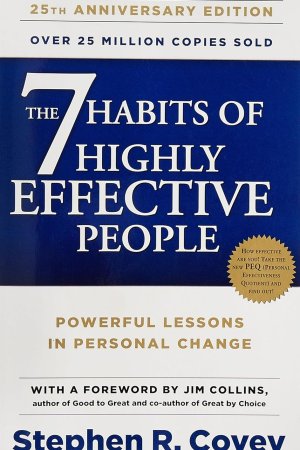
The 7 Habits of Highly Effective People by Stephen R. Covey – Blue Cover
Original price was: රු2,300.00.රු1,700.00Current price is: රු1,700.00.
3 X Rs. 566.67 or 8% Cashback with
or 3 X රු566.67 with
or up to 4 X රු425.00 with
Non-Fiction & Knowledge
රු1,600.00
3 X Rs. 533.33 or 8% Cashback with
or 3 X රු533.33 with
or up to 4 X රු400.00 with
Non-Fiction & Knowledge
රු2,450.00
3 X Rs. 816.67 or 8% Cashback with
or 3 X රු816.67 with
or up to 4 X රු612.50 with
Reviews
There are no reviews yet.