
No products in the cart.
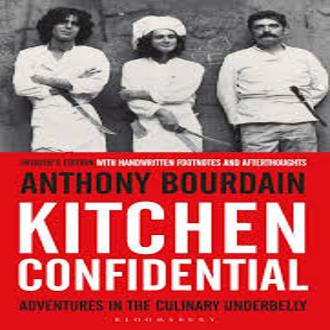

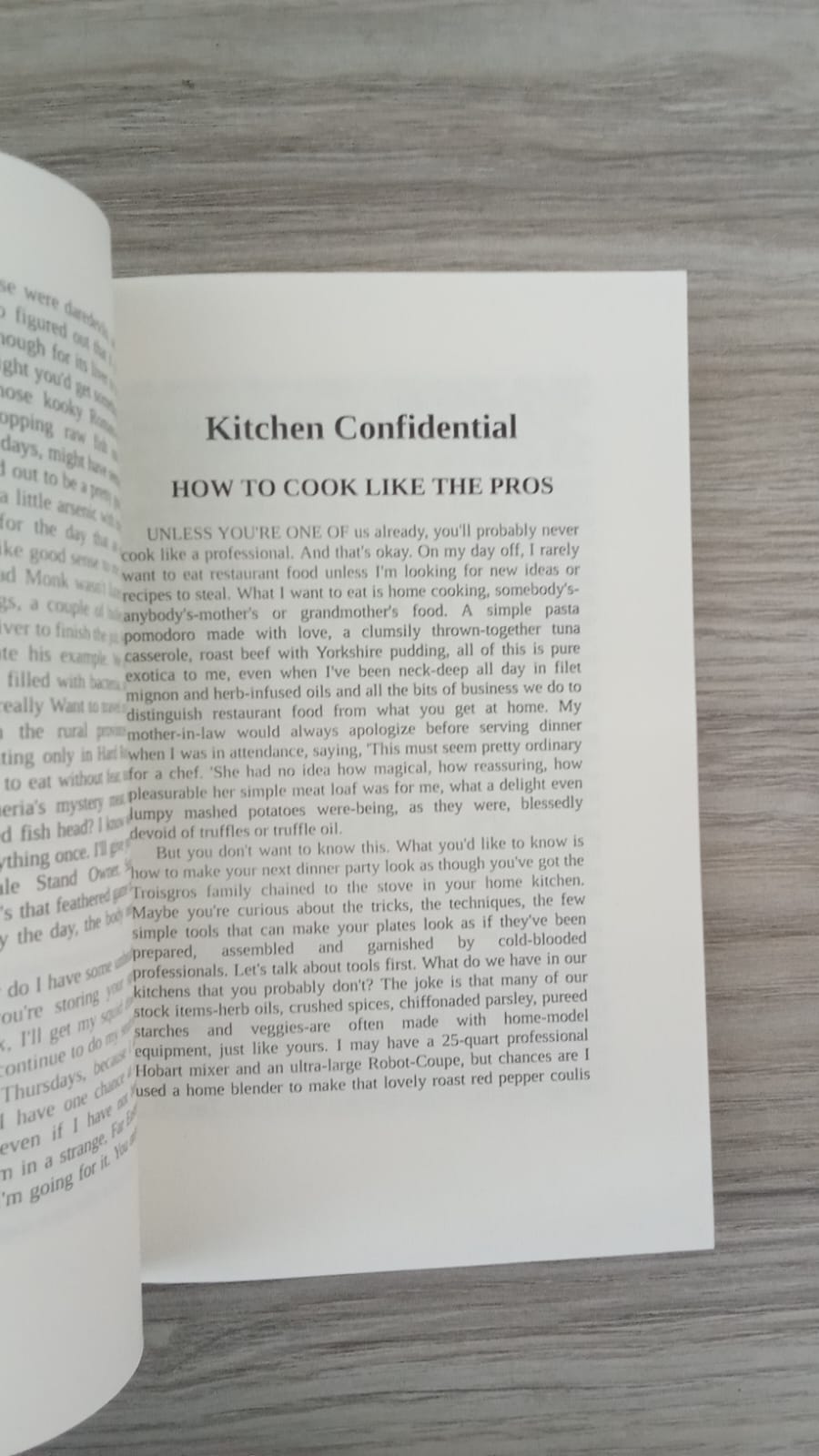
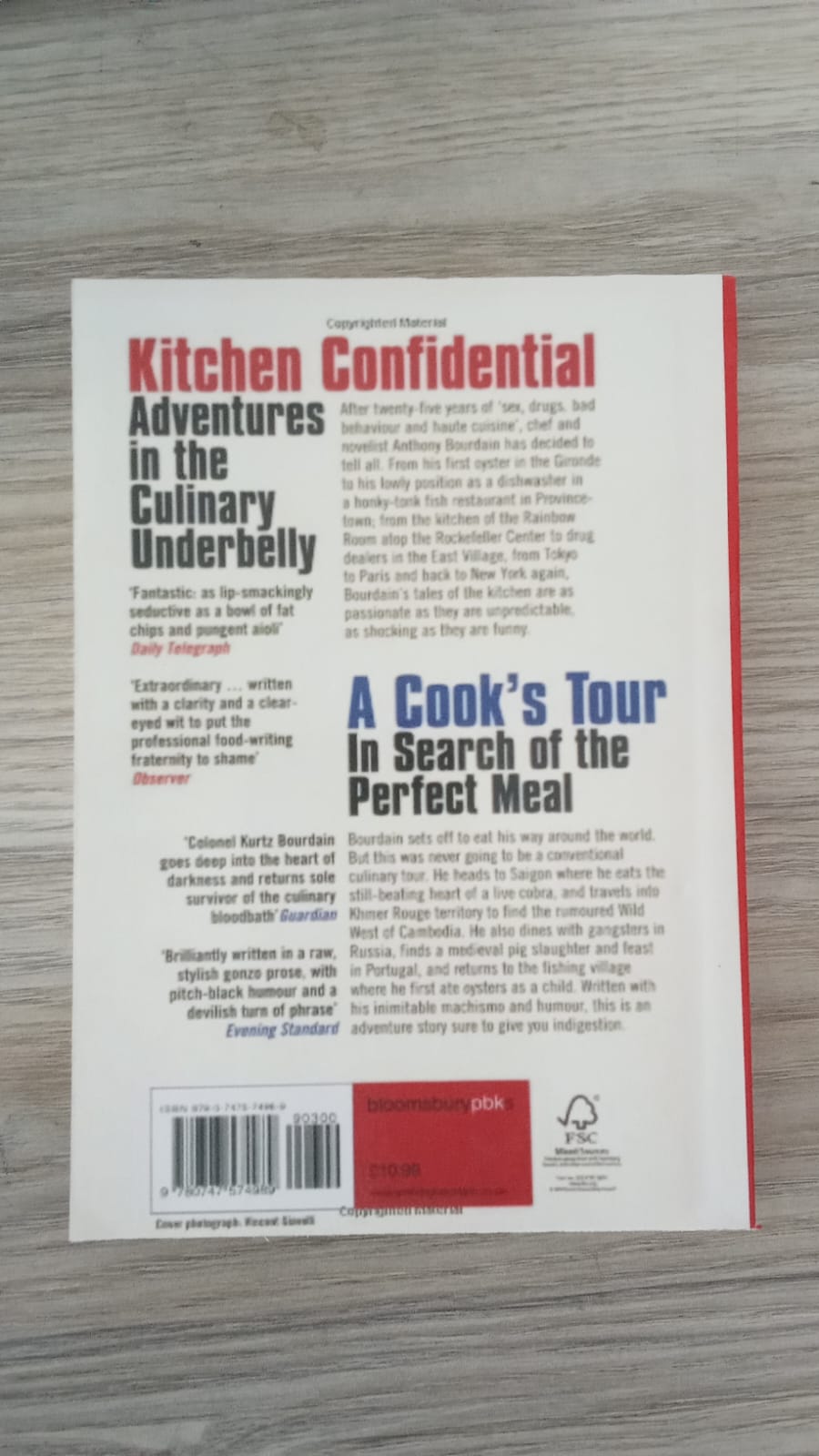
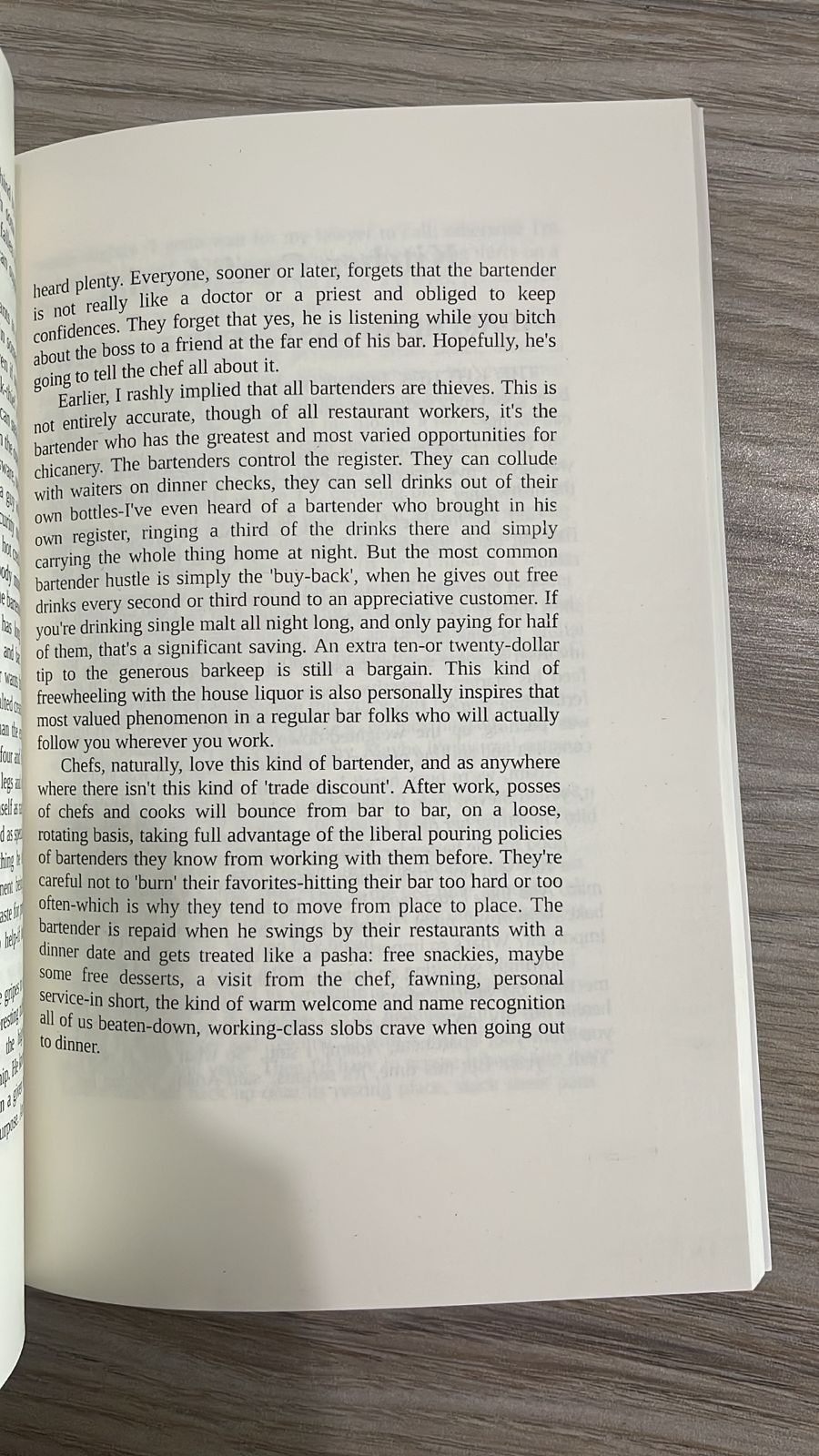






Kitchen Confidential by Anthony Bourdain


රු1,750.00
3 X Rs. 583.33 or 8% Cashback with


or 3 X රු583.33 with


or up to 4 X රු437.50 with


Kitchen Confidential is a bestselling memoir that reveals the hidden world of professional kitchens. Anthony Bourdain shares his experiences as a chef, exposing the realities, challenges, and culture of the restaurant industry with honesty and humor.
5 in stock
Kitchen Confidential by Anthony Bourdain
Kitchen Confidential by Anthony Bourdain is a brutally honest, funny, and revealing memoir about the hidden world of professional restaurant kitchens.
Bourdain takes readers behind the swinging kitchen doors.
He writes about chefs, cooks, dishwashers, restaurant owners, food culture, addiction, ambition, pressure, failure, and the strange lifestyle that comes with working in restaurants.
About Kitchen Confidential
Kitchen Confidential combines memoir, food writing, and an insider’s look at the restaurant business.
Anthony Bourdain spent decades working in professional kitchens.
He began at the bottom.
He washed dishes.
He worked on prep.
He cooked on busy lines.
Eventually, he became an executive chef.
Along the way, he saw a side of the restaurant industry that customers rarely experience.
7 Shocking Lessons from Kitchen Confidential
1. Restaurant Kitchens Are Their Own World
A professional kitchen has its own language.
Its own rules.
Its own hierarchy.
And its own culture.
Bourdain describes kitchens as intense workplaces where speed, discipline, humour, and pressure exist together.
The dining room may appear elegant.
Behind the doors, things can be very different.
2. Hard Work Matters More Than Glamour
Being a chef can look glamorous from the outside.
Reality is often different.
The hours are long.
The work is physical.
The kitchen is hot.
Weekends and holidays may be some of the busiest working days.
Kitchen Confidential makes it clear that restaurant work demands endurance.
3. Discipline Is Essential
A busy kitchen cannot operate without discipline.
Preparation must happen before service.
Ingredients need to be ready.
Stations need to be organised.
Everyone must know their role.
One mistake can affect the entire service.
Bourdain shows why preparation is one of the most important skills in professional cooking.
4. Kitchen Culture Can Be Extreme
Restaurant kitchens can attract unusual personalities.
Some people thrive under pressure.
Others burn out.
Bourdain describes a world full of humour, arguments, loyalty, competition, and excess.
His writing does not try to make the lifestyle look clean or perfect.
That honesty became one of the reasons the book attracted so much attention.
5. Food Is Only Part of Running a Restaurant
Great cooking does not automatically create a successful restaurant.
Costs matter.
Staffing matters.
Timing matters.
Purchasing matters.
Waste matters.
Management matters.
The book gives readers a better understanding of how complicated restaurant operations can be.
6. Experience Changes the Way You See Food
Bourdain spent years surrounded by professional cooking.
That experience changed the way he thought about ingredients.
Restaurants.
Chefs.
And dining.
He encourages readers to look beyond appearances.
Food can reveal culture, personality, and even the way a workplace functions.
7. Every Career Has a Hidden Side
One of the larger lessons in Kitchen Confidential goes beyond restaurants.
Every profession has things outsiders rarely see.
Success can involve sacrifice.
Skill takes years to build.
And glamorous careers may contain difficult realities.
Bourdain’s openness makes the book useful even for readers who never plan to work in hospitality.
Anthony Bourdain’s First Oyster
One of Bourdain’s most memorable early experiences involves eating an oyster while travelling in France.
That moment helped awaken his fascination with food.
It becomes symbolic of curiosity.
Trying something unfamiliar can change how you see the world.
That curiosity later became one of the defining qualities of Bourdain’s career.
Starting at the Bottom
Bourdain did not begin as a famous chef.
He worked low-level restaurant jobs.
One of his early positions involved washing dishes in Provincetown.
Those experiences taught him how kitchen teams function.
They also showed him that restaurant work could become a complete lifestyle.
Life on the Line
Cooking during restaurant service requires speed.
Tickets arrive constantly.
Customers are waiting.
Every station must work together.
There is little time to hesitate.
Bourdain captures the energy of this environment extremely well.
For readers who have worked in restaurants, many scenes may feel familiar.
For everyone else, the book offers a rare look behind the scenes.
Kitchen Hierarchy
Professional kitchens often follow a strict hierarchy.
Executive chefs manage operations.
Sous chefs support leadership.
Line cooks control individual stations.
Prep cooks prepare ingredients.
Dishwashers keep the entire operation moving.
Bourdain shows that every role matters.
A restaurant can struggle when even one part of the system fails.
Mise en Place
One important idea in professional cooking is mise en place.
It means having everything prepared and organised before service begins.
Ingredients are cut.
Tools are ready.
Stations are clean.
This concept extends beyond cooking.
Preparation can reduce mistakes and improve performance in almost any profession.
Restaurant Economics
Restaurants are financially difficult businesses.
Food costs must be controlled.
Waste reduces profit.
Labour is expensive.
Rent can be high.
Customers still expect good value.
Bourdain helps readers understand why restaurant owners and chefs must think about business as well as food.
The Darker Side of Kitchen Culture
The memoir also discusses substance use and other destructive behaviour.
Bourdain writes openly about periods of addiction and chaos.
These sections can be uncomfortable.
But they are part of the honesty of the memoir.
The book does not present professional kitchens as universally healthy environments.
Ambition
Bourdain was ambitious.
He wanted better positions.
Better kitchens.
More responsibility.
But ambition often came with pressure.
The book shows both sides.
Career growth can be exciting.
It can also demand sacrifices.
Loyalty
Restaurant teams often become very close.
Long shifts create bonds.
Staff members depend on each other.
During a difficult service, teamwork becomes essential.
Bourdain writes about the strong loyalty that can develop inside kitchen crews.
Food and Travel
Even before his later television career, Bourdain’s writing showed curiosity about other places.
Food becomes a way to understand culture.
A meal can reveal history.
Tradition.
Class.
Community.
And identity.
That perspective later became central to his work as a television host.
Writing Style
One of the biggest reasons Kitchen Confidential became so popular is Bourdain’s voice.
He writes directly.
He is sarcastic.
Funny.
Sometimes crude.
And often brutally honest.
The book does not read like a traditional culinary textbook.
It feels like listening to an experienced chef tell stories after a difficult shift.
25th Anniversary Legacy
Kitchen Confidential was first published in 2000.
It became the book that transformed Anthony Bourdain from working chef into an internationally recognised writer and media personality.
Bloomsbury now describes it as a modern classic and has released a 25th Anniversary edition with a new introduction by Irvine Welsh.
Who Should Read This Book?
Kitchen Confidential is ideal for readers interested in food, restaurants, chefs, memoirs, travel, hospitality, and behind-the-scenes workplace stories.
Culinary students may find it especially interesting.
Restaurant workers may recognise many of the personalities and situations.
Readers who enjoyed Bourdain’s television programmes may also appreciate seeing the writing style that helped launch his wider career.
Content Note
The book contains mature language and adult themes.
It also discusses substance use, addiction, sexual behaviour, workplace conflict, and other difficult experiences.
Readers expecting a traditional cookbook should also note that this is primarily a memoir and restaurant-industry narrative.
About Anthony Bourdain
Anthony Bourdain was an American chef, author, and television presenter.
He became internationally known through programmes including No Reservations and Parts Unknown.
Before his television career, Kitchen Confidential brought widespread attention to his writing and his insider perspective on professional kitchens.
Readers can learn more through the official Bloomsbury page for Kitchen Confidential.
Product Details
Title: Kitchen Confidential
Author: Anthony Bourdain
Genre: Memoir / Food Writing / Culinary Nonfiction / Hospitality
Language: English
Original Publication: 2000
Common Bloomsbury Insider’s Edition Paperback
Publisher: Bloomsbury Publishing
ISBN-13: 9781526650955
Format: Paperback
Pages: 384
Publication Date: October 1, 2021
Dimensions: 198 × 129 mm
Bloomsbury confirms these specifications for the Insider’s Edition paperback.
Original Hardcover Edition
Publisher: Bloomsbury USA
ISBN-13: 9781582340821
Format: Hardcover
Pages: 320
Publication Date: May 22, 2000
Dimensions: 9 × 6 inches
Bloomsbury confirms these details for the original U.S. hardcover edition.
Important Edition Note
There are several editions of Kitchen Confidential.
Page counts and ISBNs differ between editions.
The 2021 Bloomsbury Insider’s Edition paperback is 384 pages.
The original U.S. hardcover is 320 pages.
Always check the barcode on your physical stock before entering the final WooCommerce details.
Explore More Biography and Non-Fiction Books
Kitchen Confidential reveals the restaurant industry from the perspective of someone who lived inside it for decades.
It is funny.
Chaotic.
Sometimes disturbing.
And deeply passionate about food.
The book shows that professional kitchens are built on preparation, skill, teamwork, discipline, and people willing to work under intense pressure.
Readers can explore more Biography Books at Bargain Books.
You can also explore Non-Fiction & Knowledge Books at Bargain Books.
For readers interested in chefs, restaurants, food culture, memoirs, and the realities behind professional kitchens, Kitchen Confidential is a shocking and unforgettable read.
Be the first to review “Kitchen Confidential by Anthony Bourdain”
Related products
-29%

Self-Help & Psychology
Original price was: රු1,750.00.රු1,250.00Current price is: රු1,250.00.
3 X Rs. 416.67 or 8% Cashback with
or 3 X රු416.67 with
or up to 4 X රු312.50 with

රු2,000.00
3 X Rs. 666.67 or 8% Cashback with
or 3 X රු666.67 with
or up to 4 X රු500.00 with
-34%

Self-Help & Psychology
Original price was: රු2,350.00.රු1,550.00Current price is: රු1,550.00.
3 X Rs. 516.67 or 8% Cashback with
or 3 X රු516.67 with
or up to 4 X රු387.50 with
-13%

Out of stock
Non-Fiction & Knowledge
Original price was: රු3,900.00.රු3,400.00Current price is: රු3,400.00.
3 X Rs. 1,133.33 or 8% Cashback with
or 3 X රු1,133.33 with
or up to 4 X රු850.00 with

Out of stock
Self-Help & Psychology
රු1,500.00
3 X Rs. 500.00 or 8% Cashback with
or 3 X රු500.00 with
or up to 4 X රු375.00 with

Out of stock
Autobiography
රු2,750.00
3 X Rs. 916.67 or 8% Cashback with
or 3 X රු916.67 with
or up to 4 X රු687.50 with
-17%
Out of stock
Non-Fiction & Knowledge
Original price was: රු2,900.00.රු2,400.00Current price is: රු2,400.00.
3 X Rs. 800.00 or 8% Cashback with
or 3 X රු800.00 with
or up to 4 X රු600.00 with
-33%

Self-Help & Psychology
Original price was: රු2,300.00.රු1,550.00Current price is: රු1,550.00.
3 X Rs. 516.67 or 8% Cashback with
or 3 X රු516.67 with
or up to 4 X රු387.50 with
Reviews
There are no reviews yet.