
No products in the cart.
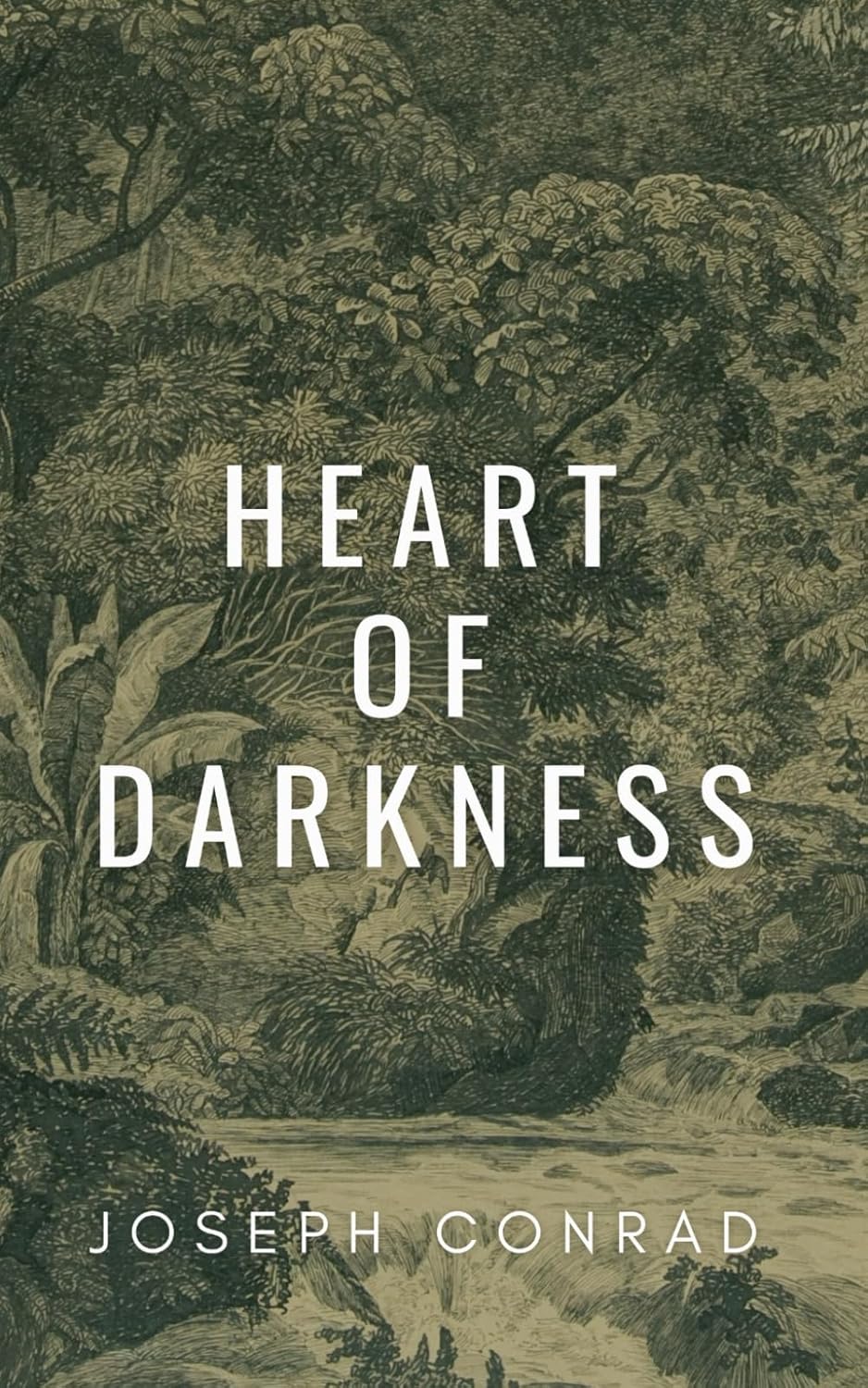
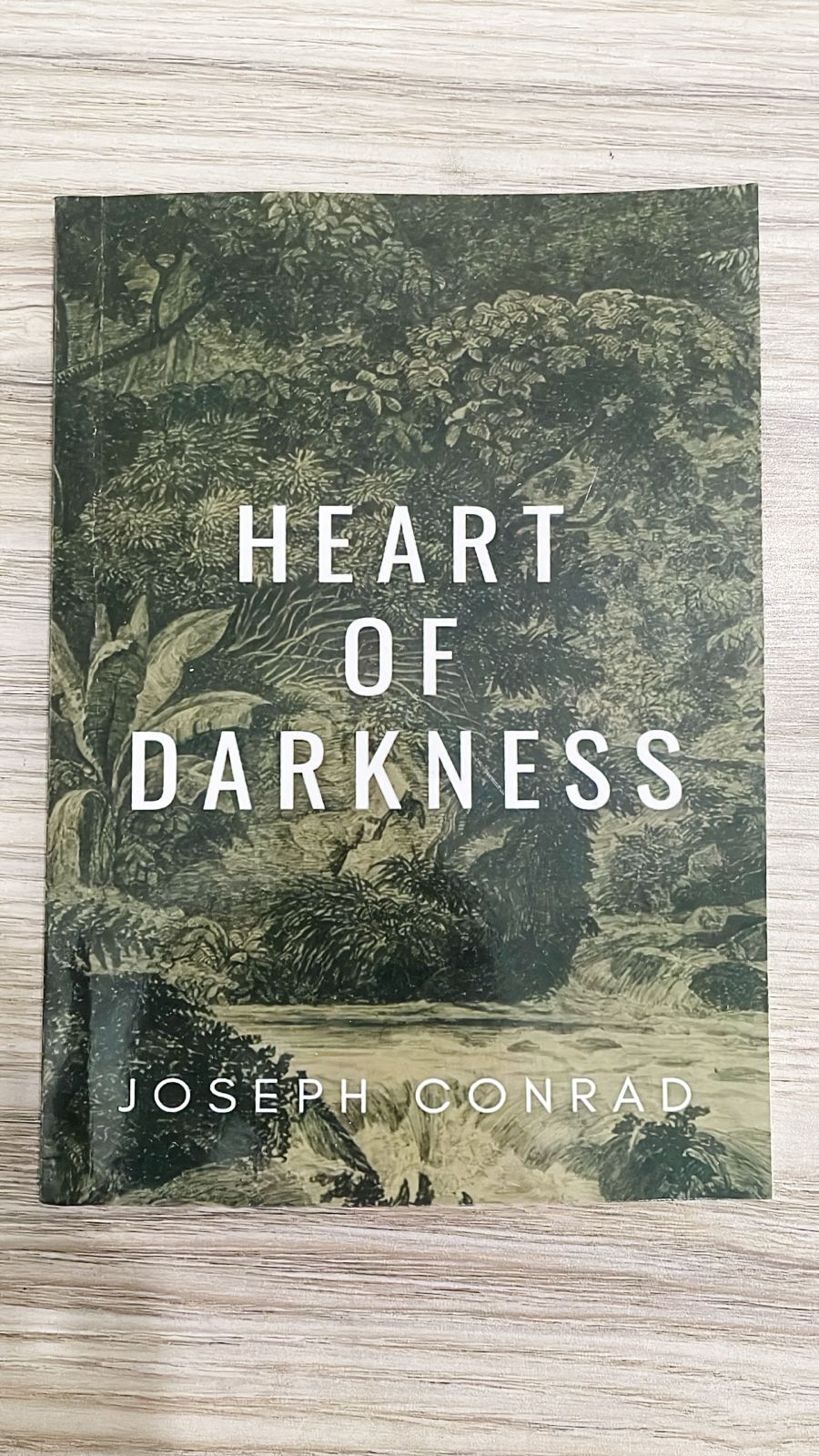

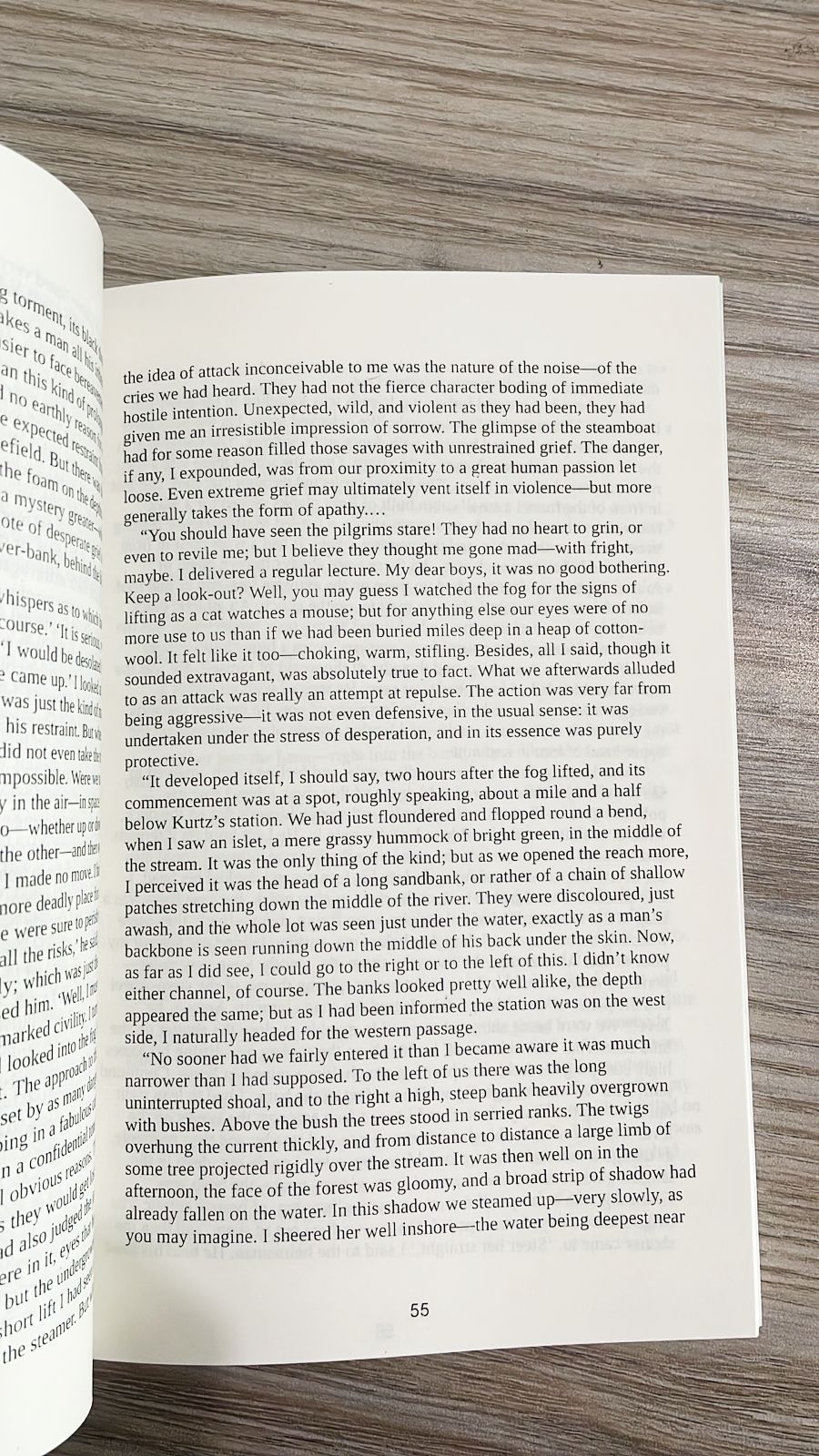
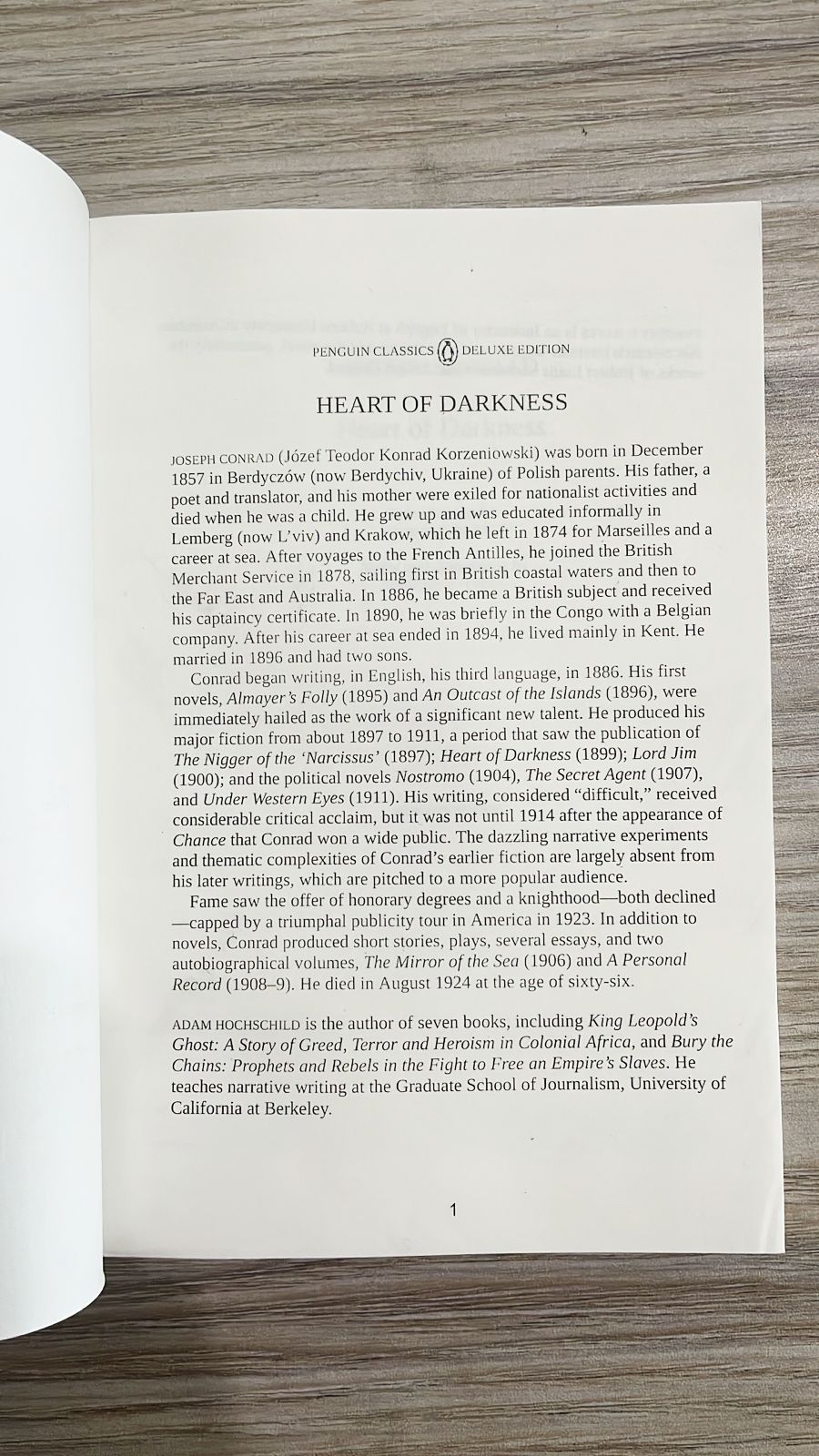







Heart Of Darkness by Joseph Conrad


රු1,600.00
3 X Rs. 533.33 or 8% Cashback with


or 3 X රු533.33 with


or up to 4 X රු400.00 with


Book Details
- Title: Heart of Darkness
- Author: Joseph Conrad
- Genre: Classic Literature, Psychological Fiction, Historical Fiction
- Language: English
- First Published: 1899
- Setting: Congo River, Africa
- Main Character: Charles Marlow
- Themes: Imperialism, Morality, Power, Isolation, Human Nature
5 in stock
Heart of Darkness by Joseph Conrad is a classic novella that explores imperialism, morality, power, human nature, and the darkness that can exist within individuals and societies. Through the journey of a sailor named Marlow, the story examines the psychological and moral consequences of colonial exploitation in Africa.
Marlow travels deep into the Congo in search of Kurtz, a mysterious ivory trader whose reputation has become legendary. As Marlow moves farther inland, he encounters violence, suffering, greed, and the disturbing realities of the colonial system.
The journey gradually becomes more than a physical expedition.
It turns into a psychological exploration of power, corruption, ambition, and the hidden parts of human nature.
Heart of Darkness by Joseph Conrad – Book Overview
Heart of Darkness by Joseph Conrad is narrated mainly through Marlow, who tells the story of his journey into the African interior.
He begins the voyage with curiosity and professional ambition, but the conditions he witnesses quickly challenge his assumptions.
The colonial stations he visits are marked by confusion, exploitation, cruelty, and inefficiency.
Marlow repeatedly sees a contradiction between the language of civilization and the reality of the system around him.
This contradiction becomes one of the central concerns of the novella.
The Journey Into the Congo
The physical journey in Heart of Darkness by Joseph Conrad is one of the book’s most important symbols.
As Marlow travels farther from the coast and deeper into the interior, the landscape becomes increasingly isolated and mysterious.
The journey represents both geographical movement and psychological descent.
Marlow is not simply travelling toward Kurtz.
He is also moving toward a deeper understanding of human behaviour.
The farther he travels, the more he questions ideas about civilization, morality, and progress.
This makes the setting an essential part of the novel’s meaning.
The Mystery of Kurtz
Kurtz is one of the most memorable characters in Heart of Darkness by Joseph Conrad.
Before Marlow meets him, he hears many different stories about Kurtz.
Some people describe him as intelligent, talented, ambitious, and unusually successful.
Others suggest that something has gone terribly wrong.
Because Kurtz remains physically absent for much of the story, his reputation becomes almost larger than the man himself.
Marlow becomes increasingly curious about who Kurtz really is and what has happened to him.
When the two finally meet, Kurtz becomes a powerful example of what can happen when ambition and authority operate without meaningful limits.
Imperialism and Exploitation
One of the major themes in Heart of Darkness by Joseph Conrad is imperialism.
The novella presents colonial activity not as a noble mission but as a system shaped by greed, violence, and exploitation.
Marlow repeatedly notices the gap between the language used to justify colonial expansion and the suffering he actually observes.
People speak about progress, civilization, and development.
Yet the reality around him often involves forced labour, cruelty, waste, and the pursuit of valuable resources.
This contradiction is one reason the novella remains widely discussed in literature courses.
Power and Corruption
Power is another central theme in Heart of Darkness by Joseph Conrad.
Kurtz has gained enormous influence in the isolated environment where he works.
Without strong rules or accountability, his authority becomes increasingly extreme.
The story raises difficult questions about how people behave when they are given power without limits.
Does power change people?
Or does it reveal qualities that were already present?
The novella does not provide simple answers.
Instead, it encourages readers to think about how social structures, personal ambition, fear, and isolation can influence behaviour.
Civilization and Savagery
Heart of Darkness by Joseph Conrad also questions the traditional distinction between civilization and savagery.
The European characters often describe themselves as civilized.
However, many of their actions involve exploitation, cruelty, greed, and violence.
This creates one of the story’s central ironies.
The people who claim to represent civilization may behave in deeply destructive ways.
Marlow gradually realizes that darkness cannot simply be assigned to one place, culture, or group of people.
It can exist wherever human beings allow greed, fear, and power to overcome moral responsibility.
Psychological Darkness
The title Heart of Darkness by Joseph Conrad can be understood in several ways.
It refers partly to the physical journey into the interior of Africa.
It also refers to psychological and moral darkness.
Marlow’s journey forces him to confront uncomfortable truths about human nature.
Kurtz becomes especially important because he represents what can happen when social boundaries disappear and personal ambition becomes dominant.
The story suggests that the capacity for destructive behaviour may exist closer to ordinary life than people want to admit.
Symbolism and Atmosphere
The novella uses symbolism heavily.
Darkness, fog, rivers, wilderness, silence, and distance all contribute to the atmosphere of Heart of Darkness by Joseph Conrad.
These elements create uncertainty.
Marlow often has incomplete information and struggles to understand what is happening around him.
The river itself becomes symbolic.
It carries Marlow deeper into an unfamiliar world while also narrowing his options.
The setting therefore becomes closely connected to the psychological experience of the journey.
Why Read Heart of Darkness by Joseph Conrad?
Heart of Darkness by Joseph Conrad is a valuable choice for readers who enjoy classic literature with strong philosophical and psychological themes.
The book explores:
- Imperialism and colonialism
- Power and corruption
- Morality
- Human nature
- Greed and ambition
- Civilization and savagery
- Psychological darkness
- Isolation
- Symbolism
- Ethical responsibility
The novella is relatively short, but its themes are complex.
This makes it particularly suitable for readers who enjoy books that encourage discussion and interpretation.
Who Should Read This Book?
Heart of Darkness by Joseph Conrad may appeal especially to readers interested in:
- Classic literature
- Literary fiction
- Colonial history
- Psychological fiction
- Political and social criticism
- Symbolic storytelling
- Moral philosophy
- Short classic novels
- Literature studies
- Historical fiction
It is also widely studied by students because of its narrative structure, symbolism, themes, and historical context.
A Powerful Classic About Human Nature
Heart of Darkness by Joseph Conrad remains an important and challenging work of classic literature because it asks difficult questions about power, morality, civilization, and human behaviour.
Marlow’s journey into the Congo becomes a journey into uncomfortable truths about greed, ambition, exploitation, and the limits of social order.
The story does not offer easy moral conclusions.
Instead, it presents readers with ambiguity and asks them to consider what happens when people are removed from familiar rules and given unchecked power.
For readers who enjoy short classics with deep themes, symbolic writing, psychological tension, and social criticism, Heart of Darkness by Joseph Conrad offers a thought-provoking reading experience.
Learn more about Heart of Darkness by Joseph Conrad on the official Penguin website.
Explore more classic literature books at Bargain Books.
Be the first to review “Heart Of Darkness by Joseph Conrad”
Related products
Out of stock
Autobiography
රු2,750.00
3 X Rs. 916.67 or 8% Cashback with
or 3 X රු916.67 with
or up to 4 X රු687.50 with
-34%
Non-Fiction & Knowledge
Original price was: රු2,250.00.රු1,490.00Current price is: රු1,490.00.
3 X Rs. 496.67 or 8% Cashback with
or 3 X රු496.67 with
or up to 4 X රු372.50 with

රු2,000.00
3 X Rs. 666.67 or 8% Cashback with
or 3 X රු666.67 with
or up to 4 X රු500.00 with
-24%
Out of stock
Non-Fiction & Knowledge
Original price was: රු2,100.00.රු1,600.00Current price is: රු1,600.00.
3 X Rs. 533.33 or 8% Cashback with
or 3 X රු533.33 with
or up to 4 X රු400.00 with
-29%

Self-Help & Psychology
Original price was: රු1,750.00.රු1,250.00Current price is: රු1,250.00.
3 X Rs. 416.67 or 8% Cashback with
or 3 X රු416.67 with
or up to 4 X රු312.50 with

Out of stock
Non-Fiction & Knowledge
රු1,900.00
3 X Rs. 633.33 or 8% Cashback with
or 3 X රු633.33 with
or up to 4 X රු475.00 with
-34%

Self-Help & Psychology
Original price was: රු2,350.00.රු1,550.00Current price is: රු1,550.00.
3 X Rs. 516.67 or 8% Cashback with
or 3 X රු516.67 with
or up to 4 X රු387.50 with

Self-Help & Psychology
රු2,200.00
3 X Rs. 733.33 or 8% Cashback with
or 3 X රු733.33 with
or up to 4 X රු550.00 with
Reviews
There are no reviews yet.