
No products in the cart.
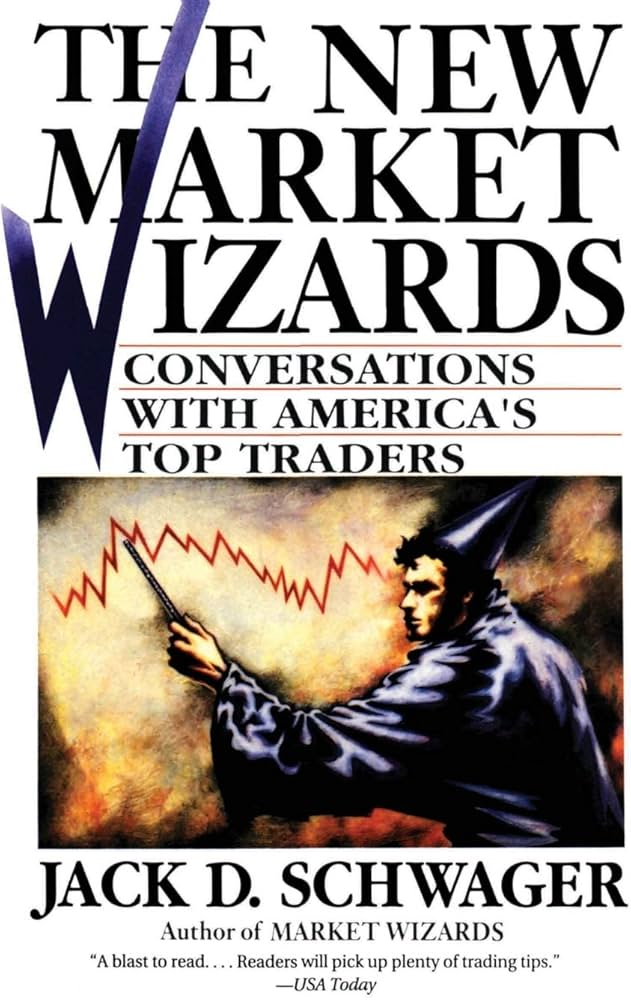
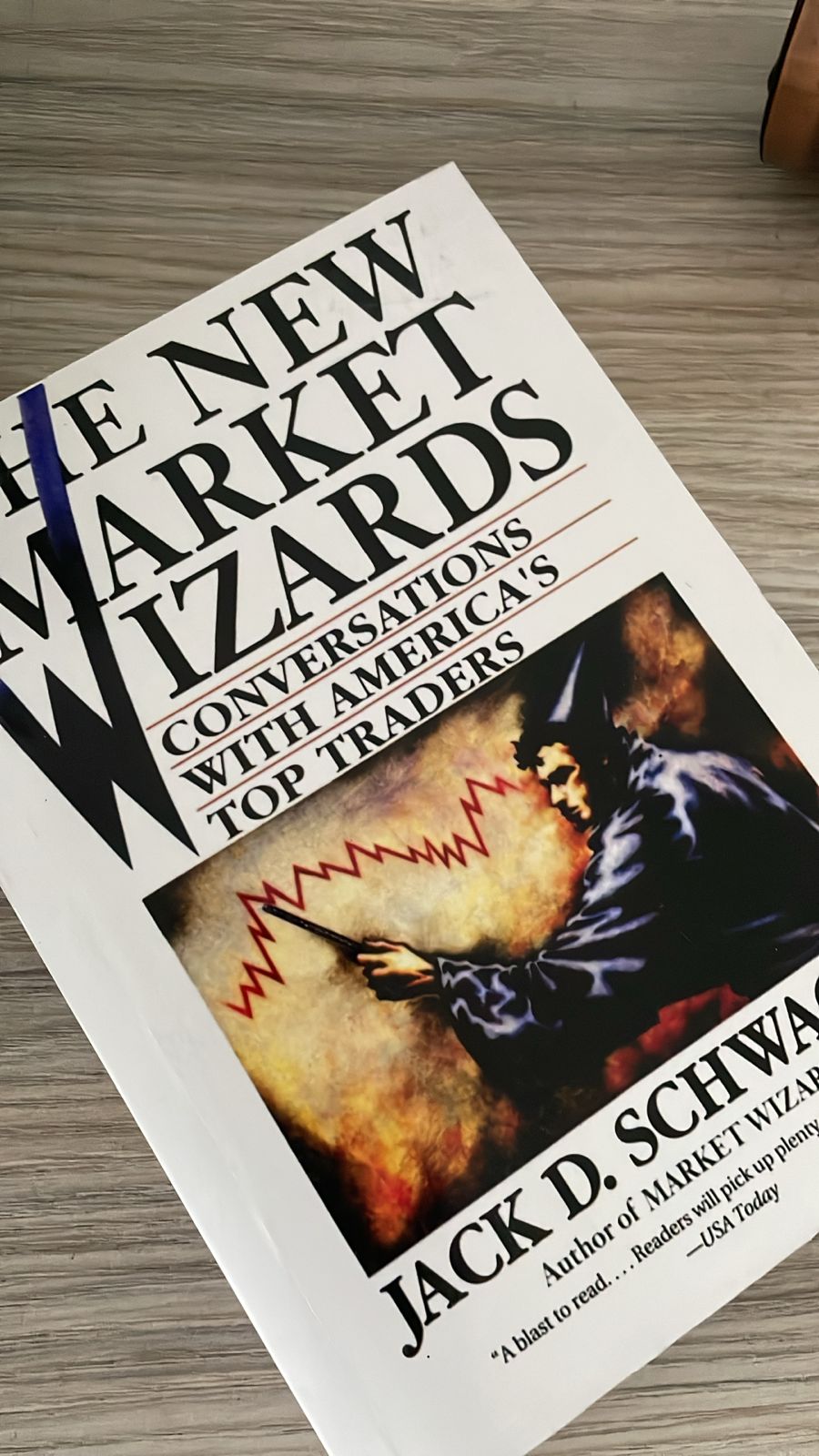

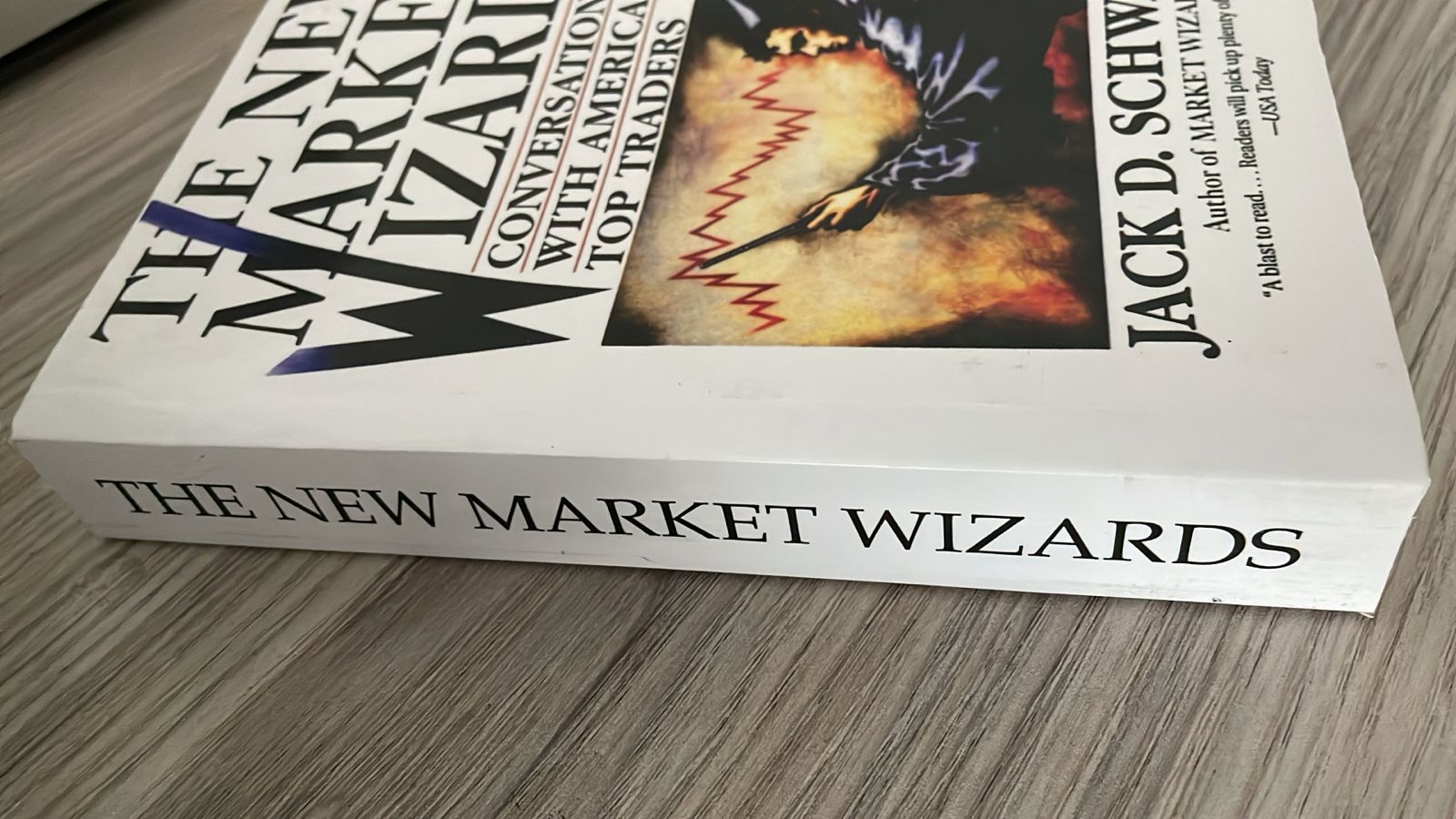






New Market Wizard by Jack D. Schwager
රු2,500.00
3 X Rs. 833.33 or 8% Cashback with


or 3 X රු833.33 with


or up to 4 X රු625.00 with


The New Market Wizards by Jack D Schwager is a classic financial-markets book featuring in-depth interviews with exceptional professional traders including Bill Lipschutz, Stanley Druckenmiller, William Eckhardt, Blair Hull and others. Through their successes, mistakes and trading philosophies, Schwager explores risk management, psychology, discipline, probability, position sizing and the importance of developing a strategy that fits the individual trader. Ideal for traders, investors, finance students and anyone interested in how top market professionals think and manage uncertainty.
3 in stock
The New Market Wizards – Jack D. Schwager
Book Description

The New Market Wizards by Jack D Schwager takes readers inside the minds of some of the most successful professional traders in financial markets, revealing how they think about risk, losses, discipline, strategy, psychology and long-term survival.
What separates consistently successful traders from everyone else?
Is it intelligence?
A secret indicator?
Perfect market predictions?
Superior technology?
Luck?
Jack D. Schwager discovered something more interesting.
There is no single trading method shared by every great trader.
Some follow trends.
Some trade currencies.
Some use mathematical models.
Some focus on options.
Some rely heavily on fundamental analysis.
Others use technical information.
Their strategies can be completely different.
Yet beneath those differences, remarkably similar principles appear again and again:
Protect capital.
Control risk.
Accept losses.
Develop a method that fits your personality.
Remain disciplined.
Avoid emotional decision-making.
And never assume that being right is more important than surviving.
The New Market Wizards by Jack D Schwager presents these lessons through detailed interviews rather than abstract theory.
Readers hear directly from traders who have experienced:
Huge wins.
Painful losses.
Market crashes.
Unexpected price movements.
Emotional pressure.
Career setbacks.
And periods when their own strategies temporarily stopped working.
That makes the book especially valuable because it does not present trading as effortless wealth.
Successful traders make mistakes too.
The difference is often how they manage those mistakes.
The New Market Wizards by Jack D Schwager – Book Overview
The New Market Wizards by Jack D Schwager is the follow-up to Schwager’s bestselling Market Wizards.
Instead of teaching one system and claiming it is the correct way to trade, Schwager interviews successful market professionals and asks them how they actually operate.
The result is almost like sitting across the table from a group of elite traders and asking:
How do you decide when to trade?
How much do you risk?
How do you handle losing streaks?
How do you know when you are wrong?
How do you control emotion?
What makes a successful trader?
The answers are often very different.
That is exactly what makes the book so useful.
Jack D. Schwager
Jack D. Schwager is widely known for his books about professional traders and financial-market psychology.
He has worked in futures research, portfolio management and investment analysis and became particularly well known through the Market Wizards interview series.
Rather than presenting himself as the person with one perfect trading system, Schwager acts as an interviewer.
He finds high-performing traders.
Studies their careers.
Asks detailed questions.
Then allows readers to identify the patterns.
The Interview Format
The interview format is one of the biggest strengths of The New Market Wizards by Jack D Schwager.
Instead of reading:
Rule 1.
Rule 2.
Rule 3.
readers encounter real decisions.
A trader explains:
What they believed.
What they did.
What happened.
Where they made money.
Where they lost money.
What they learned.
This makes the principles easier to understand because they appear inside actual experiences.
Different Traders, Different Methods
One of the most important lessons in the entire book is that successful trading does not require everyone to trade the same way.
One trader may hold positions for a long period.
Another may trade frequently.
One may use charts.
Another may use macroeconomic reasoning.
Another may use probability models.
This destroys the idea that there must be one universal secret strategy.
Find a Method That Fits You
A trading strategy can look excellent on paper but still be unsuitable for a particular person.
Why?
Because people have different:
Risk tolerance.
Patience.
Decision-making styles.
Emotional reactions.
Time horizons.
A strategy requiring months of patience may be psychologically impossible for someone who constantly wants action.
A very active strategy may be unsuitable for someone who dislikes rapid decision-making.
Bill Lipschutz
One of the famous traders featured in The New Market Wizards by Jack D Schwager is Bill Lipschutz, known for his work in currency markets.
His story illustrates the importance of understanding not only market direction but:
Position size.
Timing.
Liquidity.
Risk.
Psychology.
Currency markets can move rapidly, and large positions can create enormous gains or losses.
Stanley Druckenmiller
Stanley Druckenmiller is another major trader interviewed in the book.
His approach demonstrates the importance of flexibility.
A trader should not become emotionally attached to one forecast simply because they previously believed it strongly.
Markets change.
Information changes.
Positions sometimes need to change too.
Changing Your Mind
People often treat changing an opinion as weakness.
In markets, refusing to change your mind can become extremely expensive.
A professional trader may believe strongly that:
A currency will rise.
A stock will fall.
Interest rates will move.
Then new evidence appears.
The intelligent response is not:
“I already told everyone I was right.”
It is:
“What does the evidence say now?”
William Eckhardt
William Eckhardt, associated with Richard Dennis and the famous Turtle trading experiment, provides another perspective.
Systematic trading emphasizes:
Rules.
Probability.
Consistency.
Testing.
Following a method.
This helps reduce the temptation to make every decision emotionally.
The Turtle Traders
The famous Turtle experiment explored whether trading could be taught through a systematic set of rules.
That raises an interesting question:
Are successful traders born?
Or can skills be developed?
Schwager’s interviews repeatedly suggest that while personality matters, many important trading behaviors can be learned.
Blair Hull
Blair Hull brought a strong understanding of probability to financial markets.
His background demonstrates how ideas from one field can transfer into another.
Probability.
Expected value.
Risk.
Decision-making under uncertainty.
These concepts are central to both sophisticated gambling and trading.
But trading should not be confused with gambling simply because both involve uncertainty.
The difference lies heavily in whether someone has a tested edge and disciplined risk management.
Tom Basso
Tom Basso became associated with a calmer approach to trading.
That matters because markets can easily create emotional extremes.
Excitement after winning.
Fear after losing.
Anger after being wrong.
The more emotionally unstable the decision-maker becomes, the harder it is to follow a consistent process.
Trading Psychology
This is one of the strongest themes in The New Market Wizards by Jack D Schwager.
People often assume successful trading is mainly about finding the best analytical tool.
But a good strategy can still fail if the trader cannot follow it.
Psychology influences:
When you enter.
When you exit.
How much you risk.
Whether you chase losses.
Whether you abandon a strategy after a few bad trades.
Fear
Fear can make a trader:
Exit a good trade too early.
Avoid taking a valid opportunity.
Reduce risk at exactly the wrong time.
Fear is not automatically bad.
It can protect capital.
The problem comes when emotion completely overrides the trading plan.
Greed
Greed creates different problems.
A trader makes money.
Then wants more.
Instead of following the exit plan, they keep increasing exposure.
Eventually the market reverses.
A profitable trade becomes a loss.
Markets punish emotional certainty.
Hope
Hope can be surprisingly dangerous in trading.
A losing position falls further.
The trader thinks:
It will come back.
Maybe tomorrow.
Maybe next week.
Instead of accepting the loss, they continue holding because closing the trade would mean admitting they were wrong.
This is where risk management becomes essential.
Being Wrong Is Normal
One of the most useful lessons from The New Market Wizards by Jack D Schwager is that successful traders do not need to be correct all the time.
A strategy could have many losing trades and still succeed if:
Losses remain small.
Profitable trades are sufficiently large.
The overall method has positive expectancy.
This changes the psychological goal.
You do not need to prove you are right.
You need to manage risk.
Protect Capital
Professional trading begins with survival.
If you lose all your capital, your future opportunities disappear.
That makes risk control more important than maximizing every potential profit.
A trader who protects capital can continue participating.
A trader who takes one catastrophic risk may never receive another chance.
Position Sizing
Imagine two traders have exactly the same market idea.
Both believe a stock will rise.
Trader A risks 2% of capital.
Trader B risks 50%.
The market falls sharply.
Same idea.
Very different outcome.
Position size can matter as much as the prediction itself.
Never Risk Everything on One Idea
Confidence can become dangerous when it leads to oversized positions.
No matter how convincing a setup appears, uncertainty remains.
Unexpected news.
Economic events.
Political developments.
Liquidity changes.
Company announcements.
Markets can move in ways nobody predicted.
Stop Losses
Many traders use predetermined exit points to limit losses.
The specific technique differs between strategies.
But the underlying principle is powerful:
Decide what level of loss is acceptable before emotion becomes intense.
It is much easier to make a rational decision before the market starts moving aggressively against you.
Risk First, Profit Second
Beginners often ask:
How much can I make?
Experienced traders may first ask:
How much can I lose?
That change in thinking is fundamental.
Before entering a trade:
What invalidates the idea?
Where will I exit?
How large should the position be?
What happens if I am wrong?
Trading Is a Probability Game
No individual trade needs to work.
Even an excellent setup can lose.
The goal is to make decisions where the combination of:
Probability.
Potential reward.
Potential loss.
produces a favorable long-term outcome.
Expected Value
Suppose a strategy loses more often than it wins.
That does not automatically make it bad.
If average losses are small and average wins are much larger, the strategy can still be profitable.
This is why win rate alone is insufficient.
Discipline
A profitable trading system becomes useless if the trader repeatedly ignores it.
Discipline means following the process even when emotion argues otherwise.
That can involve:
Taking the planned loss.
Waiting for the setup.
Not chasing the market.
Avoiding excessive leverage.
Stopping after reaching risk limits.
Overtrading
Markets are always moving.
That does not mean there is always a good trade.
One dangerous habit is believing:
I am a trader, therefore I should be trading.
Sometimes the best position is no position.
Patience is also a trading skill.
Waiting for Opportunity
Good traders do not necessarily force opportunities.
They wait until the market creates conditions that fit their method.
This requires patience.
A trader who cannot tolerate inactivity may begin manufacturing reasons to trade.
Trading Plan
A trading plan can include:
What markets you trade.
Entry conditions.
Exit conditions.
Risk per trade.
Maximum daily or weekly loss.
Position sizing.
When not to trade.
The clearer the process, the easier it becomes to evaluate performance honestly.
Process Over Outcome
Suppose you break every rule and make money.
Was it a good trade?
Maybe not.
Suppose you follow your tested strategy perfectly and lose.
Was it a bad trade?
Not necessarily.
This distinction is critical.
A good decision can produce a bad short-term result because markets involve probability.
A bad decision can occasionally produce a profit through luck.
Luck Can Teach the Wrong Lesson
This is dangerous.
Someone takes an enormous risk.
It works.
They conclude:
I am brilliant.
Then repeat the same behavior with an even larger position.
Eventually probability catches up.
Sometimes early success is more dangerous than early failure because it rewards bad habits.
Learn From Losses
Losing money can teach important lessons if the trader studies what happened.
Ask:
Was the idea wrong?
Was the position too large?
Did I ignore my stop?
Did emotion affect the trade?
Did market conditions change?
Was the loss normal within the strategy?
Not every loss requires changing the system.
Losing Streaks
Even successful strategies can experience periods of poor performance.
This creates an uncomfortable question:
Is the strategy temporarily losing?
Or has the market changed enough that the strategy no longer works?
There is no easy answer.
This is where experience, testing and disciplined analysis matter.
Trading Journals
Although traders have different methods, reviewing decisions can help identify patterns.
Record:
Why you entered.
Risk.
Exit.
Result.
Emotional state.
Mistakes.
Over time, patterns become visible.
Maybe your worst trades happen after a large win.
Maybe you overtrade after losses.
Maybe certain setups consistently perform poorly.
Emotional Awareness
Knowing yourself is part of risk management.
Ask:
What happens when I lose?
Do I become aggressive?
Do I increase position size?
Do I immediately try to win the money back?
That behavior is sometimes called revenge trading.
It can turn a normal loss into a catastrophic one.
Revenge Trading
Imagine losing $500.
You feel angry.
You want it back immediately.
You take a larger trade without proper analysis.
Now you lose $1,500.
The original problem was manageable.
The emotional response created the larger problem.
Accept Losses
Trading becomes psychologically easier once losses are treated as part of the business rather than personal humiliation.
A shop has expenses.
A manufacturer has defective products.
A trader has losing trades.
The question is whether those losses remain controlled within a profitable overall process.
Markets Do Not Know You Exist
The market is not:
Punishing you.
Targeting you.
Waiting for you to enter before reversing.
Personalizing market movement creates emotional thinking.
Prices move because millions of participants respond to changing information, liquidity and expectations.
Ego
Ego is dangerous because it wants to be right.
Trading requires something different:
The willingness to recognize when you are wrong quickly.
A smaller ego can protect a larger trading account.
Flexibility
The market does not need to follow your forecast.
If evidence changes, adapt.
That principle appears repeatedly throughout The New Market Wizards by Jack D Schwager.
Fundamental Analysis
Some featured traders think in terms of:
Economics.
Interest rates.
Corporate fundamentals.
Supply and demand.
Macro trends.
Fundamental analysis attempts to understand the forces that may influence market value.
Technical Analysis
Others focus more heavily on:
Price.
Trends.
Patterns.
Market behavior.
Volume.
Momentum.
Schwager does not insist that one approach is universally superior.
Successful people appear on different sides of the debate.
Systematic Versus Discretionary Trading
Some traders rely heavily on systems.
Others use judgment.
Again, there is no single winner.
The important question is whether the approach has a legitimate edge and can be implemented consistently.
Market Wizards Have Different Personalities
This may be the book’s most reassuring lesson.
You do not need to become another trader.
You need to understand:
Your strengths.
Your weaknesses.
Your temperament.
Your method.
Copying someone else’s personality is unlikely to create sustainable success.
Learning From Great Traders Without Copying Them
A reader might think:
Stanley Druckenmiller did this, so I should trade exactly like him.
That misses the lesson.
Instead ask:
What principle can I learn?
Flexibility?
Risk management?
Conviction?
Research?
Then adapt the principle to your own situation.
Trading Is Not a Get-Rich-Quick Formula
The New Market Wizards by Jack D Schwager should not be interpreted as a promise that reading interviews with successful traders will make someone rich.
Trading involves substantial risk.
Professional success requires:
Knowledge.
Experience.
Capital management.
Discipline.
Testing.
And often years of learning.
Historical success from any trader does not guarantee that a reader can reproduce the same result.
Survivorship Bias
There is another useful caution when reading books about exceptional performers.
The people interviewed are unusually successful.
They are not representative of every market participant.
For every spectacularly successful trader, many others lose money or leave the profession.
That does not make the lessons useless.
It means readers should study principles without assuming exceptional outcomes are normal.
Historical Market Context
The original book was published in the early 1990s.
Markets have changed significantly since then.
Today traders use:
Electronic exchanges.
Algorithms.
High-frequency systems.
Instant news.
Modern derivatives.
Retail trading platforms.
Different regulations.
Yet human psychology remains surprisingly familiar.
Fear.
Greed.
Hope.
Overconfidence.
Impatience.
These have not disappeared.
Why the Book Still Matters
Technology changes.
Risk management does not disappear.
Markets change.
Discipline remains necessary.
Execution becomes faster.
Emotion still affects decisions.
This is why many ideas from The New Market Wizards by Jack D Schwager remain relevant decades after the interviews were conducted.
Is The New Market Wizards a Sequel?
Yes.
It follows Schwager’s earlier book:
Market Wizards: Interviews with Top Traders
However, you do not need to read Market Wizards first.
Each book contains its own interviews and lessons.
Readers can begin with The New Market Wizards by Jack D Schwager and understand it independently.
Market Wizards Reading Order
For readers who want to explore more of Schwager’s interview books, a natural progression begins with:
Market Wizards
The New Market Wizards
Stock Market Wizards
and later titles in the wider Market Wizards collection.
They are connected by format and subject rather than one continuous narrative.
Your Edition
Your inventory lists ISBN 9780887306679 for The New Market Wizards.
That ISBN corresponds to a HarperBusiness paperback/reprint edition. Bibliographic listings commonly show 512 pages, while the original 1992 hardcover bibliographic record lists 493 pages, so use the page count printed on your exact physical copy for WooCommerce attributes.
Important Themes
The New Market Wizards by Jack D Schwager explores trading psychology, risk management, position sizing, market analysis, discipline, losses, probability, currency trading, futures, options, stocks, systematic trading, discretionary trading, emotional control, patience, adaptability, decision-making, financial markets and long-term survival.
7 Powerful Lessons From The New Market Wizards by Jack D Schwager
- Risk management matters more than perfect predictions. Even great traders are wrong. What separates them is often how much they lose when they are wrong.
- There is no single correct trading strategy. Successful traders use radically different methods, showing that the best approach must fit the trader’s skills, temperament and market philosophy.
- Control position size before emotion takes control. A reasonable idea can become a disastrous trade when the position is excessively large.
- Losses are part of trading, not proof of personal failure. Accepting small planned losses helps prevent normal mistakes from turning into catastrophic account damage.
- Discipline is what converts a strategy into actual results. Knowing what to do means little if fear, greed or impatience repeatedly causes you to abandon the plan.
- Be willing to change your mind when the evidence changes. Markets do not reward loyalty to predictions. Flexibility can be more valuable than defending an old opinion.
- Develop your own edge instead of blindly copying someone else’s trades. The traders Schwager interviews succeed in different ways. The common lesson is to find a method you understand deeply and can execute consistently.
Why Read The New Market Wizards by Jack D Schwager?
The New Market Wizards by Jack D Schwager is an excellent choice for readers interested in trading, investing, financial markets, trading psychology, risk management, futures, currencies, stocks, options, hedge funds and professional decision-making.
It is especially useful for readers who want to understand how experienced traders think, rather than simply receiving another list of buy and sell signals.
The book teaches through real careers.
Real mistakes.
Real risk.
Real uncertainty.
That gives the lessons more depth than a system promising guaranteed profits.
Who Should Read This Book?
The New Market Wizards by Jack D Schwager may especially appeal to traders, investors, finance students, business students, portfolio managers, entrepreneurs, market enthusiasts, technical-analysis readers, risk-management professionals and anyone interested in decision-making under uncertainty.
Beginners can benefit from the psychological principles, while experienced traders may appreciate the diversity of approaches discussed across the interviews.
Readers should remember, however, that the book is educational and historical. It is not personalized financial advice, and the success of interviewed traders does not guarantee future market results.
The New Market Wizards by Jack D Schwager – Survive First, Succeed Second
The New Market Wizards by Jack D Schwager eventually reveals something much more important than a secret indicator.
There isn’t one.
One successful trader studies currencies.
Another builds mathematical systems.
Another follows trends.
Another uses fundamentals.
Another relies heavily on experience and judgment.
If their methods differ so greatly, what connects them?
Risk.
Discipline.
Adaptability.
Self-awareness.
And the ability to survive being wrong.
That may be the deepest lesson in the book.
Beginners often enter markets asking:
How can I make the most money?
Great traders often appear to begin with another question:
How do I avoid losing too much when I am wrong?
That difference changes everything.
It changes position sizing.
It changes exits.
It changes emotional reactions.
It changes the meaning of losses.
Once a trader accepts that uncertainty cannot be removed, the objective stops being perfect prediction.
The objective becomes making good decisions repeatedly while protecting enough capital to continue playing the game.
That is why The New Market Wizards by Jack D Schwager remains such a compelling trading book.
The markets described may belong partly to another technological era.
But human behavior has not changed nearly as much.
Traders still become greedy.
Still panic.
Still chase losses.
Still become overconfident after winning.
Still hold losing positions because admitting they were wrong feels painful.
And successful trading still demands the ability to manage those impulses.
For readers interested in the mindset behind professional trading, risk management and the thinking habits of exceptional market performers, The New Market Wizards by Jack D Schwager offers a fascinating collection of conversations showing that there are many ways to trade—but very few ways to survive without discipline.
Learn more about The New Market Wizards by Jack D. Schwager on the official Wiley website.
Explore more investing and finance books at Bargain Books.
Be the first to review “New Market Wizard by Jack D. Schwager”
Related products
Business
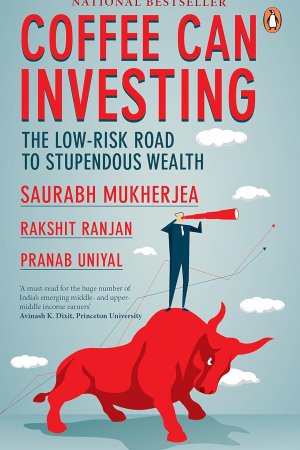
Coffee Can Investing by Sanjay Bakshi – A Simple, High-Reward Strategy for Building Long-Term Wealth
රු1,750.00
3 X Rs. 583.33 or 8% Cashback with
or 3 X රු583.33 with
or up to 4 X රු437.50 with

රු1,250.00
3 X Rs. 416.67 or 8% Cashback with
or 3 X රු416.67 with
or up to 4 X රු312.50 with

Out of stock
රු1,750.00
3 X Rs. 583.33 or 8% Cashback with
or 3 X රු583.33 with
or up to 4 X රු437.50 with
Out of stock
Business, Finance & Economics
රු1,990.00
3 X Rs. 663.33 or 8% Cashback with
or 3 X රු663.33 with
or up to 4 X රු497.50 with
රු2,500.00
3 X Rs. 833.33 or 8% Cashback with
or 3 X රු833.33 with
or up to 4 X රු625.00 with
-39%
Out of stock
Analysis & Strategy
Original price was: රු2,800.00.රු1,700.00Current price is: රු1,700.00.
3 X Rs. 566.67 or 8% Cashback with
or 3 X රු566.67 with
or up to 4 X රු425.00 with
Reviews
There are no reviews yet.