
No products in the cart.
-39%
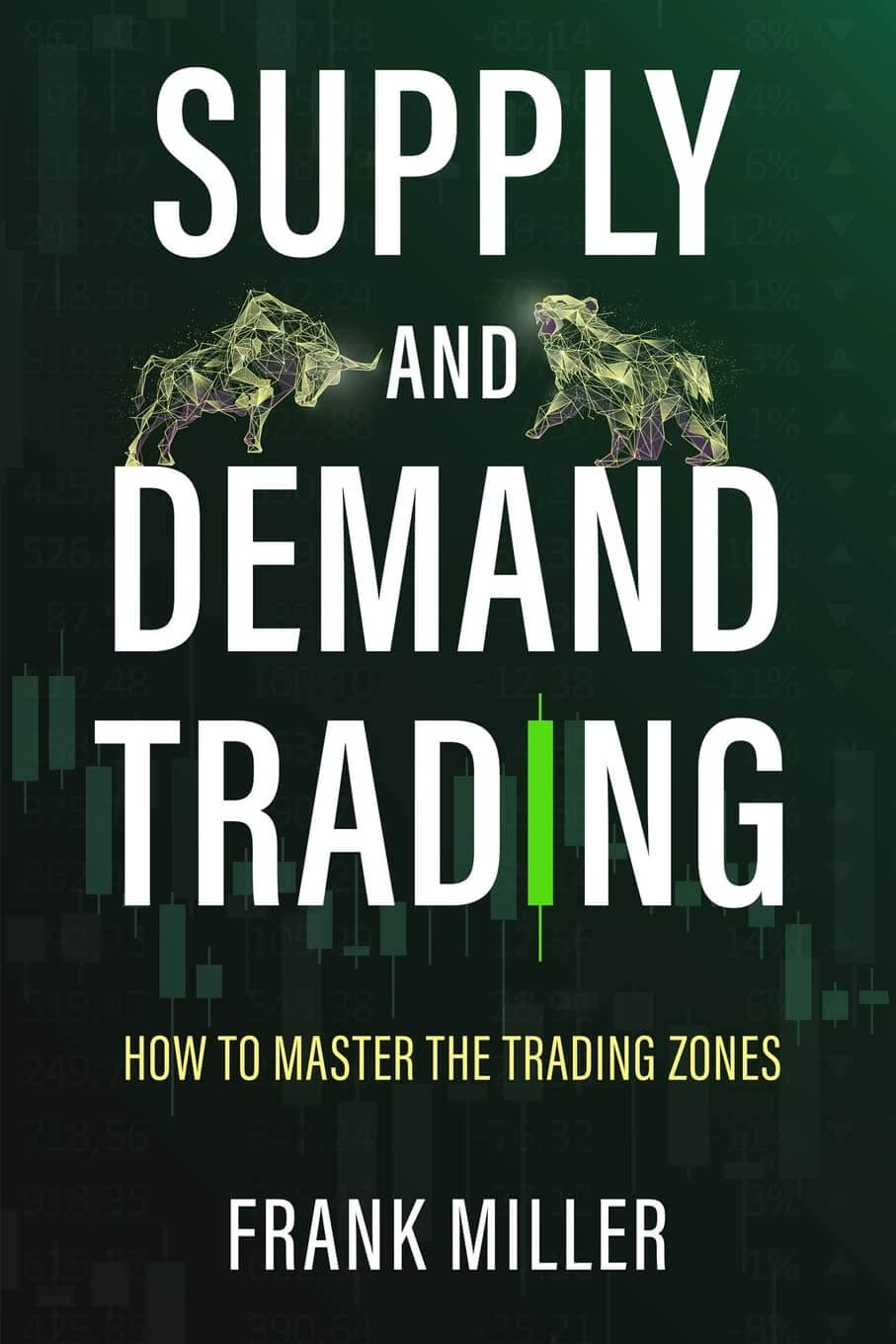
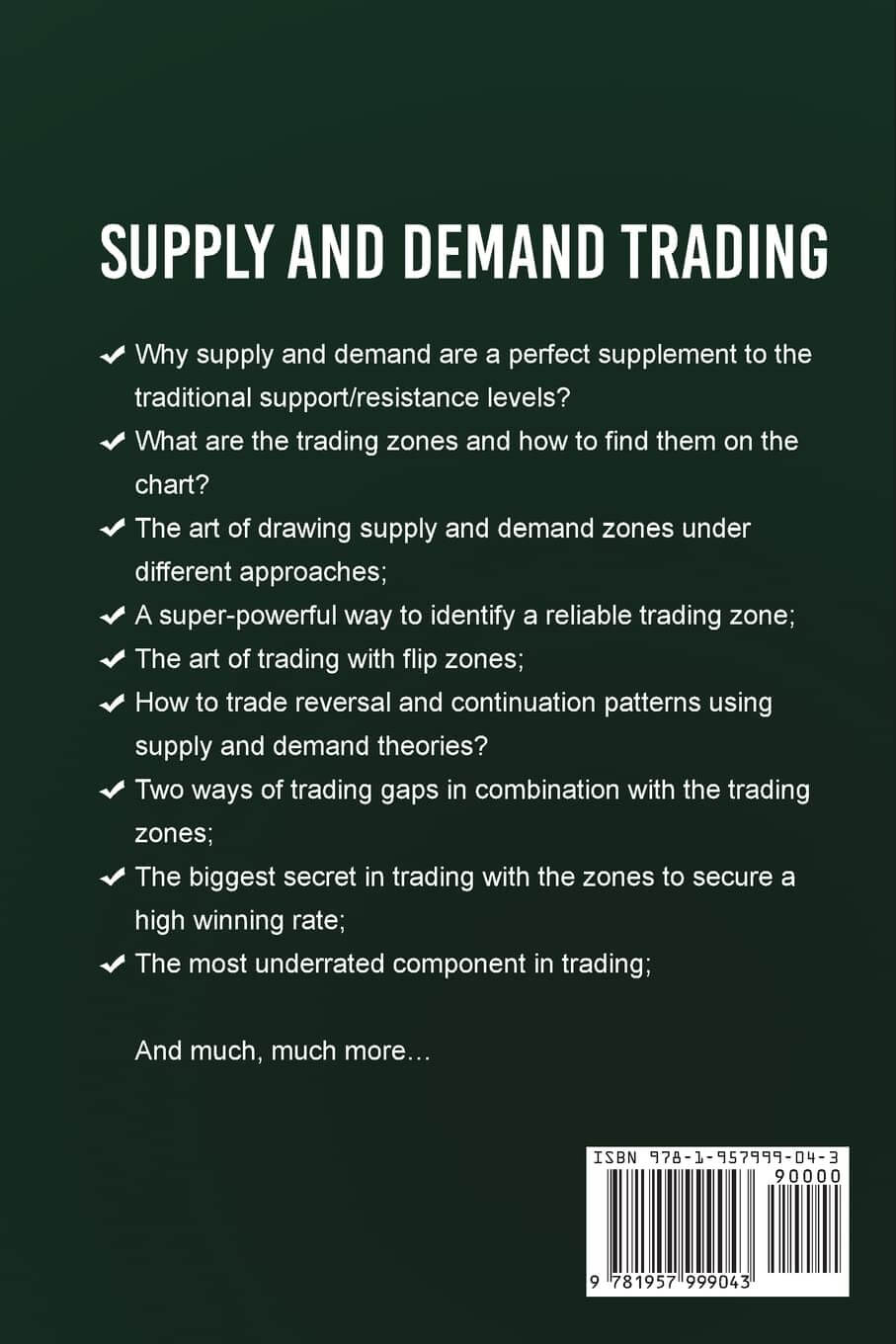
Supply And Demand Trading by Frank Miller

Original price was: රු2,800.00.රු1,700.00Current price is: රු1,700.00.
3 X Rs. 566.67 or 8% Cashback with


or 3 X රු566.67 with


or up to 4 X රු425.00 with


One of the most severe pitfalls among traders is the failure to determine which setups to give a go and which one to avoid. There are only a handful of worthwhile market signals out there for traders to consider. These setups are located in the trading zones where the Big Players pay attention to, and there are true trade opportunities.
Out of stock
Email when stock available
Supply and Demand Trading by Frank Miller
Supply and Demand Trading by Frank Miller is a practical trading guide focused on understanding how price reacts around important supply and demand zones.
Instead of relying only on indicators, the book encourages traders to study where strong buying and selling pressure may appear.
It combines price action, market structure, candlestick behaviour, support and resistance, trading zones, and practical chart analysis.
The goal is to help traders identify higher-quality setups and avoid entering the market randomly.
About Supply and Demand Trading
Supply and Demand Trading is built around a simple market idea.
Price moves because buyers and sellers are constantly competing.
When demand becomes stronger than supply, price can rise.
When supply becomes stronger than demand, price can fall.
The challenge is identifying the areas where those imbalances are most likely to matter.
Frank Miller refers to these areas as trading zones.
What Are Supply and Demand Zones?
A demand zone is an area where strong buying previously entered the market.
A supply zone is an area where strong selling previously appeared.
Traders study these regions because price may react when it returns to them.
A zone is not a guaranteed turning point.
It is an area where traders may look for additional confirmation.
That distinction is important.
7 Powerful Lessons from Supply and Demand Trading
1. Price Action Matters
One of the main ideas in Supply and Demand Trading is to pay attention to price itself.
Indicators can be useful.
But they are usually calculated from past price data.
Price action allows traders to study what buyers and sellers are doing directly on the chart.
This can include candles, swing highs, swing lows, breakouts, and reversals.
2. Supply and Demand Can Complement Support and Resistance
Traditional support and resistance levels are widely used by traders.
Supply and demand zones offer a related approach.
Instead of focusing only on one exact price, traders examine broader areas where buying or selling pressure previously became strong.
This can provide more flexibility when analysing charts.
3. Not Every Zone Is Equal
Some supply and demand areas are stronger than others.
A zone may become more interesting if price moved away from it aggressively.
Fresh zones may also receive more attention than areas that price has already tested many times.
The book encourages traders to evaluate zone quality rather than drawing every possible area.
4. Candlestick Patterns Can Add Confirmation
Supply and Demand Trading also explains how candlestick behaviour can be combined with trading zones.
A zone alone does not necessarily mean a trade should be entered.
Traders may wait for signs of rejection or reversal.
Candlestick patterns can provide another layer of information.
This may help reduce impulsive entries.
5. Reversal and Continuation Setups Are Different
Markets do not always reverse.
Sometimes price reaches an area and continues in the same direction.
Understanding the difference between reversal and continuation behaviour is important.
The book discusses ways supply and demand concepts can be used in both situations.
6. Gaps Can Reveal Market Imbalance
Price gaps can sometimes indicate a strong imbalance between buyers and sellers.
The book explores how gaps can be analysed together with supply and demand zones.
A gap may highlight an area where price moved rapidly because one side of the market had much greater pressure.
These areas can become useful points of interest later.
7. Discipline Is Essential
No trading zone works every time.
That means traders need discipline.
A strong setup can still fail.
Risk management should therefore remain part of every trading plan.
The purpose of analysis is to improve decision quality, not to create certainty.
Identifying Trading Zones
One of the practical parts of Supply and Demand Trading is learning how to identify zones on a chart.
A trader may look for areas where price paused briefly before making a strong move.
That movement can suggest an imbalance.
The stronger the departure from the zone, the more attention traders may give it.
However, context still matters.
Trend direction, market structure, volatility, and previous price behaviour can all influence the setup.
Fresh Zones and Tested Zones
A fresh zone is an area that price has not revisited since the original move.
Some traders prefer fresh zones because the original imbalance may still exist.
Repeatedly tested zones may weaken.
Each revisit can potentially consume some of the remaining buying or selling interest.
This is one reason zone history matters.
Support, Resistance, and Supply-Demand Analysis
Support and resistance often use previous highs, lows, or repeated turning points.
Supply and demand trading usually focuses more on the origin of strong price movements.
The two methods can complement each other.
A strong supply zone near resistance may attract additional attention.
A demand zone near an important support area may also be more significant.
The goal is not to use as many tools as possible.
The goal is to find meaningful agreement between different forms of analysis.
Candlestick Confirmation
Candlestick patterns can provide useful context near a zone.
For example, strong rejection may indicate that one side of the market is responding.
A large reversal candle may suggest momentum has changed.
However, patterns should not be treated as guarantees.
They work best when combined with broader market context.
This includes trend, structure, nearby levels, and risk-reward.
Reversal Trading
A reversal setup attempts to identify where an existing move may change direction.
Supply zones can become interesting during an upward move.
Demand zones can become interesting during a decline.
But entering too early can be dangerous.
Traders may wait for evidence that momentum is actually changing.
Confirmation can reduce some uncertainty.
Continuation Trading
Supply and demand concepts can also support continuation strategies.
In a strong uptrend, traders may look for pullbacks into demand.
In a strong downtrend, they may look for rallies into supply.
This approach attempts to trade in the direction of the larger move.
Trend context therefore becomes important.
A zone that works well in one market condition may behave differently in another.
Flip Zones
The book also discusses flip zones.
A previous support area can sometimes become resistance after price breaks below it.
Likewise, previous resistance can sometimes become support after a breakout.
This behaviour reflects changing market expectations.
Recognizing these shifts can help traders understand how price structure evolves.
Trading Gaps
Gaps often attract attention because they show rapid price movement.
They may occur after news, earnings, or sudden changes in market sentiment.
The book explains ways traders can combine gap analysis with supply and demand areas.
Again, no gap guarantees a future reaction.
The goal is to use it as another piece of evidence.
Risk Management Still Matters
Supply and Demand Trading should not be interpreted as a guarantee of profitable trades.
Every setup can fail.
Markets can move unpredictably.
News can quickly change sentiment.
That is why risk management remains essential.
Traders should consider position size, stop-loss placement, and risk-reward before entering.
Protecting capital is just as important as identifying opportunities.
Avoid Overtrading
One of the biggest problems among active traders is taking too many setups.
Not every market movement deserves a trade.
The book emphasizes identifying stronger trading zones.
Waiting for better-quality setups can be more effective than reacting to every candle.
Patience is a trading skill.
Sometimes the correct decision is to do nothing.
Build a Trading Plan
A trading plan can include several questions.
Where is the supply or demand zone?
What is the current trend?
Has the zone already been tested?
Is there confirmation?
Where should the stop-loss go?
What is the potential reward relative to the risk?
Answering these questions before entering can reduce emotional decisions.
Keep a Trading Journal
A journal can help traders improve over time.
Record the setup.
Record the entry and exit.
Record why the trade was taken.
After enough trades, patterns may appear.
Some setups may perform better than others.
Mistakes may also become easier to recognize.
Who Should Read This Book?
Supply and Demand Trading is suitable for readers interested in technical analysis and price action.
Beginners can use it to learn basic supply and demand concepts.
Intermediate traders may find its discussion of zone quality and chart setups useful.
It may also appeal to traders interested in forex, stocks, commodities, futures, or other chart-based markets.
Readers should remember that trading involves financial risk.
Education can improve understanding, but it cannot eliminate losses.
About Frank Miller
Frank Miller writes about technical trading concepts and price action.
In this book, his focus is on understanding where meaningful buying and selling pressure may appear.
The approach combines supply-demand analysis with candlestick patterns, support and resistance, reversals, continuation setups, and gaps.
Readers can learn more through the Google Books listing for Supply and Demand Trading.
Product Details
Title: Supply and Demand Trading
Subtitle: How to Master the Trading Zones
Author: Frank Miller
Genre: Finance / Trading / Technical Analysis
Language: English
Publication Year: 2022
Publisher: Driven Trader / Big Reason LLC editions listed
ISBN-13: 9781957999050
Pages: 150
Some editions are also catalogued under ISBN 9781957999098.
Always check the ISBN printed on your physical copy before entering final WooCommerce specifications.
Explore More Trading and Finance Books
Supply and Demand Trading gives readers a structured way to think about price movement.
It focuses on identifying where buyers and sellers may become especially active.
Trading zones can help organize chart analysis.
Candlestick behaviour can provide additional confirmation.
Risk management helps control the downside when a setup fails.
Readers interested in trading, investing, technical analysis, and financial markets can explore more Business, Finance & Economics Books at Bargain Books.
For readers who want to understand supply and demand zones more clearly, Supply and Demand Trading provides a practical introduction to this popular price-action approach.
| Author | Frank Miller |
|---|---|
| Type | Paperback Printed Book |
| ISBN/ISSN | 1957999047, 978-1957999043 |
| Language | English |
| Pages | 150 |
Be the first to review “Supply And Demand Trading by Frank Miller”
Related products
Out of stock
Analysis & Strategy
රු1,650.00
3 X Rs. 550.00 or 8% Cashback with
or 3 X රු550.00 with
or up to 4 X රු412.50 with

Damaged & Imperfect Books
රු1,200.00
3 X Rs. 400.00 or 8% Cashback with
or 3 X රු400.00 with
or up to 4 X රු300.00 with

Out of stock
රු3,900.00
3 X Rs. 1,300.00 or 8% Cashback with
or 3 X රු1,300.00 with
or up to 4 X රු975.00 with

Out of stock
Damaged & Imperfect Books
රු550.00
3 X Rs. 183.33 or 8% Cashback with
or 3 X රු183.33 with
or up to 4 X රු137.50 with
-46%

Analysis & Strategy
Original price was: රු2,950.00.රු1,600.00Current price is: රු1,600.00.
3 X Rs. 533.33 or 8% Cashback with
or 3 X රු533.33 with
or up to 4 X රු400.00 with

Damaged & Imperfect Books
රු800.00
3 X Rs. 266.67 or 8% Cashback with
or 3 X රු266.67 with
or up to 4 X රු200.00 with

Out of stock
Analysis & Strategy
රු1,750.00
3 X Rs. 583.33 or 8% Cashback with
or 3 X රු583.33 with
or up to 4 X රු437.50 with

Damaged & Imperfect Books
රු1,200.00
3 X Rs. 400.00 or 8% Cashback with
or 3 X රු400.00 with
or up to 4 X රු300.00 with
Reviews
There are no reviews yet.