
No products in the cart.
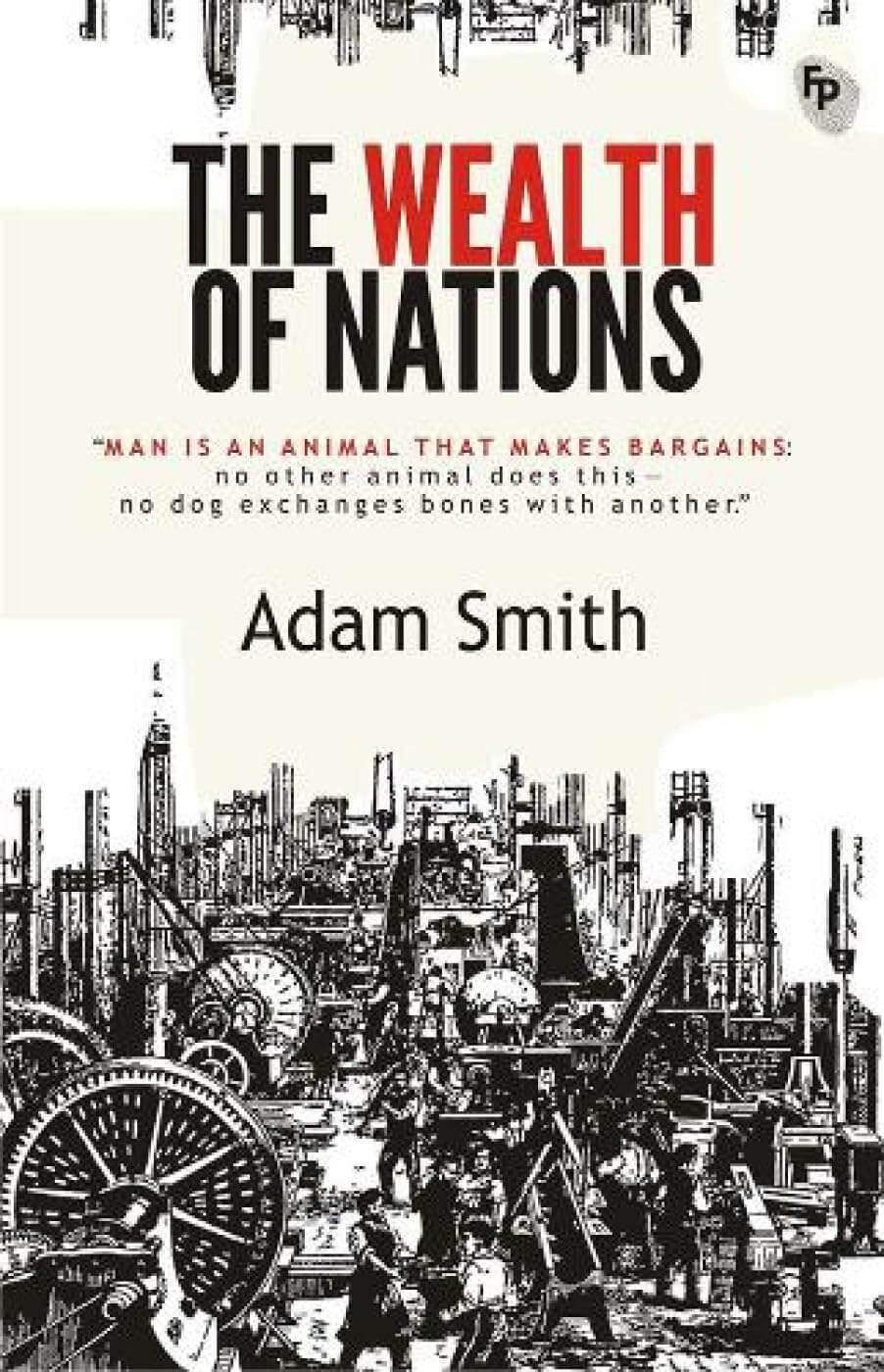
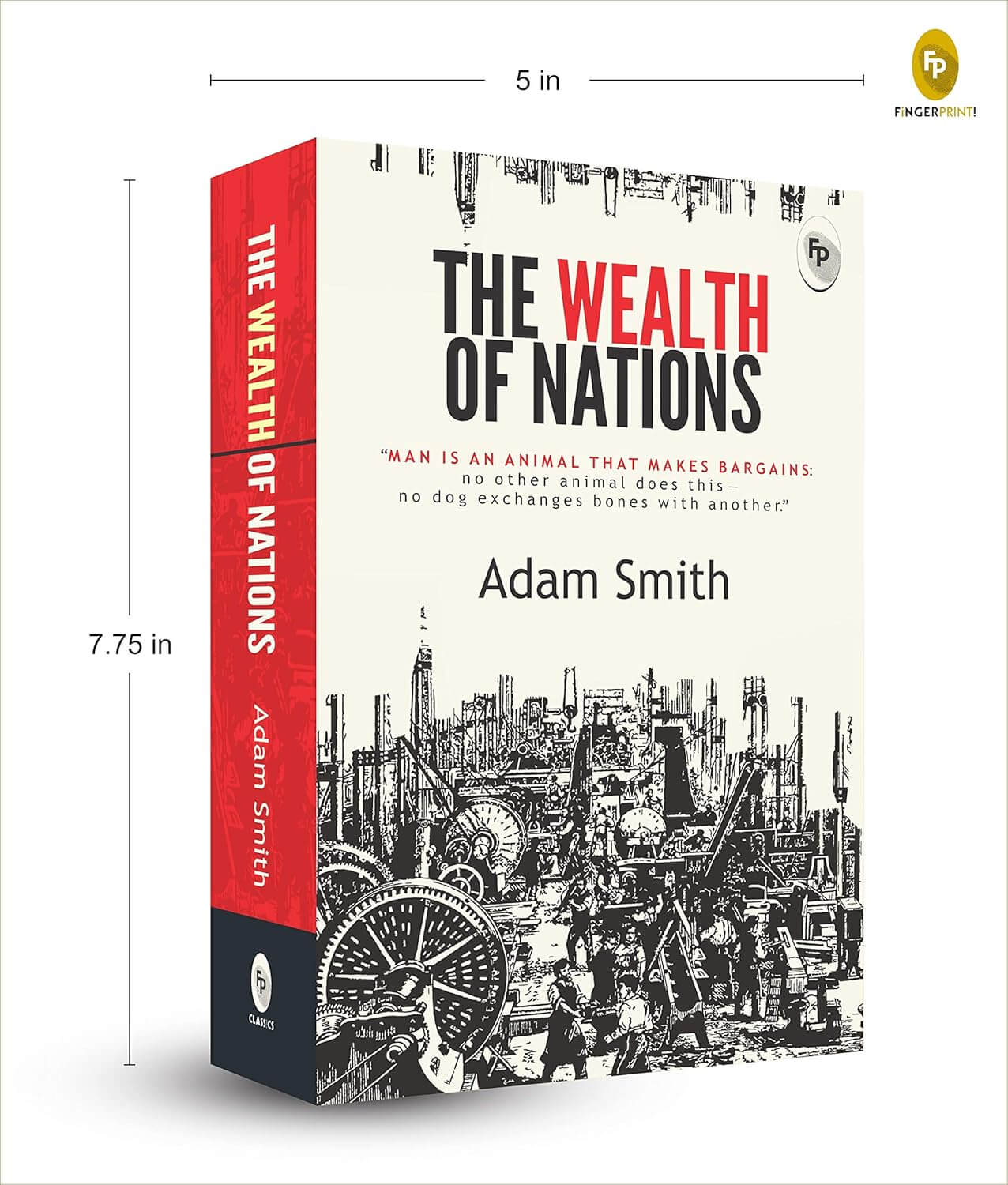
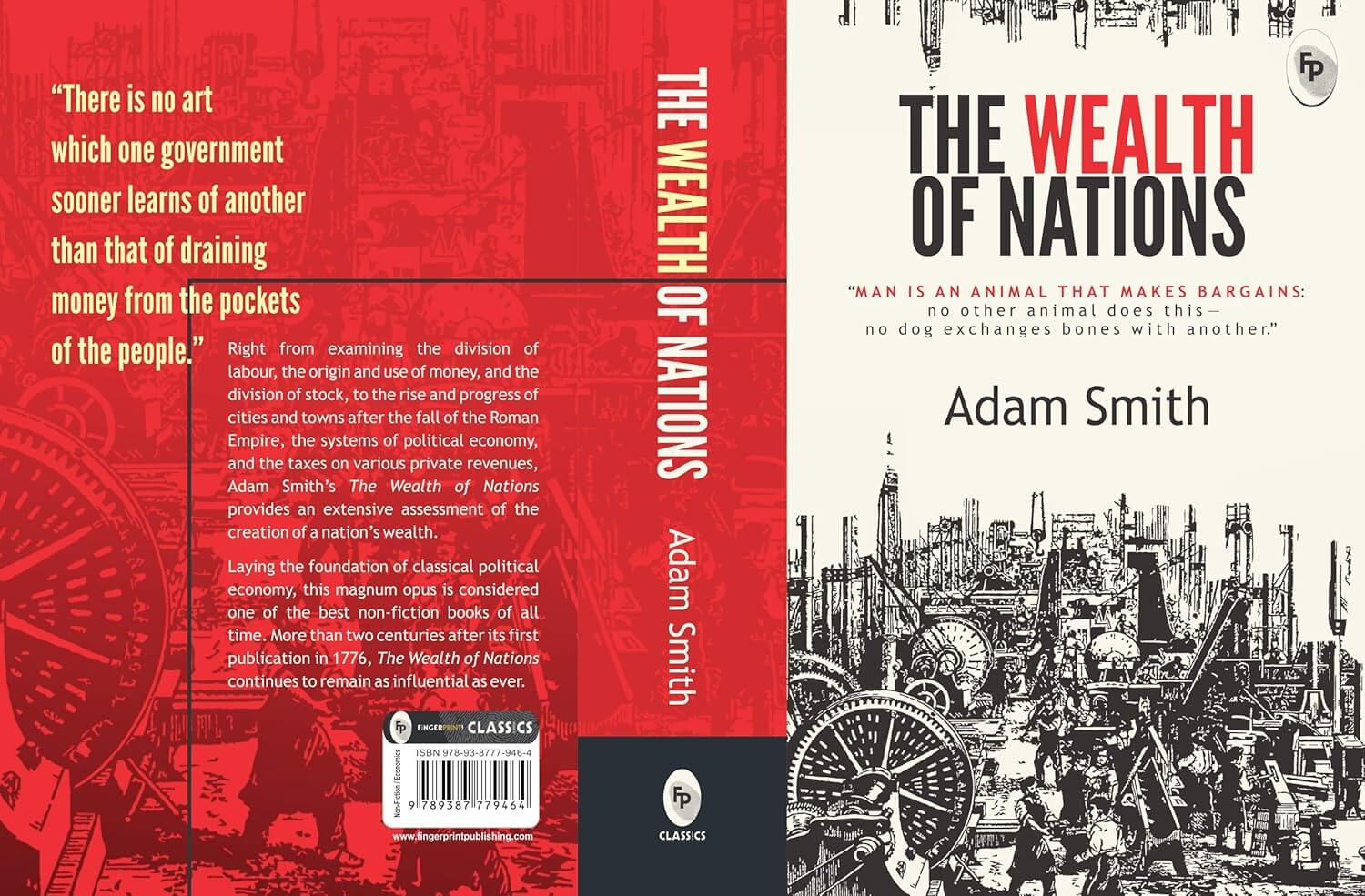
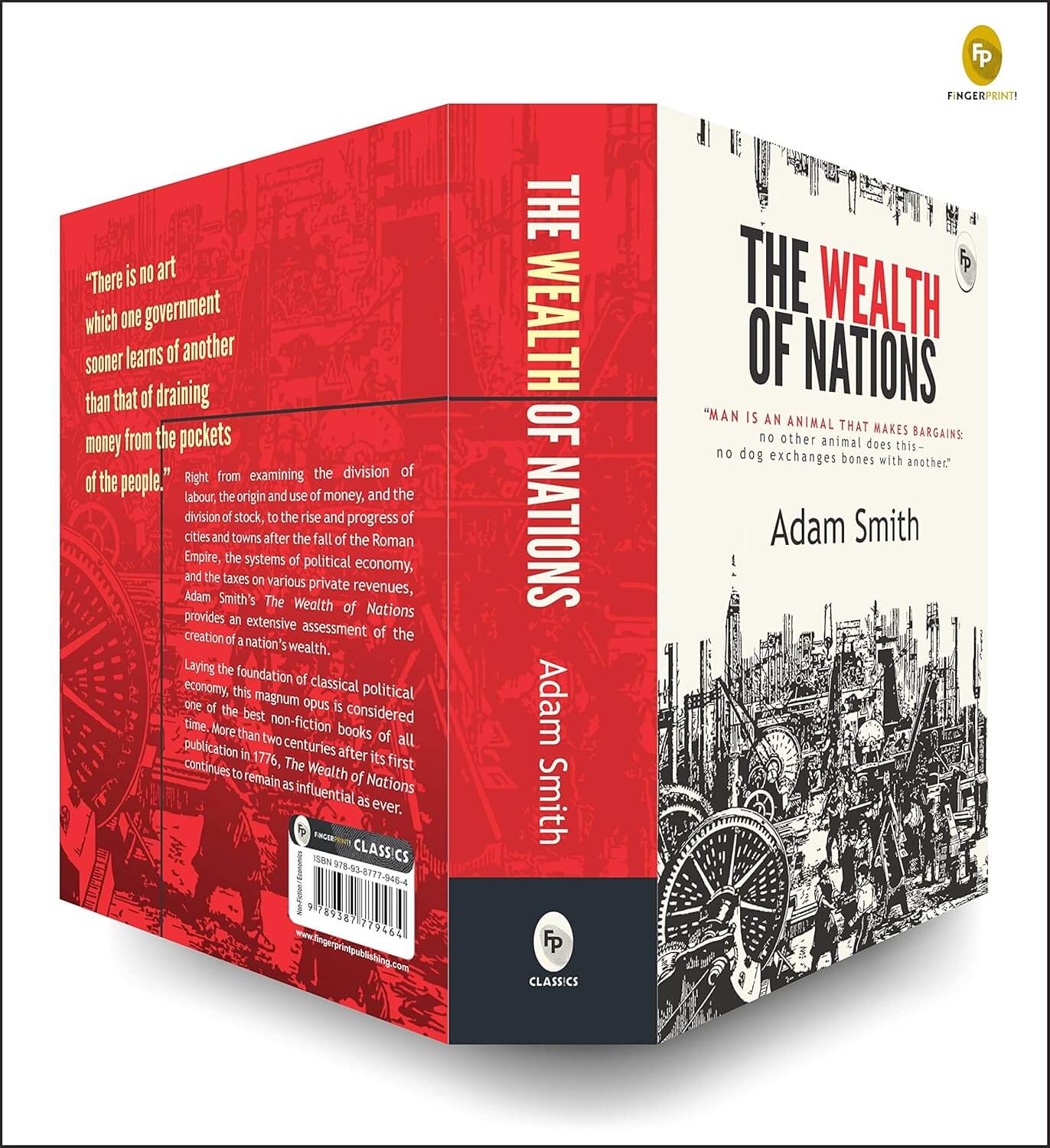
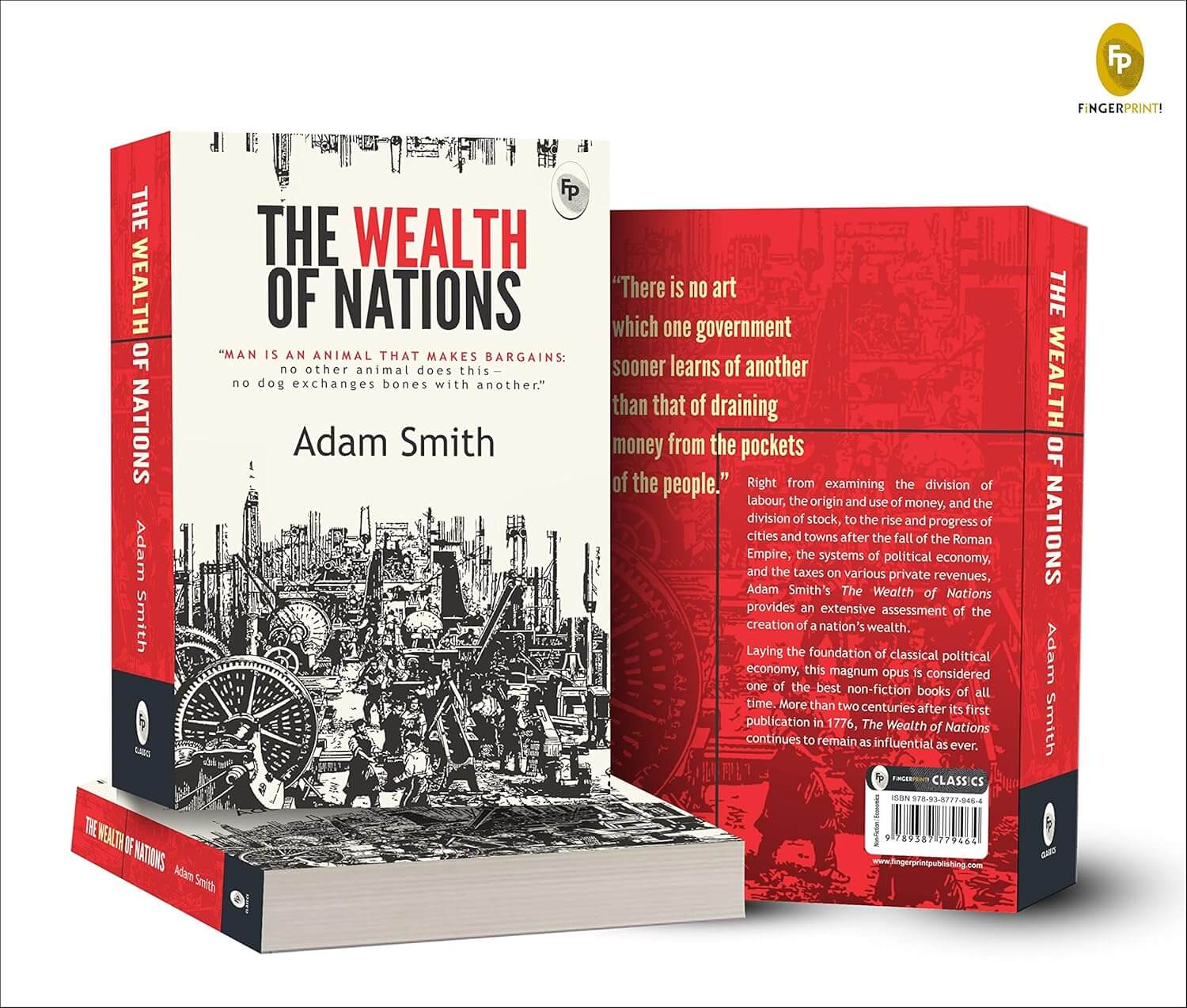
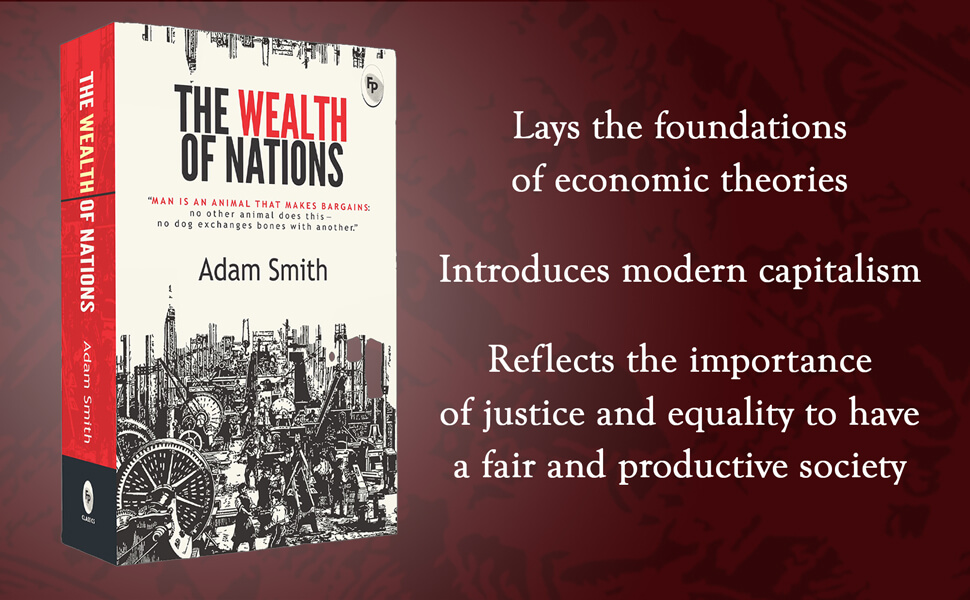








The Wealth of Nations by Adam Smith


රු3,900.00
3 X Rs. 1,300.00 or 8% Cashback with


or 3 X රු1,300.00 with


or up to 4 X රු975.00 with


“The Wealth of Nations” by Adam Smith, first published in 1776, is a foundational work in classical economics. This seminal book explores the nature and causes of the wealth of nations, introducing key concepts such as the division of labor, free markets, and the “invisible hand” that guides economic prosperity. Essential reading for anyone interested in economics, history, and political theory, this classic remains profoundly influential today.
Out of stock
Email when stock available
The Wealth of Nations by Adam Smith
The Wealth of Nations by Adam Smith is one of the most influential works in the history of economics.
First published in 1776, the book examines how societies create wealth, why specialization increases productivity, how markets coordinate economic activity, how wages and prices develop, and what role governments should play in an economy.
Its full original title is An Inquiry into the Nature and Causes of the Wealth of Nations.
More than two centuries later, the book remains essential reading for students of economics, business, history, political philosophy, and public policy.
About The Wealth of Nations
The Wealth of Nations attempts to answer a fundamental question.
Why do some societies become wealthier than others?
Adam Smith examines labor.
Production.
Trade.
Prices.
Money.
Capital.
Taxation.
Government.
And international commerce.
Rather than treating wealth simply as gold or accumulated money, Smith focuses heavily on a society’s productive capacity.
That approach helped shape later economic thinking.
7 Powerful Ideas from The Wealth of Nations
1. Division of Labour Increases Productivity
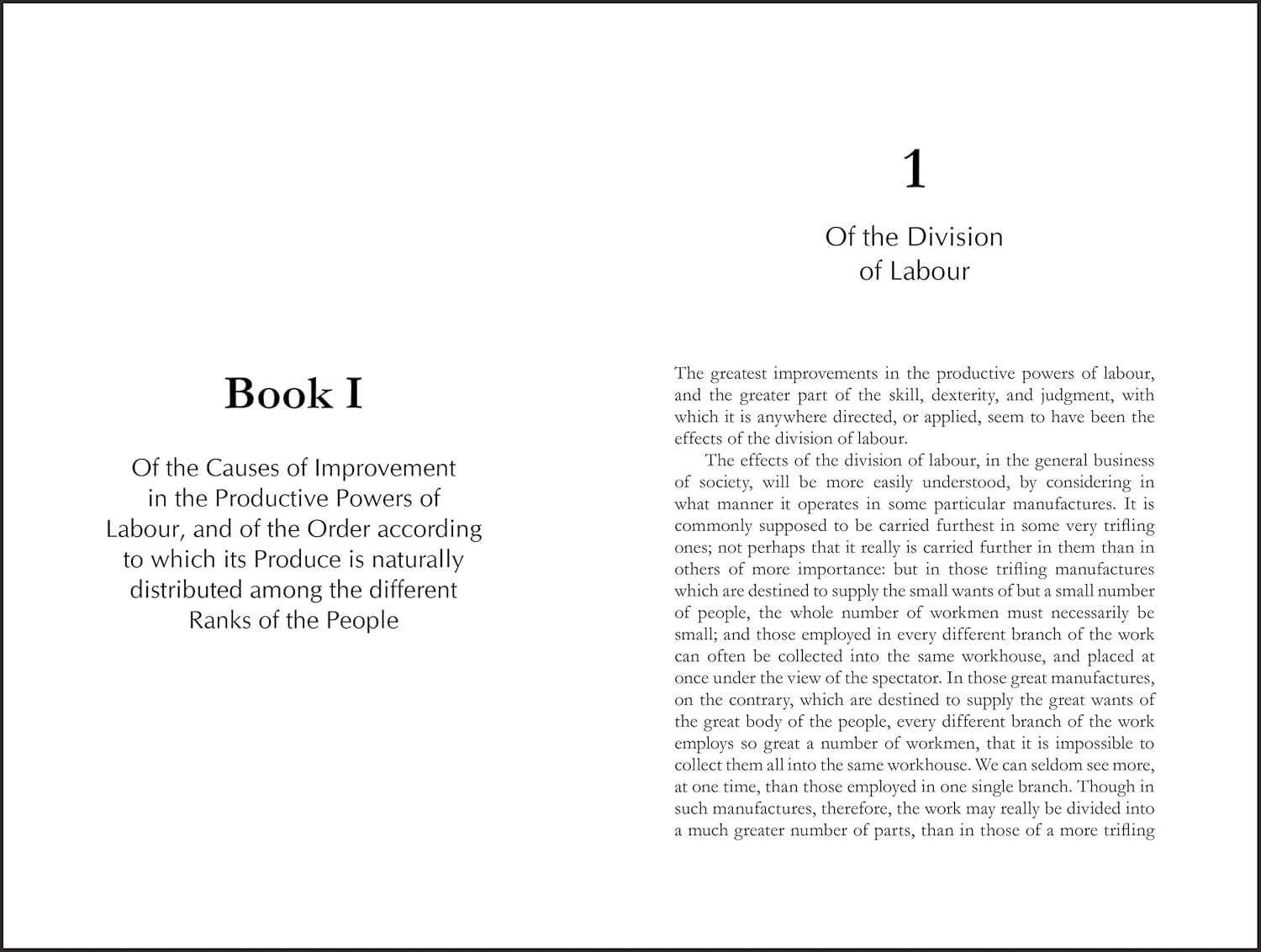
One of the most famous ideas in The Wealth of Nations is the division of labour.
Smith uses the example of pin manufacturing.
If one worker tries to complete every stage alone, production is limited.
If workers specialize in separate tasks, output can increase dramatically.
Specialization allows people to improve at specific activities.
It can reduce the time lost switching between tasks.
It may also encourage technological improvements.
This idea remains central to modern manufacturing and business operations.
2. Exchange Encourages Specialization
Specialization works because people can trade.
A baker does not need to manufacture shoes.
A shoemaker does not need to grow all their own food.
Each person can focus on particular skills and exchange the results.
Smith saw exchange as an important part of economic coordination.
Markets allow specialized producers and consumers to connect.
3. Self-Interest Can Coordinate Economic Activity
Adam Smith is often associated with the idea of the “invisible hand.”
The basic concept is that people pursuing their own economic interests can sometimes produce wider social benefits without deliberately intending to do so.
A shopkeeper wants to earn income.
To do that, the shopkeeper has to offer something customers value.
A producer seeking profit must consider demand.
However, Smith did not argue that every act of self-interest automatically creates good outcomes.
His broader work also discusses justice, institutions, moral behavior, and limits on private power.
4. Competition Matters
Competition plays an important role in The Wealth of Nations.
When several businesses compete for customers, they have incentives to improve products, reduce unnecessary costs, and offer attractive prices.
Smith was also suspicious of arrangements that allowed producers or merchants to restrict competition.
He frequently criticized monopolies and special privileges.
Markets, in his framework, work differently when power becomes concentrated.
5. Free Trade Can Increase Prosperity
Smith criticized many mercantilist policies of his time.
Mercantilism often treated international trade as a competition in which one country could gain only when another lost.
Smith argued that voluntary trade can benefit both sides when countries and individuals specialize and exchange.
This helped shape later arguments for freer international commerce.
6. Government Still Has Important Responsibilities
The Wealth of Nations is sometimes described as simply arguing for minimal government.
The actual book is more complex.
Smith identifies important public functions.
These include national defense.
Justice.
Public infrastructure.
And certain forms of education and public works that private actors may not provide adequately.
His argument is not that government should do nothing.
It is that government intervention should be examined carefully.
7. Institutions Influence Prosperity
Markets do not exist independently of institutions.
Property rules matter.
Contracts matter.
Justice matters.
Political stability matters.
Tax systems matter.
The book repeatedly shows that the structure of society affects economic activity.
This remains an important idea in modern economics.
The Famous Pin Factory Example
The pin factory is perhaps the most famous illustration in The Wealth of Nations.
Smith describes pin production being divided into multiple specialized operations.
One worker draws out wire.
Another straightens it.
Another cuts it.
Another sharpens it.
By dividing the process, workers can produce far more pins collectively than if each worker tried to make complete pins alone.
The lesson goes beyond manufacturing.
Modern companies still divide complex work among specialists.
What Is Wealth?
During Smith’s time, national wealth was often associated with stores of gold and silver.
Smith challenged this view.
He emphasized productive activity.
A wealthy society is able to produce goods and services efficiently.
This shifts attention from simply accumulating money toward understanding production.
Productivity
Productivity is central to Smith’s analysis.
A country can become richer when workers produce more value from the resources available to them.
Specialization can increase productivity.
Tools can increase productivity.
Education and skills can increase productivity.
Capital investment can increase productivity.
These ideas remain fundamental in modern economic growth theory.
Prices
Smith distinguishes between different ideas of value and price.
Market prices can change because of supply and demand.
If something becomes scarce while demand remains high, prices may rise.
If supply becomes abundant, prices may fall.
Although modern economics has developed much more detailed theories, Smith’s discussion helped establish important foundations.
Wages
The Wealth of Nations also examines wages.
Smith discusses bargaining between workers and employers.
He recognizes that employers and workers may not always have equal negotiating power.
He also examines how economic growth can affect labor demand and living standards.
These discussions make the book broader than a simple defense of business owners.
Profit
Profit provides an incentive for investment.
People may risk capital because they expect a return.
But Smith also examines conflicts between different economic groups.
The interests of workers, business owners, landlords, and consumers do not always align.
Understanding those competing interests is part of his economic analysis.
Rent and Land
Landowners receive rent from property.
Smith examines how rent differs from wages and profits.
This becomes part of his broader attempt to explain how national income is distributed among different groups.
These ideas later influenced classical economists such as David Ricardo.
Capital Accumulation
Businesses need capital.
Tools.
Buildings.
Materials.
Inventory.
Investment.
When societies save and invest resources productively, productive capacity can grow.
Smith examines how accumulating capital can support greater specialization and economic expansion.
The Invisible Hand
The “invisible hand” has become one of the most famous phrases associated with Adam Smith.
It is often used to describe decentralized market coordination.
No single person has to plan every transaction.
Prices and incentives can help coordinate millions of decisions.
However, the phrase should not be interpreted as claiming markets are always perfect.
Smith also wrote about monopolies, public goods, taxation, justice, and institutional problems.
Competition and Monopoly
Smith strongly criticized monopoly privileges.
When businesses are protected from competition, consumers may face higher prices or fewer choices.
Producers may also have less incentive to improve.
His concern about concentrated economic power remains relevant to modern debates about competition policy.
International Trade
Smith opposed many restrictions associated with mercantilism.
He argued that countries can gain through exchange.
If another country can provide a product more efficiently, importing it may allow domestic resources to be used elsewhere.
Later economists developed these ideas further.
David Ricardo, for example, later formalized the concept of comparative advantage.
Government and Defense
Smith considered national defense a fundamental responsibility of government.
A society needs protection from external threats.
This is one example of a service that cannot easily be provided through ordinary private market transactions alone.
Justice
Justice is another central government responsibility in Smith’s framework.
Markets require rules.
Contracts must be enforceable.
Property must be protected.
People need mechanisms to resolve disputes.
Without functioning legal institutions, economic exchange becomes more difficult.
Infrastructure
Smith also discusses public works.
Roads.
Bridges.
Transport infrastructure.
Institutions that support commerce.
Some projects create broad benefits but may not generate enough direct private profit for businesses to provide them efficiently.
Government may therefore have a role.
Education
Smith was concerned about the effects of repetitive specialized work.
While specialization improves productivity, extremely repetitive jobs can limit intellectual development.
He therefore supported forms of education that could help ordinary workers develop broader capabilities.
This is an important qualification to his praise of division of labour.
Taxation
Smith developed several influential principles of taxation.
Taxes should be understandable.
Predictable.
Convenient to pay.
And designed in ways that avoid unnecessary economic costs.
His discussion of taxation influenced later public-finance theory.
Economic Freedom
Economic freedom is an important theme in The Wealth of Nations.
Smith criticized government-created privileges that protected particular merchants or industries.
He generally favored allowing individuals to enter trades and exchange goods more freely.
But economic freedom in his work exists alongside justice and public institutions.
Adam Smith and Capitalism
Adam Smith is frequently called a founder of modern economics.
He is also strongly associated with capitalism.
However, the economic system of his time was very different from modern global capitalism.
Reading the book directly helps reveal a more nuanced thinker than many simplified summaries suggest.
Historical Importance
The Wealth of Nations was published during the Enlightenment.
Industrial production was changing.
International trade was expanding.
European governments were debating commerce, taxation, and empire.
Smith’s work became one of the most influential contributions to these debates.
Its influence continued through later generations of economists and policymakers.
Is The Wealth of Nations Still Relevant?
Many details reflect the eighteenth century.
Modern economics has developed far beyond Smith’s original theories.
Yet several fundamental questions remain familiar.
Why does productivity matter?
What encourages economic growth?
What happens when markets become concentrated?
When should governments intervene?
How should taxes be designed?
What makes international trade beneficial or harmful?
These are still major economic questions.
Who Should Read This Book?
The Wealth of Nations is ideal for readers interested in economics, business, history, politics, philosophy, public policy, and the origins of modern market theory.
Economics students may appreciate seeing foundational arguments in their original form.
Business readers can learn about productivity, specialization, competition, and incentives.
History readers can explore how eighteenth-century thinkers understood commerce and government.
Readers should remember that this is a historical work.
It is best read alongside modern economic research and competing perspectives rather than treated as a complete guide to contemporary economics.
About Adam Smith
Adam Smith was a Scottish philosopher and economist born in 1723.
He became one of the leading figures of the Scottish Enlightenment.
His major works include The Theory of Moral Sentiments and The Wealth of Nations.
Smith examined morality, social institutions, markets, trade, economic growth, and the relationship between individuals and society.
Readers can learn more about available editions through the official Penguin Random House page for The Wealth of Nations.
Product Details
Title: The Wealth of Nations
Original Full Title: An Inquiry into the Nature and Causes of the Wealth of Nations
Author: Adam Smith
Genre: Economics / Political Economy / Philosophy / Classic Non-Fiction
Language: English
Original Publication: 1776
Major Themes: Division of Labour, Productivity, Competition, Trade, Prices, Wages, Capital, Taxation, Government
Common Modern Library Paperback Edition
Publisher: Modern Library
ISBN-13: 9780679783367
Format: Paperback
Pages: 1,184
Publication Date: November 14, 2000
This edition includes an introduction by Robert B. Reich and commentary by R. H. Campbell and A. S. Skinner.
Penguin Classics Edition
Another widely available edition is published by Penguin Classics.
ISBN-13: 9780140436150
Format: Paperback
Pages: 672
Publication Date: March 1, 2000
This Penguin edition contains Books IV and V, so always check your edition carefully if you need the complete text.
Different publishers issue complete, abridged, selected, and multi-volume versions of The Wealth of Nations.
Page counts can therefore vary dramatically.
Always check the ISBN and contents of your physical copy before entering final WooCommerce specifications.
Explore More Economics and Business Books
The Wealth of Nations helped establish many questions that still define economics today.
Why does specialization increase output?
How do prices coordinate activity?
Why does competition matter?
What role should government play?
How does international trade create value?
More than two centuries after publication, Adam Smith’s work remains an important starting point for understanding the history of economic thought.
Readers looking for more economics and finance titles can explore Business, Finance & Economics Books at Bargain Books.
You can also explore Non-Fiction & Knowledge Books at Bargain Books.
For readers interested in economics, free markets, trade, productivity, public policy, and the intellectual foundations of modern economic thought, The Wealth of Nations remains a landmark classic.
| Author | Adam Smith |
|---|---|
| Type | Paperback Brand new Printed (Indian Locally published) |
| ISBN/ISSN | 9387779467 |
| Language | English |
| Pages | 1144 |
Be the first to review “The Wealth of Nations by Adam Smith”
Related products

Out of stock
Non-Fiction & Knowledge
රු1,800.00
3 X Rs. 600.00 or 8% Cashback with
or 3 X රු600.00 with
or up to 4 X රු450.00 with
-19%

Out of stock
Biography
Original price was: රු2,400.00.රු1,950.00Current price is: රු1,950.00.
3 X Rs. 650.00 or 8% Cashback with
or 3 X රු650.00 with
or up to 4 X රු487.50 with
-19%

Out of stock
Non-Fiction & Knowledge
Original price was: රු2,650.00.රු2,150.00Current price is: රු2,150.00.
3 X Rs. 716.67 or 8% Cashback with
or 3 X රු716.67 with
or up to 4 X රු537.50 with
-24%

Out of stock
Non-Fiction & Knowledge
Original price was: රු2,100.00.රු1,600.00Current price is: රු1,600.00.
3 X Rs. 533.33 or 8% Cashback with
or 3 X රු533.33 with
or up to 4 X රු400.00 with
-24%

Out of stock
Non-Fiction & Knowledge
Original price was: රු2,100.00.රු1,600.00Current price is: රු1,600.00.
3 X Rs. 533.33 or 8% Cashback with
or 3 X රු533.33 with
or up to 4 X රු400.00 with
-34%

Self-Help & Psychology
Original price was: රු2,350.00.රු1,550.00Current price is: රු1,550.00.
3 X Rs. 516.67 or 8% Cashback with
or 3 X රු516.67 with
or up to 4 X රු387.50 with
-17%

Out of stock
Non-Fiction & Knowledge
Original price was: රු2,900.00.රු2,400.00Current price is: රු2,400.00.
3 X Rs. 800.00 or 8% Cashback with
or 3 X රු800.00 with
or up to 4 X රු600.00 with

Non-Fiction & Knowledge
රු1,700.00
3 X Rs. 566.67 or 8% Cashback with
or 3 X රු566.67 with
or up to 4 X රු425.00 with
Reviews
There are no reviews yet.