
No products in the cart.
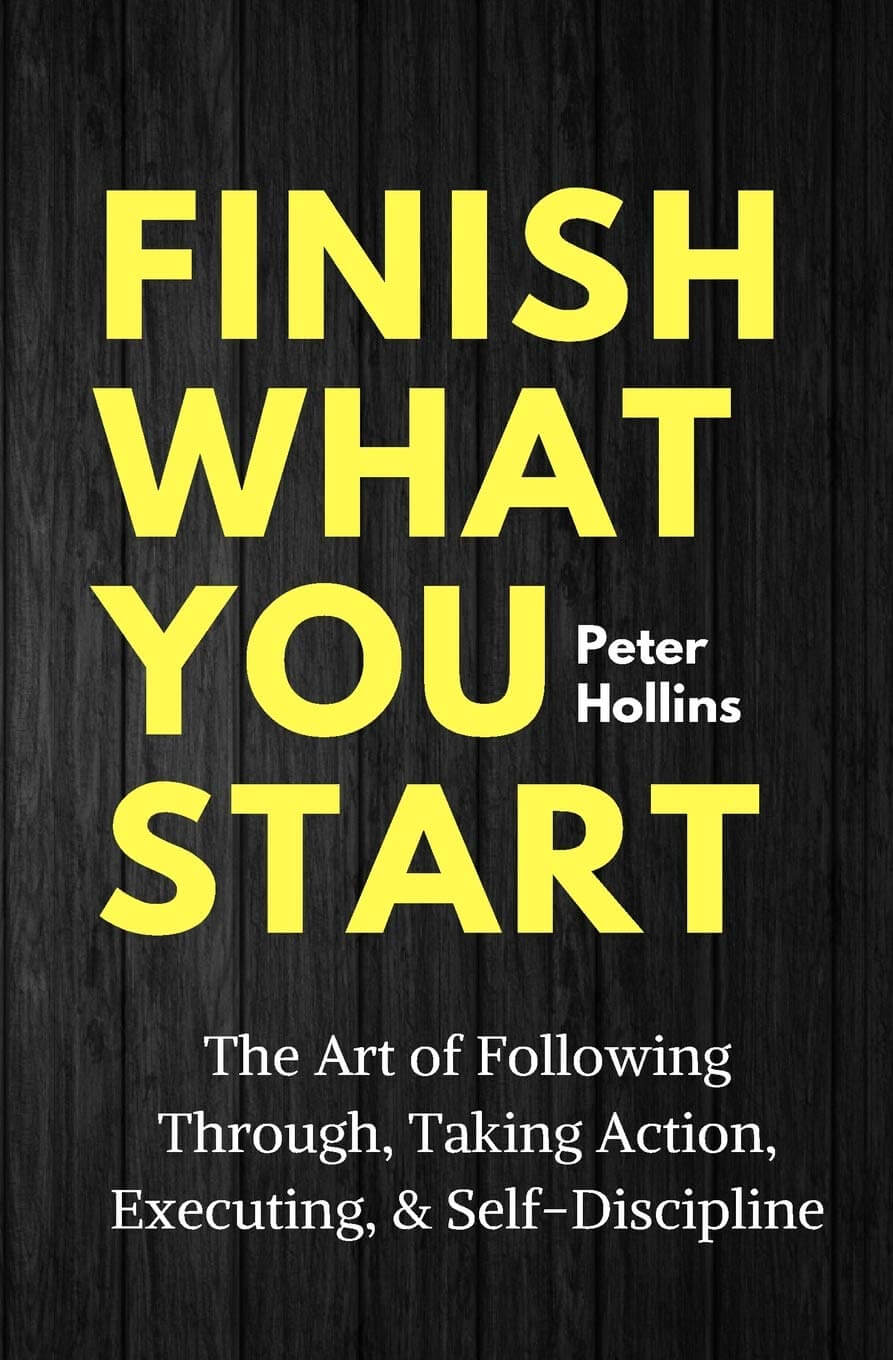
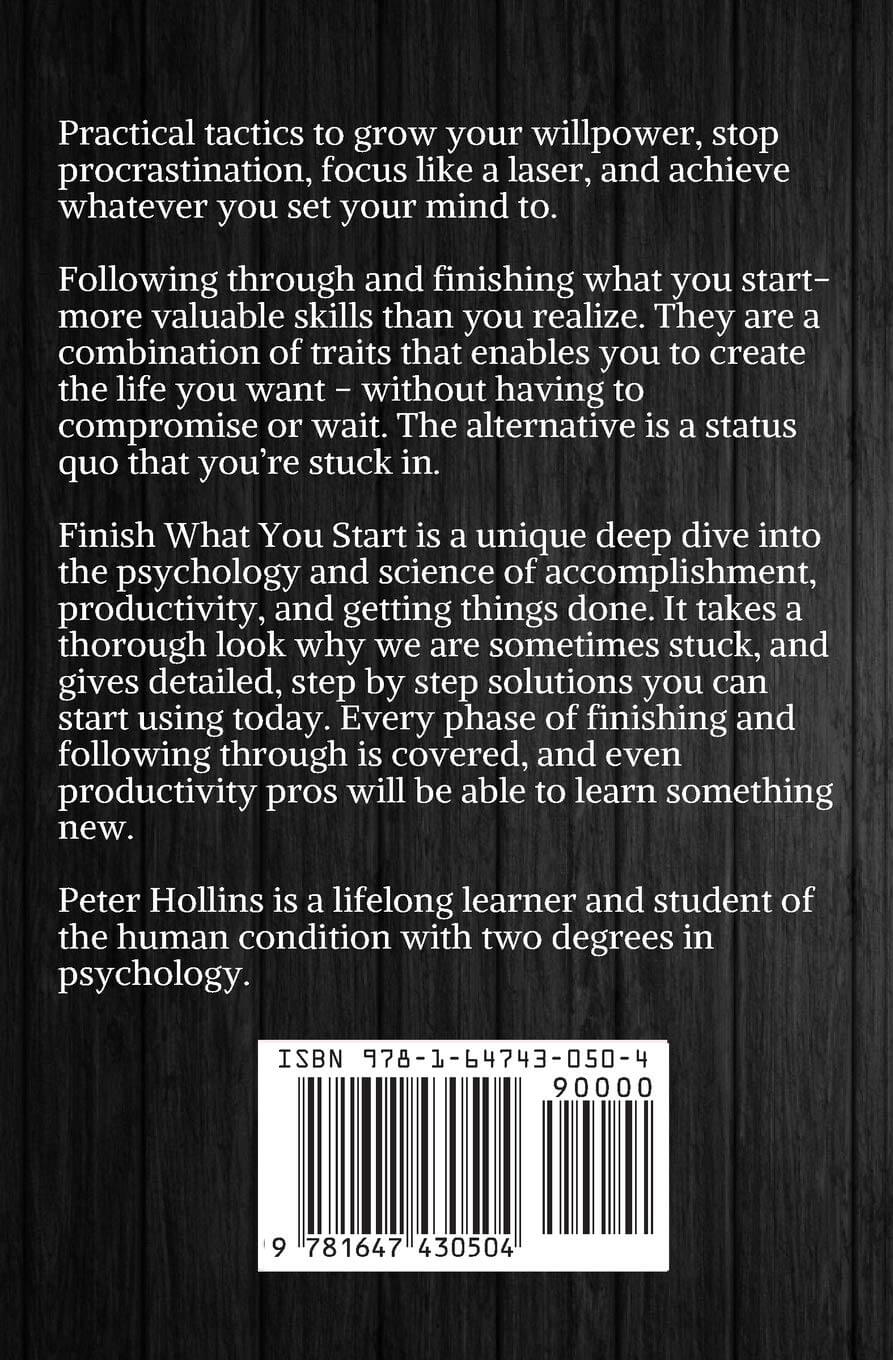
Finish What You Start by Peter Hollins

රු1,750.00
3 X Rs. 583.33 or 8% Cashback with


or 3 X රු583.33 with


or up to 4 X රු437.50 with


“Dive into the world of personal development with ‘Finish What You Start’ by Peter Hollins. This empowering guide provides practical strategies to overcome procrastination, boost productivity, and achieve your goals. Hollins combines actionable insights with motivational wisdom, making this book a must-read for anyone seeking to turn aspirations into accomplishments.”
Out of stock
Email when stock available
Finish What You Start by Peter Hollins is a practical self-development book for anyone who is good at starting things but struggles to complete them.
Starting is exciting.
You have motivation.
You have energy.
You make plans.
You imagine the result.
Then something happens.
The excitement disappears.
Distractions appear.
The task becomes harder than expected.
And another unfinished project gets added to the list.
Finish What You Start explores why this happens and what you can do about it.
Peter Hollins focuses on the psychology of follow-through, productivity, self-discipline, focus, and consistent action.
Why Read Finish What You Start?
Finish What You Start is ideal for readers who regularly struggle with:
- Procrastination
- Lack of motivation
- Poor focus
- Distractions
- Unfinished goals
- Inconsistent habits
- Low self-discipline
- Overthinking
- Lack of follow-through
- Productivity problems
- Poor execution
- Giving up too early
The book is not mainly about creating bigger goals.
It is about becoming better at completing the goals you already have.
That makes it especially useful for students, professionals, entrepreneurs, creators, and anyone who constantly starts projects but rarely reaches the finish line.
Finish What You Start and Follow-Through
Many people know what they should do.
That is usually not the problem.
They know they should exercise.
Study.
Save money.
Finish the report.
Start the business.
Complete the course.
Write the book.
Apply for the job.
But knowing is different from doing.
And doing something once is different from continuing until it is finished.
Finish What You Start focuses heavily on that gap between intention and execution.
Peter Hollins describes follow-through as a combination of psychological traits and behaviours that allow people to consistently move from planning to completion.
Finish What You Start and Procrastination
Procrastination is one of the biggest barriers to finishing.
You tell yourself:
“I’ll start tomorrow.”
“I need to be in the right mood.”
“I’ll do it after I check something.”
“I still have plenty of time.”
Then tomorrow becomes next week.
The task gets bigger in your mind.
Stress increases.
And starting feels even more difficult.
Finish What You Start encourages readers to stop waiting for perfect motivation.
Action often needs to happen before motivation arrives.
Motivation Is Not Enough
Motivation feels powerful.
But it is unreliable.
Some days you feel inspired.
Other days you feel tired.
Some mornings you want to work.
Other mornings you would rather do almost anything else.
If your success depends entirely on motivation, progress will become inconsistent.
That is why Finish What You Start places greater emphasis on discipline and systems.
Motivation may help you begin.
Discipline helps you continue.
Finish What You Start and Self-Discipline
Self-discipline means doing something even when it is not immediately enjoyable.
That does not mean forcing yourself through endless misery.
It means remembering that short-term discomfort may produce a result you genuinely value.
Studying may not feel enjoyable right now.
But passing an exam matters.
Saving money may feel restrictive.
But financial security matters.
Exercising may feel difficult.
But health matters.
Finish What You Start encourages readers to connect daily actions with longer-term outcomes.
Finish What You Start and Focus
Modern life makes focus difficult.
Phones.
Messages.
Social media.
Videos.
Notifications.
Emails.
New ideas.
Every distraction gives you another reason to abandon the task in front of you.
Peter Hollins presents focus as an important part of follow-through.
His description of the book specifically emphasizes developing stronger focus alongside willpower and productivity.
The goal is not to become perfectly focused every second.
It is to make distractions less powerful than your priorities.
Reduce Distractions
Willpower becomes harder when your environment constantly works against you.
Imagine trying to study while:
Your phone is next to you.
Notifications are appearing.
A television is playing.
Multiple browser tabs are open.
Friends are messaging.
Then compare that with:
Phone away.
One task open.
Quiet environment.
Clear deadline.
Same person.
Different environment.
Finish What You Start encourages readers to create conditions that make action easier instead of relying entirely on mental strength.
Finish What You Start and Mental Toughness
Some goals become boring.
That is normal.
The exciting beginning eventually disappears.
Progress slows.
Results may take longer than expected.
This is where many people quit.
Mental toughness is the ability to continue despite temporary discomfort.
Peter Hollins connects productivity with mental toughness and understanding how your own brain and instincts affect behaviour.
You do not need to love every step.
You need to become capable of continuing through the less exciting parts.
Stop Depending on Perfect Conditions
A common mistake is waiting for the perfect moment.
Perfect energy.
Perfect schedule.
Perfect plan.
Perfect confidence.
Perfect information.
But perfect conditions rarely arrive.
Finish What You Start encourages action despite imperfection.
A rough first attempt can be improved.
An unfinished idea cannot produce results.
Finish What You Start and Overthinking
Thinking is useful.
Overthinking is different.
You may spend hours researching.
Comparing options.
Planning.
Creating lists.
Reorganizing your system.
But eventually, planning can become another form of procrastination.
The purpose of planning is action.
If planning never leads to execution, it stops being productive.
This is one of the reasons Finish What You Start focuses so strongly on taking action.
Make Decisions Faster
Some people lose momentum because every decision becomes complicated.
Which tool should I use?
Which method is best?
Should I start Monday?
Should I wait?
What if I make a mistake?
Many decisions are reversible.
You can choose.
Try.
Observe.
Adjust.
This can be more productive than searching endlessly for certainty.
Finish What You Start and Clear Goals
Vague goals create vague actions.
“I want to become successful.”
What does that mean?
Compare it with:
“I will complete three chapters of this course before Sunday.”
That is clearer.
Clear goals make it easier to know what action is required.
Finish What You Start encourages readers to move away from abstract intentions toward concrete execution.
Break Large Goals Into Smaller Actions
Large projects can feel intimidating.
Write a book.
Launch a business.
Lose weight.
Learn programming.
Complete a degree.
Those goals can feel enormous.
But every large goal is made of smaller actions.
Write 500 words.
Create one product page.
Walk for 30 minutes.
Complete one lesson.
Study one chapter.
Smaller actions reduce psychological resistance.
The final result still matters.
But you only need to complete the next step right now.
Finish What You Start and Daily Consistency
One massive productive day is less useful than consistent progress over time.
Imagine working for ten hours once and then doing nothing for three weeks.
Now compare that with one focused hour every day.
Consistency creates momentum.
Momentum reduces the difficulty of restarting.
That is why routines can become more powerful than occasional bursts of motivation.
Protect Your Momentum
Stopping completely can make returning harder.
You lose context.
You forget where you were.
The project begins feeling unfamiliar again.
Even a small amount of progress can help maintain momentum.
One paragraph.
One exercise.
One phone call.
One page.
Small progress still keeps you connected with the goal.
Finish What You Start and Excuses
Excuses are often believable.
“I’m too tired.”
“I’m too busy.”
“I’ll start when things calm down.”
“I need more information.”
Some excuses are legitimate.
But others become habits.
Finish What You Start encourages greater awareness of the stories people tell themselves when avoiding action.
The goal is not to criticize yourself.
It is to recognize whether the reason is real or simply convenient.
Execution Matters More Than Intention
Good intentions feel productive.
But intentions alone produce nothing.
You can intend to:
Exercise.
Study.
Start a company.
Learn a language.
Save money.
Write.
Improve your career.
But results come from execution.
That distinction is central to Finish What You Start.
The book’s full subtitle itself emphasizes following through, taking action, executing, and self-discipline.
Finish What You Start for Students
Students can use the ideas in this book for:
Exam preparation.
Assignments.
Research projects.
Online courses.
Reading.
Skill development.
A student may know exactly what needs to be completed.
But procrastination can turn manageable work into last-minute stress.
Learning follow-through early can improve both academic performance and future professional habits.
Finish What You Start for Professionals
Professionals often face a different problem.
Too many tasks.
Emails.
Meetings.
Reports.
Projects.
Deadlines.
New requests.
Without clear priorities, work can become a collection of half-finished tasks.
Finish What You Start encourages readers to focus on execution rather than constant activity.
Being busy does not necessarily mean making progress.
Finish What You Start for Entrepreneurs
Entrepreneurs are surrounded by ideas.
New products.
New marketing strategies.
New software.
New partnerships.
New business models.
The temptation to constantly start something new can be enormous.
But unfinished ideas do not generate results.
An average idea executed well may create more value than an amazing idea that never leaves the planning stage.
That makes follow-through especially valuable for business owners.
Finish What You Start and Personal Responsibility
Another important idea is responsibility.
At some point, progress requires accepting that your actions matter.
Circumstances matter too.
But focusing only on circumstances can remove your sense of control.
Asking:
“What can I do next?”
is often more useful than:
“Why is everything difficult?”
Finish What You Start encourages a stronger action-oriented mindset.
7 Powerful Lessons From Finish What You Start
- Starting is easier than finishing. Real results come from follow-through.
- Motivation is unreliable. Build discipline and routines that continue when excitement disappears.
- Procrastination grows when tasks feel overwhelming. Break large goals into smaller actions.
- Focus requires protecting your attention. Reduce distractions instead of constantly fighting them.
- Execution beats endless planning. A good plan is valuable only when it produces action.
- Consistency creates momentum. Small actions repeated regularly can outperform occasional bursts of effort.
- Self-discipline is a skill. Finish What You Start treats follow-through as something that can be understood and improved rather than something people simply have or do not have.
What You Can Expect From Finish What You Start
Readers can expect:
- Productivity techniques
- Procrastination strategies
- Self-discipline
- Focus
- Willpower
- Goal completion
- Mental toughness
- Action-oriented thinking
- Habit development
- Personal responsibility
- Practical exercises
- Motivation
- Psychology
- Personal development
Who Should Read Finish What You Start?
Finish What You Start is ideal for:
Students.
Entrepreneurs.
Professionals.
Freelancers.
Content creators.
People struggling with procrastination.
People who constantly start new projects.
Anyone who struggles with consistency.
Readers interested in productivity.
Readers interested in self-discipline.
Anyone who wants to become better at turning intentions into results.
A Powerful Guide to Getting Things Done
Finish What You Start is built around a simple truth.
Starting something does not create the result.
Finishing does.
The unfinished course teaches you little.
The unfinished business never launches.
The unfinished book never reaches readers.
The unfinished project never creates its full value.
Peter Hollins focuses on understanding why people become stuck and provides practical strategies for improving follow-through, focus, willpower, productivity, and self-discipline.
For readers who are tired of making plans they never complete, Finish What You Start offers a practical reminder that progress depends less on constantly finding new motivation and more on learning how to continue.
Book Details
Title: Finish What You Start
Full Title: Finish What You Start: The Art of Following Through, Taking Action, Executing, & Self-Discipline
Author: Peter Hollins
Genre: Self-Help / Productivity / Personal Development / Psychology
Main Topics: Procrastination, Focus, Self-Discipline, Willpower, Execution, Productivity
Original Paperback Edition
A commonly catalogued 2018 edition has:
ISBN-13: 9781986622318
ISBN-10: 1986622312
Format: Paperback
Publisher: CreateSpace Independent Publishing Platform
Publication Year: 2018
Pages: 206.
PKCS Media Edition
Another widely catalogued edition has:
ISBN-13: 9781647430504
Format: Paperback
Publisher: PKCS Media
Publication Year: 2019
Pages: 206.
Regional Paperback Edition
A Sri Lankan bookseller also lists a Wisdom Tree paperback edition with:
ISBN-13: 9788183285865
Format: Paperback
Publisher: Wisdom Tree
Publication Year: 2019
Pages: 144.
Edition Note
Different editions of Finish What You Start have different ISBNs and page counts.
Use the ISBN printed on your physical copy before entering the exact edition information on your website.
Learn more about Finish What You Start by Peter Hollins on Google Books.
Explore more personal development books at Bargain Books.
| Author | Peter Hollins |
|---|---|
| Type | Paperback Printed Book |
| ISBN/ISSN | 164743050X, 978-1647430504 |
| Language | English |
| Pages | 206 |
Be the first to review “Finish What You Start by Peter Hollins”
Related products

Analysis & Strategy
රු2,250.00
3 X Rs. 750.00 or 8% Cashback with
or 3 X රු750.00 with
or up to 4 X රු562.50 with
Damaged & Imperfect Books
රු800.00
3 X Rs. 266.67 or 8% Cashback with
or 3 X රු266.67 with
or up to 4 X රු200.00 with
-19%
Analysis & Strategy
Original price was: රු2,600.00.රු2,100.00Current price is: රු2,100.00.
3 X Rs. 700.00 or 8% Cashback with
or 3 X රු700.00 with
or up to 4 X රු525.00 with
Damaged & Imperfect Books
රු550.00
3 X Rs. 183.33 or 8% Cashback with
or 3 X රු183.33 with
or up to 4 X රු137.50 with
Out of stock
රු3,900.00
3 X Rs. 1,300.00 or 8% Cashback with
or 3 X රු1,300.00 with
or up to 4 X රු975.00 with
Out of stock
Analysis & Strategy
රු1,900.00
3 X Rs. 633.33 or 8% Cashback with
or 3 X රු633.33 with
or up to 4 X රු475.00 with
-13%
Analysis & Strategy
Original price was: රු3,850.00.රු3,350.00Current price is: රු3,350.00.
3 X Rs. 1,116.67 or 8% Cashback with
or 3 X රු1,116.67 with
or up to 4 X රු837.50 with
Out of stock
Damaged & Imperfect Books
රු550.00
3 X Rs. 183.33 or 8% Cashback with
or 3 X රු183.33 with
or up to 4 X රු137.50 with
Reviews
There are no reviews yet.