
No products in the cart.
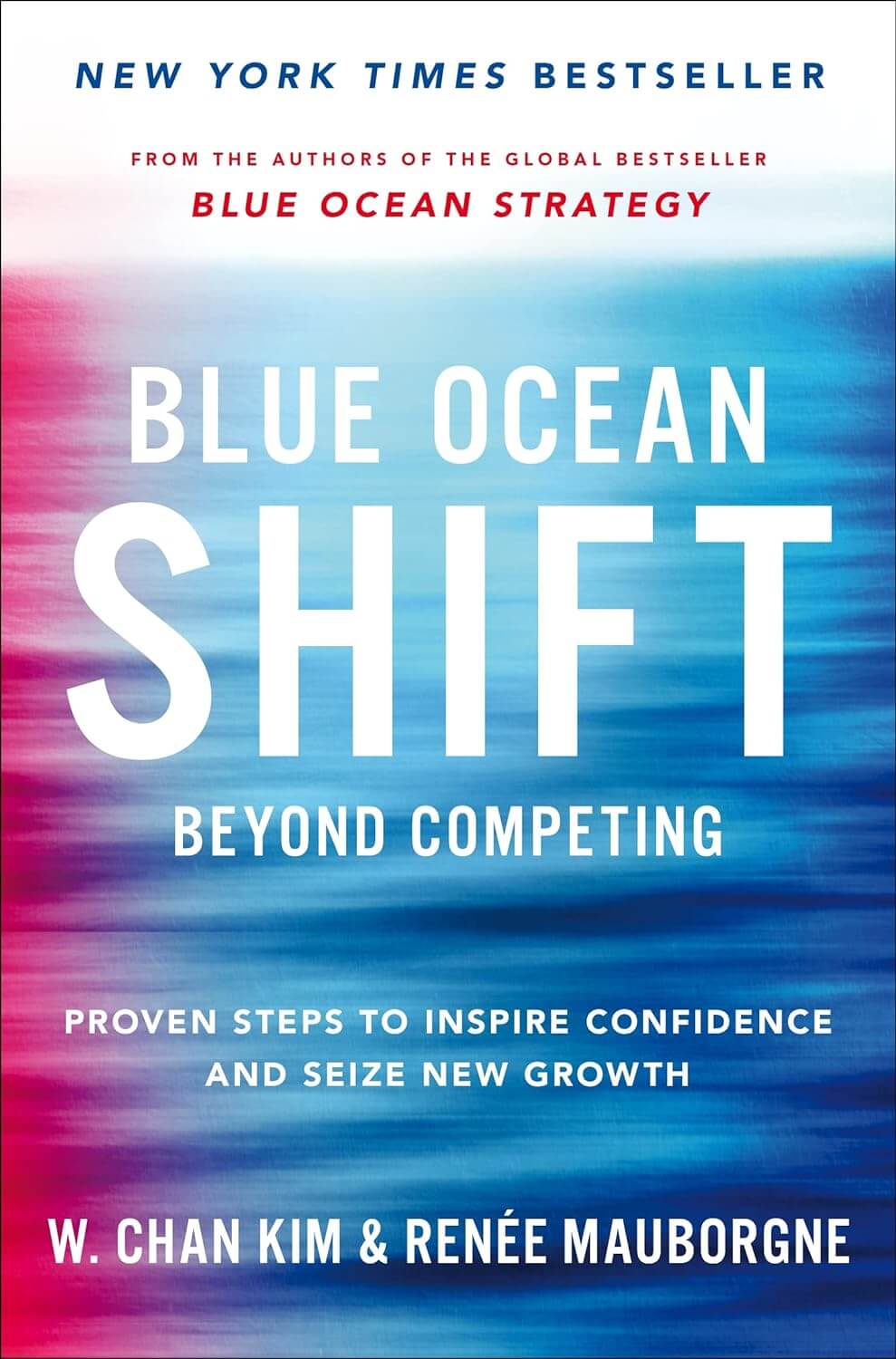
Blue Ocean Shift by Renee Mauborgne


රු1,700.00
3 X Rs. 566.67 or 8% Cashback with


or 3 X රු566.67 with


or up to 4 X රු425.00 with


Dive into innovative business strategies with ‘Blue Ocean Shift’ by Renée Mauborgne. This groundbreaking book, from the co-author of ‘Blue Ocean Strategy,’ offers practical insights and tools for creating new market spaces and driving business growth. Ideal for entrepreneurs, leaders, and strategists seeking a fresh approach to innovation and competitive advantage.
Out of stock
Email when stock available
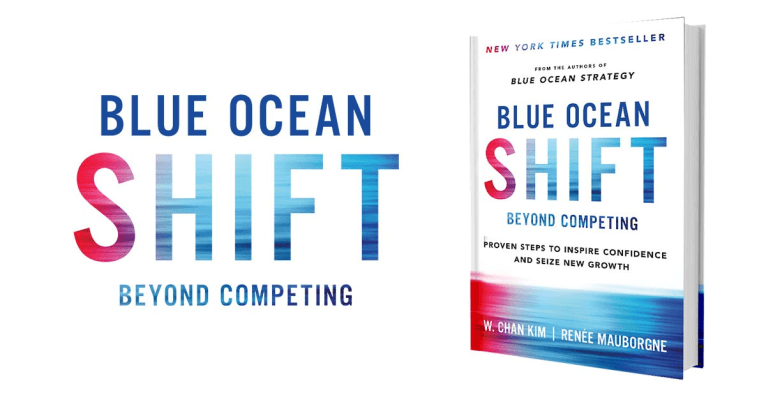
Blue Ocean Shift by W. Chan Kim and Renée Mauborgne
Blue Ocean Shift by W. Chan Kim and Renée Mauborgne is a practical business strategy book about moving beyond intense competition and creating new opportunities for growth.
The authors present a systematic process designed to help organizations move from crowded “red oceans” toward “blue oceans” of new market space.
Rather than simply trying to outperform competitors, the approach asks businesses to rethink the market itself.
The goal is to create new demand and make direct competition less important.
Why Read Blue Ocean Shift?
Blue Ocean Shift is especially useful for entrepreneurs, managers, business owners, consultants, and leaders looking for new ways to grow.
It builds on more than a decade of additional research following the publication of Blue Ocean Strategy.
The authors studied both successful and unsuccessful blue ocean initiatives across businesses, nonprofits, governments, and other organizations.
Their aim is to show not only what blue ocean strategy means, but how teams can actually apply it.
Red Oceans and Blue Oceans
A red ocean represents an existing market crowded with competitors.
Companies fight for the same customers.
Price pressure increases.
Growth can become difficult.
A blue ocean represents new market space where a company creates new demand rather than simply competing for existing demand.
The official Blue Ocean Strategy framework defines the approach as pursuing differentiation and low cost together to open new market space.
Create Instead of Only Compete
Traditional strategy often begins with competitors.
Who is the market leader?
What are competitors charging?
How can we beat them?
Kim and Mauborgne encourage businesses to ask a different question.
What value could we create that makes current competition less relevant?
This change in perspective can reveal opportunities that conventional competitive analysis may overlook.
The Five-Step Process
One of the most important features of Blue Ocean Shift is its structured five-step methodology.
The official framework describes it as a systematic process for moving from existing competition toward new market opportunities.
The process helps teams assess their existing situation.
It then guides them toward identifying new value opportunities and developing a practical strategic move.
This makes the book more action-oriented than a purely theoretical strategy guide.
Understand Where You Are Now
Before creating a new strategy, a business needs to understand its current position.
What factors does the industry compete on?
Where is money currently being invested?
What value do customers receive?
These questions help organizations visualize the existing competitive landscape.
Understanding the current situation makes it easier to identify where change may be possible.
Look Beyond Existing Customers
One powerful idea in blue ocean thinking is looking beyond current customers.
Businesses frequently focus on people who already purchase from the industry.
But noncustomers may reveal larger opportunities.
Why are some people refusing to buy?
Why have others left the market?
What prevents a new group from becoming customers?
Understanding these barriers can reveal unmet demand.
Create New Value
Blue Ocean Shift emphasizes value creation rather than innovation for its own sake.
A new idea must offer something customers genuinely care about.
At the same time, the business needs a model that can support profitable growth.
The Blue Ocean Strategy framework describes this as pursuing both differentiation and low cost rather than automatically choosing one or the other.
Break the Value-Cost Trade-Off
Traditional strategy often assumes that greater value requires greater cost.
Blue ocean thinking challenges that assumption.
The goal is to determine which industry factors can be reduced or eliminated.
At the same time, businesses can identify which factors should be raised or newly created.
This can produce a different value proposition rather than simply adding more features.
People Matter to Strategy
A major emphasis of the book is what the authors call the human side of strategic change.
Creating a strategy is not enough.
Employees must understand it.
Teams must believe they can execute it.
People need confidence to move away from familiar ways of working.
The official book description specifically emphasizes “humanness” as an important part of making strategic change happen.
Build Confidence in Your Team
Strategic change often fails because employees feel uncertain.
A new direction may challenge established practices.
Some people may fear losing influence.
Others may simply prefer familiar routines.
The authors therefore emphasize involving people in the process rather than presenting a finished strategy from the top.
Participation can increase understanding and commitment.
Strategy Should Be Visual
Blue ocean tools are designed to make strategy easier to understand.
The official framework describes its tools and processes as inclusive, visual, and intended to help people participate in execution.
This is valuable because strategy can easily become overly complicated.
A clear visual framework can help teams identify differences between their current position and a potential new direction.
Reduce the Risk of Innovation
Innovation always contains uncertainty.
A company cannot know with complete certainty whether a new offering will succeed.
However, the blue ocean approach aims to reduce unnecessary risk.
The framework includes methods for testing whether a strategic idea offers compelling value and whether it has commercial potential.
The objective is not blind experimentation.
It is systematic market creation.
Blue Ocean Shift vs Blue Ocean Strategy
Blue Ocean Strategy introduced the core idea of creating uncontested market space.
Blue Ocean Shift focuses more directly on the process of putting those ideas into action.
The official site describes it as the essential follow-up to the original book.
Readers who already understand blue ocean strategy may therefore find this book especially useful for implementation.
New readers can still understand the major principles through the explanations and examples provided.
A Bestselling Strategy Book
The official Blue Ocean Strategy site identifies the book as a New York Times, #1 Wall Street Journal, and USA Today bestseller.
It has also been translated or prepared for translation into numerous languages around the world.
Its popularity reflects the broad interest in practical alternatives to competing within increasingly crowded markets.
About W. Chan Kim and Renée Mauborgne
W. Chan Kim and Renée Mauborgne are professors of strategy at INSEAD and co-directors of the INSEAD Blue Ocean Strategy Institute.
They are also the authors of Blue Ocean Strategy and Beyond Disruption.
Their work focuses on market creation, innovation, business growth, and strategic management.
Their blue ocean teaching materials have also been adopted by universities worldwide.
5 Powerful Lessons from Blue Ocean Shift
1. Do not focus only on competitors.
New growth may come from creating different value rather than fighting for existing customers.
2. Study noncustomers.
People who refuse your industry’s products may reveal important opportunities.
3. Combine differentiation with lower cost.
Value innovation does not always require choosing one or the other.
4. Involve people in strategic change.
Teams are more likely to execute a strategy they understand and believe in.
5. Follow a systematic process.
Innovation becomes easier to manage when teams use clear steps, tools, and frameworks.
Perfect for Business Readers
Blue Ocean Shift is a strong choice for readers interested in:
- Business strategy
- Entrepreneurship
- Innovation
- Market creation
- Business growth
- Leadership
- Competitive strategy
- Strategic management
- Marketing
- Startups
- Management consulting
- Blue Ocean Strategy
It is especially useful for leaders who feel trapped in highly competitive markets.
Build Your Business Book Collection
Readers who enjoy this title may also want to explore Blue Ocean Strategy and Beyond Disruption by the same authors.
Add internal links to your Business & Economics, Entrepreneurship, Leadership, and Business Strategy categories.
You can also link directly to Blue Ocean Strategy if you stock it.
These internal links can help customers discover related books and improve your Rank Math internal-link score.
Buy Blue Ocean Shift in Sri Lanka
Looking for Blue Ocean Shift in Sri Lanka?
W. Chan Kim and Renée Mauborgne’s practical strategy book is an excellent choice for entrepreneurs, managers, consultants, and business leaders seeking new market opportunities.
Learn how to move beyond crowded competition, create new customer demand, build team confidence, and develop a strategy for sustainable growth.
Add Blue Ocean Shift to your business and strategy collection today. https://www.blueoceanstrategy.com/books/blue-ocean-shift-book/
| Author | Renee Mauborgne, W. Chan Kim |
|---|---|
| Type | Paperback Printed Book |
| ISBN/ISSN | 1509832211, 978-1509832217 |
| Language | English |
| Pages | 336 |
Be the first to review “Blue Ocean Shift by Renee Mauborgne”
Related products

Out of stock
Analysis & Strategy
රු1,650.00
3 X Rs. 550.00 or 8% Cashback with
or 3 X රු550.00 with
or up to 4 X රු412.50 with

Damaged & Imperfect Books
රු550.00
3 X Rs. 183.33 or 8% Cashback with
or 3 X රු183.33 with
or up to 4 X රු137.50 with
-15%

Out of stock
Analysis & Strategy
Beginner’s Guide To The Stock Market by Matthew R Kratter (Hardcover)
Original price was: රු3,300.00.රු2,800.00Current price is: රු2,800.00.
3 X Rs. 933.33 or 8% Cashback with
or 3 X රු933.33 with
or up to 4 X රු700.00 with

Damaged & Imperfect Books
Beginner’s Guide To The Stock Market by Matthew R Kratter (347)
රු1,500.00
3 X Rs. 500.00 or 8% Cashback with
or 3 X රු500.00 with
or up to 4 X රු375.00 with

Out of stock
රු3,900.00
3 X Rs. 1,300.00 or 8% Cashback with
or 3 X රු1,300.00 with
or up to 4 X රු975.00 with
Analysis & Strategy
රු1,750.00
3 X Rs. 583.33 or 8% Cashback with
or 3 X රු583.33 with
or up to 4 X රු437.50 with

Out of stock
Damaged & Imperfect Books
රු550.00
3 X Rs. 183.33 or 8% Cashback with
or 3 X රු183.33 with
or up to 4 X රු137.50 with

Damaged & Imperfect Books
රු1,200.00
3 X Rs. 400.00 or 8% Cashback with
or 3 X රු400.00 with
or up to 4 X රු300.00 with
Reviews
There are no reviews yet.