
No products in the cart.
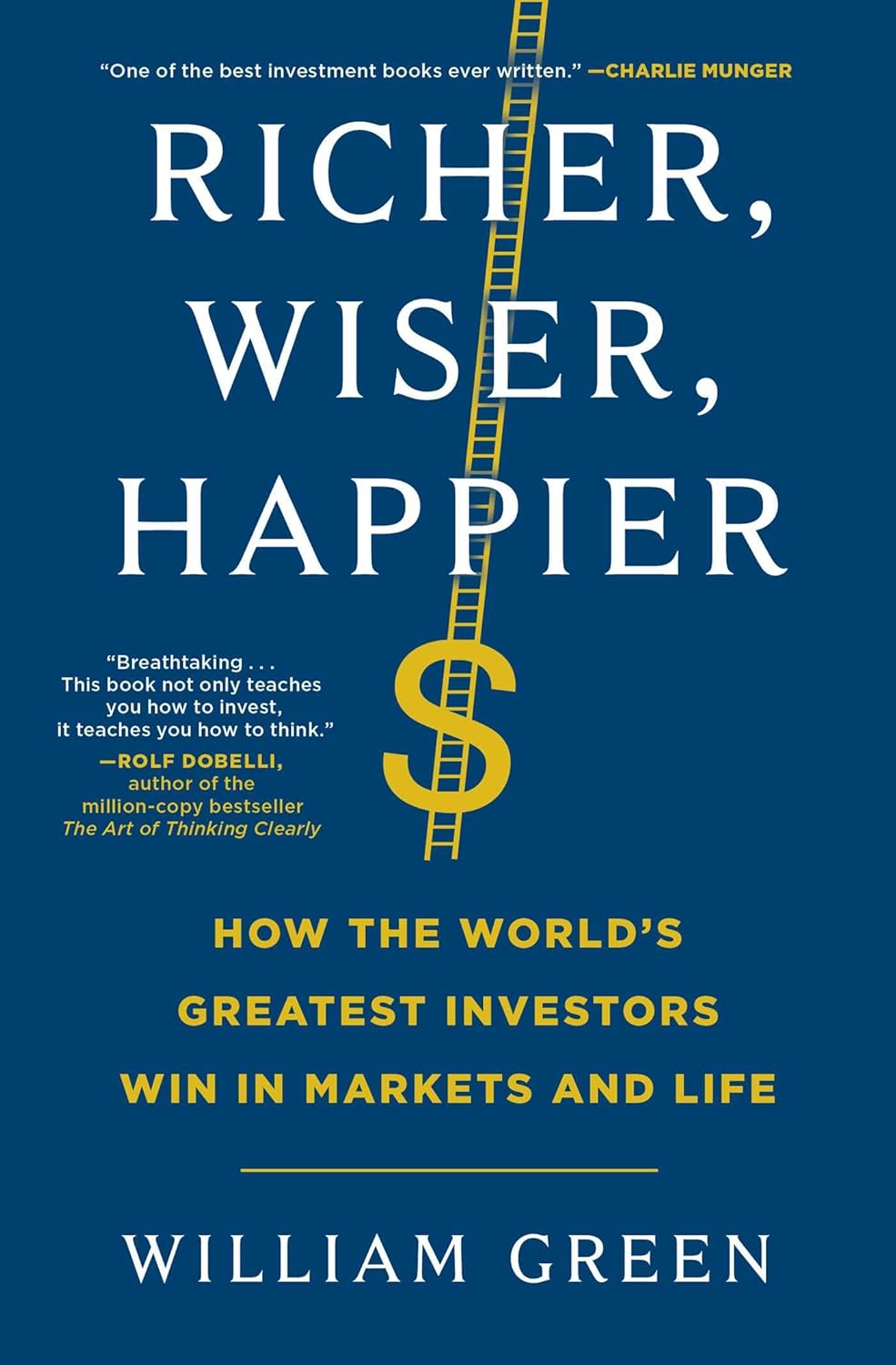
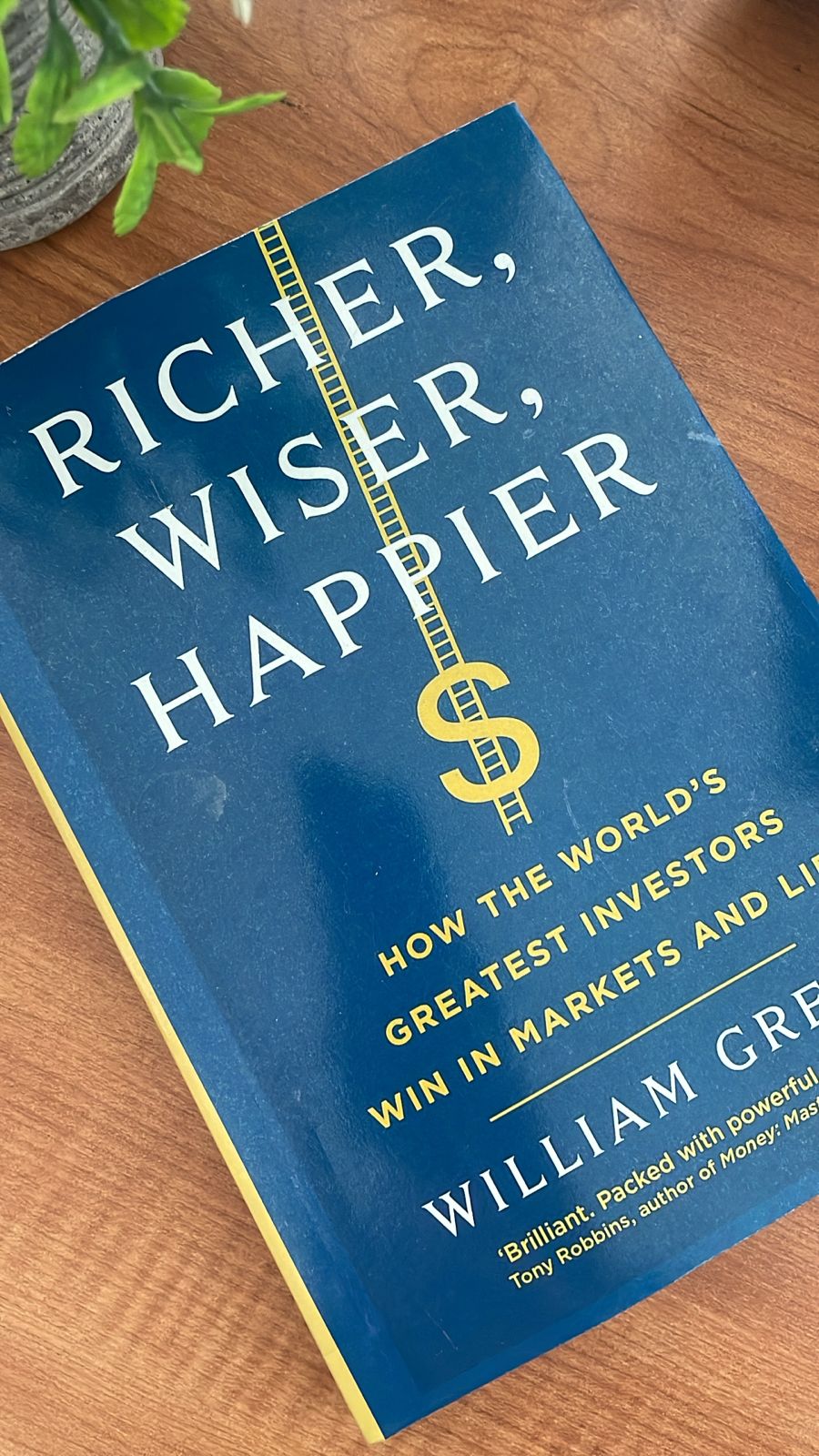

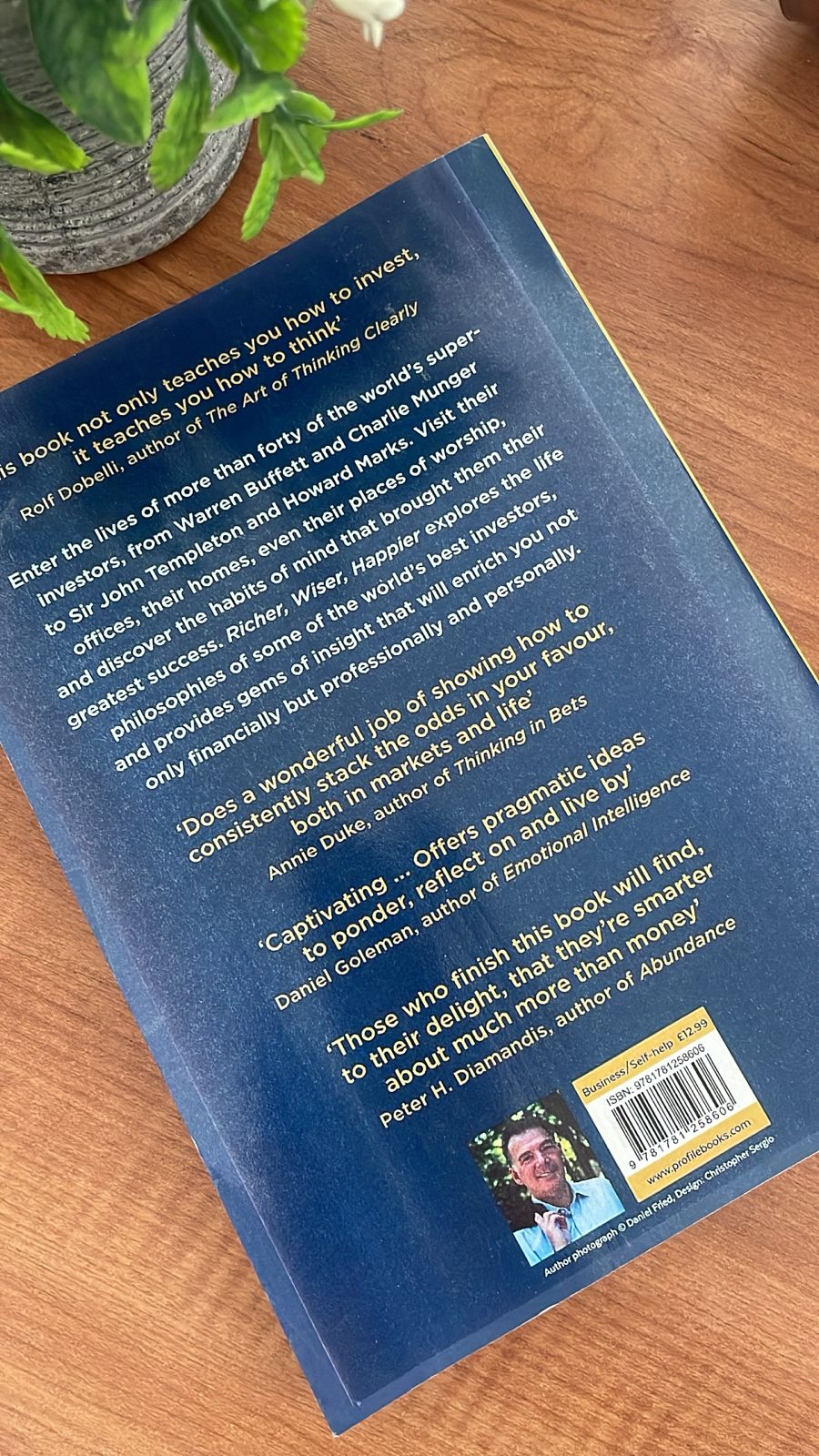
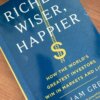



Richer, Wiser, Happier by William Green


රු2,500.00
3 X Rs. 833.33 or 8% Cashback with


or 3 X රු833.33 with


or up to 4 X රු625.00 with


• Insightful non-fiction book exploring how great investors think and live
• Focuses on long-term decision-making, discipline, and mindset
• Ideal for readers interested in investing and personal growth
5 in stock
Richer Wiser Happier by William Green is an insightful investing and decision-making book that explores what some of the world’s most successful investors can teach us not only about building wealth, but also about thinking clearly, managing risk, learning from mistakes and creating a more meaningful life.
William Green spent more than twenty-five years interviewing extraordinary investors.
Rather than asking only:
Which stocks should we buy?
Which market will rise next?
What is the next winning investment?
Green asks deeper questions.
How do exceptional investors think?
How do they make decisions under uncertainty?
How do they avoid catastrophic mistakes?
How do they remain patient when markets become irrational?
How do they learn from other people?
And after achieving enormous financial success, what do they believe actually makes life worthwhile?
Richer Wiser Happier by William Green introduces readers to investors including Mohnish Pabrai, Charlie Munger, Sir John Templeton, Jack Bogle, Howard Marks, Ed Thorp, Joel Greenblatt, Will Danoff and others.
The result is much more than a book about stock picking.
It is a book about better judgment.
Richer Wiser Happier by William Green – Book Overview
Richer Wiser Happier by William Green studies investors who achieved exceptional long-term results and asks what ordinary people can learn from their habits.
One of Green’s central observations is that great investing depends on abilities that are useful far beyond financial markets.
Patience.
Independent thinking.
Humility.
Discipline.
Emotional control.
Risk awareness.
Long-term thinking.
Learning from mistakes.
These traits can influence:
Business.
Career decisions.
Relationships.
Personal finance.
Leadership.
And everyday life.
Investing Is a Thinking Game
Many people imagine investing as a competition based primarily on information.
Who knows the latest news first?
Who has the most complicated spreadsheet?
Who can predict the market?
But information is available everywhere.
The harder challenge is interpreting information correctly.
Two investors can see the same facts and make completely different decisions.
That means psychology matters.
Better Decisions Matter More Than Constant Activity
One of the strongest lessons from Richer Wiser Happier by William Green is that successful investing does not necessarily require constant action.
Many great investors are selective.
They wait.
They study.
They allow opportunities to come to them.
This can feel uncomfortable because modern culture often rewards visible activity.
But activity and progress are not identical.
Patience
Investing often rewards patience.
A business may need years to compound.
A market may remain irrational longer than expected.
An attractive investment may not appear immediately.
Patience therefore becomes an active skill rather than simple inactivity.
Mohnish Pabrai and Learning From the Best
One of the memorable investors featured in the book is Mohnish Pabrai.
Pabrai openly studies and borrows ideas from investors such as Warren Buffett and Charlie Munger.
Green uses his example to explore a surprisingly useful principle:
Originality can be overrated.
If someone brilliant has already solved a problem, why insist on starting from zero?
The official publisher excerpt describes Pabrai’s deliberate habit of reverse-engineering and adapting successful ideas from others.
Clone Good Ideas
This does not mean copying blindly.
A better approach is:
Find people who consistently produce excellent results.
Study how they think.
Understand why their methods work.
Adapt useful principles to your own circumstances.
This applies beyond investing.
A business owner can study excellent companies.
A developer can study excellent software architecture.
A student can study effective learners.
Build a Mental Library of Great Ideas
Charlie Munger became famous for learning ideas from many fields.
Psychology.
Economics.
Mathematics.
History.
Science.
Business.
The more useful mental models you understand, the more ways you have to examine a problem.
Charlie Munger
Charlie Munger is one of the most influential thinkers discussed in Richer Wiser Happier by William Green.
Munger emphasized rationality and avoiding stupidity rather than constantly trying to display brilliance.
This leads to a powerful principle:
Sometimes the easiest way to improve results is not finding more great decisions.
It is eliminating terrible decisions.
Avoiding Big Mistakes
Suppose you make many good investments.
Then one reckless decision destroys half your capital.
The problem was not insufficient intelligence.
It was failure to manage downside risk.
This applies equally to life.
A successful career can be damaged by:
Fraud.
Unmanageable debt.
Reckless risk.
Poor health habits.
Destructive relationships.
Avoiding catastrophic errors matters enormously.
Survival Comes First
You cannot compound money if you lose everything.
You cannot build a business if one uncontrolled risk destroys it.
You cannot benefit from future opportunities if you are no longer in the game.
Therefore, strong investors repeatedly focus on survival.
Risk Is Not Simply Volatility
Investment risk is often measured through market price fluctuations.
But many long-term investors think more practically.
A stock falling temporarily is not necessarily catastrophic if the underlying business remains strong.
A more serious risk may be permanent loss of capital.
This changes how investors think.
Margin of Safety
The idea of a margin of safety means leaving room for error.
Your forecast may be wrong.
Your assumptions may be wrong.
The economy may change.
Unexpected events may occur.
Buying with a margin of safety acknowledges that uncertainty exists.
Howard Marks and Cycles
Howard Marks is known for thinking deeply about market cycles, risk and investor psychology.
Markets do not move only because business fundamentals change.
They also move because people change.
Optimism rises.
Fear disappears.
Prices increase.
Then expectations become unrealistic.
Later:
Fear returns.
Prices fall.
Investors panic.
Understanding psychology can therefore be as important as understanding numbers.
Avoid Following the Crowd Blindly
When everyone is optimistic, expensive investments can feel safe.
When everyone is terrified, attractive investments can feel dangerous.
This creates a paradox.
The emotional moment when an investment feels most comfortable may be the moment when its price is least attractive.
Independent thinking therefore matters.
Sir John Templeton
Sir John Templeton became famous for looking for opportunities where other investors were pessimistic.
Contrarian investing does not mean automatically doing the opposite of everyone.
The crowd can be correct.
The real lesson is:
Think independently.
Examine the evidence.
Do not allow popularity alone to determine the decision.
Be Willing to Look Different
Independent thinking has emotional costs.
If you make the same decision as everyone else and fail, you feel normal.
If you make a different decision and fail, you look foolish.
This makes true independence much harder than it sounds.
Emotional Strength
Great investing requires emotional endurance.
A strong investment idea may temporarily lose money.
The market may disagree with you.
Other investors may appear more successful.
Patience becomes difficult when comparison enters the picture.
Comparison Can Damage Judgment
Suppose your portfolio rises 10%.
That sounds good.
Then your friend says theirs rose 30%.
Suddenly your 10% feels like failure.
Nothing changed except comparison.
This pressure can cause investors to abandon sensible strategies in pursuit of whatever recently performed best.
FOMO
Fear of missing out is especially dangerous during market booms.
Someone else becomes rich quickly.
A stock rises every day.
A new asset seems unstoppable.
People begin thinking:
Everyone is making money except me.
That emotional pressure can overwhelm rational analysis.
Jack Bogle and Simplicity
Jack Bogle, founder of Vanguard, is among the investors discussed by Green.
Bogle strongly advocated low-cost, diversified investing for ordinary investors.
His philosophy highlights an important lesson:
Complexity does not guarantee superiority.
Sometimes a simple strategy executed consistently can beat a complicated strategy executed badly.
Costs Matter
Investment fees may appear small.
One percent.
Half a percent.
Trading costs.
Taxes.
But over decades, costs compound too.
Every rupee lost to unnecessary costs is a rupee that no longer compounds for you.
Compounding
Compounding is one of the central forces behind long-term investing.
Suppose capital grows.
Then future returns are earned not only on the original investment but also on previous gains.
Over long periods, the effect can become enormous.
The difficulty is allowing enough time.
Time Is an Investor’s Advantage
People often search for:
Better stocks.
Better forecasts.
Better timing.
But one of the greatest advantages may simply be:
More time.
Beginning early and remaining disciplined can be extremely powerful.
Ed Thorp and Probabilistic Thinking
Ed Thorp is another remarkable thinker featured in Richer Wiser Happier by William Green.
His work across mathematics, gambling and investing demonstrates the importance of probability.
You do not need certainty before making a decision.
You need to understand:
Possible outcomes.
Probabilities.
Potential gains.
Potential losses.
Think in Probabilities
Instead of asking:
Will this investment go up?
Ask:
What are the possible outcomes?
How likely is each?
What happens if I am wrong?
That shift makes decision-making more realistic.
Position Sizing
Even a good idea can become dangerous if you risk too much.
Suppose an investment has a 70% chance of working.
That still means failure is possible.
If one failure can ruin you, the position may be too large.
Risk management therefore matters alongside finding attractive opportunities.
Joel Greenblatt
Joel Greenblatt is another successful investor featured in the book.
His work emphasizes disciplined analysis and focusing on businesses that can be understood rather than chasing every opportunity.
This connects to another important principle:
You do not need to invest in everything.
Circle of Competence
A circle of competence means understanding where your knowledge is strong enough to make reasonably informed decisions.
You may understand:
Banking.
Technology.
Retail.
Manufacturing.
Consumer brands.
But not biotechnology.
There is no shame in saying:
I do not understand this.
Saying “I Don’t Know”
This may be one of the most underrated skills in investing.
Markets reward correct decisions, not confident language.
If something is too complicated, passing can be intelligent.
There will always be another opportunity.
Simplicity
Many excellent investors deliberately simplify.
They ask:
Is the business understandable?
Does it have durable advantages?
Is management trustworthy?
Is the price reasonable?
What could permanently destroy the investment?
Simple questions can reveal more than complicated forecasting models.
Long-Term Thinking
Short-term markets contain enormous noise.
Prices move because of:
News.
Emotion.
Interest-rate expectations.
Economic reports.
Political events.
Institutional flows.
Trying to predict every short-term movement can become exhausting.
Long-term investors focus more on:
Business quality.
Cash generation.
Competitive position.
Management.
Valuation.
Businesses, Not Ticker Symbols
A share represents ownership in a business.
This sounds obvious.
Yet people frequently treat stocks like lottery numbers.
Green’s investors repeatedly bring attention back to the underlying business.
What does it sell?
Why do customers buy?
Can competitors attack it?
Can it survive downturns?
Quality Matters
A cheap business is not automatically a good investment.
Sometimes a company is cheap because the business is deteriorating.
Great investors therefore often balance:
Price
and
quality.
Nick Sleep and Long-Term Value Creation
The book also explores investors who became highly focused on businesses capable of creating enormous value over long periods.
This can involve companies that strengthen relationships with customers by continually lowering costs or improving service.
The deeper principle is to search for businesses where success can reinforce itself.
Scale Economies Shared
Some exceptional businesses become stronger as they grow.
More scale lowers costs.
Lower costs benefit customers.
More customers arrive.
Scale increases further.
This kind of positive feedback loop can create durable competitive advantages.
Customer Obsession
Investors therefore need to understand how a company treats customers.
A business that consistently creates more value for customers may have stronger long-term economics than one focused only on extracting maximum short-term profit.
Incentives
Charlie Munger often emphasized understanding incentives.
People respond to how they are rewarded.
Employees.
Executives.
Salespeople.
Fund managers.
Customers.
Ask:
What behavior does this incentive encourage?
Sometimes bad systems produce bad behavior even when individuals are not intentionally malicious.
Management
A company’s leadership matters.
Investors may consider:
Capital allocation.
Integrity.
Communication.
Long-term orientation.
Treatment of shareholders.
But management assessment is difficult.
A charismatic CEO is not necessarily an effective capital allocator.
Humility
The strongest investors often recognize the limits of their knowledge.
They do not assume:
I am brilliant, therefore I will always be right.
Instead:
I will inevitably be wrong sometimes, so I need a system that survives mistakes.
That humility improves risk management.
Learn From Mistakes
An investment mistake becomes more valuable if you understand why it happened.
Was the problem:
Bad analysis?
Overconfidence?
Poor valuation?
FOMO?
Ignoring debt?
Misjudging management?
Breaking your own rules?
Without reflection, the same error can repeat.
Keep an Investment Journal
One practical technique is recording:
Why you bought.
What you expect.
What could go wrong.
What would make you sell.
Later, compare the outcome with the original reasoning.
Memory has a tendency to rewrite history.
Written decisions are harder to rationalize afterward.
Temperament Beats IQ
Extraordinary mathematical intelligence can help in some forms of investing.
But long-term investing also demands temperament.
Can you remain calm?
Can you wait?
Can you think independently?
Can you admit mistakes?
A highly intelligent person who panics may perform worse than a patient person with a simple strategy.
Resilience
The official publisher describes the book as exploring how great investors build resilience and improve decisions under uncertainty.
Markets will eventually fall.
Investments will disappoint.
Economic crises will occur.
The question is whether your strategy can survive them.
Build a Life That Can Survive Bad Luck
This principle moves beyond investing.
Financial resilience may include:
Emergency savings.
Manageable debt.
Diversification.
Insurance.
Career skills.
Personal resilience may include:
Health.
Relationships.
Adaptability.
A support network.
Robust systems survive shocks better than fragile ones.
Diversification
Diversification reduces dependence on a single outcome.
If your entire future depends on:
One stock.
One customer.
One employer.
One supplier.
One income source,
you have concentration risk.
Concentration can increase upside.
It also increases vulnerability.
When Concentration Makes Sense
Some exceptional investors hold concentrated portfolios because they have deep knowledge and high conviction.
But ordinary investors should be careful about copying the visible portfolio without copying the investor’s:
Research.
Skill.
Experience.
Temperament.
Risk tolerance.
Blind imitation is dangerous.
Investing and Personal Happiness
The title Richer, Wiser, Happier deliberately goes beyond money.
Green discovers that some highly successful investors think deeply about what wealth is actually for.
Having more money does not automatically create more happiness.
Eventually the question becomes:
What does enough look like?
Money Is a Tool
Money can provide:
Security.
Freedom.
Time.
Choice.
Opportunities.
It can reduce certain stresses.
But beyond a point, accumulating more may contribute less to happiness than people expect.
Warren Buffett’s Influence
Although the book focuses on many investors, Warren Buffett’s ideas influence several of them.
His approach emphasizes:
Long-term ownership.
High-quality businesses.
Rationality.
Patience.
Reputation.
Avoiding unnecessary complexity.
The important lesson is not copying every investment Buffett makes.
It is understanding the reasoning principles behind the decisions.
Wealth Without Wisdom
A person can become financially rich while remaining:
Anxious.
Unhealthy.
Isolated.
Unhappy.
That is why Green includes the words Wiser and Happier in the title.
The ultimate goal is not merely maximizing the bank balance.
Relationships Matter
Some investors Green profiles deliberately prioritize family, friendships and meaningful work.
This challenges the idea that achievement must consume everything else.
The highest-return investment in life may sometimes be time spent with people you care about.
Time Is More Valuable Than Money
Money can be earned again.
Time cannot.
As wealth increases, one of its greatest advantages may be the freedom to control how time is spent.
That makes time allocation an important life decision.
Enough
A dangerous financial goal is:
More.
There is no finish line.
Someone always has more.
A wiser question is:
What amount of wealth supports the life I actually want?
Defining enough can protect people from sacrificing everything in pursuit of a number that keeps moving.
Health
Long-term wealth is less useful if health is ignored.
This creates another form of compounding.
Sleep.
Exercise.
Nutrition.
Stress management.
Small health choices repeated for decades can produce major consequences.
Lifelong Learning
The investors in Richer Wiser Happier by William Green tend to be intense learners.
They read.
Think.
Study history.
Explore other disciplines.
Remain curious.
Learning compounds because each new idea can connect with ideas already understood.
Read Widely
Investing books matter.
But useful investment insights can also come from:
Psychology.
Biology.
History.
Statistics.
Philosophy.
Technology.
Studying multiple disciplines helps investors recognize patterns others may miss.
Protect Your Attention
Good decisions require clear thinking.
Constant notifications, news and market commentary can make independent thought harder.
Some great investors deliberately create periods of quiet.
This gives them space to think.
Information Versus Insight
More information does not automatically produce better decisions.
There is a point where additional news simply creates noise.
The goal is not knowing everything.
The goal is identifying what actually matters.
Don’t Predict Everything
Many investors waste enormous effort trying to forecast:
Interest rates.
Currencies.
Elections.
Short-term economic growth.
Market indexes.
Some great investors instead build portfolios that can perform reasonably across multiple possible futures.
That reduces dependence on perfect predictions.
Robustness
A robust strategy does not require everything to happen exactly as expected.
This is another important lesson from Richer Wiser Happier by William Green.
Ask:
What if I am wrong?
Can I still survive?
Investing Is Not a Get-Rich-Quick System
This book does not provide a guaranteed formula for wealth.
It does not promise that copying famous investors will automatically produce their results.
Their success reflects:
Skill.
Experience.
Opportunity.
Temperament.
Capital.
Historical circumstances.
Luck.
Readers should treat the book as education and decision-making guidance rather than personalized financial advice.
Is Richer Wiser Happier Good for Beginners?
Yes.
The book is accessible because Green tells stories about investors rather than presenting a highly technical finance textbook.
Beginners can learn principles such as:
Compounding.
Risk management.
Value.
Patience.
Independent thinking.
More experienced investors may appreciate the deeper psychological insights.
Is It a Stock-Picking Guide?
Not primarily.
Readers looking for:
“Buy these five stocks”
will not find that.
Richer Wiser Happier by William Green is more concerned with how exceptional investors think.
That makes many lessons more durable than a list of current investment recommendations.
Is It Only About Investing?
No.
That is one of the book’s strengths.
The publisher specifically describes it as drawing lessons that apply to both markets and life, particularly thinking, decision-making, assessing risk, avoiding costly mistakes and developing resilience.
William Green
William Green is a financial journalist who has written for publications including Time, Fortune, Forbes, The New Yorker and The Economist. He studied English literature at Oxford and journalism at Columbia University.
His long access to major investors allows the book to feel personal rather than purely theoretical.
Edition Note
The official Simon & Schuster page currently lists a Scribner trade paperback with:
Title: Richer, Wiser, Happier
Subtitle: How the World’s Greatest Investors Win in Markets and Life
Author: William Green
ISBN-13: 9781501164866
Pages: 304
The original digital edition was published in 2021, and other international editions may have different ISBNs, page counts and formats.
For your WooCommerce product attributes, use the ISBN and page count printed on the physical copy you actually have.
Important Themes
Richer Wiser Happier by William Green explores:
- Investing
- Wealth building
- Value investing
- Compounding
- Decision-making
- Risk management
- Behavioral finance
- Patience
- Independent thinking
- Emotional discipline
- Resilience
- Mental models
- Simplicity
- Margin of safety
- Long-term thinking
- Learning from mistakes
- Financial freedom
- Happiness
- Wisdom
- Living well
7 Powerful Lessons From Richer Wiser Happier by William Green
- Learn from people who have already solved the problem. Mohnish Pabrai demonstrates the value of studying and adapting proven ideas rather than insisting that every good strategy must be original.
- Avoid catastrophic mistakes before chasing extraordinary returns. Survival matters because compounding only works if you remain financially and emotionally capable of continuing.
- Think independently rather than automatically following the crowd. Great investors study evidence carefully and remain willing to hold an unpopular view when the facts support it.
- Simplicity can be a competitive advantage. Complicated strategies are not automatically superior. Clear principles that can be followed consistently may be more effective.
- Temperament matters as much as intelligence. Patience, humility, discipline and emotional control can determine whether someone actually benefits from a good investment strategy.
- Build systems that can survive uncertainty. Diversification, margin of safety, manageable risk and financial resilience reduce dependence on perfect predictions.
- Being richer is not enough. The deepest lesson in Richer Wiser Happier by William Green is that financial success should support a wiser and happier life rather than replace relationships, health, purpose and time.
Why Read Richer Wiser Happier by William Green?
Richer Wiser Happier by William Green is an excellent choice for readers interested in investing, Warren Buffett-style thinking, Charlie Munger, Mohnish Pabrai, Howard Marks, Jack Bogle, value investing, behavioral finance, personal finance, decision-making and long-term wealth building.
It may especially appeal to readers who enjoyed books such as:
The Intelligent Investor
The Psychology of Money
The Most Important Thing
Poor Charlie’s Almanack
The Education of a Value Investor
Money: Master the Game
The book does not require advanced knowledge of finance.
Its most valuable ideas are often psychological rather than mathematical.
Who Should Read This Book?
Richer Wiser Happier by William Green may especially appeal to:
- Beginner investors
- Experienced investors
- Business owners
- Entrepreneurs
- Finance students
- Professionals interested in decision-making
- Readers of Charlie Munger and Warren Buffett
- Personal-finance readers
- People building long-term wealth
- Readers interested in behavioral psychology
- Anyone trying to make better decisions under uncertainty
- Readers who want financial success without sacrificing the rest of life
Richer Wiser Happier by William Green – Investing Lessons for Markets and Life
Richer Wiser Happier by William Green begins with investing but ultimately becomes a book about judgment.
Markets are uncertain.
Nobody has perfect information.
Even legendary investors make mistakes.
The difference is that exceptional investors build ways of thinking that help them survive those mistakes.
They learn.
They wait.
They question themselves.
They avoid unnecessary risk.
They borrow good ideas.
They protect against catastrophic loss.
And they understand that one brilliant decision is less important than making reasonably good decisions repeatedly for decades.
That is where investing begins to resemble life.
A career compounds.
Knowledge compounds.
Relationships compound.
Health habits compound.
Reputation compounds.
Small decisions repeated over many years can produce extraordinary differences.
The book therefore asks readers to think beyond:
How can I make more money?
toward:
How can I make better decisions?
How can I avoid ruining what I have built?
How can I become more rational?
How can I use money to create freedom?
And what kind of life will actually make the effort worthwhile?
Those questions explain the title.
Richer.
Financial security and intelligent capital allocation.
Wiser.
Better judgment, humility and understanding.
Happier.
A life where money serves your values instead of becoming the only value.
For readers who want an investing book that combines financial wisdom with psychology, decision-making and personal philosophy, Richer Wiser Happier by William Green is a highly engaging exploration of how some of the world’s greatest investors approach both markets and life.
Learn more about Richer, Wiser, Happier by William Green on the official Simon & Schuster website.
Explore more investing, business, and personal development books at Bargain Books.
Be the first to review “Richer, Wiser, Happier by William Green”
Related products

Out of stock
රු1,750.00
3 X Rs. 583.33 or 8% Cashback with
or 3 X රු583.33 with
or up to 4 X රු437.50 with
-39%
Out of stock
Analysis & Strategy
Original price was: රු2,800.00.රු1,700.00Current price is: රු1,700.00.
3 X Rs. 566.67 or 8% Cashback with
or 3 X රු566.67 with
or up to 4 X රු425.00 with
රු1,250.00
3 X Rs. 416.67 or 8% Cashback with
or 3 X රු416.67 with
or up to 4 X රු312.50 with
Out of stock
Business, Finance & Economics
රු1,990.00
3 X Rs. 663.33 or 8% Cashback with
or 3 X රු663.33 with
or up to 4 X රු497.50 with
Business
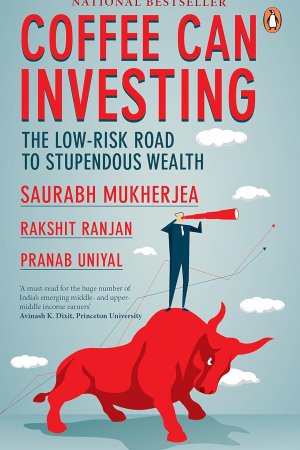
Coffee Can Investing by Sanjay Bakshi – A Simple, High-Reward Strategy for Building Long-Term Wealth
රු1,750.00
3 X Rs. 583.33 or 8% Cashback with
or 3 X රු583.33 with
or up to 4 X රු437.50 with
රු2,500.00
3 X Rs. 833.33 or 8% Cashback with
or 3 X රු833.33 with
or up to 4 X රු625.00 with
Reviews
There are no reviews yet.