
No products in the cart.
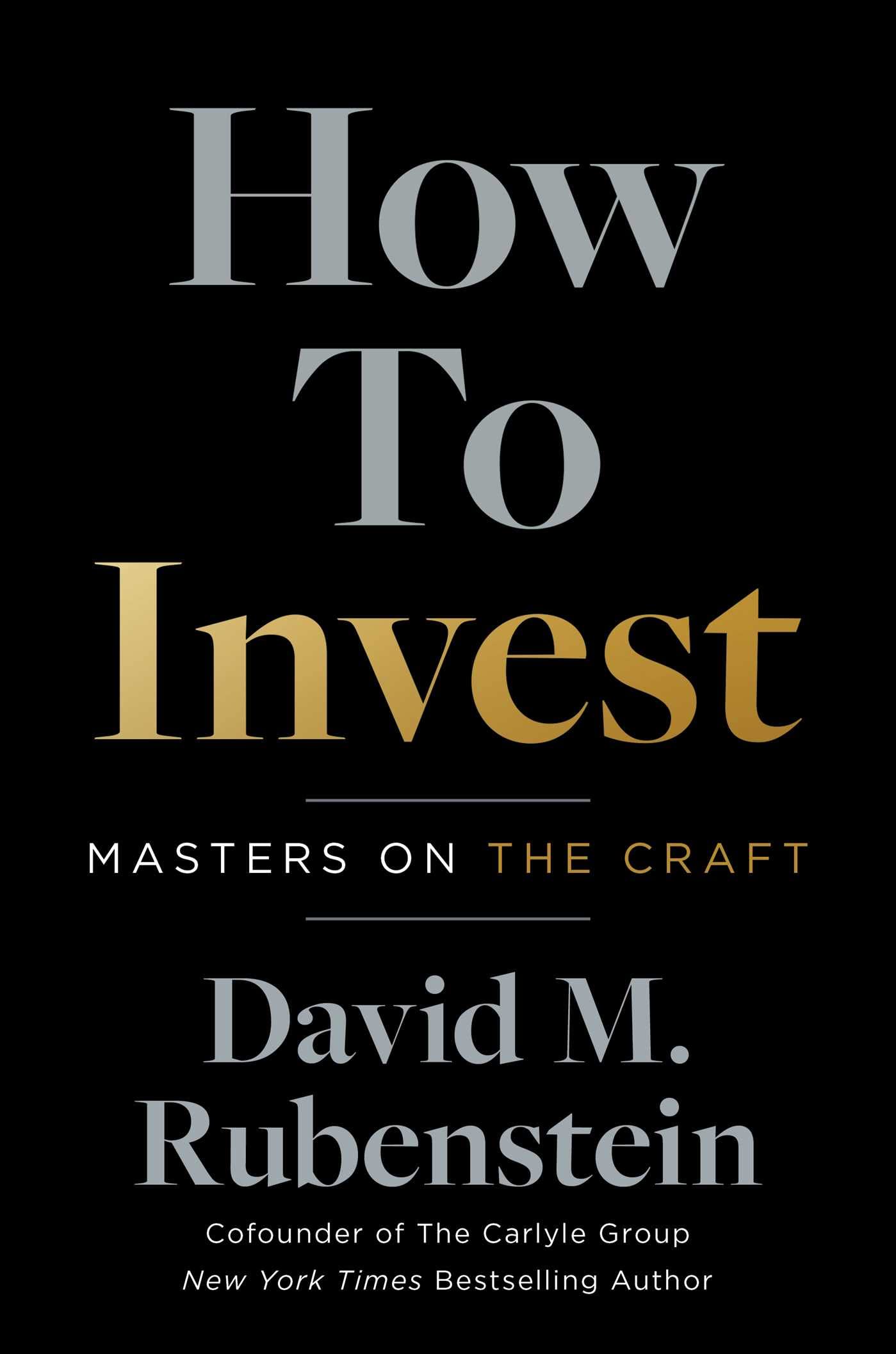
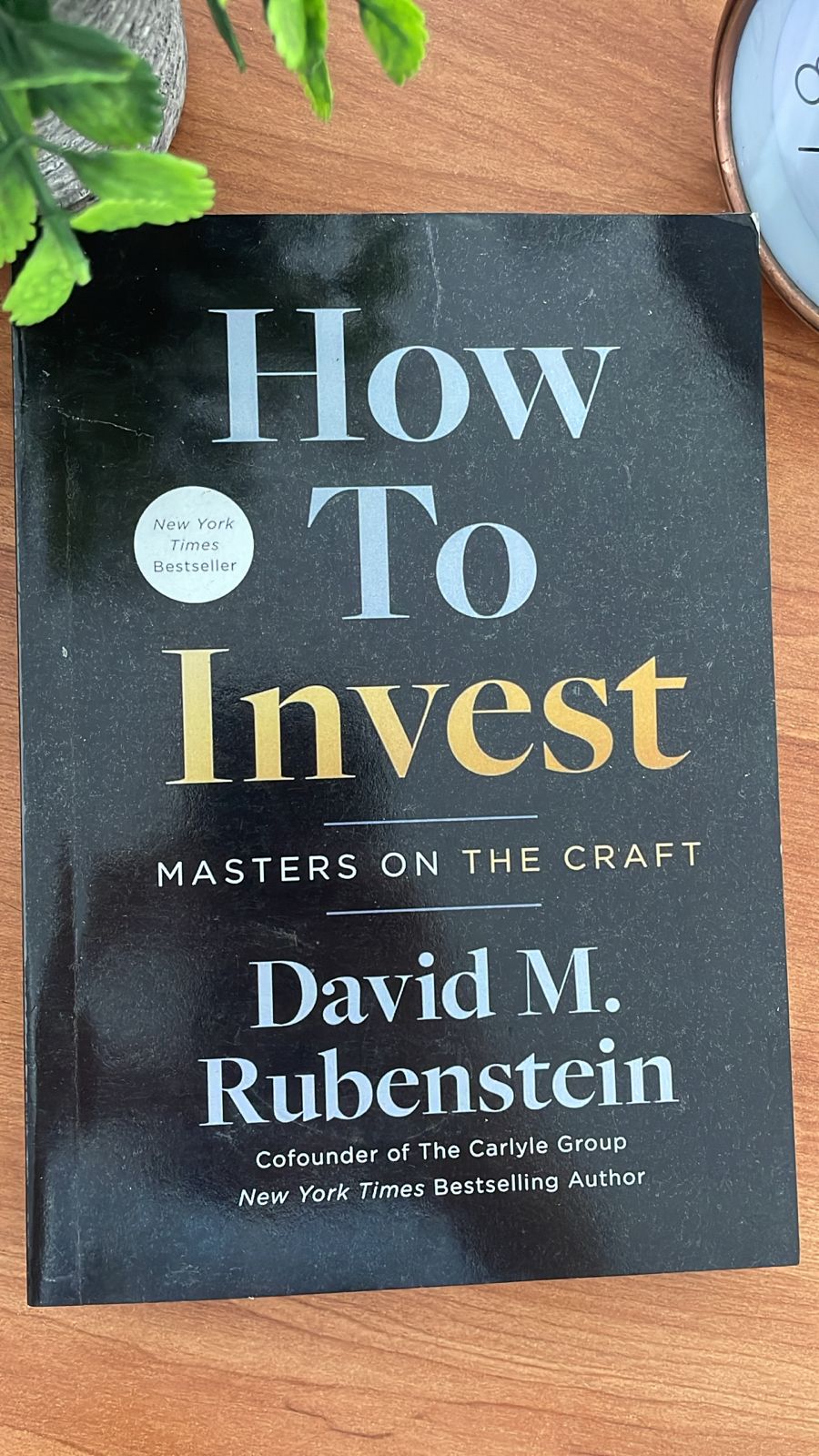


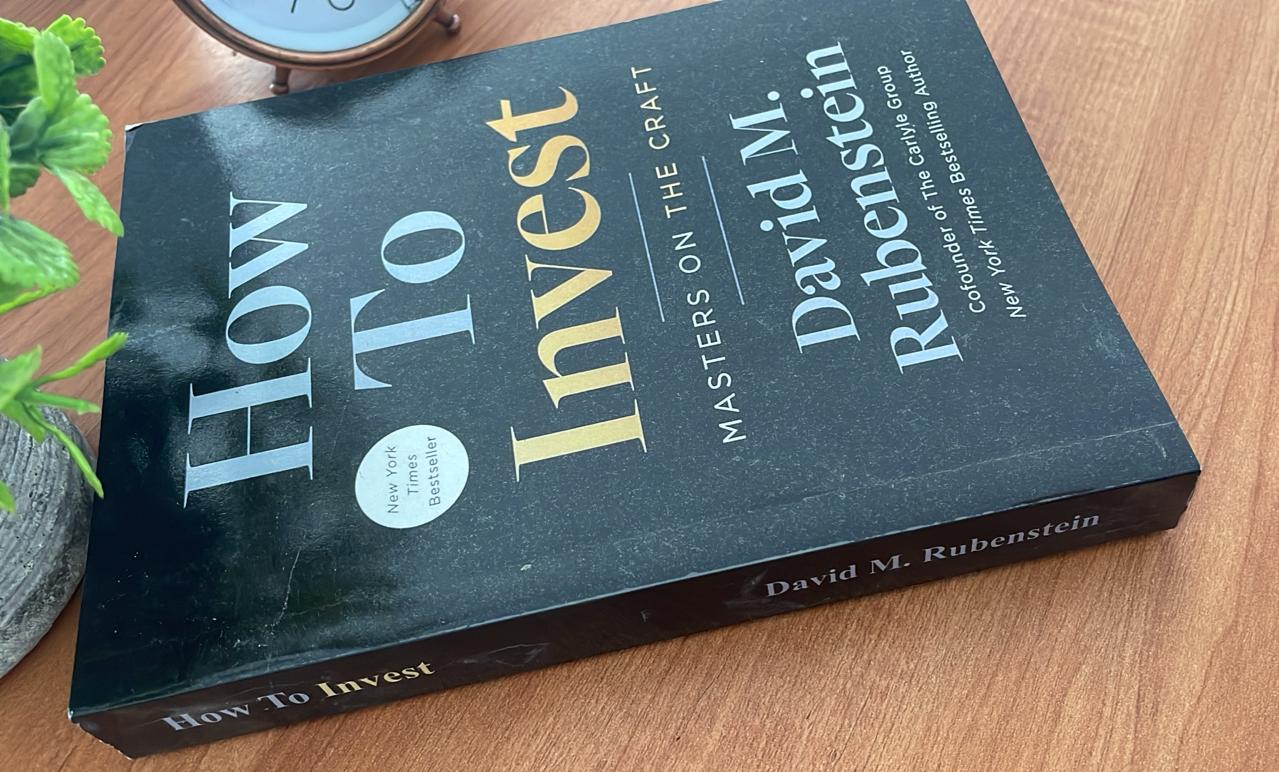



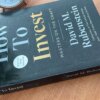
How to Invest by David M. Rubenstein


රු2,350.00
3 X Rs. 783.33 or 8% Cashback with


or 3 X රු783.33 with


or up to 4 X රු587.50 with


How to Invest by David Rubenstein is an insightful master class featuring lessons from leading investors across private equity, stocks, hedge funds, venture capital, real estate, and other markets, exploring risk, research, discipline, mistakes, and long-term investment success.
5 in stock
How to Invest by David Rubenstein is an insightful guide to the world of investing, bringing together lessons from some of the most successful investors, business leaders, and financial thinkers of modern times. Through conversations with experts across private equity, hedge funds, venture capital, real estate, public markets, endowments, and other investment areas, David Rubenstein explores how professional investors identify opportunities, manage uncertainty, learn from mistakes, and build long-term success.
David Rubenstein has spent decades working inside the investment industry.
Rather than presenting one rigid formula for becoming a successful investor, he examines how different investors developed their own strategies.
Some focus on undervalued companies.
Others invest in growing businesses.
Some specialize in private equity.
Others build portfolios around real estate, technology, hedge funds, or long-term institutional investing.
The central lesson of How to Invest by David Rubenstein is that there is no single path to investment success.
Successful investors develop a clear process, understand their strengths, manage risk carefully, and remain willing to learn.
How to Invest by David Rubenstein – Book Overview
How to Invest by David Rubenstein is structured around conversations with prominent investors who have built extraordinary careers in finance.
Rubenstein asks them how they began investing, which mistakes influenced them, how they identify opportunities, how they respond to market uncertainty, and what separates excellent investors from ordinary ones.
The book features insights from major figures including Ray Dalio, Larry Fink, Seth Klarman, Stan Druckenmiller, Jim Simons, Bill Ackman, Marc Andreessen, and others.
Each investor approaches markets differently.
This is one of the book’s greatest strengths.
Readers can compare several investing philosophies rather than being told that only one strategy works.
Learn From the World’s Best Investors
One of the main attractions of How to Invest by David Rubenstein is access to the thinking of highly experienced investors.
Investing books often focus on one author’s strategy.
This book works differently.
Rubenstein gathers ideas from investors who specialize in very different areas.
Readers encounter perspectives from:
- Private equity
- Public stocks
- Hedge funds
- Venture capital
- Real estate
- Institutional investing
- Endowments
- Technology
- Alternative investments
- Sustainable investing
- Global markets
This variety helps readers understand that investment decisions depend on goals, expertise, time horizon, risk tolerance, and the type of asset being evaluated.
Understand Risk Before Return
Risk is one of the most important themes in How to Invest by David Rubenstein.
New investors often focus first on potential returns.
They ask how much money an investment could make.
Experienced investors usually ask another question first:
What could go wrong?
Every investment carries uncertainty.
A company may lose customers.
An industry may change.
Interest rates may rise.
Management may make poor decisions.
Technology may disrupt an established business.
Economic conditions may deteriorate.
Strong investors therefore evaluate both potential reward and potential loss.
The goal is not to eliminate every risk.
That would make investing almost impossible.
The goal is to understand which risks are worth accepting.
Finding Great Opportunities
How to Invest by David Rubenstein explores how leading investors recognize attractive opportunities.
Different investors use different methods.
Some look for businesses the market has misunderstood.
Some search for extraordinary companies capable of growing for many years.
Others look for assets where operational improvements can create additional value.
Venture capital investors may focus on founders and technologies that could transform entire industries.
Real-estate investors may analyse location, demand, financing, and long-term economic development.
The common principle is research.
Successful investors rarely depend entirely on excitement or popularity.
They develop a process for evaluating whether an opportunity makes sense.
Long-Term Thinking
Long-term thinking appears repeatedly throughout How to Invest by David Rubenstein.
Financial markets constantly create short-term noise.
Prices move every day.
News headlines change.
Analysts revise predictions.
Investors become excited or frightened.
But strong investment results can take years to develop.
A good company may experience temporary problems.
A new technology may take longer than expected to become profitable.
A real-estate investment may require patience.
Long-term investors therefore need the ability to distinguish between temporary volatility and permanent deterioration.
This requires both patience and judgment.
The Importance of Research
Research is fundamental to investing.
How to Invest by David Rubenstein shows how professional investors spend considerable time understanding what they are buying.
Research may include examining:
- Business models
- Management teams
- Financial statements
- Competition
- Industry trends
- Customer demand
- Debt
- Cash flow
- Technology
- Valuation
- Economic conditions
- Regulatory risks
The more an investor understands an asset, the better equipped they are to evaluate uncertainty.
Research does not guarantee success.
Unexpected events can always happen.
But disciplined analysis can improve decision quality.
Learning From Investment Mistakes
Mistakes are another major theme in How to Invest by David Rubenstein.
Even legendary investors make bad decisions.
They buy companies that disappoint.
They miss opportunities.
They underestimate risks.
They sell too early.
They remain committed to an idea for too long.
The difference is often what happens afterward.
Strong investors study their mistakes.
They ask why the decision failed.
Was the original analysis wrong?
Did circumstances change?
Was emotion involved?
Was the investment too large?
Did they misunderstand management?
Failure becomes valuable when it improves the next decision.
Private Equity
Private equity naturally plays an important role in How to Invest by David Rubenstein because Rubenstein co-founded The Carlyle Group.
Private-equity investors typically buy significant ownership positions in businesses and attempt to improve their long-term value.
This may involve:
- Improving operations
- Changing strategy
- Strengthening management
- Expanding into new markets
- Reducing unnecessary costs
- Making acquisitions
- Improving capital structure
Private equity differs from simply buying a stock and waiting for the price to rise.
Investors often become actively involved in how the company develops.
The book gives readers useful insight into how this important part of modern finance works.
Venture Capital and Innovation
Venture capital is another area explored in How to Invest by David Rubenstein.
Venture capitalists invest in younger companies that may have enormous growth potential but also significant risk.
Many startups fail.
But one highly successful company can sometimes produce extraordinary returns.
Venture investors therefore evaluate factors such as:
- Founders
- Market size
- Technology
- Competitive advantage
- Growth potential
- Business model
- Product-market fit
- Ability to scale
This type of investing requires comfort with uncertainty.
Future outcomes are difficult to predict because many companies are still developing their products and markets.
Hedge Funds and Flexible Strategies
How to Invest by David Rubenstein also introduces readers to hedge-fund investing.
Hedge funds may use strategies that are more flexible than traditional investment funds.
Some invest in stocks.
Others use bonds, currencies, commodities, derivatives, or macroeconomic strategies.
Different hedge-fund managers may have completely different approaches.
What matters is having a clear investment philosophy and understanding the circumstances in which that philosophy works.
This reinforces one of the book’s central messages:
Successful investing is not about copying random trades.
It is about developing a repeatable process.
Real Estate Investing
Real estate is another major investment category covered in How to Invest by David Rubenstein.
Real-estate investors need to consider factors such as:
- Location
- Interest rates
- Population growth
- Rental demand
- Construction costs
- Economic activity
- Financing
- Property management
- Long-term development
Real estate can generate income while also potentially increasing in value.
However, it carries risks.
Properties require maintenance.
Financing costs can rise.
Demand can change.
A strong real-estate investor therefore needs both financial knowledge and an understanding of local markets.
Psychology and Emotional Discipline
Investing is not only about numbers.
Psychology matters.
How to Invest by David Rubenstein shows why successful investors need emotional discipline.
Markets naturally move between optimism and pessimism.
When prices rise quickly, investors may become overconfident.
When markets fall, fear can become overwhelming.
Emotional decisions can lead investors to buy expensive assets during periods of excitement and sell undervalued assets during periods of panic.
Experienced investors attempt to separate emotion from analysis.
That does not mean they never feel fear or excitement.
It means those emotions do not completely control the decision-making process.
Contrarian Thinking
Some successful investors become successful precisely because they are willing to disagree with the crowd.
How to Invest by David Rubenstein explores this contrarian approach.
When nearly everyone believes an investment is attractive, the optimism may already be reflected in its price.
When nearly everyone hates an investment, there may sometimes be opportunity.
However, being different is not automatically intelligent.
A contrarian investor still needs evidence.
The goal is not to disagree simply for attention.
It is to think independently and reach conclusions based on research rather than popularity.
Management Matters
A great business can still produce disappointing results if it is badly managed.
How to Invest by David Rubenstein demonstrates why many investors spend significant time evaluating leadership teams.
Important questions may include:
Does management allocate capital intelligently?
Are executives honest?
Do they understand their industry?
Can they adapt?
How do they respond when something goes wrong?
Do their incentives align with investors?
Numbers can reveal much about a company.
But leadership often determines what happens next.
Patience and Discipline
Patience is one of the qualities shared by many successful investors featured in How to Invest by David Rubenstein.
Good opportunities do not appear every day.
Sometimes the best decision is to wait.
Investors may feel pressure to constantly buy or sell because markets are always moving.
But activity is not the same as progress.
Disciplined investors understand their strategy and wait for opportunities that fit it.
They do not need to participate in every trend.
They also recognize that compounding takes time.
Long-term wealth is usually created gradually rather than overnight.
Investing and Luck
Luck also influences investment outcomes.
A good investment thesis may fail because of an unpredictable event.
A weak decision may temporarily make money because market conditions happened to move in the investor’s favour.
How to Invest by David Rubenstein helps demonstrate why investors should evaluate their decision-making process rather than judging themselves entirely by one result.
A good process repeated over many years is generally more useful than celebrating one lucky investment.
This perspective encourages humility.
Markets are uncertain.
No investor knows everything.
Why Read How to Invest by David Rubenstein?
How to Invest by David Rubenstein is a valuable choice for readers interested in:
- Investing
- Private equity
- Stocks
- Hedge funds
- Venture capital
- Real estate
- Wealth management
- Portfolio strategy
- Risk management
- Business
- Financial markets
- Investment psychology
- Entrepreneurship
- Long-term wealth creation
The book allows readers to learn from multiple investment philosophies rather than presenting only one point of view.
Who Should Read This Book?
How to Invest by David Rubenstein may especially appeal to:
- Beginner investors
- Experienced investors
- Entrepreneurs
- Business owners
- Finance students
- Economics students
- Business students
- Wealth-management professionals
- Investment professionals
- Startup founders
- Readers interested in private equity
- Readers interested in financial markets
- Anyone wanting to understand how major investors think
It is particularly useful for readers who want broader exposure to different investment styles and asset classes.
A Powerful Master Class in Investing
How to Invest by David Rubenstein provides something unusual: the opportunity to compare how many highly successful investors approach the same fundamental challenge.
How do you take capital today and invest it intelligently for the future?
The answers vary.
Some investors focus on valuation.
Others focus on growth.
Some concentrate heavily.
Others diversify.
Some invest in public markets.
Others prefer private businesses, startups, real estate, or alternative assets.
But several principles repeatedly appear.
Do your research.
Understand risk.
Know what you are investing in.
Learn from mistakes.
Develop emotional discipline.
Think independently.
Stay patient.
And never assume that past success makes you incapable of being wrong.
For readers interested in financial markets, investment strategy, private equity, venture capital, stocks, real estate, risk management, and the thinking of some of the world’s leading investors, How to Invest by David Rubenstein offers a fascinating and practical master class in the craft of investing.
Learn more about How to Invest by David M. Rubenstein on the official Simon & Schuster website.
Explore more investing and finance books at Bargain Books.
Be the first to review “How to Invest by David M. Rubenstein”
Related products
-28%
Self-Help & Psychology
Original price was: රු1,800.00.රු1,300.00Current price is: රු1,300.00.
3 X Rs. 433.33 or 8% Cashback with
or 3 X රු433.33 with
or up to 4 X රු325.00 with

Non-Fiction & Knowledge
රු1,950.00
3 X Rs. 650.00 or 8% Cashback with
or 3 X රු650.00 with
or up to 4 X රු487.50 with
-24%

Out of stock
Non-Fiction & Knowledge
Original price was: රු2,500.00.රු1,900.00Current price is: රු1,900.00.
3 X Rs. 633.33 or 8% Cashback with
or 3 X රු633.33 with
or up to 4 X රු475.00 with

Out of stock
Self-Help & Psychology
රු1,500.00
3 X Rs. 500.00 or 8% Cashback with
or 3 X රු500.00 with
or up to 4 X රු375.00 with
-24%

Non-Fiction & Knowledge
Original price was: රු2,300.00.රු1,750.00Current price is: රු1,750.00.
3 X Rs. 583.33 or 8% Cashback with
or 3 X රු583.33 with
or up to 4 X රු437.50 with

Non-Fiction & Knowledge
රු2,450.00
3 X Rs. 816.67 or 8% Cashback with
or 3 X රු816.67 with
or up to 4 X රු612.50 with
-39%

Out of stock
Self-Help & Psychology
Original price was: රු2,450.00.රු1,500.00Current price is: රු1,500.00.
3 X Rs. 500.00 or 8% Cashback with
or 3 X රු500.00 with
or up to 4 X රු375.00 with
-14%
Out of stock
Self-Help & Psychology
Original price was: රු2,900.00.රු2,500.00Current price is: රු2,500.00.
3 X Rs. 833.33 or 8% Cashback with
or 3 X රු833.33 with
or up to 4 X රු625.00 with
Reviews
There are no reviews yet.