
No products in the cart.
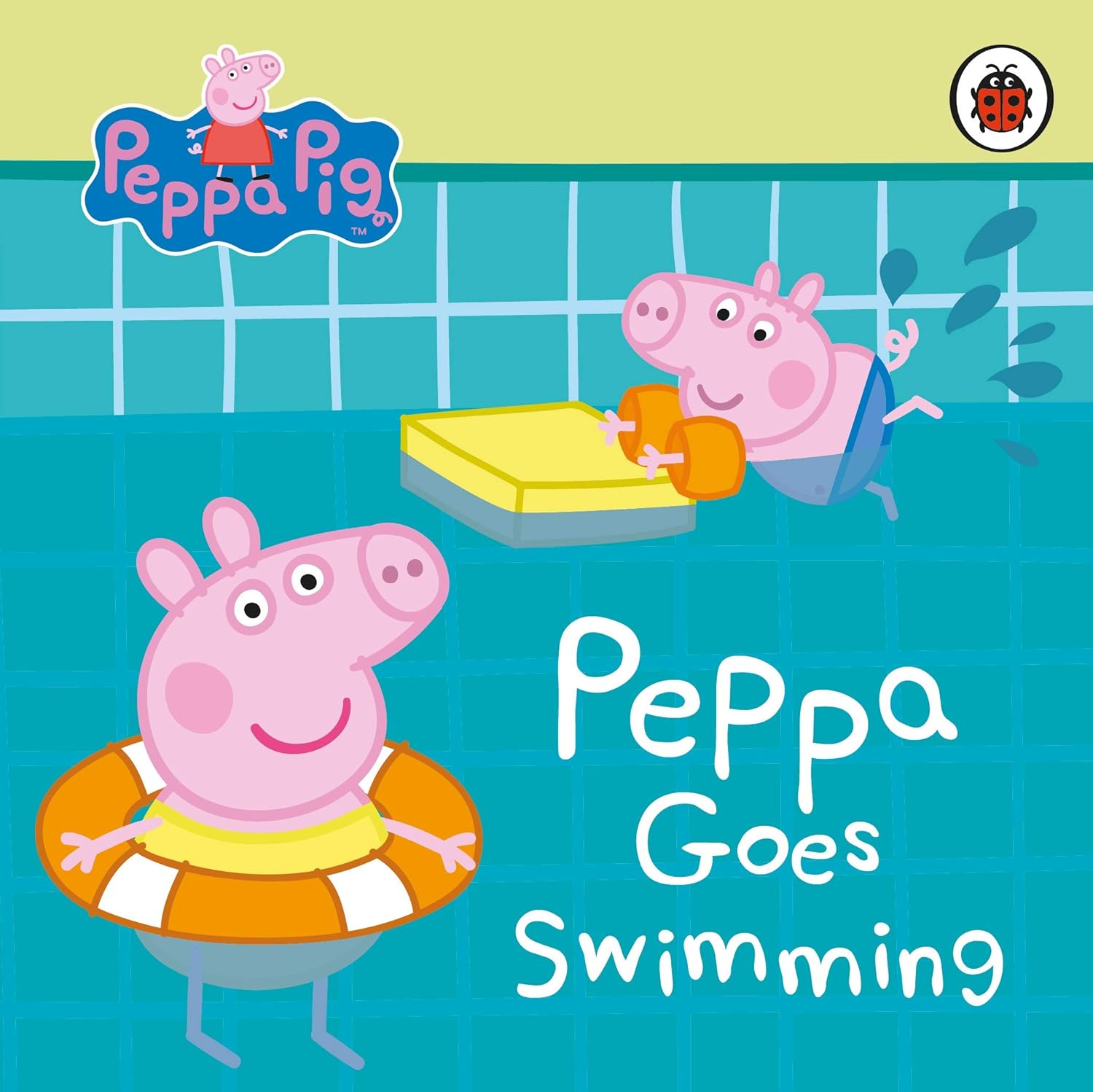
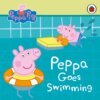
Peppa Pig: Peppa Goes Swimming
රු2,050.00
3 X Rs. 683.33 or 8% Cashback with


or 3 X රු683.33 with


or up to 4 X රු512.50 with


Buy Peppa Pig: Peppa Goes Swimming online in Sri Lanka
Join Peppa and little brother George on an exciting aquatic adventure! When it’s time to go swimming, George feels scared about getting in the pool. Will Mummy and Daddy Pig help him overcome his fears? This colorful storybook teaches young readers about courage, family support, and trying new things. Perfect for Sri Lankan families embracing swimming culture and water safety education – especially relevant as more parents prioritize swimming lessons for children’s development and confidence building.
A delightful tale featuring the beloved pig family that encourages children to face their fears with family support.
- Language: English
- Title: Peppa Pig: Peppa Goes Swimming
- Page Count: 24
- Genres: Children, Picture Books
- Author(s): Neville Astley, Mark Baker
- Published Year: 2009
5 in stock
Peppa Pig: Peppa Goes Swimming
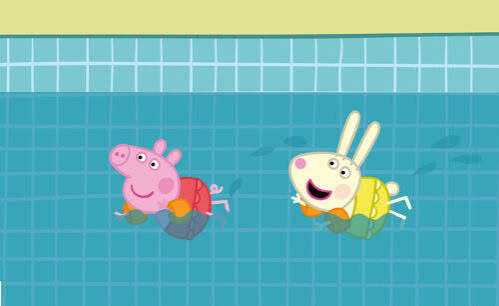
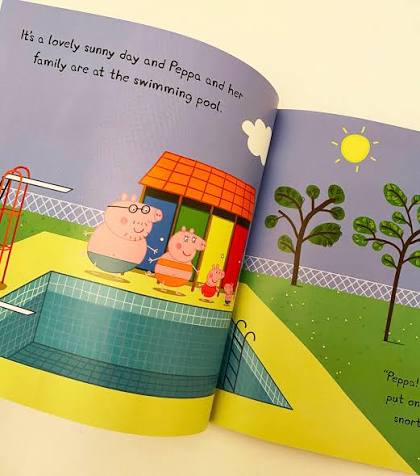
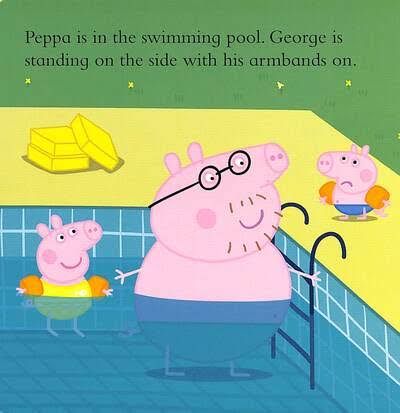
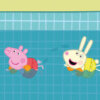
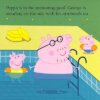
Peppa Pig: Peppa Goes Swimming is a reassuring first-experience board book about George’s first visit to a swimming pool. Peppa is excited to get into the water, but George feels nervous and is unsure whether he wants to join her. With patient encouragement from Mummy Pig and Daddy Pig, he gradually becomes comfortable and begins splashing happily.
Created for toddlers and preschoolers, this colourful Peppa Pig adventure can help children understand that feeling uncertain before a new activity is perfectly normal. Its sturdy pages, familiar characters, simple storytelling, and positive swimming theme make it ideal for children beginning swimming lessons or preparing for their first pool visit.
Swimming is a new experience for George. The pool looks unfamiliar, and he feels nervous about entering the water.
Many young children can relate to his reaction. A pool may seem large, the water may feel cold, and the sounds inside an indoor swimming centre can be louder than expected. Children may also feel uncertain when asked to try unfamiliar movements.
George’s experience gently shows that children do not need to become confident immediately. With support, reassurance, and time, a new activity can gradually become enjoyable.
Mummy Pig and Daddy Pig help George feel safe rather than expecting him to manage alone. Their patient support shows young readers the importance of trusted adults during a first swimming experience.
Parents can use the story to explain that adults and qualified swimming teachers are there to offer guidance. Children should listen carefully to instructions and tell an adult if they feel frightened or uncomfortable.
Useful discussion questions include:
- “Why does George feel nervous?”
- “Who helps him at the swimming pool?”
- “What makes George feel more confident?”
- “How do you think the water feels?”
- “What should we do if we feel worried?”
- “Do you think George will enjoy swimming?”
These questions encourage children to recognise emotions and talk about their own concerns.
As the story continues, George becomes more comfortable in the pool. He discovers that swimming and splashing can be fun when he has appropriate support.
This gradual change gives the book an encouraging message: confidence can grow through small steps. A child might begin by sitting near the pool, touching the water, entering with an adult, or practising one simple skill at a time.
Children develop at different rates, so comparisons with siblings or friends are rarely helpful. George’s story works best as reassurance rather than a promise that every child will immediately enjoy the water.
Peppa Pig: Peppa Goes Swimming can be shared before a child’s first swimming class. Adults can describe what the child may see and do, while explaining that individual pools and lessons may operate differently.
Families may need to bring:
- Suitable swimwear
- A towel
- A change of clothes
- Pool-safe footwear
- Swimming aids requested by the instructor
- A bag for wet clothing
- Goggles, if appropriate
- Any required personal-care items
Parents should check the swimming centre’s rules before visiting. Some locations require swimming caps or have specific guidance about approved flotation aids.
The story provides opportunities to introduce words connected with swimming and water.
Parents can talk about:
- Swimming pool
- Water
- Splash
- Float
- Kick
- Paddle
- Shallow
- Deep
- Swimsuit
- Towel
- Lifeguard
- Swimming teacher
Adults can repeat these words while pointing towards the illustrations. Children may also enjoy copying movements, such as pretending to kick their legs, paddle with their hands, or dry themselves with an imaginary towel.
Although this is a light-hearted story, real-world swimming requires continuous and responsible adult supervision. Books and flotation devices cannot replace active supervision or professional instruction.
Children should learn that they must:
- Never enter a pool without permission
- Stay close to a responsible supervising adult
- Follow lifeguard and instructor directions
- Walk rather than run near the pool
- Avoid pushing other swimmers
- Use only approved swimming aids
- Remain within an appropriate depth
- Tell an adult immediately if they feel unsafe
- Never swim alone
Adults must follow local pool regulations and provide supervision appropriate to the child’s age and ability. Even confident young swimmers require close attention around water.
George’s nervousness offers a natural opportunity to discuss emotions. Children may experience excitement and worry at the same time, particularly before a first lesson.
Adults can explain that:
- Feeling nervous is normal
- It is helpful to tell someone how you feel
- New skills take practice
- Asking for help is sensible
- Small attempts still count as progress
- Confidence often grows gradually
This message can apply beyond swimming to school, sports, medical appointments, and other unfamiliar experiences.
Reading Peppa Goes Swimming aloud can encourage children to listen, observe, predict, and communicate. Its clear sequence helps preschoolers understand how George’s feelings change throughout the story.
Shared reading may support:
- Listening and concentration
- Story comprehension
- Early vocabulary
- Sequencing
- Prediction
- Emotional awareness
- Confidence discussing worries
- Visual observation
- Parent-child communication
- Interest in physical activity
Children can also practise retelling the story using the pictures as prompts.
Swimming can be an enjoyable form of movement when practised safely and with suitable instruction. It involves the whole body and may help children build coordination, confidence, and familiarity with water.
The book can encourage positive interest in swimming without pressuring children to progress faster than they are ready. Adults can praise effort, listening, and willingness to participate rather than focusing only on whether a child can swim independently.
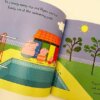
This 2020 edition is presented as a sturdy board book. Thick pages are easier for toddlers to hold and turn than ordinary paper pages, making it suitable for repeated family reading.
The compact square format is convenient for:
- Reading before a swimming lesson
- Bedtime stories
- Quiet play
- Nursery story sessions
- Family travel
- Waiting times
- A child’s first home library
Its 16-page length is manageable for preschool attention spans while providing a complete first-experience story.
Families can continue the swimming theme away from the water with safe pretend-play activities.
Children might:
- Pretend to swim on a dry floor
- Pack a swimming bag
- Practise naming pool items
- Draw a colourful swimming pool
- Use toy figures to retell George’s experience
- Sing action songs about splashing
- Talk about pool-safety rules
Dry-land pretend play should never include putting a child’s face into containers of water. Any activity involving water requires appropriate adult supervision.
Peppa Pig: Peppa Goes Swimming is an appealing gift for:
- Children preparing for their first pool visit
- Toddlers beginning swimming lessons
- Young Peppa Pig and George fans
- Children who feel nervous around water
- Families discussing water safety
- Nurseries and early-learning centres
- Birthday and holiday gifts
- Preschool first-experience collections
Its reassuring message makes it especially useful before a new swimming activity.
Peppa Pig is a popular preschool character who lives with Mummy Pig, Daddy Pig, and her younger brother George. Their stories explore family life, friendships, playgroup activities, celebrations, outings, and other familiar childhood experiences.
Peppa Pig books use colourful illustrations, accessible storytelling, familiar characters, and gentle humour to help young readers explore everyday situations.
This book is suitable for:
- Toddlers and preschool children
- Children learning to swim
- Little ones visiting a pool for the first time
- Peppa Pig and George fans
- Parents introducing water-safety rules
- Families preparing for swimming lessons
- Nurseries and preschool classrooms
- Anyone seeking a reassuring first-experience story
These details refer to the 2020 UK board-book edition and are confirmed by the official Penguin UK publication page.
Be the first to review “Peppa Pig: Peppa Goes Swimming”
Related products
-49%

Out of stock
Children & Young Adult
Original price was: රු3,400.00.රු1,750.00Current price is: රු1,750.00.
3 X Rs. 583.33 or 8% Cashback with
or 3 X රු583.33 with
or up to 4 X රු437.50 with
Out of stock
Children & Young Adult
රු2,500.00
3 X Rs. 833.33 or 8% Cashback with
or 3 X රු833.33 with
or up to 4 X රු625.00 with
-16%

Out of stock
Children & Young Adult
Original price was: රු32,000.00.රු27,000.00Current price is: රු27,000.00.
3 X Rs. 9,000.00 or 8% Cashback with
or 3 X රු9,000.00 with
or up to 4 X රු6,750.00 with

Out of stock
Children & Young Adult
Famous Five Vol 10: Five on a Hike Together by Enid Blyton | Classic Children’s Adventure Book
රු800.00
3 X Rs. 266.67 or 8% Cashback with
or 3 X රු266.67 with
or up to 4 X රු200.00 with
Out of stock
Adventure Fiction
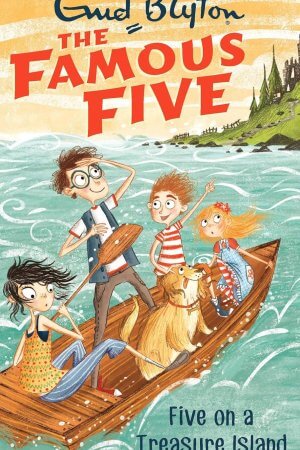
Famous Five: Five on a Treasure Island by Enid Blyton | Book 1 of the Classic Adventure Series
රු800.00
3 X Rs. 266.67 or 8% Cashback with
or 3 X රු266.67 with
or up to 4 X රු200.00 with
Out of stock
Children & Young Adult
රු12,000.00
3 X Rs. 4,000.00 or 8% Cashback with
or 3 X රු4,000.00 with
or up to 4 X රු3,000.00 with

Out of stock
Children & Young Adult
රු1,750.00
3 X Rs. 583.33 or 8% Cashback with
or 3 X රු583.33 with
or up to 4 X රු437.50 with
-13%
Out of stock
Children & Young Adult
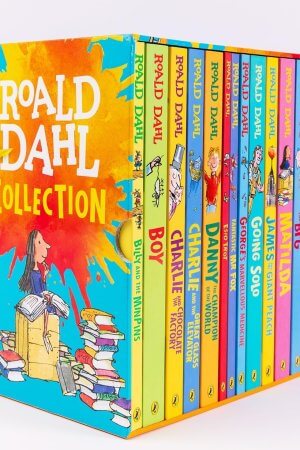
Roald Dahl Complete Collection by Roald Dahl (16-Book Box Set)
Original price was: රු12,500.00.රු10,900.00Current price is: රු10,900.00.
3 X Rs. 3,633.33 or 8% Cashback with
or 3 X රු3,633.33 with
or up to 4 X රු2,725.00 with
Reviews
There are no reviews yet.