
No products in the cart.
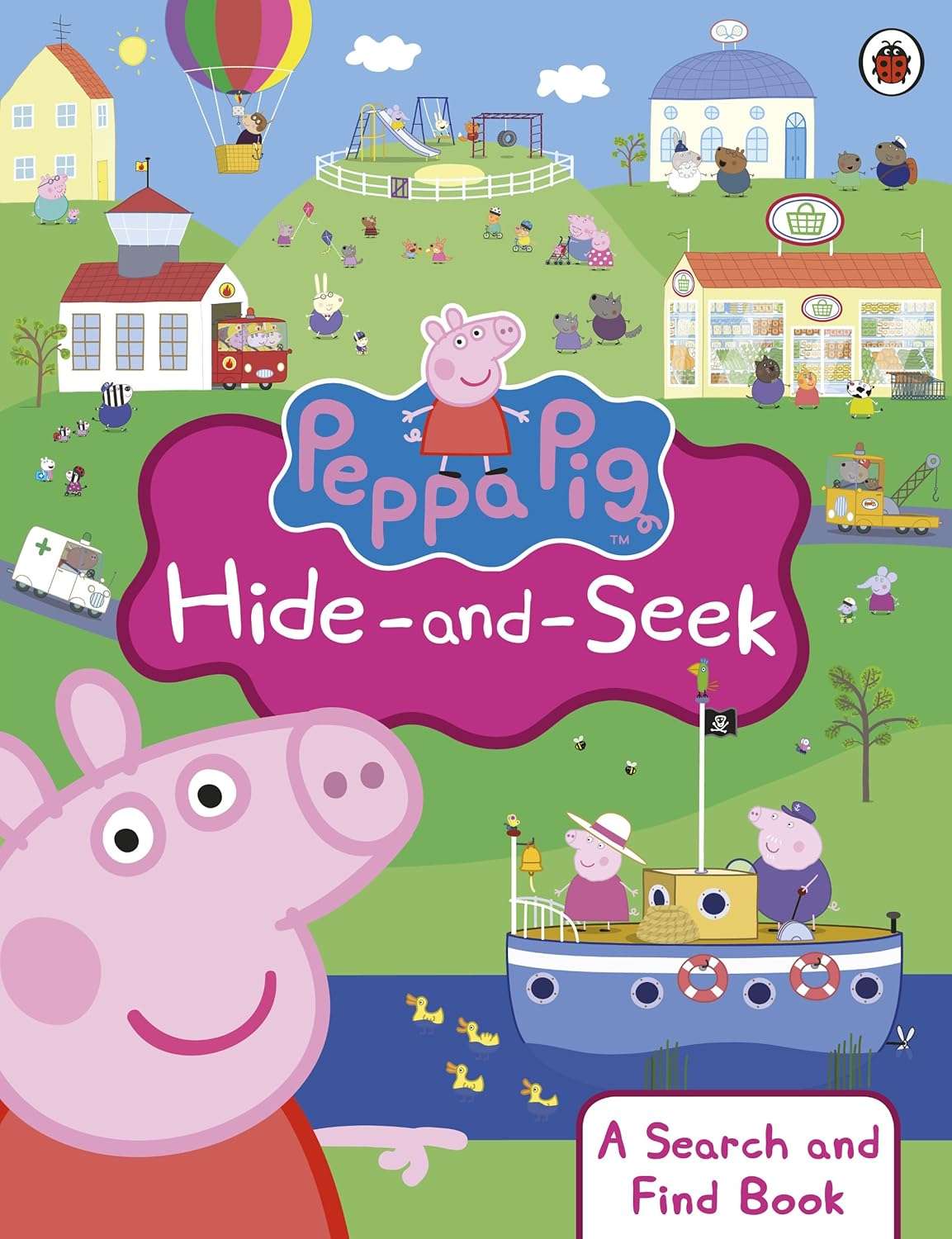
Peppa Pig: Peppa Hide and Seek
රු2,500.00
3 X Rs. 833.33 or 8% Cashback with


or 3 X රු833.33 with


or up to 4 X රු625.00 with


| Feature | Details |
|---|---|
| Title | Peppa Pig: Hide-and-Seek |
| Author / Brand | Peppa Pig |
| ISBN | 978-0723293125 |
| Pages | 24 pages |
| Format | Paperback |
| Publication Date | 27 August 2014 |
| Dimensions | Approximately 318 mm × 4 mm × 245 mm |
| Weight | 199 g |
| Genre / Category | Children’s Activity / Search & Find Book; part of Peppa Pig series |
| Imprint / Publisher | Ladybird |
5 in stock
Peppa Pig: Hide-and-Seek – A Search and Find Book
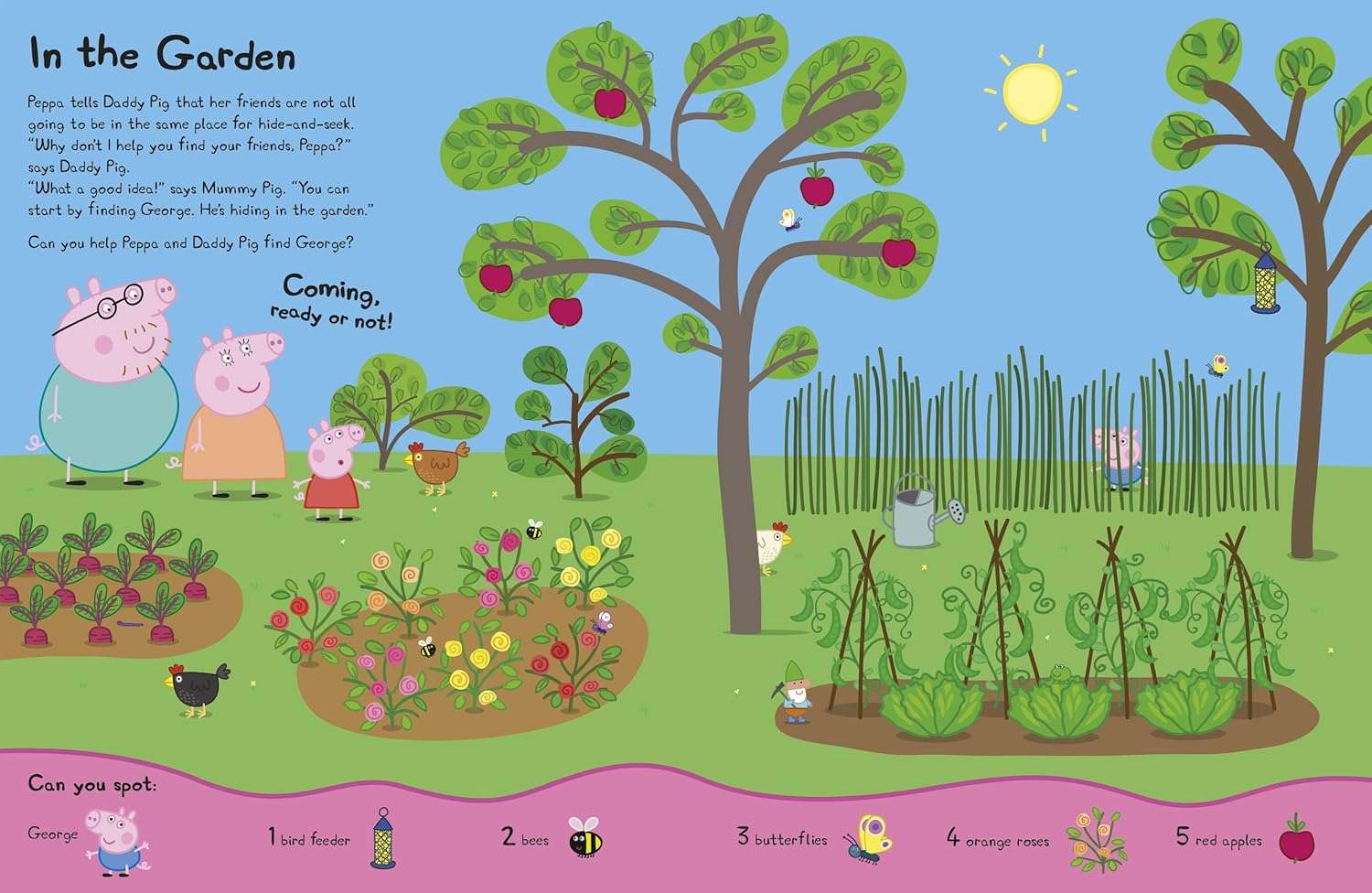
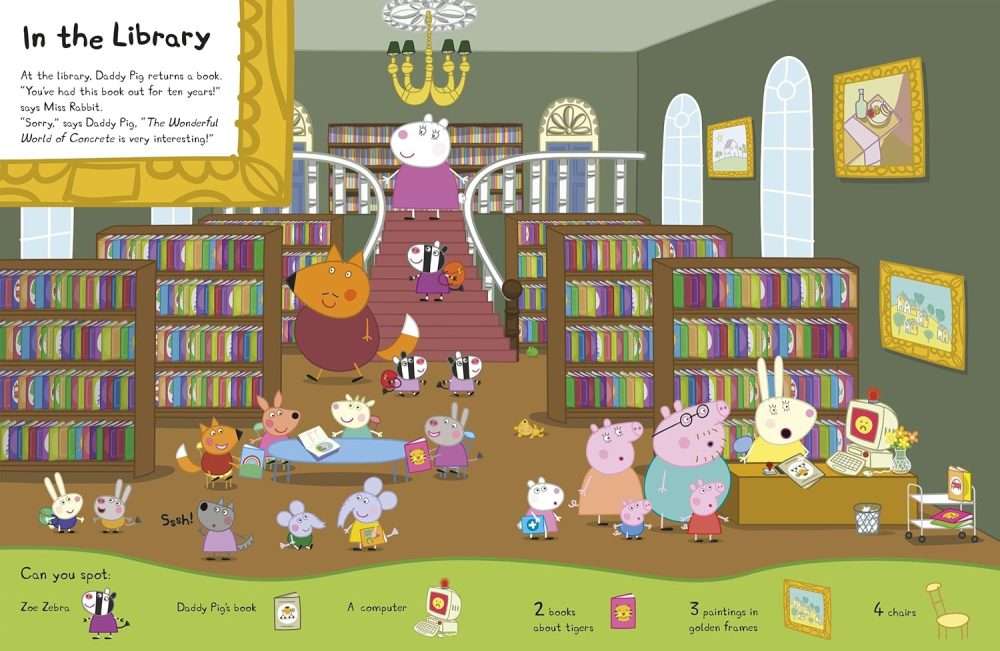
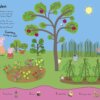
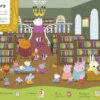
Peppa Pig: Hide-and-Seek is a large, colourful search-and-find activity book in which Peppa goes looking for her friends while discovering hundreds of objects along the way. Peppa’s friends are too busy to stop and play, so she takes the hide-and-seek game to them.
Children can join Peppa as she visits lively locations including the museum, gym, and supermarket. Each scene contains characters and objects to find, giving young readers plenty to examine beyond the main hide-and-seek adventure.
With more than 200 things to spot, familiar Peppa Pig characters, and generously sized illustrated pages, this activity book provides screen-free entertainment while supporting observation, concentration, vocabulary, and visual recognition.
Peppa wants to play hide-and-seek, but her friends are busy in different places. Instead of giving up, she goes on an adventure to find them.
Children become active participants by searching each scene alongside Peppa. They must look carefully, identify the correct characters, and complete the visual challenges before continuing.
Parents can build excitement by asking:
- “Where could Peppa’s friend be hiding?”
- “Can you find the correct character?”
- “What else can you see in the picture?”
- “Which object did you notice first?”
- “Can you find something red?”
- “How many animals can you spot?”
- “Where should Peppa look next?”
These questions encourage children to describe their observations rather than simply pointing.
The book contains over 200 things for children to find across its busy illustrated scenes. This large number of search challenges gives the activity strong repeat value.
A child may not discover everything during the first reading. When they return later, they can search for previously missed objects, try to remember familiar locations, or complete the pages with less adult assistance.
The multiple objects also allow adults to adjust the difficulty. Younger children can begin with larger or more distinctive items, while older preschoolers can search for smaller details.
The “over 200 things to spot” feature is described by major UK booksellers, including the Foyles edition listing.
Peppa’s search takes her to different everyday locations. These varied settings keep the pages visually interesting while introducing useful vocabulary.
At the Museum
Museum scenes can encourage children to discuss exhibitions, interesting objects, and places where people learn about history, science, art, or nature.
Adults can ask what the characters are looking at and whether the child has visited a museum before.
At the Gym
The gym introduces movement, exercise, and sporting activities. Children can identify equipment, copy simple actions away from the page, or describe how the characters are moving.
At the Supermarket
The supermarket provides opportunities to name foods, baskets, trolleys, shelves, and other familiar objects. Parents can ask children to find particular items or discuss what their family usually buys.
These settings turn the search-and-find game into a broader vocabulary-building experience.
Search-and-find activities require children to examine a large image and separate individual details from a busy background. This can strengthen visual attention and careful observation.
To find an object, a child may need to consider:
- Its colour
- Its shape
- Its size
- Where it might logically appear
- Which objects look similar
- Whether part of it is hidden
- How it differs from nearby items
Adults can offer hints when necessary without immediately revealing the answer. For example, they might say, “Look near the shelves,” or “Can you find something with the same colour?”
Some objects may be easy to find, while others require a more careful search. This gives children opportunities to practise staying focused when the answer is not immediately obvious.
Parents can reinforce a positive attitude by praising effort and persistence. Helpful phrases include:
- “Let’s look one more time.”
- “Try checking another part of the page.”
- “You are looking very carefully.”
- “That one was difficult, but you found it.”
- “Would you like a small clue?”
The goal is to make searching enjoyable rather than turning it into a test. Children should feel comfortable taking breaks or returning to a difficult page later.
The detailed illustrations provide many opportunities to introduce new words. Parents can name animals, objects, colours, locations, actions, and positions.
Positional language is particularly useful during search games. Adults can describe an item as:
- Above
- Below
- Beside
- Behind
- In front
- Between
- Near
- Far
- Inside
- Outside
Children can gradually begin using these words to explain where they found something.
Although the book’s main purpose is searching, families can add simple counting and matching challenges.
For example, children might:
- Count particular characters
- Find two matching objects
- Group items by colour
- Identify the largest and smallest objects
- Count how many items appear on a shelf
- Find objects beginning with a particular sound
- Compare two parts of a scene
- Locate a requested shape
These activities can be adapted to the child’s age without writing on or altering the pages.
After exploring the book several times, children may begin remembering where certain characters and objects are hidden. This is not a problem—the memory challenge becomes part of the activity.
Adults can ask children to close the book and recall:
- Which places Peppa visited
- Where a friend was hiding
- What objects appeared in the supermarket
- Which page was most difficult
- Which scene was their favourite
Remembering and describing visual information can support comprehension and narrative skills.
The search-and-find format does not require every word to be read aloud. Children can browse the pages and explore the illustrations independently, making the book accessible to preschoolers who are not yet reading.
Independent use may encourage:
- Decision-making
- Visual confidence
- Self-directed play
- Persistence
- Page-handling skills
- Satisfaction from completing a challenge
Younger children may initially need an adult to read the prompts, while older children can use the pictures to understand what they need to find.
Exploring Peppa Pig: Hide-and-Seek may support:
- Visual discrimination
- Concentration
- Observation
- Memory
- Matching
- Early counting
- Positional vocabulary
- Problem-solving
- Patience and perseverance
- Parent-child communication
The book combines these skills with an enjoyable game featuring characters many children already recognise.
At approximately 316 × 243 mm, this is a generously sized paperback. The large pages provide space for busy scenes and numerous small details.
Its format is suitable for:
- Family activity time
- Quiet independent play
- Preschool group activities
- Rainy afternoons
- Travel and holidays
- Waiting times
- Screen-free entertainment
Because it is a paperback rather than a board book, younger children should be shown how to turn the pages carefully.
Families can extend the theme with a safe hide-and-seek game at home. Adults should establish clear boundaries and explain which locations are not safe for hiding.
A simpler alternative is to hide a toy in one room and provide clues such as “near,” “under,” or “beside.” Children can also create a picture containing hidden objects for an adult to find.
These extensions may encourage movement, listening, creativity, and use of positional language.
Peppa Pig: Hide-and-Seek is suitable for:
- Children aged approximately three years and above
- Young Peppa Pig fans
- Preschoolers who enjoy search-and-find books
- Children developing concentration
- Families seeking screen-free activities
- Nurseries and early-learning centres
- Travel entertainment
- Birthday or Christmas gifts
Its many objects and detailed scenes provide more replay value than a single-use activity.
Peppa Pig is a popular preschool character whose adventures explore family life, friendship, playgroup, outings, celebrations, and imaginative games.
Peppa Pig books use colourful illustrations, familiar characters, and accessible activities to encourage young children to enjoy stories, puzzles, and early learning.
The edition and publication specifications are confirmed by the official Penguin UK page.
Be the first to review “Peppa Pig: Peppa Hide and Seek”
Related products
Out of stock
Children & Young Adult
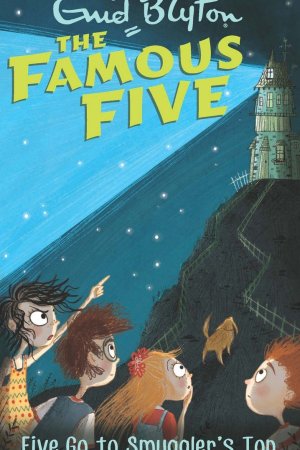
Famous Five: Five Go to Smuggler’s Top – Book 4 by Enid Blyton
රු800.00
3 X Rs. 266.67 or 8% Cashback with
or 3 X රු266.67 with
or up to 4 X රු200.00 with

Children & Young Adult
The Famous Five Complete Box Set of 21 by Enid Blyton & Eileen Soper
රු9,900.00
3 X Rs. 3,300.00 or 8% Cashback with
or 3 X රු3,300.00 with
or up to 4 X රු2,475.00 with
Out of stock
Children & Young Adult
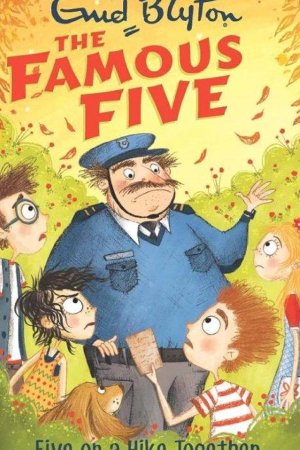
Famous Five Vol 10: Five on a Hike Together by Enid Blyton | Classic Children’s Adventure Book
රු800.00
3 X Rs. 266.67 or 8% Cashback with
or 3 X රු266.67 with
or up to 4 X රු200.00 with
Out of stock
Children & Young Adult
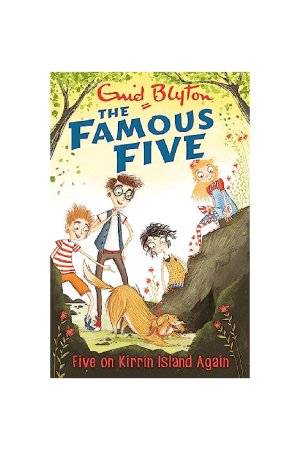
Famous Five Vol 6: Five on Kirrin Island Again by Enid Blyton | Classic Adventure Book
රු800.00
3 X Rs. 266.67 or 8% Cashback with
or 3 X රු266.67 with
or up to 4 X රු200.00 with
-16%
Out of stock
Children & Young Adult
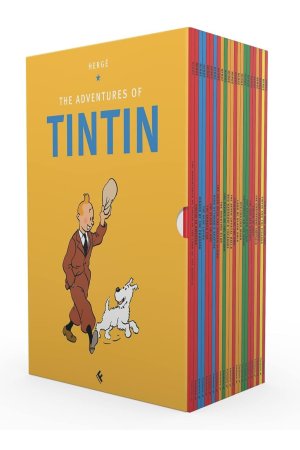
Original price was: රු32,000.00.රු27,000.00Current price is: රු27,000.00.
3 X Rs. 9,000.00 or 8% Cashback with
or 3 X රු9,000.00 with
or up to 4 X රු6,750.00 with

Out of stock
Children & Young Adult
රු1,950.00
3 X Rs. 650.00 or 8% Cashback with
or 3 X රු650.00 with
or up to 4 X රු487.50 with
Out of stock
Children & Young Adult
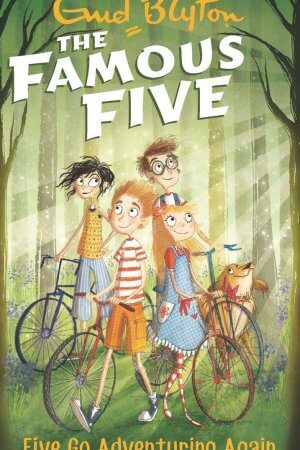
Famous Five: Five Go Adventuring Again by Enid Blyton | Book 2 of the Classic Adventure Series
රු800.00
3 X Rs. 266.67 or 8% Cashback with
or 3 X රු266.67 with
or up to 4 X රු200.00 with

Out of stock
Children & Young Adult
රු3,200.00
3 X Rs. 1,066.67 or 8% Cashback with
or 3 X රු1,066.67 with
or up to 4 X රු800.00 with
Reviews
There are no reviews yet.