
No products in the cart.





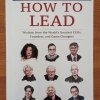





How to Lead by David Rubenstein is an insightful leadership and business book that brings together wisdom from some of the world’s most successful CEOs, founders, investors, political leaders, athletes, entertainers, and innovators.
David M. Rubenstein, cofounder of The Carlyle Group, draws on years of conversations with highly accomplished leaders to understand what makes certain people capable of creating extraordinary results.
Instead of presenting one single formula for leadership, the book shows that successful leaders can have very different personalities, backgrounds, industries, and management styles.
Some are quiet.
Others are highly energetic.
Some depend heavily on analysis.
Others rely partly on intuition.
But certain qualities repeatedly appear.
Focus.
Persistence.
Communication.
Curiosity.
Integrity.
Learning from failure.
The willingness to take responsibility.
How to Lead by David Rubenstein gives readers an opportunity to learn directly from people who have faced difficult decisions at the highest levels of business, government, technology, finance, entertainment, and sport.
How to Lead by David Rubenstein – Book Overview
How to Lead by David Rubenstein is built around conversations with influential leaders from many different fields.
The book includes perspectives from figures such as:
- Bill Gates
- Jeff Bezos
- Warren Buffett
- Oprah Winfrey
- Tim Cook
- Jamie Dimon
- Phil Knight
- Richard Branson
- Eric Schmidt
- Indra Nooyi
- Ruth Bader Ginsburg
- Bill Clinton
- George W. Bush
- Yo-Yo Ma
- Jack Nicklaus
Each person reached a high level of achievement through a different path.
Rubenstein examines how they began, how they developed their abilities, how they responded to failure, and what they learned while leading major organizations or pursuing demanding careers.
This variety makes the book particularly valuable.
Readers are not being told to copy one leader.
Instead, they can compare different approaches and identify principles that may work in their own lives.
Leadership Has No Single Formula
One of the strongest lessons in How to Lead by David Rubenstein is that there is no perfect leadership personality.
Some people assume leaders must always be highly confident, charismatic, and naturally comfortable speaking to large groups.
The leaders in this book demonstrate something different.
Effective leadership can take many forms.
A person may lead through vision.
Another may lead through detailed understanding.
Someone else may build trust through communication.
Another may become successful because of relentless focus.
The important question is not whether someone looks like a traditional leader.
It is whether they can influence people, make good decisions, communicate purpose, and create meaningful results.
Focus on What Matters
Focus appears repeatedly throughout How to Lead by David Rubenstein.
Successful leaders often understand that they cannot pursue every opportunity.
Time is limited.
Money is limited.
Attention is limited.
Organizations therefore need priorities.
A leader who constantly changes direction may create confusion.
Strong leaders identify what matters most and concentrate resources around those priorities.
This principle can apply beyond large companies.
A student needs priorities.
An entrepreneur needs priorities.
A manager needs priorities.
Someone trying to achieve ten major goals simultaneously may make less progress than someone concentrating deeply on two or three important objectives.
Learn From Failure
Failure is another major topic in How to Lead by David Rubenstein.
Many highly successful people have experienced significant setbacks.
Businesses fail.
Products fail.
Investments fail.
Strategies fail.
Careers can move in unexpected directions.
The important question is what someone does afterward.
Strong leaders do not simply pretend failures never happened.
They analyse them.
What went wrong?
What assumptions were incorrect?
What information was missed?
What should be changed?
This turns failure into useful information.
Leadership therefore requires enough confidence to make difficult decisions and enough humility to admit when those decisions were wrong.
Decision-Making Under Pressure
Leaders rarely receive perfect information.
How to Lead by David Rubenstein explores how highly accomplished people make difficult decisions when outcomes remain uncertain.
Executives may need to invest billions before knowing whether a strategy will succeed.
Political leaders may need to respond during crises.
Entrepreneurs may need to launch products before they know how customers will react.
Waiting forever for complete certainty can become another form of failure.
Strong decision-makers gather the best available information, listen to knowledgeable people, consider risks, and eventually make a choice.
They also accept responsibility for that choice.
Jeff Bezos and Intuition
Jeff Bezos is one of the prominent leaders featured in How to Lead by David Rubenstein.
His experience demonstrates that business decisions are not always made entirely through spreadsheets and calculations.
Analysis is important.
Data matters.
But some major decisions also require judgment and intuition.
Entrepreneurs often enter markets that do not yet exist.
There may be no perfect historical data showing what will happen.
At those moments, leaders need to combine evidence with an understanding of customers, technology, timing, and long-term opportunity.
This does not mean ignoring numbers.
It means recognizing that leadership sometimes requires acting before every answer becomes obvious.
Bill Gates and Continuous Learning
Bill Gates represents another important leadership perspective in How to Lead by David Rubenstein.
His career demonstrates the value of curiosity and continuous learning.
Industries change rapidly.
Technology develops.
Competitors emerge.
Customer expectations change.
A leader who stops learning may eventually become disconnected from reality.
Continuous learners read.
They ask questions.
They seek experts.
They reconsider assumptions.
They remain interested in subjects outside their immediate responsibilities.
This intellectual curiosity can help leaders recognize opportunities that others overlook.
Warren Buffett and Long-Term Thinking
Warren Buffett’s presence in How to Lead by David Rubenstein reinforces the importance of patience and long-term thinking.
Modern business can encourage short-term behaviour.
Companies focus on quarterly results.
Investors react to daily market movements.
Social media creates constant pressure for immediate attention.
But many extraordinary businesses are built over decades.
A long-term leader asks different questions.
Will this decision still make sense five years from now?
Does it strengthen the organization?
Does it improve reputation?
Does it create lasting value?
Thinking long term can help leaders avoid decisions that create temporary success but permanent damage.
Oprah Winfrey and Authenticity
Oprah Winfrey’s career provides another important leadership lesson.
How to Lead by David Rubenstein shows how successful leadership can depend on genuine connection with people.
Communication becomes more powerful when audiences believe the speaker is authentic.
People want to understand why a leader cares.
Employees want to know what their work means.
Customers want to trust organizations.
Authenticity does not mean revealing every personal thought.
It means creating consistency between what someone says and how they behave.
Trust becomes difficult when those two things repeatedly contradict each other.
Communication Is Essential
Communication is one of the most transferable ideas in How to Lead by David Rubenstein.
A leader may have an excellent strategy.
But if nobody understands that strategy, execution becomes difficult.
Good leaders explain priorities.
They repeat important messages.
They listen.
They ask questions.
They understand that communication moves in both directions.
Listening is especially important.
Senior leaders can become isolated because employees may be afraid to deliver bad news.
A strong organization needs environments where people can respectfully challenge assumptions and raise problems before those problems become serious.
Leadership During Crisis
Crisis reveals leadership quickly.
How to Lead by David Rubenstein includes leaders who have operated through financial crises, technological disruption, political uncertainty, organizational problems, and other difficult circumstances.
During a crisis, people look for direction.
Leaders need to remain calm without pretending the situation is easy.
They need to communicate honestly.
They need to prioritize.
They need to make decisions quickly.
They also need to recognize that employees may be experiencing fear and uncertainty.
Leadership during crisis therefore requires both competence and empathy.
Innovation and Change
Innovation is another central subject in How to Lead by David Rubenstein.
Successful organizations cannot assume that yesterday’s strategy will continue working forever.
Technology changes.
Markets change.
Consumer behaviour changes.
New competitors appear.
Leaders must remain willing to challenge successful systems before those systems become outdated.
This can be difficult.
People naturally resist change, especially when the current approach still appears profitable.
But waiting until a crisis arrives can make transformation much harder.
Strong leaders attempt to understand what is changing before the consequences become unavoidable.
Integrity and Trust
Integrity appears among the qualities Rubenstein associates with effective leadership.
Trust takes years to build and can disappear quickly.
Employees need to believe their leaders will behave responsibly.
Customers need confidence in companies.
Investors need accurate information.
Partners need reliability.
Without trust, every relationship becomes more expensive and complicated.
How to Lead by David Rubenstein demonstrates that reputation becomes an important leadership asset.
People remember how leaders behave during difficult moments.
Integrity matters most when doing the right thing is inconvenient.
Build Strong Teams
No successful leader achieves everything alone.
How to Lead by David Rubenstein repeatedly demonstrates the importance of teams.
Great leaders surround themselves with people who have different skills and perspectives.
A CEO does not need to be the best engineer, marketer, accountant, salesperson, and operations expert.
They need to build an organization where excellent people can work together.
Strong leaders therefore learn how to:
- Hire talented people
- Delegate responsibility
- Listen to experts
- Set clear priorities
- Develop employees
- Encourage honest communication
- Resolve conflict
- Recognize good work
- Take responsibility when things fail
Leadership becomes less about personally doing everything and more about helping a group perform effectively.
Persistence and Hard Work
Persistence is another characteristic found throughout How to Lead by David Rubenstein.
Many successful leaders spent years building their careers before reaching positions that outsiders noticed.
Their success was rarely immediate.
They experienced rejection.
They made mistakes.
They worked through difficult periods.
Persistence matters because large achievements usually require time.
However, persistence should not mean repeating exactly the same failed strategy forever.
Effective leaders combine persistence with learning.
They keep pursuing the larger objective while remaining willing to change the method.
Find What You Do Well
The leaders featured in How to Lead by David Rubenstein succeeded in very different fields.
Technology.
Finance.
Government.
Sports.
Entertainment.
Music.
Business.
This reinforces an important lesson.
Leadership does not require everyone to become the same type of person.
People should understand their strengths.
A highly analytical person may become an excellent strategic leader.
A brilliant communicator may inspire teams.
A technically skilled person may build innovative products.
Someone with exceptional interpersonal skills may create powerful organizations.
Success becomes more likely when people understand where their abilities can create the greatest value.
Leadership Is About Responsibility
Leadership often appears glamorous from the outside.
Senior executives have impressive titles.
Founders receive media attention.
Political leaders have influence.
But How to Lead by David Rubenstein shows that leadership also brings responsibility.
Leaders make decisions affecting employees, shareholders, customers, communities, and organizations.
They are often expected to make decisions when everyone else is uncertain.
They receive criticism when outcomes are poor.
Real leadership therefore involves accepting responsibility rather than simply enjoying authority.
Why Read How to Lead by David Rubenstein?
How to Lead by David Rubenstein is a strong choice for readers interested in:
- Leadership
- Business
- Management
- Entrepreneurship
- Decision-making
- Communication
- Innovation
- Success
- Personal development
- Crisis management
- Team building
- Career growth
- CEOs and founders
- Business biographies
- Learning from failure
The book offers lessons from people who have actually operated at the highest levels of their respective fields.
Who Should Read This Book?
How to Lead by David Rubenstein may especially appeal to:
- Entrepreneurs
- Business owners
- Managers
- Team leaders
- CEOs and executives
- Startup founders
- Business students
- Management students
- Young professionals
- Investors
- Professionals preparing for leadership roles
- Readers interested in successful CEOs
- Anyone wanting to become a stronger leader
It can also be useful for students or early-career professionals because leadership principles can be practised before someone receives a formal management title.
7 Powerful Lessons From How to Lead
How to Lead by David Rubenstein offers many ideas, but seven important lessons stand out:
- Stay focused – Great leaders know what matters most.
- Learn from failure – Mistakes can become valuable information.
- Keep learning – Curiosity allows leaders to adapt.
- Communicate clearly – People cannot follow a direction they do not understand.
- Build strong teams – Leadership is not a solo activity.
- Think long term – Sustainable success usually requires patience.
- Protect your integrity – Trust is one of a leader’s most valuable assets.
These principles can apply whether someone is leading a multinational company, a startup, a university project, or a small team.
A Powerful Guide to Becoming a Better Leader
How to Lead by David Rubenstein demonstrates that exceptional leadership can emerge from many different personalities and backgrounds.
There is no single perfect formula.
Jeff Bezos does not lead exactly like Warren Buffett.
Bill Gates does not lead exactly like Oprah Winfrey.
A technology founder faces different problems from a political leader or professional athlete.
Yet important qualities repeatedly appear across their stories.
Curiosity.
Focus.
Persistence.
Communication.
Integrity.
Judgment.
Hard work.
The willingness to learn.
And the ability to recover from failure.
By bringing together the experiences of CEOs, founders, investors, public figures, and other high performers, How to Lead by David Rubenstein provides readers with a broad and practical education in leadership.
For anyone interested in management, entrepreneurship, business, career growth, decision-making, communication, and understanding how extraordinary leaders think, this book offers an engaging collection of lessons from people who have faced some of the most demanding leadership challenges in the world.
Learn more about How to Lead by David M. Rubenstein on the official Simon & Schuster website.
Explore more business and leadership books at Bargain Books.
Be the first to review “How To Lead by David M. Rubenstein”
Related products
-39%

Out of stock
Self-Help & Psychology
Original price was: රු2,450.00.රු1,500.00Current price is: රු1,500.00.
3 X Rs. 500.00 or 8% Cashback with


or 3 X රු500.00 with


or up to 4 X රු375.00 with

-24%

Non-Fiction & Knowledge
Original price was: රු2,300.00.රු1,750.00Current price is: රු1,750.00.
3 X Rs. 583.33 or 8% Cashback with
or 3 X රු583.33 with
or up to 4 X රු437.50 with
Non-Fiction & Knowledge
රු2,250.00
3 X Rs. 750.00 or 8% Cashback with
or 3 X රු750.00 with
or up to 4 X රු562.50 with
-29%

Self-Help & Psychology
Original price was: රු1,750.00.රු1,250.00Current price is: රු1,250.00.
3 X Rs. 416.67 or 8% Cashback with
or 3 X රු416.67 with
or up to 4 X රු312.50 with
-33%

Self-Help & Psychology
Original price was: රු2,300.00.රු1,550.00Current price is: රු1,550.00.
3 X Rs. 516.67 or 8% Cashback with
or 3 X රු516.67 with
or up to 4 X රු387.50 with
-21%
Non-Fiction & Knowledge
7 Secrets to Investing Like Warren Buffett by Mary Buffett & Sean Seah
Original price was: රු1,900.00.රු1,500.00Current price is: රු1,500.00.
3 X Rs. 500.00 or 8% Cashback with
or 3 X රු500.00 with
or up to 4 X රු375.00 with
-34%

Self-Help & Psychology
Original price was: රු2,350.00.රු1,550.00Current price is: රු1,550.00.
3 X Rs. 516.67 or 8% Cashback with
or 3 X රු516.67 with
or up to 4 X රු387.50 with

Out of stock
Self-Help & Psychology
රු1,900.00
3 X Rs. 633.33 or 8% Cashback with
or 3 X රු633.33 with
or up to 4 X රු475.00 with
Reviews
There are no reviews yet.