
No products in the cart.
-14%
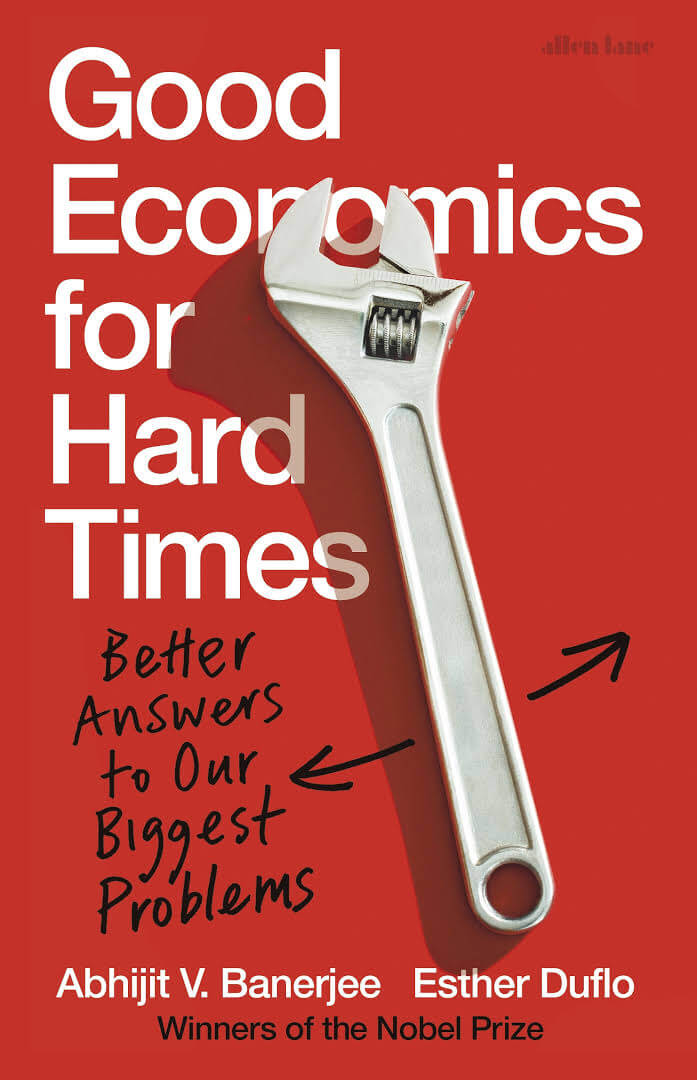
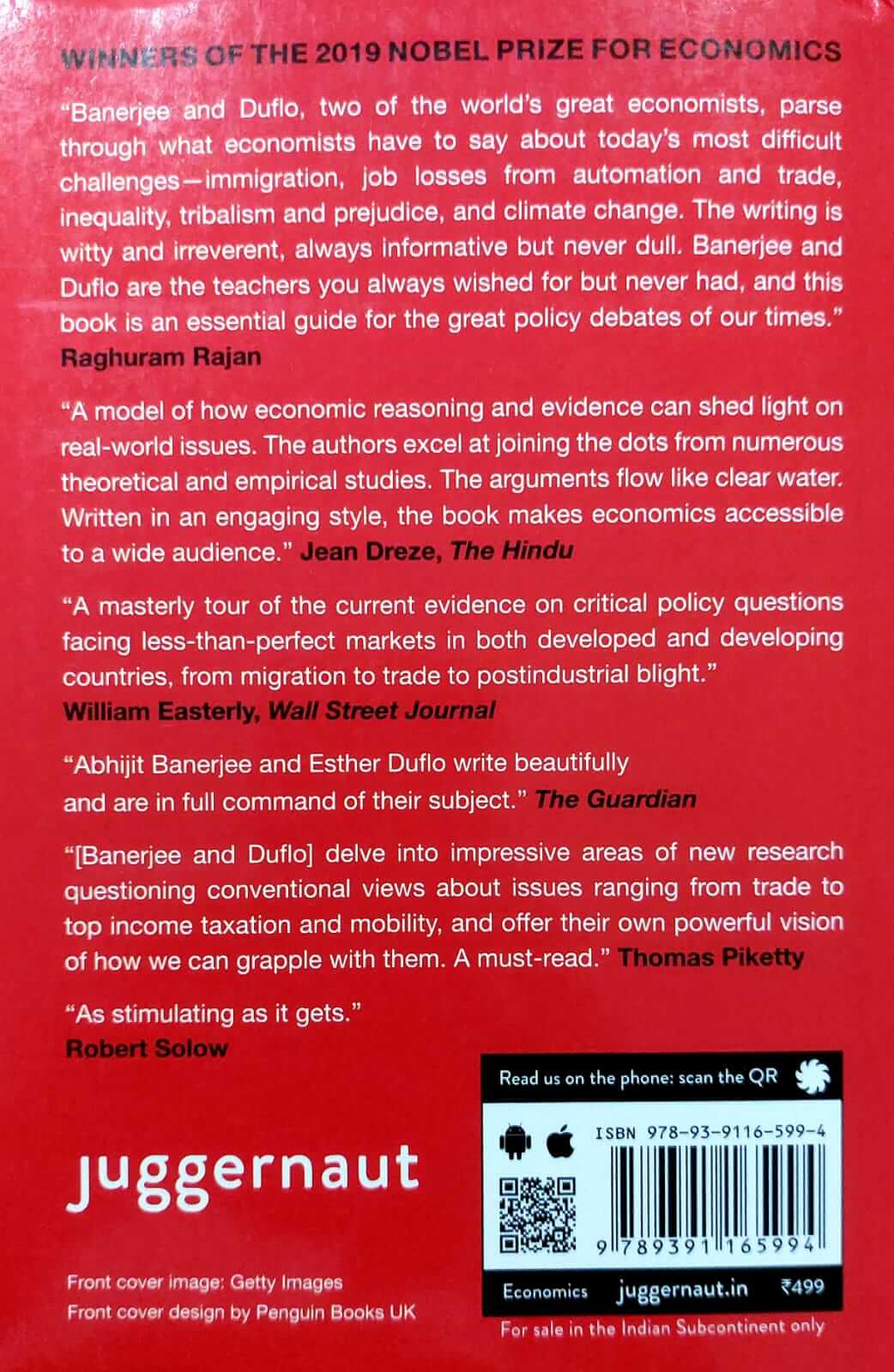
Good Economics for Hard Times by Banerjee and Esther Duflo


Original price was: රු3,450.00.රු2,950.00Current price is: රු2,950.00.
3 X Rs. 983.33 or 8% Cashback with


or 3 X රු983.33 with


or up to 4 X රු737.50 with


Explore pressing global challenges and pragmatic solutions with “Good Economics for Hard Times” by Abhijit V. Banerjee and Esther Duflo. This enlightening paperback offers accessible insights into complex issues such as inequality, immigration, and climate change. Order now for a fresh perspective on today’s world.
Out of stock
Email when stock available
Good Economics for Hard Times
Good Economics for Hard Times by Abhijit V. Banerjee and Esther Duflo is a thought-provoking economics book that examines some of the biggest challenges facing the modern world. From inequality and immigration to globalization, technological disruption, economic growth and climate change, the authors use research and real-world evidence to explain what economics can teach us about difficult social and economic problems.
Written by two winners of the 2019 Nobel Prize in Economic Sciences, the book challenges common assumptions and encourages readers to look beyond political slogans and simple explanations.
Instead of presenting economics as a collection of complicated formulas, Banerjee and Duflo show how economic research can help us better understand how people behave, how societies function and why certain policies succeed while others fail.
Why Read Good Economics for Hard Times?
One of the biggest strengths of Good Economics for Hard Times is its focus on real-world problems.
Economic debates are often filled with strong opinions. Topics such as immigration, taxation, international trade and inequality can quickly become political arguments where people rely more on beliefs than evidence.
Banerjee and Duflo take a different approach.
They examine research, data and experiments to understand what actually happens when governments introduce policies or when societies experience major economic changes.
Their goal is not simply to defend one political position. Instead, they encourage readers to examine the evidence before reaching conclusions.
This makes the book useful for anyone who wants to understand economics without needing an academic background.
Economics Explained Through Real Life
Many people assume that economics is mainly about money, banks and stock markets.
Good Economics for Hard Times shows that economics is much broader.
Economists study how people make decisions, how businesses respond to incentives, why people move between countries, how technology changes employment and why some communities become richer while others struggle.
The authors explore these questions using examples from different countries and communities.
By doing this, they demonstrate how economic policies can affect ordinary people’s lives.
The book also explains why policies that sound logical may sometimes produce unexpected results.
Understanding Immigration
Immigration is one of the major topics discussed in Good Economics for Hard Times.
Public debates often claim that immigrants take jobs away from local workers or reduce wages.
Banerjee and Duflo examine economic evidence to determine whether these assumptions match what happens in reality.
They look at why people migrate, how migrants participate in labour markets and how immigration affects local economies.
The discussion helps readers understand that migration is a complicated issue involving employment, opportunity, family, culture and government policy.
Rather than relying on fear or political messaging, the authors encourage readers to consider what research actually tells us.
Globalization and International Trade
Globalization has created enormous opportunities for businesses and consumers, but it has also created challenges.
International trade can reduce prices and allow companies to reach new markets.
However, when industries move production to other countries, some workers and communities can lose jobs.
The authors examine both sides of this issue.
They explain how globalization can create overall economic benefits while still producing serious problems for particular groups of people.
This distinction is important because economic growth does not automatically mean that everyone benefits equally.
Inequality and Economic Opportunity
Another important theme in Good Economics for Hard Times is inequality.
Why do some people accumulate enormous wealth while others struggle to improve their economic situation?
How much inequality should societies accept?
And what policies can governments use to create better opportunities?
Banerjee and Duflo examine income inequality, taxation and social programs while questioning some common assumptions about how people respond to government support.
Their analysis emphasizes that economic policy should consider both efficiency and human dignity.
Technology and the Future of Work
Technology continues to transform the global economy.
Automation, artificial intelligence and new digital technologies can increase productivity, but they can also change or eliminate certain jobs.
Good Economics for Hard Times explores how technological change affects workers and communities.
The authors consider whether new technologies always create enough new jobs to replace those that disappear.
They also examine the importance of helping workers adapt when industries change.
For readers interested in the future of employment, this part of the book provides valuable economic context.
Climate Change and Economic Policy
Climate change is not only an environmental problem.
It is also an economic challenge.
Extreme weather, rising temperatures and environmental damage can affect agriculture, productivity, migration and living standards.
Banerjee and Duflo discuss how economic policies can help societies respond to environmental challenges.
Their approach focuses on practical solutions rather than simply describing the problem.
They examine how governments can design policies that encourage environmental protection without placing unnecessary burdens on vulnerable communities.
Economics With Compassion
One of the most distinctive ideas in Good Economics for Hard Times is that good economic policy should consider human dignity.
Economic discussions sometimes reduce people to statistics.
The authors argue that understanding people’s motivations, fears, identities and circumstances is essential when designing effective policies.
A program may appear efficient on paper but fail if it ignores how people actually behave.
This human-centred approach makes the book different from many traditional economics texts.
Written by Nobel Prize-Winning Economists
Abhijit V. Banerjee and Esther Duflo are economists at MIT and jointly received the 2019 Nobel Prize in Economic Sciences for their experimental approach to reducing global poverty.
They are also known for their earlier book Poor Economics.
In Good Economics for Hard Times, they apply their evidence-based approach to broader economic issues affecting both developed and developing countries.
The book was originally released in 2019, and later editions include updated material addressing changing economic conditions.
Who Should Read Good Economics for Hard Times?
This book is a great choice for readers interested in:
- Economics
- Business and finance
- Globalization
- Income inequality
- Immigration
- Climate change
- Technology and employment
- Government policy
- Social development
- Political economy
- Evidence-based decision making
- Global social issues
Students of economics, business, politics and social sciences may find the book particularly useful.
However, you do not need to be an economist to understand it.
The authors explain complicated ideas using accessible language and practical examples.
Is Good Economics for Hard Times Worth Reading?
If you want to better understand why economies behave the way they do, Good Economics for Hard Times is an excellent place to start.
The book does not promise easy answers.
Instead, it demonstrates that many economic problems are complicated and require careful research, experimentation and an understanding of human behaviour.
This makes the book especially valuable in a world where economic issues are often explained through short headlines and political arguments.
Readers are encouraged to question assumptions and look at evidence before forming opinions.
Buy Good Economics for Hard Times in Sri Lanka
If you are searching for Good Economics for Hard Times in Sri Lanka, this insightful economics book is a valuable addition to your non-fiction collection.
Whether you are a student, entrepreneur, business professional or simply someone interested in understanding today’s world, Banerjee and Duflo provide a clear and engaging introduction to some of the most important economic debates of our time.
From inequality and immigration to globalization, technology and climate change, Good Economics for Hard Times offers an evidence-based perspective on the challenges shaping our societies and explains how better economics can contribute to better decisions.
Learn more about Good Economics for Hard Times by Abhijit V. Banerjee and Esther Duflo on the official Hachette Book Group website.
Explore more economics and business books at Bargain Books.

| Author | Abhijit Banerjee and Esther Duflo |
|---|---|
| Type | Paperback Printed Book |
| ISBN/ISSN | 154178894X, 978-1541788947 |
| Language | English |
| Pages | 432 |
Be the first to review “Good Economics for Hard Times by Banerjee and Esther Duflo”
Related products

Non-Fiction & Knowledge
රු1,700.00
3 X Rs. 566.67 or 8% Cashback with
or 3 X රු566.67 with
or up to 4 X රු425.00 with

Out of stock
Self-Help & Psychology
රු1,900.00
3 X Rs. 633.33 or 8% Cashback with
or 3 X රු633.33 with
or up to 4 X රු475.00 with
-19%

Out of stock
Non-Fiction & Knowledge
Original price was: රු2,650.00.රු2,150.00Current price is: රු2,150.00.
3 X Rs. 716.67 or 8% Cashback with
or 3 X රු716.67 with
or up to 4 X රු537.50 with

Non-Fiction & Knowledge
රු1,550.00
3 X Rs. 516.67 or 8% Cashback with
or 3 X රු516.67 with
or up to 4 X රු387.50 with
-34%

Self-Help & Psychology
Original price was: රු2,350.00.රු1,550.00Current price is: රු1,550.00.
3 X Rs. 516.67 or 8% Cashback with
or 3 X රු516.67 with
or up to 4 X රු387.50 with
-14%

Self-Help & Psychology
Original price was: රු2,900.00.රු2,500.00Current price is: රු2,500.00.
3 X Rs. 833.33 or 8% Cashback with
or 3 X රු833.33 with
or up to 4 X රු625.00 with
-24%

Out of stock
Non-Fiction & Knowledge
Original price was: රු2,500.00.රු1,900.00Current price is: රු1,900.00.
3 X Rs. 633.33 or 8% Cashback with
or 3 X රු633.33 with
or up to 4 X රු475.00 with
-24%

Non-Fiction & Knowledge
Original price was: රු2,300.00.රු1,750.00Current price is: රු1,750.00.
3 X Rs. 583.33 or 8% Cashback with
or 3 X රු583.33 with
or up to 4 X රු437.50 with
Reviews
There are no reviews yet.