
No products in the cart.
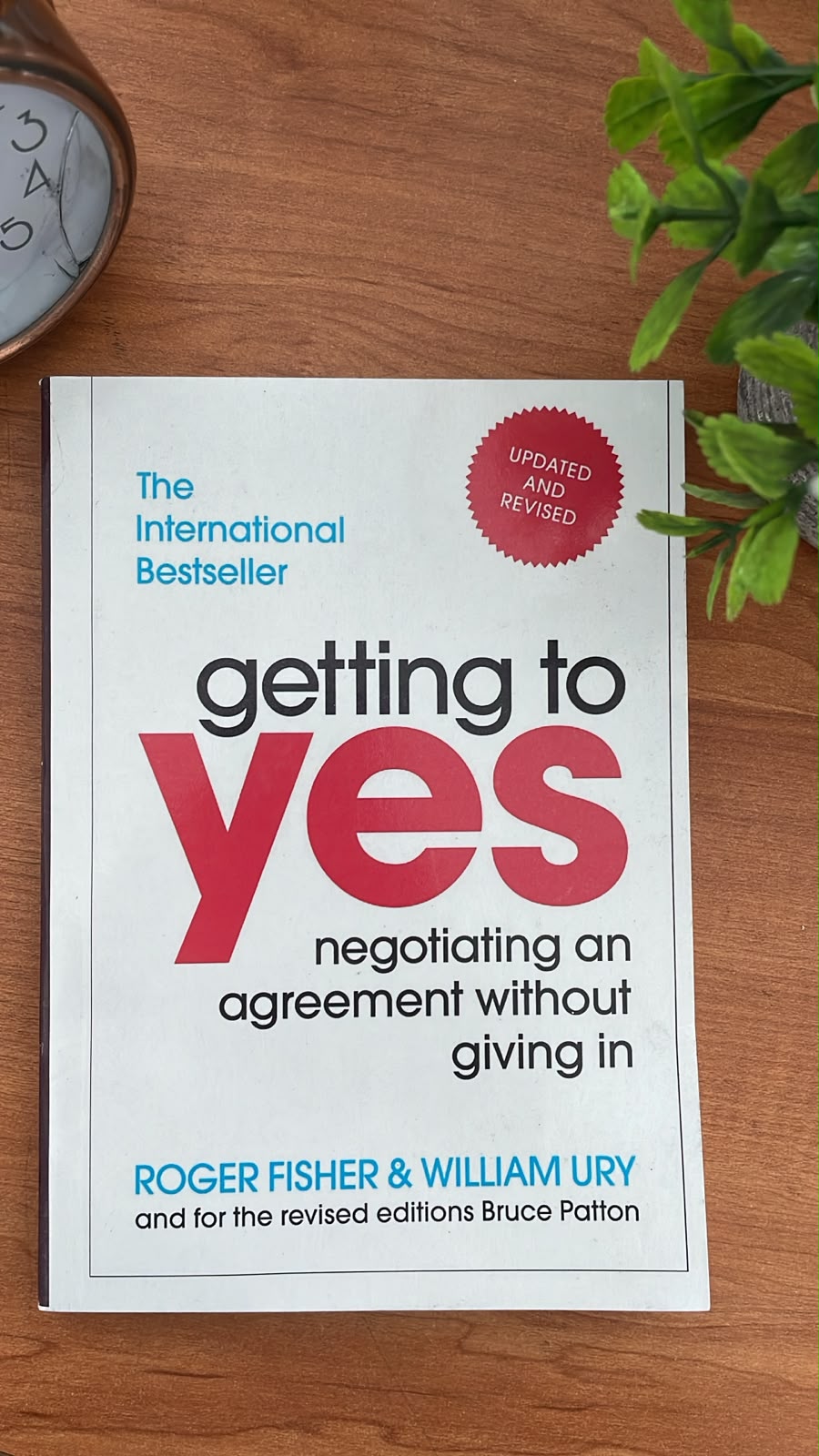
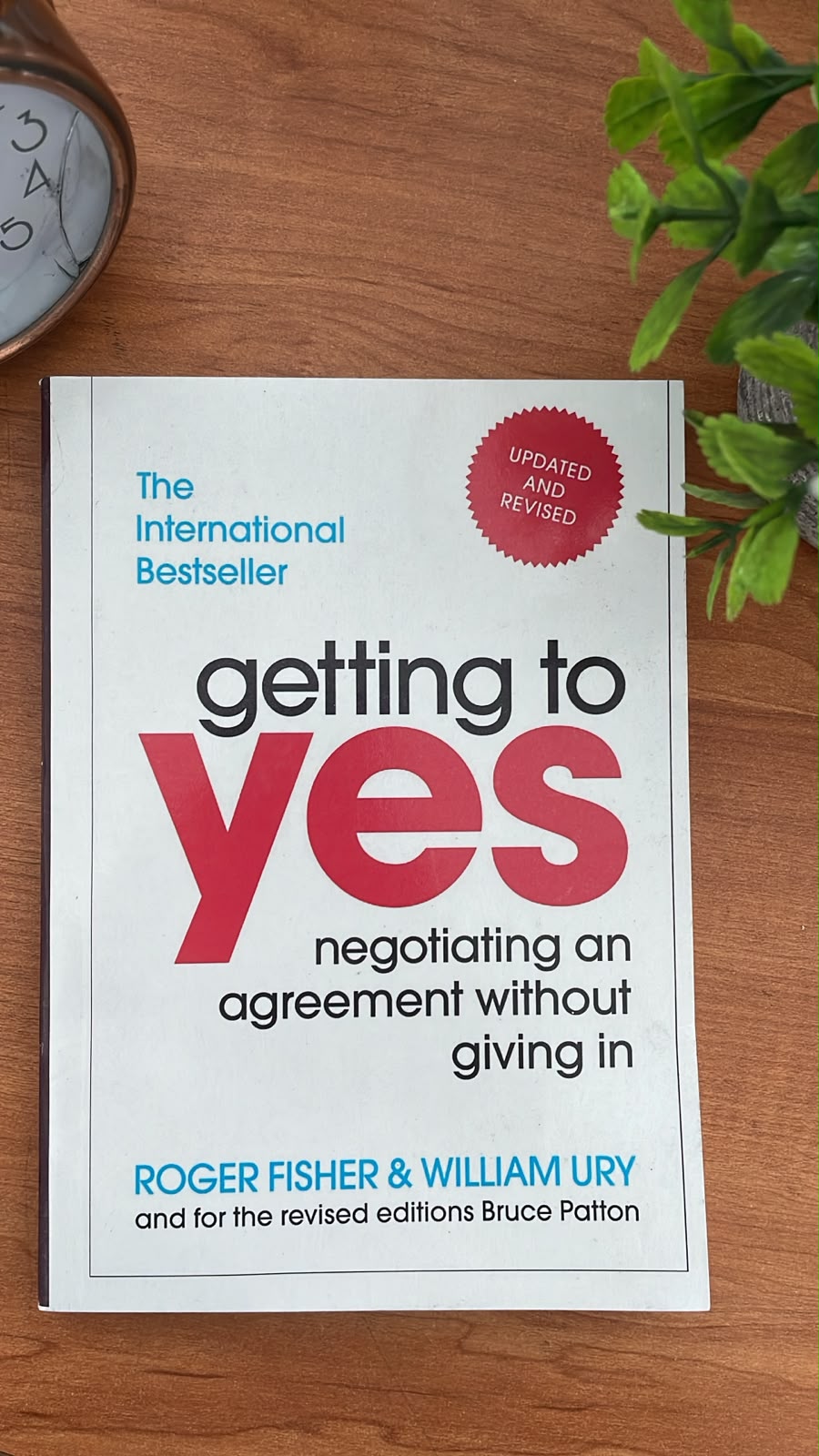


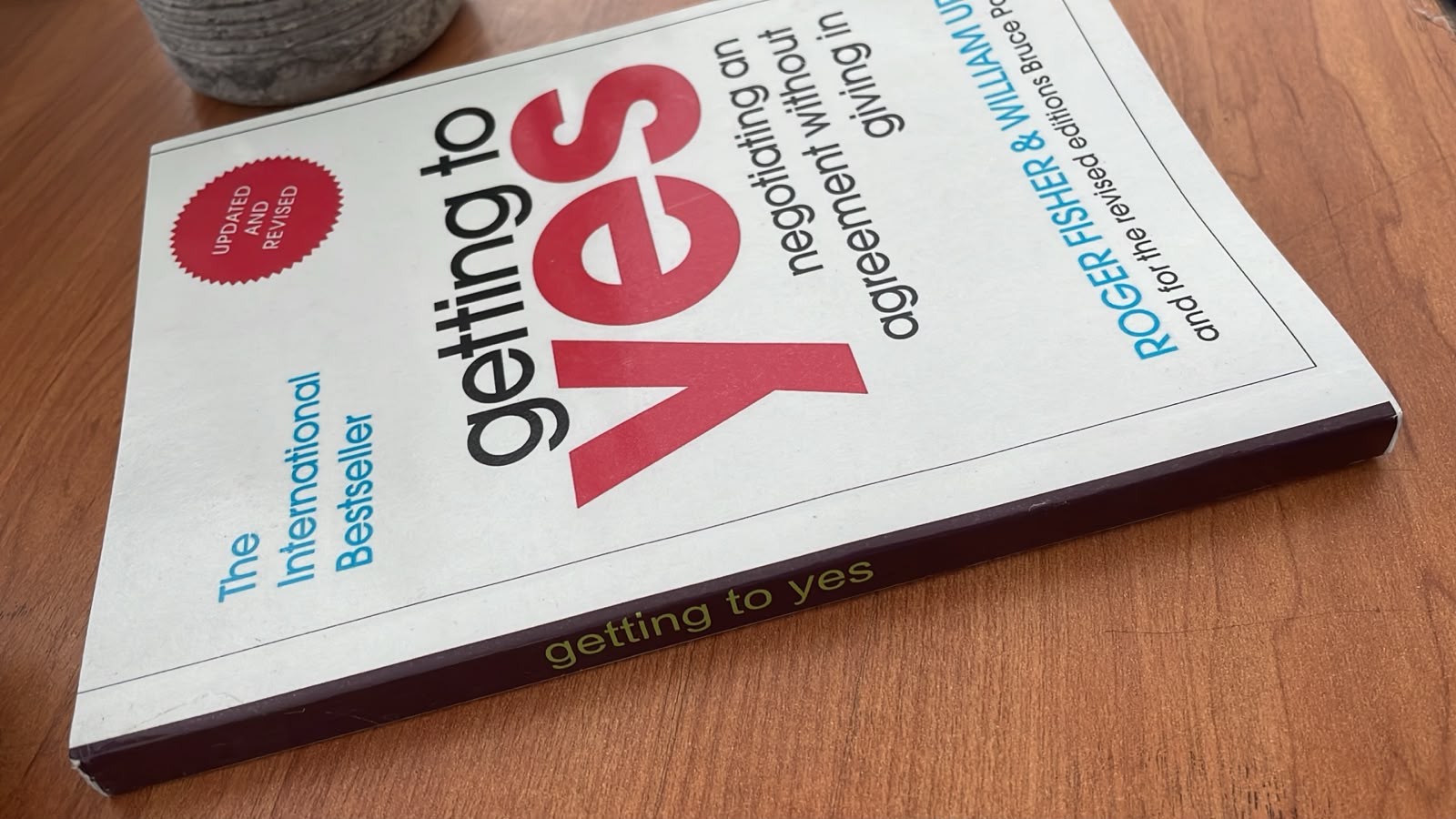





Getting to Yes by Roger Fisher & William Ury


රු1,750.00
3 X Rs. 583.33 or 8% Cashback with


or 3 X රු583.33 with


or up to 4 X රු437.50 with


Getting to Yes by Roger Fisher and William Ury is a classic negotiation guide that teaches principled strategies for reaching fair, win-win agreements.
Out of stock
Email when stock available
Getting to Yes by Roger Fisher, William Ury, and Bruce Patton is one of the most influential books ever written about negotiation.
Everyone negotiates.
Business owners negotiate with suppliers.
Employees negotiate salaries.
Managers negotiate deadlines.
Customers negotiate prices.
Parents negotiate with children.
Partners negotiate responsibilities.
Companies negotiate contracts.
Governments negotiate agreements.
Yet many people approach negotiation in one of two ways.
They become hard negotiators.
Fight.
Demand.
Pressure.
Refuse to compromise.
Or they become soft negotiators.
Give in.
Avoid conflict.
Accept less than they should.
Try to keep everyone happy.
Getting to Yes argues that neither approach is necessary.
There is another method.
Solve the problem rather than attack the person.
Understand interests rather than argue endlessly over positions.
Create several possible solutions.
Use fair standards.
And know what you will do if agreement cannot be reached.
This approach became known as principled negotiation or negotiation on the merits.
Why Read Getting to Yes?
Getting to Yes is useful for anyone who needs to persuade, negotiate, solve disagreements, or reach agreements with other people.
Readers can learn about:
- Negotiation
- Conflict resolution
- Business deals
- Salary negotiation
- Supplier negotiation
- Customer negotiation
- Communication
- Problem-solving
- BATNA
- Fair standards
- Win-win negotiation
- Difficult conversations
- Relationship management
- Decision-making
- Leadership
The book’s main strength is its simplicity.
You do not need to become aggressive.
You do not need complicated psychological tricks.
Instead, the authors give readers a framework for approaching the problem intelligently.
Getting to Yes and Principled Negotiation
The central method in Getting to Yes contains four major principles:
- Separate the people from the problem
- Focus on interests, not positions
- Invent options for mutual gain
- Insist on objective criteria
Harvard’s Program on Negotiation continues to describe these as the core elements of principled negotiation.
Each principle helps remove a common reason negotiations fail.
Getting to Yes Principle 1: Separate the People From the Problem
Negotiations involve people.
And people bring emotions.
Pride.
Fear.
Anger.
Assumptions.
Misunderstandings.
Past experiences.
Imagine negotiating with a supplier about a late shipment.
You say:
“You are always unreliable.”
Now the issue is no longer simply the late shipment.
You have attacked the supplier personally.
They become defensive.
They may reply:
“Your company never gives us enough notice.”
Suddenly both sides are fighting.
Getting to Yes recommends separating the relationship problem from the actual issue.
Instead of:
“You are unreliable.”
try:
“The order was scheduled for Monday but arrived Thursday. How can we prevent this on the next shipment?”
Now both sides can focus on the delivery problem.
Harvard’s negotiation guidance emphasizes addressing emotions and relationship issues while keeping them separate from the substantive problem being negotiated.
Attack the Problem, Not the Person
This principle is useful far beyond business.
Imagine two employees arguing.
One says:
“You don’t care about this project.”
The other responds:
“You are impossible to work with.”
Now the argument becomes personal.
A better conversation might be:
“We have missed two deadlines. Let’s identify what is causing the delays.”
Same problem.
Completely different approach.
The goal is to put both people on the same side of the table.
Then put the problem on the other side.
Getting to Yes Principle 2: Focus on Interests, Not Positions
This is perhaps the most famous lesson from Getting to Yes.
A position is what someone says they want.
An interest is why they want it.
Imagine a supplier says:
“I need Rs. 1,500 per unit.”
You say:
“I can only pay Rs. 1,300.”
Those are positions.
If both sides keep repeating them, negotiation becomes difficult.
But ask:
Why does the supplier need Rs. 1,500?
Perhaps:
The order quantity is small.
Payment takes too long.
Shipping costs are high.
They are worried about exchange rates.
Now you have interests.
Maybe you can offer:
A larger quantity.
Faster payment.
A longer-term agreement.
Combined shipping.
Suddenly there may be solutions beyond simply arguing over Rs. 1,300 versus Rs. 1,500.
Harvard’s Program on Negotiation identifies discovering the interests behind positions as one of the most important parts of the method.
Ask “Why?”
Whenever someone makes a strong demand, ask:
Why is this important?
What problem are they trying to solve?
What concern is behind the demand?
What happens if they do not get what they want?
These questions often reveal possibilities hidden behind fixed positions.
Getting to Yes and the Famous Orange Example
Imagine two people both want one orange.
If they simply negotiate positions, they might cut it in half.
Each gets 50%.
Seems fair.
But what if one person wanted the peel for cooking?
And the other wanted the juice?
If they had discussed their interests, one could receive the entire peel while the other receives all the juice.
Both receive more value than a simple compromise.
That illustrates an important principle.
A compromise is not always the best solution.
Understanding interests can sometimes create something better.
Getting to Yes Principle 3: Invent Options for Mutual Gain
Many negotiations fail because people jump too quickly from disagreement to one proposed solution.
Instead, Getting to Yes encourages negotiators to create multiple options before deciding.
Suppose an employee asks for a salary increase.
The company cannot afford the exact increase requested.
The negotiation does not necessarily need to end.
Other options might include:
Performance bonuses.
Flexible work.
Additional leave.
Training.
Promotion pathway.
Commission.
Revised responsibilities.
A later salary review.
One proposal becoming impossible does not mean no agreement exists.
Expand the Pie Before Dividing It
Negotiators often think:
“If you gain something, I lose something.”
Sometimes that is true.
But not always.
Different people value different things differently.
A supplier may care strongly about:
Fast payment.
You may care more about:
Lower price.
That creates a trade.
You pay faster.
They reduce the price.
Both sides gain something important.
This is the logic behind creating options for mutual benefit.
Getting to Yes Principle 4: Use Objective Criteria
Imagine you are negotiating a price.
Seller:
“Rs. 10 million.”
Buyer:
“Rs. 7 million.”
Why should either number win?
Instead of arguing based entirely on preference, use an external standard.
For example:
Market price.
Recent comparable sales.
Industry rates.
Replacement cost.
Expert valuation.
Published salary data.
Legal standards.
Previous contracts.
Objective criteria move the discussion away from:
“My number versus your number.”
toward:
“What would be fair according to a reasonable standard?”
Harvard’s principled-negotiation framework emphasizes legitimacy and objective standards as a way of reaching fairer outcomes.
Getting to Yes and BATNA
Another major concept associated with Getting to Yes is the BATNA.
BATNA means:
Best Alternative To a Negotiated Agreement.
In simple language:
What will you do if this negotiation fails?
Suppose you are buying a product from Supplier A.
If Supplier A refuses your terms, perhaps Supplier B can provide the same product for slightly more.
Supplier B is your alternative.
Knowing that changes your negotiating position.
You do not have to accept any deal simply because someone says:
“This is my final offer.”
You compare the proposed agreement with your best alternative.
Harvard’s Program on Negotiation emphasizes that understanding and strengthening your BATNA is essential because it tells you when walking away may be better than accepting a bad deal.
Never Accept a Deal Worse Than Your Best Alternative
Imagine you are negotiating salary.
Company offers:
Rs. 120,000.
Another company has already offered you:
Rs. 140,000.
Unless the first job provides other advantages you value significantly, accepting Rs. 120,000 may not make sense.
Your BATNA gives you a comparison point.
Without knowing your alternatives, people can become too desperate to reach agreement.
Sometimes no deal is better than a bad deal.
Improve Your BATNA Before Negotiating
A powerful lesson is that negotiation strength does not come only from being persuasive.
Sometimes the best way to become stronger is to improve your alternatives.
Before negotiating with one supplier, find two others.
Before negotiating a job offer, keep interviewing.
Before buying one property, investigate alternatives.
Before renewing one contract, understand the market.
The stronger your alternative, the less pressure you feel to accept an unfavorable agreement.
Getting to Yes and Win-Win Negotiation
The book is frequently described as teaching win-win negotiation.
That description is useful, but it can be misunderstood.
Win-win does not mean:
Give the other person everything they want.
Always split things 50/50.
Never say no.
Always reach agreement.
The goal is to explore whether an agreement can satisfy important interests on both sides better than their alternatives.
Sometimes no such agreement exists.
Then walking away may be appropriate.
Principled negotiation is cooperative.
But it is not weak.
Getting to Yes and Difficult Negotiators
What if the other person refuses to cooperate?
They may:
Make extreme demands.
Refuse fair standards.
Use pressure.
Attack personally.
Lie.
Threaten.
Try dirty tricks.
Getting to Yes also discusses how to respond when the other side does not initially use principled negotiation.
One approach the authors describe is negotiation jujitsu.
Instead of reacting to pressure with more pressure, redirect the conversation toward interests, options, and objective criteria.
Harvard’s Program on Negotiation describes this as escaping the destructive cycle of action and reaction.
Getting to Yes and Emotional Control
A good negotiation can collapse quickly when emotions take control.
Someone insults you.
You respond.
They become angrier.
You push harder.
The original issue disappears.
The authors therefore emphasize understanding perceptions, emotions, and communication.
Listening becomes a negotiating skill.
So does acknowledging another person’s perspective.
You can understand someone without agreeing with them.
That difference is extremely important.
Understanding Is Not Surrender
Suppose a customer says:
“Your delivery service is terrible.”
You could respond:
“No, it isn’t.”
Now you have an argument.
Or:
“I understand why you’re frustrated. The delivery was promised Tuesday and arrived Friday. Let’s see what happened.”
You have acknowledged their experience.
You have not admitted that your entire company is terrible.
You have simply removed one obstacle to problem-solving.
Getting to Yes in Business
The ideas work particularly well in business situations.
You can use them when negotiating:
Supplier prices.
Purchase quantities.
Payment terms.
Employee salaries.
Delivery schedules.
Business partnerships.
Rental agreements.
Client contracts.
Project deadlines.
Service problems.
The same framework applies.
People.
Interests.
Options.
Standards.
Alternatives.
Getting to Yes for Managers
Managers constantly negotiate.
Even when they do not call it negotiation.
An employee asks for leave.
Another wants higher pay.
Two departments want the same resources.
A customer requests a refund.
A supplier wants higher prices.
Management wants a project finished sooner.
Knowing how to identify interests can help managers solve these problems without turning every disagreement into a confrontation.
Getting to Yes for Everyday Life
The method is not only for million-dollar contracts.
Families negotiate constantly.
Where should we go?
Who will do this task?
How much should we spend?
When should we leave?
What school should the child attend?
The same mistakes occur.
Personal attacks.
Fixed positions.
Poor listening.
No exploration of alternatives.
Applying principled negotiation can improve ordinary conversations too.
7 Powerful Lessons From Getting to Yes
1. Separate People From Problems
Solve the issue without turning the other person into the enemy.
2. Focus on Interests, Not Positions
Ask why someone wants something instead of arguing only about what they demand.
3. Create Multiple Options
Do not assume there is only one possible solution.
4. Use Fair Standards
Market prices, industry standards, expert opinions, and other objective criteria can make agreements easier to justify.
5. Know Your BATNA
Always understand what you will do if no agreement is reached.
6. Cooperation Is Not Weakness
You can treat the other person respectfully without giving away your interests.
7. Aim for a Better Agreement, Not Simply Victory
The central lesson of Getting to Yes is that successful negotiation is not necessarily about defeating someone.
It is about finding an outcome that serves your important interests better than your alternatives.
What You Can Expect From Getting to Yes
Readers can expect:
- Principled negotiation
- Business negotiation
- Conflict resolution
- BATNA
- Win-win negotiation
- Interests versus positions
- Objective criteria
- Communication
- Difficult conversations
- Problem-solving
- Negotiation preparation
- Persuasion
- Mutual-gain strategies
- Workplace negotiation
- Personal negotiation
Who Should Read Getting to Yes?
Getting to Yes is ideal for:
Business owners.
Managers.
Entrepreneurs.
Sales professionals.
HR managers.
Purchasing teams.
Law students.
Negotiators.
Project managers.
Employees preparing for salary negotiations.
Customer-service professionals.
People dealing with suppliers.
Anyone interested in communication and conflict resolution.
Readers who enjoyed Getting Past No should especially read this book.
Getting to Yes explains the core principled-negotiation method, while Getting Past No focuses more specifically on what to do when the other side is difficult or resistant.
A Powerful Classic About Better Negotiation
Getting to Yes changes the basic question behind negotiation.
Instead of asking:
How do I beat them?
ask:
How do we solve this problem while protecting our important interests?
Separate the people from the problem.
Understand what each side actually needs.
Create several possible solutions.
Use legitimate standards.
Know your alternatives.
And refuse to accept an agreement simply because you feel pressured to say yes.
That combination creates a negotiating style that can be both cooperative and strong.
For readers who want to become better at business, leadership, communication, sales, conflict resolution, supplier negotiations, salary discussions, and everyday decision-making, Getting to Yes remains one of the most important introductory books on negotiation. Penguin Random House describes it as a broadly applicable method for reaching mutually satisfying agreements at home, in business, and across many other situations.
Book Details
Title: Getting to Yes
Full Title: Getting to Yes: Negotiating Agreement Without Giving In
Authors: Roger Fisher, William Ury & Bruce Patton
Genre: Business / Negotiation / Communication / Conflict Resolution
Core Method: Principled Negotiation
Developed from: Harvard Negotiation Project
Current Major Edition: Third Edition, 2011.
2011 Penguin Paperback Edition
ISBN-13: 9780143118756
Format: Paperback
Publisher: Penguin Books
Publication Date: May 3, 2011
Pages: 240.
Digital Edition
ISBN-13: 9781101539545
Format: Ebook
Publisher: Penguin Books
Publication Date: May 3, 2011
Pages: 240 in the publisher catalogue.
Author Note
The original work is associated with Roger Fisher and William Ury.
Bruce Patton is credited as a co-author on the updated editions, including the widely available 2011 third edition. All three have strong connections to the Harvard Negotiation Project.
Edition Note
There are several editions of Getting to Yes, including older editions with different pagination and ISBNs.
For your product page, use the ISBN printed on your physical copy before entering the exact page count, publication year, or edition.
Learn more about Getting to Yes by Roger Fisher, William Ury, and Bruce Patton on the official Penguin Random House website.
Explore more negotiation and business books at Bargain Books.
Be the first to review “Getting to Yes by Roger Fisher & William Ury”
Related products
-21%

Non-Fiction & Knowledge
7 Secrets to Investing Like Warren Buffett by Mary Buffett & Sean Seah
Original price was: රු1,900.00.රු1,500.00Current price is: රු1,500.00.
3 X Rs. 500.00 or 8% Cashback with
or 3 X රු500.00 with
or up to 4 X රු375.00 with
-14%

Out of stock
Self-Help & Psychology
Original price was: රු2,900.00.රු2,500.00Current price is: රු2,500.00.
3 X Rs. 833.33 or 8% Cashback with
or 3 X රු833.33 with
or up to 4 X රු625.00 with
-24%

Out of stock
Non-Fiction & Knowledge
Original price was: රු2,100.00.රු1,600.00Current price is: රු1,600.00.
3 X Rs. 533.33 or 8% Cashback with
or 3 X රු533.33 with
or up to 4 X රු400.00 with

Out of stock
Non-Fiction & Knowledge
රු1,600.00
3 X Rs. 533.33 or 8% Cashback with
or 3 X රු533.33 with
or up to 4 X රු400.00 with
-28%

Self-Help & Psychology
Original price was: රු1,800.00.රු1,300.00Current price is: රු1,300.00.
3 X Rs. 433.33 or 8% Cashback with
or 3 X රු433.33 with
or up to 4 X රු325.00 with
-34%

Non-Fiction & Knowledge
Original price was: රු2,250.00.රු1,490.00Current price is: රු1,490.00.
3 X Rs. 496.67 or 8% Cashback with
or 3 X රු496.67 with
or up to 4 X රු372.50 with

Out of stock
Self-Help & Psychology
රු2,200.00
3 X Rs. 733.33 or 8% Cashback with
or 3 X රු733.33 with
or up to 4 X රු550.00 with
-24%

Non-Fiction & Knowledge
Original price was: රු2,300.00.රු1,750.00Current price is: රු1,750.00.
3 X Rs. 583.33 or 8% Cashback with
or 3 X රු583.33 with
or up to 4 X රු437.50 with
Reviews
There are no reviews yet.