
No products in the cart.
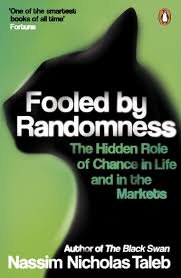
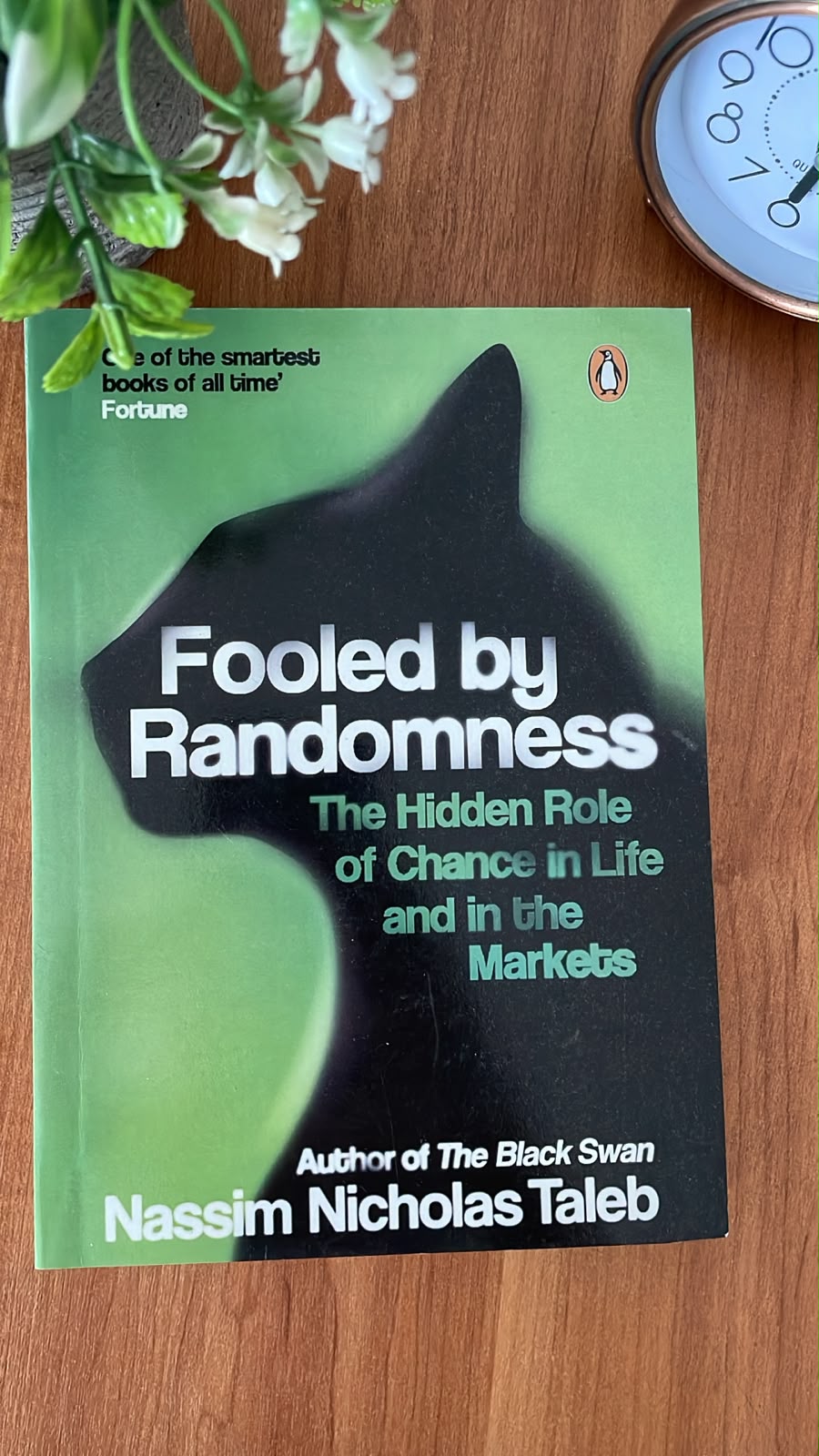
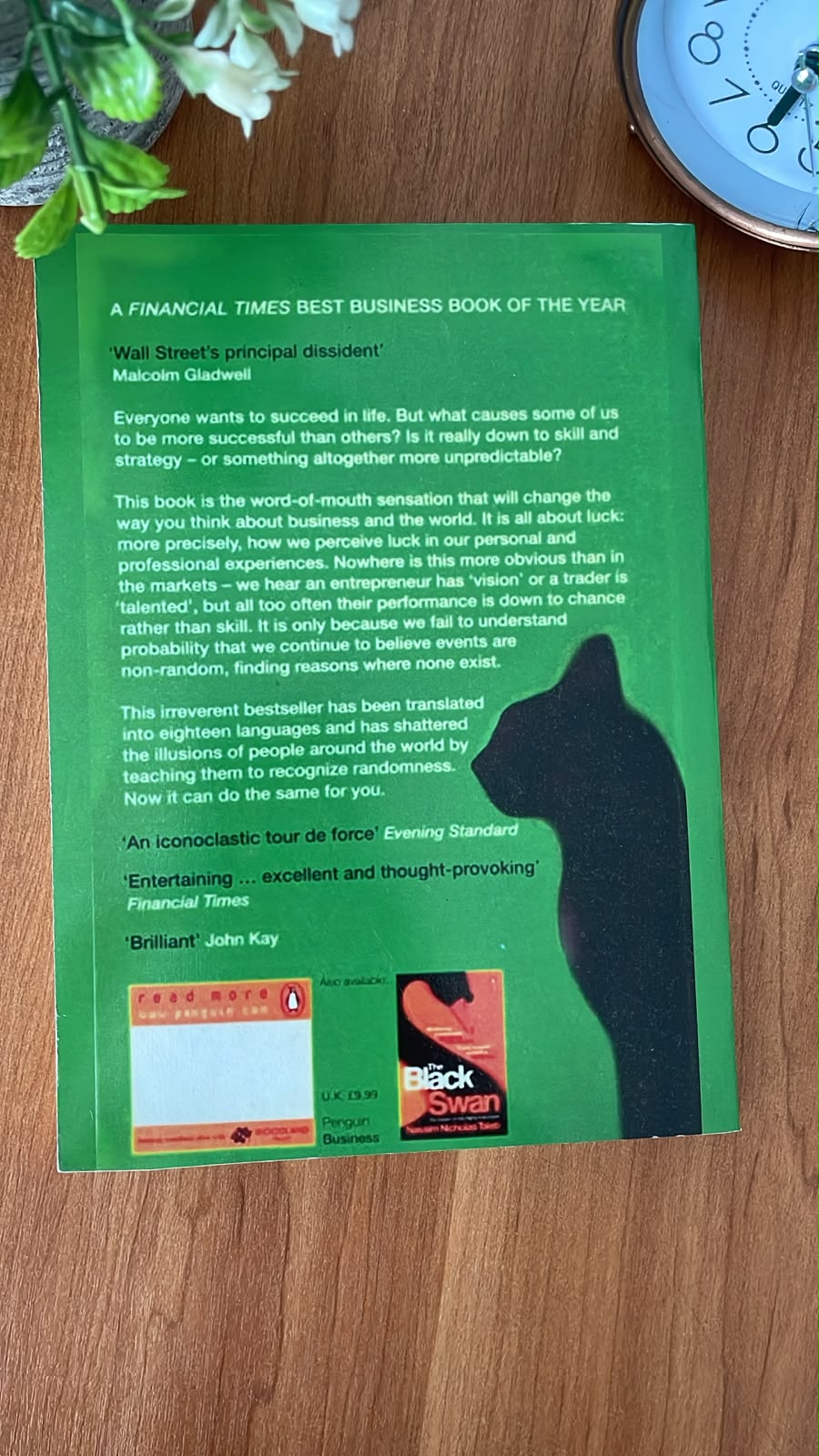
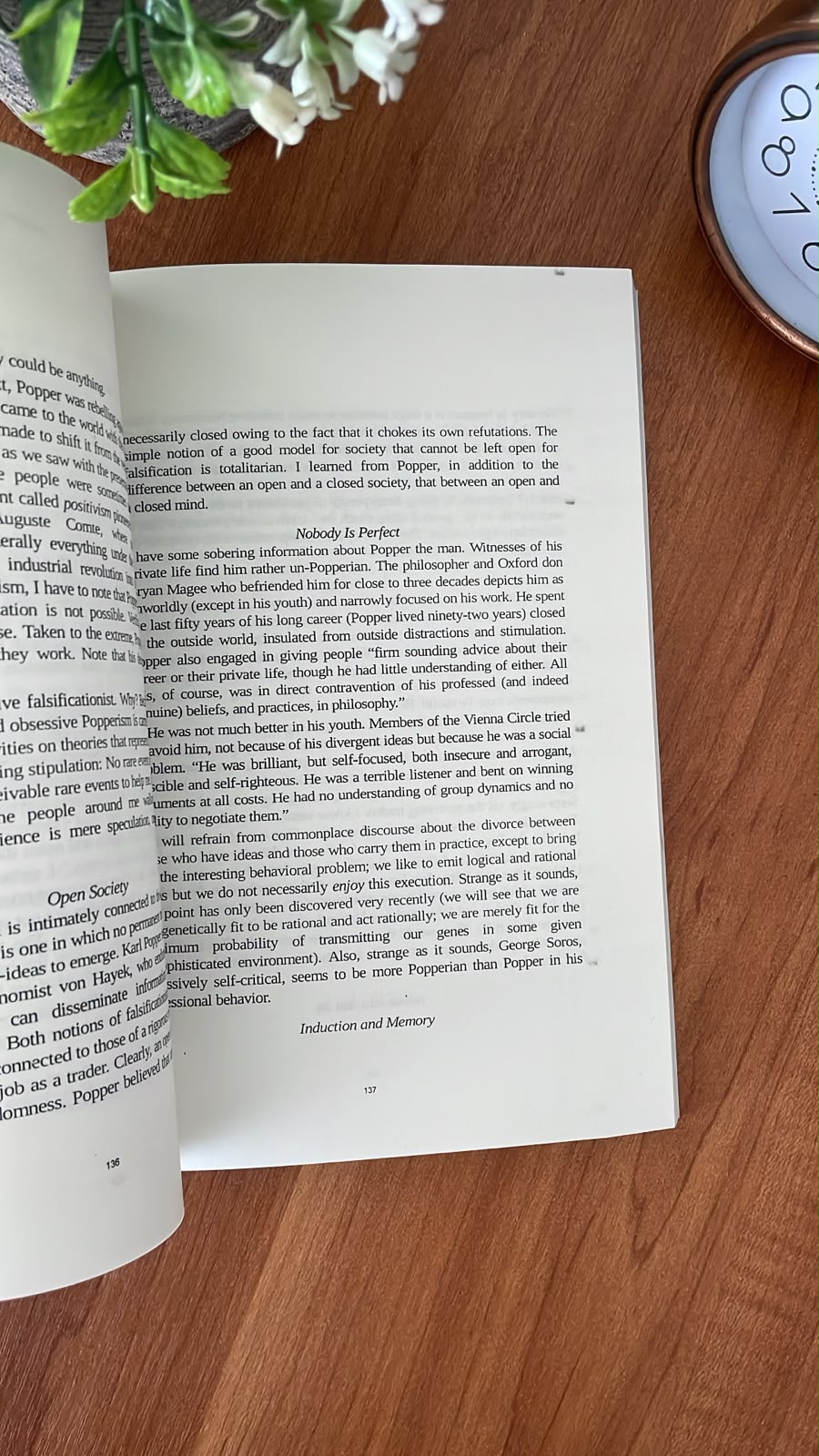
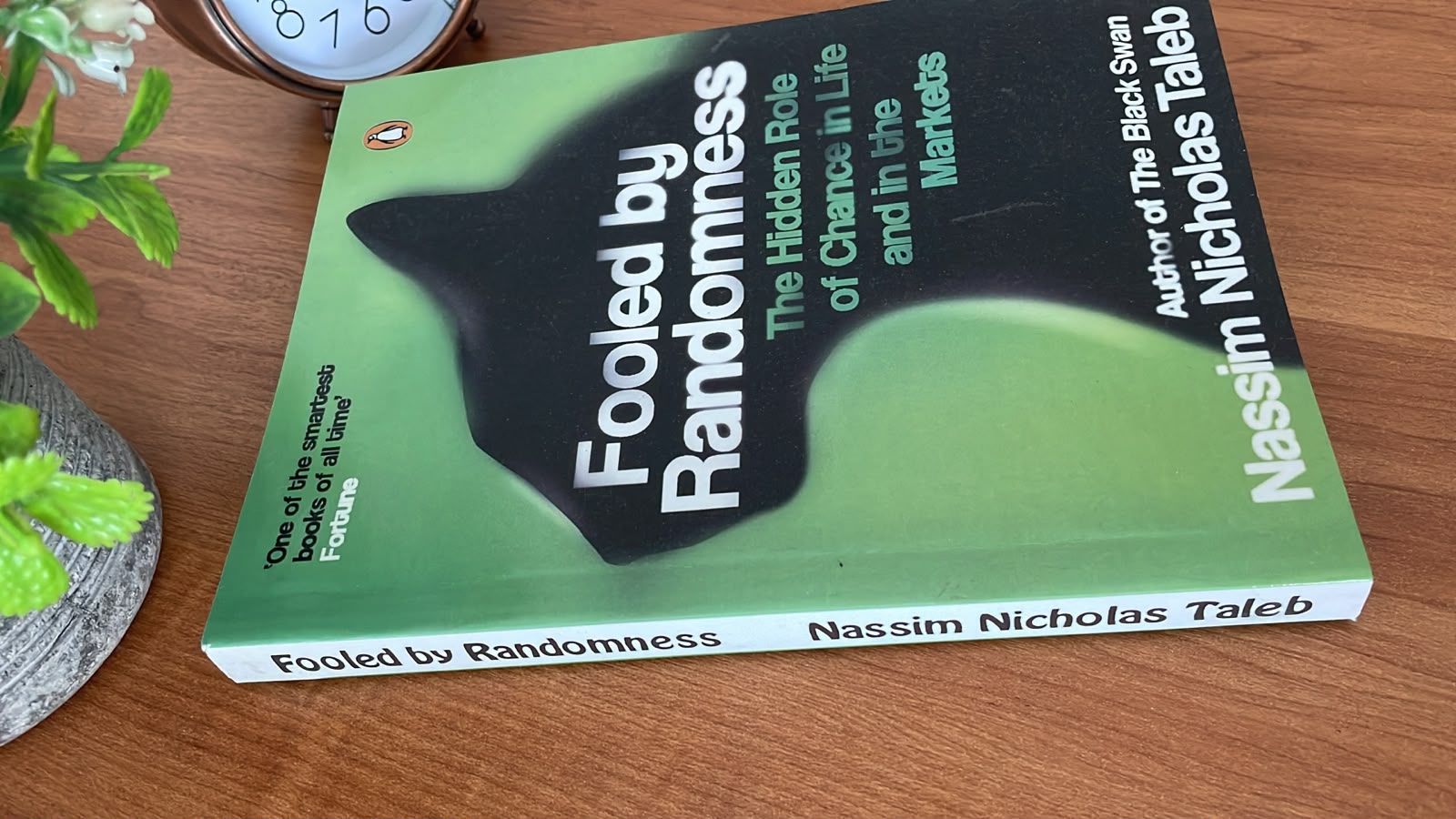




Fooled by Randomness – Nassim Nicholas Taleb
රු1,950.00
3 X Rs. 650.00 or 8% Cashback with


or 3 X රු650.00 with


or up to 4 X රු487.50 with


Fooled by Randomness by Nassim Nicholas Taleb explores how luck and chance influence success, challenging common beliefs about skill, risk, and decision-making.
2 in stock
Fooled by Randomness by Nassim Nicholas Taleb challenges one of the most comfortable beliefs we have about success.
That successful people always succeed because they are skilled.
Sometimes they are.
But sometimes they are simply lucky.
A trader makes millions.
An investor picks the right stock.
A business becomes successful.
A manager receives a promotion.
A prediction turns out to be correct.
We naturally search for explanations.
Intelligence.
Strategy.
Experience.
Talent.
Hard work.
But Taleb asks a more uncomfortable question.
How much of the result was actually caused by randomness?
That question forms the heart of Fooled by Randomness.
Taleb examines how humans misunderstand luck, probability, uncertainty, and chance, especially in environments such as financial markets where successful outcomes are frequently mistaken for evidence of exceptional ability.
Why Read Fooled by Randomness?
Fooled by Randomness is ideal for readers interested in investing, psychology, probability, business, decision-making, and understanding why success can sometimes be misleading.
The book explores:
- Luck
- Probability
- Risk
- Investing
- Financial markets
- Success and failure
- Survivorship bias
- Uncertainty
- Human psychology
- Decision-making
- Random events
- Pattern recognition
- Hindsight
- Skill versus luck
- Critical thinking
It is not simply an investment guide.
Taleb uses trading because financial markets make randomness unusually visible.
But the lessons apply far beyond Wall Street.
Fooled by Randomness and Luck
People generally understand that luck exists.
The harder problem is recognizing how important it can be.
Imagine 1,000 people making risky decisions.
Some will fail quickly.
Others survive.
A few may succeed repeatedly.
Eventually, one person appears extraordinarily successful.
Observers may conclude:
“That person discovered the perfect strategy.”
Maybe.
But another possibility exists.
With enough participants and enough randomness, somebody may eventually produce an impressive winning streak purely through chance.
Fooled by Randomness teaches readers to consider that possibility before automatically treating success as proof of skill.
Fooled by Randomness and Skill
Taleb does not argue that skill does not exist.
That would be too simple.
The real challenge is separating skill from luck.
A surgeon’s skill can often be evaluated over many procedures.
But evaluating an investor after one successful year is much harder.
Perhaps the investment process was excellent.
Perhaps the market happened to move favourably.
Perhaps both were involved.
The problem arises when people confidently attribute everything to skill.
That is especially dangerous when the environment contains a large amount of uncertainty.
Fooled by Randomness and Financial Markets
Trading provides the book with many of its examples.
Markets contain:
Thousands of participants.
Changing information.
Unexpected events.
Economic shocks.
Political decisions.
Investor psychology.
Technology changes.
And countless interactions nobody can completely predict.
Despite this complexity, people often create simple explanations afterward.
“The market rose because of this.”
“That investor succeeded because of that strategy.”
Taleb encourages greater humility.
Sometimes the explanation is valid.
Sometimes we are simply creating a convincing story after observing the outcome.
Penguin Random House describes the financial world as one of the clearest places where luck is regularly mistaken for skill.
Survivorship Bias in Fooled by Randomness
One particularly important concept is survivorship bias.
Imagine studying successful entrepreneurs.
You interview ten billionaires.
Then you identify similarities.
They took risks.
Worked long hours.
Ignored critics.
Therefore, you conclude that copying those behaviours will make someone successful.
But there is a problem.
What about the thousands of entrepreneurs who also:
Took risks.
Worked long hours.
Ignored critics.
And failed?
If we only study the survivors, we may misunderstand what caused success.
Google Books specifically identifies survivorship bias as one of the probability-related ideas explored in Fooled by Randomness.
Fooled by Randomness and the Lucky Fool
Taleb introduces the idea of people who succeed because circumstances favour them but are treated as if their success proves superior insight.
Penguin Random House describes this recognizable figure as the lucky person who happened to be in the right place at the right time and attracted followers who mistook chance for replicable expertise.
This idea applies far beyond investing.
A businessperson succeeds during a booming economy.
A creator becomes popular when an algorithm suddenly promotes their work.
An employee joins a fast-growing company and receives several promotions.
Their success may involve talent.
But environment and timing may also matter enormously.
Success Does Not Always Prove the Process Was Good
This is one of the most useful lessons from Fooled by Randomness.
A good result can come from a bad decision.
And a bad result can come from a good decision.
Imagine someone investing all their savings in one risky company.
The stock doubles.
Was the decision intelligent?
The outcome was excellent.
But the decision may still have involved unacceptable risk.
Now imagine someone follows a diversified, carefully researched strategy.
Then markets crash temporarily.
The outcome looks bad.
But their process may still have been sensible.
Judging decisions only by outcomes can therefore be misleading.
Fooled by Randomness and Alternative Outcomes
When something happens, we naturally focus on what actually occurred.
But intelligent risk thinking also considers what could have happened.
Suppose someone drives extremely fast every day and never crashes.
They may conclude:
“I am an excellent driver.”
But surviving does not prove the behaviour was safe.
Many alternative outcomes were possible.
Similarly, an investor who repeatedly takes enormous risks may look brilliant right until the moment one bad outcome destroys years of gains.
Fooled by Randomness encourages readers to think beyond the visible outcome and consider the range of possible outcomes surrounding a decision.
Fooled by Randomness and Hindsight
After an event happens, it often feels predictable.
The company failed.
“Obviously the business model was weak.”
The market crashed.
“Obviously prices were too high.”
A stock exploded upward.
“Obviously that company was going to dominate.”
But these events often did not look obvious beforehand.
Hindsight makes the past appear cleaner than it actually was.
We know the ending.
Then we unconsciously reinterpret earlier information to make that ending seem inevitable.
Fooled by Randomness encourages readers to remember how uncertain events actually looked before they happened.
Humans Love Patterns
The human mind is designed to look for patterns.
That ability is incredibly useful.
But it can also mislead us.
Random sequences can look meaningful.
Coincidences can look intentional.
Temporary trends can look permanent.
Three successful investments can look like proof of genius.
Taleb argues that people frequently create explanations for random events because accepting randomness feels uncomfortable.
Penguin UK summarizes the book’s argument by noting that people often search for reasons and patterns even where randomness may be the better explanation.
Fooled by Randomness and Prediction
Predictions sound impressive when they are correct.
But one correct prediction proves very little.
Imagine 100 experts make different predictions about an economic crisis.
One gets the timing almost perfectly right.
That person may suddenly become famous.
But was it genuine forecasting ability?
Or was someone eventually likely to be correct simply because enough predictions were made?
This does not mean expertise is useless.
It means predictions need to be judged across many observations rather than celebrated because of one lucky success.
Fooled by Randomness and Confidence
Confidence is often attractive.
People prefer someone who says:
“I know exactly what will happen.”
over someone who says:
“There are several possible outcomes.”
But the second person may actually understand uncertainty better.
Fooled by Randomness encourages intellectual humility.
Recognize what you know.
Recognize what you do not know.
And do not pretend uncertainty disappears simply because confident explanations feel satisfying.
Risk Is Different From What Actually Happened
This distinction is critical.
Risk exists before the outcome.
Suppose you gamble your entire savings.
You win.
The outcome is positive.
But the risk you took was still enormous.
People often judge risky behaviour differently depending on whether it worked.
That is dangerous.
Smart decision-making requires asking:
“What could have happened?”
not only:
“What happened?”
This is one of the reasons Fooled by Randomness remains useful for investors and business readers.
Fooled by Randomness and Business Success
Business stories frequently become simplified.
A successful company appears.
Then books and articles explain:
Its culture.
Its leadership.
Its strategy.
Its innovation.
Its founder.
These factors may genuinely matter.
But we should also ask:
How many companies followed similar strategies and disappeared?
Was the timing unusually favourable?
Did a competitor make an unexpected mistake?
Did technology suddenly shift?
Was there an economic boom?
Taleb reminds readers that success stories may leave out the invisible role of chance.
Fooled by Randomness for Investors
Investors can use the book as a reminder not to confuse short-term performance with long-term ability.
One profitable year does not prove a strategy works.
One losing year does not necessarily prove it fails.
Instead, consider:
Risk taken.
Time horizon.
Possible outcomes.
Consistency.
Exposure to catastrophic loss.
Market environment.
And whether results can realistically be repeated.
That mindset can help investors avoid blindly following whoever happened to perform best recently.
Fooled by Randomness and Failure
The book also changes how we think about failure.
Not every failure proves incompetence.
Sometimes a good decision produces a poor result.
That does not mean mistakes should be ignored.
It means failure needs analysis.
Was the process poor?
Was the risk unnecessary?
Was the outcome simply unlucky?
Could the decision have been improved?
Learning to distinguish these situations produces better judgement.
Fooled by Randomness and Decision-Making
Better decision-making does not require predicting everything.
That is impossible.
Instead, you can become more aware of uncertainty.
Ask:
What assumptions am I making?
What happens if I am wrong?
How large could the downside be?
Am I confusing a good outcome with a good process?
Am I studying only successful examples?
Could randomness explain part of what I am seeing?
Those questions do not remove uncertainty.
They help you operate more intelligently inside it.
Fooled by Randomness and The Incerto Series
Fooled by Randomness became the opening book in Nassim Nicholas Taleb’s larger Incerto collection about uncertainty, risk, probability, and decision-making.
Penguin Random House currently lists the books associated with the collection as:
- Fooled by Randomness
- The Black Swan
- The Bed of Procrustes
- Antifragile
- Skin in the Game
Each can stand alone, so you do not need to read the entire collection to understand this book.
What to Read After Fooled by Randomness
A natural next choice is The Black Swan.
That book explores rare, high-impact, difficult-to-predict events and our tendency to explain them afterward.
Readers who want to go deeper into Taleb’s thinking can then explore:
Antifragile
The Bed of Procrustes
and
Skin in the Game.
7 Powerful Lessons From Fooled by Randomness
- Success does not automatically prove skill. Luck can produce impressive results.
- Study failures as well as winners. Survivorship bias can create false lessons about success.
- Judge decisions by process, not only outcomes. A risky decision can still produce a lucky result.
- Consider alternative outcomes. What could have happened matters when evaluating risk.
- Be careful with confident predictions. One correct forecast may be chance rather than genuine predictive ability.
- Humans naturally create patterns and stories. Randomness can look meaningful when we desperately want an explanation.
- Respect uncertainty. Fooled by Randomness encourages humility when dealing with markets, business, careers, and life.
What You Can Expect From Fooled by Randomness
Readers can expect:
- Probability
- Luck
- Risk
- Trading
- Investing
- Psychology
- Survivorship bias
- Decision-making
- Financial markets
- Uncertainty
- Human error
- Philosophy
- Business thinking
- Critical thinking
- Success and failure
- Nassim Nicholas Taleb’s distinctive arguments
Who Should Read Fooled by Randomness?
Fooled by Randomness is ideal for:
Investors.
Traders.
Entrepreneurs.
Business owners.
Finance students.
Managers.
Professionals.
Readers interested in psychology.
Readers interested in probability.
People interested in decision-making.
Fans of The Black Swan and Antifragile.
Anyone who wants to become more skeptical of simple explanations for success.
A Powerful Book About Luck, Risk and Success
Fooled by Randomness challenges readers to stop viewing the world only through visible outcomes.
The successful trader may be skilled.
Or lucky.
The failed businessperson may have made terrible decisions.
Or simply experienced an unfortunate outcome.
The expert who predicted the crisis may have understood something important.
Or might have been the one correct prediction among hundreds of failed ones.
Real life contains skill.
Effort.
Intelligence.
And strategy.
But it also contains randomness.
Taleb’s central warning is that people systematically underestimate that randomness and then create convincing stories to explain results after they happen.
For readers interested in investing, business, probability, psychology, risk, and smarter decision-making, Fooled by Randomness is a thought-provoking introduction to Nassim Nicholas Taleb’s philosophy of uncertainty.
Book Details
Title: Fooled by Randomness
Full Title: Fooled by Randomness: The Hidden Role of Chance in the Markets and in Life
Author: Nassim Nicholas Taleb
Genre: Business / Finance / Probability / Philosophy / Psychology
Series / Collection: Incerto
Original Publication: 2001
Original Publisher: Texere.
Penguin Paperback Edition
A widely available Penguin UK edition has:
ISBN-13: 9780141031484
Format: Paperback
Publisher / Imprint: Penguin
Publication Date: 7 July 2011
Pages: 368
Dimensions: approximately 19.7 × 12.9 × 2.3 cm
Weight: approximately 276 g.
Random House Hardcover Edition
The U.S. Random House hardcover edition lists:
ISBN-13: 9781400067930
Format: Hardcover
Publication Date: October 14, 2008
Pages: 368
Dimensions: approximately 6⅛ × 9¼ inches
Publisher: Random House.
Edition Note
The original 2001 edition and later revised editions differ in page count and some content.
For example, the original Texere edition catalogued by Google Books has 203 pages, while later Penguin and Random House editions run to 368 pages.
Use the ISBN printed on your physical copy before entering exact edition details on your website.
Learn more about Fooled by Randomness by Nassim Nicholas Taleb on the official Penguin Random House website.
Explore more business and personal development books at Bargain Books.
:::
Be the first to review “Fooled by Randomness – Nassim Nicholas Taleb”
Related products
-13%
Out of stock
Non-Fiction & Knowledge
Original price was: රු3,900.00.රු3,400.00Current price is: රු3,400.00.
3 X Rs. 1,133.33 or 8% Cashback with
or 3 X රු1,133.33 with
or up to 4 X රු850.00 with
-33%

Self-Help & Psychology
Original price was: රු2,300.00.රු1,550.00Current price is: රු1,550.00.
3 X Rs. 516.67 or 8% Cashback with
or 3 X රු516.67 with
or up to 4 X රු387.50 with
-14%
Out of stock
Self-Help & Psychology
Original price was: රු2,900.00.රු2,500.00Current price is: රු2,500.00.
3 X Rs. 833.33 or 8% Cashback with
or 3 X රු833.33 with
or up to 4 X රු625.00 with
Out of stock
Non-Fiction & Knowledge
රු1,600.00
3 X Rs. 533.33 or 8% Cashback with
or 3 X රු533.33 with
or up to 4 X රු400.00 with
-24%
Non-Fiction & Knowledge
Original price was: රු2,300.00.රු1,750.00Current price is: රු1,750.00.
3 X Rs. 583.33 or 8% Cashback with
or 3 X රු583.33 with
or up to 4 X රු437.50 with
Out of stock
Self-Help & Psychology
රු2,200.00
3 X Rs. 733.33 or 8% Cashback with
or 3 X රු733.33 with
or up to 4 X රු550.00 with
රු2,000.00
3 X Rs. 666.67 or 8% Cashback with
or 3 X රු666.67 with
or up to 4 X රු500.00 with

Out of stock
Autobiography
රු2,750.00
3 X Rs. 916.67 or 8% Cashback with
or 3 X රු916.67 with
or up to 4 X රු687.50 with
Reviews
There are no reviews yet.