
No products in the cart.
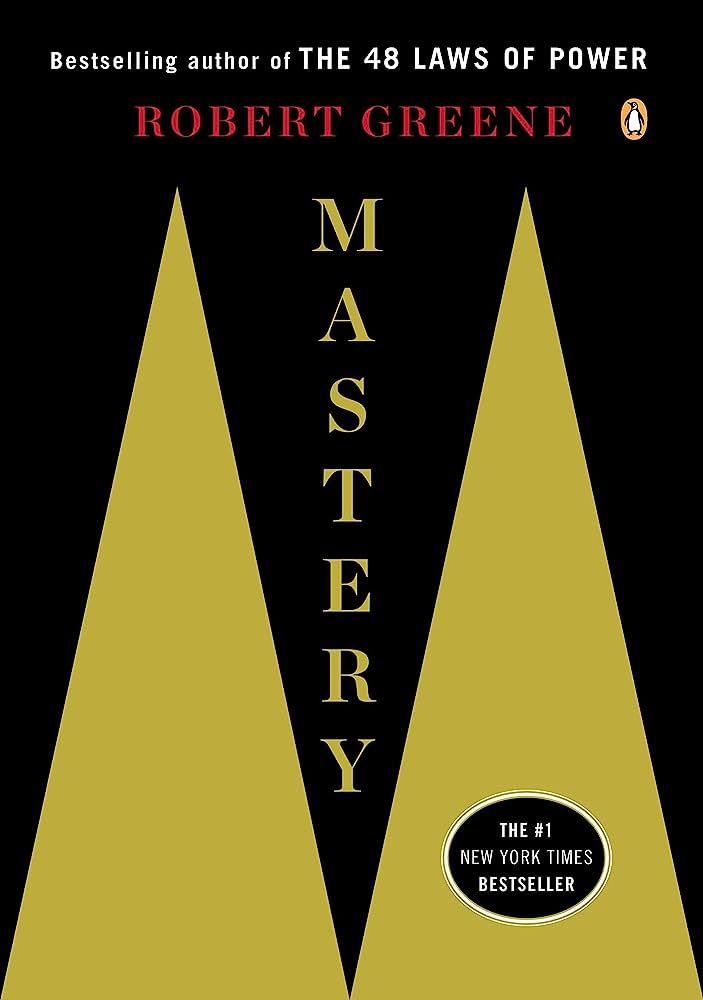







Mastery by Robert Greene
රු1,900.00
3 X Rs. 633.33 or 8% Cashback with


or 3 X රු633.33 with


or up to 4 X රු475.00 with


Mastery by Robert Greene is a powerful personal-development guide about discovering your life’s task and developing exceptional skill through apprenticeship, practice, mentorship, social intelligence and creativity. Using examples from figures such as Leonardo da Vinci, Charles Darwin, Mozart and Benjamin Franklin, Robert Greene explains why mastery is built through years of focused learning rather than shortcuts. Ideal for students, professionals, entrepreneurs, leaders and creatives who want to become truly exceptional at their craft.
4 in stock
Mastery by Robert Greene is a powerful guide to developing exceptional skill, discovering your true calling and following the long process that can transform an ordinary beginner into a master.
Why do some people become extraordinary at what they do?
Are they simply born more talented?
More intelligent?
Luckier?
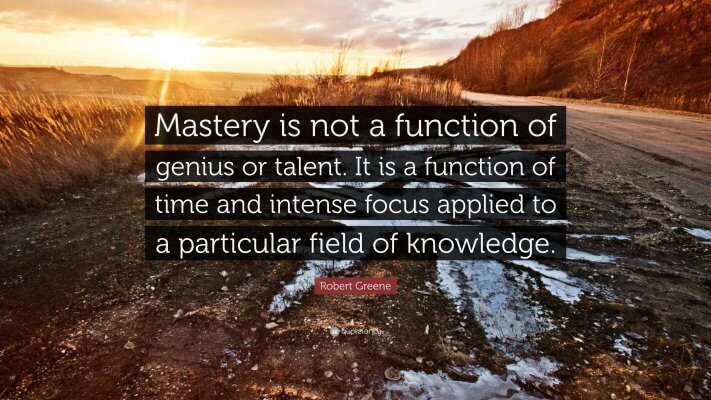
Robert Greene argues that mastery is not reserved for a small group of naturally gifted people.
Instead, it usually develops through a process involving:
Purpose.
Apprenticeship.
Practice.
Mentorship.
Social intelligence.
Creativity.
Persistence.
Deep experience.
Using the lives of historical figures and modern professionals, Greene explores how people learn their craft, overcome obstacles and gradually reach a level where knowledge becomes intuitive.
The path is not quick.
There is no secret trick.
There is no overnight transformation.
Real mastery requires years of focused learning and improvement.
Mastery by Robert Greene encourages readers to discover work that genuinely fits their natural interests, become serious students of their chosen field, learn from skilled mentors, understand the people around them and eventually move beyond imitation into creativity.
For students, professionals, entrepreneurs, artists, leaders and anyone trying to become exceptional in a particular field, the book offers a detailed philosophy of long-term personal and professional development.
Mastery by Robert Greene – Book Overview
Mastery by Robert Greene is built around the idea that human beings possess an extraordinary capacity to learn.
At the beginning of any skill, everything feels difficult.
You have to think consciously.
You make mistakes.
You move slowly.
You do not understand the deeper patterns.
With enough meaningful practice, something changes.
Knowledge becomes familiar.
Patterns become easier to recognize.
Decisions become faster.
Eventually, an experienced person may seem to act almost instinctively.
Greene calls the highest development of this process mastery.
What Is Mastery?
Mastery is more than being competent.
A competent person knows how to perform the work.
A master understands the field deeply enough to:
Recognize patterns quickly.
Solve unusual problems.
Adapt.
Create.
Innovate.
Make decisions that beginners may not even understand.
This level develops through experience rather than shortcuts.
Mastery Is a Process
One of the central messages of Mastery by Robert Greene is that mastery has stages.
Greene’s broad path includes:
Discovering your life’s task.
Completing a serious apprenticeship.
Working with mentors.
Developing social intelligence.
Entering a creative-active phase.
Reaching mastery.
Each stage prepares the person for the next.
Discover Your Life’s Task
The first major challenge is discovering what kind of work fits you.
Greene encourages readers to pay attention to their strongest and most persistent interests.
What fascinated you before society told you what was practical?
What activities naturally hold your attention?
What subjects repeatedly draw you back?
These clues can point toward what Greene calls a Life’s Task.
Your Natural Inclinations
People often choose careers because of:
Money.
Family expectations.
Status.
Social pressure.
Convenience.
Sometimes those choices work.
But sometimes they create a life that feels disconnected from the person’s deeper interests.
Greene argues that long-term excellence is easier when the work connects with genuine curiosity.
Childhood Interests
Childhood can contain useful clues.
Before people begin worrying about:
Job titles.
Salary.
Prestige.
They often follow curiosity naturally.
One child takes machines apart.
Another constantly draws.
Another organizes groups.
Another reads everything about animals.
Another builds things.
These early patterns may reveal natural inclinations.
Do Not Copy Someone Else’s Path
Admiring successful people is useful.
Trying to become an exact copy is not.
Your path needs to reflect your own:
Skills.
Interests.
Personality.
Circumstances.
Mastery requires individuality.
The Apprenticeship Phase
After choosing a direction comes apprenticeship.
This is one of the most important ideas in Mastery by Robert Greene.
Beginners often want recognition too early.
They ask:
How quickly can I earn more?
How quickly can I get promoted?
How quickly can I become successful?
Greene suggests another question:
How much can I learn here?
Choose Learning Over Money
Especially early in a career, an opportunity that teaches important skills may be more valuable than one that pays slightly more but teaches very little.
Skills compound.
Knowledge compounds.
Experience compounds.
The person who invests heavily in learning can create much greater future options.
Observe First
During apprenticeship, observe carefully.
Understand:
How the industry works.
How experienced people behave.
Which skills matter.
Where mistakes happen.
How customers think.
How decisions are made.
Before trying to revolutionize a field, understand it.
Learn the Rules Before Breaking Them
Creative people are sometimes told:
Ignore the rules.
But effective innovation often comes after understanding the rules deeply.
A musician learns fundamentals before transforming music.
A programmer learns systems before designing better ones.
A business owner understands customers before reinventing the experience.
Knowledge gives rebellion direction.
Practice
There is no mastery without practice.
Reading helps.
Watching helps.
Courses help.
But eventually you must perform the skill repeatedly.
Write.
Code.
Sell.
Design.
Teach.
Build.
Practice converts information into ability.
Deliberate Improvement
Repeating the same easy task is not enough.
Improvement requires working on weaknesses.
Ask:
Where am I slow?
What do I avoid?
What mistake keeps recurring?
Which skill would dramatically improve my performance?
Then practice there.
The Importance of Patience
Modern culture often celebrates quick success.
Greene takes the opposite position.
Deep skill takes time.
People who constantly change direction because progress feels slow may never stay in one field long enough to become exceptional.
The Learning Curve
Beginners often improve rapidly.
Then progress slows.
This plateau can become frustrating.
But the plateau does not necessarily mean learning has stopped.
The brain may still be building deeper understanding.
Consistency matters.
Accept Being a Beginner
Being bad at something initially is normal.
Every master was once inexperienced.
Embarrassment can prevent learning because people avoid situations where they might look incompetent.
A better mindset is:
I am here to learn.
Mentors
A mentor can accelerate development.
Why?
Because an experienced person has already made many mistakes that a beginner has not yet encountered.
A mentor can help you understand:
What matters.
What does not.
Which mistakes are dangerous.
Which skills deserve attention.
The Mentor Dynamic
Mastery by Robert Greene explains that mentorship should not become permanent dependence.
The goal is not to remain a follower forever.
The goal is to absorb knowledge and eventually develop your own approach.
Learn How the Mentor Thinks
Do not only copy what a mentor does.
Try to understand:
Why do they make this decision?
What do they notice?
How do they solve problems?
What questions do they ask?
The deepest lesson is often the thinking process.
Eventually Move Beyond the Mentor
A successful student eventually becomes independent.
If you only imitate your teacher, you remain a copy.
Mastery requires building upon what you learned and developing your own voice.
Social Intelligence
Technical skill alone is not enough.
People work with:
Managers.
Customers.
Colleagues.
Employees.
Partners.
Competitors.
Understanding human behavior therefore becomes essential.
Read People Realistically
People often see others through:
Hope.
Fear.
Projection.
Assumptions.
Greene encourages readers to observe behavior carefully.
What do people actually do?
Not simply what do they say?
Avoid Naivety
A talented person can still fail because they misunderstand:
Office politics.
Ego.
Envy.
Competition.
Status.
Motivation.
Social intelligence protects technical ability.
Understand Yourself Too
Social intelligence is not only about reading other people.
It also requires recognizing your own:
Insecurity.
Pride.
Sensitivity.
Need for approval.
Emotional patterns.
Self-awareness improves judgment.
Emotional Reactions
A strong emotional reaction can distort perception.
Anger.
Envy.
Fear.
Excitement.
Before acting, ask:
Am I responding to reality?
Or to emotion?
This can prevent costly mistakes.
Creative-Active Phase
After years of learning, a person eventually reaches a point where imitation is no longer enough.
Now the question becomes:
What can I contribute?
This is the creative-active phase.
Develop Your Own Voice
A writer stops sounding exactly like favorite authors.
A business owner develops a distinctive model.
A designer creates an original style.
A scientist begins asking new questions.
A programmer develops a better system.
Mastery requires moving from consumption to creation.
Combine Different Interests
Innovation often appears when people connect fields that are normally kept separate.
Technology and art.
Psychology and marketing.
Science and design.
Software and education.
Your unusual combination of interests can become an advantage.
Creativity Comes From Knowledge
Creativity is not always a mysterious flash of inspiration.
Often it comes from having enough knowledge to see connections other people miss.
The master has a large mental library.
New ideas emerge by combining pieces differently.
Deep Focus
Mastery requires periods of concentrated attention.
Constant interruptions make deep learning difficult.
Phone notifications.
Messages.
Social media.
Multitasking.
These fragment attention.
Serious skill development requires time where the mind stays with one difficult problem.
Concentration
The ability to concentrate is a competitive advantage.
Someone who can work deeply for several hours may accomplish far more than someone who spends the entire day switching between tasks.
Avoid Constant Distraction
Entertainment is easy.
Mastery is difficult.
The person pursuing mastery must sometimes choose:
Practice over distraction.
Learning over comfort.
Long-term development over immediate stimulation.
Failure
Failure is unavoidable.
Every serious learner will:
Make mistakes.
Choose wrong approaches.
Misunderstand something.
Lose opportunities.
Experience criticism.
The question is whether failure becomes information.
Use Failure as Feedback
Instead of:
“I failed, therefore I am not talented.”
ask:
Why did this fail?
What skill was missing?
What assumption was wrong?
What should I change?
This turns disappointment into development.
Persistence
Persistence matters because mastery takes longer than most people expect.
Many competitors will quit.
Some lose interest.
Some chase another trend.
Remaining committed can itself become an advantage.
Flexibility
Persistence does not mean blindly repeating the same method.
Persist with the deeper goal.
Adapt the strategy.
A master learns when to:
Continue.
Change.
Experiment.
Abandon an ineffective method.
Intuition
At advanced levels, experts sometimes appear to know the answer instantly.
This can look mysterious.
But expert intuition often comes from enormous accumulated experience.
The brain recognizes patterns before the person can fully explain them consciously.
Pattern Recognition
A beginner sees isolated information.
A master sees relationships.
For example, an experienced:
Doctor sees symptom patterns.
Programmer sees architecture problems.
Salesperson recognizes customer hesitation.
Designer notices imbalance.
Chess player sees strategic structures.
Experience changes perception.
Tacit Knowledge
Some knowledge is difficult to explain in words.
You acquire it through doing.
This is sometimes called tacit knowledge.
Books can describe swimming.
But eventually you must enter the water.
The same principle applies to most complex skills.
Historical Examples
Mastery by Robert Greene draws lessons from accomplished figures across history.
Greene examines people such as:
Leonardo da Vinci.
Charles Darwin.
Wolfgang Amadeus Mozart.
Benjamin Franklin.
Johann Wolfgang von Goethe.
Albert Einstein.
Their lives provide examples of:
Curiosity.
Apprenticeship.
Experimentation.
Persistence.
Independence.
Creative development.
Leonardo da Vinci
Leonardo da Vinci represents the power of intense curiosity.
He studied:
Anatomy.
Painting.
Engineering.
Nature.
Water.
Movement.
Architecture.
His interests crossed boundaries.
Rather than seeing knowledge as separate categories, he searched for connections.
Charles Darwin
Darwin’s development illustrates patient observation.
His scientific achievements did not emerge from one sudden moment.
They developed through:
Travel.
Observation.
Note-taking.
Comparison.
Questioning.
Long periods of thought.
Mozart
Mozart demonstrates how early exposure and enormous practice can develop extraordinary capability.
His talent was remarkable, but Greene emphasizes development rather than simply labeling greatness as an unexplained gift.
Benjamin Franklin
Franklin’s life provides examples of:
Self-education.
Experimentation.
Social intelligence.
Practical learning.
Adaptability.
He continually developed himself across different fields.
Modern Masters
Greene also examines modern figures from areas including:
Science.
Technology.
Sports.
Architecture.
Business.
The point is that the pathway to mastery is not limited to one profession.
Mastery in Business
Entrepreneurs can apply Mastery by Robert Greene by becoming deeply knowledgeable about:
Customers.
Products.
Operations.
Finance.
Marketing.
Employees.
Competition.
Business mastery comes from understanding the entire system, not simply having an idea.
Know Your Customers
A business owner who deeply understands customers gains a major advantage.
What do they want?
What frustrates them?
What do they value?
Why do they leave?
What makes them return?
Mastery begins with observation.
Learn Before Scaling
Rapid growth can hide weak fundamentals.
Before scaling, understand:
Unit economics.
Operations.
Customer experience.
Team structure.
Cash flow.
Systems.
Growth amplifies both strengths and weaknesses.
Mastery for Entrepreneurs
Entrepreneurship rewards broad capability.
Successful founders often need to understand some combination of:
Sales.
Leadership.
Finance.
Marketing.
Technology.
Operations.
Negotiation.
No one begins knowing all of these.
They are learned.
Mastery for Employees
Employees can apply the same principles.
Do not think only about your current job title.
Think:
What skills am I accumulating?
Who can teach me?
Which assignments stretch me?
What would make me unusually valuable?
Career growth becomes a learning strategy.
Mastery for Software Professionals
Software developers can apply the apprenticeship model particularly well.
Do not only learn:
Syntax.
Learn:
Architecture.
Databases.
Security.
Testing.
Cloud systems.
User needs.
Business logic.
The goal is to understand why systems work, not only how to copy code.
Mastery for Students
Students often focus on grades.
Grades matter.
But mastery requires deeper learning.
Ask:
Can I explain this concept?
Can I apply it?
Can I solve a new problem?
Can I build something with it?
True learning goes beyond memorizing enough to pass an exam.
Active Learning
To learn faster:
Practice.
Explain concepts.
Create projects.
Test yourself.
Ask questions.
Apply ideas.
Passive reading alone creates an illusion of competence.
Mastery and Career Choice
Choosing a field purely because it currently pays well can be risky.
Markets change.
Technology changes.
Trends change.
Long-term success is stronger when a career connects:
Market demand.
Useful skills.
And genuine interest.
AI and Mastery
Modern AI tools can accelerate learning.
They can help:
Explain concepts.
Generate examples.
Review work.
Debug.
Research.
Brainstorm.
But AI can also create a dangerous shortcut.
If the tool always thinks for you, your own ability may develop more slowly.
Use technology to support mastery, not avoid the difficult practice required to achieve it.
Tools Do Not Replace Understanding
A programmer using AI still needs to recognize bad code.
A writer still needs judgment.
A designer still needs taste.
A manager still needs leadership.
Tools increase capability when the user has enough knowledge to evaluate the output.
Mastery Versus Talent
One of the most useful messages in Mastery by Robert Greene is that talent alone is not enough.
Natural ability can create an early advantage.
But without:
Practice.
Discipline.
Learning.
Persistence.
even talented people can stop improving.
The Danger of Early Praise
Someone repeatedly told they are naturally gifted may become afraid of failure.
They may avoid difficult challenges because failure threatens their identity.
A mastery mindset values:
Learning.
Effort.
Experimentation.
Growth.
Mastery Versus Success
Success and mastery are not identical.
Someone can become financially successful without mastering a field.
Someone else can become highly skilled without becoming famous.
Mastery focuses primarily on capability.
Recognition may come later.
Status
Chasing status too early can distract from learning.
Instead of asking:
Does this make me look successful?
ask:
Does this make me better?
That small shift can change career decisions.
Money
Money is important.
But Greene repeatedly encourages a long-term perspective.
Sometimes the highest-paying immediate option is not the option that creates the greatest future skill.
Learning can become an investment.
The 10,000-Hour Idea
People often associate mastery with the popular idea of spending around 10,000 hours practicing a skill.
But hours alone do not guarantee mastery.
The quality of practice matters.
Feedback matters.
Difficulty matters.
Reflection matters.
You can repeat bad methods for years.
Quality of Practice
Effective practice should include:
Clear goals.
Focused attention.
Feedback.
Correction.
Gradually increasing difficulty.
This turns time into improvement.
Avoid Complacency
Becoming good creates another danger:
You stop learning.
You begin believing:
I already know this.
Masters remain curious.
The field continues changing.
Beginner’s Mind
Even experts benefit from maintaining some beginner-like curiosity.
Ask:
Why?
What changed?
Is there another method?
What am I missing?
Curiosity prevents knowledge from becoming rigid.
The Creative Mind
At advanced levels, mastery becomes increasingly creative.
You are no longer only following best practices.
You begin creating new ones.
That is when skill becomes original contribution.
Independence
Eventually, a master becomes capable of trusting their own judgment.
Not because they ignore feedback.
But because years of experience have created a deep internal understanding.
Mastery Takes Time
One of the most important truths in Mastery by Robert Greene is also the least glamorous:
It takes time.
There are no genuine shortcuts around:
Experience.
Practice.
Mistakes.
Observation.
Learning.
People searching constantly for shortcuts may repeatedly restart at beginner level.
Stay on the Path
Progress may feel invisible for months.
Then suddenly a difficult skill becomes easier.
This is why patience matters.
You cannot always see learning happening.
Is Mastery a Self-Help Book?
Yes.
Mastery by Robert Greene fits within:
Self-help.
Personal development.
Career development.
Leadership.
Skill development.
It also contains substantial historical biography and analysis.
Is Mastery a Business Book?
It is useful for business readers but is broader than business.
Its principles apply to:
Entrepreneurs.
Artists.
Scientists.
Athletes.
Writers.
Engineers.
Managers.
Students.
Anyone trying to develop exceptional skill.
Is Mastery About Manipulation?
No.
Readers who know Robert Greene from The 48 Laws of Power may expect a book primarily about power or manipulation.
Mastery by Robert Greene focuses much more strongly on:
Learning.
Skill.
Mentorship.
Practice.
Creativity.
Career development.
Social intelligence.
Is Mastery Easy to Read?
The concepts are accessible, but the book is detailed and substantial.
It contains many historical and biographical examples.
Readers who enjoy longer personal-development books with real-life case studies are likely to appreciate it.
Is Mastery Worth Reading for Beginners?
Yes.
In fact, beginners may benefit enormously because the book explains how to approach the early years of learning.
Its apprenticeship principles can help readers avoid expecting expertise too quickly.
Robert Greene
Robert Greene is an American author known for books about:
Power.
Strategy.
Human behavior.
Self-development.
His major works include:
The 48 Laws of Power
The Art of Seduction
The 33 Strategies of War
The 50th Law
The Laws of Human Nature
The Daily Laws
and Mastery.
Mastery and The Laws of Human Nature
Readers who enjoy Mastery by Robert Greene may also appreciate The Laws of Human Nature.
Mastery focuses more heavily on:
Skill development.
Career.
Learning.
Creativity.
Mentorship.
The Laws of Human Nature focuses more directly on understanding:
Motivation.
Emotion.
Character.
Human behavior.
Both include social intelligence as an important element.
Mastery and The 48 Laws of Power
The books have different purposes.
The 48 Laws of Power examines power dynamics and strategy.
Mastery by Robert Greene examines how people become exceptionally capable.
A reader interested primarily in career growth and skill development may find Mastery particularly practical.
Important Themes
Mastery by Robert Greene explores:
- Life’s Task
- Apprenticeship
- Skill development
- Mentorship
- Social intelligence
- Creativity
- Deep practice
- Career development
- Patience
- Observation
- Failure
- Persistence
- Intuition
- Pattern recognition
- Leadership
- Self-awareness
- Professional growth
- Innovation
- Focus
- Long-term thinking
7 Powerful Lessons From Mastery by Robert Greene
There are many lessons in Mastery by Robert Greene, but seven stand out:
- Discover work that connects with your natural interests – Long-term effort becomes easier when your chosen field genuinely engages your curiosity.
- Treat the early stage of your career as an apprenticeship – Focus heavily on acquiring skills and understanding your field rather than chasing status too quickly.
- Practice the difficult parts instead of repeating only what feels comfortable – Mastery requires focused improvement, feedback and repeated correction.
- Find mentors who can accelerate your learning – Experienced people can reveal patterns, mistakes and lessons that would take years to discover alone.
- Develop social intelligence alongside technical ability – Understanding people, motives, emotions and workplace dynamics protects and strengthens your professional skills.
- Move from imitation to creativity – Learn the established methods first, then combine your experience and interests to create something uniquely yours.
- Accept that mastery takes years – Patience, persistence and deep experience produce advantages that cannot be created through shortcuts.
Why Read Mastery by Robert Greene?
Mastery by Robert Greene is an excellent choice for readers interested in:
- Robert Greene
- Self-improvement
- Personal development
- Career growth
- Mastering skills
- Learning
- Mentorship
- Leadership
- Creativity
- Entrepreneurship
- Professional development
- Social intelligence
- Deep work
- Focus
- Productivity
- Success
- Skill acquisition
- Finding purpose
- Long-term thinking
- Becoming exceptional at your craft
It is particularly valuable for readers who want to build genuine competence rather than simply appear successful.
Who Should Read This Book?
Mastery by Robert Greene may especially appeal to:
- Students
- Entrepreneurs
- Business owners
- Software engineers
- Designers
- Artists
- Writers
- Managers
- Leaders
- Young professionals
- Career changers
- Researchers
- Creatives
- People looking for mentors
- Readers interested in Robert Greene
- Anyone serious about becoming exceptional in a chosen field
Mastery by Robert Greene – Become So Good That Your Work Becomes Intuitive
Mastery by Robert Greene challenges the fantasy of overnight success.
From the outside, extraordinary people often appear naturally gifted.
We see the finished result.
The successful entrepreneur.
The brilliant scientist.
The great artist.
The elite professional.
What we usually do not see are the years behind that result.
Years of:
Practice.
Failure.
Observation.
Repetition.
Mentorship.
Experimentation.
Uncertainty.
The master was once a beginner.
The difference is that the beginner remained on the path long enough to see more deeply.
At first, you follow rules.
Then you understand why the rules exist.
Eventually, you recognize when a rule should be changed.
That is the movement from apprenticeship toward mastery.
Greene’s message is demanding but encouraging.
You do not need to be born knowing how to do extraordinary work.
You need to discover a direction worth pursuing and accept the learning process.
Observe carefully.
Practice.
Find teachers.
Understand people.
Make mistakes.
Develop patience.
Experiment.
Create.
And keep going long enough for experience to transform how you see your field.
Eventually, knowledge becomes something deeper than information.
You begin noticing patterns other people miss.
Problems that once seemed difficult become familiar.
Your decisions become faster because they are supported by years of experience.
And eventually, you stop simply following your field.
You begin contributing something new to it.
That is the goal of Mastery by Robert Greene.
For readers interested in career development, entrepreneurship, creativity, leadership, learning and becoming exceptional at a chosen craft, this book offers a detailed roadmap for turning curiosity into skill, skill into expertise and expertise into mastery.
Learn more about Mastery by Robert Greene on Robert Greene’s official website.
Explore more personal development and strategy books at Bargain Books.
| Author | Robert Greene |
|---|---|
| Type | Paperback Printed Book |
| ISBN/ISSN | 978-1781250914, 9781781250914 |
| Language | English |
| Pages | 352 |
Be the first to review “Mastery by Robert Greene”
Related products
-23%

Non-Fiction & Knowledge
Original price was: රු2,200.00.රු1,700.00Current price is: රු1,700.00.
3 X Rs. 566.67 or 8% Cashback with
or 3 X රු566.67 with
or up to 4 X රු425.00 with

Non-Fiction & Knowledge
රු1,950.00
3 X Rs. 650.00 or 8% Cashback with
or 3 X රු650.00 with
or up to 4 X රු487.50 with
-24%
Out of stock
Non-Fiction & Knowledge
Original price was: රු2,100.00.රු1,600.00Current price is: රු1,600.00.
3 X Rs. 533.33 or 8% Cashback with
or 3 X රු533.33 with
or up to 4 X රු400.00 with
-19%

Out of stock
Biography
Original price was: රු2,400.00.රු1,950.00Current price is: රු1,950.00.
3 X Rs. 650.00 or 8% Cashback with
or 3 X රු650.00 with
or up to 4 X රු487.50 with

රු2,000.00
3 X Rs. 666.67 or 8% Cashback with
or 3 X රු666.67 with
or up to 4 X රු500.00 with

Non-Fiction & Knowledge
රු1,900.00
3 X Rs. 633.33 or 8% Cashback with
or 3 X රු633.33 with
or up to 4 X රු475.00 with
-17%
Out of stock
Non-Fiction & Knowledge
Original price was: රු2,900.00.රු2,400.00Current price is: රු2,400.00.
3 X Rs. 800.00 or 8% Cashback with
or 3 X රු800.00 with
or up to 4 X රු600.00 with
-24%

Non-Fiction & Knowledge
Original price was: රු2,300.00.රු1,750.00Current price is: රු1,750.00.
3 X Rs. 583.33 or 8% Cashback with
or 3 X රු583.33 with
or up to 4 X රු437.50 with
Reviews
There are no reviews yet.