
No products in the cart.

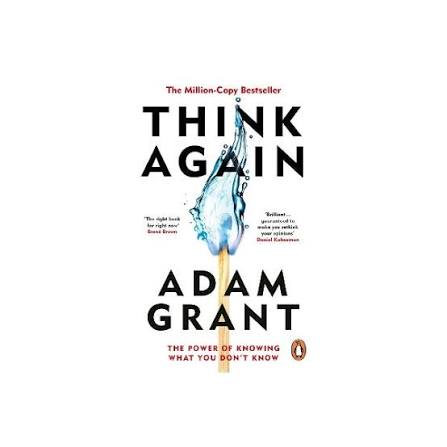
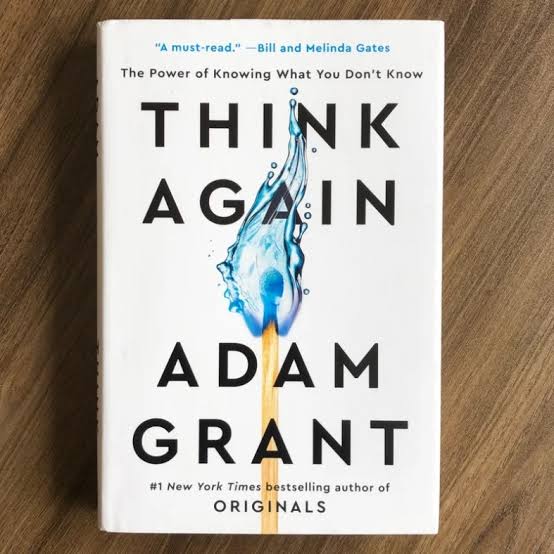

Think Again: The Power of Knowing What You Don’t Know by Adam Grant

රු1,700.00
3 X Rs. 566.67 or 8% Cashback with


or 3 X රු566.67 with


or up to 4 X රු425.00 with


Think Again by Adam Grant explores the powerful skill of questioning what you think you know.
Learn how to rethink assumptions, become comfortable with being wrong, stay intellectually curious, make better decisions and encourage others to reconsider their ideas.
Perfect for readers interested in psychology, leadership, decision-making, business and personal development.
Author: Adam Grant
Format: Paperback
Pages: 320
Genre: Psychology / Business / Personal Development
Book Details / WooCommerce
| Field | Enter This |
|---|---|
| Title | Think Again |
| Subtitle | The Power of Knowing What You Don’t Know |
| Author | Adam Grant |
| ISBN-13 | 9780753553916 |
| ISBN-10 | 0753553910 |
| Format | Paperback |
| Publisher | Penguin Random House UK |
| Imprint | WH Allen |
| Publication Date | 29 June 2023 |
| Original Publication Year | 2021 |
| Pages | 320 |
| Language | English |
| Audience | Adult / General |
| Genre | Psychology / Business / Personal Development |
| Weight | 0.228 kg |
| Length | 19.7 cm |
| Width | 12.6 cm |
| Height / Thickness | 2.1 cm |
| Dimensions | 19.7 × 12.6 × 2.1 cm |
3 in stock
Think Again: The Power of Knowing What You Don’t Know by Adam Grant
Learn the Power of Rethinking
Think Again: The Power of Knowing What You Don’t Know by Adam Grant explores one of the most valuable skills in a rapidly changing world:
the ability to rethink.
Most people are taught how to learn.
We collect knowledge.
We build opinions.
We develop expertise.
But Adam Grant argues that learning is only part of the process.
Sometimes the more important skill is being willing to:
- Question what you already believe
- Admit when you may be wrong
- Update your opinions
- Learn from disagreement
- Change your mind when new evidence appears
Penguin describes Think Again as a guide to keeping your thinking fresh, learning when to question your ideas and helping other people reconsider theirs.
Why Rethinking Matters
Intelligence is often described as the ability to think and learn.
Grant argues that another ability may be just as important:
the ability to unlearn and rethink.
People naturally become attached to their opinions.
Once we believe something, we often look for evidence that proves us right instead of evidence that might challenge us.
This can happen in:
- Business
- Relationships
- Education
- Leadership
- Politics
- Career decisions
- Personal beliefs
- Everyday problem-solving
Think Again encourages readers to become more comfortable with doubt.
Instead of seeing uncertainty as weakness, Grant presents it as an opportunity to learn.
The Importance of Intellectual Humility
One of the major themes in the book is intellectual humility.
This means being confident enough to hold an opinion while also recognising that you may not know everything.
Grant encourages readers to ask:
What evidence would make me change my mind?
That question can help prevent people from becoming trapped inside outdated beliefs.
Rather than protecting an opinion simply because it is ours, the goal is to remain curious.
Think Like a Scientist
One of the book’s most useful ideas is to approach opinions more like a scientist.
A scientist develops a hypothesis.
Then the hypothesis is tested.
If the evidence does not support it, the hypothesis changes.
Grant argues that everyday thinking can work in a similar way.
Instead of saying:
“I know I’m right.”
we can ask:
“What evidence would prove me wrong?”
This changes disagreement from a threat into a learning opportunity.
The Joy of Being Wrong
Many people dislike discovering that they were wrong.
It can feel embarrassing or uncomfortable.
But Grant argues that finding out you were wrong can actually be useful.
Being wrong means you have learned something you did not know before.
The real problem is not making mistakes.
The bigger problem is continuing to defend an outdated belief after better information becomes available.
Confidence and Humility
The book explores the difference between confidence and certainty.
You can be confident in your ability while remaining uncertain about your conclusions.
This combination can be powerful.
Grant shows how people can maintain:
- Confidence in themselves
- Curiosity about other perspectives
- Willingness to reconsider
- Openness to feedback
without becoming indecisive.
How to Handle Disagreement
Think Again also examines how to communicate with people who disagree with you.
Trying to defeat someone in an argument does not always change their mind.
In fact, aggressive arguments may make people defend their existing position even more strongly.
Grant explores approaches that encourage:
- Better questions
- Listening
- Mutual respect
- Curiosity
- Finding common ground
- Understanding another person’s reasoning
The goal is not simply to win.
The goal is to create conditions where both sides can think more carefully.
Helping Other People Rethink
Changing your own mind is difficult.
Helping someone else change theirs may be even harder.
Grant uses examples from debates, organisations, public conversations and professional situations to show how people can encourage others to reconsider without making them defensive.
Google Books describes the book as exploring how to question our opinions, open other people’s minds and create environments that value learning and reconsideration.
Rethinking at Work
The ideas in Think Again have strong applications in workplaces.
Teams can become less effective when people are afraid to disagree.
Leaders may continue supporting old strategies simply because they invested time or money in them.
Employees may repeat the same processes because:
“That’s how we’ve always done it.”
Grant encourages organisations to create cultures where people can:
- Challenge assumptions
- Ask questions
- Admit mistakes
- Experiment
- Learn from failure
- Change direction
This makes the book particularly useful for managers, entrepreneurs and professionals.
Rethinking Career Decisions
The book also encourages people to reconsider rigid life plans.
A career goal created years ago may no longer fit the person you have become.
Grant suggests that goals should sometimes be treated as hypotheses rather than permanent commitments.
This gives people permission to reconsider:
- Career paths
- Professional identities
- Personal priorities
- Long-term plans
Changing direction does not automatically mean failure.
Sometimes it means responding intelligently to new information.
Learning From People Who Disagree With You
People often surround themselves with others who share similar views.
This can create an environment where assumptions are rarely challenged.
Grant recommends developing relationships with people who are willing to disagree constructively.
These people can help reveal:
- Weak arguments
- Blind spots
- Unsupported assumptions
- Better alternatives
The purpose is not constant conflict.
It is better thinking.
Main Ideas in Think Again
1. Question Your Assumptions
Do not automatically treat old beliefs as permanent truths.
2. Stay Curious
Curiosity makes it easier to learn from people and experiences that challenge you.
3. Become Comfortable With Being Wrong
Finding an error is an opportunity to improve your thinking.
4. Separate Identity From Opinion
Changing your opinion does not mean losing your identity.
5. Listen Better
Understanding another person’s reasoning can be more productive than trying to defeat them.
6. Build Learning Cultures
Teams and organisations improve when people can challenge ideas safely.
7. Update Your Thinking
New evidence should be allowed to change old conclusions.
Major Themes
Critical Thinking
The book encourages readers to examine assumptions instead of automatically defending them.
Decision-Making
Better decisions often require questioning what we think we already know.
Open-Mindedness
Grant presents flexibility as a strength rather than indecision.
Leadership
Good leaders create environments where disagreement and learning are possible.
Learning
Knowledge should remain open to revision.
Self-Awareness
Recognising the limits of your knowledge can improve judgement.
Communication
Better questions and listening can make difficult discussions more productive.
Who Will Benefit From Think Again?
This book may be especially useful for:
- Managers
- Entrepreneurs
- Business owners
- Students
- Teachers
- Leaders
- Software professionals
- Researchers
- Team members
- Decision-makers
- Anyone interested in psychology
- Readers of personal-development books
It is particularly relevant to people who regularly make decisions, solve problems or work in changing environments.
Is Think Again Part of a Series?
No.
Think Again is a standalone nonfiction book.
Readers do not need to read Adam Grant’s other books first.
However, readers who enjoy it may also like:
- Give and Take
- Originals
- Hidden Potential
- Option B
About Adam Grant
Adam Grant is an organisational psychologist and professor at the Wharton School.
Penguin describes him as an organisational psychologist whose research examines areas including motivation, success, character and change. He has written several bestselling books and hosts the Re podcast.
His books include:
- Give and Take
- Originals
- Think Again
- Hidden Potential
For Sri Lankan readers interested in better decision-making, psychology, business, leadership and personal growth, Think Again offers practical ideas for becoming more flexible and thoughtful in a rapidly changing world.
Be the first to review “Think Again: The Power of Knowing What You Don’t Know by Adam Grant”
Related products
Non-Fiction & Knowledge
රු2,450.00
3 X Rs. 816.67 or 8% Cashback with
or 3 X රු816.67 with
or up to 4 X රු612.50 with
-14%
Self-Help & Psychology
Original price was: රු2,900.00.රු2,500.00Current price is: රු2,500.00.
3 X Rs. 833.33 or 8% Cashback with
or 3 X රු833.33 with
or up to 4 X රු625.00 with

Non-Fiction & Knowledge
රු1,550.00
3 X Rs. 516.67 or 8% Cashback with
or 3 X රු516.67 with
or up to 4 X රු387.50 with
-23%

Non-Fiction & Knowledge
Original price was: රු2,200.00.රු1,700.00Current price is: රු1,700.00.
3 X Rs. 566.67 or 8% Cashback with
or 3 X රු566.67 with
or up to 4 X රු425.00 with
රු2,000.00
3 X Rs. 666.67 or 8% Cashback with
or 3 X රු666.67 with
or up to 4 X රු500.00 with
-21%
Non-Fiction & Knowledge
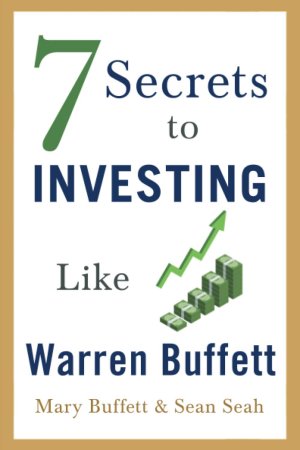
7 Secrets to Investing Like Warren Buffett by Mary Buffett & Sean Seah
Original price was: රු1,900.00.රු1,500.00Current price is: රු1,500.00.
3 X Rs. 500.00 or 8% Cashback with
or 3 X රු500.00 with
or up to 4 X රු375.00 with
-19%
Out of stock
Non-Fiction & Knowledge
Original price was: රු2,650.00.රු2,150.00Current price is: රු2,150.00.
3 X Rs. 716.67 or 8% Cashback with
or 3 X රු716.67 with
or up to 4 X රු537.50 with

Non-Fiction & Knowledge
රු1,900.00
3 X Rs. 633.33 or 8% Cashback with
or 3 X රු633.33 with
or up to 4 X රු475.00 with
Reviews
There are no reviews yet.