No products in the cart.
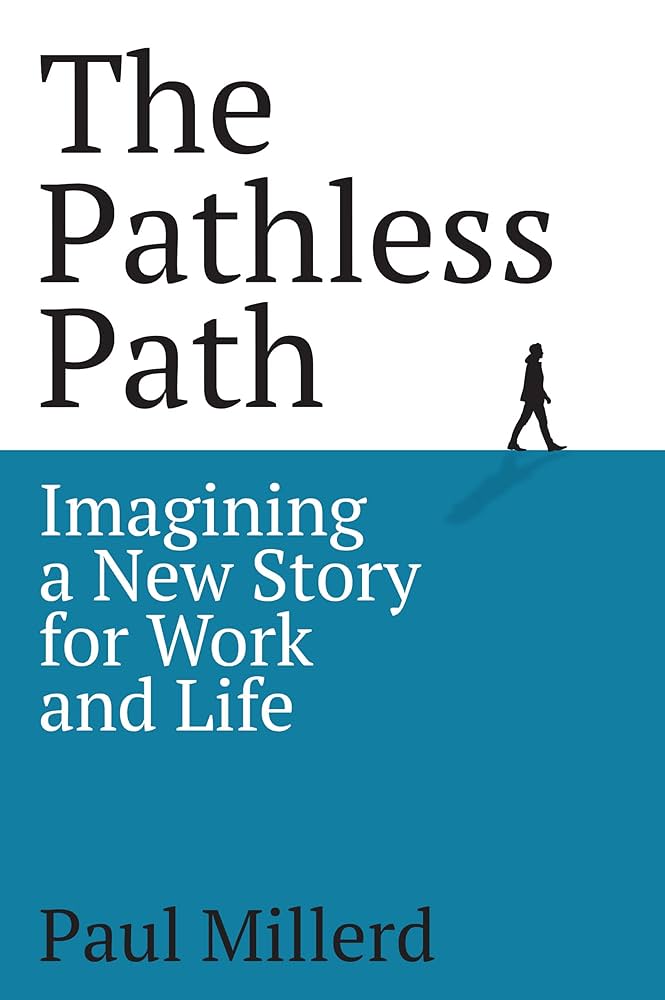
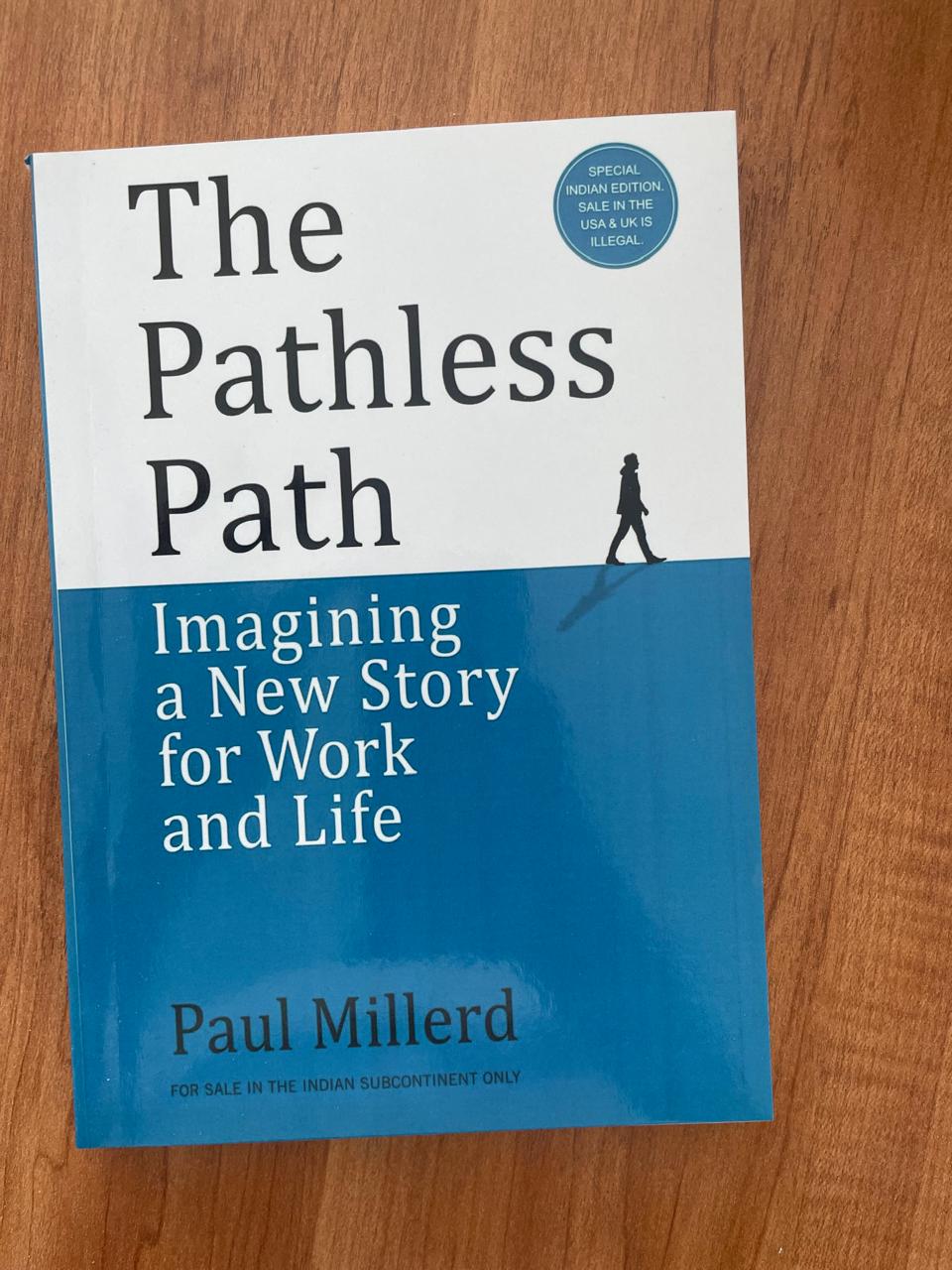
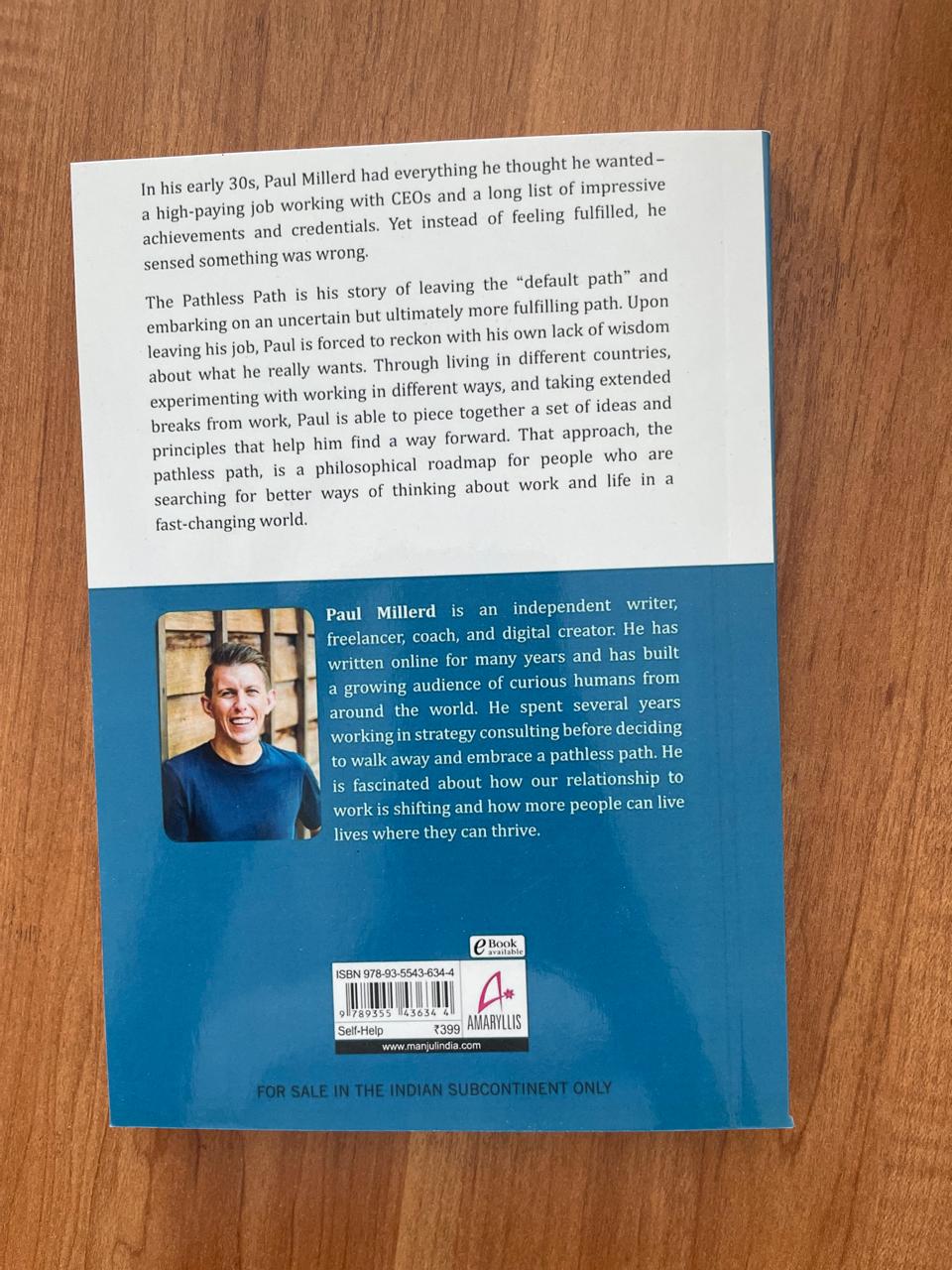
Pathless Path by Paul Millerd
රු1,750.00
3 X Rs. 583.33 or 8% Cashback with


or 3 X රු583.33 with


or up to 4 X රු437.50 with


The Pathless Path by Paul Millerd is a modern personal growth and career book that challenges traditional ideas of success, work, and life paths. Instead of following a fixed career ladder, the book explores what happens when someone steps away from conventional expectations to create a more meaningful and flexible life.
6 in stock
The Pathless Path by Paul Millerd is a thoughtful and refreshingly unconventional exploration of work, success, freedom and what happens when the life that looks successful from the outside no longer feels right on the inside.
Paul Millerd appeared to be following an excellent career path.
Good education.
Prestigious consulting work.
Strong income.
Impressive credentials.
A résumé that made sense.
From the outside, he seemed to be moving in exactly the direction ambitious professionals are encouraged to follow.
But something felt wrong.
The achievements were real.
The satisfaction was not.
Instead of continuing simply because the path looked respectable, Millerd began asking a more difficult question:
What if the life everyone says you should want is not the life you actually want?
That question eventually pushed him away from the traditional corporate path and into a period of uncertainty, self-employment, travel, writing, experimentation and reflection.
The Pathless Path by Paul Millerd is the story of that transition.
It is not a book telling everyone to quit their job.
It does not argue that conventional careers are automatically bad.
Instead, it asks readers to examine whether the path they are following was consciously chosen—or simply inherited from expectations about what a successful adult is supposed to do.
For anyone questioning their career, considering a major change, recovering from burnout or trying to build a healthier relationship with work, this book offers a powerful alternative to the idea that life must follow one predetermined route.
The Pathless Path by Paul Millerd – Book Overview
The Pathless Path by Paul Millerd begins with the idea of the default path.
Every culture has expectations about how a successful life should unfold.
Study.
Get qualifications.
Find a respectable job.
Earn more.
Get promoted.
Buy things.
Build status.
Keep moving upward.
None of these things is necessarily wrong.
The problem appears when someone follows the script without ever asking whether it actually suits them.
Millerd’s argument is not:
Reject everything conventional.
It is:
Recognize that the conventional path is only one possible path.
That difference is essential.
The Default Path
Millerd describes the default path as the set of culturally accepted decisions and accomplishments associated with becoming a successful adult.
Different countries and families may define it differently.
For one person, success might mean:
A university degree.
A professional career.
A house.
Marriage.
Children.
Retirement at a certain age.
For someone else, the script may involve entrepreneurship, prestige, wealth or another form of achievement.
The problem is not having goals.
The problem is allowing the script to make every major life decision automatically.
Life Scripts
From childhood, people absorb ideas about what they are “supposed” to do.
Parents.
Teachers.
Friends.
Employers.
Media.
Culture.
All influence the mental picture of a successful future.
Eventually, those expectations can become so familiar that they stop looking like choices.
They simply feel like reality.
The Pathless Path by Paul Millerd encourages readers to notice these invisible scripts.
Ask Where the Goal Came From
Suppose someone wants to become a senior executive.
Why?
Maybe they genuinely love leadership.
Or perhaps:
Their coworkers expect it.
Their family respects prestigious jobs.
Everyone around them is chasing promotion.
They have never imagined another possibility.
The same goal can be meaningful for one person and empty for another.
The important question is:
Did you choose it?
Success Can Still Feel Wrong
One of the most valuable ideas in The Pathless Path by Paul Millerd is that dissatisfaction does not always mean someone has failed.
Sometimes dissatisfaction appears after success.
You receive the promotion.
Reach the income target.
Get the prestigious job.
Then discover that the achievement does not create the feeling you expected.
This can be confusing because externally nothing seems wrong.
The Golden Handcuffs
A successful career can become harder to leave as income and status increase.
More salary creates:
A better lifestyle.
More financial obligations.
Higher expectations.
Professional identity.
The cost of walking away increases.
This is sometimes called the golden handcuffs problem.
The job may become less fulfilling precisely while becoming more difficult to leave.
Prestige
Prestige can be especially powerful.
People often pursue opportunities partly because other people admire them.
A famous company.
An elite university.
An impressive title.
Prestige is not meaningless.
But it becomes dangerous when other people’s admiration becomes more important than your own experience of daily life.
What Does Your Tuesday Feel Like?
A career can sound impressive in conversation while producing an ordinary daily life you dislike.
That creates a useful test.
Instead of asking:
“Does my career sound successful?”
ask:
“Do I like the way my normal days feel?”
Your life is mostly ordinary days.
Not LinkedIn announcements.
Not promotion celebrations.
Not annual awards.
Burnout
Millerd’s journey was influenced by his growing dissatisfaction with conventional work and questions about how he wanted to live. His book traces the movement from achievement-oriented consulting toward a more experimental relationship with work and life.
Burnout can sometimes reveal a problem with workload.
But sometimes it reveals a deeper mismatch involving:
Meaning.
Autonomy.
Values.
Environment.
Lifestyle.
A vacation may solve exhaustion temporarily.
It may not solve a life that feels fundamentally wrong.
Leaving the Default Path
Walking away from a familiar path sounds exciting in theory.
In reality, it can be frightening.
A normal career provides structure.
Salary.
Status.
Colleagues.
Routine.
Identity.
When you leave, many of those things disappear simultaneously.
Suddenly you need to answer questions that employers previously answered for you.
What should I work on?
When should I work?
How much money is enough?
Where should I live?
What do I actually want?
Freedom Can Be Uncomfortable
People often imagine freedom as automatically relaxing.
But freedom also creates responsibility.
If nobody tells you what to do, you must decide.
That can feel surprisingly uncomfortable.
There is no obvious scoreboard.
No promotion ladder.
No manager confirming you are making progress.
The pathless path therefore requires learning how to live with uncertainty.
Uncertainty Is Not Always a Problem to Solve
Millerd describes the pathless path as embracing uncertainty rather than treating an uncertain future as something that must immediately be fixed.
This is a major mindset shift.
The traditional career model says:
Know the destination.
Create the plan.
Execute.
The pathless approach sometimes says:
Take a step.
Pay attention.
Learn.
Adjust.
Continue.
Experiment Instead of Predicting Everything
Most people cannot accurately predict what kind of work will make them happy ten years from now.
So instead of trying to design the entire future intellectually, The Pathless Path by Paul Millerd encourages experimentation.
Try:
Freelancing.
A side project.
A sabbatical.
Writing.
Teaching.
Consulting.
Remote work.
A different schedule.
Living somewhere new.
The point is not that every experiment succeeds.
The point is that experiments create information.
Experience Gives Better Data Than Imagination
You can spend six months wondering:
Would I enjoy freelancing?
Or you can take one small freelance project.
The project may reveal:
I love independent work.
I hate client management.
I enjoy writing.
I need more social interaction.
That information is far more useful than endlessly thinking about hypothetical futures.
You Do Not Need the Perfect Plan
One reason people remain stuck is the belief that they must know exactly what comes next before changing anything.
But major life transitions rarely work that neatly.
You may know:
This is no longer right.
without yet knowing:
This is exactly what comes next.
The gap between those two points can be uncomfortable.
It can also be productive.
Curiosity
Curiosity becomes an important compass on a path without a predetermined map.
Instead of asking only:
What is the safest career?
ask:
What keeps pulling my attention?
What would I explore if nobody were judging me?
What problems do I enjoy working on?
What kind of people energize me?
Curiosity can reveal directions that status-driven planning overlooks.
Follow Energy
Some work leaves you tired in a satisfying way.
Other work leaves you empty.
That distinction matters.
Pay attention to activities that make you:
More curious.
More engaged.
More alive.
This does not mean turning every hobby into a business.
It means recognizing that energy contains information.
Define Enough
Modern career culture often creates an endless ladder.
More salary.
Bigger title.
Better house.
More recognition.
At some point, a person needs to ask:
How much is enough?
Without an answer, success has no finish line.
Money Matters
The Pathless Path by Paul Millerd does not require pretending money is irrelevant.
Financial security matters.
Bills still exist.
Family responsibilities matter.
The key question becomes:
What role should money play in the larger design of life?
Money can create freedom.
But maximizing money can also reduce freedom if it requires sacrificing everything else.
Time Is a Form of Wealth
A person earning less money but controlling more of their time may feel wealthier in important ways than someone earning far more while controlling almost none of it.
Time allows:
Family.
Health.
Learning.
Friendship.
Rest.
Creative work.
Travel.
Reflection.
The book encourages readers to broaden their definition of wealth beyond salary.
Work Is Part of Life, Not Life Itself
Many people organize life around work.
Where they live.
When they wake up.
When they travel.
When they see family.
When they rest.
all become secondary to employment.
The pathless path asks whether work could instead be designed to support the kind of life someone actually wants.
Lifestyle Before Job Title
Instead of starting with:
What job should I have?
try:
How do I want my days to work?
Where do I want to live?
How much flexibility do I want?
How much income do I truly need?
Do I want colleagues nearby?
Do I want to travel?
Then ask what types of work can support that life.
This reverses the usual order.
Leaving a Job Is Not the Only Path
An important caution is that The Pathless Path by Paul Millerd should not be reduced to:
Quit your job.
Someone can become more pathless while staying employed.
You might:
Negotiate remote work.
Reduce hours.
Change teams.
Take a sabbatical.
Create an independent project.
Change companies.
Build savings.
Experiment on weekends.
The goal is greater agency, not automatically self-employment.
Small Experiments Reduce Risk
Life changes do not always need to be dramatic.
Rather than resigning tomorrow:
Test the idea first.
Take one project.
Save more money.
Talk to someone already doing the work.
Try working independently for a month.
Small experiments can reveal whether the imagined alternative actually suits you.
Fear
Leaving a respected path creates many fears.
What will people think?
What if I earn less?
What if I fail?
What if I regret it?
What if I want to return?
These fears are understandable.
The pathless path does not eliminate them.
It encourages acting without requiring perfect certainty.
The Fear of Looking Unsuccessful
People sometimes remain in unhappy situations because leaving would make them look unsuccessful.
Imagine explaining:
“I left a prestigious job and I am experimenting.”
Some people may interpret that as failure.
But living primarily to protect your reputation gives strangers enormous influence over your life.
Identity
Career identity can become extremely strong.
Ask someone:
“Who are you?”
They may immediately answer with their job.
Consultant.
Engineer.
Doctor.
Manager.
Designer.
But what happens when the job disappears?
A more flexible identity makes change easier.
You can be a person who does work rather than a person whose entire identity is their work.
Achievement Addiction
Achievement can become self-reinforcing.
Accomplish one goal.
Feel good briefly.
Immediately choose the next one.
Repeat.
The problem appears when achievement becomes the only source of self-worth.
Then slowing down feels dangerous.
Rest feels unproductive.
Uncertainty feels like failure.
Achievement Versus Aliveness
One of the deeper tensions in The Pathless Path by Paul Millerd is between appearing successful and feeling fully alive.
The two can overlap.
But they do not automatically.
Someone may achieve less conventionally while experiencing:
More curiosity.
More connection.
More freedom.
More meaningful work.
That may be a better definition of success for that person.
The Good Life
The book ultimately asks readers to consider what a good life means personally.
There is no universal answer.
For one person, the good life may involve:
A stable job.
Family.
Community.
Predictable routines.
For another:
Independent work.
Travel.
Creative projects.
Flexible time.
The mistake is assuming one person’s answer should apply to everyone.
Success Must Be Defined Personally
If you do not define success, society will happily define it for you.
Usually using visible metrics:
Income.
Job title.
House size.
Prestige.
Followers.
Awards.
Personal definitions may involve less visible things:
Time with children.
Health.
Creative freedom.
Friendship.
Learning.
Peace.
The Pathless Path Is Not Anti-Career
This distinction matters.
A meaningful path may still involve ambitious work.
You can:
Build a company.
Become an executive.
Work at a large organization.
Earn a high salary.
and still live intentionally.
The issue is not whether the path looks conventional.
The issue is whether you consciously chose it.
Work Can Be Meaningful Without Being Your Entire Purpose
Another useful idea is separating meaningful work from the belief that one job must provide everything.
A job may provide:
Income.
Structure.
Interesting problems.
Your sense of meaning might also come from:
Family.
Community.
Art.
Faith.
Friendship.
Volunteering.
Expecting one employer to provide identity, purpose, friendship, status and financial security may be unrealistic.
Finding the Others
Leaving a conventional path can feel lonely.
People around you may not understand your decisions.
Finding others who are exploring similar ideas can make uncertainty easier.
Community provides:
Examples.
Encouragement.
Perspective.
Possibility.
Seeing someone else build an unconventional life expands your own imagination about what is possible.
Environment Shapes Possibility
If everyone you know follows one path, alternatives can feel unrealistic.
Meet freelancers.
Artists.
Entrepreneurs.
Remote workers.
Researchers.
Independent creators.
People on sabbaticals.
People with unconventional schedules.
Suddenly the range of imaginable lives becomes wider.
Travel and Perspective
Millerd’s own journey involved living in different countries and experimenting with different ways of working and living.
Travel can disrupt assumptions because it reveals that:
Normal is local.
Different societies organize:
Work.
Family.
Time.
Success.
Community.
differently.
The existence of many models makes it harder to believe your original model is the only one.
Sabbaticals and Space
Constant busyness makes deep reflection difficult.
A sabbatical or extended break can create enough distance to ask questions that everyday routines suppress.
What do I actually want?
What am I doing only from habit?
What would I change if nobody expected anything from me?
Not everyone can take a long sabbatical.
But even shorter periods of intentional space can help.
Rest Is Not Wasted Time
Achievement culture often treats rest as useful only because it increases future productivity.
Rest so you can work harder.
But rest can also have value in itself.
A life does not need to justify every hour through output.
Productivity Is Not the Same as a Good Life
You can become extremely efficient at doing things that do not matter to you.
That creates an uncomfortable question:
What if productivity is helping you move faster in the wrong direction?
Before optimizing your schedule, decide what the schedule is for.
Career Change
The Pathless Path by Paul Millerd can be especially valuable during career transitions because it normalizes not immediately knowing the answer.
Traditional career advice often demands:
Choose the target role.
Create the plan.
Network.
Apply.
But some transitions require exploration before commitment.
Re-entry Is Possible
Leaving a conventional path does not necessarily mean permanently closing every door.
People sometimes exaggerate career risk in their imagination.
Skills remain.
Relationships remain.
Experience remains.
A future return to employment may still be possible.
Recognizing this can make experimentation feel less dangerous.
Optionality
Financial savings, portable skills and professional relationships can increase the ability to experiment.
Therefore, someone wanting a more unconventional path can prepare by increasing optionality.
Build savings.
Learn useful skills.
Maintain relationships.
Reduce unnecessary expenses.
Create multiple sources of opportunity.
Freedom is easier when choices exist.
Entrepreneurship
Entrepreneurs may strongly connect with The Pathless Path by Paul Millerd.
But the book does not romanticize entrepreneurship as the new default answer.
Building a startup can become another prestige path.
Fundraise.
Scale.
Grow.
Exit.
Repeat.
A person can leave one default script only to enter another.
The deeper goal is intentionality.
Independent Work
Freelancing and independent work can offer:
Autonomy.
Flexible schedules.
Location freedom.
Creative control.
But they also create:
Income uncertainty.
Administration.
Selling.
Self-management.
No employer benefits.
Freedom always comes with trade-offs.
There Is No Perfect Path
Every lifestyle contains disadvantages.
Corporate work may provide stability but reduce autonomy.
Independent work may provide autonomy but reduce predictability.
The goal is not finding a path with zero problems.
It is choosing trade-offs you are willing to accept.
Trade-Offs Reveal Priorities
Instead of asking:
What is the best career?
ask:
Which problems am I willing to live with?
Someone may prefer:
Lower salary + more time.
Another may prefer:
Higher workload + faster financial progress.
Neither is universally correct.
Is The Pathless Path a Self-Help Book?
Partly.
It fits well under Self-Help & Personal Development, which is also the category currently used in your BookLounge catalogue.
However, it is not a conventional step-by-step self-help manual.
Millerd describes it more as a personal journey and philosophical roadmap than a collection of productivity hacks.
Is It a Career Book?
Yes, but it is broader than career advice.
It explores:
Work.
Meaning.
Identity.
Money.
Time.
Freedom.
Uncertainty.
Success.
Life design.
So readers looking for a straightforward guide to getting promoted may find something quite different.
Is It Anti-Work?
No.
The book is not arguing that meaningful life requires avoiding work.
It asks how work can occupy a healthier and more intentional place within life.
Millerd later continued exploring this subject in his book Good Work: Reclaiming Your Inner Ambition.
Is It Good for Students?
Yes, especially university students approaching major career decisions.
Students often feel pressure to choose a perfect path immediately.
The book offers another perspective:
Your first job does not need to determine your entire life.
Careers can evolve through experimentation.
Is It Good for Professionals?
Yes.
It may be especially relevant to professionals who appear successful but privately wonder:
Is this it?
People in:
Consulting.
Software.
Finance.
Management.
Marketing.
Corporate leadership.
Entrepreneurship.
may recognize the tension between professional achievement and personal meaning.
Is It Good for Someone Thinking of Quitting Their Job?
Yes, but it should not be interpreted as instructions to resign impulsively.
The book is useful precisely because it can help someone examine:
Why they want to leave.
What they want more of.
What financial runway they need.
What experiments they can run first.
A thoughtful transition is usually better than a dramatic escape.
Is It a Memoir?
Partly.
Millerd uses his own move from prestigious consulting toward independent work and a more experimental life as the narrative foundation of the book. The original 2022 editions are categorized across memoir, careers and self-help.
Edition Note
There are multiple editions of The Pathless Path.
The original self-published 2022 editions are listed with slightly different ISBNs and page counts depending on format, including editions around 211–220 pages.
A 2024 Repro India edition is listed at 222 pages, ISBN 9789355434623.
Because your BookLounge catalogue does not show an ISBN for product 10282 in the source I checked, use the ISBN and page count printed on your actual physical copy rather than copying details from another edition.
Important Themes
The Pathless Path by Paul Millerd explores:
- Meaningful work
- Career change
- The default path
- Life scripts
- Success
- Freedom
- Uncertainty
- Self-employment
- Independent work
- Burnout
- Curiosity
- Experimentation
- Money and enough
- Time
- Identity
- Personal values
- Life design
- Sabbaticals
- Intentional living
- Redefining success
7 Powerful Lessons From The Pathless Path by Paul Millerd
- The default path is only one option. Education, career progression, money and status can create a good life, but they should be conscious choices rather than unquestioned obligations.
- Success needs a personal definition. If you do not decide what success means to you, you will probably inherit someone else’s definition based on salary, prestige or visible achievement.
- Experiments can be better than perfect plans. You do not need to know exactly what you want for the next twenty years. Small experiments can reveal what gives you energy and what does not.
- Uncertainty is not automatically failure. Periods without a clear path can create space for learning, curiosity and possibilities that a rigid plan would never reveal.
- Time is a form of wealth. A higher salary is not always a better deal if earning it requires sacrificing health, relationships, freedom and almost every hour you control.
- Freedom comes with responsibility and trade-offs. Independent work may provide flexibility, but it can also create financial uncertainty and greater responsibility. No path eliminates difficulty.
- The goal is not to escape work—it is to build a life worth supporting with your work. The Pathless Path by Paul Millerd ultimately invites readers to place work inside a larger definition of a good life rather than allowing work to define the entire life.
Why Read The Pathless Path by Paul Millerd?
The Pathless Path by Paul Millerd is an excellent choice for readers interested in:
- Career change
- Meaningful work
- Personal development
- Self-employment
- Freelancing
- Entrepreneurship
- Burnout recovery
- Work-life balance
- Life design
- Remote work
- Digital nomad lifestyles
- Intentional living
- Personal freedom
- Career uncertainty
- Sabbaticals
- Alternative careers
- Redefining success
- Finding purpose
- Independent work
- Creating a meaningful life
It is particularly valuable for someone who has done many things “right” yet still feels that something is missing.
That feeling does not automatically mean you need to destroy your current life.
It may simply mean you need to start asking better questions.
Who Should Read This Book?
The Pathless Path by Paul Millerd may especially appeal to:
- Professionals questioning their career
- University graduates unsure about their future
- Consultants
- Software professionals
- Entrepreneurs
- Freelancers
- Remote workers
- Creators
- People considering a sabbatical
- People recovering from burnout
- Workers who feel trapped by prestige or salary
- People planning a major life transition
- Readers interested in unconventional careers
- Anyone who wants more freedom and intention in work and life
The Pathless Path by Paul Millerd – What If You Don’t Need the Whole Map?
The Pathless Path by Paul Millerd starts with a problem many ambitious people eventually discover.
You can follow the instructions perfectly and still arrive somewhere you do not want to stay.
Get the degree.
Get the job.
Earn more.
Get promoted.
Do everything correctly.
Then one day ask:
Why am I doing this?
That question can be terrifying.
Because once you ask it seriously, the old answers may stop working.
Prestige may no longer feel sufficient.
Money may still matter but no longer justify every trade-off.
The career ladder may still exist, but you may no longer want to climb it.
Then what?
Millerd’s answer is not a new ten-step formula.
That would simply create another path to follow.
Instead, he offers permission to explore.
Try something.
Learn.
Pay attention.
Change direction.
Build enough financial stability to create options.
Notice what makes you feel alive.
Question the invisible scripts shaping your decisions.
Find people living differently.
Define success yourself.
And accept that uncertainty may never disappear completely.
That is why the phrase pathless path works so well.
There is movement.
But not always a predetermined map.
For people used to achievement systems with:
Grades.
Promotions.
KPIs.
Job titles.
Rankings.
that can initially feel uncomfortable.
But it can also create something valuable:
agency.
You stop asking only:
“What am I supposed to do next?”
and begin asking:
“What kind of life am I trying to create?”
That may be the most important career question of all.
Because a career is not separate from life.
It consumes years of life.
Hours of life.
Energy from life.
Attention from life.
So the goal should not simply be building the most impressive career possible.
It should be deciding what role work should play in a life you actually want to live.
For readers questioning conventional success, considering a career change or simply wondering whether another way of working is possible, The Pathless Path by Paul Millerd offers a thoughtful, reassuring and deeply human exploration of what can happen when you stop demanding a perfect map and start learning how to choose your own direction.
Learn more about The Pathless Path by Paul Millerd on the official book website.
Explore more career and personal development books at Bargain Books.
Be the first to review “Pathless Path by Paul Millerd”
Related products
Out of stock
Autobiography
රු2,750.00
3 X Rs. 916.67 or 8% Cashback with
or 3 X රු916.67 with
or up to 4 X රු687.50 with
-33%

Self-Help & Psychology
Original price was: රු2,300.00.රු1,550.00Current price is: රු1,550.00.
3 X Rs. 516.67 or 8% Cashback with
or 3 X රු516.67 with
or up to 4 X රු387.50 with
-14%
Out of stock
Self-Help & Psychology
Original price was: රු2,900.00.රු2,500.00Current price is: රු2,500.00.
3 X Rs. 833.33 or 8% Cashback with
or 3 X රු833.33 with
or up to 4 X රු625.00 with
Out of stock
Non-Fiction & Knowledge
රු1,600.00
3 X Rs. 533.33 or 8% Cashback with
or 3 X රු533.33 with
or up to 4 X රු400.00 with

Out of stock
Non-Fiction & Knowledge
රු1,900.00
3 X Rs. 633.33 or 8% Cashback with
or 3 X රු633.33 with
or up to 4 X රු475.00 with
-19%
Out of stock
Non-Fiction & Knowledge
Original price was: රු2,650.00.රු2,150.00Current price is: රු2,150.00.
3 X Rs. 716.67 or 8% Cashback with
or 3 X රු716.67 with
or up to 4 X රු537.50 with
-24%
Out of stock
Non-Fiction & Knowledge
Original price was: රු2,100.00.රු1,600.00Current price is: රු1,600.00.
3 X Rs. 533.33 or 8% Cashback with
or 3 X රු533.33 with
or up to 4 X රු400.00 with
Out of stock
Self-Help & Psychology
රු1,500.00
3 X Rs. 500.00 or 8% Cashback with
or 3 X රු500.00 with
or up to 4 X රු375.00 with
Reviews
There are no reviews yet.