
No products in the cart.

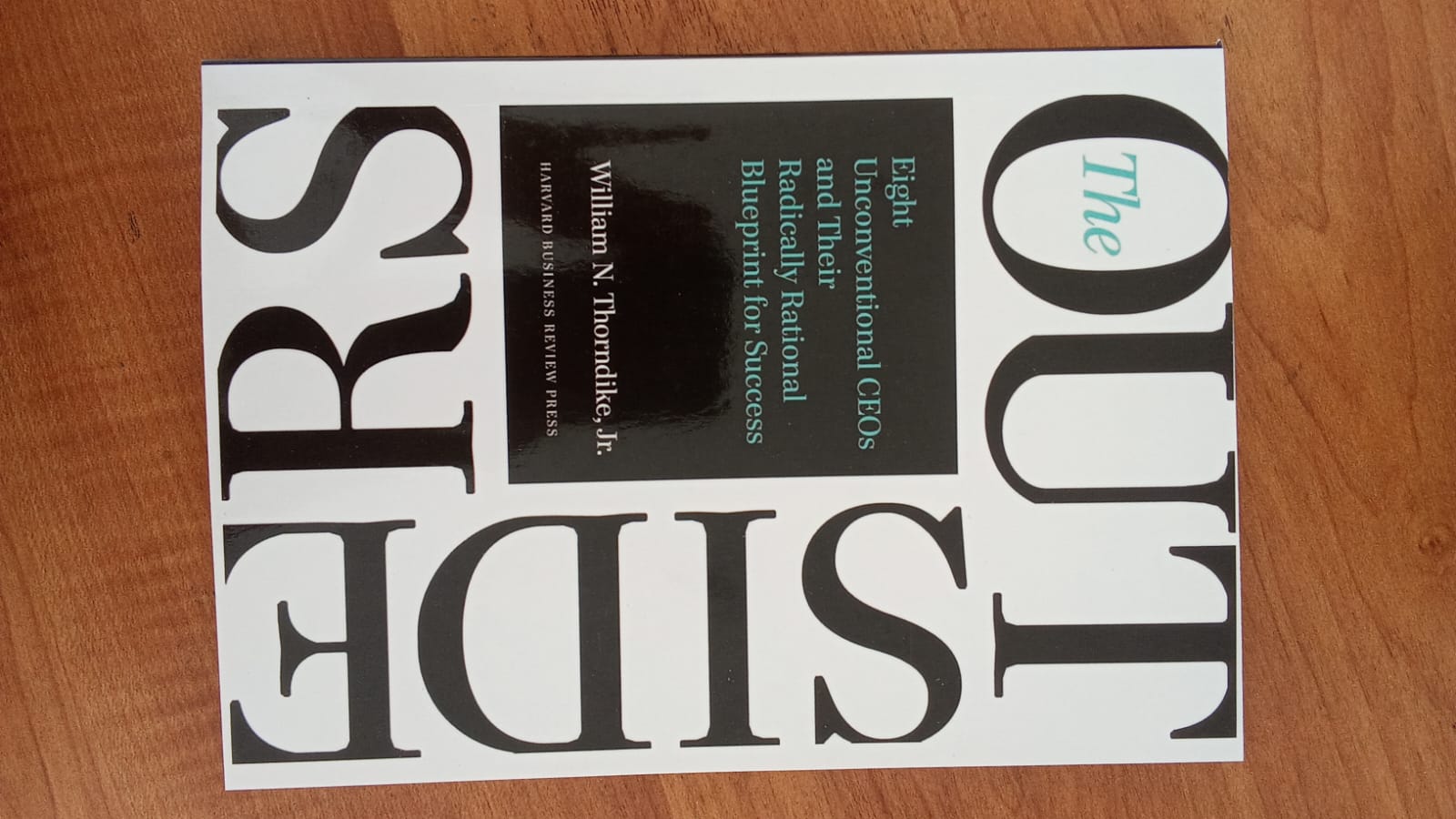
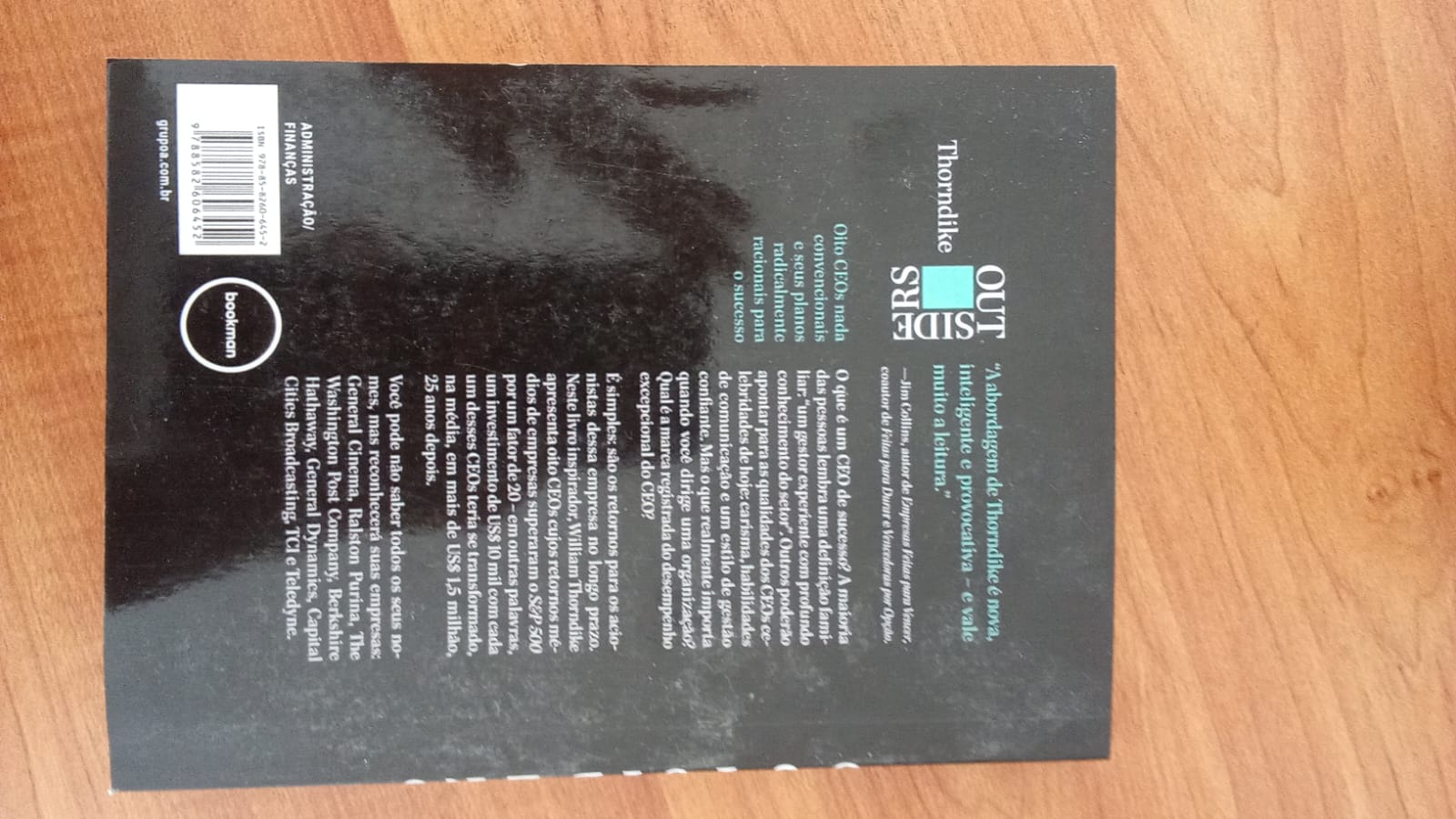




Outsiders by William Thorndike


රු1,700.00
3 X Rs. 566.67 or 8% Cashback with


or 3 X රු566.67 with


or up to 4 X රු425.00 with


The Outsiders by SE Hinton is a powerful coming-of-age classic following fourteen-year-old Ponyboy Curtis, his brothers and his close-knit Greaser friends as they struggle with poverty, gang conflict and their violent rivalry with the wealthy Socs. As one terrible night changes everything, Ponyboy begins questioning the labels that divide people and discovers deeper truths about friendship, family, grief, courage and belonging. A moving and accessible YA classic for teens, students and readers who enjoy emotionally rich stories about identity and social class.
5 in stock
The Outsiders by SE Hinton is a powerful coming-of-age classic about friendship, brotherhood, class conflict, violence and the struggle to find belonging in a world that seems determined to divide people into opposing sides.
Fourteen-year-old Ponyboy Curtis knows exactly where he belongs.
He is a Greaser.
The Greasers come from the poorer side of town.
They wear their hair long.
They do not have much money.
They are judged by how they look and where they come from.
On the other side are the Socs, short for Socials.
They have money.
Cars.
Social status.
And, from Ponyboy’s perspective, the freedom to cause trouble without facing the same consequences.
For Ponyboy, the division seems simple:
Greasers versus Socs.
Us versus them.
But life becomes much more complicated after a violent encounter between the two groups changes everything.
What begins as a story about rival teenage gangs becomes a deeply emotional exploration of:
Family.
Loyalty.
Violence.
Grief.
Identity.
Class.
Friendship.
And the realization that people on opposite sides may share more pain than either group wants to admit.
The Outsiders by SE Hinton remains widely read because its characters feel real.
Ponyboy is thoughtful and sensitive.
Johnny is vulnerable but courageous.
Dallas is hardened by life.
Darry carries responsibilities that force him to grow up too quickly.
Sodapop tries to keep the family together.
And even the Socs are gradually revealed to be more complicated than Ponyboy first believes.
The Outsiders by SE Hinton – Book Overview
The Outsiders by SE Hinton is told from the perspective of Ponyboy Curtis.
Ponyboy lives with his two older brothers:
Darry
and
Sodapop
after the death of their parents.
The brothers are trying to remain together as a family despite financial pressure and emotional strain.
Ponyboy also belongs to a close group of Greasers, including:
Johnny Cade.
Dallas Winston.
Two-Bit Mathews.
Steve Randle.
Their friendship becomes a form of family.
They defend one another.
Argue.
Laugh.
Fight.
And survive together.
Ponyboy Curtis
Ponyboy is different from the stereotypical tough-gang image people may expect.
He likes:
Books.
Movies.
School.
Sunsets.
He is observant and emotionally sensitive.
That creates one of the novel’s central tensions.
The world sees him as:
A Greaser.
A troublemaker.
A boy from the wrong side of town.
But Ponyboy knows there is much more inside him than that label.
Labels
This becomes one of the biggest themes in The Outsiders by SE Hinton.
People are placed into categories.
Greaser.
Soc.
Poor.
Rich.
Troublemaker.
Privileged kid.
But labels simplify people.
A person’s social group may influence their life.
It does not completely explain who they are.
The Greasers
The Greasers come from working-class backgrounds.
They are recognizable through appearance and reputation.
Many people assume they are naturally violent or criminal.
But Hinton shows individual personalities within the group.
They are not interchangeable.
Each character has:
A different family situation.
Different fears.
Different ambitions.
Different ways of responding to hardship.
The Socs
The Socs come from wealthier families.
To the Greasers, the Socs appear to have everything.
Money.
Cars.
Respectability.
Opportunity.
But The Outsiders by SE Hinton gradually complicates this picture.
Having money does not mean having no problems.
Pain is not limited to one social class.
Class Conflict
The Greaser-Soc rivalry is fundamentally connected to social class.
The two groups do not merely dislike one another because of personality.
Their conflict is connected to:
Money.
Status.
Neighborhood.
Appearance.
Opportunity.
How adults perceive them.
The novel therefore becomes more than a teenage-gang story.
It is also about inequality.
Violence
Violence appears throughout the story.
Fights between Greasers and Socs are treated as part of their world.
But the novel does not romanticize violence as harmless fun.
Violence creates consequences.
Physical injuries.
Fear.
Death.
Trauma.
Revenge.
More violence.
The cycle becomes increasingly destructive.
Johnny Cade
Johnny is one of the novel’s most important characters.
He is younger, quiet and deeply affected by violence at home and on the streets.
He looks to the Greasers for the support he does not receive elsewhere.
His relationship with Ponyboy becomes central to the emotional heart of the novel.
Friendship as Family
For Johnny, friendship is not merely social.
It is survival.
The Greasers offer him:
Protection.
Belonging.
Recognition.
This is one reason loyalty becomes such a powerful theme.
When your friends are the people who make you feel safe, friendship begins functioning like family.
Dallas Winston
Dallas, or Dally, is one of the hardest members of the group.
He has experienced a rough life and has learned to protect himself emotionally by becoming tough.
Dally can appear reckless and aggressive.
Yet Hinton gradually reveals that even hardened people can care deeply.
Toughness
The book repeatedly asks what being tough actually means.
Is toughness:
Winning fights?
Never crying?
Acting fearless?
Or can courage also mean:
Caring about someone.
Doing the right thing.
Admitting pain.
Protecting another person.
The novel challenges simple ideas about masculinity.
Darry Curtis
Darry is Ponyboy’s oldest brother.
After their parents’ deaths, Darry becomes responsible for keeping the family together.
That means he has to act as:
Brother.
Guardian.
Provider.
Disciplinarian.
Ponyboy often interprets Darry’s strictness as anger.
But responsibility can sometimes look harsh from the perspective of the younger person being protected.
Sodapop Curtis
Sodapop is warmer and more openly affectionate.
He often acts as the emotional bridge between Ponyboy and Darry.
Through the three brothers, the novel explores different ways people express love.
Some people say it directly.
Others show it through responsibility.
Family After Loss
The Curtis brothers have already experienced enormous grief before the main story begins.
The death of their parents changed their lives.
Darry gave up opportunities.
Sodapop works.
Ponyboy worries about whether authorities might separate them.
This adds constant emotional pressure beneath the gang conflict.
Belonging
Nearly every major character wants to belong somewhere.
Ponyboy wants to belong to his brothers and friends.
Johnny wants a safe family.
Dally needs people even while pretending he does not.
The Greasers themselves become a community.
Belonging can be protective.
But group identity can also intensify conflict when people begin seeing outsiders only as enemies.
Us Versus Them
The Greasers think:
Socs do not understand us.
The Socs may think similar things about Greasers.
Once people divide the world into:
Us
and
Them,
it becomes easier to stop seeing individuals.
That is how prejudice grows.
Cherry Valance
Cherry Valance becomes important because she challenges Ponyboy’s assumptions about the Socs.
She comes from the opposite social group.
Yet she and Ponyboy can talk.
They discover shared interests and emotional understanding.
Their conversations help Ponyboy realize that class differences do not erase common humanity.
Sunsets
One of the most memorable symbolic ideas in the novel involves sunsets.
People on both sides of town see the same sunset.
That simple idea becomes powerful.
Different neighborhoods.
Different clothes.
Different amounts of money.
Same sky.
It symbolizes the possibility that people divided by society may still share fundamental human experiences.
Identity
Ponyboy spends much of the novel deciding what kind of person he wants to become.
He could accept the identity society gives him:
Greaser.
Troublemaker.
Outsider.
But he also sees himself as:
Reader.
Student.
Brother.
Friend.
Individual.
Growing up means learning that other people’s labels do not need to become your entire identity.
Coming of Age
The Outsiders by SE Hinton is fundamentally a coming-of-age novel.
Ponyboy begins with a relatively simple understanding of the world.
Greasers good.
Socs bad.
His experiences force him to recognize greater complexity.
People can be:
Kind and cruel.
Strong and vulnerable.
Privileged and unhappy.
Poor and generous.
Human beings rarely fit into one simple category.
Loss
Loss becomes increasingly important as the story develops.
The novel asks what happens when teenagers are forced to experience consequences normally associated with adulthood.
Grief changes Ponyboy.
It also changes how he understands people he previously thought he knew.
Trauma
Violent experiences do not disappear simply because an event ends.
Characters experience:
Fear.
Shock.
Denial.
Grief.
Emotional withdrawal.
The book shows that surviving something physically does not always mean recovering emotionally immediately.
Heroism
One of the most interesting questions in The Outsiders by SE Hinton is:
Who gets to be called a hero?
Someone can be viewed by society as a delinquent and still act courageously.
Public reputation does not always match character.
Courage
Courage is not limited to winning fights.
Sometimes courage means:
Saving someone.
Standing beside a friend.
Facing grief.
Choosing compassion.
Trying to understand someone from the other side.
The novel gradually redefines strength.
Stay Gold
The famous phrase “Stay gold” is connected with innocence, beauty and the possibility of holding onto goodness even after experiencing hardship.
It becomes one of the most recognizable ideas associated with the novel.
For SEO copy, it is better to discuss its meaning without revealing every emotional circumstance surrounding it.
Innocence
Growing up often means learning that the world is more painful and complicated than we expected.
But maturity does not necessarily require becoming completely cynical.
Ponyboy’s sensitivity is not something he needs to destroy.
It may actually be one of his greatest strengths.
Empathy
One of the strongest lessons in The Outsiders by SE Hinton is empathy.
Understanding another person’s pain does not mean approving of everything they do.
It means recognizing that they are more complicated than the category you placed them in.
Ponyboy slowly learns this about the Socs.
Social Inequality
Money affects what options people have.
Where they live.
How others judge them.
How much protection they receive.
The novel does not present poverty and wealth as simple moral categories.
Instead, it shows how inequality creates tension and different life experiences.
Brotherhood
Brotherhood appears in two forms.
Ponyboy has biological brothers.
He also has the Greasers.
Both forms of brotherhood create:
Loyalty.
Conflict.
Protection.
Responsibility.
This helps explain why the novel is often remembered as a story about belonging as much as gang rivalry.
Friendship
The friendships feel intense because the characters depend on one another.
They are not simply meeting after school for entertainment.
They know they may need to defend one another physically and emotionally.
This creates strong loyalty.
Masculinity
Many boys in the novel have learned that appearing vulnerable is dangerous.
Crying may be seen as weakness.
Fear may need to be hidden.
But the novel repeatedly shows that emotional suppression comes with a cost.
Caring does not make someone weak.
Adults and Teenagers
One reason The Outsiders became influential in young-adult literature is that it takes teenage problems seriously.
The characters’ struggles are not treated as silly simply because they are young.
Their emotions have real consequences.
Their social world matters.
Penguin Random House describes the novel as a work that helped lay the groundwork for the modern YA genre.
S. E. Hinton
S. E. Hinton began writing The Outsiders as a teenager and was still very young when it was published.
That helps explain why the teenage characters feel immediate rather than written entirely from an adult’s distant perspective.
Hinton went on to become a major figure in young-adult literature and received the American Library Association’s Margaret A. Edwards Award for her contribution to the field.
First Published in 1967
The Outsiders was first published in 1967 and has remained widely read for generations.
Despite its age, many of its central themes remain recognizable:
Class division.
Bullying.
Violence.
Peer groups.
Family conflict.
Feeling misunderstood.
Searching for identity.
Is The Outsiders a Classic?
Yes.
It is widely considered a modern young-adult classic and a major influence on the development of realistic YA fiction.
Rather than focusing only on idealized teenage life, Hinton wrote about poverty, gang conflict, family problems, violence and alienation.
Is The Outsiders Suitable for Teen Readers?
Penguin Random House currently recommends several editions for readers around age 12 and up / Grade 7 and above.
However, parents and teachers should be aware that the story contains:
Violence.
Death.
Gang fights.
Family loss.
Abuse.
Smoking.
Alcohol references.
Grief.
Teen characters in dangerous situations.
The book handles these themes seriously rather than as graphic horror.
Is The Outsiders a Romance?
No.
There are some interactions involving attraction and social relationships, but romance is not the main focus.
The novel is primarily about:
Coming of age.
Friendship.
Brotherhood.
Class.
Violence.
Identity.
Is It Based on a True Story?
No.
The Outsiders by SE Hinton is fiction.
However, Hinton drew on the kinds of social divisions and youth conflicts she observed around her, which helped give the story its realistic tone.
Is The Outsiders Part of a Series?
No strict series reading order is required.
The Outsiders works as a complete standalone novel.
Hinton wrote other novels set in related social environments, but you do not need to read anything before or after this book to understand Ponyboy’s story.
The Outsiders Film
The novel was adapted into the well-known 1983 film directed by Francis Ford Coppola.
Penguin Random House continues to identify the novel as the inspiration for Coppola’s film, and the book has also inspired a Tony Award-winning Broadway musical.
The film helped introduce the story to another generation of readers.
Should You Read the Book Before Watching the Film?
Yes, especially if you want greater access to Ponyboy’s thoughts.
Because the novel is told from his perspective, readers experience:
His confusion.
His grief.
His judgments.
His changing understanding of the Socs.
His feelings about his brothers.
A film can show events visually, but the book gives much more direct access to Ponyboy’s inner world.
Different Editions
There are many editions of The Outsiders, so ISBN and page count can vary considerably.
For example, Penguin Random House currently lists:
- A Penguin Classics paperback, ISBN 9780143039853, at 160 pages.
- A Speak paperback, ISBN 9780142407332, at 224 pages.
- A 50th Anniversary Edition, ISBN 9780425288290, at 224 pages.
For WooCommerce, use the ISBN and page count printed on the exact physical copy you have, rather than copying data from another edition.
Content Considerations
The Outsiders by SE Hinton contains mature themes including:
- Gang violence
- Physical assault
- Death
- Grief
- Family loss
- Domestic abuse references
- Socioeconomic inequality
- Smoking
- Alcohol references
- Bullying
- Trauma
- Dangerous situations involving teenagers
- Emotional distress
The novel is generally considered YA rather than adult-only fiction, but these themes are important for younger readers and parents to know.
Important Themes
The Outsiders by SE Hinton explores:
- Friendship
- Brotherhood
- Family
- Social class
- Greasers and Socs
- Identity
- Belonging
- Violence
- Grief
- Loyalty
- Courage
- Empathy
- Prejudice
- Poverty
- Privilege
- Growing up
- Trauma
- Masculinity
- Innocence
- Hope
7 Powerful Reasons to Read The Outsiders by SE Hinton
- Ponyboy is an unforgettable narrator. His sensitivity, intelligence and uncertainty allow readers to experience gang conflict from inside the life of someone society has already judged.
- The friendship feels genuinely important. Johnny, Dally, Two-Bit and the rest of the Greasers are not simply background characters; they become a substitute family built around loyalty and survival.
- It challenges simple ideas about rich and poor. The Greasers and Socs appear completely different at first, but Ponyboy gradually learns that money does not eliminate fear, pain or loneliness.
- The novel takes teenage problems seriously. Hinton does not reduce the characters’ lives to school drama. Family loss, poverty, violence and identity have real consequences.
- It asks what real strength means. Physical toughness matters in the characters’ world, but empathy, sacrifice and emotional honesty gradually become equally important forms of courage.
- Its message about labels remains relevant. People are still judged by clothing, neighborhoods, money, families and social groups. The novel reminds readers that categories never tell the entire story.
- It is an accessible modern classic. The novel is relatively short, emotionally direct and fast-moving, making The Outsiders by SE Hinton an excellent choice for readers who want to begin exploring classic literature without starting with a very dense book.
Why Read The Outsiders by SE Hinton?
The Outsiders by SE Hinton is an excellent choice for readers interested in:
Coming-of-age novels.
Young-adult classics.
Friendship stories.
Brotherhood.
Family relationships.
Class conflict.
Greasers and Socs.
Teen fiction.
Social inequality.
Stories about outsiders.
Emotional classics.
Books about identity.
School reading.
Short classics.
Character-driven fiction.
It is especially suitable for readers who appreciate stories where characters discover that the world is more complicated than the labels people use to divide it.
Who Should Read This Book?
The Outsiders by SE Hinton may especially appeal to:
- Teen readers
- Young-adult fiction fans
- Students
- Teachers
- Classic-fiction readers
- Readers interested in friendship and brotherhood
- Fans of coming-of-age novels
- Readers interested in social class and inequality
- People who have seen the 1983 film
- Readers looking for an accessible modern classic
- Anyone who has ever felt judged, excluded or misunderstood
The Outsiders by SE Hinton – Can People on Opposite Sides Really Be So Different?
The Outsiders by SE Hinton begins with a world divided into two sides.
Greasers.
Socs.
Ponyboy believes he understands the difference.
One group struggles.
One group has everything.
One group gets blamed.
One group gets away with things.
Then life becomes complicated.
A conversation with someone from the opposite group reveals unexpected similarities.
Violence produces consequences nobody can easily escape.
Friendship becomes more important than reputation.
Loss changes what once seemed simple.
And Ponyboy gradually discovers that the people he calls enemies are still people.
That does not erase inequality.
The Socs still have advantages the Greasers do not.
Money still changes consequences.
Class still shapes opportunity.
But recognizing inequality does not require believing everyone on the other side is identical.
That is what makes the novel endure.
It is not asking readers to pretend differences do not exist.
It is asking them to look beyond those differences long enough to see the individual.
Ponyboy learns that someone can be:
A Greaser
and
A reader.
A fighter
and
A sensitive person.
Poor
and
Generous.
A Soc
and
Unhappy.
A tough boy
and
Afraid.
People contain contradictions.
Labels remove them.
For Ponyboy, growing up means seeing those contradictions more clearly.
He also has to understand his brothers differently.
Darry’s strictness begins to look less like rejection and more like responsibility.
Sodapop’s warmth becomes more important.
Johnny’s vulnerability contains courage.
Dally’s hardness contains attachment.
The world becomes less simple.
That can be painful.
But it is also the beginning of maturity.
For readers who appreciate emotionally powerful stories about friendship, family, inequality, violence and belonging, The Outsiders by SE Hinton remains one of the most memorable coming-of-age classics in young-adult literature.
Learn more about The Outsiders by S. E. Hinton on the official Penguin Random House website.
Explore more young adult and classic fiction books at Bargain Books.
Be the first to review “Outsiders by William Thorndike”
Related products
Out of stock
Autobiography
රු2,750.00
3 X Rs. 916.67 or 8% Cashback with
or 3 X රු916.67 with
or up to 4 X රු687.50 with
-39%
Out of stock
Self-Help & Psychology
Original price was: රු2,450.00.රු1,500.00Current price is: රු1,500.00.
3 X Rs. 500.00 or 8% Cashback with
or 3 X රු500.00 with
or up to 4 X රු375.00 with

Out of stock
Non-Fiction & Knowledge
රු1,600.00
3 X Rs. 533.33 or 8% Cashback with
or 3 X රු533.33 with
or up to 4 X රු400.00 with
-33%

Self-Help & Psychology
Original price was: රු2,300.00.රු1,550.00Current price is: රු1,550.00.
3 X Rs. 516.67 or 8% Cashback with
or 3 X රු516.67 with
or up to 4 X රු387.50 with
-21%

Non-Fiction & Knowledge
7 Secrets to Investing Like Warren Buffett by Mary Buffett & Sean Seah
Original price was: රු1,900.00.රු1,500.00Current price is: රු1,500.00.
3 X Rs. 500.00 or 8% Cashback with
or 3 X රු500.00 with
or up to 4 X රු375.00 with
-13%

Out of stock
Non-Fiction & Knowledge
Original price was: රු3,900.00.රු3,400.00Current price is: රු3,400.00.
3 X Rs. 1,133.33 or 8% Cashback with
or 3 X රු1,133.33 with
or up to 4 X රු850.00 with
-23%

Non-Fiction & Knowledge
Original price was: රු2,200.00.රු1,700.00Current price is: රු1,700.00.
3 X Rs. 566.67 or 8% Cashback with
or 3 X රු566.67 with
or up to 4 X රු425.00 with
Out of stock
Self-Help & Psychology
රු2,200.00
3 X Rs. 733.33 or 8% Cashback with
or 3 X රු733.33 with
or up to 4 X රු550.00 with
Reviews
There are no reviews yet.