No products in the cart.
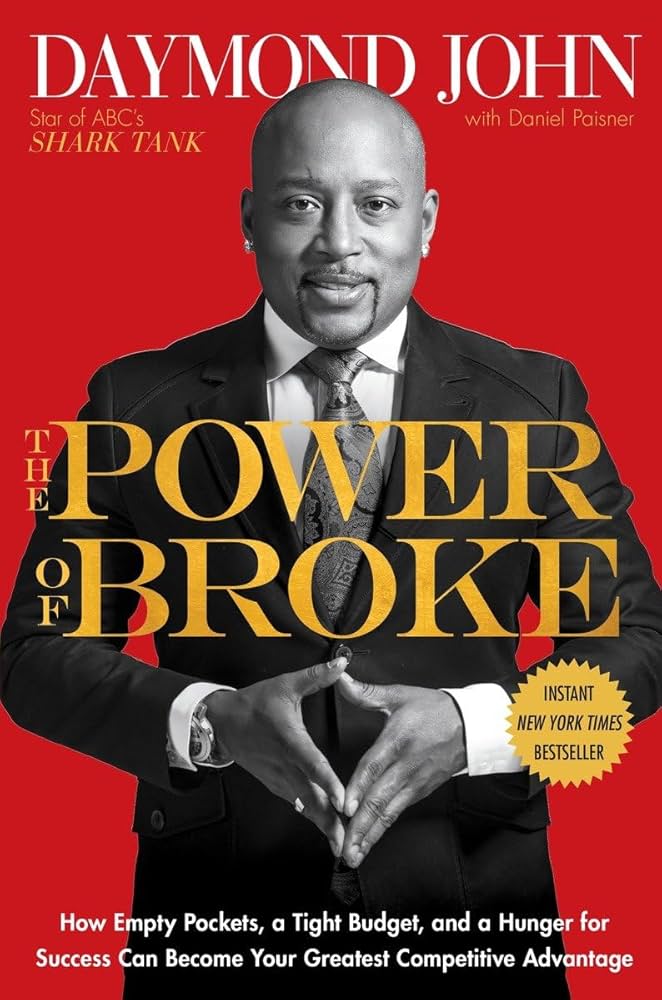
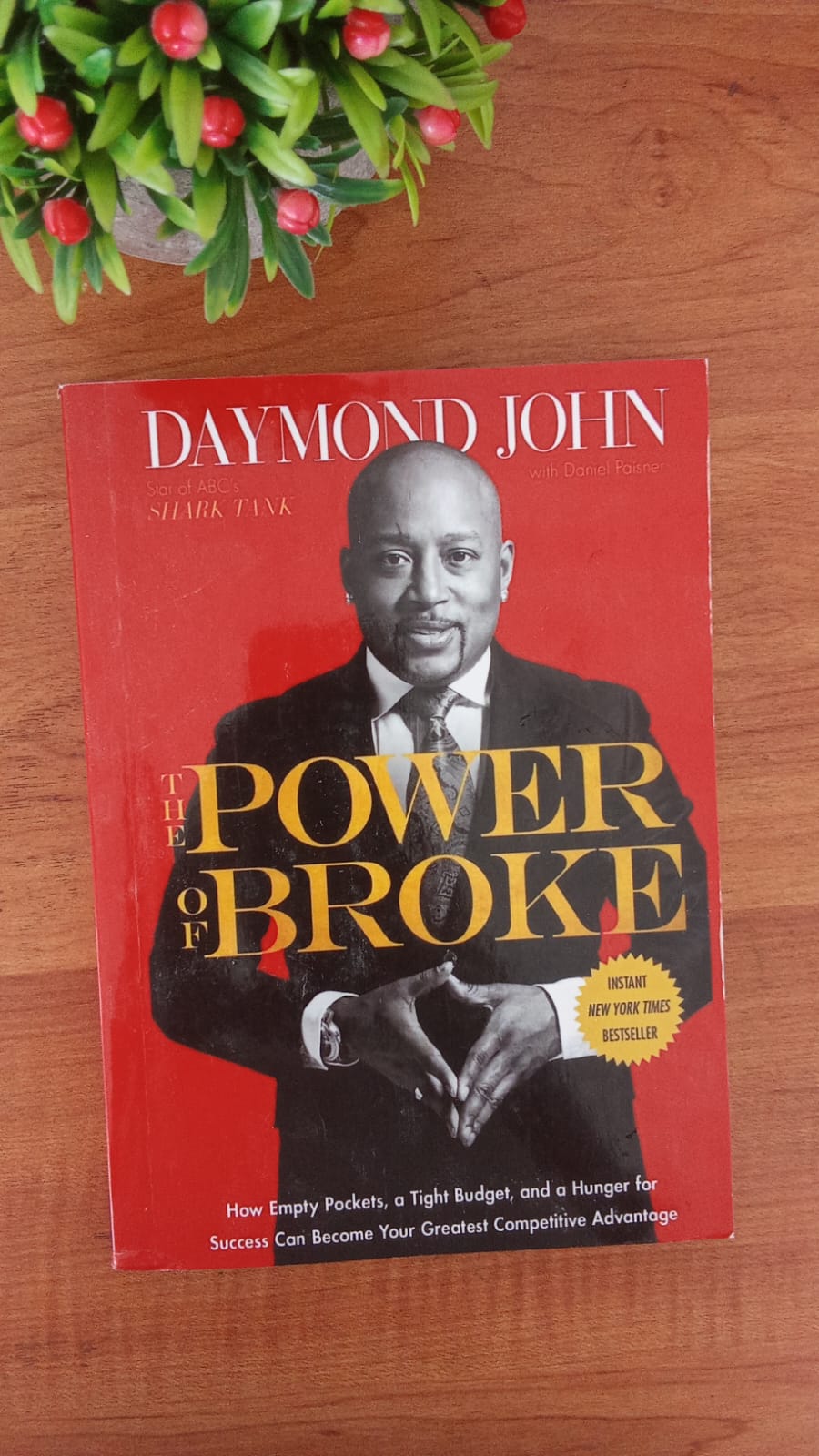
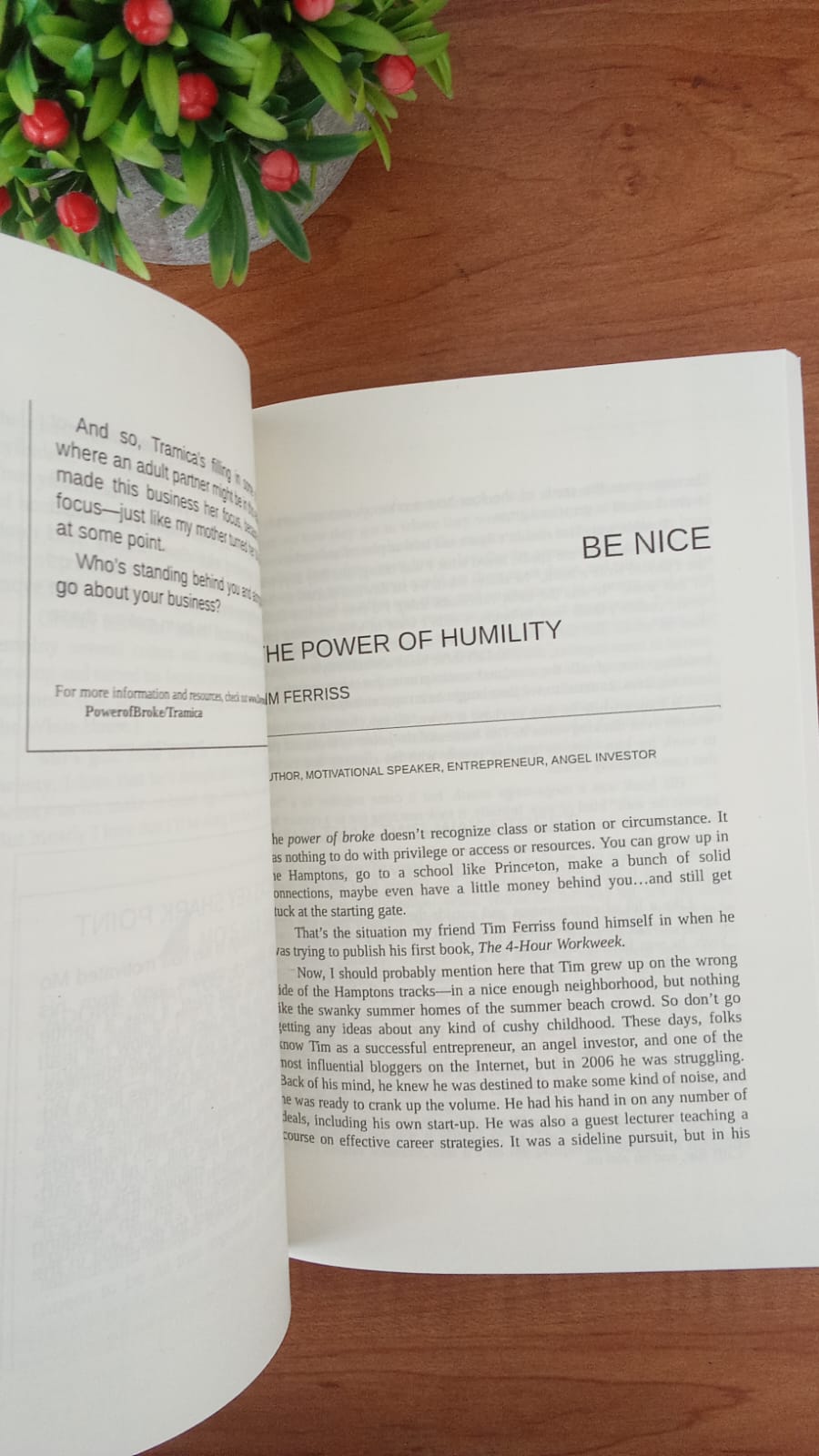
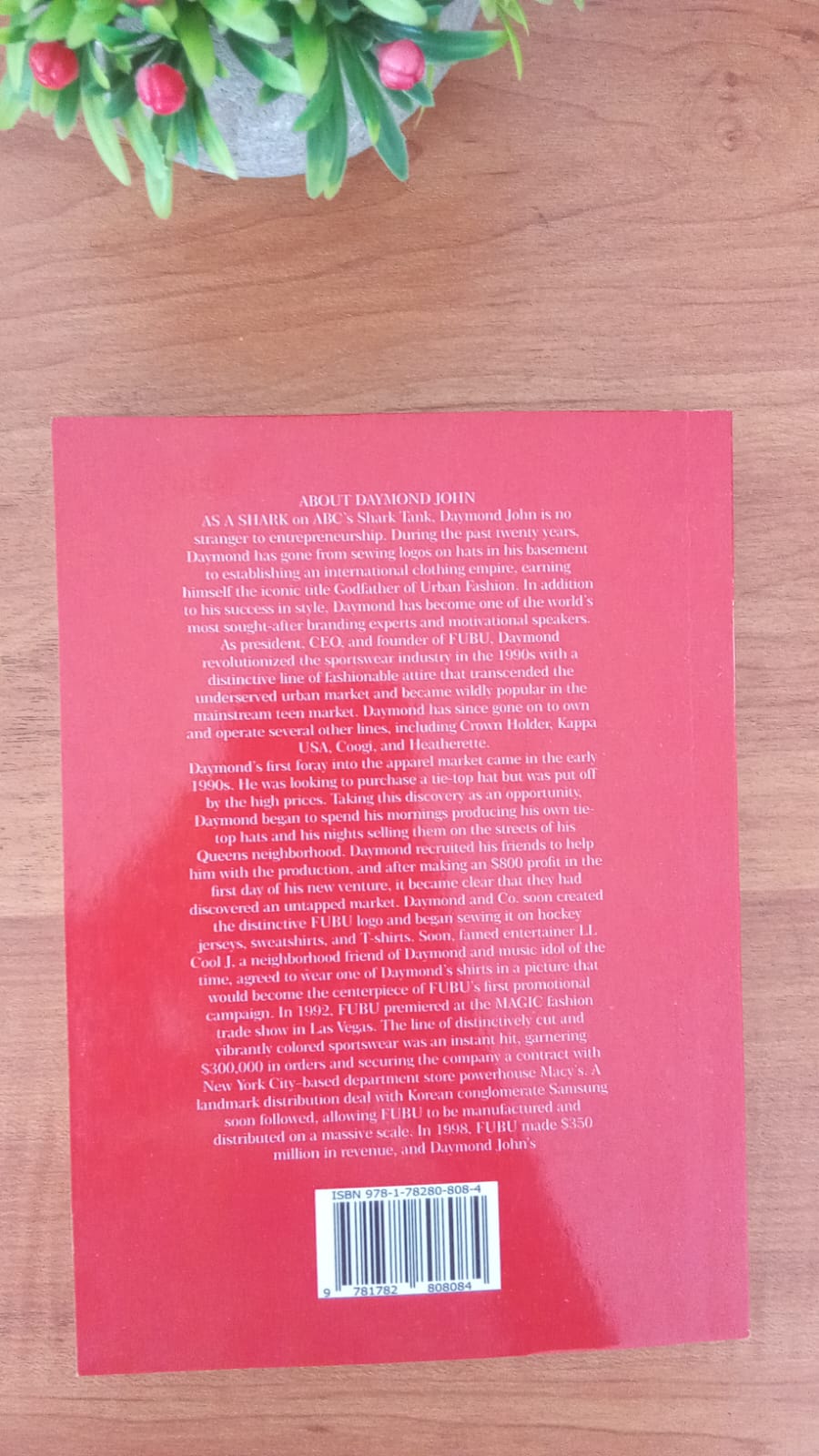
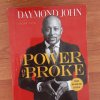

Power Of Broke by Daymond John

රු1,750.00
3 X Rs. 583.33 or 8% Cashback with


or 3 X රු583.33 with


or up to 4 X රු437.50 with


Product Short Description:
The Power of Broke by Daymond John is an inspiring business and motivational book that shows how starting with limited resources can become a powerful advantage. Through real-life success stories and practical insights, it teaches how creativity, hustle, and determination can turn challenges into opportunities. Perfect for entrepreneurs and anyone looking to succeed despite limitations.
6 in stock
The Power of Broke by Daymond John is an energetic business and entrepreneurship guide about using limited resources, strong motivation and creative thinking to turn constraints into competitive advantages.
Most aspiring entrepreneurs believe they need money first.
Investment.
A large marketing budget.
Expensive equipment.
A polished office.
A large team.
Perfect branding.
Daymond John challenges that assumption.
Before becoming the founder of the globally recognized FUBU fashion brand and a familiar investor on Shark Tank, John began with extremely limited resources.
According to the publisher, he started selling home-sewn clothing on the streets of Queens with a budget of around $40. Without large advertising budgets or powerful investors behind him, he had to find unconventional ways to attract attention and build demand.
That experience became the foundation of The Power of Broke by Daymond John.
The core argument is simple:
Having less can sometimes force you to think more.
When money cannot solve every problem, entrepreneurs may be pushed toward:
Creativity.
Resourcefulness.
Focus.
Authentic customer relationships.
Unconventional marketing.
Persistence.
Smarter use of limited resources.
The book combines Daymond John’s own entrepreneurial journey with stories from other entrepreneurs and creators who built opportunities without beginning with enormous financial advantages.
Rather than treating “broke” purely as a disadvantage, John asks readers to consider whether scarcity can sometimes create the urgency needed to innovate.
The Power of Broke by Daymond John – Book Overview
The Power of Broke by Daymond John explores the mindset of building something when resources are limited.
It does not mean that poverty is automatically beneficial.
It does not mean money is unnecessary.
And it certainly does not guarantee that someone with little capital will succeed.
Instead, John focuses on a specific entrepreneurial idea:
When you cannot simply spend your way around every problem, you are forced to make sharper decisions.
You ask:
What actually matters?
What does the customer really want?
How can I reach people cheaply?
What can I do myself?
Which expense is necessary?
What can wait?
How can I create attention instead of purchasing it?
These questions can make an early-stage business more disciplined.
Daymond John
Daymond John is best known as the founder of FUBU and as an investor on ABC’s Shark Tank.
His entrepreneurial story began long before television fame.
He built FUBU from modest beginnings by creating clothing that reflected the culture and customers he understood personally.
Instead of beginning with a giant corporation, he began close to the market.
That experience shapes nearly every major idea in The Power of Broke by Daymond John.
FUBU
FUBU stands for For Us, By Us.
The brand developed around a clear understanding of its audience and cultural identity.
That point matters.
John did not begin by asking:
What enormous market can I capture?
He understood a community.
Its style.
Its language.
Its preferences.
That gave the brand authenticity.
Know Your Customer
One lesson from The Power of Broke by Daymond John is that businesses with limited budgets cannot afford to market vaguely.
They need to know:
Who is buying?
Why are they buying?
What problem is being solved?
What identity is being expressed?
What does the customer already care about?
The clearer the answer, the less money is wasted.
Broke Forces Focus
A large budget can sometimes hide weak decisions.
If a campaign performs badly, a company may simply spend more.
A small entrepreneur cannot always do that.
Every rupee or dollar matters.
That creates pressure to focus.
What is essential?
What creates revenue?
What can be delayed?
What is simply vanity?
Constraints Can Create Creativity
One of the central ideas in The Power of Broke by Daymond John is that constraints can stimulate creativity.
Imagine two businesses need attention.
Business A has a huge advertising budget.
Business B has almost no budget.
Business A may simply purchase ads.
Business B has to think differently.
Could it collaborate with another business?
Create unusual content?
Build community?
Use word of mouth?
Partner with influencers before they become famous?
Stage an event?
Turn customers into advocates?
Scarcity can force experimentation.
Creativity Becomes Currency
When you lack financial capital, other resources become more important.
Ideas.
Energy.
Relationships.
Time.
Skills.
Storytelling.
Reputation.
Customer trust.
These forms of capital can sometimes compensate for limited money in the early stages.
The Power of Authenticity
Customers can often recognize when a company genuinely understands them.
FUBU’s early appeal came partly from its closeness to the culture it represented.
This leads to a useful principle:
Do not merely study a customer from a spreadsheet.
Understand their world.
Listen to them.
Notice what they value.
Build something that feels relevant.
Marketing Without a Huge Budget
The Power of Broke by Daymond John is particularly useful for entrepreneurs who assume marketing always requires expensive advertising.
Marketing can also involve:
Word of mouth.
Partnerships.
Storytelling.
Community involvement.
Social media.
Publicity.
Referrals.
Creative events.
Customer experience.
The best marketing idea is not always the most expensive one.
Tell a Strong Story
People often connect with stories before they connect with specifications.
Why did you start?
What problem frustrated you?
Who are you trying to help?
Why is this product different?
What struggle did you overcome?
A strong entrepreneurial story can help customers remember a business.
Brand Means More Than a Logo
A logo is part of branding.
It is not the entire brand.
A brand is also:
What customers expect.
How the company communicates.
How products feel.
How problems are handled.
What the company represents.
The reputation people repeat when you are not in the room.
Use What You Already Have
People often delay starting because they focus entirely on what they lack.
No office.
No investor.
No professional camera.
No expensive software.
No large staff.
John encourages a different question:
What do I have right now?
A phone.
A laptop.
A skill.
A customer relationship.
A small amount of stock.
A personal network.
A room that can become a workspace.
Starting with available resources can reveal what is truly required.
Start Small
Starting small can reduce risk.
Instead of manufacturing 10,000 products before confirming demand, test 20.
Instead of opening a huge location immediately, test a smaller format.
Instead of building a complex app for one year, validate whether customers actually need it.
Small beginnings create opportunities to learn cheaply.
Validate Before Scaling
The Power of Broke by Daymond John fits naturally with the principle of validating demand before spending heavily.
Ask:
Will people pay?
Will they return?
Will they recommend it?
Can I deliver profitably?
Do customers actually care?
Money spent after validation is usually more informed than money spent before understanding the market.
Sales Matter
Entrepreneurship can become overly focused on:
Logos.
Websites.
Business cards.
Social media followers.
Pitch decks.
But businesses ultimately need customers.
A simple business with paying customers may be stronger than a beautiful business with no revenue.
Cash Flow
Limited capital makes cash flow especially important.
A company can look successful but still run into trouble if money comes in too slowly while bills must be paid immediately.
Entrepreneurs need to understand:
Revenue.
Costs.
Margins.
Payment timing.
Inventory.
Debt.
Cash reserves.
The “power of broke” should never become an excuse to ignore basic financial management.
Resourcefulness
Resourcefulness means solving problems using what is available.
Perhaps you cannot afford a photographer.
Can you learn basic product photography?
Cannot hire a full marketing team?
Can you master one channel first?
Cannot afford a large showroom?
Can you sell online?
Resourcefulness is not about doing everything permanently.
It is about surviving intelligently until the business can afford more.
Learn Skills Before Outsourcing Everything
Early-stage entrepreneurs often benefit from understanding basic:
Sales.
Marketing.
Customer service.
Finance.
Operations.
Digital tools.
Even when these functions are later delegated, firsthand experience helps founders judge whether work is being done well.
But Don’t Do Everything Forever
The power of broke has limits.
A founder who refuses to hire help even after the business can afford it may become the bottleneck.
There is a difference between:
Being resourceful
and
being unable to delegate.
As the business grows, the strategy should evolve.
Hunger
“Hunger” in the book’s subtitle refers to strong motivation.
Someone with limited resources may feel urgent pressure to make the business work.
That urgency can produce intense focus.
However, hunger needs direction.
Working 16 hours on the wrong problem does not automatically create success.
Effort must be connected to customer value.
Hustle
Entrepreneurial culture often celebrates hustle.
John values hard work, persistence and unconventional effort.
But readers should interpret this sustainably.
Working hard matters.
So do:
Health.
Sleep.
Judgment.
Relationships.
Recovery.
Burnout damages creativity and decision-making.
Desperation Can Produce Innovation
The publisher summarizes John’s philosophy with the idea that desperation can drive innovation.
When the normal solution is unavailable, people look for alternatives.
This can create breakthroughs.
But desperation can also produce poor decisions if people become reckless.
A useful interpretation is:
Use urgency to become creative, not careless.
The Importance of Goals
When resources are limited, unclear goals become expensive.
A founder should know:
What am I trying to achieve this month?
More customers?
Better retention?
Higher margins?
A product launch?
Validation?
Clear goals help limited resources move in one direction.
Laser Focus
John repeatedly emphasizes focus.
Entrepreneurs constantly see new opportunities.
New product.
New platform.
New market.
New partnership.
Trying everything can destroy momentum.
Sometimes success requires saying:
Not now.
Know What You Stand For
Strong brands often have a clear identity.
A company that tries to appeal to absolutely everyone may feel meaningful to nobody.
FUBU succeeded partly because the brand knew the community it wanted to serve.
This principle applies across industries.
Bookstore.
Cafe.
Software company.
Fashion brand.
Consultancy.
Know your audience.
Build Community
Customers can become more valuable than a one-time transaction.
They can become:
Repeat buyers.
Reviewers.
Referrers.
Fans.
Community members.
A business with loyal customers spends less energy constantly replacing people who never return.
Customer Service Is Marketing
If your advertising budget is small, customer experience becomes even more important.
A delighted customer may recommend you for free.
A disappointed customer may discourage others.
Service therefore becomes part of marketing.
Listen Closely
Small businesses often have one advantage over large companies:
They are closer to customers.
A founder can speak directly with buyers.
Read messages.
Observe complaints.
Ask questions.
Use that proximity.
Customer conversations can reveal product improvements more cheaply than formal research.
Steve Aoki
The publisher highlights DJ and entrepreneur Steve Aoki among the examples in the book, describing his rise from small paid performances toward global recognition.
His story supports the idea that early opportunities can be used as stepping stones rather than dismissed because they are small.
Gigi Butler
Another case study is Gigi Butler, who developed a cupcake business after working as a cleaner and beginning with limited financial resources.
The lesson is not simply:
Use credit cards and take risks.
The more useful lesson is:
Start with something people value, test it and build from demand.
Mo Bridges
John also discusses young entrepreneur Mo Bridges, who started a bow-tie business using available materials and family support.
This example reinforces a recurring idea:
Entrepreneurship often begins before everything looks professional.
Relationships Matter
Limited-money entrepreneurs can benefit enormously from relationships.
A connection may lead to:
Advice.
A customer.
An introduction.
Free publicity.
A supplier.
A collaboration.
A mentor.
Networking therefore becomes a form of entrepreneurial capital.
Ask for Help
Being resourceful does not mean doing everything alone.
Strong entrepreneurs know when to ask:
Who knows more than I do?
Who has already solved this problem?
Who could introduce me?
Good questions can save enormous amounts of money and time.
Negotiation
When budgets are tight, negotiation becomes important.
Can a supplier provide better terms?
Can you purchase smaller quantities?
Can two companies collaborate?
Can payment be staged?
Can services be exchanged?
Not every price or arrangement is fixed.
Barter and Partnerships
Early-stage businesses sometimes trade value rather than money.
A photographer may need website work.
A web developer may need photography.
A cafe may collaborate with a bookstore.
A creator may exchange exposure for access.
These arrangements should remain fair and clearly agreed upon, but creative partnerships can stretch limited resources.
Don’t Confuse Spending With Progress
Buying equipment can feel productive.
Renting a premium office can feel successful.
Designing expensive packaging can feel impressive.
But ask:
Does this create customer value?
Does this improve revenue?
Does this solve a real problem?
Or does it simply make the business look established?
Vanity Expenses
A new business may spend money trying to appear larger than it is.
Expensive furniture.
Luxury office.
Unnecessary software subscriptions.
Premature staff growth.
Large inventory.
Sometimes these costs create no meaningful advantage.
The power-of-broke mindset asks founders to defend every major expense.
Bootstrapping
The ideas in The Power of Broke by Daymond John overlap strongly with bootstrapping.
Bootstrapping means building a company largely through:
Personal resources.
Early revenue.
Careful spending.
Rather than depending immediately on outside investment.
This approach can preserve control but may also limit speed.
Neither bootstrapping nor venture funding is automatically superior.
The right model depends on the business.
Investment Is Not Success
Startups sometimes celebrate fundraising as though it were the final achievement.
Investment is fuel.
It is not the destination.
A company that raises millions but cannot create sustainable customer value can still fail.
Capital should strengthen a working model rather than substitute for one.
Money Can Magnify Mistakes
If a business model is weak, additional money may simply help it lose money faster.
This is another reason the power-of-broke mindset remains useful even after funding arrives.
Maintain discipline.
Keep asking whether spending creates value.
Think Like You’re Broke Even When You’re Not
One of the most practical interpretations of the book is maintaining resourcefulness even after success.
Ask:
If I could not simply spend more, how would I solve this?
This mental exercise can reveal cheaper and sometimes better solutions.
Entrepreneurship in the Digital Age
Today many businesses can start with tools that were unavailable when FUBU began.
An entrepreneur may have access to:
Social media.
Canva.
Ecommerce platforms.
AI tools.
Cloud software.
Online marketplaces.
Remote freelancers.
Digital payment systems.
These tools reduce some startup costs.
But they also increase competition.
Everyone has access to similar technology.
Creativity and customer understanding remain valuable differentiators.
Social Media and the Power of Broke
A small business may not have money for television advertising.
But it can still:
Create short-form videos.
Show behind-the-scenes work.
Educate customers.
Respond publicly.
Build community.
Tell founder stories.
Share customer testimonials.
Digital distribution has made the power-of-broke mindset even more relevant in some industries.
Content Can Replace Part of an Ad Budget
Useful or entertaining content can earn attention.
A bookstore can create:
Book recommendations.
Reviews.
Author guides.
Reading lists.
Reels.
A cafe can create:
Behind-the-scenes videos.
Coffee education.
Menu stories.
Customer moments.
A software company can publish:
Tutorials.
Problem-solving articles.
Case studies.
This requires effort, but not necessarily a massive media budget.
Entrepreneurship Is Problem Solving
The strongest businesses solve a problem.
The product is simply the method.
Ask:
What frustration exists?
What does the customer struggle with?
What is too expensive?
Too slow?
Too confusing?
Too inconvenient?
Too boring?
Entrepreneurship becomes clearer when the problem is defined first.
Don’t Fall in Love With the Solution
A founder may love an idea while customers do not.
That is dangerous.
Be committed to solving the problem, but flexible about how.
The market may reveal a better solution.
Failure
The Power of Broke by Daymond John is motivational, but entrepreneurship still involves failure.
Campaigns fail.
Products fail.
Partnerships fail.
Business models fail.
The goal is not to avoid every failure.
It is to learn before the cost becomes fatal.
Fail Cheaply
Limited-resource businesses naturally benefit from small experiments.
Instead of betting everything:
Test.
Measure.
Learn.
Adjust.
This makes failure less expensive and turns it into information.
Entrepreneurship Is Not Guaranteed
This is an important caveat.
Limited capital does not automatically improve a business.
Some businesses genuinely require substantial funding.
Manufacturing.
Biotechnology.
Infrastructure.
Restaurants.
Hardware.
Inventory-heavy retail.
Having insufficient capital can be a serious disadvantage.
The useful message of The Power of Broke by Daymond John is not:
Money does not matter.
It is:
Do not assume money is the only resource that matters.
Access to Capital Still Matters
Readers should also avoid romanticizing financial hardship.
Access to money can provide:
Time.
Safety.
Inventory.
Staff.
Research.
Technology.
Marketing.
Financial hardship can create serious barriers.
John’s framework is most useful as a mindset for resourcefulness, not as proof that being financially constrained is always beneficial.
Entrepreneurship Requires Risk Management
Hunger should not become recklessness.
Do not:
Borrow irresponsibly.
Ignore cash flow.
Risk essential household money without thought.
Assume passion guarantees demand.
Business decisions should still be based on evidence.
Personal Finance and Business Finance
Entrepreneurs should understand the difference between business enthusiasm and financial reality.
Track:
Costs.
Revenue.
Profit.
Debt.
Taxes.
Inventory.
Cash.
A business can have strong sales and still lose money.
Profit Matters
Revenue can look impressive.
Profit tells a different story.
If you sell Rs. 1,000,000 worth of products but spend Rs. 1,100,000 generating those sales, the business has not created a sustainable result.
The power-of-broke mindset encourages cost awareness from the beginning.
Learn to Sell
Sales is one of the most valuable founder skills.
You must sell:
The product to customers.
The vision to employees.
The opportunity to partners.
The business to investors.
Selling is not necessarily manipulation.
Good selling helps the right person understand genuine value.
Confidence
Starting with limited resources can create insecurity.
Your competitor may have:
More employees.
A larger office.
Better equipment.
More money.
But customers may still choose you if you provide:
Better service.
Better understanding.
Better quality.
Better positioning.
More authenticity.
Don’t Compete on Everything
A small business cannot always beat a corporation on:
Scale.
Advertising.
Purchasing power.
Instead, compete where small businesses can be strong.
Speed.
Personality.
Specialization.
Customer closeness.
Flexibility.
Authenticity.
Become Memorable
Limited marketing money means every interaction matters more.
Give customers something worth talking about.
A distinctive product.
Excellent packaging.
Unexpected service.
A unique story.
A memorable experience.
Word of mouth becomes powerful when the business gives people something to repeat.
Consistency
Creativity can attract attention once.
Consistency builds a business.
Customers need to know they can rely on:
Quality.
Delivery.
Service.
Communication.
A viral moment without operational reliability rarely creates long-term success.
From Survival to Scale
The mindset that starts a business may need to evolve as it grows.
Early stage:
Do everything creatively.
Later stage:
Build systems.
Hire.
Delegate.
Standardize.
Measure.
An entrepreneur should not remain trapped permanently in survival mode.
Systems
A company becomes stronger when important tasks do not depend entirely on the founder’s memory.
Create systems for:
Orders.
Inventory.
Customer service.
Marketing.
Accounting.
Hiring.
Quality control.
Systems turn hustle into an organization.
Is The Power of Broke a Self-Help Book?
It contains motivational ideas, but it is best categorized as:
Business / Entrepreneurship / Personal Development
Its examples focus strongly on entrepreneurship, branding, creativity and resourcefulness.
Is The Power of Broke Good for Beginners?
Yes.
The ideas are accessible and do not require advanced financial or business knowledge.
New entrepreneurs may particularly appreciate the emphasis on starting with available resources.
Is It Only for People With No Money?
No.
The power-of-broke philosophy can also be useful to established companies.
A business with money can still ask:
How would we solve this if we could not simply increase the budget?
That question may reveal inefficient spending.
Is It a Step-by-Step Business Plan?
No.
The Power of Broke by Daymond John is more motivational and principle-driven than a detailed startup textbook.
It will not replace:
Accounting education.
Market research.
Legal advice.
Financial planning.
Industry-specific knowledge.
It is best read as a mindset and entrepreneurship book.
The Full Subtitle
The complete title is:
The Power of Broke: How Empty Pockets, a Tight Budget, and a Hunger for Success Can Become Your Greatest Competitive Advantage.
For WooCommerce, you can keep the shorter product title:
The Power of Broke by Daymond John
because it is cleaner for customers and SEO.
Edition Details
The official Crown Currency paperback edition is listed as:
Title: The Power of Broke
By: Daymond John with Daniel Paisner
Publisher: Crown Currency
Paperback ISBN: 9781101903612
Pages: 288
Paperback Publication Date: April 18, 2017.
The original hardcover edition was published earlier and uses a different ISBN, so check the barcode on your physical copy before entering the ISBN into WooCommerce.
Important Themes
The Power of Broke by Daymond John explores:
- Entrepreneurship
- Bootstrapping
- Limited resources
- Creativity
- Branding
- Marketing
- Customer understanding
- Persistence
- Hustle
- Sales
- Innovation
- Focus
- Resourcefulness
- Networking
- Small business
- Business growth
- Goal setting
- Financial discipline
- Authenticity
- Competitive advantage
7 Powerful Lessons From The Power of Broke by Daymond John
- Constraints can stimulate creativity. When buying the obvious solution is impossible, entrepreneurs may discover smarter, cheaper or more original alternatives.
- Start with what you already have. Waiting for perfect funding, equipment or conditions can delay learning. Begin with available resources and test whether customers actually care.
- Know your customer deeply. A limited marketing budget becomes much more effective when you understand exactly who you are trying to reach and why they should care.
- Authenticity can outperform expensive advertising. Customers often connect strongly with businesses that genuinely understand their culture, problems and aspirations.
- Money should amplify a good idea, not replace one. Funding cannot permanently rescue a product that customers do not want or a business model that does not work.
- Stay focused on the goal. Limited resources require saying no to unnecessary distractions, vanity expenses and opportunities that do not support the core business.
- Keep the resourceful mindset even after success. The greatest lesson from The Power of Broke by Daymond John is that financial discipline and creative problem-solving remain valuable even when you eventually have money to spend.
Why Read The Power of Broke by Daymond John?
The Power of Broke by Daymond John is an excellent choice for aspiring entrepreneurs, small-business owners, startup founders, students, marketers, creators and anyone who wants to build something without waiting for perfect financial conditions.
It is particularly useful for readers asking:
Can I start without a big investor?
How do I market with limited money?
How can I compete with larger companies?
What resources do I already have?
How do I turn limitations into ideas?
How do I stay focused?
The book does not promise that being broke guarantees success.
Instead, it argues that entrepreneurs can sometimes transform the discipline created by scarcity into an advantage.
That distinction is important.
The goal is not to remain broke.
The goal is to become so resourceful that eventually having more resources makes you even more effective.
Who Should Read This Book?
The Power of Broke by Daymond John may especially appeal to:
- Aspiring entrepreneurs
- Startup founders
- Small-business owners
- Students interested in business
- Marketing professionals
- Salespeople
- Freelancers
- Creators
- Side-hustle builders
- Retail business owners
- Ecommerce entrepreneurs
- People building businesses with limited capital
- Fans of Shark Tank
- Readers interested in branding
- Readers who enjoy motivational business books
The Power of Broke by Daymond John – Start Before Everything Is Perfect
The Power of Broke by Daymond John challenges one of the most common excuses in entrepreneurship:
“I will start when I have enough money.”
Sometimes more money is genuinely necessary.
But sometimes that sentence hides another problem.
Fear.
Uncertainty.
Lack of validation.
A belief that everything needs to look professional before the first customer arrives.
John’s own story suggests another approach.
Start small.
Understand the customer.
Use what you have.
Learn how to sell.
Create attention.
Watch what works.
Improve.
Then grow.
This approach can feel less glamorous than announcing a giant startup launch.
But it provides something valuable:
Evidence.
A paying customer is evidence.
A repeat order is evidence.
A referral is evidence.
A campaign that works is evidence.
Once you have evidence, later investment becomes easier to use intelligently.
The title therefore does not really celebrate poverty.
It celebrates resourcefulness under pressure.
Being broke forces questions wealthy organizations sometimes avoid.
Do we actually need this expense?
Does the customer care?
Can we solve this differently?
Can we create attention instead of buying it?
Are we building something useful—or simply something expensive?
Those questions can protect entrepreneurs from wasting money.
They can also create businesses that understand their customers more deeply.
Eventually, success may provide access to larger budgets.
The challenge is not forgetting what made the early business effective.
Keep the creativity.
Keep the customer connection.
Keep the discipline.
Keep questioning unnecessary spending.
Keep solving problems.
That is the deeper message of The Power of Broke by Daymond John.
You do not need to celebrate having limited resources.
You need to refuse to let limited resources become the automatic reason you never begin.
Learn more about The Power of Broke by Daymond John on the official Daymond John website.
Explore more business and entrepreneurship books at Bargain Books.
Be the first to review “Power Of Broke by Daymond John”
Related products

Out of stock
Autobiography
රු2,750.00
3 X Rs. 916.67 or 8% Cashback with
or 3 X රු916.67 with
or up to 4 X රු687.50 with
-23%
Non-Fiction & Knowledge
Original price was: රු2,200.00.රු1,700.00Current price is: රු1,700.00.
3 X Rs. 566.67 or 8% Cashback with
or 3 X රු566.67 with
or up to 4 X රු425.00 with
-29%
Self-Help & Psychology
Original price was: රු1,750.00.රු1,250.00Current price is: රු1,250.00.
3 X Rs. 416.67 or 8% Cashback with
or 3 X රු416.67 with
or up to 4 X රු312.50 with
Out of stock
Non-Fiction & Knowledge
රු1,500.00
3 X Rs. 500.00 or 8% Cashback with
or 3 X රු500.00 with
or up to 4 X රු375.00 with
Out of stock
Self-Help & Psychology
රු1,900.00
3 X Rs. 633.33 or 8% Cashback with
or 3 X රු633.33 with
or up to 4 X රු475.00 with
-13%
Out of stock
Non-Fiction & Knowledge
Original price was: රු3,900.00.රු3,400.00Current price is: රු3,400.00.
3 X Rs. 1,133.33 or 8% Cashback with
or 3 X රු1,133.33 with
or up to 4 X රු850.00 with

Out of stock
Self-Help & Psychology
රු1,500.00
3 X Rs. 500.00 or 8% Cashback with
or 3 X රු500.00 with
or up to 4 X රු375.00 with
-17%
Out of stock
Non-Fiction & Knowledge
Original price was: රු2,900.00.රු2,400.00Current price is: රු2,400.00.
3 X Rs. 800.00 or 8% Cashback with
or 3 X රු800.00 with
or up to 4 X රු600.00 with
Reviews
There are no reviews yet.