
No products in the cart.
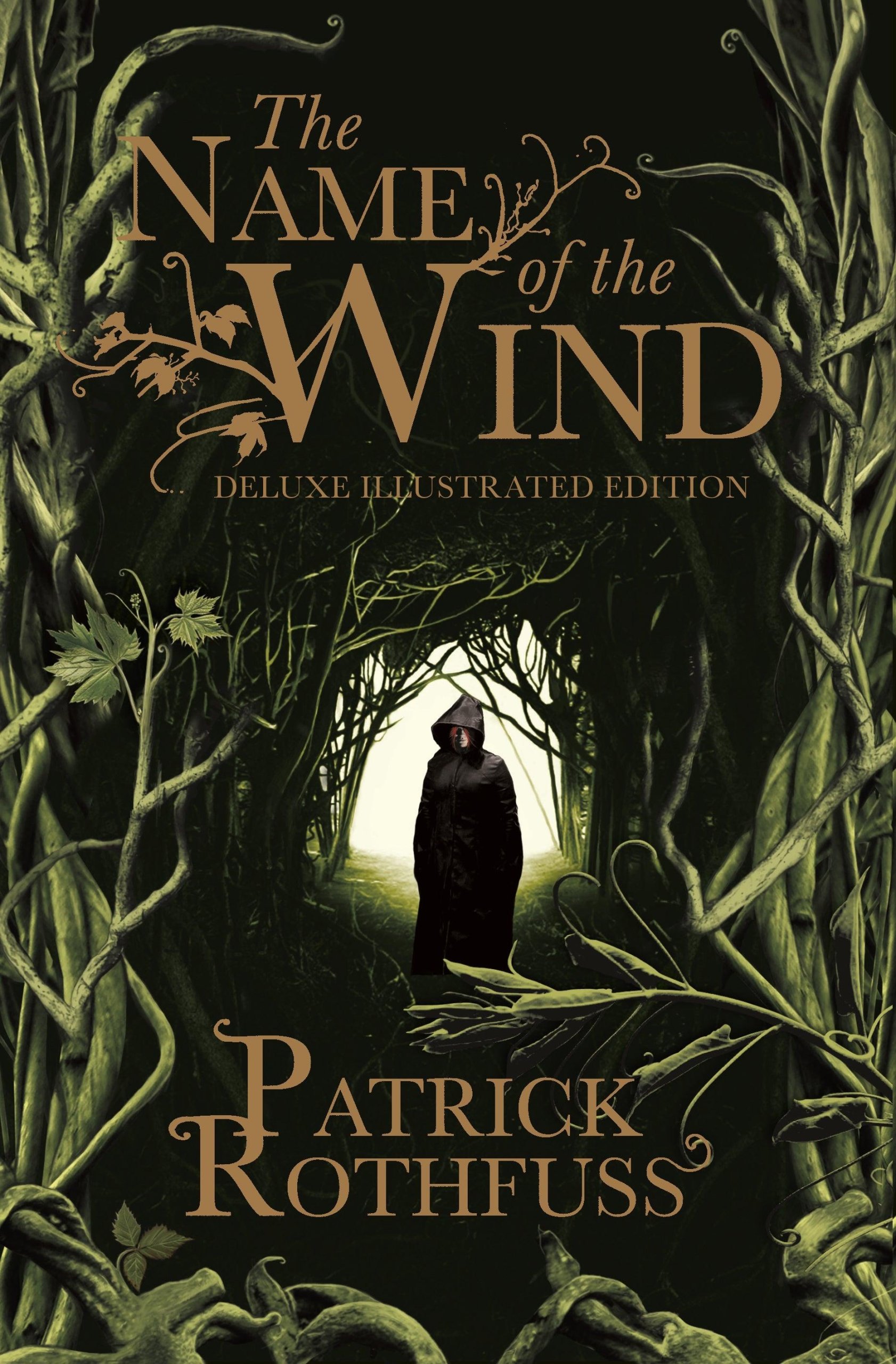








The Name of the Wind by Patrick Rothfuss is an extraordinary epic fantasy novel about music, magic, tragedy, knowledge and the complicated truth behind a legendary hero.
Kvothe is famous.
Depending on who tells the story, he is a brilliant musician.
A dangerous magician.
A fearless adventurer.
A killer.
A hero.
A man responsible for events that have already become legend.
But when the novel begins, that legendary figure seems to have disappeared.
Far from fame and adventure, a quiet innkeeper named Kote lives in a small tavern and appears determined to remain unnoticed.
Then a travelling scribe known as the Chronicler discovers who he really is.
Kvothe agrees to tell his story.
His real story.
Not the rumours.
Not the songs.
Not the legends.
The truth.
And so begins The Name of the Wind by Patrick Rothfuss, the first day of Kvothe’s autobiographical account.
From his childhood among travelling performers to devastating loss, poverty on the streets of Tarbean, his obsession with the mysterious Chandrian and his extraordinary entrance into the University, Kvothe’s story becomes a sweeping journey through one of modern fantasy’s richest worlds.
Yet this is not simply a story about becoming powerful.
It is about how stories become legends.
How memories change.
How reputation grows.
How brilliance can exist alongside pride and terrible mistakes.
And how the person behind a famous story may be far more complicated than the story everyone else believes.
The Name of the Wind by Patrick Rothfuss – Book Overview
The Name of the Wind by Patrick Rothfuss is the opening novel of The Kingkiller Chronicle.
Patrick Rothfuss structures the story in two layers.
In the present day, Kvothe lives quietly under another name.
In the past, he tells Chronicler how he became the person whose reputation spread across the world.
This creates an unusual fantasy experience.
Readers know that Kvothe will eventually become famous.
But they do not know:
How.
Why.
Which stories are true.
Which were exaggerated.
Or how the brilliant young man in the story became the quiet innkeeper seen in the present.
That mystery gives the novel much of its emotional power.
Kvothe
Kvothe is one of the most memorable narrators in modern fantasy.
He is extraordinarily talented.
But he is not perfect.
He is:
Intelligent.
Curious.
Proud.
Impulsive.
Musical.
Ambitious.
Stubborn.
Resourceful.
Sometimes reckless.
This combination makes him fascinating because brilliance does not protect him from bad decisions.
The Man Behind the Legend
People in Kvothe’s world tell stories about him.
Some sound impossible.
Others have been exaggerated.
Kvothe knows that reputation has transformed him into something almost mythical.
By telling his own story, he attempts to separate:
Fact.
Rumour.
Memory.
Legend.
Stories About Stories
One of the most important themes in The Name of the Wind by Patrick Rothfuss is storytelling itself.
A story can change depending on:
Who tells it.
Who hears it.
Why they repeat it.
What they remember.
A small event may become enormous after being told a hundred times.
That makes Kvothe’s reputation central to the novel.
Childhood Among the Edema Ruh
Kvothe grows up among the Edema Ruh, a travelling troupe of performers.
This childhood gives him:
Music.
Theatre.
Storytelling.
Performance.
Curiosity.
A broad education.
He learns to see the world through both art and observation.
Music
Music is essential to Kvothe’s identity.
It is not simply a hobby.
His lute represents:
Family.
Memory.
Skill.
Expression.
Home.
For Kvothe, music can communicate things ordinary language cannot.
The Lute
The lute becomes one of the most emotionally significant objects in the story.
It connects Kvothe to:
His childhood.
His parents.
His identity.
His ability to survive.
Readers who enjoy fantasy where music matters deeply to the protagonist may especially appreciate this novel.
Arliden and Laurian
Kvothe’s parents play an important role in shaping his early life.
His father, Arliden, is a talented performer and songwriter.
His mother, Laurian, is intelligent and witty.
Their travelling company becomes Kvothe’s first world.
That early warmth makes later events especially powerful.
The Chandrian
One of the biggest mysteries in The Name of the Wind by Patrick Rothfuss concerns the Chandrian.
They exist somewhere between:
Legend.
Folklore.
Fear.
Reality.
Stories about them are old.
Information is difficult to find.
Many people treat them as myths.
Kvothe has very personal reasons for believing otherwise.
Mystery
The Chandrian mystery becomes one of the forces driving Kvothe forward.
He wants answers.
Who are they?
Why are stories about them so inconsistent?
Why is reliable information difficult to find?
And what happened in his past?
These questions extend beyond the first book.
Tragedy
Kvothe’s life changes dramatically through tragedy.
Without revealing unnecessary spoilers, readers should know that early loss shapes almost everything that follows.
His search for:
Knowledge.
Power.
Answers.
Control.
is partly a response to trauma.
Tarbean
After losing the life he knew, Kvothe eventually survives on the streets of Tarbean.
This period is very different from his earlier childhood.
He experiences:
Poverty.
Hunger.
Violence.
Isolation.
Survival.
The talented child who once travelled with musicians now has to focus simply on staying alive.
Survival
Tarbean demonstrates that intelligence alone does not protect someone from hardship.
Kvothe must adapt.
The experience changes him.
It also leaves emotional wounds that do not disappear simply because his circumstances improve later.
The University
One of the most exciting parts of The Name of the Wind by Patrick Rothfuss begins when Kvothe reaches the University.
The University is a center of advanced learning.
Students study subjects including:
Language.
Medicine.
Mathematics.
Alchemy.
Artificing.
Sympathy.
And deeper forms of magic.
For Kvothe, it offers something invaluable:
Knowledge.
Knowledge as Power
Many fantasy stories focus on magical artifacts or inherited abilities.
Kvothe often gains power through learning.
He studies.
Asks questions.
Experiments.
Argues.
Reads.
Observes.
Knowledge becomes one of the book’s most important forms of power.
Sympathy
One of the major magical systems in the novel is sympathy.
Sympathy operates through rules, mental discipline and connections between things.
Rather than vague spellcasting, it often feels almost scientific.
This gives the fantasy world a distinctive intellectual quality.
Magic With Rules
Readers who enjoy structured magic systems may find sympathy especially interesting.
Effective use requires:
Concentration.
Knowledge.
Mental strength.
Understanding relationships between objects and energy.
Magic therefore feels like something that can be studied rather than simply inherited.
Naming
But sympathy is not the only form of magic.
Another deeper concept involves Names.
Knowing the true name of something means understanding it at a profound level.
This idea connects directly to the book’s title.
The Name of the Wind
The phrase The Name of the Wind refers to more than a poetic title.
The wind is constantly changing.
Trying to understand its true name represents a deeper form of magical knowledge.
This leads into one of the most mysterious areas of Rothfuss’s world.
Master Elodin
Elodin is closely associated with naming.
He is brilliant.
Strange.
Unpredictable.
And very different from ordinary teachers.
Through him, readers begin to understand that some knowledge cannot be learned simply by memorizing information.
The University Masters
The University contains different masters responsible for specialized fields.
This structure makes the school feel like a genuine academic institution rather than merely a magical background.
Students must deal with:
Lessons.
Fees.
Rules.
Examinations.
Competition.
Teachers.
Research.
Tuition
One surprisingly important problem in Kvothe’s life is money.
He may be talented enough to study at the University.
But talent does not automatically pay tuition.
This adds realism to his situation.
Kvothe constantly needs to think about:
Income.
Expenses.
Loans.
Work.
Poverty and Talent
This creates a recurring tension.
What happens when someone has extraordinary potential but limited financial resources?
Opportunity may technically exist.
But access still has a price.
Kvothe’s financial struggles make the University storyline more grounded.
Devi
Kvothe’s money problems bring him into contact with Devi, one of the novel’s memorable secondary characters.
She is intelligent, formidable and not someone Kvothe should underestimate.
The relationship illustrates how financial desperation can force people into risky arrangements.
Ambrose Jakis
Kvothe also develops a serious conflict with Ambrose Jakis.
Ambrose is wealthy, powerful and arrogant.
Kvothe is proud enough to refuse submission.
Their rivalry creates escalating consequences.
Pride
Pride is one of Kvothe’s most important flaws.
His confidence helps him survive impossible situations.
But the same confidence can become:
Recklessness.
Arrogance.
Refusal to back down.
A need to prove himself.
Great strengths can become weaknesses when taken too far.
Intelligence Does Not Equal Wisdom
Kvothe is extremely clever.
But clever and wise are not the same thing.
A clever person can:
Win an argument.
Solve a problem.
Create a brilliant plan.
A wise person also knows:
When not to argue.
When to wait.
When pride is becoming dangerous.
Kvothe has much more experience with the first category.
Denna
Denna is one of the most important people in Kvothe’s life.
Their relationship is complicated.
Romantic.
Elusive.
Tender.
Frustrating.
Neither always communicates clearly.
Their paths repeatedly cross and separate.
Love and Idealization
Kvothe’s feelings for Denna also raise questions about idealization.
When we care deeply about someone, do we see them as they are?
Or partly as we imagine them?
Kvothe is a storyteller.
That makes this question especially interesting.
Friendship
Not every important relationship is romantic.
Kvothe develops friendships at the University that provide:
Humor.
Support.
Advice.
Loyalty.
These relationships prevent the story from becoming entirely focused on one exceptional individual.
Willem and Simmon
Wilem and Simmon become especially important companions.
Their friendship with Kvothe adds warmth to the University storyline.
They help remind readers that even a legendary figure needs ordinary friendship.
Auri
The mysterious Auri is another memorable presence.
She lives in the hidden spaces beneath and around the University.
Her relationship with Kvothe is quiet and unusual.
Readers who become especially interested in Auri can later read the related novella The Slow Regard of Silent Things.
The Archives
The University’s enormous Archives should contain exactly the kind of information Kvothe needs.
But knowledge being present somewhere does not mean knowledge is easy to access.
Rules, restrictions and Kvothe’s own mistakes complicate his research.
Searching for the Chandrian
Kvothe’s investigation into the Chandrian becomes a search through:
Songs.
Stories.
Old records.
Rumours.
Fragments.
The lack of reliable information makes the mystery stronger.
Myth Versus History
This is one of Rothfuss’s recurring interests.
When does history become legend?
How much truth survives in a song?
What happens when people deliberately destroy or alter information?
The fantasy world feels old because its past is incomplete.
Language
Language matters throughout The Name of the Wind by Patrick Rothfuss.
Names.
Songs.
Stories.
Words.
Rumours.
Translations.
Different languages can preserve or distort knowledge.
That makes language part of the worldbuilding itself.
A Story Within a Story
Rothfuss frequently places smaller stories inside Kvothe’s larger story.
Characters tell:
Legends.
Children’s stories.
Songs.
Historical accounts.
Rumours.
These nested stories create the feeling of a world with its own mythology.
The Frame Narrative
The present-day scenes with Kvothe, Chronicler and Bast are extremely important.
They remind readers:
We already know this story does not end simply with Kvothe becoming a famous hero.
Something happened afterward.
The gap between young Kvothe and older Kote becomes one of the series’ biggest mysteries.
Bast
Bast is Kvothe’s student and companion in the present-day storyline.
His relationship with Kvothe provides clues that the apparently ordinary innkeeper is not as ordinary as he seems.
Bast also knows more about Kvothe’s current condition than Chronicler does.
Chronicler
Chronicler arrives to record Kvothe’s life story.
His presence creates the reason Kvothe finally begins telling the truth behind his reputation.
The act of recording the story also raises another question:
Can a life ever be captured perfectly in words?
An Unreliable Narrator?
Kvothe is telling his own story.
That naturally creates questions.
Is everything exactly as he remembers?
Does he exaggerate?
Does he minimize his mistakes?
Is the famous storyteller controlling how we see him?
Readers can decide for themselves.
A Coming-of-Age Story
Despite its epic fantasy setting, The Name of the Wind by Patrick Rothfuss is also a coming-of-age novel.
Kvothe moves through:
Childhood.
Trauma.
Poverty.
Education.
Friendship.
Love.
Ambition.
He gradually becomes closer to the legendary figure introduced by the frame narrative.
The Cost of Becoming Legendary
Legends usually focus on achievements.
They often remove:
Fear.
Luck.
Mistakes.
Embarrassment.
Pain.
Kvothe’s account puts those things back.
That is one reason the story feels intimate despite its epic reputation.
Worldbuilding
Rothfuss builds the world gradually.
Readers learn about:
Currency.
Religion.
Music.
Universities.
Magic.
Folklore.
Politics.
Different cultures.
But much of this information appears through Kvothe’s experiences rather than large encyclopedia-style explanations.
Inns and Taverns
Inns are important spaces in the story.
They are places where:
News travels.
Songs are performed.
Stories spread.
Travellers meet.
Rumours grow.
This fits perfectly with a novel interested in how information moves between people.
The Eolian
Music becomes especially important around places such as the Eolian, where skilled performers can demonstrate their ability.
For Kvothe, succeeding musically matters not merely as entertainment but as identity, reputation and potential income.
Talent and Performance
Being talented is one thing.
Performing under pressure is another.
A musician must convert:
Practice.
Memory.
Emotion.
Technique.
into a single live performance.
That makes Kvothe’s musical challenges some of the book’s most memorable scenes.
Fantasy Without Constant Battles
Readers expecting nonstop war may be surprised.
The novel contains danger and action, but much of its tension comes from:
Learning.
Money.
Rivalry.
Music.
Mystery.
Friendship.
Research.
Personal mistakes.
This gives the fantasy a different rhythm from military epics.
Is The Name of the Wind Part of a Series?
Yes.
The Name of the Wind by Patrick Rothfuss is Book 1 of The Kingkiller Chronicle. Penguin Random House officially labels it Book 1 and “Day One.”
The main reading order begins:
Book 1 – The Name of the Wind
Book 2 – The Wise Man’s Fear
Your own reconciliation inventory also lists The Wise Man’s Fear by Patrick Rothfuss, confirming that sequel within your catalogue workflow.
Should You Read The Wise Man’s Fear First?
No.
Begin with The Name of the Wind by Patrick Rothfuss.
The second novel continues Kvothe’s story directly, so reading the books in order is strongly recommended.
Related Kingkiller Books
There are also shorter works set in the same world, including:
The Slow Regard of Silent Things – focused on Auri.
The Narrow Road Between Desires – focused on Bast.
These are companion works rather than substitutes for the main novels.
Is The Name of the Wind a Standalone?
No.
It completes “Day One” of Kvothe’s narration but is clearly the beginning of a larger story.
Readers should expect major mysteries and character arcs to continue beyond the first volume.
Is It High Fantasy?
Yes.
It contains:
A fully invented world.
Magic systems.
Myths.
Different cultures.
Ancient mysteries.
But the novel often feels more intimate than traditional epic fantasy because much of the story focuses closely on one character’s life.
Is It Dark Fantasy?
Not primarily.
The story contains tragedy, violence and darker themes, but its overall genre is better described as epic fantasy / coming-of-age fantasy.
Is There Romance?
Yes.
Kvothe’s relationship with Denna provides a significant romantic element.
However, The Name of the Wind by Patrick Rothfuss is not primarily a romance novel.
The main focus remains Kvothe’s life, education, mysteries and transformation.
Is It Difficult to Read?
The novel is long, but Rothfuss’s prose is generally accessible.
Readers who enjoy:
Detailed worldbuilding.
Character development.
Mystery.
Music.
School settings.
may find it surprisingly easy to become absorbed despite the length.
Is It Similar to Harry Potter?
There are surface similarities because Kvothe studies magic at a University.
However, the tone, world, age of the protagonist and storytelling structure are very different.
The University is more like an advanced academic institution than a children’s magical boarding school.
Is It Similar to Game of Thrones?
Both belong to modern epic fantasy, but their focus differs.
Game of Thrones emphasizes many characters, political conflict and competing power structures.
The Name of the Wind by Patrick Rothfuss focuses much more closely on one narrator and his personal journey.
Patrick Rothfuss
Patrick Rothfuss published The Name of the Wind in 2007.
The novel won the Quill Award and was recognized as a Publishers Weekly Best Book of the Year. His sequel, The Wise Man’s Fear, later debuted at #1 on the New York Times bestseller list.
Edition Note
Different editions of The Name of the Wind have different page counts and ISBNs.
For example, Penguin Random House currently lists a DAW paperback edition at 672 pages, ISBN 9780756405892, while other mass-market and anniversary editions differ.
For WooCommerce, use the ISBN and page count printed on the exact physical copy you are selling, rather than copying details from another edition.
Content Considerations
The Name of the Wind by Patrick Rothfuss contains potentially sensitive material including:
- Death and family loss
- Violence and murder
- Childhood trauma
- Poverty and homelessness
- Hunger
- Bullying
- Physical assault
- Threats and dangerous situations
- Alcohol use
- References to sex and prostitution
- Grief
- Academic and financial stress
The book is written for older teen and adult fantasy readers rather than young children.
Important Themes
The Name of the Wind by Patrick Rothfuss explores:
- Magic
- Music
- Storytelling
- Identity
- Reputation
- Knowledge
- Trauma
- Survival
- Poverty
- Education
- Friendship
- Love
- Pride
- Ambition
- Memory
- Truth versus legend
- Names
- Power
- Curiosity
- The cost of becoming famous
7 Epic Reasons to Read The Name of the Wind by Patrick Rothfuss
- Kvothe is a fascinatingly imperfect hero – He is brilliant and capable, but pride, impulsiveness and bad decisions make his journey unpredictable.
- The magic system rewards intelligence – Sympathy, naming and University study give magic a sense of structure, learning and mystery rather than simply unexplained power.
- Music is woven deeply into the story – Kvothe’s identity as a musician gives the fantasy an emotional dimension rarely explored with this level of importance.
- The frame narrative creates a powerful mystery – Readers meet the older Kvothe first, making every success in his youth raise another question about how he eventually became Kote.
- The world feels full of genuine history – Songs, myths, contradictory stories and incomplete records make the setting feel as though it existed long before the reader arrived.
- It mixes epic fantasy with deeply personal storytelling – Large mysteries coexist with tuition problems, friendship, grief, love, rivalry and the everyday struggle to survive.
- It constantly challenges the idea of legend – The novel asks whether famous stories reveal the truth about heroes or merely create versions of people that are easier to remember.
Why Read The Name of the Wind by Patrick Rothfuss?
The Name of the Wind by Patrick Rothfuss is an excellent choice for readers interested in epic fantasy, magic schools, complex protagonists, musical characters, detailed worldbuilding, mysterious legends and character-driven storytelling.
It may especially appeal to readers who enjoy:
Patrick Rothfuss.
Kvothe.
The Kingkiller Chronicle.
Fantasy books.
Magic systems.
The University.
Musicians in fantasy.
Coming-of-age stories.
Stories within stories.
Mystery.
Ancient legends.
Academic fantasy.
Character-driven fantasy.
Slow-burn worldbuilding.
Complex heroes.
Books about storytelling itself.
Who Should Read This Book?
The Name of the Wind by Patrick Rothfuss may especially appeal to:
- Epic fantasy readers
- Patrick Rothfuss fans
- Readers starting The Kingkiller Chronicle
- Fans of magic-school settings
- Readers who enjoy complex protagonists
- Fans of deep worldbuilding
- Readers who enjoy fantasy mysteries
- Musicians and music lovers
- Readers interested in storytelling and mythology
- Fans of long immersive novels
- Readers who enjoy intelligent magic systems
- People who prefer character-driven fantasy over nonstop warfare
- Older teen and adult fantasy readers
The Name of the Wind by Patrick Rothfuss – The Truth Behind a Legend
The Name of the Wind by Patrick Rothfuss begins with silence.
A famous man has disappeared.
The world remembers Kvothe as:
A musician.
A magician.
A hero.
A killer.
A legend.
Yet the man behind the innkeeper’s counter does not look legendary.
That gap becomes the heart of the story.
How does a gifted child travelling with performers become one of the most famous people in his world?
And perhaps more importantly:
How does that legendary man eventually become someone who seems to have abandoned his old identity?
Kvothe’s answer begins with childhood.
Music.
Family.
Curiosity.
Then tragedy.
Loss.
Hunger.
Survival.
Then opportunity.
The University.
Magic.
Friendship.
Knowledge.
Love.
Rivalry.
But the story never allows readers to forget the man telling it.
Young Kvothe believes he is moving toward greatness.
Older Kvothe already knows where those choices led.
That gives even triumphant moments a subtle sadness.
Readers understand that brilliance alone did not save him.
Perhaps brilliance even helped create some of his problems.
Kvothe knows how to learn quickly.
He knows how to perform.
He knows how to survive.
But he also knows how to turn a small conflict into a dangerous one because his pride will not allow him to walk away.
That complexity is what elevates the story beyond a simple fantasy about a gifted hero.
Legends remove contradictions.
People contain them.
Kvothe is both.
Talented and foolish.
Confident and wounded.
Resourceful and reckless.
Compassionate and self-centered.
The story he tells is therefore not simply:
“How I became powerful.”
It is closer to:
“How I became the man people turned into a legend.”
For readers who enjoy immersive fantasy, magical education, mysteries, music, complicated protagonists and stories that explore the difference between reputation and reality, The Name of the Wind by Patrick Rothfuss is an unforgettable beginning to The Kingkiller Chronicle.
Learn more about The Name of the Wind by Patrick Rothfuss on Patrick Rothfuss’ official website.
Explore more fantasy books at Bargain Books.
Be the first to review “Name Of The Wind by Patrick Rothfuss”
Related products

Out of stock
Non-Fiction & Knowledge
රු1,600.00
3 X Rs. 533.33 or 8% Cashback with


or 3 X රු533.33 with


or up to 4 X රු400.00 with

-17%
Out of stock
Non-Fiction & Knowledge
Original price was: රු2,900.00.රු2,400.00Current price is: රු2,400.00.
3 X Rs. 800.00 or 8% Cashback with
or 3 X රු800.00 with
or up to 4 X රු600.00 with
Out of stock
Autobiography
රු2,750.00
3 X Rs. 916.67 or 8% Cashback with
or 3 X රු916.67 with
or up to 4 X රු687.50 with
-28%

Self-Help & Psychology
Original price was: රු1,800.00.රු1,300.00Current price is: රු1,300.00.
3 X Rs. 433.33 or 8% Cashback with
or 3 X රු433.33 with
or up to 4 X රු325.00 with

Non-Fiction & Knowledge
රු2,250.00
3 X Rs. 750.00 or 8% Cashback with
or 3 X රු750.00 with
or up to 4 X රු562.50 with

Out of stock
Self-Help & Psychology
රු1,500.00
3 X Rs. 500.00 or 8% Cashback with
or 3 X රු500.00 with
or up to 4 X රු375.00 with
-29%

Self-Help & Psychology
Original price was: රු1,750.00.රු1,250.00Current price is: රු1,250.00.
3 X Rs. 416.67 or 8% Cashback with
or 3 X රු416.67 with
or up to 4 X රු312.50 with
-21%

Non-Fiction & Knowledge
7 Secrets to Investing Like Warren Buffett by Mary Buffett & Sean Seah
Original price was: රු1,900.00.රු1,500.00Current price is: රු1,500.00.
3 X Rs. 500.00 or 8% Cashback with
or 3 X රු500.00 with
or up to 4 X රු375.00 with
Reviews
There are no reviews yet.