
No products in the cart.
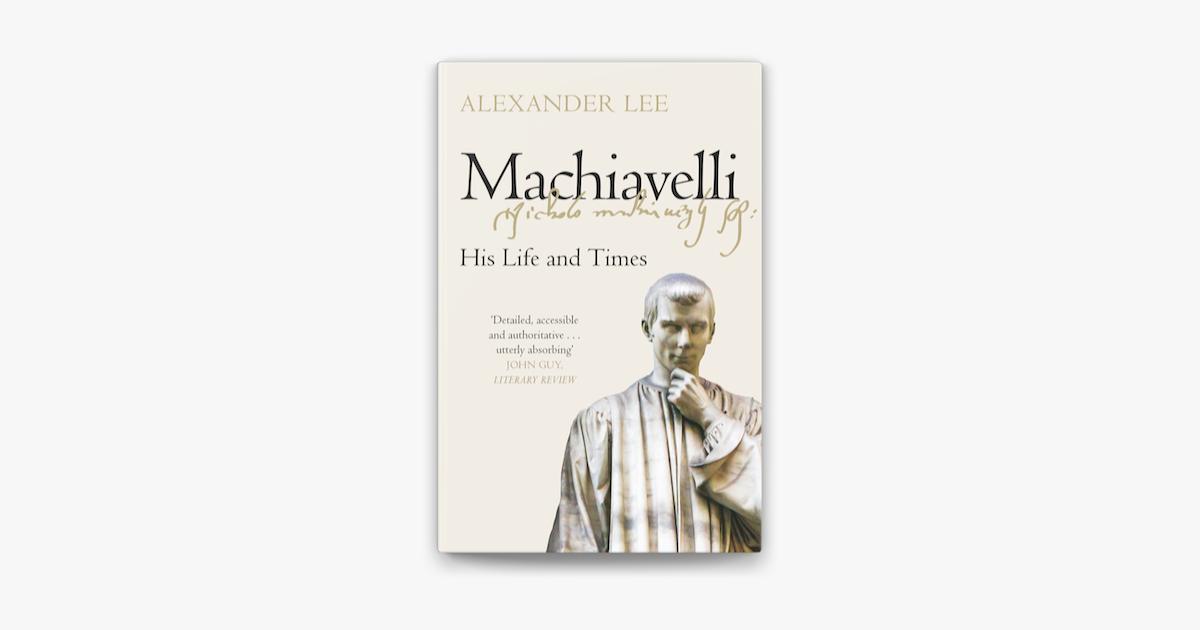
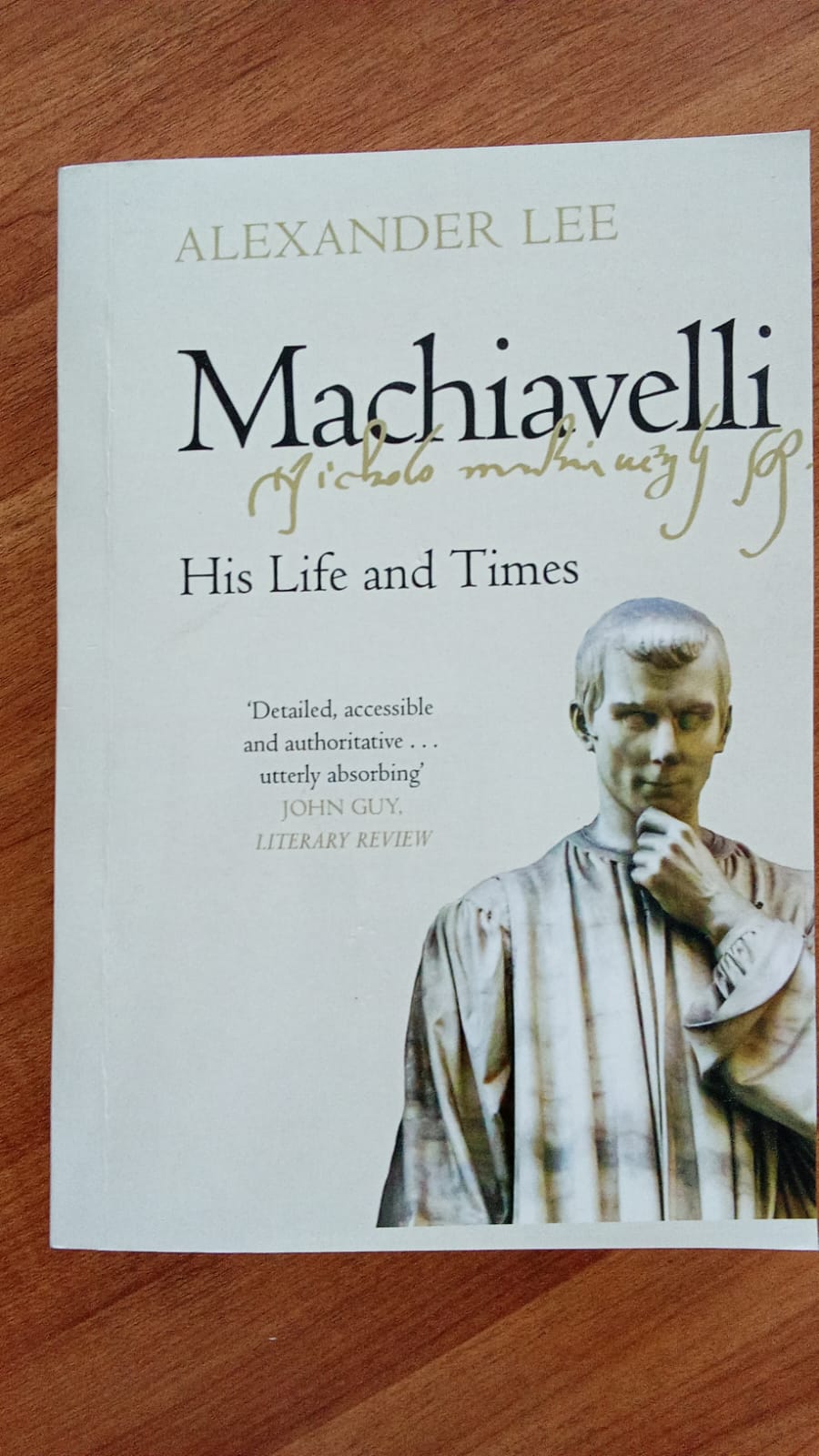
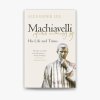
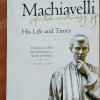



Machiavelli His Life and Times by Alexander Lee is a sweeping historical biography that reveals the complicated man behind one of the most famous and misunderstood names in political thought.
For centuries, Niccolò Machiavelli has been associated with:
Power.
Manipulation.
Political calculation.
Deception.
Ruthless leadership.
His most famous work, The Prince, helped make his name synonymous with cold political strategy.
But who was Machiavelli really?
Was he simply a cynical thinker teaching rulers how to seize power?
Or was he a far more complicated man shaped by war, political instability, personal ambition, failure, exile and the dangerous politics of Renaissance Italy?
Alexander Lee takes readers beyond the stereotype.
He reconstructs Machiavelli’s life within the extraordinary world of Florence, where republics rose and fell, wealthy families competed for control, armies crossed Italy, popes behaved like princes and diplomats operated inside constantly changing alliances.
Machiavelli His Life and Times by Alexander Lee combines biography, politics and Renaissance history to explain how Machiavelli’s experiences helped shape the ideas that would later make him one of history’s most influential political writers.
Machiavelli His Life and Times by Alexander Lee – Book Overview
Machiavelli His Life and Times by Alexander Lee follows Niccolò Machiavelli from his childhood in Florence through his career as a government official and diplomat, his encounters with powerful political figures, his fall from office, imprisonment and exile, and his later years as a writer.
The biography presents Machiavelli not merely as an abstract political philosopher.
He becomes a living person.
Ambitious.
Observant.
Funny.
Frustrated.
Sometimes successful.
Sometimes humiliated.
Often caught inside political situations beyond his control.
Understanding that human story makes works such as The Prince much easier to understand.
Who Was Niccolò Machiavelli?
Niccolò Machiavelli was born in Florence in 1469.
Florence was one of the great political and cultural centers of Renaissance Italy.
It was also extremely unstable.
Power shifted.
Families competed.
Republican institutions struggled against powerful elites.
Foreign armies repeatedly intervened in Italian affairs.
This environment became Machiavelli’s political education.
Renaissance Florence
Florence was famous for:
Art.
Banking.
Commerce.
Architecture.
Humanism.
Political competition.
It produced figures such as:
Leonardo da Vinci.
Michelangelo.
The Medici family.
Machiavelli lived in the middle of this extraordinary world.
But Renaissance Florence was not only beautiful.
It could also be:
Violent.
Unstable.
Corrupt.
Politically dangerous.
The Medici Family
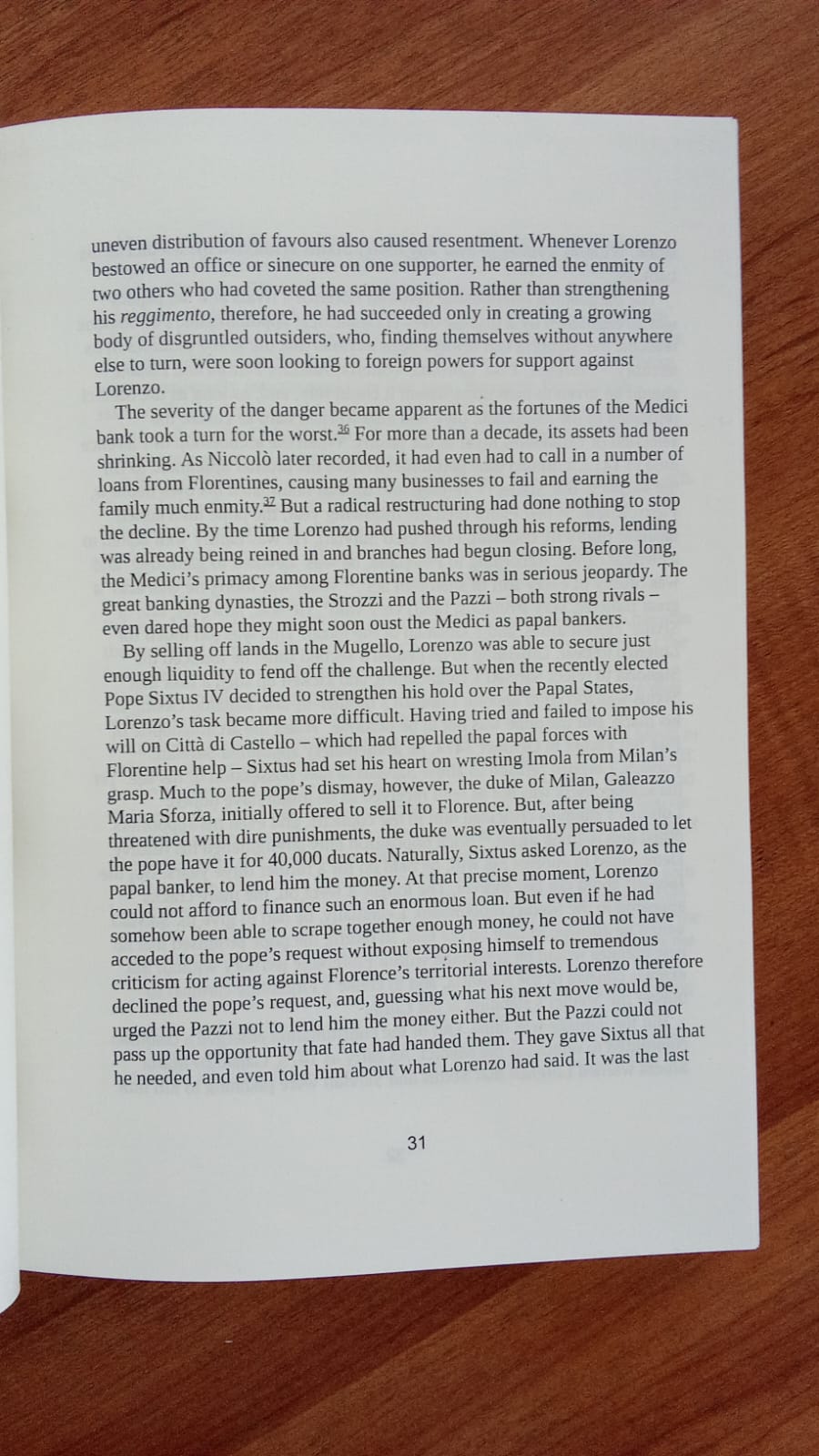
The Medici family played an enormous role in Florentine politics.
Their power influenced Machiavelli’s career both directly and indirectly.
When political control changed, government officials could suddenly find themselves:
Promoted.
Dismissed.
Exiled.
Arrested.
Machiavelli would eventually experience the consequences of such a political reversal personally.
The Florentine Republic
After major political changes in Florence during the late fifteenth century, a republican government emerged.
Machiavelli entered public service in 1498.
This transformed his life.
He became involved in:
Diplomacy.
Government administration.
Military affairs.
Political negotiations.
Foreign missions.
Instead of observing politics from a distance, he experienced it directly.
Machiavelli the Diplomat
One of the most fascinating aspects of Machiavelli His Life and Times by Alexander Lee is seeing Machiavelli as a working diplomat.
Diplomacy required him to study powerful people carefully.
What did they want?
What were they afraid of?
Could they be trusted?
What alliances might they abandon tomorrow?
These were not classroom questions.
Making the wrong judgment could damage Florence.
Learning From Powerful Leaders
Machiavelli met and observed rulers, generals, ambassadors and political leaders.
These encounters gave him practical experience that later influenced his political writing.
He saw rulers who were:
Bold.
Weak.
Clever.
Unpredictable.
Successful.
Disastrous.
He became fascinated by why some leaders survived while others failed.
Cesare Borgia
One of the most famous political figures connected with Machiavelli is Cesare Borgia.
Borgia was ambitious, ruthless and politically skilled.
Machiavelli observed him closely during diplomatic missions.
Later readers often connect Borgia with some of the leadership examples discussed in The Prince.
Power in Practice
Machiavelli’s importance comes partly from the fact that he did not think about politics only in ideal terms.
He studied how power actually worked.
A ruler might promise loyalty.
Then break the promise.
An ally might change sides.
A military victory might disappear within months.
Political survival required understanding reality rather than relying only on what should happen.
Politics Versus Morality
This became one of the most controversial aspects of Machiavelli’s reputation.
Traditional political writing often asked:
How should a good ruler behave?
Machiavelli asked a different question:
What actually allows rulers and states to survive?
That shift made his work revolutionary.
The Prince
The Prince became Machiavelli’s most famous work.
It examines political leadership, power, strategy and survival.
The book discusses subjects such as:
Leadership.
Fear.
Loyalty.
Military strength.
Political reputation.
Fortune.
Decision-making.
The actions necessary to preserve power.
Its arguments have been debated for centuries.
Was Machiavelli Evil?
The word Machiavellian is often used to describe manipulative or ruthless behavior.
But Machiavelli His Life and Times by Alexander Lee encourages readers to look beyond that simple reputation.
Machiavelli’s thinking developed inside a world where:
Governments collapsed.
Cities were invaded.
Leaders were betrayed.
Political alliances changed quickly.
Understanding that environment helps explain why he thought so intensely about survival and power.
Realism
Machiavelli became associated with political realism.
Instead of beginning with ideal human behavior, he observed people as they actually behaved.
People can be:
Loyal.
Selfish.
Brave.
Fearful.
Generous.
Deceptive.
A political system must function despite these contradictions.
Human Nature
Machiavelli’s writing often reflects a skeptical view of human behavior.
People may support a leader while circumstances are favorable.
But loyalty can disappear during crisis.
This makes leadership partly a problem of understanding incentives and behavior.
Military Power
Military strength was another major concern for Machiavelli.
Italian states often relied on mercenary soldiers.
Machiavelli viewed dependence on mercenaries as dangerous.
He believed states needed more reliable military foundations.
Mercenaries
Mercenary forces fought for payment.
That created obvious problems.
Would they remain loyal?
Would they fight courageously?
Could another ruler pay them more?
Machiavelli believed political independence required military independence.
Building a Militia
Machiavelli became involved in efforts to create a citizen militia for Florence.
This reflected his belief that political institutions needed practical military strength.
Ideas were not enough.
A republic also had to defend itself.
War and Politics
One of the recurring lessons in Machiavelli His Life and Times by Alexander Lee is that politics and military power were deeply connected in Renaissance Italy.
Diplomacy mattered.
But diplomacy without strength could become fragile.
France and Italy
Foreign powers such as France and Spain became deeply involved in Italian affairs.
Italian states were often caught between larger military powers.
Machiavelli watched these conflicts unfold firsthand.
This reinforced his interest in political weakness and national vulnerability.
The Papacy
Renaissance popes were not simply religious leaders.
They could also function as powerful political rulers.
The Papal States controlled territory.
Popes negotiated alliances.
Raised armies.
Supported political campaigns.
This combination of religion and political power shaped the world Machiavelli observed.
Pope Alexander VI
The world of Pope Alexander VI, the Borgia pope, provides important context for the rise of Cesare Borgia.
The relationship between papal authority, family ambition and political power reveals how complicated Renaissance politics could become.
Fortune
One of Machiavelli’s famous concepts is fortuna, often translated as fortune.
Fortune represents the unpredictable forces that affect human life.
A ruler can make intelligent decisions.
Then unexpected events change everything.
War.
Illness.
Death.
Political collapse.
A sudden alliance.
Leadership therefore requires adapting when circumstances change.
Virtù
Another important Machiavellian concept is virtù.
This does not simply mean moral virtue.
It refers more broadly to qualities such as:
Ability.
Boldness.
Skill.
Energy.
Judgment.
Decisiveness.
A capable leader tries to respond effectively to fortune.
Adaptability
One of Machiavelli’s most enduring lessons is that a strategy successful in one situation may fail in another.
People often repeat behavior because it worked before.
But circumstances change.
Effective leaders must adapt.
The Fall of the Republic
Machiavelli’s political career eventually collapsed when political control of Florence changed and the Medici returned to power.
He lost his government position.
For someone whose identity had become deeply connected with public service, this was devastating.
Arrest and Imprisonment
Machiavelli was later arrested after being suspected of involvement in a conspiracy.
He was imprisoned and tortured.
Although he survived and was eventually released, the experience marked a dramatic reversal.
A government official who had once negotiated with powerful rulers now found himself politically powerless.
Political Failure
Failure is central to understanding Machiavelli.
He was not writing from uninterrupted success.
He experienced:
Dismissal.
Humiliation.
Political exclusion.
Imprisonment.
Uncertainty.
His ideas were shaped by watching political projects collapse as much as by observing success.
Exile From Political Life
After losing office, Machiavelli spent time away from the political center he loved.
He wanted to return to government service.
Instead, he increasingly turned toward writing.
This period produced some of his most important work.
Writing The Prince
Machiavelli wrote The Prince after his political fall.
This context matters enormously.
He was not simply writing abstract philosophy.
He was trying to make sense of years spent observing:
War.
Government.
Diplomacy.
Leadership.
Failure.
Power.
Political Experience Becomes Political Theory
Many political thinkers begin with theory.
Machiavelli had years of direct experience first.
Then he analyzed what he had seen.
This gives his work a practical quality that continues to attract:
Politicians.
Military strategists.
Business leaders.
Historians.
Students.
The Discourses
Machiavelli also wrote the Discourses on Livy.
This work is important because it shows that his political thought cannot be reduced entirely to advice for princes.
The Discourses explores republican government, institutions, citizenship and political liberty.
Machiavelli the Republican Thinker
Readers who know only The Prince may be surprised by Machiavelli’s strong interest in republics.
He thought deeply about:
Political institutions.
Citizen participation.
Law.
Conflict inside republics.
Long-term political stability.
This makes his political philosophy much broader than the stereotype suggests.
Republican Liberty
For Machiavelli, a strong political system needed more than one brilliant ruler.
Institutions mattered.
Laws mattered.
Citizens mattered.
Political systems needed structures capable of surviving individual leaders.
Conflict Can Strengthen Institutions
Machiavelli sometimes argued that political conflict is not always destructive.
Competing interests can produce better institutions when structured properly.
This is a surprisingly modern idea.
A healthy political system does not require everyone to think exactly the same way.
History
Machiavelli studied history because he believed earlier political experiences could help people understand present problems.
Ancient Rome became especially important to his thinking.
He compared:
Past.
Present.
Human behavior.
Institutions.
Military systems.
Learning From Rome
Roman history provided examples of:
Republican government.
Military organization.
Political conflict.
Expansion.
Leadership.
Decline.
Machiavelli used these examples to think about the political challenges of his own era.
History Repeats Patterns
Machiavelli did not necessarily believe history repeated itself perfectly.
But he believed human behavior produced recurring patterns.
Ambition.
Fear.
Competition.
Desire for power.
These forces appear in different eras.
The Art of Leadership
Machiavelli His Life and Times by Alexander Lee is especially interesting for leadership readers because Machiavelli’s life provides examples of leadership in extreme conditions.
He observed what happened when leaders:
Acted quickly.
Waited too long.
Trusted the wrong allies.
Failed to understand circumstances.
Leadership requires judgment.
Reputation
Reputation mattered enormously in Renaissance politics.
A ruler needed others to believe certain things about him.
Strong.
Generous.
Dangerous.
Reliable.
Religious.
Decisive.
Machiavelli understood that perception can influence political reality.
Appearance Versus Reality
One of the ideas associated with Machiavelli is the difference between:
What a leader appears to be.
and
What a leader actually does.
Political audiences often judge appearances.
A successful leader must understand both reputation and reality.
Fear and Love
One of the most famous questions associated with The Prince is whether it is better for a ruler to be loved or feared.
The wider point concerns reliability.
Can a ruler depend on affection during crisis?
What kind of authority survives pressure?
Machiavelli’s answer remains controversial because he prioritizes political survival over comforting ideals.
Decision-Making
Political leaders rarely have perfect information.
They must often decide quickly.
Wait?
Attack?
Negotiate?
Trust?
Withdraw?
Machiavelli’s diplomatic experience taught him how dangerous uncertainty could be.
Timing
A good decision made too late can become a bad decision.
Timing therefore becomes part of political skill.
This lesson applies beyond government.
Business.
Negotiation.
Competition.
Leadership.
All involve timing.
Strategy
Machiavelli remains popular among strategy readers because he focuses relentlessly on consequences.
What happens next?
How will competitors react?
What incentives exist?
What resources do you control?
Strategy requires looking beyond immediate actions.
Power
Power is one of the central subjects of Machiavelli His Life and Times by Alexander Lee.
But power is not presented as something simple.
Power can come from:
Office.
Military strength.
Money.
Reputation.
Alliances.
Institutions.
Popular support.
Understanding where power actually comes from is essential.
Power Can Disappear
Machiavelli’s own career demonstrates this perfectly.
One political change transformed him from:
Government official.
Diplomat.
Strategist.
into a man excluded from power.
Political authority can disappear surprisingly quickly.
Personal Life
Alexander Lee’s biography also pays attention to Machiavelli as a private individual rather than only a political thinker.
Readers encounter:
Family relationships.
Marriage.
Friendships.
Money problems.
Personal ambitions.
Literary interests.
This makes the biography more human than a purely intellectual history.
Machiavelli the Writer
Machiavelli was not limited to political theory.
He also wrote:
Drama.
Poetry.
History.
Letters.
His literary abilities reveal another side of his personality.
The Mandrake
One of Machiavelli’s best-known dramatic works is The Mandrake, or La Mandragola.
It is a comedy involving:
Desire.
Deception.
Social hypocrisy.
Manipulation.
Its humor reminds readers that Machiavelli was far more than a severe political philosopher.
Humor
Machiavelli’s personality could be humorous, irreverent and socially lively.
This is often lost when readers encounter only isolated quotations from The Prince.
Biography restores those human dimensions.
Florentine Histories
Machiavelli later wrote a history of Florence.
This brought together his interests in:
Political conflict.
Institutions.
Historical change.
Florentine identity.
His understanding of politics was always closely tied to historical analysis.
Political Ideas Born From Experience
One of the major strengths of Machiavelli His Life and Times by Alexander Lee is showing how ideas and biography intersect.
A political idea becomes easier to understand when readers know:
What Machiavelli had witnessed.
Which rulers he had met.
Which governments had collapsed.
Which political failures had affected him personally.
Context Changes Interpretation
Reading The Prince alone can make Machiavelli sound shockingly ruthless.
Reading his biography reveals the dangerous political environment behind his arguments.
Context does not automatically make every argument correct.
But it makes them more understandable.
Renaissance Italy
Italy during Machiavelli’s lifetime was not yet a unified modern nation-state.
It contained competing powers such as:
Florence.
Venice.
Milan.
Naples.
The Papal States.
Foreign rulers also intervened heavily.
This fragmented environment created constant instability.
Diplomacy as Survival
For smaller states, diplomacy could become a matter of survival.
One bad alliance could lead to invasion.
One powerful enemy could change everything.
Machiavelli therefore learned to think strategically about relationships between states.
Political Intelligence
Political intelligence means understanding not only what people say but what incentives drive them.
Machiavelli constantly studied:
Ambition.
Fear.
Interest.
Opportunity.
This observational style became central to his reputation.
Leadership Without Illusions
Perhaps Machiavelli’s most uncomfortable lesson is that leaders cannot afford to understand the world only as they wish it were.
They must understand:
How people actually behave.
How institutions actually function.
How power actually moves.
Only then can they make effective decisions.
Ethics and Political Reality
This does not mean ethics become irrelevant.
Instead, Machiavelli raises a difficult question:
What happens when moral ideals conflict with political survival?
Political thinkers have debated that question ever since.
Why Machiavelli Still Matters
More than five centuries later, Machiavelli remains widely discussed.
His ideas appear in conversations about:
Politics.
Business.
Leadership.
War.
Negotiation.
Psychology.
Strategy.
Power.
That influence makes understanding his actual life especially valuable.
Beyond Internet Quotes
Machiavelli is frequently reduced to short quotes online.
But his thinking is far more complicated.
Reading a serious biography helps separate:
Historical Machiavelli.
Popular mythology.
Later interpretations.
Alexander Lee
Alexander Lee is a historian whose work focuses on Renaissance history and culture.
In this biography, he combines political history with close attention to Machiavelli’s personal life and the world surrounding him.
The result is both a biography of an individual and a portrait of Renaissance Italy.
A Detailed Biography
This is not a short introduction to Machiavelli.
It is a substantial historical biography.
Readers should expect:
Detailed political context.
Historical personalities.
Diplomatic missions.
Wars.
Florentine politics.
Personal relationships.
Political ideas.
This depth makes the book particularly suitable for serious history readers.
Who Should Read It Before The Prince?
Readers planning to study The Prince may benefit enormously from reading a biography like this.
Knowing Machiavelli’s world can make ideas about:
Mercenaries.
Fortune.
Political instability.
Leadership.
State survival.
much easier to understand.
Is This Book Written by Machiavelli?
No.
Machiavelli His Life and Times by Alexander Lee is a modern biography about Niccolò Machiavelli.
If you want Machiavelli’s own political writing, look for works such as:
The Prince
Discourses on Livy
Is This the Same as The Prince?
No.
The Prince was written by Machiavelli.
Machiavelli: His Life and Times was written centuries later by Alexander Lee and explains Machiavelli’s life, historical environment and intellectual development.
Is It a Biography?
Yes.
It is a historical and political biography covering Machiavelli’s life alongside the events of Renaissance Italy.
It is particularly useful for understanding the person behind the famous political reputation.
Content Considerations
Machiavelli His Life and Times by Alexander Lee discusses mature historical material, including:
- War and political violence
- Imprisonment
- Torture
- Executions and assassination
- Political conspiracy
- Sexual relationships
- Corruption
- Religious and political conflict
- Family and personal difficulties
- Social violence
- Political persecution
These topics are presented within a serious historical and biographical context.
7 Powerful Reasons to Read Machiavelli His Life and Times by Alexander Lee
There are many reasons to read Machiavelli His Life and Times by Alexander Lee, but seven stand out:
- It reveals the man behind the Machiavellian stereotype – Machiavelli becomes a real person shaped by ambition, humor, family, political success and painful failure.
- It explains the world that produced The Prince – Renaissance Florence, war, diplomacy, the Medici and foreign intervention provide essential context for his ideas.
- Readers see Machiavelli working as a real diplomat – His theories about power emerged partly from direct observation of rulers and political crises.
- Cesare Borgia and other major historical figures come alive – The biography places Machiavelli alongside some of the most fascinating political personalities of Renaissance Italy.
- It shows that Machiavelli wrote about much more than ruthless rulers – His republican ideas, historical writings, comedies and discussions of institutions reveal a broader thinker.
- His failures are as instructive as his successes – Dismissal, imprisonment and political exclusion help explain why he became obsessed with fortune, adaptability and political survival.
- The book makes Machiavelli’s ideas easier to understand today – Readers interested in leadership, power, strategy and political realism gain the historical context necessary to interpret his work intelligently.
Why Read Machiavelli His Life and Times by Alexander Lee?
Machiavelli His Life and Times by Alexander Lee is an excellent choice for readers interested in:
- Niccolò Machiavelli
- Alexander Lee
- The Prince
- Political philosophy
- Renaissance history
- Renaissance Florence
- Italian history
- Political biography
- Leadership
- Strategy
- Power
- Diplomacy
- Cesare Borgia
- Medici history
- Military history
- Political realism
- Republican government
- European history
- Historical biography
- Famous political thinkers
It is particularly valuable for readers who want to understand Machiavelli as a historical person rather than simply as the symbol of ruthless political manipulation.
Who Should Read This Book?
Machiavelli His Life and Times by Alexander Lee may especially appeal to:
- History readers
- Biography readers
- Political science students
- Philosophy students
- Leadership readers
- Strategy readers
- Readers of The Prince
- Students of Renaissance history
- Readers interested in Florence
- Readers interested in European politics
- Business and leadership readers
- Academics and researchers
- Readers who enjoy detailed historical biographies
- Anyone curious about the real Machiavelli
Machiavelli His Life and Times by Alexander Lee – The Man Behind the Myth
Machiavelli His Life and Times by Alexander Lee challenges readers to move beyond one of history’s most powerful stereotypes.
For centuries, Machiavelli’s name has been used as a synonym for:
Manipulation.
Deception.
Ruthlessness.
Political calculation.
But a human life cannot be reduced to one adjective.
Machiavelli lived through one of the most turbulent periods in Italian history.
He watched governments collapse.
Foreign armies invade.
Powerful families return from exile.
Rulers rise quickly and fall just as quickly.
He negotiated with dangerous political figures.
Tried to strengthen Florence.
Lost his career.
Was imprisoned.
Experienced torture.
Returned to private life.
And transformed years of political observation into some of the most influential writing about power ever produced.
That journey makes his ideas more understandable.
Machiavelli did not write from a peaceful university office while imagining political problems.
He had watched political reality operate at close range.
He knew that:
Allies betray.
Fortune changes.
Armies fail.
Reputations collapse.
Power disappears.
That experience shaped his insistence that political leaders must understand the world as it actually exists.
Yet Alexander Lee’s biography also reveals a Machiavelli who was more than a strategist.
He was:
A husband.
A father.
A friend.
A government employee.
A diplomat.
A historian.
A dramatist.
A writer desperate to return to political relevance.
Understanding these different identities allows readers to see why Machiavelli remains so fascinating more than five hundred years after his death.
For anyone interested in Renaissance history, political philosophy, leadership, strategy, power and the real person behind The Prince, Machiavelli His Life and Times by Alexander Lee offers a detailed and compelling journey through both an extraordinary life and an extraordinary age.
Learn more about Machiavelli: His Life and Times by Alexander Lee on the official Pan Macmillan website.
Explore more biography and history books at Bargain Books.
Be the first to review “Machiavelli: His Life and Times by Alexander Lee”
Related products
-24%
Out of stock
Non-Fiction & Knowledge
Original price was: රු2,500.00.රු1,900.00Current price is: රු1,900.00.
3 X Rs. 633.33 or 8% Cashback with


or 3 X රු633.33 with


or up to 4 X රු475.00 with

-19%
Out of stock
Non-Fiction & Knowledge
Original price was: රු2,650.00.රු2,150.00Current price is: රු2,150.00.
3 X Rs. 716.67 or 8% Cashback with
or 3 X රු716.67 with
or up to 4 X රු537.50 with
-14%
Out of stock
Self-Help & Psychology
Original price was: රු2,900.00.රු2,500.00Current price is: රු2,500.00.
3 X Rs. 833.33 or 8% Cashback with
or 3 X රු833.33 with
or up to 4 X රු625.00 with
Out of stock
Non-Fiction & Knowledge
රු1,600.00
3 X Rs. 533.33 or 8% Cashback with
or 3 X රු533.33 with
or up to 4 X රු400.00 with
රු2,000.00
3 X Rs. 666.67 or 8% Cashback with
or 3 X රු666.67 with
or up to 4 X රු500.00 with
-13%
Out of stock
Non-Fiction & Knowledge
Original price was: රු3,900.00.රු3,400.00Current price is: රු3,400.00.
3 X Rs. 1,133.33 or 8% Cashback with
or 3 X රු1,133.33 with
or up to 4 X රු850.00 with
-21%
Non-Fiction & Knowledge
7 Secrets to Investing Like Warren Buffett by Mary Buffett & Sean Seah
Original price was: රු1,900.00.රු1,500.00Current price is: රු1,500.00.
3 X Rs. 500.00 or 8% Cashback with
or 3 X රු500.00 with
or up to 4 X රු375.00 with

Out of stock
Non-Fiction & Knowledge
රු1,500.00
3 X Rs. 500.00 or 8% Cashback with
or 3 X රු500.00 with
or up to 4 X රු375.00 with
Reviews
There are no reviews yet.