
No products in the cart.
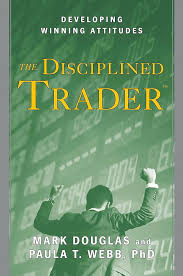
Disciplined Trader by Mark Douglas


රු1,750.00
3 X Rs. 583.33 or 8% Cashback with


or 3 X රු583.33 with


or up to 4 X රු437.50 with


Disciplined Trader by Mark Douglas teaches the mindset, discipline, and emotional control needed for consistent trading success,
Indian locally published copy included.
Out of stock
Email when stock available
The Disciplined Trader is one of the influential classics on trading psychology, discipline and developing the mindset required to operate effectively in financial markets.
Rather than concentrating mainly on chart patterns or technical indicators, the book examines the psychological side of trading.
It explores how thoughts, beliefs, fear, expectations and emotional responses can influence trading behaviour and results.
The Disciplined Trader is especially useful for readers interested in stock trading, forex, investing, market psychology and understanding why knowledge alone may not produce consistent trading behaviour.
Why Read The Disciplined Trader?
The Disciplined Trader focuses on one of the most difficult parts of participating in financial markets: controlling yourself.
A trader can understand technical analysis.
They can study charts.
They can have a trading strategy.
Yet emotions can still interfere with execution.
Fear may cause someone to exit too early.
Greed may encourage excessive risk.
Overconfidence may encourage someone to ignore their trading plan.
The book explores these psychological challenges and offers a framework for developing a more disciplined approach.
The Disciplined Trader and Trading Psychology
Trading psychology is at the heart of The Disciplined Trader.
Markets provide constant information.
Prices move.
Opportunities appear.
Losses happen.
But traders do not always interpret these events objectively.
Their beliefs and previous experiences can influence what they see.
Google Books’ table of contents specifically includes sections dealing with how memories, associations and beliefs influence market information.
Understanding these influences can help traders recognise why they repeatedly make certain decisions.
Discipline Over Emotion
Successful trading requires more than excitement or motivation.
It requires discipline.
A disciplined trader follows a process even when emotions become uncomfortable.
That might mean accepting a loss.
It could mean waiting for a valid opportunity.
It could also mean refusing to increase risk simply because several previous trades were profitable.
The Disciplined Trader encourages readers to develop mental habits that support consistent decision-making rather than emotional reactions.
The Disciplined Trader and Fear
Fear can influence trading in several ways.
A trader may fear losing money.
They may fear missing an opportunity.
They may also fear giving back profits already earned.
These fears can create inconsistent decisions.
Someone may enter too early.
Another person may hesitate until the opportunity disappears.
Another trader may close a position before their original plan says they should.
The Disciplined Trader examines how emotional responses and limiting beliefs can interfere with trading performance.
Accept That the Market Is Uncertain
Markets do not owe traders predictable outcomes.
Even a well-researched trade can lose money.
That uncertainty can be psychologically difficult.
Many traders want certainty before taking action.
But financial markets cannot provide complete certainty.
Google Books lists a chapter titled “The Market Is Always Right” and another describing the market as an unstructured environment, reflecting the book’s focus on adapting to the nature of markets rather than expecting markets to behave according to personal expectations.
Stop Trying to Control the Market
A trader cannot control price movement.
They can only control their own decisions.
You can control:
- Position size
- Entry criteria
- Exit criteria
- Risk limits
- Whether you follow your strategy
- How you respond to losses
- How you respond to profits
This distinction is extremely important.
The Disciplined Trader shifts attention away from trying to control markets and toward developing self-mastery.
Google Books specifically lists “Self-Mastery as a Profit-Taking Tool” among the book’s chapters.
The Disciplined Trader and Self-Mastery
The Disciplined Trader treats self-mastery as a fundamental trading skill.
A trader may know what they should do.
Doing it consistently is another challenge.
For example, a trader may know they should limit risk.
After several losses, however, they may increase their position size in an attempt to recover money quickly.
That decision is emotional rather than disciplined.
Self-mastery means recognising those impulses and continuing to follow a well-defined process.
Beliefs Influence Trading Decisions
People interpret markets through their own beliefs.
One trader sees a falling market and thinks:
“This is a buying opportunity.”
Another thinks:
“This market will collapse.”
Both traders are looking at the same price movement.
The difference lies partly in interpretation.
The Disciplined Trader examines how beliefs and mental frameworks influence the way traders perceive market information.
This makes self-awareness particularly important.
Learn to Accept Losses
Losses are part of trading.
No trading strategy can guarantee that every trade will be profitable.
The psychological problem begins when traders interpret losses personally.
A losing trade can feel like failure.
That emotional reaction may then influence the next decision.
The trader might take excessive risk.
They might abandon a strategy.
Or they may stop taking valid opportunities because they are afraid of another loss.
The Disciplined Trader encourages readers to develop a healthier relationship with uncertainty and outcomes.
Avoid Revenge Trading
Revenge trading happens when someone tries to recover a loss immediately.
The trader stops following their normal process.
Position sizes may increase.
Risk limits may disappear.
The goal changes from following a strategy to recovering money emotionally.
This can create even larger losses.
The principles explored in The Disciplined Trader help readers understand why emotional control and disciplined behaviour matter so much after disappointing outcomes.
The Disciplined Trader and Consistency
Consistency does not mean winning every trade.
It means applying a process consistently.
A trader might have rules for:
- When to enter
- When to exit
- How much to risk
- When not to trade
- How many positions to hold
- When to stop trading for the day
Following those rules repeatedly creates structure.
The Disciplined Trader focuses on building attitudes and behaviours designed to support greater consistency in market participation.
Develop a Winning Mindset
Google Books lists a major section titled “Adapting a Winning Mindset Creates Consistent Profits.”
A winning mindset is not simply positive thinking.
It involves understanding risk.
It involves emotional stability.
It also requires being able to follow a process without needing every individual trade to succeed.
The goal is to think in a way that supports disciplined behaviour across many decisions.
The Market Does Not Know You Exist
Markets are impersonal.
They do not know whether you need money.
They do not know whether you lost your previous trade.
They do not care whether you believe a stock should rise.
Recognising this can help traders separate personal emotions from market information.
Instead of asking what the market should do, disciplined traders can focus on what it is actually doing.
This mindset supports more objective decision-making.
Trading Requires Responsibility
One important psychological shift is accepting responsibility.
It can be easy to blame:
- The market
- News
- A broker
- Another trader
- A trading signal
- Social media advice
But blaming external factors does not improve future decisions.
A trader needs to examine what they personally controlled.
Did they follow their plan?
Did they understand the risk?
Did they enter impulsively?
Did they ignore their exit rules?
This type of self-examination supports the behavioural changes discussed throughout The Disciplined Trader.
Create a Clear Trading Framework
A strong mental approach becomes more useful when combined with clear rules.
Without a framework, every market movement can create another emotional decision.
A trader may constantly ask:
Should I buy?
Should I sell?
Should I wait?
Should I increase my position?
Rules reduce this uncertainty.
Google Books lists “Building the Framework” as one of the major sections of The Disciplined Trader.
Learn From Trading Mistakes
Mistakes contain information.
A losing trade may reveal that a strategy needs improvement.
It might also reveal that the strategy was fine but execution was poor.
These are very different problems.
A disciplined trader needs to distinguish between them.
Reviewing decisions objectively can help identify repeated behavioural patterns.
That process can gradually improve both trading discipline and self-awareness.
The Disciplined Trader for Beginners
The Disciplined Trader can be useful for beginners because many new traders focus almost entirely on finding the perfect strategy.
They search for indicators.
They look for patterns.
They search for predictions.
But even a strong strategy becomes difficult to follow if the trader cannot control emotional decisions.
Penguin Random House describes the book as applicable to new traders, returning traders, investment traders, institutional traders, brokers and experienced market participants.
Useful for Experienced Traders Too
Experience does not automatically eliminate psychological mistakes.
Experienced traders can still become overconfident.
They can still take excessive risk.
They can still hesitate.
They can still break their own rules.
That is why The Disciplined Trader can remain relevant even after someone has learned the technical side of trading.
Mental discipline requires continuous practice.
The Disciplined Trader vs Trading in the Zone
Mark Douglas is also widely associated with Trading in the Zone, another major work on trading psychology.
The Disciplined Trader came earlier, in 1990, and helped introduce the investment industry to Douglas’s approach to trading psychology.
Readers interested in psychology-focused trading books may find the two works complementary.
7 Powerful Lessons From The Disciplined Trader
- Control Yourself, Not the Market – Price movement cannot be controlled, but your risk and behaviour can.
- Accept Uncertainty – Every trade contains risk, regardless of how confident you feel.
- Follow a Process – Consistency comes from disciplined execution rather than emotional reactions.
- Understand Your Beliefs – Previous experiences can influence how you interpret market information.
- Accept Losses Objectively – A losing trade does not automatically mean your entire strategy is wrong.
- Develop Self-Mastery – Emotional control can be as important as technical knowledge.
- Take Responsibility – Improvement begins when traders objectively examine their own decisions.
What You Can Learn From The Disciplined Trader
Readers can explore:
- Trading psychology
- Trading discipline
- Emotional control
- Risk management
- Market psychology
- Fear and greed
- Self-mastery
- Trading consistency
- Limiting beliefs
- Decision-making
- Market uncertainty
- Trading mindset
- Behavioural patterns
- Goal achievement
- Stock trading
- Investment psychology
Who Should Read The Disciplined Trader?
The Disciplined Trader is suitable for people interested in the psychological side of financial markets.
Stock traders can use its ideas to examine their behaviour.
Forex traders may find its discussion of discipline and uncertainty relevant.
Crypto traders can also apply many of the broader psychological principles, and the current publisher description explicitly includes crypto traders among its intended audience.
Beginners can use it to understand why psychology matters before developing bad habits.
Experienced traders can use it to identify recurring emotional mistakes.
Readers interested in behavioural finance may also appreciate its emphasis on beliefs, perception and decision-making.
A Powerful Classic on Trading Psychology
The Disciplined Trader explains why successful trading requires more than technical knowledge.
Markets create uncertainty.
Losses create emotion.
Profits can create overconfidence.
Fear can prevent action.
Greed can encourage excessive risk.
The challenge is developing a mental framework that allows you to operate consistently despite these pressures.
The book explores the structure of the trading environment, beliefs, self-mastery, mindset and techniques for behavioural change.
For readers who want to understand trading psychology, emotional discipline and the mental side of financial markets, The Disciplined Trader remains an important addition to a trading and investment bookshelf.
Book Details
Title: The Disciplined Trader
Subtitle: Developing Winning Attitudes
Authors listed by current publisher: Mark Douglas & Paula T. Webb
Category: Business / Trading Psychology / Investing
Publication Date: April 1, 1990
Pages: 256
Publisher: Tarcher on the current Penguin Random House listing
ISBN-13: 9780132157575
Format listed: Hardcover
Dimensions: 6 × 9 inches
Be the first to review “Disciplined Trader by Mark Douglas”
Related products
-23%

Non-Fiction & Knowledge
Original price was: රු2,200.00.රු1,700.00Current price is: රු1,700.00.
3 X Rs. 566.67 or 8% Cashback with
or 3 X රු566.67 with
or up to 4 X රු425.00 with

Non-Fiction & Knowledge
රු1,550.00
3 X Rs. 516.67 or 8% Cashback with
or 3 X රු516.67 with
or up to 4 X රු387.50 with
-33%

Self-Help & Psychology
Original price was: රු2,300.00.රු1,550.00Current price is: රු1,550.00.
3 X Rs. 516.67 or 8% Cashback with
or 3 X රු516.67 with
or up to 4 X රු387.50 with

Out of stock
Autobiography
රු2,750.00
3 X Rs. 916.67 or 8% Cashback with
or 3 X රු916.67 with
or up to 4 X රු687.50 with

Out of stock
Non-Fiction & Knowledge
රු1,500.00
3 X Rs. 500.00 or 8% Cashback with
or 3 X රු500.00 with
or up to 4 X රු375.00 with
-13%

Out of stock
Non-Fiction & Knowledge
Original price was: රු3,900.00.රු3,400.00Current price is: රු3,400.00.
3 X Rs. 1,133.33 or 8% Cashback with
or 3 X රු1,133.33 with
or up to 4 X රු850.00 with
-24%
Non-Fiction & Knowledge
Original price was: රු2,300.00.රු1,750.00Current price is: රු1,750.00.
3 X Rs. 583.33 or 8% Cashback with
or 3 X රු583.33 with
or up to 4 X රු437.50 with
රු2,000.00
3 X Rs. 666.67 or 8% Cashback with
or 3 X රු666.67 with
or up to 4 X රු500.00 with
Reviews
There are no reviews yet.