
No products in the cart.
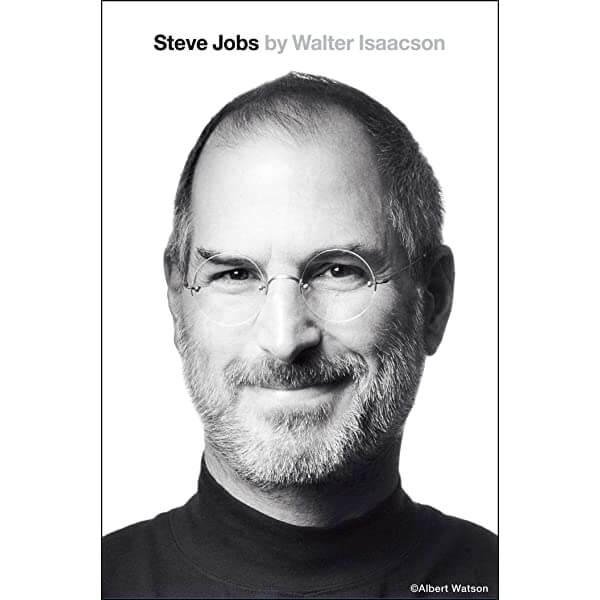
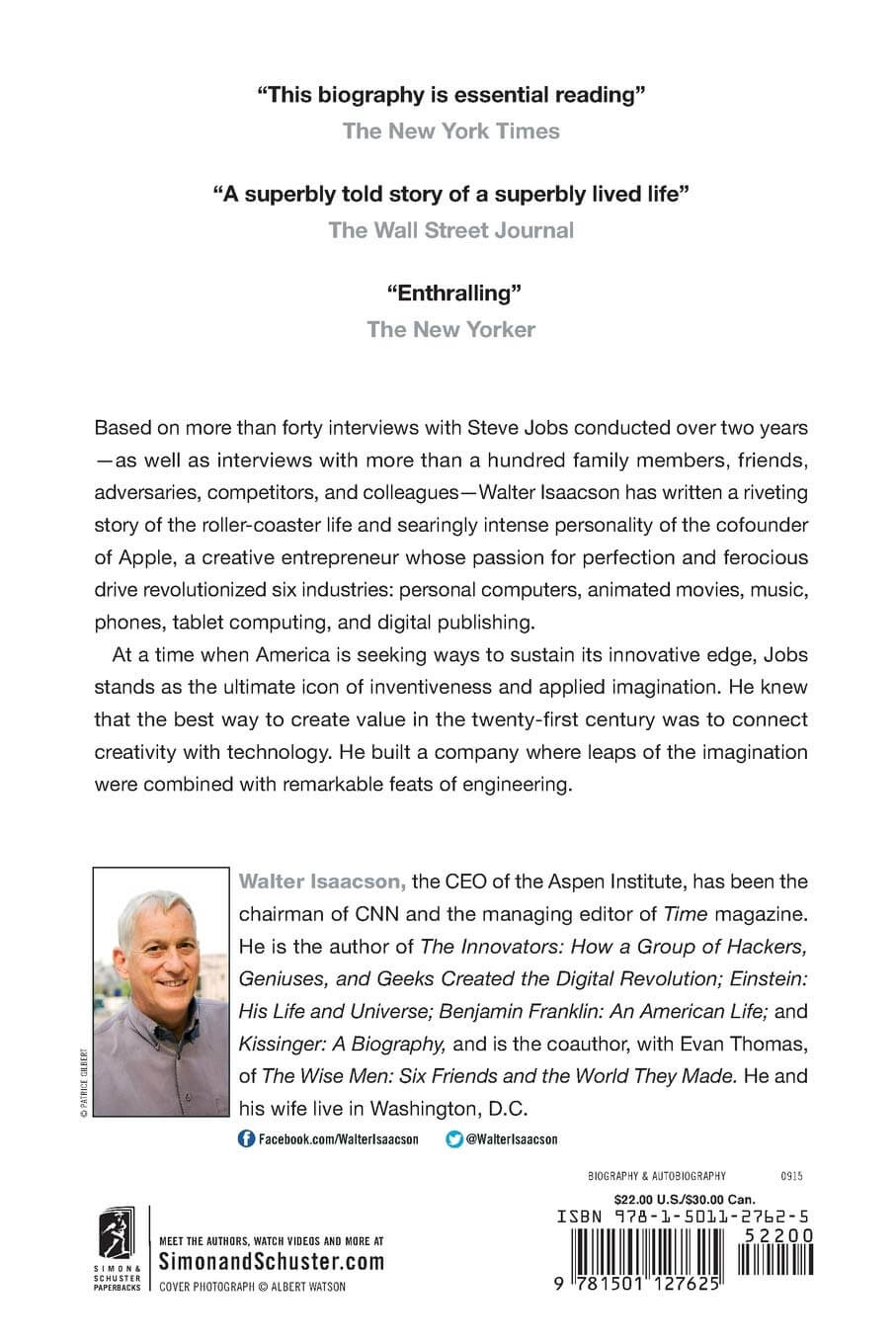



Steve Jobs by Walter Isaacson
Steve Jobs by Walter Isaacson is a detailed biography of the Apple cofounder whose ideas helped transform personal computing, music, animation, smartphones, tablets, and digital publishing.
The book explores Jobs as both an extraordinary innovator and a deeply complicated person.
Walter Isaacson does not present a simple success story.
Instead, he examines Jobs’s ambition, creativity, perfectionism, temper, leadership style, failures, relationships, and ability to imagine products people did not yet know they wanted.
About Steve Jobs
Steve Jobs was written with Jobs’s cooperation but without giving him control over the final book.
Isaacson interviewed him repeatedly over two years.
He also spoke with people who knew Jobs closely.
That included family members, colleagues, competitors, friends, and people who had difficult relationships with him.
The result is a broad portrait of one of the most influential technology entrepreneurs of the modern era.
The Beginning of Apple
Steve Jobs and Steve Wozniak helped create Apple during the early personal-computer revolution.
Their partnership combined different strengths.
Wozniak brought exceptional engineering ability.
Jobs brought product vision, presentation, design instincts, and an intense desire to build something people would love using.
Apple grew from a small startup into one of the most influential technology companies in the world.
But the journey was far from smooth.
7 Powerful Lessons from Steve Jobs
1. Focus Matters
One of the strongest lessons in the biography is the importance of focus.
Jobs believed companies could easily become distracted by too many products and priorities.
When he returned to Apple, he pushed the company to simplify.
Fewer products meant more attention could be given to making each one better.
This idea can apply to business, product development, and personal work.
2. Design Is More Than Appearance
Jobs cared deeply about how products looked.
But design was not only about appearance.
He wanted hardware, software, packaging, and user experience to feel connected.
A product should not simply look attractive.
It should also feel intuitive and coherent.
This principle became central to Apple’s identity.
3. Technology and Creativity Work Better Together
Steve Jobs repeatedly shows Jobs’s interest in the intersection between technology and the humanities.
He did not want technology to exist only for engineers.
He wanted technology to feel human.
That meant combining technical capability with design, storytelling, music, typography, and emotion.
This approach influenced many of Apple’s most important products.
4. Great Products Often Require Saying No
Jobs was famous for rejecting ideas.
He believed creating something excellent required eliminating unnecessary features and distractions.
That could make him extremely demanding.
But it also created a culture where products were repeatedly refined.
The lesson is not simply to reject everything.
It is to protect the most important priorities.
5. Perfectionism Can Create Both Excellence and Conflict
Jobs’s perfectionism produced remarkable results.
It also made him difficult to work with.
He could push teams beyond what they believed was possible.
At the same time, his management style could be harsh and emotionally exhausting.
The biography presents both sides.
This makes the book useful as both an innovation story and a leadership caution.
6. Failure Does Not End a Career
Jobs was forced out of Apple, the company he helped create.
That could have ended his story.
Instead, he founded NeXT and became deeply involved with Pixar.
Those experiences helped shape the leader who eventually returned to Apple.
His second period at Apple became one of the most important chapters of his career.
The story demonstrates that failure can create new skills and opportunities.
7. Build for the Long Term
Jobs often focused on creating products and companies that would matter beyond the next quarter.
Short-term financial results were important.
But product quality and long-term identity mattered too.
This approach helped Apple create products that shaped entire categories.
Steve Jobs and Pixar
Apple is only part of the story.
Jobs also played an important role in Pixar.
He acquired the company when computer animation was still developing.
Pixar eventually became one of the most successful animation studios in the world.
Films such as Toy Story demonstrated the potential of combining technology with storytelling.
This experience strengthened Jobs’s understanding of creative industries.
The Return to Apple
Jobs eventually returned to Apple after years away.
The company was struggling.
Its product lineup was confusing.
Its direction was unclear.
Jobs simplified the company’s priorities.
He helped guide the development of products including the iMac, iPod, iPhone, and iPad.
These products changed not only Apple but entire industries.
The iPod and Digital Music
The iPod changed how people carried and listened to music.
But the device itself was only part of the strategy.
Apple also developed the iTunes ecosystem.
Hardware, software, and content worked together.
This reflected Jobs’s preference for integrated systems.
He wanted the entire user experience to feel connected.
The iPhone Revolution
The iPhone became one of Apple’s most important products.
It combined a phone, internet device, media player, and later an enormous app ecosystem.
Its success transformed the smartphone market.
It also demonstrated Jobs’s belief that technology should be powerful without feeling complicated.
The iPhone became one of the clearest examples of his product philosophy.
Leadership and Personality
Steve Jobs does not hide the difficult parts of its subject.
Jobs could be inspiring.
He could also be confrontational.
He demanded extremely high standards.
Some employees found that motivating.
Others found it exhausting.
Walter Isaacson shows how Jobs’s personality was closely connected to both his achievements and his failures.
This complexity makes the biography more valuable than a simple celebration.
Innovation and Product Thinking
Jobs believed that customers could not always describe what future products should look like.
That did not mean ignoring customers.
It meant understanding their needs at a deeper level.
Apple often tried to create experiences rather than simply add more features.
This way of thinking influenced product development across the technology industry.
Who Should Read This Book?
Steve Jobs is ideal for readers interested in technology, business, entrepreneurship, leadership, product development, and innovation.
Entrepreneurs can learn from Jobs’s focus on product quality.
Designers may appreciate the emphasis on simplicity and user experience.
Managers can study both the strengths and weaknesses of his leadership style.
Students interested in Apple, Silicon Valley, and modern technology history may also find the biography especially useful.
About Walter Isaacson
Walter Isaacson is a bestselling biographer and historian.
His books include biographies of Albert Einstein, Leonardo da Vinci, Jennifer Doudna, Elon Musk, Benjamin Franklin, and Steve Jobs.
He has also served as editor of Time, chair and CEO of CNN, and CEO of the Aspen Institute.
Readers can learn more about the book on the official Simon & Schuster Steve Jobs page.
Product Details
Title: Steve Jobs
Author: Walter Isaacson
Genre: Biography / Business / Technology / Leadership
Language: English
Publisher: Simon & Schuster
Original Hardcover Publication: October 24, 2011
Original Hardcover ISBN-13: 9781451648539
Original Hardcover Pages: 656
A later Simon & Schuster trade paperback edition carries ISBN 9781982176860 and contains 672 pages.
ISBN, page count, dimensions, format, and cover may vary between editions.
Always check the physical copy you are selling before entering final WooCommerce specifications.
Explore More Biography and Business Books
Steve Jobs is more than a biography of the Apple cofounder.
It is also a study of creativity, innovation, leadership, ambition, design, and the cost of perfectionism.
Jobs helped build products that changed how people use computers, listen to music, communicate, and consume digital media.
But the biography also shows that extraordinary achievements can coexist with serious personal flaws.
Readers interested in similar titles can explore Biography Books at Bargain Books.
Readers interested in entrepreneurship and innovation can also explore Business, Finance & Economics Books at Bargain Books.
For readers who want to understand the person behind Apple’s most influential era, Steve Jobs offers a detailed and revealing account.
| Author | Walter Issaccson |
|---|---|
| Language | English |
| Type | Paperback Printed Book (Second Quality Copy) |
Be the first to review “Steve Jobs by Walter Issaccson”
Related products
-33%

Self-Help & Psychology
Original price was: රු2,300.00.රු1,550.00Current price is: රු1,550.00.
3 X Rs. 516.67 or 8% Cashback with


or 3 X රු516.67 with


or up to 4 X රු387.50 with

-19%

Out of stock
Biography
Original price was: රු2,400.00.රු1,950.00Current price is: රු1,950.00.
3 X Rs. 650.00 or 8% Cashback with
or 3 X රු650.00 with
or up to 4 X රු487.50 with

Out of stock
Self-Help & Psychology
රු1,900.00
3 X Rs. 633.33 or 8% Cashback with
or 3 X රු633.33 with
or up to 4 X රු475.00 with
-26%

Out of stock
Non-Fiction & Knowledge
Original price was: රු2,000.00.රු1,490.00Current price is: රු1,490.00.
3 X Rs. 496.67 or 8% Cashback with
or 3 X රු496.67 with
or up to 4 X රු372.50 with
-13%

Out of stock
Non-Fiction & Knowledge
Original price was: රු3,900.00.රු3,400.00Current price is: රු3,400.00.
3 X Rs. 1,133.33 or 8% Cashback with
or 3 X රු1,133.33 with
or up to 4 X රු850.00 with
-23%

Non-Fiction & Knowledge
Original price was: රු2,200.00.රු1,700.00Current price is: රු1,700.00.
3 X Rs. 566.67 or 8% Cashback with
or 3 X රු566.67 with
or up to 4 X රු425.00 with
-24%
Out of stock
Non-Fiction & Knowledge
Original price was: රු2,100.00.රු1,600.00Current price is: රු1,600.00.
3 X Rs. 533.33 or 8% Cashback with
or 3 X රු533.33 with
or up to 4 X රු400.00 with
-24%

Non-Fiction & Knowledge
Original price was: රු2,300.00.රු1,750.00Current price is: රු1,750.00.
3 X Rs. 583.33 or 8% Cashback with
or 3 X රු583.33 with
or up to 4 X රු437.50 with
Reviews
There are no reviews yet.