
No products in the cart.
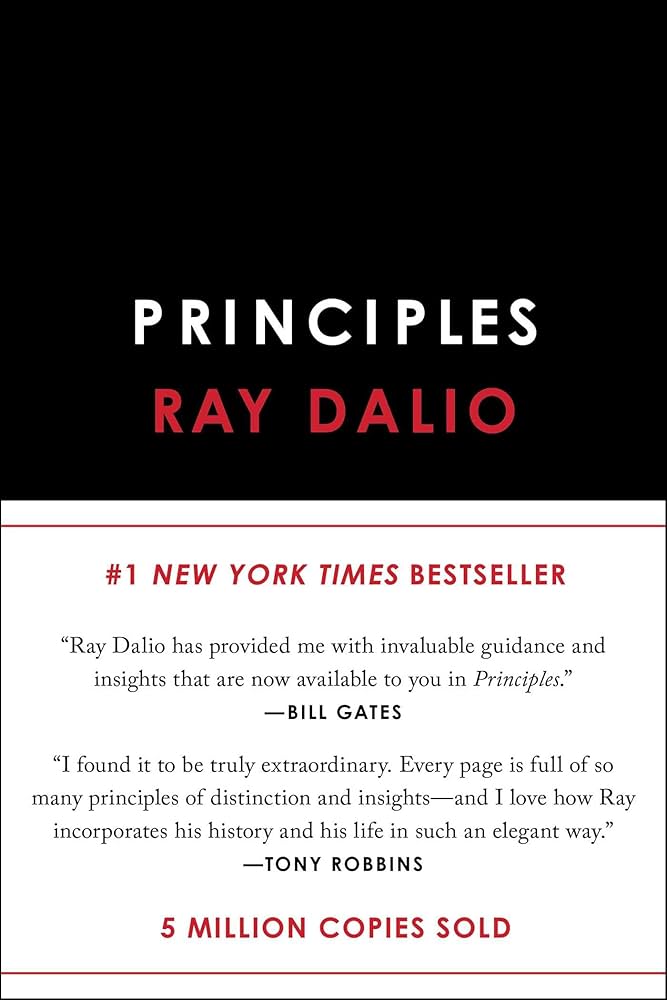
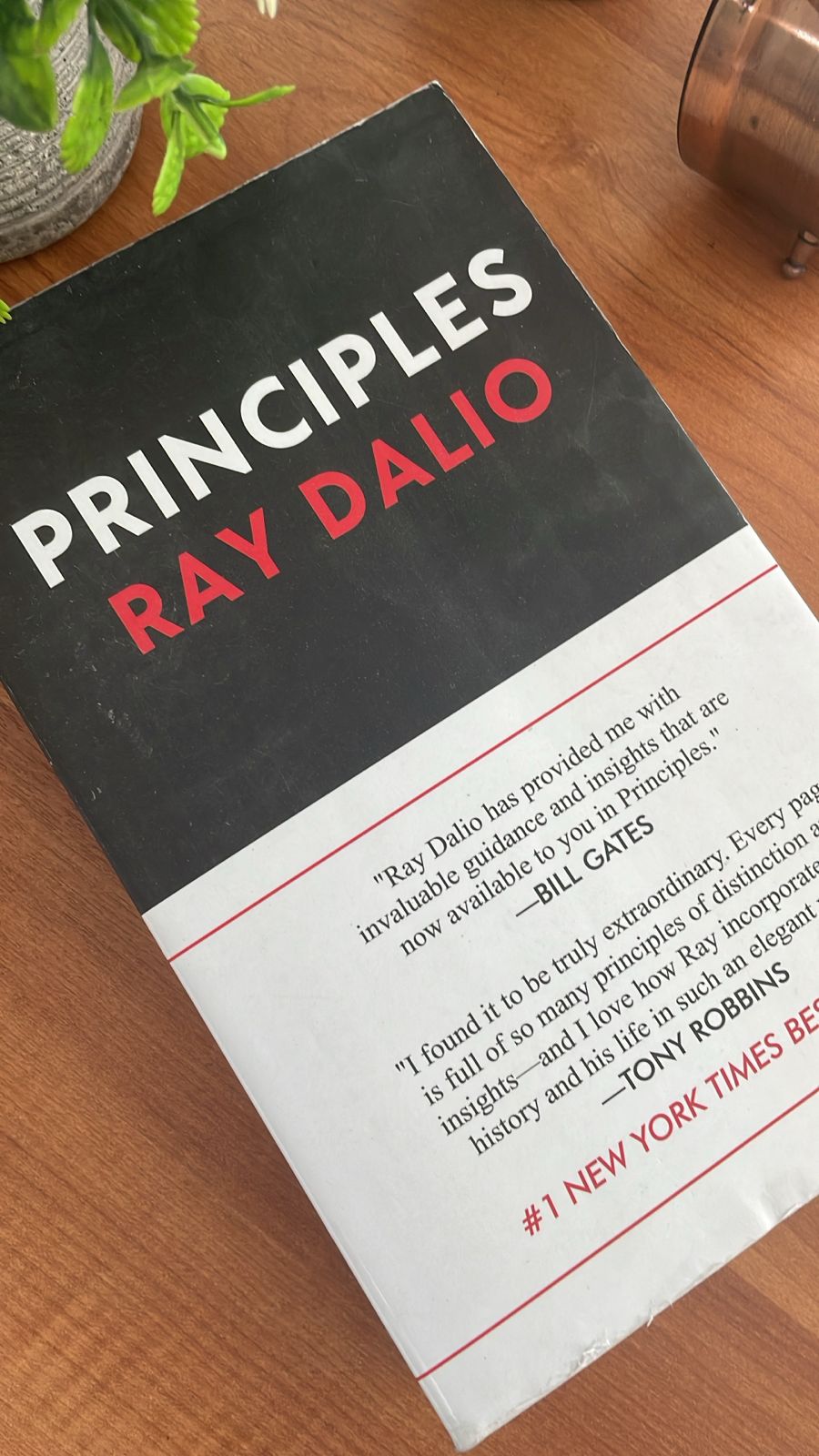


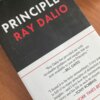






Principles Life and Work by Ray Dalio is a thought-provoking guide to making better decisions, learning from mistakes, achieving meaningful goals and building organizations where truth, transparency and strong ideas matter more than ego or hierarchy.
Ray Dalio built his career by trying to understand one question:
What principles produce better outcomes repeatedly?
Instead of treating every problem as completely new, Dalio began recording the lessons he learned from successes and failures.
Over time, these lessons developed into a system of principles for approaching life, work, relationships, management and decision-making.
The result is Principles: Life and Work.
Part autobiography and part practical guide, the book explains how Dalio developed the ideas that influenced both his personal decision-making and the culture of Bridgewater Associates, the investment firm he founded in 1975.
The official publisher describes the book as a collection of principles developed and refined over more than forty years, with particular emphasis on radical truth, radical transparency, meaningful work, meaningful relationships and systematic decision-making.
Rather than presenting success as luck or natural talent, Dalio encourages readers to examine how they think.
What do you do when you are wrong?
How do you respond to criticism?
How do you make difficult decisions?
Do you repeat the same mistakes?
Do you know your weaknesses?
Can people around you tell you the truth?
Those questions make Principles Life and Work by Ray Dalio useful not only for investors but for entrepreneurs, managers, students, professionals and anyone interested in improving how they make decisions.
Principles Life and Work by Ray Dalio – Book Overview
Principles Life and Work by Ray Dalio is divided conceptually around three areas: Dalio’s personal journey, principles for life and principles for work.
The autobiographical element explains where the principles came from.
The life section focuses on how individuals can pursue goals, deal with reality and learn from mistakes.
The work section expands those ideas into organizations, leadership, teams and decision-making systems.
This structure matters because Dalio does not present his principles as abstract motivational quotations.
He connects them with experiences.
Mistakes.
Business decisions.
Career setbacks.
Management problems.
Successes.
The principles are therefore presented as rules developed through repeated testing.
Ray Dalio
Ray Dalio founded Bridgewater Associates in 1975, initially operating from his two-bedroom apartment in New York.
Over the following decades, Bridgewater developed into one of the world’s best-known investment firms.
Dalio’s approach became notable not only because of investing performance but because of the unusual management culture he created around open disagreement, transparency and systematic decision-making.
Principles as Decision Rules
One of the most useful ideas in the book is that a principle can act like a rule for future decisions.
Suppose you make a mistake.
You can simply fix that one mistake.
Or you can ask:
Why did this happen?
What rule would prevent me from repeating it?
That second approach creates a principle.
Over time, principles can reduce the need to solve the same problem repeatedly from zero.
Learn From Experience
Dalio encourages readers to examine both success and failure.
Success asks:
What worked?
Failure asks:
What broke?
Both contain information.
A person who celebrates success without understanding it may not know how to reproduce it.
A person who experiences failure without reflecting on it may repeat it.
Pain Plus Reflection
One of Dalio’s best-known ideas is that painful experiences can become useful when they are followed by serious reflection.
The important part is not the pain itself.
Failure does not magically improve someone.
The value comes from asking:
What happened?
Why?
What did I misunderstand?
What should I change?
Pain without reflection can simply become repeated frustration.
Reflection turns experience into learning.
Mistakes Are Data
Many workplaces punish mistakes so severely that employees begin hiding them.
That creates a dangerous situation.
The organization still has problems.
Now management simply cannot see them.
Dalio argues for an environment where mistakes can be examined openly so that systems improve.
That does not mean mistakes have no consequences.
It means hiding mistakes can be more dangerous than acknowledging them.
Radical Truth
A central concept in Principles Life and Work by Ray Dalio is radical truth.
This means attempting to understand reality as accurately as possible rather than protecting your ego.
Reality does not change because you dislike it.
A business losing customers is still losing customers even if management avoids discussing it.
A weak skill remains weak even if criticism feels uncomfortable.
Truth creates the possibility of improvement.
Radical Transparency
Dalio pairs radical truth with radical transparency.
The idea is that people should have enough access to information to understand how decisions are being made.
Transparency can reduce:
Office politics.
Hidden agendas.
Rumours.
Information asymmetry.
But it can also feel uncomfortable.
Not every organization will want to implement Dalio’s model exactly.
The broader lesson is still useful:
When important information is unnecessarily hidden, trust and decision quality may suffer.
Ego Can Block Learning
People naturally defend their beliefs.
We do not like hearing:
You are wrong.
Your plan failed.
Someone else understands this better.
But if protecting ego becomes more important than discovering truth, improvement slows.
Dalio therefore emphasizes intellectual humility.
The goal is not to prove that you were right.
The goal is to discover what is right.
Be Radically Open-Minded
Open-mindedness does not mean agreeing with everyone.
It means accepting the possibility that another person may understand something you do not.
A useful question becomes:
What if I am wrong?
That single question can improve decision-making dramatically.
Thoughtful Disagreement
Dalio values disagreement when it is serious and evidence-based.
Two intelligent people may look at the same problem differently.
Instead of immediately turning disagreement into conflict, they can ask:
What information is each person using?
What assumptions differ?
Which person has relevant expertise?
What evidence would change our minds?
Thoughtful disagreement can improve decisions.
Idea Meritocracy
Bridgewater became associated with what Dalio calls an idea meritocracy.
The goal is to allow the best ideas to win rather than automatically giving the final word to:
The loudest person.
The most senior person.
The highest-paid person.
This requires a culture where people can challenge one another respectfully.
Not Every Opinion Has Equal Weight
Dalio does not argue that every opinion should count equally.
Experience matters.
Track record matters.
Expertise matters.
If two people disagree about a specialized subject and one has repeatedly demonstrated strong judgment in that field, their opinion may deserve more weight.
This leads to the concept of believability-weighted decision-making.
Believability
A believable person is someone who has demonstrated expertise and good judgment in a particular area.
For example, if you are deciding how to fix a complex database failure, the opinion of an experienced database engineer may deserve more weight than that of someone with no technical background.
This sounds obvious.
Yet organizations often ignore expertise because hierarchy or politics interferes.
The Five-Step Process
One of the most practical frameworks in Principles Life and Work by Ray Dalio is his five-step process for achieving goals.
First, determine what you want.
Then identify the problems preventing you from getting there.
Diagnose the root causes.
Design solutions.
Execute those solutions.
The process sounds simple.
Doing it honestly is harder.
Set Clear Goals
A vague goal produces vague action.
“I want to be successful.”
Successful at what?
A clearer goal might be:
Launch a profitable online business.
Complete my degree.
Become a software engineer.
Reduce operating costs.
Build an emergency fund.
Specific goals create direction.
Identify Problems
Once the goal is clear, ask:
What is preventing me from reaching it?
Many people avoid this step because identifying problems can feel negative.
Dalio argues the opposite.
A problem is evidence that something needs attention.
If you refuse to name the problem, you cannot solve it.
Diagnose Before Solving
This is one of the most valuable business lessons in the book.
Do not immediately jump from:
Problem
to
solution.
First determine the root cause.
Imagine sales are falling.
Possible causes include:
Wrong pricing.
Weak advertising.
Bad product selection.
Slow delivery.
Poor customer experience.
A technical website problem.
Applying the wrong solution wastes time.
Root Cause Thinking
The visible problem may only be a symptom.
Suppose an employee repeatedly misses deadlines.
The easy conclusion is:
The employee is lazy.
But the real cause might be:
Poor planning.
Unclear requirements.
Too much workload.
Weak training.
A broken process.
A manager who keeps changing priorities.
Good diagnosis avoids treating symptoms as causes.
Design a Better System
Once the cause is understood, build a solution that reduces the chance of recurrence.
This is where principles become useful.
Instead of fixing one case, improve the system.
For example, if orders are repeatedly shipped incorrectly, do not only correct today’s mistake.
Create a verification process that reduces future mistakes.
Execute
A perfect plan that is never executed has no value.
Dalio repeatedly emphasizes disciplined implementation.
Knowing what should happen is different from actually doing it.
Execution requires:
Responsibility.
Deadlines.
Measurement.
Follow-up.
Accountability.
Goals Need Measurement
What gets measured becomes easier to manage.
Businesses measure:
Revenue.
Profit.
Inventory.
Conversions.
Returns.
Customer retention.
Individuals can also track:
Study hours.
Exercise.
Savings.
Project progress.
But measurement should support goals rather than becoming an obsession with numbers that do not matter.
Think Like a Machine Designer
Dalio often encourages readers to view systems almost like machines.
A machine contains:
Inputs.
Processes.
People.
Rules.
Outputs.
If the output is wrong, inspect the machine.
This mindset can reduce emotional reactions to recurring problems.
Instead of asking:
Who should we blame?
ask:
What part of the system produced this outcome?
People Are Part of the System
This does not mean people are literally machines.
It means organizational outcomes depend partly on whether people are matched with roles suited to their abilities.
A brilliant salesperson may not automatically become a brilliant manager.
A great programmer may dislike management.
Understanding strengths and weaknesses can improve role selection.
Know Your Weaknesses
Self-awareness is another recurring theme.
You do not need to be excellent at everything.
In fact, believing you are excellent at everything can be dangerous.
If you understand your weaknesses, you can:
Improve them.
Build systems around them.
Find people who complement you.
The problem begins when weakness remains invisible.
Ask for Honest Feedback
Most people say they want feedback.
Then become defensive when they receive it.
Useful feedback may be uncomfortable precisely because it reveals something we did not want to see.
The challenge is separating:
The emotional reaction
from
the useful information.
Feedback Should Also Be Fair
Radical honesty can easily become an excuse for rudeness if used badly.
Useful feedback should be:
Specific.
Relevant.
Evidence-based.
Directed toward improvement.
The goal is not humiliating someone.
It is helping them see reality more clearly.
Meaningful Work
Dalio argues that meaningful work matters more than money alone.
People often perform better when they understand why the work matters.
Meaning may come from:
Solving difficult problems.
Creating something valuable.
Serving customers.
Learning.
Building a strong team.
Working toward a mission.
Meaningful Relationships
Work is also relational.
A high-performing organization filled with people who distrust each other may eventually become unstable.
Dalio connects meaningful work with meaningful relationships.
Trust makes disagreement easier.
Disagreement can improve decisions.
Better decisions improve the organization.
Build the Right Culture
Culture is not simply:
Office decorations.
Company parties.
Mission statements.
Culture is the set of behaviors an organization consistently rewards or discourages.
If leaders say:
“We value honesty”
but punish anyone who brings bad news, the real culture does not value honesty.
People learn from consequences more than slogans.
Hiring
One of the strongest work principles is choosing the right people.
Skills matter.
Character matters.
Values matter.
A person can have impressive qualifications and still be wrong for a particular environment.
Hiring mistakes can become extremely expensive because they affect:
Performance.
Culture.
Management time.
Team morale.
Match People to Roles
Dalio encourages leaders to understand individual strengths and weaknesses.
Instead of expecting everyone to be equally good at everything, organizations should place people where their abilities are most useful.
This sounds simple.
But promotions often violate it.
Someone succeeds in one role and is automatically moved into another requiring completely different skills.
Management
Good management is not simply telling people what to do.
Managers need to understand:
Goals.
People.
Processes.
Problems.
Accountability.
They must recognize whether poor results come from:
The wrong person.
Poor training.
Bad systems.
Unclear expectations.
Weak leadership.
Meetings
Meetings can create enormous waste.
A useful meeting should have:
A purpose.
Relevant participants.
Clear decisions.
Responsibilities afterward.
Otherwise meetings become expensive conversations with no result.
Decision-Making
One of the most useful themes in Principles Life and Work by Ray Dalio is deliberate decision-making.
Instead of making important choices entirely through emotion, readers are encouraged to understand the variables involved.
What evidence exists?
What are the risks?
Who has relevant experience?
What happened in similar situations?
This does not remove intuition.
It gives intuition something to work with.
Use Data Without Worshipping Data
Data can expose patterns.
But data can also be incomplete.
Numbers require interpretation.
A sales dashboard may show that one product performs poorly.
It does not automatically explain why.
Good decision-making combines:
Data.
Context.
Experience.
Judgment.
Systems and Algorithms
Dalio is interested in turning repeated decisions into systematic rules.
If you notice that the same type of situation appears again and again, it may be possible to develop an algorithm or checklist for handling it.
This idea is particularly relevant today in:
Software.
Finance.
Operations.
AI.
Business process automation.
Automation Does Not Remove Judgment
Some decisions can be systemized.
Others remain complex.
The goal should not be:
Automate everything.
It should be:
Automate what can be reliably automated so human attention can focus on higher-value judgment.
Failure Can Improve the System
An organization that never admits mistakes may look strong temporarily.
In reality, it becomes fragile.
Every failure contains information about the system.
The strongest organizations learn faster than their competitors.
The Bridgewater Example
Much of the work section is influenced by Dalio’s experience building Bridgewater Associates.
Readers should remember that Bridgewater’s culture is unusual.
Not every workplace will want to reproduce it exactly.
Radical transparency may work differently depending on:
Industry.
Culture.
Privacy requirements.
Team size.
Legal constraints.
The broader value lies in examining the reasoning behind the principles rather than copying every practice mechanically.
Principles Are Not Universal Laws
This is an important way to read the book.
Dalio is presenting his principles.
Readers should test them.
Some may fit your life perfectly.
Others may need adaptation.
A principle should remain useful because it improves decisions, not because a famous investor wrote it.
Build Your Own Principles
One of the best ways to use Principles Life and Work by Ray Dalio is to create your own list.
When something important happens, record:
What happened?
Why?
What did I learn?
What should I do next time?
Eventually patterns emerge.
Those patterns can become personal principles.
Principles for Entrepreneurs
Entrepreneurs may find the book particularly useful because business creates repeated uncertainty.
Should we hire?
Should we expand?
Should we change pricing?
Should we stop a product?
Should we invest in technology?
A clear set of decision principles can reduce emotional inconsistency.
Principles for Managers
Managers can apply the book by improving how they:
Give feedback.
Define responsibilities.
Diagnose problems.
Run meetings.
Hire.
Measure performance.
Resolve disagreements.
The strongest managers do not merely solve today’s problems.
They improve the environment that produces tomorrow’s decisions.
Principles for Students
Students can use the same thinking.
Suppose you fail an examination.
The useful response is not:
“I am bad at this.”
Diagnose.
Did you:
Start too late?
Study the wrong material?
Memorize without understanding?
Practice too few questions?
Mismanage exam time?
Once the cause is visible, the next study plan can improve.
Principles for Software Developers
The ideas translate surprisingly well into software engineering.
Bugs happen.
The question is whether the team merely patches the bug or also asks:
Why did our process allow this bug?
Do we need:
Better tests?
Code review?
Monitoring?
Documentation?
Validation?
A better deployment process?
That is systems thinking.
Principles for Business Owners
Business owners can apply the book by creating written rules for recurring decisions.
For example:
When should we reorder inventory?
What qualifies a product for promotion?
When should we hire?
How should customer complaints be escalated?
When should a project be stopped?
Clear principles reduce arbitrary decisions.
Is Principles Life and Work an Investing Book?
Not primarily.
Ray Dalio is famous as an investor, and his career naturally appears throughout the book.
However, Principles Life and Work by Ray Dalio focuses much more broadly on:
Decision-making.
Life.
Management.
Organizations.
Culture.
Problem-solving.
Readers looking specifically for an investing strategy manual should not expect a detailed guide to selecting investments.
Is It a Business Book?
Yes.
A substantial portion concerns:
Management.
Organizations.
Leadership.
Hiring.
Decision-making.
Workplace culture.
It fits strongly within business and leadership.
Your current BookLounge category Non-Fiction > Finance, Economics & Investing is understandable because of Dalio’s background, but Business, Leadership & Marketing would also be highly suitable if you allow more than one category.
Is It Self-Help?
Partly.
The life principles address goals, mistakes, self-awareness and decision-making.
However, the book is more analytical and systems-oriented than a typical motivational self-help title.
Is It a Memoir?
Partly.
Dalio uses his own life and Bridgewater experience to explain where the principles came from.
The official publisher describes it as both instructive and deeply connected with Dalio’s personal story.
Is It Suitable for Beginners?
Yes, although it is a substantial book.
Readers do not need financial expertise.
The concepts become easier when read slowly and applied rather than rushed through.
It can be useful to pause after an important principle and ask:
How would this apply to my own life or work?
Hardcover Edition Details
For the official Simon & Schuster hardcover:
Title: Principles: Life and Work
Author: Ray Dalio
Publisher: Avid Reader Press / Simon & Schuster
Publication Date: September 19, 2017
Pages: 592
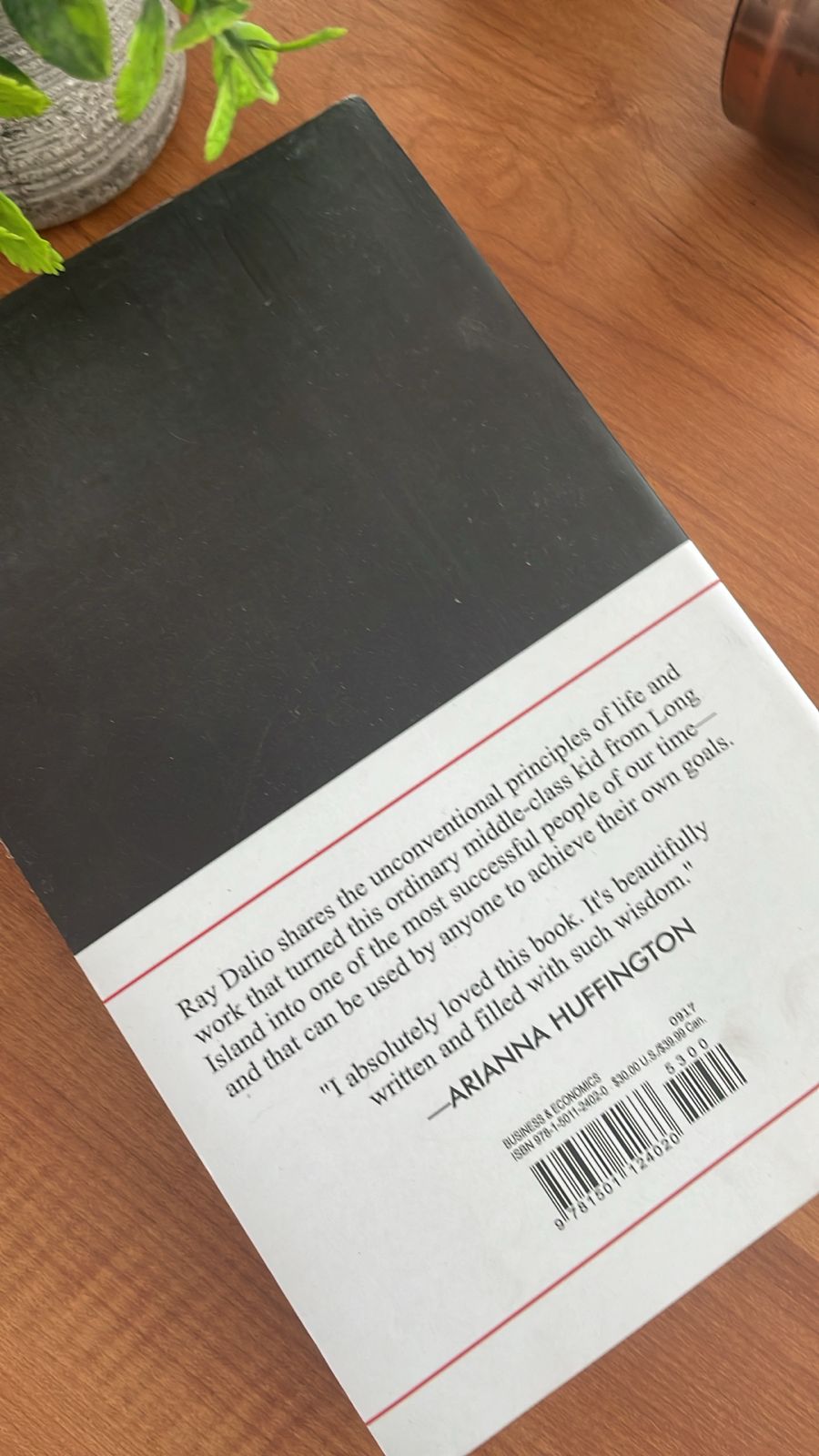
ISBN-13: 9781501124020
Your BookLounge listing identifies the product as a hardcover, product code 2376, at Rs. 5,500.
Also correct your author field from “Ray Dalio, Jeremy Bobb” to simply “Ray Dalio.” Jeremy Bobb belongs only in audiobook narration metadata.
7 Powerful Lessons From Principles Life and Work by Ray Dalio
- Face reality instead of protecting your ego. Better decisions begin when you care more about discovering the truth than proving yourself right.
- Turn mistakes into principles. When something goes wrong, diagnose why it happened and create a rule or system that reduces the chance of repeating it.
- Use pain as a signal to reflect. Difficult experiences become valuable when you examine them carefully and change your behavior afterward.
- Know your strengths and weaknesses. Self-awareness allows you to improve, choose better roles and work with people whose abilities complement your own.
- Encourage thoughtful disagreement. Different viewpoints can improve a decision when people challenge ideas respectfully and focus on evidence rather than ego.
- Diagnose root causes before designing solutions. Solving the visible symptom may create temporary relief while leaving the actual problem untouched.
- Build systems that produce better decisions repeatedly. Long-term success comes not only from making one good decision but from creating processes, principles and cultures that improve the quality of future decisions.
Why Read Principles Life and Work by Ray Dalio?
Principles Life and Work by Ray Dalio is an excellent choice for readers interested in entrepreneurship, leadership, management, business systems, decision-making, personal development, investing culture, problem-solving and organizational psychology.
It is especially valuable for people who are tired of vague advice such as:
Work harder.
Believe in yourself.
Never give up.
Dalio’s approach asks more specific questions.
What system are you using?
How do you know whether it works?
What happens when you fail?
How do you detect your blind spots?
Who is allowed to challenge your decisions?
How quickly does your organization learn?
Those questions can produce practical improvement.
Who Should Read This Book?
Principles Life and Work by Ray Dalio may especially appeal to entrepreneurs, managers, business owners, investors, team leaders, university students, software professionals, executives and readers who enjoy analytical approaches to personal development.
It is particularly useful for people responsible for making repeated decisions.
The more decisions you make, the more valuable a reliable decision-making system becomes.
Principles Life and Work by Ray Dalio – Build a System for Better Decisions
Principles Life and Work by Ray Dalio ultimately asks readers to stop treating life as a series of unrelated events.
A mistake happens.
Learn from it.
A decision works.
Understand why.
A disagreement appears.
Examine the evidence.
A goal remains unreachable.
Identify the obstacle.
The pattern is always similar.
Reality produces feedback.
The question is whether we listen.
Dalio’s approach is strongly systematic.
He treats progress almost like engineering.
Set a goal.
Observe reality.
Identify problems.
Find causes.
Design improvements.
Execute.
Measure.
Repeat.
This can sound mechanical.
But the purpose is deeply human.
Better systems can reduce unnecessary mistakes.
Better feedback can help people grow.
Better transparency can improve trust.
Better decisions can create more meaningful work.
The difficult part is accepting that improvement often begins with something uncomfortable:
admitting that our current understanding may be wrong.
That may be the central lesson behind the entire book.
Success does not require knowing everything.
It requires creating a process that helps you learn faster when you discover that you do not.
For readers who want a substantial business and personal-development book about decision-making, leadership, goals, mistakes, workplace culture and continuous improvement, Principles Life and Work by Ray Dalio offers a detailed framework for turning experience into better decisions.
Learn more about Principles: Life & Work by Ray Dalio on the official Principles website.
Explore more business, investing, and personal development books at Bargain Books.
Be the first to review “Principles by Ray Dalio”
Related products
-21%
Non-Fiction & Knowledge
7 Secrets to Investing Like Warren Buffett by Mary Buffett & Sean Seah
Original price was: රු1,900.00.රු1,500.00Current price is: රු1,500.00.
3 X Rs. 500.00 or 8% Cashback with


or 3 X රු500.00 with


or up to 4 X රු375.00 with

Non-Fiction & Knowledge
රු1,700.00
3 X Rs. 566.67 or 8% Cashback with
or 3 X රු566.67 with
or up to 4 X රු425.00 with
-17%
Out of stock
Non-Fiction & Knowledge
Original price was: රු2,900.00.රු2,400.00Current price is: රු2,400.00.
3 X Rs. 800.00 or 8% Cashback with
or 3 X රු800.00 with
or up to 4 X රු600.00 with
-26%
Out of stock
Non-Fiction & Knowledge
Original price was: රු2,000.00.රු1,490.00Current price is: රු1,490.00.
3 X Rs. 496.67 or 8% Cashback with
or 3 X රු496.67 with
or up to 4 X රු372.50 with
-19%
Out of stock
Non-Fiction & Knowledge
Original price was: රු2,650.00.රු2,150.00Current price is: රු2,150.00.
3 X Rs. 716.67 or 8% Cashback with
or 3 X රු716.67 with
or up to 4 X රු537.50 with
-23%

Non-Fiction & Knowledge
Original price was: රු2,200.00.රු1,700.00Current price is: රු1,700.00.
3 X Rs. 566.67 or 8% Cashback with
or 3 X රු566.67 with
or up to 4 X රු425.00 with

Out of stock
Non-Fiction & Knowledge
රු1,500.00
3 X Rs. 500.00 or 8% Cashback with
or 3 X රු500.00 with
or up to 4 X රු375.00 with
Out of stock
Non-Fiction & Knowledge
රු1,600.00
3 X Rs. 533.33 or 8% Cashback with
or 3 X රු533.33 with
or up to 4 X රු400.00 with
Reviews
There are no reviews yet.