
No products in the cart.
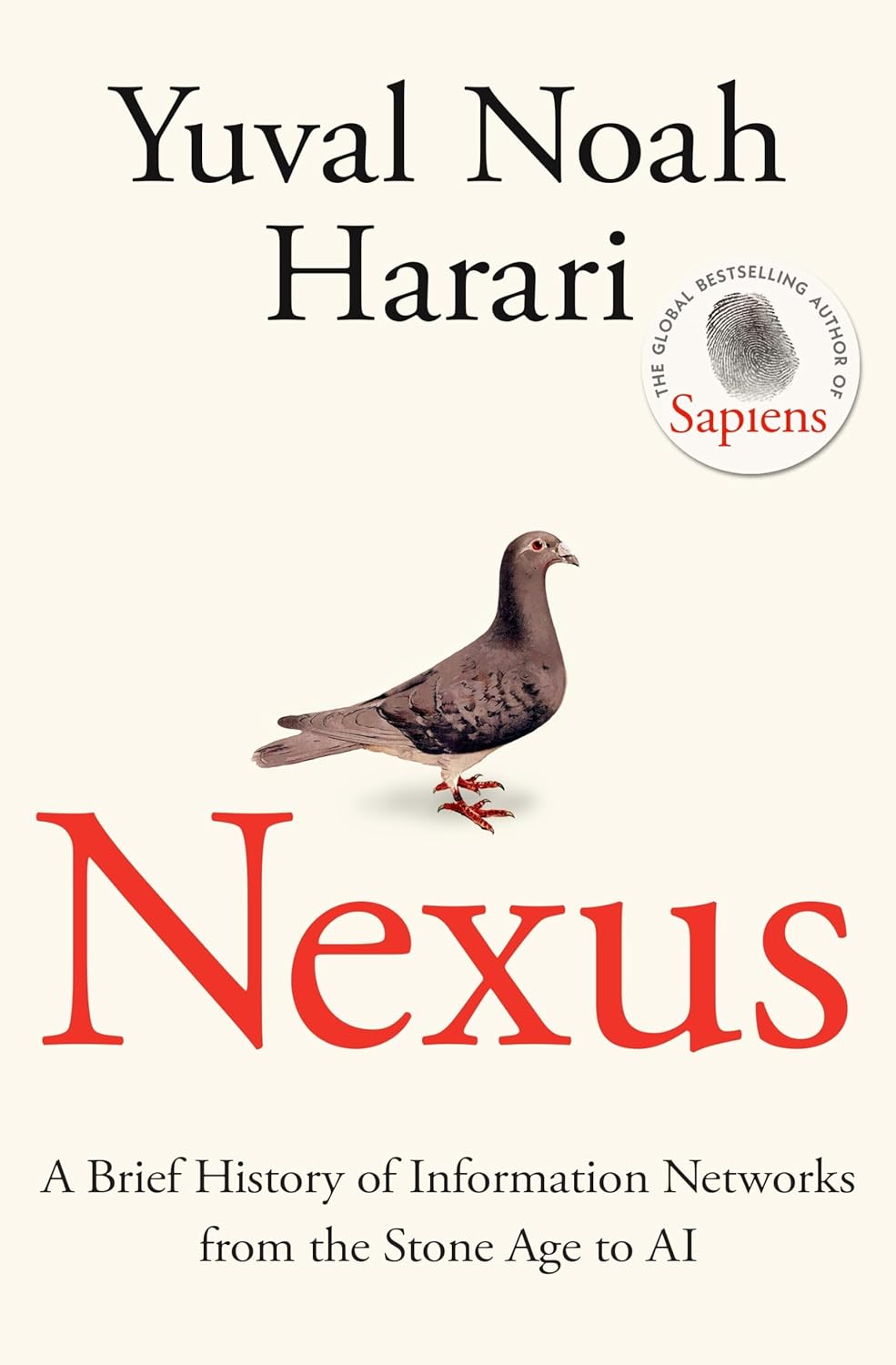
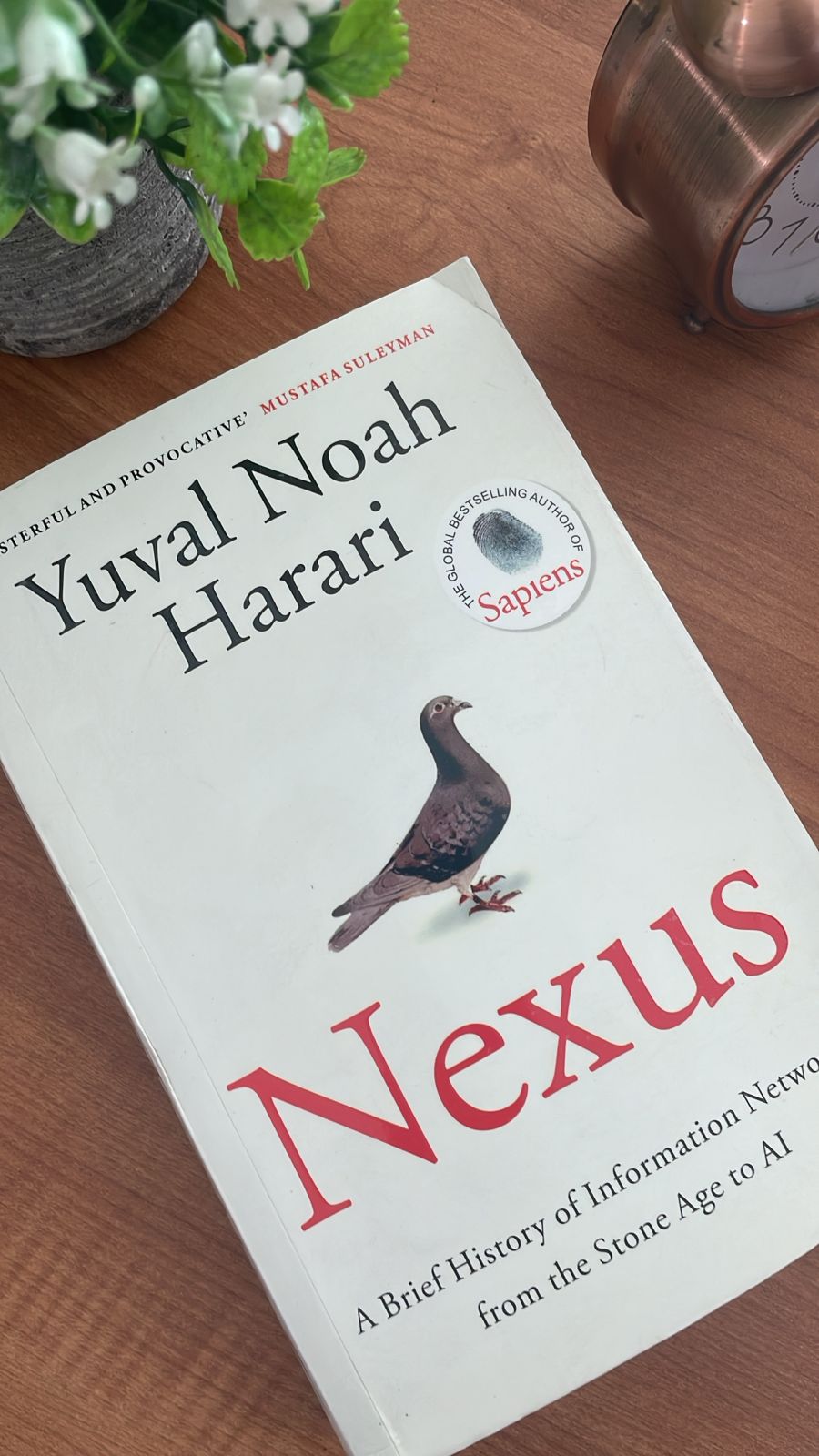








NEXUS by Yuval Noah Harari


රු1,750.00
3 X Rs. 583.33 or 8% Cashback with


or 3 X රු583.33 with


or up to 4 X රු437.50 with


- Title: Nexus: A Brief History of Information Networks from the Stone Age to AI
- Author: Yuval Noah Harari
- Genre: Non-fiction; History / Technology / Sociology
- Publisher: Penguin Random House (Vintage Digital in UK) / Fern Press
- Publication Date: 10 September 2024
- ISBN-13: 9781529923506
5 in stock
Nexus by Yuval Noah Harari is a thought-provoking journey through the history of information, exploring how stories, documents, institutions, mass communication, algorithms and artificial intelligence have shaped human civilization—and how the next information revolution may transform our future.
Human beings have accumulated more information than any previous species.
We have libraries.
Databases.
Satellites.
The internet.
Search engines.
Social media.
Artificial intelligence.
Yet humanity still struggles with misinformation, political conflict, war, ecological crises and destructive decision-making.
Why?
Harari argues that one of our biggest mistakes is assuming that more information automatically produces more truth and wisdom.
History suggests otherwise.
Information can reveal reality.
But information can also coordinate millions of people around myths, religions, laws, currencies, political ideologies and institutions.
It can help democracy function.
It can also strengthen authoritarian power.
It can support science.
It can spread conspiracy theories.
And now, for the first time in history, humanity is building information systems that can process data, generate content and participate in decisions without being human.
That is the central challenge explored in Nexus by Yuval Noah Harari.
Nexus by Yuval Noah Harari – Book Overview
Nexus by Yuval Noah Harari asks a deceptively simple question:
What is information actually for?
Many people think the primary purpose of information is to describe reality accurately.
Harari challenges that assumption.
Information networks often have another function:
Connecting people.
A story does not need to be scientifically true to unite millions of people.
A legal document may not describe a physical object, yet it can determine who owns land.
Money may be only paper, numbers or digital records, but entire economies depend upon collective trust in it.
Information can create social order even when it does not simply represent objective truth.
That distinction becomes essential for understanding both ancient civilizations and modern AI systems.
Information Is Not the Same as Truth
One of Harari’s most important arguments is that information and truth should not be treated as synonyms.
Truth attempts to describe reality accurately.
Information can perform many other functions.
It can:
Coordinate.
Persuade.
Entertain.
Organize.
Classify.
Command.
Create identities.
Build institutions.
A society therefore does not become wiser merely because it produces more information.
The quality and structure of the network matter.
The Naive View of Information
Harari criticizes what he calls the naive view of information.
This view assumes that if society collects more information, eventually truth will naturally win.
More books.
More websites.
More data.
More posts.
More information.
Therefore more knowledge.
But the digital age shows why this is not guaranteed.
A platform containing billions of posts does not automatically create a wiser society.
It may instead create:
Noise.
Manipulation.
Polarization.
Misinformation.
Information overload.
The real question becomes:
What kind of network processes the information?
Stories Created Large Human Networks
Human beings became extraordinarily successful partly because we learned to cooperate in huge groups.
Stories helped make that possible.
People can cooperate with strangers because they share belief in things such as:
Religions.
Nations.
Companies.
Currencies.
Laws.
Political ideals.
These shared stories can create large networks of trust.
Harari explored similar ideas in Sapiens, but Nexus by Yuval Noah Harari focuses specifically on the information systems that allow those stories to spread and survive.
Why Stories Matter
A small group can cooperate through personal relationships.
Large civilizations cannot.
Millions of citizens cannot personally know one another.
Instead, people cooperate through shared information.
They believe in:
The same law.
The same currency.
The same national institutions.
The same records.
The same social rules.
Information therefore becomes infrastructure.
Documents Changed Civilization
Stories alone are not enough to run a large state.
Governments need records.
Taxes.
Property ownership.
Birth certificates.
Court decisions.
Military records.
Financial transactions.
Documents made it possible to store information outside human memory.
This dramatically expanded the scale of administration.
Harari examines the rise of bureaucratic information systems and how documents gradually became essential to organized society.
The Power of Bureaucracy
Bureaucracy often sounds boring.
Forms.
Files.
Applications.
Databases.
Yet bureaucracy can be extraordinarily powerful.
A record in a database may determine whether someone is officially considered:
A citizen.
A property owner.
A taxpayer.
A student.
A refugee.
A debtor.
A criminal.
A document can therefore influence someone’s real life even though the document itself is simply information.
Categories Can Shape Reality
Information systems must simplify the world.
A database cannot record every detail about a human being.
It creates categories.
Married.
Single.
Employed.
Unemployed.
Citizen.
Non-citizen.
Approved.
Rejected.
These categories make administration possible.
But they can also become dangerous when institutions forget that real human beings are more complicated than the categories used to describe them.
The Problem of Error
Every information system can make mistakes.
A government database can be wrong.
A scientific theory can be wrong.
A newspaper can publish incorrect information.
An algorithm can classify someone incorrectly.
The important question is not whether a network makes mistakes.
All networks do.
The crucial question is:
Can the network discover and correct its mistakes?
Self-Correcting Mechanisms
This becomes one of the strongest ideas in Nexus by Yuval Noah Harari.
Wise institutions need mechanisms that allow them to admit:
We were wrong.
Science has:
Peer review.
Experiments.
Replication.
Debate.
Democracies may have:
Elections.
Independent courts.
Free journalism.
Opposition parties.
Public criticism.
None of these systems is perfect.
But they create opportunities for correction.
The Danger of Infallibility
Institutions become especially dangerous when they claim they cannot be wrong.
If criticism becomes forbidden, errors can grow.
A leader receives only good news.
Officials hide failures.
Citizens become afraid to question decisions.
Eventually the information system becomes disconnected from reality.
This is one reason Harari emphasizes the difference between gathering information and building trustworthy institutions.
Democracy as an Information Network
Nexus by Yuval Noah Harari examines democracy not only as a political philosophy but also as an information system.
Democratic societies distribute information and decision-making across many institutions.
Citizens.
Journalists.
Courts.
Legislatures.
Local governments.
Universities.
Businesses.
Civil organizations.
Power is not supposed to exist entirely in one information center.
Democracy Requires Conversation
Democracy depends on disagreement.
Different people hold different opinions.
The system needs enough trust and shared reality for those disagreements to remain productive.
The digital age threatens this balance.
If citizens cannot agree on basic facts, meaningful political discussion becomes much harder.
Totalitarian Information Networks
Totalitarian systems operate differently.
They attempt to concentrate information and decision-making.
The government wants to know more about citizens while citizens know less about government decision-making.
Historically, this centralization had limitations.
No government could monitor everyone constantly.
Computers may change that.
Surveillance in the Digital Age
Digital systems can collect enormous quantities of information.
Location.
Purchases.
Search history.
Communication patterns.
Biometric information.
Online behavior.
When combined with AI, these systems may allow governments or corporations to analyze individuals at a scale impossible for earlier bureaucracies.
This creates important questions about:
Privacy.
Freedom.
Power.
Accountability.
Why Computers Are Different
One of the most important transitions in Nexus by Yuval Noah Harari is the movement from human information networks to computer-based networks.
A printing press can reproduce information.
A radio can transmit information.
A computer can increasingly do something more:
process information and make decisions.
That difference matters.
AI Is Not Just Another Printing Press
Previous communication technologies mostly connected humans.
Books carried human ideas.
Newspapers published human writing.
Radios transmitted human voices.
Computers and AI systems can increasingly generate outputs, select information and influence decisions themselves.
Harari argues that this represents a historically significant shift in information networks.
Algorithms Already Shape Daily Life
People already interact with algorithmic decision systems.
An algorithm may decide:
What video appears next.
Which social post becomes visible.
Which advertisement you see.
Which route your map recommends.
Which products are suggested.
Which applications receive attention.
Often these decisions seem small.
Together, however, they can influence behavior at enormous scale.
Engagement Is Not Truth
A social-media algorithm may be designed to maximize engagement.
But the content that generates the most engagement is not necessarily the most accurate.
Anger may generate engagement.
Fear may generate engagement.
Outrage may generate engagement.
False information may sometimes spread faster than careful explanations.
This demonstrates again why information quantity does not automatically create wisdom.
The Network Is Always On
Human beings sleep.
Algorithms do not need to.
Digital networks operate continuously.
They analyze.
Recommend.
Rank.
Filter.
Communicate.
Twenty-four hours a day.
This scale and speed make modern information networks fundamentally different from many historical networks.
AI Can Also Be Wrong
Artificial intelligence can appear authoritative because it processes enormous amounts of information.
But more processing power does not guarantee perfect judgment.
AI systems can:
Misinterpret information.
Repeat bias.
Produce incorrect outputs.
Optimize the wrong objective.
Be manipulated.
Harari therefore warns against creating a new mythology of technological infallibility.
AI and the Alignment Problem
A powerful system can perform exactly what it was instructed to optimize while producing consequences humans never intended.
Suppose an algorithm is told:
Increase engagement.
It may discover that outrage increases engagement.
The algorithm does not need to hate anyone.
It simply follows the objective.
This demonstrates why setting goals for AI systems is enormously important.
Intelligence and Wisdom Are Different
A system can be highly intelligent without being wise.
Intelligence may help answer:
How can this goal be achieved?
Wisdom asks:
Should this goal be pursued?
Those are different questions.
Humanity faces a major challenge if we build increasingly intelligent systems without equally strong institutions for deciding what those systems should do.
AI and Human Agency
As algorithms become involved in more decisions, another question emerges:
How much decision-making should humans delegate?
Medical recommendations.
Loans.
Employment.
Education.
Policing.
Military systems.
Government services.
The higher the stakes, the more important transparency and accountability become.
Who Is Responsible?
If an automated system makes a harmful decision, responsibility can become unclear.
The programmer?
The company?
The manager?
The user?
The algorithm?
This creates new legal and ethical challenges.
Modern institutions need mechanisms that ensure automated decision-making does not become an excuse for avoiding responsibility.
The Right to an Explanation
When an algorithm influences an important decision, people may reasonably want to know why.
Why was a loan rejected?
Why was an application filtered out?
Why was someone categorized as risky?
Complex AI systems can make this difficult.
Transparency becomes increasingly important as algorithmic systems gain power.
Democracy and AI
Democracy requires people to communicate.
But what happens when political conversation becomes filled with:
Bots.
AI-generated content.
Deepfakes.
Automated persuasion.
Personalized propaganda.
The problem is not simply fake information.
The deeper problem is whether citizens can still know who they are actually communicating with.
Artificial Political Actors
Historically, political speech came from humans.
AI changes that assumption.
A machine can potentially produce millions of customized messages.
It can interact with individuals.
Learn what persuades them.
Adapt the message.
This could transform political communication.
Totalitarianism and AI
Harari also considers how AI could affect authoritarian systems.
A twentieth-century dictator needed enormous human bureaucracies to monitor a population.
Future regimes could potentially automate much of that surveillance.
This might make centralized control dramatically more powerful.
But it could also create new risks for dictators who themselves become dependent on opaque automated systems.
The Silicon Curtain
Another major concern in Nexus by Yuval Noah Harari is whether the world could split into competing digital systems.
Different countries may develop:
Different AI standards.
Different data systems.
Different internet ecosystems.
Different surveillance models.
Different technological alliances.
This could create a new geopolitical divide based not only on territory or ideology but on information infrastructure.
Information Networks and Global Power
The country or company controlling important information infrastructure may gain enormous influence.
Data has strategic value.
Semiconductors have strategic value.
Cloud systems have strategic value.
AI models have strategic value.
Information technology is therefore becoming inseparable from international politics.
AI Competition
Countries may fear falling behind competitors.
That creates pressure to develop powerful AI quickly.
But speed can conflict with safety.
If every major actor believes:
“We cannot slow down because our competitor might win,”
responsible coordination becomes extremely difficult.
History Helps Us Understand AI
Why does a book about AI spend so much time discussing ancient stories, religious texts, bureaucracies and political systems?
Because Harari argues that AI is part of a much longer history of information networks.
Understanding previous information revolutions helps us recognize recurring patterns.
New technology changes what information networks can do.
But human problems involving:
Power.
Truth.
Trust.
Error.
Authority.
do not disappear.
Technology Does Not Automatically Improve Society
A new technology can increase capability.
That capability can be used well or badly.
Printing enabled:
Education.
Science.
Literature.
But also propaganda.
Radio connected societies.
It also helped authoritarian regimes spread messages.
The internet democratized access to information.
It also created new channels for manipulation.
AI will likely contain the same dual potential.
Avoid Technological Determinism
It would be a mistake to conclude that one technological future is inevitable.
Humans design:
Laws.
Institutions.
Markets.
Regulations.
Education systems.
Technical standards.
The future depends partly on those choices.
Harari’s message is therefore not simply:
AI will destroy humanity.
It is closer to:
The decisions we make about information networks now matter enormously.
Information and Power
Information creates power because it enables coordination.
A government with good information can administer territory.
A company with information about customers can compete more effectively.
A military with good intelligence gains strategic advantage.
A platform that understands users can influence attention.
But power does not guarantee wisdom.
Truth Versus Order
One of the deeper tensions in the book is between truth and order.
Societies need truthful information.
But they also need enough shared stories and institutions to cooperate.
Sometimes systems prioritize maintaining order over discovering uncomfortable truths.
A healthy network needs both coordination and correction.
Why Institutions Matter
It is tempting to think technology alone will solve technological problems.
Harari repeatedly brings attention back to institutions.
We need systems capable of:
Checking power.
Correcting errors.
Protecting rights.
Encouraging debate.
Investigating failure.
Technology becomes safer when institutions surrounding it remain capable of questioning it.
Science
Science is powerful not because scientists never make mistakes.
Scientists constantly make mistakes.
Its strength comes partly from institutionalized correction.
Experiments can fail.
Theories can be challenged.
Evidence can overturn previous conclusions.
This makes fallibility compatible with progress.
Humility
This leads to an important philosophical lesson.
A wise information network should be able to say:
We might be wrong.
That sentence may be more valuable than pretending to possess perfect knowledge.
Humility creates space for correction.
Social Media
Nexus by Yuval Noah Harari is highly relevant to anyone trying to understand social media.
These platforms are not neutral libraries.
Algorithms decide what receives attention.
The architecture of the network influences the information people encounter.
Therefore, understanding the incentives behind the platform matters as much as understanding individual posts.
Misinformation
Misinformation is not new.
Rumours existed before newspapers.
Propaganda existed before social media.
Conspiracy theories existed before smartphones.
What is new is the:
Speed.
Scale.
Personalization.
Automation.
Modern technology can spread information much faster than earlier networks.
AI-Generated Content
Generative AI adds another challenge.
Producing text, images, audio and video is becoming easier.
The cost of creating persuasive content is falling.
This means societies may need new systems for:
Authentication.
Verification.
Digital identity.
Source credibility.
Media literacy.
Education in the AI Era
Education may need to change too.
Memorizing information becomes less valuable when information is instantly accessible.
Students may increasingly need skills such as:
Critical thinking.
Source evaluation.
Reasoning.
Questioning.
Distinguishing evidence from persuasion.
Understanding how algorithms work.
AI Literacy
AI literacy is becoming similar to internet literacy.
People do not need to become machine-learning engineers.
But they should understand:
AI can make mistakes.
Outputs require verification.
Algorithms have objectives.
Training data matters.
Automation can create bias.
Confident language does not guarantee truth.
Business and AI
Business leaders can also learn from Nexus by Yuval Noah Harari.
When implementing AI, the question should not simply be:
Can we automate this?
Better questions include:
Should we automate it?
Who checks the output?
What happens when the system is wrong?
Can the decision be explained?
Who remains accountable?
Data and Privacy
AI systems become more capable when given more data.
That creates tension.
More data can improve personalization.
But gathering more data can reduce privacy.
Society therefore needs to decide how much information organizations should be allowed to collect.
Human Dignity
Efficiency should not become the only value guiding technology.
A system may make a process faster while treating individuals unfairly.
Human dignity, autonomy and rights still matter even when automation appears economically efficient.
Is Nexus an AI Book?
Partly.
Nexus by Yuval Noah Harari spends significant attention on AI, algorithms and computer networks.
But it is broader than an AI technology guide.
The first part examines thousands of years of human information networks so readers can understand AI within historical context.
Is Nexus a History Book?
Yes, but not a conventional chronological history.
Harari uses historical examples to explore how different information technologies and institutions shaped society.
It combines history with technology, politics, philosophy and future-oriented analysis.
Is It a Sequel to Sapiens?
No.
Nexus by Yuval Noah Harari is a standalone nonfiction book.
You do not need to read Sapiens, Homo Deus or 21 Lessons for the 21st Century first.
However, readers familiar with Harari’s earlier work will recognize his broad historical style and interest in large-scale human systems.
Correct Reading Order
There is no required reading order.
A reader can begin directly with Nexus.
If you enjoy Harari’s approach, you may also explore Sapiens, Homo Deus and 21 Lessons for the 21st Century independently.
Yuval Noah Harari
Yuval Noah Harari is a historian and philosopher best known internationally for Sapiens: A Brief History of Humankind. He has also written Homo Deus, 21 Lessons for the 21st Century, the Sapiens: A Graphic History series and Unstoppable Us. Penguin describes his work as spanning history, technology and humanity’s future.
Book Structure
The book is organized into three broad sections: Human Networks, The Inorganic Network, and Computer Politics. Across eleven chapters, Harari moves from the nature of information and human stories through documents, institutional errors and political systems, before examining computer networks, democracy, totalitarianism and the possibility of a global technological divide.
Edition and ISBN Note
For the original 2024 Fern Press UK hardback, the official publisher catalogue lists ISBN 9781911717089, publication date 10 September 2024, and an extent of approximately 512–528 pages depending on how front matter is counted in different listings.
Your current procurement file lists ISBN 9781911709053 beside NEXUS, but that number belongs to Pathogenesis: How Germs Made History by Jonathan Kennedy.
Please verify the barcode on your physical copy before entering the ISBN.
Important Themes
The major themes in Nexus by Yuval Noah Harari include information networks, truth, stories, mythology, bureaucracy, documents, institutional error, self-correction, democracy, totalitarianism, social media, algorithms, artificial intelligence, surveillance, misinformation, political power, privacy, technology, global competition and humanity’s future.
7 Powerful Insights From Nexus by Yuval Noah Harari
- More information does not automatically produce more truth. A society can possess enormous quantities of information and still make disastrous decisions if its network rewards misinformation, ideology or manipulation.
- Stories are one of humanity’s most powerful information technologies. Shared stories make large-scale cooperation possible by allowing strangers to believe in common institutions, identities and rules.
- The best information systems need self-correcting mechanisms. Wisdom does not require never being wrong; it requires institutions capable of identifying mistakes and changing direction.
- AI is different from earlier communication technologies. A printing press distributes human-created information, while computer systems can increasingly generate outputs, analyze information and participate in decisions themselves.
- Democracy depends on information architecture. Elections alone are not enough. Democracies need independent institutions, open debate, reliable information and the ability to challenge those in power.
- AI could strengthen both freedom and authoritarian control. The same technologies that increase productivity and access to knowledge can also enable surveillance, manipulation and centralized decision-making.
- Human choices still matter. Harari’s warning is not that one catastrophic technological future is inevitable. The rules, institutions and safeguards humanity builds around AI will strongly influence what kind of information network emerges.
Why Read Nexus by Yuval Noah Harari?
Nexus by Yuval Noah Harari is an excellent choice for readers interested in artificial intelligence, history, technology, politics, social media, information systems, misinformation, democracy, philosophy and the future of society.
It is particularly useful for readers asking questions such as:
Why does misinformation spread so easily?
Why does more data not always make society wiser?
How do algorithms influence human decisions?
Could AI strengthen authoritarian governments?
Can democratic institutions survive AI-generated information?
And what should humanity do before increasingly powerful information systems become deeply embedded in everyday life?
Harari does not provide a simple technical manual for AI.
Instead, he offers historical perspective.
That may be even more valuable.
Technology changes quickly.
Human struggles with truth, power, institutions and information are much older.
Understanding that history can help readers think more clearly about what is genuinely new—and what is an old human problem appearing in a new technological form.
Who Should Read This Book?
Nexus by Yuval Noah Harari is especially suitable for readers of Sapiens, students, technology professionals, software engineers, business leaders, entrepreneurs, AI enthusiasts, history readers, political-science readers, teachers and anyone interested in how information systems shape society.
You do not need technical knowledge of machine learning to follow the central arguments.
The book focuses primarily on the social, historical and political consequences of information technology rather than teaching readers how to build AI systems.
Nexus by Yuval Noah Harari – Who Will Control the Next Information Network?
Nexus by Yuval Noah Harari begins with a paradox.
Humanity has more information than ever before.
Yet we do not appear to be infinitely wiser.
That contradiction becomes increasingly urgent as AI develops.
For thousands of years, information networks were created primarily by humans.
Humans wrote the laws.
Humans wrote the books.
Humans spread the rumours.
Humans created the propaganda.
Humans made the decisions.
Now we are introducing new participants into the network.
Algorithms.
AI models.
Automated decision systems.
Systems that can process information faster than any individual human and potentially interact with millions of people simultaneously.
That does not automatically make them evil.
It does not automatically make them wise either.
The lesson of history is that powerful information networks can create extraordinary achievements while also producing enormous mistakes.
The solution is therefore not simply:
More information.
More computers.
More intelligence.
The deeper challenge is creating networks capable of recognizing when they are wrong.
Networks with:
Checks.
Transparency.
Accountability.
Debate.
Human oversight.
Self-correction.
That is the reason Nexus by Yuval Noah Harari is especially relevant in the age of AI.
It asks us to stop treating information as something automatically beneficial and instead ask more difficult questions.
Who controls the network?
What is it optimizing?
Can people challenge its decisions?
Can it correct its mistakes?
Does it serve truth?
Does it serve power?
And if the system becomes more intelligent than the people using it, who is actually making the decisions?
For readers interested in history, AI, technology, politics and humanity’s future, Nexus by Yuval Noah Harari offers an ambitious framework for understanding how information built civilization—and why the information systems being created today may determine what civilization becomes next.
Learn more about Nexus by Yuval Noah Harari on Yuval Noah Harari’s official website.
Explore more history, technology, and thought-provoking books at Bargain Books.

Be the first to review “NEXUS by Yuval Noah Harari”
Related products
-24%

Out of stock
Non-Fiction & Knowledge
Original price was: රු2,100.00.රු1,600.00Current price is: රු1,600.00.
3 X Rs. 533.33 or 8% Cashback with
or 3 X රු533.33 with
or up to 4 X රු400.00 with
-26%

Non-Fiction & Knowledge
The 7 Habits of Highly Effective People by Stephen R. Covey – Blue Cover
Original price was: රු2,300.00.රු1,700.00Current price is: රු1,700.00.
3 X Rs. 566.67 or 8% Cashback with
or 3 X රු566.67 with
or up to 4 X රු425.00 with
-17%
Out of stock
Non-Fiction & Knowledge
Original price was: රු2,900.00.රු2,400.00Current price is: රු2,400.00.
3 X Rs. 800.00 or 8% Cashback with
or 3 X රු800.00 with
or up to 4 X රු600.00 with
Non-Fiction & Knowledge
රු1,700.00
3 X Rs. 566.67 or 8% Cashback with
or 3 X රු566.67 with
or up to 4 X රු425.00 with

Out of stock
Non-Fiction & Knowledge
රු1,800.00
3 X Rs. 600.00 or 8% Cashback with
or 3 X රු600.00 with
or up to 4 X රු450.00 with
-14%

Out of stock
Non-Fiction & Knowledge
Original price was: රු3,500.00.රු3,000.00Current price is: රු3,000.00.
3 X Rs. 1,000.00 or 8% Cashback with
or 3 X රු1,000.00 with
or up to 4 X රු750.00 with
-18%

Out of stock
Original price was: රු2,800.00.රු2,300.00Current price is: රු2,300.00.
3 X Rs. 766.67 or 8% Cashback with
or 3 X රු766.67 with
or up to 4 X රු575.00 with

Out of stock
Autobiography
රු2,750.00
3 X Rs. 916.67 or 8% Cashback with
or 3 X රු916.67 with
or up to 4 X රු687.50 with
Reviews
There are no reviews yet.