
No products in the cart.
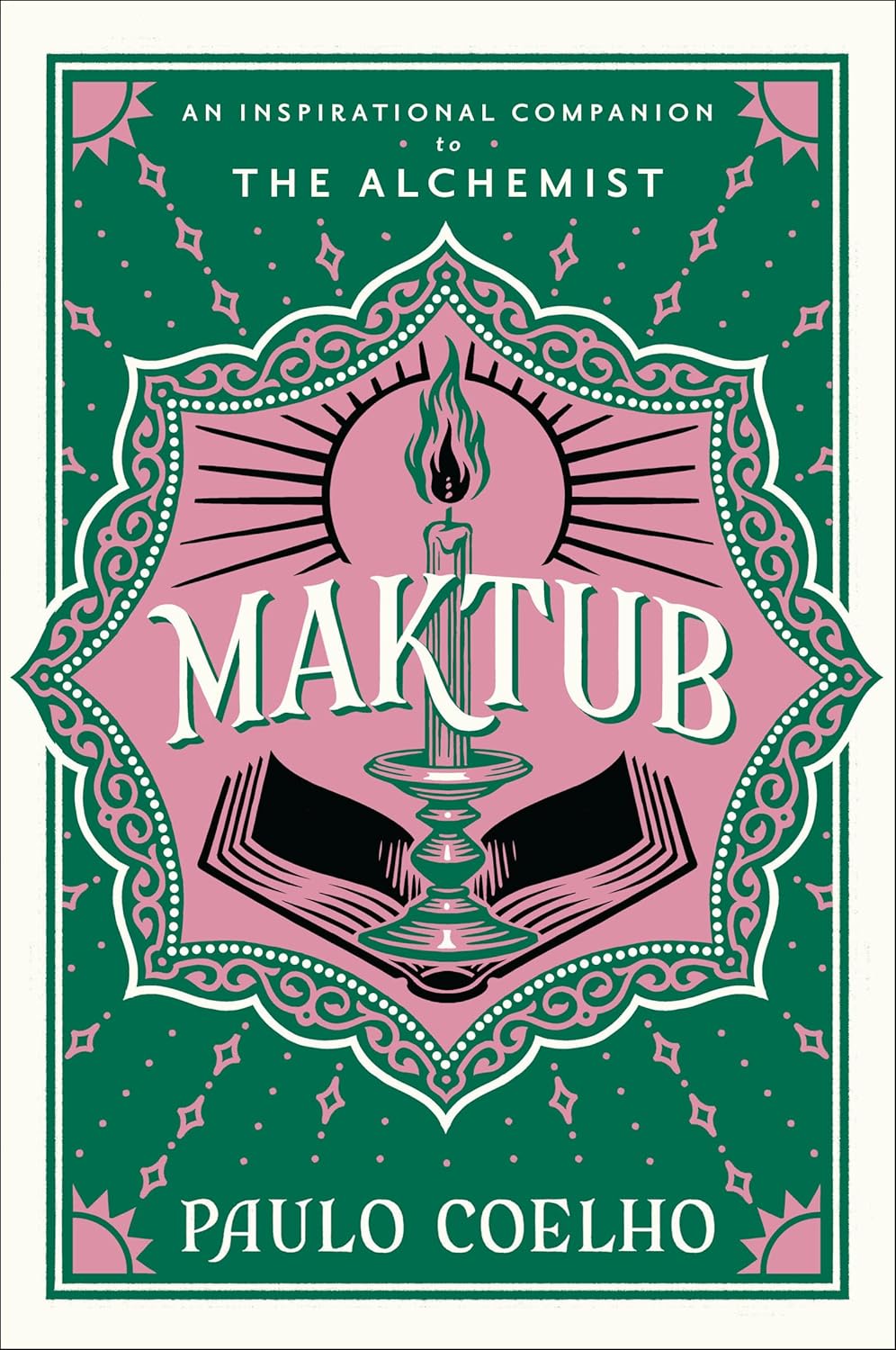

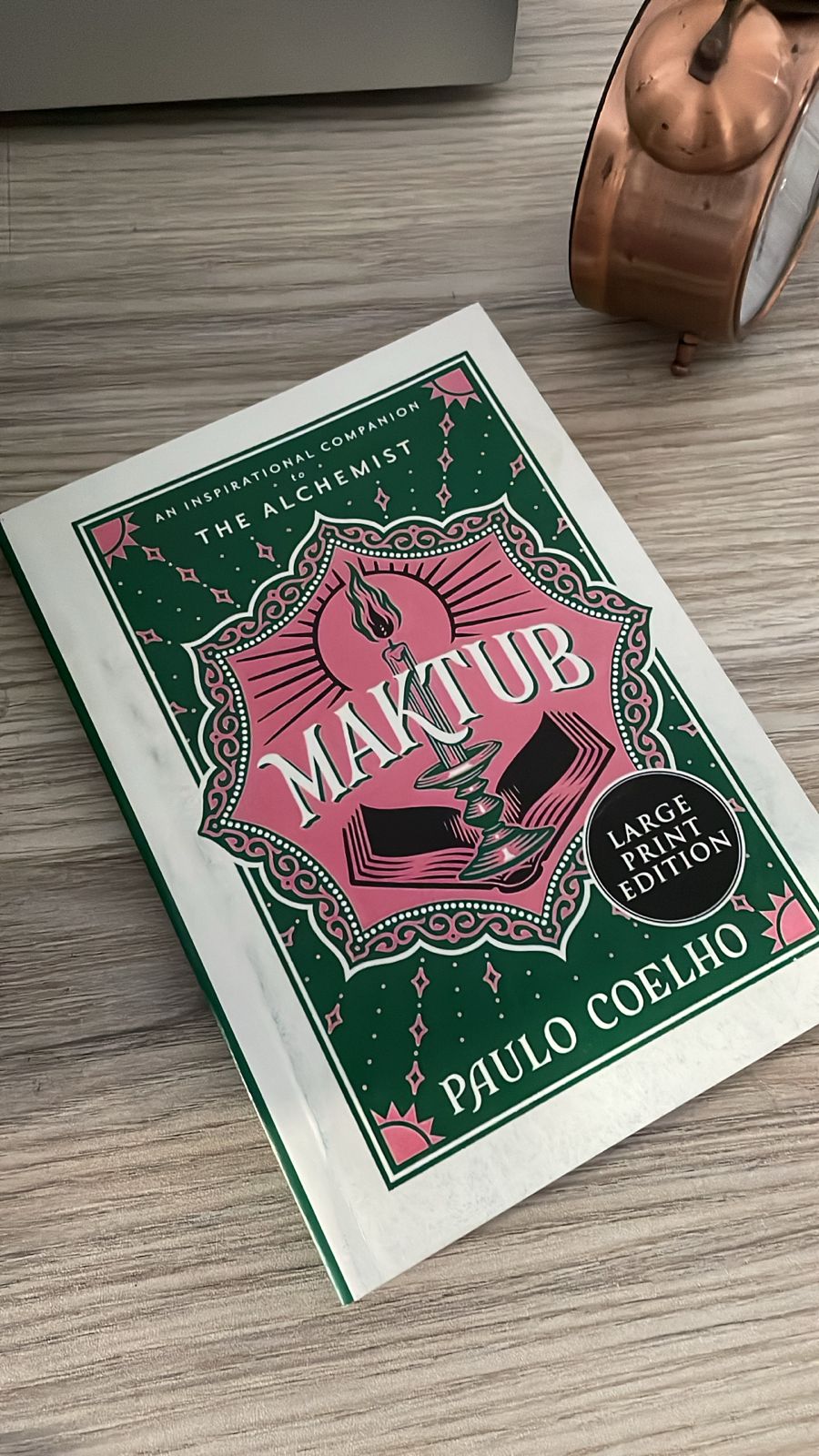

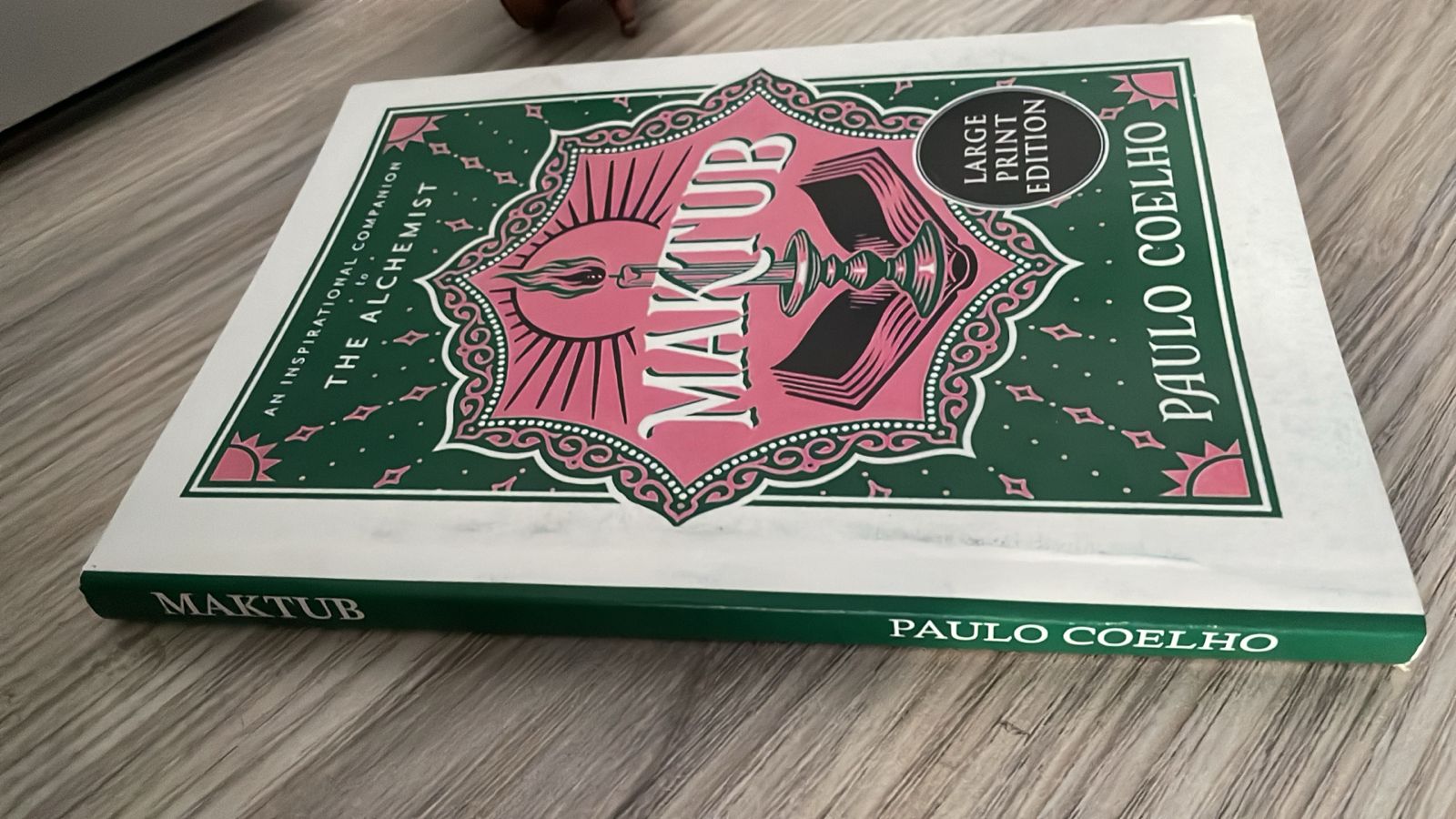








Maktub by Paulo Coelho is an inspiring collection of short stories, parables and reflections about destiny, faith, courage, love, responsibility, self-discovery and the mysterious ways ordinary moments can teach extraordinary lessons.
The word Maktub means:
“It is written.”
But Paulo Coelho does not use that idea to suggest that human beings should simply sit back and wait for destiny to control everything.
Instead, the stories encourage readers to think about the relationship between:
Destiny.
Choice.
Faith.
Action.
Responsibility.
Hope.
Transformation.
Originally gathered from Paulo Coelho’s daily writings, the book contains brief reflections that can often be read in only a few minutes.
Yet many of them invite much longer contemplation.
A traveler faces an unexpected problem.
A disciple questions a master.
An ordinary person discovers wisdom through an unusual experience.
A conversation reveals something about fear.
A mistake becomes a lesson.
A seemingly simple encounter becomes an invitation to look at life differently.
Maktub by Paulo Coelho is not structured like a traditional novel with one central plot.
Instead, it offers many small stories that readers can approach slowly, returning to particular passages whenever they need:
Perspective.
Encouragement.
Reflection.
Inspiration.
For readers who enjoyed The Alchemist, this collection offers another opportunity to explore Coelho’s characteristic themes of spiritual growth, destiny, listening to life and recognizing meaning within everyday experience.
Maktub by Paulo Coelho – Book Overview
Maktub by Paulo Coelho is a collection of short inspirational pieces rather than a conventional novel.
Each entry offers a moment.
A story.
A conversation.
A question.
A lesson.
Some are extremely short.
Others unfold like miniature parables.
Together they form a book about how people understand:
Life.
God.
Destiny.
Love.
Failure.
Fear.
Faith.
Relationships.
Personal responsibility.
The future.
The stories do not provide one rigid philosophy.
Instead, they encourage readers to pause and think.
What Does Maktub Mean?
The word Maktub comes from Arabic and is commonly translated as:
“It is written.”
The phrase can suggest destiny or something already written into the course of life.
But the book treats destiny in a more thoughtful way.
If something is written, does that mean we have no responsibility?
Not necessarily.
Coelho repeatedly returns to the importance of:
Choice.
Effort.
Awareness.
Responsibility.
Courage.
The future may contain mystery, but people still have to decide how they respond to life.
Destiny
Destiny is one of the strongest themes in Maktub by Paulo Coelho.
Many people wonder:
Is everything predetermined?
Do our choices matter?
Why do certain people enter our lives?
Why do opportunities appear at unexpected moments?
Why do some plans fail?
The stories do not always provide direct answers.
Instead, they invite readers to become more comfortable with mystery.
Destiny Does Not Mean Passivity
Believing that life contains meaning does not mean doing nothing.
A traveler still has to walk.
A student still has to learn.
A person seeking love still has to become vulnerable.
Someone facing difficulty still has to choose a response.
Destiny may present the road.
You still have to travel it.
Responsibility
Personal responsibility is an important counterbalance to destiny.
It is easy to say:
“This was meant to happen.”
But that belief should not become an excuse for avoiding responsibility.
Human beings still make choices.
Those choices create consequences.
Faith
Faith appears throughout Maktub by Paulo Coelho.
But the reflections are often broader than formal religious instruction.
Faith may involve trusting that:
Life can still change.
A difficult experience can contain meaning.
A person can begin again.
There may be something larger than what we currently understand.
Faith During Uncertainty
Faith is easiest when everything goes according to plan.
Its real difficulty appears when:
Plans fail.
Relationships end.
Opportunities disappear.
The future becomes unclear.
At those moments, faith may simply mean taking the next step without knowing the entire path.
The Journey
Travel and journeys appear frequently in Paulo Coelho’s writing.
A journey can be physical.
But it can also represent:
Growth.
Learning.
Transformation.
A person begins in one emotional or spiritual place.
Experience changes them.
The destination is not always geographic.
Life as a Journey
People often think happiness begins after reaching something.
After:
Graduation.
Marriage.
Promotion.
Money.
Success.
But life is mostly the road between those milestones.
Maktub by Paulo Coelho encourages readers to pay attention to the journey itself.
Self-Reflection
The book works especially well for readers who enjoy reflection.
You may read one page and immediately recognize yourself.
A story may remind you of:
A relationship.
A mistake.
A fear.
A decision.
A dream.
The value often comes from connecting the story with your own life.
Know Yourself
Self-knowledge sounds simple.
But many people spend years following expectations created by:
Family.
Society.
Friends.
Work.
Culture.
Only later do they ask:
What do I actually believe?
What matters to me?
What kind of life am I building?
These are central questions in personal growth.
Listen
Listening is a recurring spiritual and practical idea.
People often listen only long enough to prepare their response.
Real listening requires attention.
Listen to:
Other people.
Silence.
Experience.
Your own conscience.
The world around you.
Sometimes wisdom arrives quietly.
Silence
Modern life is noisy.
Phones.
Messages.
Social media.
News.
Work.
Entertainment.
Constant distraction makes inner reflection difficult.
Silence gives thought space to appear.
Wisdom
The stories in Maktub by Paulo Coelho often present wisdom through ordinary situations rather than formal philosophy.
A teacher.
A traveler.
An old woman.
A disciple.
A stranger.
Any person can become the source of an important lesson.
Wisdom Can Come From Unexpected People
Status does not guarantee wisdom.
Someone may have:
Money.
Education.
Power.
Authority.
Yet an ordinary person may understand something deeper about life.
This encourages humility.
Teachers
Teachers appear in many forms throughout spiritual storytelling.
A teacher may provide answers.
But the best teacher often provides questions.
Why do you believe this?
What are you afraid of?
What are you avoiding?
What are you seeking?
Questions force the learner to think.
Learning Through Experience
A lesson heard intellectually is different from a lesson lived personally.
Someone may tell you:
Failure can teach you.
But experiencing failure makes the lesson real.
Experience turns abstract ideas into understanding.
Fear
Fear is one of the greatest forces limiting human behavior.
Fear of:
Failure.
Rejection.
Judgment.
Loss.
Change.
Uncertainty.
Sometimes fear protects us.
Sometimes it prevents us from living fully.
Courage
Courage does not mean having no fear.
Courage means recognizing fear and acting when something important still needs to be done.
That may mean:
Speaking honestly.
Starting again.
Changing direction.
Leaving something unhealthy.
Following a dream.
The Unknown
People naturally prefer certainty.
We want to know:
What will happen?
Will this work?
Will I succeed?
Will this person stay?
But certainty is rarely available.
Life requires moving forward while many questions remain unanswered.
Trust
Trust is closely connected to uncertainty.
Trusting life does not mean assuming everything will be easy.
It means believing you can respond to whatever comes.
Failure
Failure appears differently when viewed through spiritual growth.
Instead of only asking:
Why did I fail?
a person can ask:
What is this teaching me?
What should change?
What did I misunderstand?
Failure as Redirection
Some failures close doors that were never right for us.
Others reveal missing skills.
Others simply require another attempt.
Not every failure means stop.
Sometimes it means:
Learn.
Adjust.
Continue.
Mistakes
Everyone makes mistakes.
The danger is not making one mistake.
The danger is refusing to learn from it.
Mistakes can produce:
Humility.
Experience.
Self-awareness.
Compassion.
Forgiveness
Forgiveness appears naturally in a book about human relationships and spiritual growth.
People hurt each other.
Sometimes deliberately.
Sometimes accidentally.
Forgiveness can help release the emotional weight of the past.
Forgiveness Does Not Mean Approval
Forgiving someone does not require saying:
What happened was acceptable.
It can simply mean refusing to allow the event to control your inner life forever.
Boundaries can still remain.
Love
Love is another central theme in Maktub by Paulo Coelho.
Love may involve:
Romantic relationships.
Friendship.
Family.
Compassion.
Spiritual connection.
Love can create joy.
But love also requires vulnerability.
Love Requires Courage
To love someone is to accept uncertainty.
You cannot guarantee:
They will never leave.
They will never disappoint you.
Everything will always be easy.
Love therefore requires courage.
Love and Possession
One important spiritual distinction is the difference between loving someone and trying to possess them.
Love allows another person to remain themselves.
Possession attempts to control.
Healthy love requires:
Freedom.
Trust.
Respect.
Relationships
Relationships become mirrors.
They reveal:
Our fears.
Expectations.
Insecurities.
Strengths.
Patterns.
Sometimes the difficult person teaches more than the easy person.
Let People Be Different
Not everyone will understand life the way you do.
Different experiences create different perspectives.
Growth includes learning to respect differences without abandoning your own values.
Human Connection
Despite differences of:
Language.
Culture.
Religion.
Country.
Status.
people share many of the same emotional experiences.
Everyone understands some version of:
Love.
Fear.
Hope.
Loss.
Longing.
The stories emphasize these shared human experiences.
Kindness
A small act of kindness may seem insignificant.
But you rarely know what another person is carrying.
One thoughtful action can completely change someone’s day.
Small Actions
One of the recurring ideas behind parables is that small actions can have large meaning.
A conversation.
A gesture.
A decision.
A moment of courage.
Life-changing events are not always dramatic.
Presence
People spend enormous amounts of time mentally living somewhere else.
Thinking about yesterday.
Worrying about tomorrow.
But the only moment where action actually happens is the present.
Live the Present
This does not mean ignoring the future.
Planning matters.
But constant anxiety about tomorrow can prevent you from experiencing today.
The Past
The past can teach.
But it cannot be changed.
Regret becomes useful only when it improves future behavior.
Otherwise, it simply becomes repeated emotional punishment.
Letting Go
Letting go is difficult because people often become attached to:
Old relationships.
Old identities.
Old dreams.
Old mistakes.
Sometimes growth requires accepting that something has ended.
New Beginnings
Every ending creates space.
It may not immediately feel positive.
But eventually new possibilities can emerge.
Maktub by Paulo Coelho repeatedly encourages openness to transformation.
Change
People often ask for a better life while resisting change.
But improvement itself is change.
You cannot become someone different while insisting everything stay exactly the same.
Transformation
True transformation is usually gradual.
One realization.
One decision.
One new habit.
One act of courage.
Eventually, those small changes create a different life.
Patience
Not everything happens immediately.
A seed needs time.
A skill needs practice.
Trust needs consistency.
Healing needs patience.
Trying to force everything can create unnecessary frustration.
Timing
Sometimes the right thing arrives at the wrong moment.
Sometimes what seems like a delay later makes sense.
Life has rhythms.
Not every season is meant for the same activity.
Waiting Versus Avoiding
Patience should not become an excuse for fear.
There is a difference between:
Waiting for the right moment.
And endlessly postponing because you are afraid.
Wisdom includes knowing the difference.
Action
Spirituality without action can become escape.
A person may read hundreds of inspiring books.
Nothing changes unless something is applied.
Turn Reflection Into Action
After reading Maktub by Paulo Coelho, ask:
What idea affected me most?
What should I change?
Who should I forgive?
What conversation am I avoiding?
What dream have I abandoned?
Reflection becomes powerful when it leads to action.
Responsibility and Spirituality
One of the important ideas in the book is that seeking spiritual understanding does not remove everyday responsibilities.
A person cannot ignore:
Family.
Work.
Commitments.
Consequences.
and claim to be pursuing enlightenment.
Growth should make someone more responsible, not less.
Ordinary Life Can Be Spiritual
You do not need to live on a mountain to discover wisdom.
Meaning can appear while:
Working.
Traveling.
Talking.
Helping someone.
Making a mistake.
Spiritual insight can occur in everyday life.
Simplicity
Many of Coelho’s stories are simple.
That simplicity is deliberate.
Complicated language is not always necessary to express meaningful ideas.
A short parable can remain in memory for years.
Parables
A parable is a short story used to communicate a deeper lesson.
Rather than directly telling readers what to believe, a parable gives them something to interpret.
Different readers may take different meanings from the same story.
Why Parables Work
Parables are memorable because the idea is attached to:
A person.
An event.
A choice.
A surprising ending.
Stories often remain in memory longer than abstract explanations.
Short Reflections
One major advantage of Maktub by Paulo Coelho is its format.
Readers do not need to complete a long chapter every time they open the book.
You can read:
One reflection in the morning.
Another before bed.
A few pages during a break.
This makes it suitable for slow reading.
A Book to Read Slowly
This is not necessarily a book to finish as quickly as possible.
Some readers may prefer:
One page.
Then reflection.
Another page tomorrow.
The book’s short format encourages this.
Journaling With Maktub
Readers interested in journaling can use the stories as prompts.
After reading a reflection, write:
What did this mean to me?
Where have I experienced something similar?
What would I do differently?
What am I avoiding?
This turns reading into active self-reflection.
Personal Growth
Maktub by Paulo Coelho fits naturally with readers interested in personal growth.
But personal growth should not mean constantly believing you are inadequate.
Growth means recognizing potential.
You can appreciate who you are now while still becoming more.
Comparison
Comparing yourself constantly with other people creates frustration.
Someone will always appear:
Richer.
More successful.
More attractive.
More advanced.
A more useful comparison is:
Am I becoming wiser than I was before?
Success
Success means different things to different people.
Money may matter.
Career may matter.
But success can also include:
Peace.
Love.
Freedom.
Purpose.
Meaning.
A person should decide what success means personally rather than simply borrowing society’s definition.
Purpose
Purpose gives direction.
It answers:
Why am I doing this?
Why does this work matter?
Why am I pursuing this goal?
Purpose can make difficult effort feel worthwhile.
Calling
Paulo Coelho frequently explores the idea that people feel called toward particular paths.
A calling may be:
Creative.
Professional.
Spiritual.
Personal.
The challenge is recognizing whether the voice comes from genuine purpose or temporary impulse.
Listening to Your Inner Voice
People often know more about themselves than they admit.
They may already know:
This relationship is unhealthy.
This career no longer fits.
This dream still matters.
The difficult part is acting on that knowledge.
The Soul
The book frequently approaches life from a spiritual perspective.
For readers comfortable with spiritual language, this can make the reflections especially meaningful.
For others, the same stories can still be approached as philosophical reflections on human behavior.
Different Spiritual Traditions
The collection draws on stories and wisdom associated with different spiritual traditions and teachers.
Readers encounter:
Masters.
Disciples.
Saints.
Hermits.
Buddhist figures.
Travelers.
This gives the collection a universal rather than narrowly doctrinal tone.
Universal Wisdom
Different traditions often ask similar questions.
How should we live?
What is love?
How should we respond to suffering?
What is courage?
What matters when life ends?
These shared questions connect humanity.
Humility
Humility means understanding that you do not know everything.
A person who believes they already understand every mystery has little reason to keep learning.
Wisdom often begins with:
“I don’t know.”
Ego
The ego wants:
Recognition.
Control.
Approval.
Superiority.
But constantly protecting the ego can make life exhausting.
Growth sometimes requires accepting that:
You were wrong.
Someone else knows more.
You need help.
Helping Others
A meaningful life is not entirely self-focused.
Personal growth should eventually affect how you treat others.
Knowledge becomes more valuable when it creates:
Compassion.
Service.
Kindness.
Understanding.
Giving
Giving does not only involve money.
You can give:
Time.
Attention.
Knowledge.
Encouragement.
Patience.
Sometimes the simplest form of generosity is being fully present for someone.
Gratitude
Gratitude changes attention.
Instead of constantly noticing what is missing, it encourages recognition of what already exists.
Health.
Friendship.
Food.
Home.
Opportunity.
Another day.
Gratitude and Ambition
Gratitude does not mean you must stop wanting improvement.
You can appreciate the present while still working toward a better future.
Both can exist together.
Suffering
The book does not pretend human life is free from suffering.
Loss and pain are part of existence.
The spiritual question becomes:
What do we do with suffering?
Meaning in Difficulty
Some painful experiences do not immediately make sense.
Forcing a positive lesson too quickly can feel false.
But with time, people sometimes discover:
Strength.
Understanding.
Compassion.
New direction.
Hope
Hope allows people to continue before they see evidence of improvement.
It is especially important during difficult seasons.
Hope says:
This chapter may not be the whole story.
Paulo Coelho
Paulo Coelho is the internationally bestselling Brazilian author of books including:
The Alchemist
The Pilgrimage
Eleven Minutes
The Zahir
Brida
Aleph
The Fifth Mountain
His writing frequently explores spirituality, destiny, love, personal transformation and the search for meaning.
Maktub and The Alchemist
Maktub by Paulo Coelho is often presented as an inspirational companion to The Alchemist.
Readers who enjoyed The Alchemist may recognize familiar themes such as:
Destiny.
Faith.
Journeys.
Signs.
Purpose.
Personal transformation.
However, the structure is very different.
Is Maktub a Sequel to The Alchemist?
No.
You do not need to read The Alchemist before reading Maktub by Paulo Coelho.
Maktub is not a continuation of Santiago’s story.
It is a separate collection of parables and reflections.
The books are connected mainly through themes.
Recommended Reading Order
There is no required order.
However, readers interested in Paulo Coelho’s spiritual and philosophical writing may enjoy:
1. The Alchemist
2. Maktub
3. The Pilgrimage
But each book can be read independently.
Is Maktub a Novel?
No.
Maktub by Paulo Coelho is primarily a collection of short stories, parables and reflections.
Readers looking for a continuous plot should know this before purchasing.
Is Maktub a Self-Help Book?
It overlaps with:
Personal development.
Spirituality.
Philosophy.
Inspirational writing.
But it is not a traditional step-by-step self-help manual.
It offers stories and experiences for readers to interpret rather than a strict program to follow.
English Translation
The modern English edition is translated by Margaret Jull Costa.
Her translation brings Coelho’s brief reflections and parables to English-language readers while preserving the accessible style of the collection.
Who Will Enjoy Maktub?
The book may especially appeal to readers who enjoy:
Short reflections.
Meaningful stories.
Spiritual books.
Inspirational writing.
Philosophy.
Personal development.
Books that can be reread slowly.
Is Maktub Religious?
The book contains spiritual and religious imagery and draws on wisdom from different traditions.
However, it is not simply a textbook for one religious doctrine.
Its themes are broadly focused on:
Humanity.
Faith.
Meaning.
Responsibility.
Inner growth.
Readers from different backgrounds may interpret the stories differently.
A Book for Daily Reading
Because the entries are short, Maktub by Paulo Coelho can work especially well as a daily reading book.
Read one story.
Think about it.
Return tomorrow.
Over time, the collection becomes less like a book you simply finish and more like a book you revisit.
7 Powerful Lessons From Maktub by Paulo Coelho
There are many reflections in Maktub by Paulo Coelho, but seven broader lessons stand out:
- Destiny does not remove responsibility – Life may contain mystery, but we still have to make choices, act and accept the consequences of those choices.
- Wisdom can appear in ordinary moments – A conversation, mistake, journey or unexpected encounter can teach something important if we pay attention.
- Fear should not make every decision for you – Courage does not mean eliminating fear; it means continuing when something meaningful is worth pursuing.
- Faith matters most when the path is unclear – Trust becomes meaningful when certainty is unavailable and you still have to take the next step.
- Love requires freedom and vulnerability – Genuine love involves trust, respect and allowing another person to remain themselves rather than trying to control them.
- Spiritual growth must include responsibility – Reflection and faith should help us live more honestly and responsibly rather than becoming ways to escape everyday duties.
- Transformation often begins with small moments of awareness – One realization, question or decision can become the beginning of a much larger change.
Why Read Maktub by Paulo Coelho?
Maktub by Paulo Coelho is an excellent choice for readers interested in:
- Paulo Coelho books
- The Alchemist
- Spirituality
- Personal growth
- Inspirational books
- Short stories
- Parables
- Life lessons
- Self-reflection
- Destiny
- Faith
- Courage
- Love
- Wisdom
- Purpose
- Mindfulness
- Personal transformation
- Philosophy
- Meaning of life
- Books for daily reflection
It is especially suitable for readers who enjoy short pieces that can be read slowly rather than one long continuous narrative.
Who Should Read This Book?
Maktub by Paulo Coelho may especially appeal to:
- Paulo Coelho fans
- Readers who loved The Alchemist
- Readers interested in spirituality
- Personal-development readers
- People exploring purpose and meaning
- Readers who enjoy philosophical stories
- Readers who enjoy short parables
- People going through periods of change
- Readers interested in faith and destiny
- People who enjoy journaling and reflection
- Readers looking for an inspirational gift
- Anyone who prefers books that can be revisited many times
Maktub by Paulo Coelho – It Is Written, But You Still Have to Live It
Maktub by Paulo Coelho begins with a mysterious idea:
It is written.
At first, that may sound as though everything has already been decided.
But the book’s deeper message is more dynamic.
Life may contain events we cannot control.
People arrive.
People leave.
Opportunities appear.
Plans fail.
Unexpected doors open.
We do not choose everything that happens.
But we still choose how we respond.
That is where responsibility begins.
The stories encourage readers to pay closer attention.
To:
Listen.
Question.
Learn.
Forgive.
Love.
Take risks.
Accept uncertainty.
Continue walking.
A person may spend years searching for one enormous revelation while ignoring the hundreds of small lessons appearing every day.
A conversation may contain wisdom.
A disappointment may create redirection.
A stranger may teach something unexpected.
A mistake may reveal what needs to change.
This is the spirit of Maktub by Paulo Coelho.
Wisdom is not always hidden somewhere distant.
Sometimes it is already present in ordinary life.
We simply need enough awareness to recognize it.
For readers interested in Paulo Coelho, spirituality, destiny, personal growth, faith, love and the search for meaning, Maktub by Paulo Coelho is a thoughtful collection to read slowly, return to often and reflect upon long after each short story ends.
Learn more about Maktub by Paulo Coelho on the official HarperCollins page.
Explore more inspirational and personal growth books at Bargain Books.
Be the first to review “Maktub by Paulo Coelho”
Related products
Non-Fiction & Knowledge
රු2,250.00
3 X Rs. 750.00 or 8% Cashback with


or 3 X රු750.00 with


or up to 4 X රු562.50 with

-24%
Out of stock
Non-Fiction & Knowledge
Original price was: රු2,500.00.රු1,900.00Current price is: රු1,900.00.
3 X Rs. 633.33 or 8% Cashback with
or 3 X රු633.33 with
or up to 4 X රු475.00 with
-23%
Non-Fiction & Knowledge
Original price was: රු2,200.00.රු1,700.00Current price is: රු1,700.00.
3 X Rs. 566.67 or 8% Cashback with
or 3 X රු566.67 with
or up to 4 X රු425.00 with

Out of stock
Non-Fiction & Knowledge
රු1,600.00
3 X Rs. 533.33 or 8% Cashback with
or 3 X රු533.33 with
or up to 4 X රු400.00 with
Out of stock
Self-Help & Psychology
රු1,500.00
3 X Rs. 500.00 or 8% Cashback with
or 3 X රු500.00 with
or up to 4 X රු375.00 with
-19%
Out of stock
Non-Fiction & Knowledge
Original price was: රු2,650.00.රු2,150.00Current price is: රු2,150.00.
3 X Rs. 716.67 or 8% Cashback with
or 3 X රු716.67 with
or up to 4 X රු537.50 with
-24%
Non-Fiction & Knowledge
Original price was: රු2,300.00.රු1,750.00Current price is: රු1,750.00.
3 X Rs. 583.33 or 8% Cashback with
or 3 X රු583.33 with
or up to 4 X රු437.50 with
-33%

Self-Help & Psychology
Original price was: රු2,300.00.රු1,550.00Current price is: රු1,550.00.
3 X Rs. 516.67 or 8% Cashback with
or 3 X රු516.67 with
or up to 4 X රු387.50 with
Reviews
There are no reviews yet.