
No products in the cart.
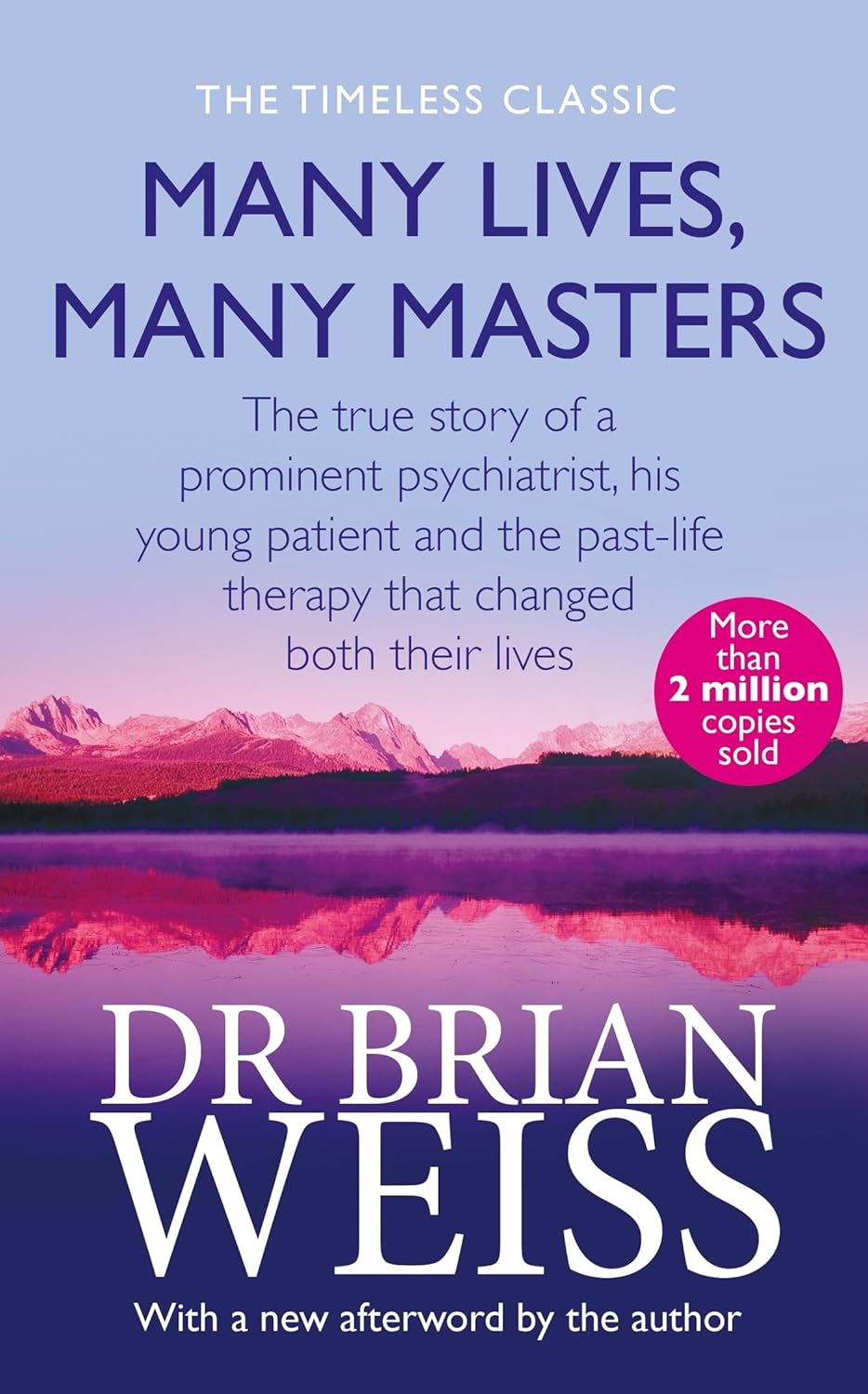




Many Lives, Many Masters by Dr. Brian Weiss
රු1,750.00
3 X Rs. 583.33 or 8% Cashback with


or 3 X රු583.33 with


or up to 4 X රු437.50 with


Many Lives Many Masters by Brian Weiss is a bestselling spiritual memoir about psychiatrist Dr. Brian Weiss and a patient named Catherine, whose hypnotic therapy sessions appeared to reveal memories of previous lives and messages from spiritual Masters. Exploring reincarnation, past-life regression, fear, healing, relationships, death, love and spiritual growth, the book follows Weiss’s transformation from skeptical psychiatrist to believer in a larger spiritual journey. Ideal for readers interested in spirituality, psychology, consciousness and questions about life after death. Past-life regression and reincarnation remain controversial and are not scientifically established.
3 in stock
Many Lives Many Masters by Brian Weiss is a thought-provoking spiritual memoir about psychiatrist Dr. Brian L. Weiss and an unusual patient whose therapy sessions dramatically challenged his understanding of memory, healing, death and human consciousness.
Weiss was trained as a conventional psychiatrist.
He approached his work through:
Medicine.
Psychology.
Clinical observation.
Scientific training.
Then he began treating a patient he calls Catherine.
She suffered from several fears and anxieties, and traditional therapy had produced limited progress.
During hypnosis, Weiss attempted to help Catherine recover memories from her childhood.
Instead, according to his account, she began describing scenes that appeared to belong to completely different lives.
Different places.
Different time periods.
Different identities.
Different deaths.
Even more surprising to Weiss were moments when Catherine seemed to communicate information attributed to highly evolved spiritual beings whom the book calls the Masters.
These sessions forced Weiss to question many of his previous assumptions.
Could trauma come from experiences beyond the present life?
Could consciousness continue after death?
Could relationships extend across multiple lifetimes?
Could spiritual understanding help reduce fear?
Many Lives Many Masters by Brian Weiss tells the story of how one psychiatrist moved from skepticism toward a belief in reincarnation and spiritual continuity.
It is important, however, to distinguish the book’s claims from established science.
Past-life regression and reincarnation remain controversial and are not scientifically proven.
Readers can therefore approach the book in different ways:
As a spiritual memoir.
As an account of an unusual therapeutic relationship.
As a book about reincarnation.
As a reflection on fear and healing.
Or simply as an invitation to consider questions about life, death and meaning.
Many Lives Many Masters by Brian Weiss – Book Overview
Many Lives Many Masters by Brian Weiss centers on the therapy of Catherine, a young woman experiencing intense fears, anxiety and emotional difficulties.
Weiss initially uses conventional psychiatric approaches.
Eventually, hypnosis becomes part of the treatment.
During one session, Catherine is encouraged to return to the source of a particular problem.
Instead of describing childhood, she begins talking about an existence that appears to be from another historical period.
Weiss is shocked.
His scientific background makes him skeptical.
But the experiences continue.
Dr. Brian L. Weiss
Brian Weiss is a psychiatrist who trained in traditional medicine and psychiatry.
That background is important to the book because Weiss repeatedly emphasizes how difficult it was for him to accept what he believed he was witnessing.
He did not begin the story already convinced about reincarnation.
His transformation becomes one of the central narratives.
The Skeptical Psychiatrist
At the beginning, Weiss sees himself as:
Rational.
Scientific.
Evidence-focused.
Professionally cautious.
Claims about previous lives do not fit comfortably within his training.
This makes his reaction to Catherine’s sessions central to the book.
He continually asks himself:
Is this imagination?
Is Catherine creating stories?
Is something psychological happening?
Or could these experiences reflect something beyond conventional understanding?
Catherine
Catherine is the patient at the center of the narrative.
The name is used to protect her privacy.
She arrives in therapy experiencing difficulties including:
Fear.
Anxiety.
Phobias.
Relationship problems.
Emotional distress.
Her treatment does not initially produce the progress Weiss hopes for.
Hypnosis
Hypnosis becomes the method through which the unusual material emerges.
In clinical hypnosis, a person enters a state of focused attention and increased suggestibility.
Weiss initially hopes to explore earlier memories from Catherine’s present life.
Instead, she begins reporting what she describes as previous incarnations.
Past-Life Regression
Many Lives Many Masters by Brian Weiss became one of the best-known popular books associated with past-life regression.
Past-life regression is the practice of using hypnosis or similar techniques to encourage people to recall experiences interpreted as previous lives.
Supporters may view these experiences as evidence of reincarnation.
Skeptics and many researchers argue that such memories can arise from:
Suggestion.
Imagination.
Confabulation.
Cultural expectations.
Memory distortion.
For this reason, the book’s spiritual claims should be understood as Weiss’s interpretation rather than settled scientific evidence.
Reincarnation
Reincarnation is the belief that some aspect of a person continues after death and is born again into another life.
Versions of this belief appear in several religious and philosophical traditions.
In Weiss’s account, Catherine describes multiple previous lives.
These experiences gradually influence how both patient and therapist understand her current fears.
Healing Through Understanding
A major theme is the idea that understanding the source of fear can reduce its power.
In conventional psychotherapy, discovering connections between earlier experiences and present reactions can be valuable.
Weiss interprets Catherine’s improvements through the framework of past-life experiences.
Whether readers accept that interpretation or not, the broader theme remains:
Fear often becomes easier to confront when it is understood.
Fear
Fear appears repeatedly in Many Lives Many Masters by Brian Weiss.
Catherine experiences fears that feel powerful and difficult to explain.
The book explores whether fear can become deeply embedded within the mind.
It also asks:
Can understanding transform fear?
Can perspective reduce anxiety?
Can people become less afraid of death?
Fear of Death
Perhaps the most significant fear examined in the book is fear of death.
If consciousness continues, Weiss reasons, death may represent transition rather than absolute ending.
This spiritual interpretation becomes increasingly important as the sessions continue.
Death and Continuity
The book presents death not as the final disappearance of the self but as part of a larger journey.
Again, this is a spiritual belief rather than an established scientific conclusion.
But for readers interested in questions of mortality, the idea can be deeply thought-provoking.
The Masters
One of the most distinctive elements of Many Lives Many Masters by Brian Weiss is the appearance of the so-called Masters.
During certain hypnotic states, Catherine communicates statements that Weiss interprets as wisdom from highly evolved spiritual beings.
These messages discuss:
Love.
Patience.
Learning.
Fear.
Spiritual development.
Relationships.
The purpose of life.
The book’s title refers partly to these Masters.
Spiritual Teachers
The Masters are presented as teachers who have advanced through levels of spiritual understanding.
Their messages often emphasize that human beings are here to:
Learn.
Grow.
Love.
Develop compassion.
Release fear.
Fulfill responsibilities.
Many Lives
The “many lives” of the title refers to the repeated incarnations Catherine describes.
Each life contains different:
Relationships.
Challenges.
Failures.
Lessons.
According to the book’s spiritual framework, these experiences contribute to a much longer journey of personal development.
Life as a School
A recurring idea is that life functions almost like a school.
People encounter experiences that help them learn.
Challenges may contain lessons.
Relationships may help people develop emotionally or spiritually.
From this perspective, human life is not random but educational.
Learning
Learning is central to the book.
Weiss’s spiritual interpretation suggests that people continue learning across different existences.
Important lessons include:
Patience.
Love.
Forgiveness.
Compassion.
Nonviolence.
Understanding.
Love
Love is one of the most important themes in Many Lives Many Masters by Brian Weiss.
The messages Weiss attributes to the Masters repeatedly suggest that love is fundamental to spiritual growth.
Relationships become opportunities to learn how to:
Care.
Understand.
Forgive.
Support.
Release control.
Relationships Across Lifetimes
The book suggests that people may encounter the same souls in different relationships across different lives.
Someone who is:
A parent in one life.
A friend in another.
A partner in another.
could, within this belief system, remain part of the same spiritual group.
This idea is sometimes associated with concepts such as soul groups or recurring soul relationships.
Karmic Relationships
Readers familiar with spiritual traditions may connect the book’s ideas with karma.
In simple terms, karma concerns the consequences of actions.
The book presents relationships and experiences as opportunities for learning rather than merely punishment or reward.
Forgiveness
If relationships extend across many lives, resentment begins to look different.
The book encourages readers to consider releasing:
Anger.
Hatred.
Revenge.
Long-term resentment.
Forgiveness becomes connected with spiritual freedom.
Forgiveness Does Not Mean Accepting Harm
A healthy interpretation of forgiveness should not require remaining in:
Abusive relationships.
Unsafe situations.
Harmful environments.
People can forgive emotionally while maintaining strong boundaries.
Spiritual Growth
The central journey is not about becoming richer or more successful.
It is about becoming spiritually wiser.
Growth may involve:
More patience.
Less fear.
Greater compassion.
Deeper love.
More awareness.
A better understanding of others.
Patience
Patience appears repeatedly in the teachings presented in the book.
People often want immediate answers.
Immediate healing.
Immediate success.
Immediate certainty.
But spiritual development is portrayed as gradual.
Time
From the book’s perspective, spiritual development unfolds across far more time than one human lifetime.
That idea dramatically changes how problems are viewed.
A difficult event may become one chapter in a much larger story.
Purpose
Many Lives Many Masters by Brian Weiss encourages readers to ask:
Why am I here?
What am I supposed to learn?
Which relationships matter most?
What patterns keep repeating?
How can I become more compassionate?
Purpose becomes connected to growth.
Repeating Patterns
People often notice repeating patterns in life.
Similar relationships.
Similar conflicts.
Similar fears.
Similar mistakes.
The book interprets some repeating patterns spiritually.
Psychology may interpret others through:
Attachment.
Conditioning.
Family dynamics.
Trauma.
Learned behavior.
Readers can consider both perspectives.
Healing
Catherine’s reported emotional improvement is a major part of the story.
As she explores the material appearing during hypnosis, Weiss reports that some fears begin decreasing.
This strengthens his belief that the sessions are meaningful.
Healing Does Not Prove Reincarnation
An important distinction is necessary.
A therapeutic experience can feel meaningful or reduce symptoms without proving that every memory produced during hypnosis is historically factual.
People can benefit emotionally from:
Symbolic stories.
Metaphors.
Imagery.
Narrative interpretation.
Therefore, improvement itself does not scientifically demonstrate reincarnation.
Memory
Memory is much less reliable than people often assume.
Human memory can be influenced by:
Questions.
Suggestions.
Expectations.
Later information.
Imagination.
This is especially relevant when considering memories produced under hypnosis.
Hypnosis and Memory Accuracy
Hypnosis can create vivid experiences.
But vividness does not necessarily equal historical accuracy.
A memory can feel completely real and still contain errors.
Readers should keep this in mind while considering the book’s extraordinary claims.
Science and Spirituality
One of the most interesting tensions in Many Lives Many Masters by Brian Weiss is the conflict between:
Scientific training.
And spiritual interpretation.
Weiss’s journey moves increasingly toward spiritual belief.
Readers may agree or disagree with his conclusions.
Either response can make the book intellectually interesting.
Questions Without Easy Answers
The book asks questions science has not resolved in the way Weiss proposes.
What exactly is consciousness?
Does anything continue after death?
Why do some unusual experiences feel so real?
How should subjective spiritual experiences be interpreted?
These remain complex questions.
Consciousness
Consciousness is one of the deepest mysteries in philosophy and neuroscience.
Humans can experience:
Thought.
Memory.
Emotion.
Self-awareness.
Dreams.
Spiritual experiences.
We understand many aspects of brain function, but philosophical questions about consciousness remain active areas of debate.
Life After Death
The book strongly leans toward the belief that consciousness survives death.
This belief provides comfort for many readers.
However, it remains a spiritual or metaphysical claim rather than a scientifically established fact.
Grief
Belief in continued existence can influence how people experience grief.
For someone who believes relationships continue beyond death, loss may feel less final.
That does not mean grief disappears.
Missing someone is still painful.
Hope
Hope is a major emotional quality of Many Lives Many Masters by Brian Weiss.
The book suggests that:
Life continues.
Growth continues.
Love continues.
Mistakes can be corrected.
People have more opportunities to learn.
For spiritually inclined readers, this can create a reassuring worldview.
Compassion
If people are all learning at different stages, judgment may become less useful.
Someone acting badly may still need:
Boundaries.
Consequences.
Accountability.
But understanding can coexist with accountability.
Judgment
The book encourages less judgment and greater awareness.
We rarely know the complete story of another person.
Even within a non-reincarnation framework, this remains a valuable idea.
Personal Transformation
Brian Weiss undergoes his own transformation.
He begins as the therapist.
But over time, he becomes a learner too.
Catherine’s sessions challenge his:
Professional assumptions.
Beliefs.
Understanding of death.
Understanding of therapy.
Teacher and Student
An interesting reversal occurs.
The psychiatrist initially assumes he is teaching and healing the patient.
Eventually, he believes the patient is bringing him important lessons.
This reversal becomes central to the emotional appeal of the book.
Spiritual Awakening
Readers interested in spiritual awakening may find this transformation particularly engaging.
A spiritual awakening can involve questioning previous beliefs and becoming open to new ways of understanding life.
For Weiss, Catherine becomes the catalyst.
Skepticism
Skepticism is reasonable when approaching extraordinary claims.
Being skeptical does not necessarily mean dismissing the entire book.
A reader can say:
“I am not convinced these were literally past lives.”
while still appreciating the book’s reflections on:
Fear.
Love.
Healing.
Meaning.
Death.
Personal growth.
Belief
Other readers may strongly connect with Weiss’s interpretation.
They may see Catherine’s experiences as evidence of:
Reincarnation.
Spiritual continuity.
Soul development.
Masters.
Life after death.
The book leaves readers to consider these questions personally.
Is Many Lives Many Masters a True Story?
Brian Weiss presents the book as a nonfiction account of his therapeutic experiences with a patient called Catherine.
However, his interpretation of Catherine’s hypnotic memories as actual past lives is not scientifically established.
So it is best described as:
A nonfiction spiritual memoir containing extraordinary claims interpreted by the author through a reincarnation framework.
Is Many Lives Many Masters a Psychology Book?
Partly.
Brian Weiss is a psychiatrist, and psychotherapy and hypnosis form the foundation of the story.
However, the book goes far beyond conventional psychology into:
Reincarnation.
Spirituality.
Life after death.
Metaphysical ideas.
It should therefore not be treated as a standard clinical psychology textbook.
Is It a Self-Help Book?
It can appeal strongly to self-help readers, but it is not structured as a traditional step-by-step program.
There are no rigid exercises such as:
Day 1.
Day 2.
Day 3.
Instead, readers learn through Catherine’s story and Weiss’s reflections.
Is It a Spiritual Book?
Yes.
Many Lives Many Masters by Brian Weiss is primarily associated with:
Spirituality.
Reincarnation.
Past-life regression.
Life after death.
Soul growth.
Personal healing.
Is It Religious?
Not in the sense of teaching one formal religious doctrine.
Its ideas overlap with beliefs found in several spiritual and religious traditions.
Readers from different backgrounds may interpret the content differently.
Can You Read It Without Believing in Reincarnation?
Absolutely.
A reader can approach the book as:
A spiritual story.
A psychological curiosity.
A memoir.
A philosophical exploration.
You do not need to accept all of Weiss’s conclusions to find the book interesting.
Is It Easy to Read?
Yes.
The writing is generally accessible.
Although it deals with large questions about:
Death.
Consciousness.
Spirituality.
Psychology.
the narrative structure keeps it approachable.
Why the Book Became Popular
The book addresses questions many people quietly carry:
What happens after death?
Why am I afraid?
Why do certain relationships feel unusually familiar?
Why do some emotional patterns repeat?
Does life have a larger purpose?
These questions have universal emotional appeal.
Brian Weiss Books
Readers who enjoy Many Lives Many Masters by Brian Weiss may also be interested in his other books, including:
Through Time Into Healing
Only Love Is Real
Messages from the Masters
Same Soul, Many Bodies
His later work continues exploring reincarnation, past-life therapy and spiritual development.
Where Should You Start With Brian Weiss?
For most readers, Many Lives Many Masters is the best starting point.
It introduces:
Brian Weiss.
Catherine.
Past-life regression.
The Masters.
The central spiritual framework that influences his later books.
Content Considerations
Many Lives Many Masters by Brian Weiss contains material involving:
- Anxiety and phobias
- Mental-health treatment
- Hypnosis
- Death
- Descriptions of deaths in alleged past lives
- Grief
- Fear of death
- Reincarnation
- Spiritual and metaphysical claims
- Childhood experiences
- Relationship distress
- Discussions of trauma
Readers should also understand that past-life regression is controversial and should not replace evidence-based mental-health care where professional treatment is needed.
7 Powerful Spiritual Lessons From Many Lives Many Masters by Brian Weiss
There are many ideas in Many Lives Many Masters by Brian Weiss, but seven stand out:
- Fear can lose power when it is understood – Catherine’s story emphasizes examining the roots of fear rather than allowing unexplained anxiety to control life.
- Love is presented as central to spiritual growth – The book repeatedly returns to compassion, connection and love as qualities that matter more than status or material success.
- Relationships can become opportunities for learning – Whether interpreted spiritually or psychologically, difficult relationships may reveal patterns that deserve attention.
- Death does not need to dominate life with fear – Weiss’s spiritual interpretation presents death as transition rather than absolute ending, offering a different perspective on mortality.
- Growth requires patience – Wisdom, healing and personal transformation rarely happen instantly.
- A person can remain open without abandoning critical thinking – The book is especially interesting because Weiss begins as a skeptic, although readers should still distinguish personal experience from scientific evidence.
- Life becomes richer when we ask what we are here to learn – The book encourages reflection on purpose, compassion, responsibility and the patterns shaping our lives.
Why Read Many Lives Many Masters by Brian Weiss?
Many Lives Many Masters by Brian Weiss is an excellent choice for readers interested in:
- Brian Weiss
- Reincarnation
- Past-life regression
- Spirituality
- Life after death
- Hypnosis
- Psychology
- Personal growth
- Healing
- Anxiety
- Fear
- Spiritual awakening
- Soul journeys
- Karma
- Relationships
- Consciousness
- Death and dying
- Metaphysical books
- Spiritual self-help
- Books about purpose and meaning
It is particularly suitable for readers who enjoy exploring questions that sit between psychology, spirituality and philosophy.
Who Should Read This Book?
Many Lives Many Masters by Brian Weiss may especially appeal to:
- Spiritual readers
- Brian Weiss fans
- Readers curious about reincarnation
- Readers interested in past-life regression
- People exploring fear of death
- Personal-development readers
- Psychology enthusiasts
- Readers interested in hypnosis
- People exploring spirituality
- Readers interested in consciousness
- People going through periods of self-reflection
- Readers interested in soul connections
- Readers questioning the meaning of life
- Anyone open to unusual ideas about healing and human existence
Many Lives Many Masters by Brian Weiss – A Story About Fear, Healing and the Mystery of Human Life
Many Lives Many Masters by Brian Weiss begins as a fairly ordinary therapeutic story.
A psychiatrist.
A patient.
Anxiety.
Fear.
Treatment.
Then everything changes.
The patient begins describing experiences that appear to belong to other lives.
The psychiatrist becomes confused.
Skepticism collides with curiosity.
And eventually the therapist begins questioning some of his deepest assumptions about:
Memory.
Death.
Consciousness.
Spirituality.
The book does not provide scientific proof of reincarnation.
That distinction matters.
Hypnotically recovered memories can be influenced by suggestion and imagination, and past-life regression remains controversial.
But the book’s lasting appeal is not dependent entirely on whether every reader accepts its supernatural interpretation.
Underneath the extraordinary claims are deeply human questions.
Why are we afraid?
How do we heal?
Why do certain relationships affect us so strongly?
What does it mean to forgive?
How should we think about death?
What makes a life meaningful?
Can people change?
Weiss’s answer becomes increasingly spiritual.
He comes to believe that human beings live many lives, continue learning after death and return repeatedly to develop spiritually.
Some readers will accept this worldview.
Others will remain skeptical.
But both may find themselves reflecting on the same fundamental idea:
Perhaps life should not be measured only by:
Money.
Achievement.
Status.
Possessions.
Perhaps the quality of our lives also depends on how well we learn to:
Love.
Understand.
Forgive.
Grow.
Help others.
Release unnecessary fear.
That is why Many Lives Many Masters by Brian Weiss has remained influential among readers interested in spirituality and personal transformation.
It invites readers into an unusual therapy room and leaves them with one of humanity’s oldest questions:
What if there is more to our existence than one lifetime can explain?
Learn more about Many Lives, Many Masters by Brian L. Weiss on Brian Weiss’ official website.
Explore more personal development and spiritual books at Bargain Books.
Be the first to review “Many Lives, Many Masters by Dr. Brian Weiss”
Related products

Non-Fiction & Knowledge
රු1,950.00
3 X Rs. 650.00 or 8% Cashback with
or 3 X රු650.00 with
or up to 4 X රු487.50 with
රු2,000.00
3 X Rs. 666.67 or 8% Cashback with
or 3 X රු666.67 with
or up to 4 X රු500.00 with
Out of stock
Autobiography
රු2,750.00
3 X Rs. 916.67 or 8% Cashback with
or 3 X රු916.67 with
or up to 4 X රු687.50 with
Out of stock
Self-Help & Psychology
රු2,200.00
3 X Rs. 733.33 or 8% Cashback with
or 3 X රු733.33 with
or up to 4 X රු550.00 with
-21%
Non-Fiction & Knowledge
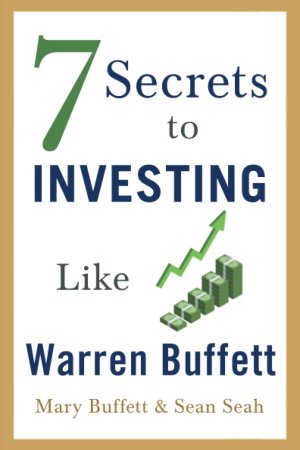
7 Secrets to Investing Like Warren Buffett by Mary Buffett & Sean Seah
Original price was: රු1,900.00.රු1,500.00Current price is: රු1,500.00.
3 X Rs. 500.00 or 8% Cashback with
or 3 X රු500.00 with
or up to 4 X රු375.00 with
-34%
Non-Fiction & Knowledge
Original price was: රු2,250.00.රු1,490.00Current price is: රු1,490.00.
3 X Rs. 496.67 or 8% Cashback with
or 3 X රු496.67 with
or up to 4 X රු372.50 with
Non-Fiction & Knowledge
රු2,450.00
3 X Rs. 816.67 or 8% Cashback with
or 3 X රු816.67 with
or up to 4 X රු612.50 with
Out of stock
Self-Help & Psychology
රු1,900.00
3 X Rs. 633.33 or 8% Cashback with
or 3 X රු633.33 with
or up to 4 X රු475.00 with
Reviews
There are no reviews yet.